What is Sweden’s National Dish?

swedishchef

If you’ve ever wondered what Sweden’s National Dish is, now is the time to take part in a competition hosted by radio station P3. So far, the folowwing have been eliminated: falafel, swede, ‘plankstek’ (literally steak on a plank) and ‘palt’ (dumplings).

What is left to vote for are the following:

  • ‘Smörgåstårta’ (sandwich cake) versus ‘Sill och potatis’ (pickled herring and boiled potatoes)
  • ‘Köttbullar’ (meatballs) versus ‘Blodpudding’ (black pudding)
  • ‘Tacos’ versus ‘Falukorv med makaroner´ (sausage with macaroni)
  • ‘Kebabpizza’ versus ‘varmkorv’ (hot dog)

If you’d like to vote, here’s the link: VoteforSwedenNationalDish

So, what do you think? What is Sweden’s National Dish?

Trump in Swedish

The other day I heard a new Swedish word. I guess it stuck in my head because it felt contemporary. I was so amused by the word that I had to look it up. And imagine my pleasure when I found its definition! 

The Swedish word I’m referring to is ‘trumpen’. Contemporary for obvious reasons, the word is an adjective and translates as the following: 

  • Glum
  • Moody
  • Morose
  • Stuffy
  • Surly 

Could it be more appropriate?! 

Sweden’s Name of the Day

In Sweden, there’s a concept known as a ‘name’s day’. Each day of the year has a name associated with it. For example, today January 2nd, is Svea’s day. 

Celebrating name’s day was originally intended to weaken the importance of celebrating birthdays which was considered heathen and unChristian. Most people were christened after saints, which was deemed more holy. 

Interestingly, the concept was also used commonly by farmers to plan their crops, rather than on specific dates. This still exists today somewhat with terms such as Mårten’s Eve and Anna’s Day. 
Today it is seen mostly as an opportunity to celebrate a person with that name on that very day. Some people give presents or go out for dinner, others send texts or write congratulations on social media. Others ignore it completely.

So what can you do if your name doesn’t have an official name’s day? Well, either don’t care about it or adopt a day. 

My English name doesn’t exist in the calendar so I chose the closest Swedish name I could – Nils. That means that the 8th October is my day. Along with the other 138,350 males in Sweden with the name Nils.  

Oh, and the 5 women who also weirdly have Nils as their first name too! 

So when is your name’s day? 

Top 10 things I miss about Sweden

swebuildings

I’ve been hearing and reading a lot of Sweden-bashing recently. While we are free to think what we want, I believe it’s all too simplistic to focus on the negative and complain about Sweden or Swedes. It’s very easy to focus on what Sweden is not, rather than what it is.

Recently, I’ve been a lot in Asia and Latin America, far away from Sweden and my family and friends. Sometimes when we’re confronted by new environments, it is then we realize what we appreciate about our home locations. I’ve been putting some thought into it. Apart from my loved ones, what is it that I miss about Sweden when I’m away?

Here are my top 10, in no particular order of priority.

  1. the feeling that the sky is big and endless, giving a sense of freedom in my mind and spirit
  2. knowing that I can take a deep breath and fill my lungs with fresh oxygen instead of polluted toxic fumes
  3. the calmness in my thoughts and that I don’t have to battle with external noises in order just to hear myself think
  4. my anonymity and just blending in with the crowd
  5. the certainty of knowing how things function and how I am supposed to behave
  6. walking outside without interruption, confusion or danger
  7. the knowledge that I don’t have to keep buying bottled water – I can drink directly from the tap without getting seriously sick as a consequence
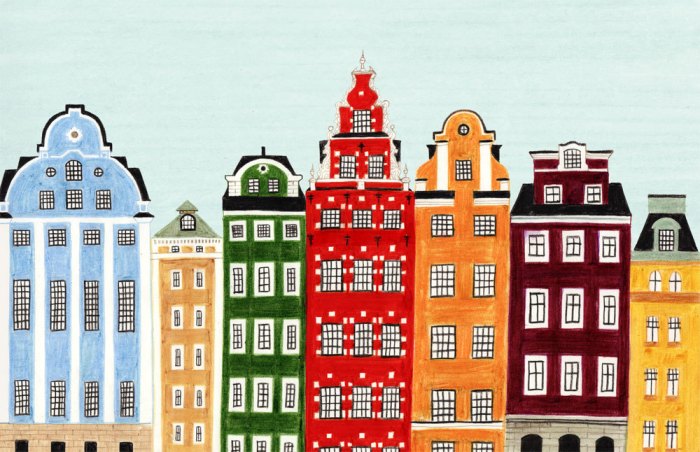
  8. the evening light cascading on the colorful buildings – the umbras, the rusty reds and the deep golds
  9. the sting of the cold air on my nose and cheeks (never thought I’d admit to that one)
  10. the Swedish aesthetic – environments filled with stylish modern design, cool Nordic solutions and healthy-looking easy-on-the-eye people

None of this is to say that I don’t enjoy traveling, because I do very much so. I just think that sometimes it’s worth taking a moment to reflect over what you appreciate about where you live.

I’m sure, if you do, you’ll find there’s a lot more than you think.

What do you appreciate about Sweden when you’re not here? I’d love to hear your thoughts – write them in the comments below.

If you like this blog, please share it with your friends.

This thing about being tall 

At a height of 193 cm, I am at the tall end of the man scale. However, in Sweden, I am rarely reminded of it. While I am taller than the Swedish 182 cm average, I still blend in. It isn’t until I visit another country that I become reminded that I am towering over other people and height becomes a source of attention or in worse case ridicule. 

This makes me think of visibility in relation to the intercultural experience. Does the more visible we are affect the authenticity of the experience? 

I remember my first time in Asia how people pointed at me and laughed. I remember in Mexico how people wanted to touch me and in China how they wanted to take a photo with me. My physicality was strange to them and, as such, my presence was impossible for them to ignore. 

I genuinely think that my experience of other countries is coloured by the fact that I can’t hide. I am seen by everybody wherever I go. Shorter people can more easily disappear in the crowd and, as such, can more neutrally observe their surroundings. Through no choice of my own, I am often influencing mine, which consequently makes my surroundings less authentic. 
In Sweden, people don’t notice. Or maybe they just don’t care. Or are too polite to point it out. Whatever the reason, I perceive that my feeling of physical sameness rather than difference is something that helped me adapt quickly to Swedish society and acknowledge it as the place I feel at home. 

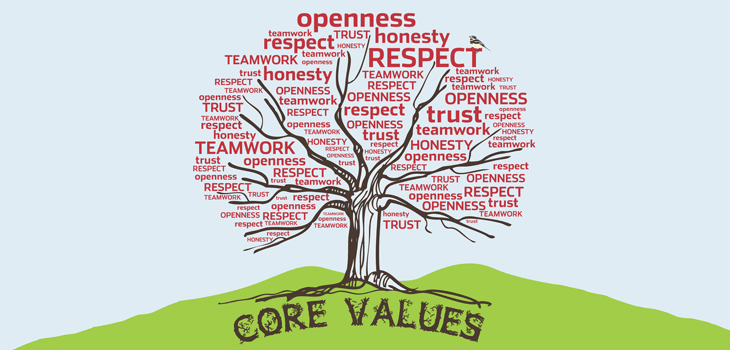
The debate over Swedish values


Every summer in Sweden, there is a politics week held on the Baltic island of Gotland. Over 8 days, each of the main political parties gets a chance to promote their agenda. This year, there has been a lot of talk about Swedish values, which in turn has started a debate about what are Swedish values and if they even exist. 

If we are looking for values that are exclusive to Sweden, the answer is no. If however we are looking for values that are prioritised in Sweden and function as a way to move society forward then, yes, they do exist. It is a matter of definition.  They may not apply to every Swede, but researchers have seen clear values in Swedish society that, while not unique to Sweden, are very strong. 

There has been a lot of talk about values of equality and tolerance. These values have been strong in Swedish society in the past and have enabled the welfare state, the laws and the political systems we enjoy today. 

According to the World Values Survey, which is a credible and extensive body of research that looks into what values drive society, there are two main value sets that separate Sweden from many other countries in the world. Those values are so-called secular/rational values and values of self expression/self actualisation.

Secular/rational values. In other words, the importance of the church and religion has deminished in Swedish society, religion and politics are separated, traditional family structures exist side by side with less traditional structures. Decisions are made ‘rationally’ and not based on scripture or a religious morality. This is very different from most places around the world.

Self expression/actualisation. The right and the need to say what one thinks is a strong driver in Swedish society. The right to your own opinion, your own perspective and to live the life of your own choice are considered undeniable human rights. This is different from many other places around the world. 

Many behaviours we see in society, in families and in the work place can be traced to these underlying driving values in Swedish society. 

The danger in discussing Swedish values lies in the belief that these are static and fixed. As society changes, so do the prevailing values. As the world around us changes, so do the values. As the environment is impacted, as war and crisis occur, values change. 

When political parties want to reinforce Swedish values, they are romanticising and simplifying. This is dangerous rhetoric as they are wilfully and deliberately using values to exclude. 

What do Shakespeare, the 1st of May and immigrants have in common?

Shakespeare_2888800b

Today is May 1st 2016, celebrated in Sweden as in many other countries, with demonstrations, political speeches and parades. Most political parties, including the fascist party, have rallies and gatherings. One of the hot topics this year is immigration and the large increase of asylum seekers that have arrived in Sweden during the recent months. For some people in Sweden, these immigrants are a positive addition to Swedish society. For others the influx of immigrants is unwelcome, a problem that is perceived to bring with it social and societal disruption.

Reflecting over this situation, I hear echoes of something that happened in London on May 1st, 1517 – almost exactly 500 years ago – something known as ‘Evil May Day’.

During this period ín history, the reign of Henry the Eighth, Londoners were feeling unhappy with their situation. There was a great deal of misery, poverty and disease. As a consequence, they came to resent the presence of foreigners in the city, especially those seen to have money.  An inflammatory xenophobic speech had been made at Easter calling on all “Englishmen to cherish and defend themselves, and to hurt and grieve aliens for the common weal’.  Over the following two weeks there were sporadic attacks on foreigners and immigrants. On May Day 1517, it culminated, and a mob of thugs, liberated prisoners and others took to the streets and attacked foreigners and looted their homes. The under-sheriff at the time, the legendary Thomas More, tried unsuccessfully to dissuade them. Nobody was killed but several were arrested and charged with treason. Referring to the events of this day, William Shakespeare, many years later, wrote a text depicting the speech that Thomas More delivered to the rioters.

The voice of Shakespeare, who died 400 years ago last week, resonates through this text. The fascinating thing about it is that it is as relevant today as it was 400 years ago. This saddens me. The same forces at action centuries ago, are still in action today. This should be a reminder to all of us to be vigilant. Not everything, it seems, does change with time.

Here’s the text:

‘A Plea on behalf of Immigrants’ by William Shakespeare

Grant them removed, and grant that this your noise
Hath chid down all the majesty of England;
Imagine that you see the wretched strangers,
Their babies at their backs and their poor luggage,
Plodding to the ports and coasts for transportation,
And that you sit as kings in your desires,
Authority quite silent by your brawl,
And you in ruff of your opinions clothed;
What had you got? I’ll tell you: you had taught
How insolence and strong hand should prevail,
How order should be quelled; and by this pattern
Not one of you should live an aged man,
For other ruffians, as their fancies wrought,
With self same hand, self reasons, and self right,
Would shark on you, and men like ravenous fishes
Would feed on one another.

You’ll put down strangers,
Kill them, cut their throats, possess their houses,
And lead the majesty of law in line
To slip him like a hound.
Alas, alas! Say now the king
Should so much come too short of your great trespass
As but to banish you, whether would you go?
What country, by the nature of your error,
Should give you harbour? go you to France or Flanders,
To any German province, to Spain or Portugal,
Nay, any where that not adheres to England,
Why, you must needs be strangers: would you be pleased
To find a nation of such barbarous temper,
That, breaking out in hideous violence,
Would not afford you an abode on earth,
Whet their detested knives against your throats,
Spurn you like dogs, and like as if that God
Owed not nor made not you, nor that the claimants
Were not all appropriate to your comforts,
But chartered unto them, what would you think
To be thus used? this is the strangers case;
And this your mountainish inhumanity.
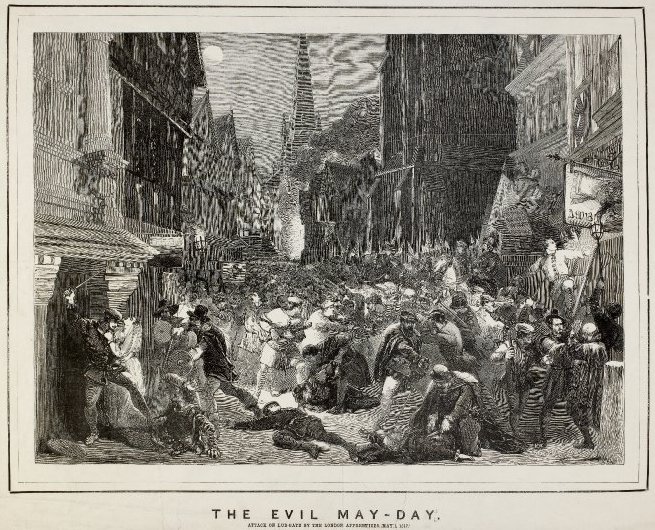
 

Evil%20May%20Day.jpg


A witchy pink Thursday

easterwitchmooon

Today is ‘Skärtorsdag’, or Maundy Thursday in English. In Sweden it’s celebrated by Children dressing up as witches. This tradition originates from the belief centuries ago that tonight was the witches night, where witches would make their journey to Blåkulle – the Blue Mountain. It was a night of danger and evil, and Swedish people would bar their doors to their houses and barns and leave outside gifts that would make the witches’ journey easier – food, milk, clothes, broomsticks. Today, Swedes give the children sweets and money.

But why is it called Skärtorsdag’? The word ‘skär’ means ‘pink’. But does that make today Pink Thursday?

Actually not.

The word ‘skär’ has Another meaning that might be more relevant – ‘clean’.

If you know your bible stories, today being the day before Good Friday is the day when Jesus gathered his disciples together for the last supper, introduced communion, and was later betrayed by Judas, and condemned to death on the cross. It is the day evil was said to be released – hence the witches described earlier in this text.

Prior to the last supper, according to the Easter story, Jesus washed the feet of the disciples. And he washed them clean – a symbolic metaphor for purification and the washing away of sin.

So, today isn’t Pink Thursday – it’s Clean Thursday.

I’d better start mopping the kitchen floor then.

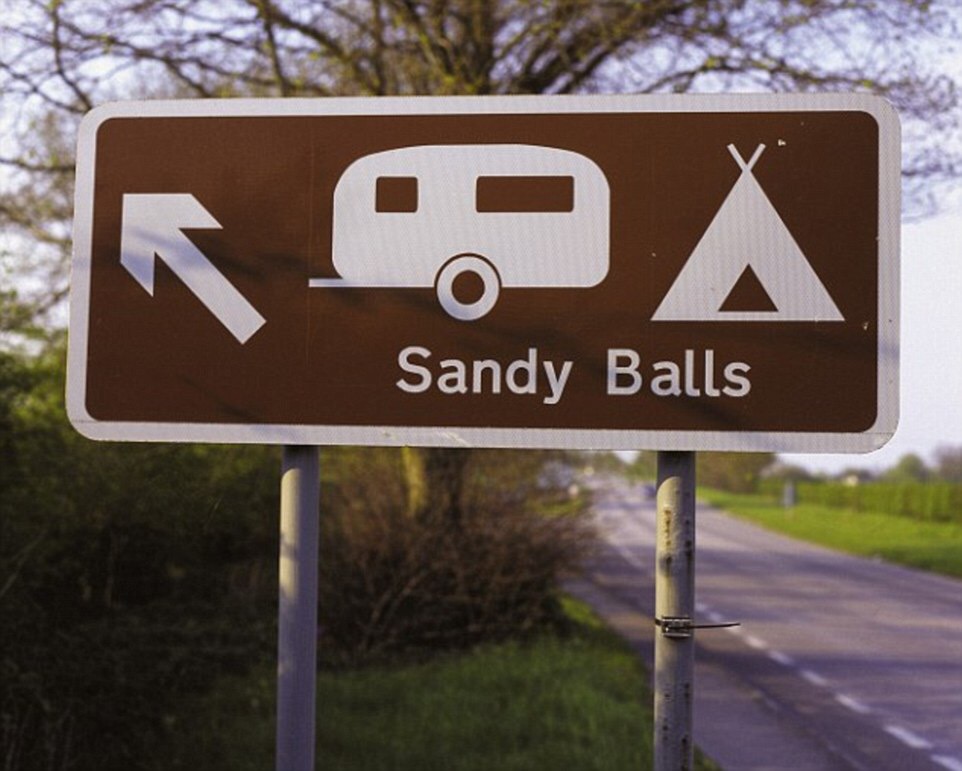
Top 5 Rude Swedish Place Names 


In Britain, and Sweden, there are many places with funny or rude names. 

What’s in a name? Does the name of a place say anything about its residents? For example, are the people of Uppsala upwardly mobile people? Or are the people of Sundsvall very sound in their values and morals? Maybe. If the name of place represents the type of people who live there, what does it say about the residents of these top 5 rude place names in Sweden? 

5) In the town of Mora there is a place called Rövhålet, which translates as ‘butt hole’. 

4) Bögs gård, north of Stockholm, literally means ‘Gay’s farm’

3) Kattsjärten in the county of Värmland is the evocative ‘cat’s arse’ in English 

2) Way up in the north of Sweden, you will find Sexträsk, which is the exotic place of ‘sex swamp’

1) But the most embarrassing must be the place called Djupröven, which is just outside of Uppsala. It means ‘Deep Ass’ in English. Says it all. 

There’s also a suburb of Stockholm which I’m always embarrassed to say. The suburb of Fittja sounds very much like the offensive word for female genitalia. Best to avoid saying it if you’re a foreign speaker of Swedish. 

What other funny or rude place names in Sweden do you know? 

Please share this blog, if you enjoyed it. 

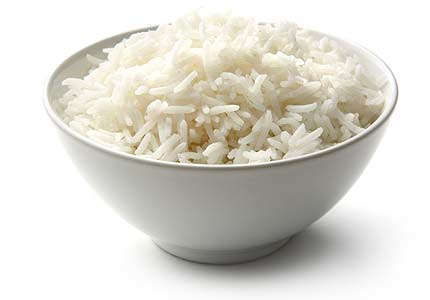
Swedes ban rice

  
Just when you thought it safe to go back into the kitchen, the Swedish Food Health and Safety Board announced today that rice is killing us. This white staple apparently has the deadly chemical arsenic in it. 

People who eat rice more than four times a week are strongly advised to cut back and parents who reach for the convenient rice cake to appease their children should stop it immediately. 

While I’m sure this is thoroughly well-founded, it’s a bit hard to take seriously as over the years we’ve been warned about eating most foodstuffs in one way or another. 

From a global perspective, to the east of us, there are entire nations who build their cuisine on rice. And to my, granted limited, knowledge, I don’t believe arsenic poisoning is the biggest cause of death there.