Top 10 English words borrowed from Swedish

Yesterday I wrote about the word quisling, meaning traitor, which is used in English but is actually borrowed from Norwegian. This made me curious about what English words are borrowed from the Swedish language.

After a little research, here are the top 10 (in alphabetical order):

  1. Angstrom, the measurement, after the Swedish scientist Anders Jonas Ångström
  1. Celcius – the international measure of temperatures – is named after Swedish scientist Anders Celcius.
  2. Gauntlet (as in ‘run the gauntlet’) – from the Swedish word gatlopp
  1. Gravlax, marinated salmon, from the Swedish gravad lax
  2. Moped – Swedish shortening of trampcykel med motor och pedaler (“engined bike with motor and pedals”)
  1. Ombudsman – a person who acts as a trusted intermediary between an organization and some internal or external constituency.
  2. Orienteering – from orientering
  1. Rutabaga – the root vegetable, (from Swedish dialectal word rotabagge)
  2. Smorgasbord – from the Swedish smörgåsbord, (literally “sandwich table”), which in Swedish either refers to a buffet with very specific types of food, or is used as a metaphor
  3. Tungsten, literally “heavy stone”.

What exactly is a quisling?

Sweden might have a government soon. Months after the general election, an unconventional middle coalition seems to be forming, which includes former opposition parties from left and right. All of this is an attempt to keep an extreme right wing party out of the government. However, it’s not without its critics.

One party in particular – the right-oriented Center Party- have been strongly criticized for being turncoats and traitors. One disgruntled politician called the leader of the Center party a quisling. While we use this term in English, I was curious to check into where the word comes from and why it is such a serious insult.

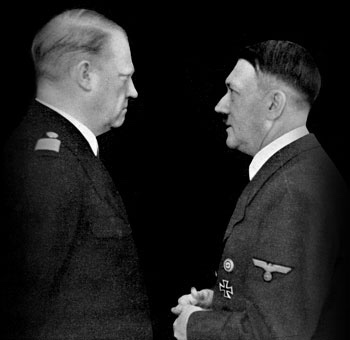
According to Wiki, quisling is a term originating in Norway, which is used in all the Scandinavian languages and in English for a person who collaborates with an enemy occupying force – or more generally as a synonym for traitor. The word originates from the surname of the Norwegian war-time leader Vidkun Quisling who headed a domestic Nazi regime during the Second World War.

Interestingly, the use of the word quisling predates the war though. In 1933, the term was used to describe the followers of Quisling who was in the process of starting a national fascist party based on the German nazi model.

In 1940, Quisling attempted to seize power in Norway, as he wanted to collaborate with Hitler. His coup d’etat failed, and he and his followers were declared criminals. In the British Times the headline was ‘Quislings everywhere’, and the term became synonymous with traitor – a word to ‘carry the scorn of mankind throughout the centuries’, to quote Winston Churchill.

So there we have it. A word taken from a pitiful, slithering fascist who was a traitor to his country and collaborated with an enemy power. Sounds more like a description of Trump if you ask me.

It seems then definitely out of proportion that the word is currently being used to describe the leader of Sweden’s Center party.

Of course many people are disappointed, and she has had to make some difficult compromises. But there is one promise she has not backed down on, however difficult it might be – to never give fascists a position of power in Swedish politics. And though not ideal for her, she has moved to the middle to prevent this.

The irony then is in the fact that she is being called a quisling. She is not a quisling, she is in fact the complete opposite.

Sweden, Swedeland or Sweorice? Why is Sweden called Sweden?

The Swedish word for Sweden is Sverige. Have you ever wondered why then Sweden is called Sweden in English?

Well, like all etymology of words, the explanation can be found centuries back and in a different country. In fact, the English name was loaned from the Dutch language in the 17th century. It is based on Middle Dutch Zweden, the Dutch name of Sweden. In turn, the name Zweden is the dative plural of  Zwede (Swede). Country names based on a dative plural and adding -n were the norm in German and Dutch in the 15th century – other examples are the German Italien “Italy” and Spanien“Spain”. These are also actually the words in Swedish for those countries.

What about before the 17th century when England borrowed the name Sweden from the Dutch? Well, clearly Sweden existed, and indeed it was called something else – Swedeland. And in early Old English, the country was known as Sweoland or Sweorice. Sweorice translates as the realm of the Sveonas – who were a Germanic tribe of the Sviar (a Norse tribe).

It’s not clear why the English suddenly changed to the Dutch version, but it may have been due to siding in conflicts or to make trading and communication easier.

So yesterday’s Swedeland is today’s Sweden. Personally, I think Sweorice has a nice ring to it, and is seems closer to the Swedish word Sverige.

Why Swedes celebrate their names

Today is Svea’s Name’s Day. And October 8th is my Name’s Day. Well, not quite….but almost. It is Nils. And since I’m called Neil, well, I take Nils as my day.

Some of you might be wondering what the hell I’m talking about. What is a ‘Name’s Day’? Well, it’s like this. In Sweden, every day has a name, sometimes two. And if your name happens to be represented in this way in the calender, then you can celebrate your day. Strange? Maybe. Unusual? Not really.

A Name’s Day is actually a tradition in lots of countries such as Bulgaria, Croatia and Ukraine. According to Wiki, the custom originated with the Christian calendar of saints: believers named after a saint would celebrate that saint’s feast day. In Sweden, however, there is no longer any explicit connection to Christianity. It’s been a tradition since the Middle Ages and started because the church wanted the people to celebrate Name’s Days instead of birthdays which they viewed as a pagan tradition.

There are different lists though some names are celebrated on the same day in many countries. In 1901 a comprehensive modernization was made in Sweden to make the list up to date with current names. This also happened in Finland, but not in other countries.

But Name’s Days are not without their controversy. The monopoly on calenders, held by the Royal Swedish Academy of Sciences, expired in 1972 and so did the official name day list. And then all hell broke loose. Competing lists emerged and finally in 1986 a new list with three names on each day was designed to create harmony in the Name’s Day chaos. But people weren’t happy. Seven years later, this list was revised and reduced to two names per day. But Swedes were still dissatisfied with this and the Swedish Academy produced a new two-name list which was finally accepted and brought into use in 2001. Although it does not have the official status of older lists, it is now universally used in Sweden.

One alternative calender, however, is the Diversity Calender which appoints each day with a more diverse selection of names to represent modern-day society.

How this tradition arrived in Sweden is unclear. Maybe it was imported by foreign religious leaders or merchants, or maybe it’s to do with the fact that the Swedish Protestant Church retains some traditions similar to the Catholic. Whatever the origin, it’s a reason to celebrate. And Swedes love to celebrate!

So, come on Svea, today’s your day – January 2nd! Happy Name’s Day to you!!

If you’d like to check out if you’re privileged to have a Name’s Day go to www.dagensnamnsdag.nu

Sweden’s Greasy New Year’s Day

January 1st is the day in Sweden when most pizzas are sold. Whether laziness, apathy or hangover cravings lie behind it, a pizza is ordered every second on New Year’s Day.

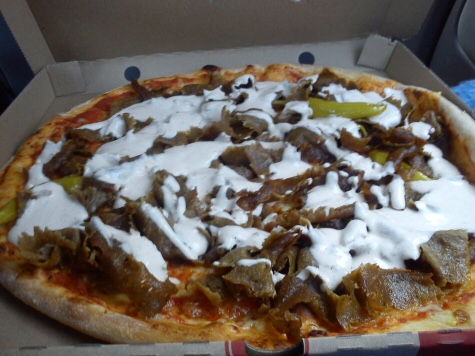
Fast food pizza company Onlinepizza has released statistics on the most sold pizzas in Sweden during 2018. Apart from personally designed toppings, the winner at almost 20% is the Kebab pizza – a dubious Swedish classic. Consisting of cheese, tomato and sliced kebab meat, the popular pizza is a real fat bomb. You can see it pictured above.

In second place is the Vesuvio with smoked ham, in third place comes the pineapple-strewn Hawaii pizza. Fourth is the hammy Capricciosa and fifth is the humble Margarita.

The top 20 list also includes the gross-sounding Gyros pizza, consisting of Greek giros meat and tsatsiki. There’s also a frightful pizza with taco sauce, ham and jalapeños called an Azteca.

Are you eating a pizza today? If so, what type have you ordered?

Sweden’s Las Vegas on the Baltic Sea

Did you know that Sweden was once a great political power? The Swedish Empire exercised control over the Baltic region for over 100 years. The beginning of the Empire is usually taken as the reign of King Gustav Adolf in 1611, and the end as the loss of territories in 1721 following the Great Northern War. Sweden had control of Finland, Estonia, Latvia, Denmark, Norway and parts of Germany. It is rumoured in Swedish history that King Gustav Adolf had an ambition to make the Baltic Sea a large lake inside Sweden.

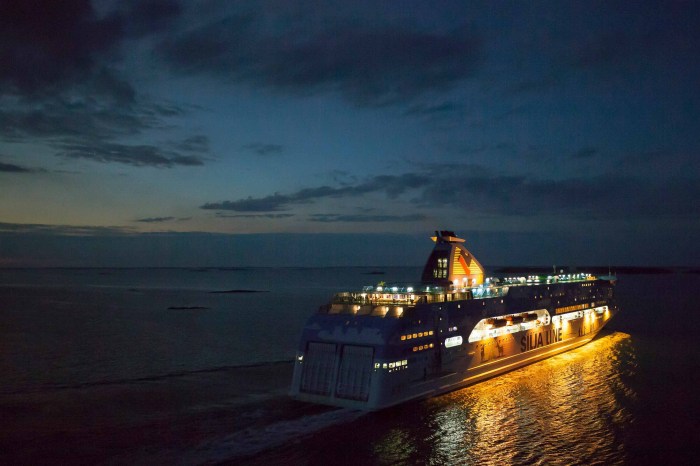
This was all a very long time ago, and today things don’t look quite the same for Sweden. Today, the most common boats that travel over the Baltic Sea are ferries and cruise ships. These huge ships traffic, amongst other destinations, Stockholm, Helsinki, Åbo, Åland, Visby, Riga, Gdansk, Rostock and Tallinn. Today, they are not for invading Swedes but mostly for multinational tax-free shopping, city breaks, partying, cruising, transporting goods and touristing.

The specific party boats between Sweden and Finland are a Swedish classic. They are also a special case – they are a kind of ‘booze cruise’ and are an interesting study in how many varying levels of intoxication there are. It’s hard to say who wins the competition in being most drunk and going berserk – the Swedes or the Finns – but both nations give it a good attempt. These boats are notorious locations for partying and, like Las Vegas, what happens on the ferry stays on the ferry. It’s a fascinating sight to witness.

The boats have various well-used bars, nightclubs, cabaret lounges with tacky stage performances, a mix of good to production-line restaurants, basic and luxury cabins, spa, poker tables, slot machines, karaoke, bingo and tax free shopping. Everything is ambitiously designed to give passengers a fun night or two at sea.

You don’t have to party like crazy to travel these boats however. Lots of families, couples and calm groups of friends use the boats as transportation or as cruises and mini breaks. With an upgrade, you can experience nicer restaurants and better cabins. The view out of the window is also very pretty as the boats glide gently through the thousands of islands in the archipelago and out into the open sea.

So, whether you’re looking for beautiful scenery, a sociological study of the Swedes and the Finns, or wanting a wet party night, then jump on a cruise ship from Stockholm and venture out onto the Baltic Sea.

Swedes and their alcohol – a Swedish odyssey?

When visiting Sweden, people are often struck by the system for purchasing alcohol. In bars and restaurants everything goes as expected but if you want to buy a bottle of, for example, wine or whisky then this is done in the state-owned alcohol shops known as Systembolaget. These shops have restricted opening hours closing at 6 or 7pm on weekdays and 2 or 3pm on Saturdays. On Sundays and Public Holidays they are closed.

Sweden’s alcohol monopoly started in the 1800’s and the national company Systembolaget was formed in 1955.

Systembolaget has a retail network of circa 426 stores, around 25 in Stockholm. The company has an interesting mandate from the Swedish state – to help limit the medical and social harm caused by alcohol and thereby improve public health. This explains why access to alcohol is restricted through the number of stores, opening hours and retail rules, and why the corporation is aims not to maximise its profit. In other words, the alcohol monopoly is highly socio-political -its foremost aim is to stop people consuming alcohol, or at least to consume it responsibly.

Although strange for many visitors, it’s a concept that seems to work – Swedes consume on average 9.1 litres of pure alcohol per person annually, less than many other countries.

However, it is at times like Christmas that the restricted opening times become more obvious. This year, the shops are closed for 4 days from yesterday at 3pm. Up and down the country, long queues were reported. I saw this with my own eyes, and had a weird recollection of old pictures from the Second World War or Soviet Russia. People seemed to be in a good mood while they waited, though it meant waiting for almost an hour outside some branches.

I guess it’s the price you pay for lack of forward planning. Anyway, I hope everybody got what they wanted and that they have a boozy, woozy, snoozy Christmas worth queuing for.

Sweden’s longest night

winter solstice

Today, Friday Dec 21st is the longest night for people in Sweden and the rest of the northern hemisphere. At this time of year, it doesn’t get much darker than this. In Swedish, there’s an expression – now we’re moving towards brighter times – and it’s really relevant today, as from tomorrow the amount of daylight will gradually extend until June.

The winter solstice is the official start of astronomical winter, and this year it will be extra special. The winter solstice marks the exact moment each year when the Northern Hemisphere reaches its greatest possible tilt away from the sun, according to National Oceanic and Atmospheric Administration. It signals the beginning of winter in the Northern Hemisphere and the summer season in the Southern Hemisphere.

But this year, the solstice isn’t the only celestial show in the coming days. A full moon known as the Cold Moon will take place on Saturday. The moon will appear full for a few days. However, it is the first time it coincides with the winter solstice since 2010. It won’t occur again until 2094, by which time most of us will be dead. In addition to the full moon, a meteor shower will take place on Friday and Saturday nights, according to NASA.

So it might be dark and dreary outside, but look up to the sky. You might just witness something spectacular – and I don’t mean Santa and his sleigh.

Sweden’s most horrifying and thought-provoking monument

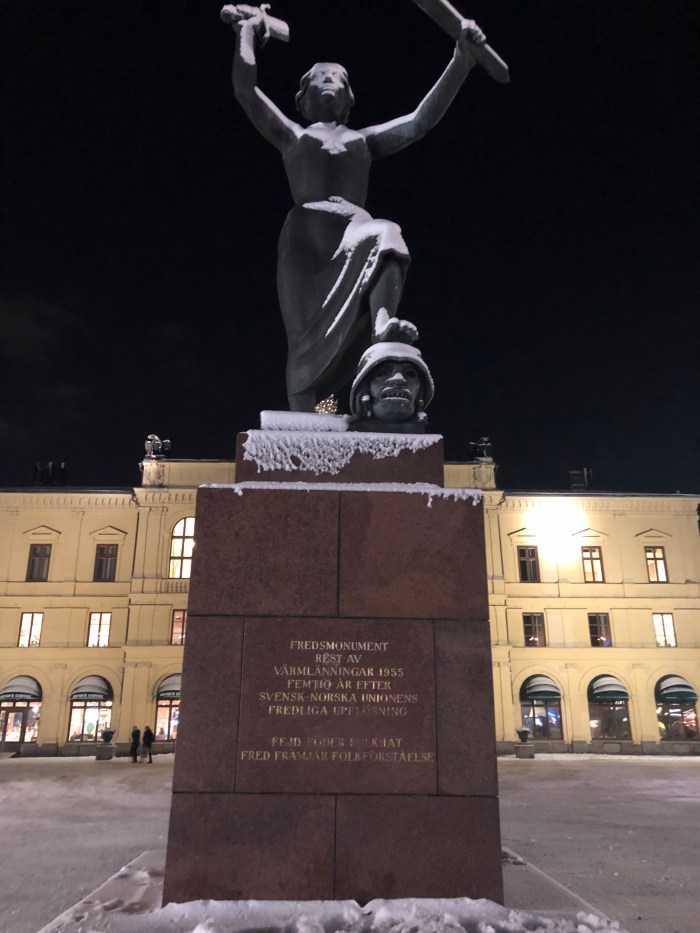
On the main square in the western Swedish town of Karlstad, there is a statue. A striking statue. A significant statue. A statue that was once voted the ugliest statue in the country.

The statue represents a strident woman holding a broken sword, with her left foot placed firmly on the decapitated head of a ghoulish soldier. It’s fairly gruesome. And it certainly has impact. But the message might surprise you.

Raised in 1955, the statue is actually a peace monument which commemorates the dissolution of the union between Sweden and Norway in 1905. Previously, the two countries were unified under the same monarch, and their separation could have led to bitter and bloody conflicts but it didn’t. It was carried out peacefully and paved the way for long-term cooperation between the two neighboring nations.

The statue has many nicknames amongst the town’s locals – ‘the old bitch with the wash paddle”, ”horror woman’ and ‘monument of horrors’.

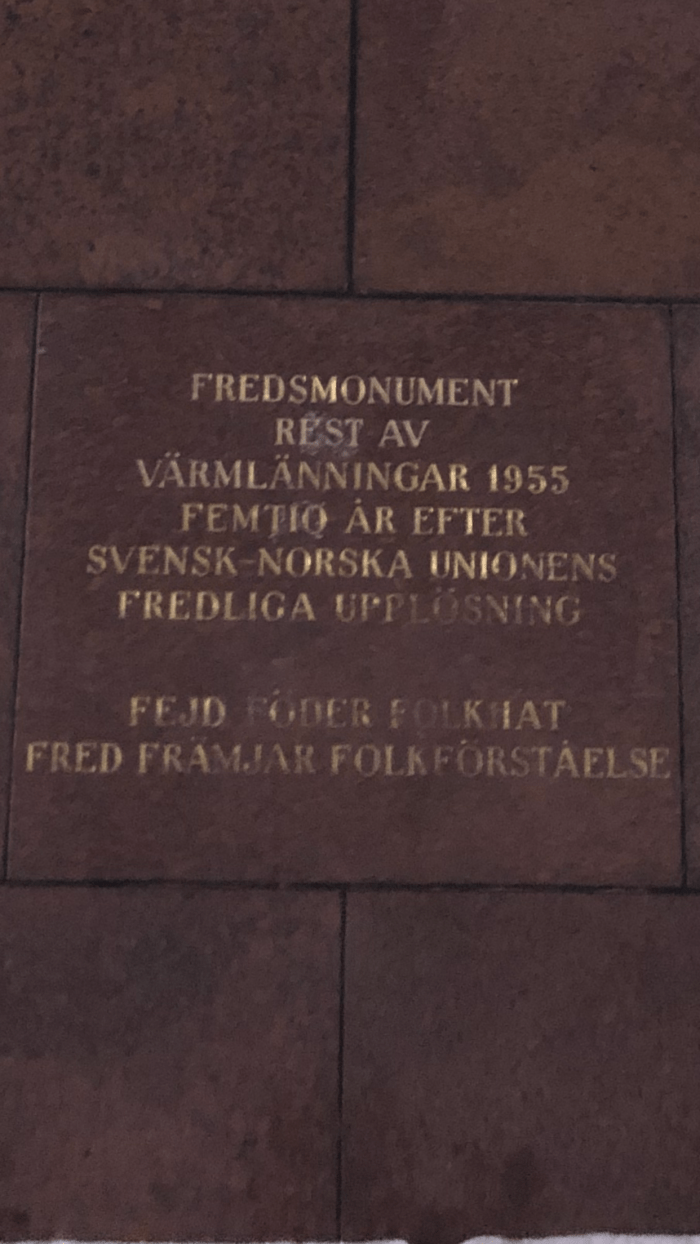
Even if you find the statue unnerving, there’s no denying that it’s inscription is poignant. Using clever Swedish alliteration, the message reads:

Feuds feed folk hatred, peace promotes people’s understanding”

If you’re ever in the area, the monument is worth a look. She is a powerful representation of a significant moment in the history of Sweden and of Scandinavia.

50 Swedish words for snow

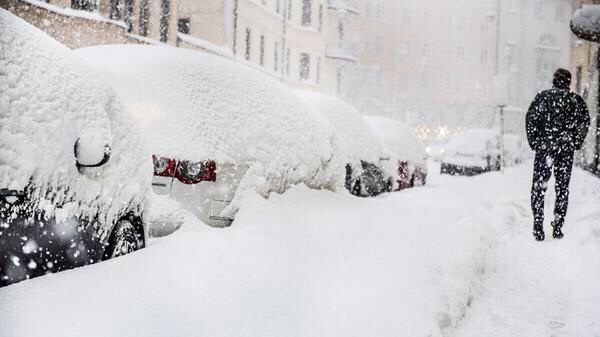
Last year, I published this list of words for snow and I thought since the snow has arrived in most of Sweden, it’s worth sharing the list again.

Not surprisingly when living in a country where it snows a lot, people start to see differences and nuances in the type of snow, whereas in English the word might just be an unsatisfactory ‘snow’. The Swedish language makes it easy to join words together to describe these nuances.

Here is a list of 50 Swedish words related to snow.

1) Blötsnö – wet, slushy snow
2) Drivsnö – snow that is blown into troublesome snow drifts
3) Aprilsnö – snow in April, according to suspicion signifies plenty of food for the coming season
4) Hårdsnö – compacted hard snow
5) Konstsnö – artificial snow
6) Kramsnö – squeezy snow, perfect for making snowballs
7) Julesnö – snow at Christmas
8) Klabbsnö – wet, warm snow for building snowmen
9) Kolsyresnö – frozen carbondioxide
10) Kornsnö – small white snow breadcrumbs
11) Lappvante – thick, falling snow
12) Lössnö – snow that can loosen and be dangerous
13) Majsnö – surprising and unwelcome snow in May
14) Modd – snow that has partly melted due to salt
15) Natursnö – real snow (as opposed to artificial)
16) Nysnö – fresh snow, crisp and white
17) Pudersnö – powder snow
18) Rekordsnö – an unusual amount of snow, breaking previous snow records
19) Slask – slushy snow mixed with rain and dirt on the ground
20) Snö – snow
21) Snöblandat regn – snow mixed with rain
22) Muohta – the Sami word for snow (it is said the Sami actually have 200 words for snow!)
23) Snörök – faint particles of snow that look like smoke
24) Yrsnö – snow being whipped around by the wind in all directions
25) Åsksnö – snow that pours down during a thunder storm

26) Snökanon – a sudden blast of snow that suddenly hits a place, and feels like snow has been dumped on you

27) Jungfrusnö – virgin snow

28) Snösmocka – a huge amount of snow

29) Snötäcke – snow on the ground

30) Sjösnö – snow over the sea that can roll in over land

31) Snöfall – snow in the air

32) Flingsnö – snow with larger crystals

33) Skarsnö – a crispy surface on a blanket of snow

34) Packsnö – thickly packed snow

35) Pärlsnö – snow like small pearls that hurts when it hits your face

36) Snöglopp – wet snow mixed with rain

37) Spårsnö – snow that allows footprints to be formed

38) Fjöcksnö – a light, fluffy snow

39) Flister – snow the consistency of salt that stings the face when it falls

40) Flaksnö – a sheet of snow

41) Upplega – snow on the upper side of a tree branch

42) Firn – liquid-like snow that can initiate an avalanche

43) Fimmel – sandy snow that falls at low temperatures

44) Själja – a thin layer of ice on top of the snow that resembles glass

45) Knarrsnö – crispy snow that creaks when you walk on it

46) Snöfyk – wet snow

47) Torrsnö – dry snow

48) Månsilver – a poetic word to describe the dusting of snow

49) Snöis – snow on cold water that forms an icy solid surface

50) Stöp – a mixture of snow and ice resembling porridge that forms on top of cold water

So, let it snow! Let it snow! Let it snow!