The only 2 Swedes to win acting Oscars

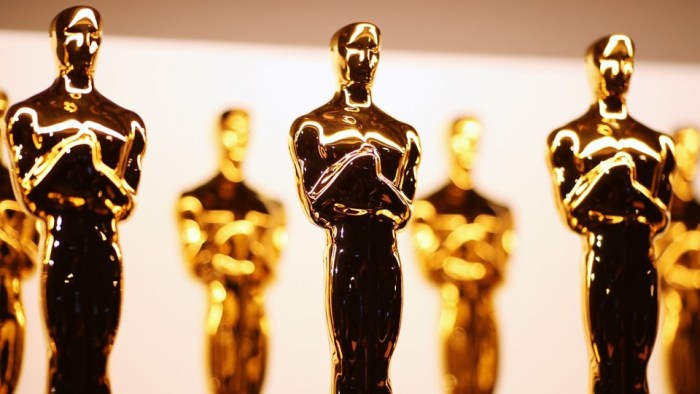
On Sunday, it’s the annual Oscar’s gala and this year there are 2 Swedish nominations included. Over the Oscar’s 91-year history, 14 Swedes have taken home a statue. Many of these academy awards are for lighting, costumes, photography and direction. Not much for acting. In fact, despite Sweden’s excellent acting corps, only 2 people have won an Oscar for their acting talents.

Do you know who they are?

Below, you will find their names.

1944, Ingrid Bergman for Best Lead Actress in ‘Gaslight’ and in 1956 for ‘Anastasia’. She also won for Best Supporting Actress in ‘Murder on the Orient Express’ in 1974

2016, Alicia Vikander for Best Supporting Actress in ‘The Danish Girl’

Sweden has also had a few actors who were nominated and didn’t win:

1972, Ann-Margret for Best Supporting Actress in ‘Carnal Knowledge’ and Best Lead Actress for ‘Tommy’ in 1976

1989, Max von Sydow för Best Lead Actor in ‘Pelle the Conquerer’ and in 2012 for Best Supporting Actor in ‘Extremely Loud and Incredibly Close’

1990, Lena Olin for Best Supporting Actress in ‘Enemies: a love story’

Swedish legend Greta Garbo never actually won an Oscar, although she was nominated 4 times. In 1955, she was given an honorary Oscar however.

This year, Sweden has no acting nominees. So we’ll have keep our fingers crossed for the categories best make-up and best music instead.

6 reasons why Swedes take Eurovision so seriously

We are in the middle of the Eurovision qualification rounds (known colloquially as ‘Mello’) in Sweden – three weeks in, three weeks to go. This extended selection period occupies every Saturday night for 6 weeks, and results in the song and artist who will represent the country in the big final in Israel.

People gather up and down the country to have ‘Mello’ parties. Social media and traditional media are full of comments about the bad quality of the contestants this year (and every year). People are raging that the wrong songs are voted to move on in the league table.

Nobody, and I mean nobody takes their Eurovision (ESC) more seriously than the Swedes.

But why is that? Here are a few theories:

Brightening up the winter blues. Mello comes during the deepest, darkest, dreariest time of the year. The glittery colourfulness of Mello brightens up February and early March, when nothing much else happens.

Reliving the glory days. ABBA’s legacy is a constant reminder to Swedes that they once reached long-lasting global fame and it all started at ESC. Every year is a hunt for the next big thing, when the international light will shine once more on this little country in the north.

Organized ‘religion‘. Sweden is, relatively speaking, not a religious country. So the human need for organising ourselves into a collective manifests itself in other ways. Hockey and football become a form of organized religion. And ‘Mello’ is another variation on the same theme. Ask Swedes why they like Mello and many use the word ‘folk fest’ – a ‘national party for the people.’

Swedish traditions. Sweden is a country that is good at holding on to traditions – crayfish parties, snaps songs, semla cream buns, Easter trees – to name just a few. Therefore it is easy for this society to absorb, and structure, new traditions. Halloween is now a thing here. So is Valentine’s Day. So Mello becomes another tradition and slots nicely into the national calendar.

Vicarious extrovertism. Swedes are not generally known for being outgoing and extroverted, although there are of course exceptions. This means that Mello becomes so attractive, as it’s an opportunity for Swedes to live vicariously through the ‘crazy’ performers who dance around in sequins and funny outfits. It’s also an opportunity to push your own boundaries and wear a glittery hat or a pink feather boa. And all under organised, acceptable conditions.

Love of music. Because some Swedes actually like the music.

Which theory is most accurate do you think? Do you have another theory?

Yum Yum Sweden!

Working with many non-Swedes, I often hear the complaint that Swedish food is bland, boring and tasteless. But the truth is that Sweden prides itself on its good food and its number of top-notch, often experimental, restaurants.

The Scandinavian kitchen is full of mouthwatering delights such as warm-smoked salmon, creamed dill potatoes and shellfish by the bucket load. No surprise then that there’s a lot of expressions in the Swedish language for food being delish. When we in English might say ‘yum, yum’ or ‘scrummy’, the Swedes also have a plethora of words to use. Here are a few:

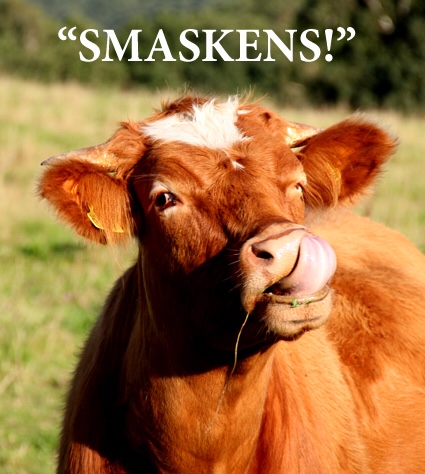
  • Smaskens
  • Smaskig
  • Läcker
  • Mumsig
  • Namnam
  • Gött
  • Smarrig
  • Delikat
  • Skitgott
  • Utsökt

So many foreigners might not think that Swedish food is great – but it’s clear that the Swedes do!

Let me know what Swedish food you think is ‘smarrig’!

Follow me on Instagram #watchingtheswedes

National day of the Sami – Sweden’s indigenous people

Today is theNational Day of Sweden’s indigenous people – the Sami. So I thought I would share this blog again that I posted last year.

Did you know that Sweden has an indigenous people? I know, isn’t that cool?!

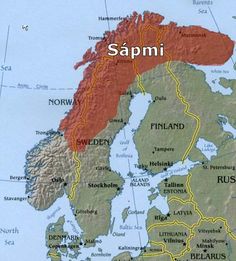
Just like Australia has the Aborigine and China has the Pamiri – Sweden has the Sami. For about 5000 years, the Sami people have lived way up in the arctic north of Sweden in the homeland they call ‘Sapmi’. Today Sapmi actually covers not only Sweden, but also Norway, Finland and Russia. Historically, the Sami were referred to as Lapps, but today this is deemed a derogatory term.

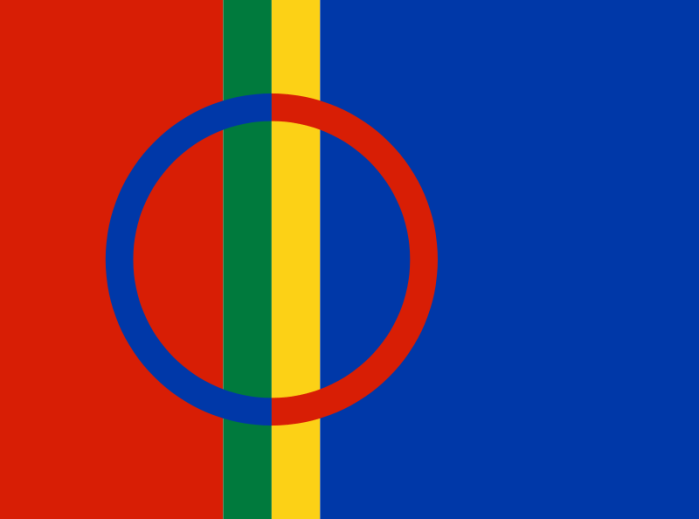
Today, February 6th, is the National Day of the Sami. Today, the Sami flag should be flown and the Sami national anthem is sung in the local Sami language.  The first time this day was celebrated was in 1993 in Jokkmokk, Sweden.

The Sami are the only indigenous people in Scandinavia that are recognised and protected by international convention. The United Nations estimates that there are over 370 million indigenous people living in over 70 countries worldwide. This is roughly 6% of the global population.

Today, around 10% of the Sami population of approximately 70,000 work within the traditional work of reindeer herding. Most of the rest of the indigenous Sami population is urbanised. Like many indigenous people around the world, the Sami have also been treated very badly by the colonising inhabitants of their country. Scandinavia has a legacy of law and assimilation that denied Sami their rights, and an state-sanctioned history of the removal of generations of children for placement in boarding schools and missions. A recent film called ‘Sameblod’ depicted this shameful era of Swedish history.

It took until 1989 for Sweden to recognise the ‘Sami nation’. Sami pupils are entitled to be taught in their native language, although a loophole enables this right to be sometimes bypassed. In 1998, Sweden apologized for their wrongs against the Sami. To make up for past suppression, the authorities of Norway, Sweden and Finland now make an effort to build up Sami cultural institutions and promote Sami culture and language.

However, it is far from rosy in the arctic north. Conflict over land rights, herding rights, exploitation rights are still raging on across Sapmi. Today, the Sami are experiencing cultural and environmental threats, including unwelcome oil exploration, mining, dam building, climate change, military bombing ranges, and exploitative tourism.

Apart from through activism, it is in the Sami parliaments that the main conflicts are debated.  There are three, unconnected Sami parliaments spanning the region – Sweden founded in 1993, Finland in 1973 and Norway in 1989. Russia has not recognized the Sami as a minority and, therefore there is no official Sami parliament (an unrecognised one exists). These democratic parliaments stand up for Sami heritage but have very weak political influence.

Like many nations around the world, Sweden and their neighbours have to balance the ghost of a shameful past with the conflicts of the present and the hope of the future. Without doubt, discrimination against the Sami people still exists.

This is why today, February 6th, is so important as a day of celebration and recognition but also as a day of atonement.
The most popular names in Sweden

Oliver was the most popular name for male newborns in the UK last year. And Olivia was the most popular female name. In London, it was Amelia and Mohammed and in Ireland it was Jack and Emily.

So what about Sweden in 2018? Just-released information from Sweden’s office of statistics give us the following answer.

The most popular top 5 names for male newborns were:

  1. William
  2. Liam
  3. Noah
  4. Lucas
  5. Oliver

In fact, there are 44010 males in Sweden with the name William. And 58 females!

And for newborn girls it was:

  1. Alice
  2. Maja
  3. Lilly
  4. Ella
  5. Wilma

Interestingly, there are 38957 females called Alice in Sweden. And 22 men!

The names Ture, Lias and Amir are the fastest climbing names in the list of boys’ names. And for girls, Hailey och Bianca. The names Sebastian, Neo, Simon, Emelie, Ellinor, Idun and Noomi have left the top 20 list.

If you want to see how many people have your name in Sweden, go to svenskanamn.alltforfaldrar.se

Remember to follow me on Instagram! watchingtheswedes

Ice, ice baby: 15 Swedish words for ice

Currently in the depths of winter, the Swedish landscape is covered in snow and ice.

I previously published a blog about 50 Swedish words for snow. So I became curious about how many words are there to describe ice.

I was surprised to find an enormous number of words. I guess it’s not so surprising for a Nordic country with so many lakes, rivers and waterways that there are many words to describe the different stages and shapes of frozen water.

Here are 15 of the words I found: 15 words for ice.

  1. Is – the standard word for ice
  2. Blankis – ice that shines like a mirror
  3. Nyis – ice that’s only a couple of centimeters thick and transparent
  4. Fast is – thick ice, often not transparent
  5. Issörja – when the air is cold but the water is moving, a kind of ice slop forms
  6. Tallrikis – plates of ice that form when above mentioned ice slop clusters together
  7. Pannkaksis- similar to tallriksis but formed when water with different amount of salt content meet each other
  8. Svallis – the kind of yellowish ice that freezes on mountainsides or rocky walls
  9. Drivis – large pieces of ice that float on the water and are driven by wind
  10. Isflak – a large, loose sheet of ice floating on water
  11. Rutten is – literally ‘rotten ice’, the first stage of thawing ice
  12. Skruvis – when thin ice layers itself on top of each other, like filo pastry.
  13. Istapp – icicle
  14. Svartis – black ice on the ground
  15. Glattis – an evenly compact layer of ice on the ground

What other words for ice do you know?

Follow me on Instagram! Watchingtheswedes!

Swedish expressions: ‘Drunk as a jackdaw’


kaja-2

In English, we have vivid sayings such as ‘pissed as a fart’, ‘drunk as a skunk’ and ‘pissed as a newt’. In Sweden, one of the expressions to describe an intoxicated person is ‘drunk as a jackdaw‘ (Swedish: full som en alika). It might seem odd, but there is an explanation.

The most popular theory has to do with the small breweries that populated the Swedish countryside in the past. At the end of the brewing process, the brewers would through the unusable remnants out into the yard. This meant that there were attractive piles of sweet mush distributed all over the countryside. The local jackdaws were rather partial to this mashy, mushy goo, and they would swoop down to eat it. While getting food in themselves, they also imbibed alcohol, and after a while, they would stagger away across the yard in blissed inebriation. The local population of course loved this, and coined the phrase ‘drunk as an jackdaw’.

In Swedish, there is another expression for being a drunk, this time in a noun form – ‘fyllekaja’ – which also means ‘drunk jackdaw’. The word ‘kaja’ is the word for jackdaw in most of Sweden. ‘Alika’ is a regional word used mostly in the southern counties.

A young Swedish hero who puts us to shame

Unless you’ve been living under a rock for the last decade, the imminent threat of climate change can not have escaped you. Many people the world over are concerned, if not terrified, about the future of our planet. The word ‘klimatångest‘ has popped up in the Swedish language – climate anxiety – to reflect the growing stress people are feeling as the weather changes and the earth burns.

In contexts of concern, unlikely heroes often rise up, and many of them are women. Women who sit in the white section of the bus, women who attack neo nazis with their handbags, women who protest school shootings in USA, women who bite back against haters and mysogynists on social media. Women who take no shit.

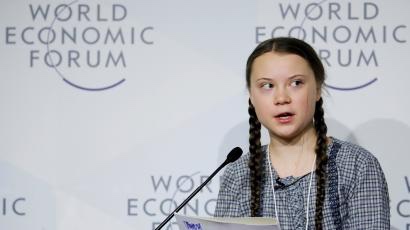
Such a young woman is the Swedish climate activist Greta Thunberg. At 16 years old, she has made headlines for her bravery, her directness and the fact that she calls us out – the older generations who are failing her generation. Currently in the snow topped village of Davos, she is attending the World Economic Forum. She attacked, in a speech, the wealthy who continue to earn money at the expense of the earth’s resources. She criticised them for flying in on private jets instead of travelling the train, as she did, for 30 hours. It was like seeing David defeat Goliath. Listening to her, the powerful audience gave a weak, unconvinced round of applause. It’s clearly uncomfortable to be called out by a 16 year old Swede.

What’s amazing about Greta Thunberg is her conviction and her single-mindedness. She puts it down to her Aspergers diagnosis saying she can focus on what’s important instead of focusing on the ‘social game that seems to be so important for so many people’.

It’s wonderful to watch her, and listen to her as she continues to tear a hole in the establishment with her wit and uncompromising fierceness. And it’s a reminder that we don’t need to look to our elders to find inspiration. It can certainly be found by looking at the generations behind us. Tomorrow’s heroes are there. They want change and they have a sense of urgency.

Greta Thunberg wants us to act as if the house is on fire.

Because, in her words, the house is on fire.

Top 10 English words borrowed from Swedish

Yesterday I wrote about the word quisling, meaning traitor, which is used in English but is actually borrowed from Norwegian. This made me curious about what English words are borrowed from the Swedish language.

After a little research, here are the top 10 (in alphabetical order):

  • 1. Angstrom, the measurement, after the Swedish scientist Anders Jonas Ångström
  • 2. Celcius – the international measure of temperatures – is named after Swedish scientist Anders Celcius.
  • 3. Gauntlet (as in ‘run the gauntlet’) – from the Swedish word gatlopp
  • 4. Gravlax, marinated salmon, from the Swedish gravad lax
  • 5. Moped – Swedish shortening of trampcykel med motor och pedaler (“engined bike with motor and pedals”)
  • 6. Ombudsman – a person who acts as a trusted intermediary between an organization and some internal or external constituency.
  • 7. Orienteering – from orientering
  • 8. Rutabaga – the root vegetable, (from Swedish dialectal word rotabagge)
  • 9. Smorgasbord – from the Swedish smörgåsbord, (literally “sandwich table”), which in Swedish either refers to a buffet with very specific types of food, or is used as a metaphor
  • 10. Tungsten, literally “heavy stone”