6 reasons why Swedes take Eurovision so seriously

We are in the middle of the Eurovision qualification rounds (known colloquially as ‘Mello’) in Sweden – three weeks in, three weeks to go. This extended selection period occupies every Saturday night for 6 weeks, and results in the song and artist who will represent the country in the big final in Israel.

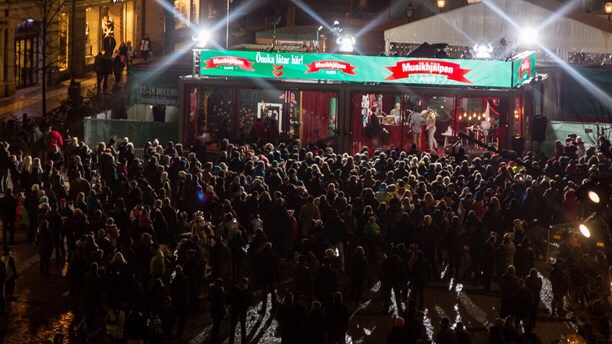
People gather up and down the country to have ‘Mello’ parties. Social media and traditional media are full of comments about the bad quality of the contestants this year (and every year). People are raging that the wrong songs are voted to move on in the league table.

Nobody, and I mean nobody takes their Eurovision (ESC) more seriously than the Swedes.

But why is that? Here are a few theories:

Brightening up the winter blues. Mello comes during the deepest, darkest, dreariest time of the year. The glittery colourfulness of Mello brightens up February and early March, when nothing much else happens.

Reliving the glory days. ABBA’s legacy is a constant reminder to Swedes that they once reached long-lasting global fame and it all started at ESC. Every year is a hunt for the next big thing, when the international light will shine once more on this little country in the north.

Organized ‘religion‘. Sweden is, relatively speaking, not a religious country. So the human need for organising ourselves into a collective manifests itself in other ways. Hockey and football become a form of organized religion. And ‘Mello’ is another variation on the same theme. Ask Swedes why they like Mello and many use the word ‘folk fest’ – a ‘national party for the people.’

Swedish traditions. Sweden is a country that is good at holding on to traditions – crayfish parties, snaps songs, semla cream buns, Easter trees – to name just a few. Therefore it is easy for this society to absorb, and structure, new traditions. Halloween is now a thing here. So is Valentine’s Day. So Mello becomes another tradition and slots nicely into the national calendar.

Vicarious extrovertism. Swedes are not generally known for being outgoing and extroverted, although there are of course exceptions. This means that Mello becomes so attractive, as it’s an opportunity for Swedes to live vicariously through the ‘crazy’ performers who dance around in sequins and funny outfits. It’s also an opportunity to push your own boundaries and wear a glittery hat or a pink feather boa. And all under organised, acceptable conditions.

Love of music. Because some Swedes actually like the music.

Which theory is most accurate do you think? Do you have another theory?
Sweden’s Greasy New Year’s Day

January 1st is the day in Sweden when most pizzas are sold. Whether laziness, apathy or hangover cravings lie behind it, a pizza is ordered every second on New Year’s Day.

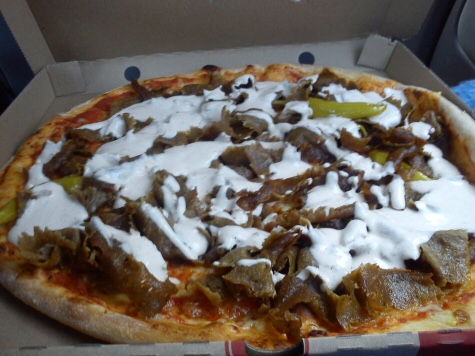
Fast food pizza company Onlinepizza has released statistics on the most sold pizzas in Sweden during 2018. Apart from personally designed toppings, the winner at almost 20% is the Kebab pizza – a dubious Swedish classic. Consisting of cheese, tomato and sliced kebab meat, the popular pizza is a real fat bomb. You can see it pictured above.

In second place is the Vesuvio with smoked ham, in third place comes the pineapple-strewn Hawaii pizza. Fourth is the hammy Capricciosa and fifth is the humble Margarita.

The top 20 list also includes the gross-sounding Gyros pizza, consisting of Greek giros meat and tsatsiki. There’s also a frightful pizza with taco sauce, ham and jalapeños called an Azteca.

Are you eating a pizza today? If so, what type have you ordered?

Swedes and their alcohol – a Swedish odyssey?

When visiting Sweden, people are often struck by the system for purchasing alcohol. In bars and restaurants everything goes as expected but if you want to buy a bottle of, for example, wine or whisky then this is done in the state-owned alcohol shops known as Systembolaget. These shops have restricted opening hours closing at 6 or 7pm on weekdays and 2 or 3pm on Saturdays. On Sundays and Public Holidays they are closed.

Sweden’s alcohol monopoly started in the 1800’s and the national company Systembolaget was formed in 1955.

Systembolaget has a retail network of circa 426 stores, around 25 in Stockholm. The company has an interesting mandate from the Swedish state – to help limit the medical and social harm caused by alcohol and thereby improve public health. This explains why access to alcohol is restricted through the number of stores, opening hours and retail rules, and why the corporation is aims not to maximise its profit. In other words, the alcohol monopoly is highly socio-political -its foremost aim is to stop people consuming alcohol, or at least to consume it responsibly.

Although strange for many visitors, it’s a concept that seems to work – Swedes consume on average 9.1 litres of pure alcohol per person annually, less than many other countries.

However, it is at times like Christmas that the restricted opening times become more obvious. This year, the shops are closed for 4 days from yesterday at 3pm. Up and down the country, long queues were reported. I saw this with my own eyes, and had a weird recollection of old pictures from the Second World War or Soviet Russia. People seemed to be in a good mood while they waited, though it meant waiting for almost an hour outside some branches.

I guess it’s the price you pay for lack of forward planning. Anyway, I hope everybody got what they wanted and that they have a boozy, woozy, snoozy Christmas worth queuing for.

Swedish ways to die #1 In the lift

There is one thing that unites us all. We all die. That said, there are many ways in which we can shuffle off this mortal coil. Just like our lives are unique, so probably are our deaths.

Living in Sweden, I am often struck by the many ways one can die. Perhaps not specific to this country, but at least very cultural.

Here’s the first way: ‘the careless accident in the lift’ – a tragic way to pop your clogs.

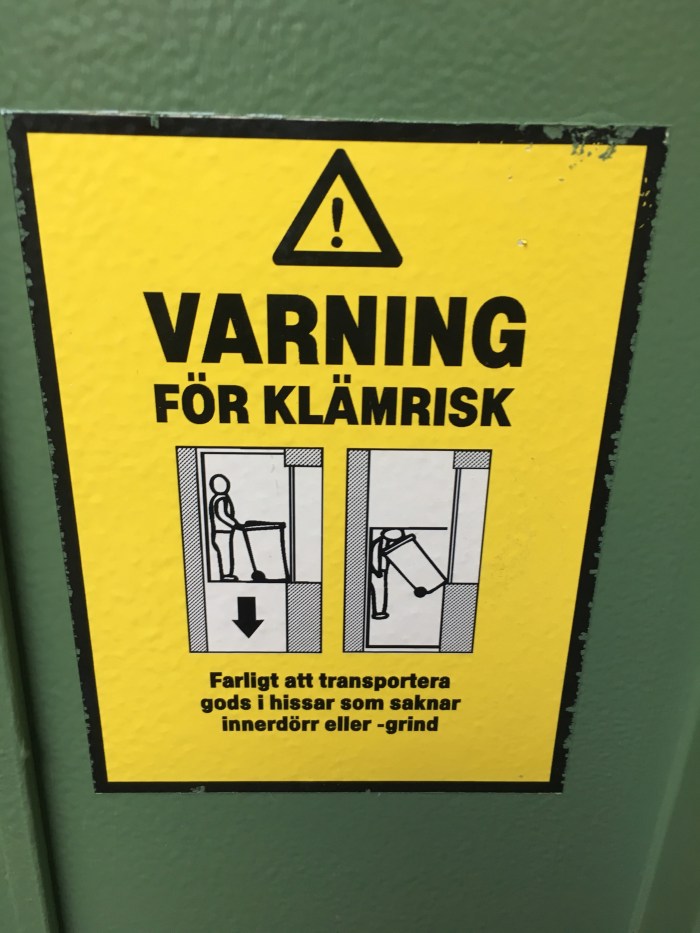
Many Swedish lifts don’t have inner doors. As the lift descends, the floors slide by visibly. If you have a large article with you, for example, a wheely bin, it can fasten on the edge of the lift. The bin gets stuck, the lift keeps descending and voila, you are crushed to death or decapitated. A very Swedish way to die.

Below, you see a sign on the door to the lift in my apartment building. It says ‘warning – risk of crushing. It is dangerous to transport goods in lifts without inner doors or gates.’

Sweden Pride

This year EuroPride comes to Sweden, being held in double cities Stockholm and Gothenburg. The whole concept of LGBT Pride has taken strong root in Sweden, and many towns up and down the country hold their own celebration. For example, today is Springpride in the midland city of Eskilstuna.

Currently there are 73 Pride festivals in Sweden during the year. From Arctic Pride way up in the north to Malmö Pride in the south, it is possible to celebrate throughout the year.

Swedes seem to have embraced the concept of Pride with open arms. There is, of course, a commercial benefit but the main reason seems to be that LGBT Pride resonates well with the societal Swedish values of equality, tolerance and acceptance. However, like everything, it has its opponents. Right wing groups occasionally organize counter demonstrations or, as in Eskilstuna yesterday, decide to put up homophobic, anti-Pride propaganda. Thankfully, these groups are small and as long as the majority of Swedes continue to stand up for Pride, they have little impact.

If you’d like to know where a Pride is near you, go to http://www.svenskapride.se which collects all the National events in one place.

Sweden’s history of LGBT rights is a comparatively progressive story. Changes didn’t happen automatically however. Thanks to the hard work of campaigners, lobbyists, and politicians, society can enjoy one of the most egalitarian legislations in the world. According to wiki:

‘ Same-sex sexual activity was legalized in 1944 and the age of consent was equalized in 1972. Homosexuality was declassified as a mental illness in 1979. Sweden also became the first country in the world to allow transgender persons to change their legal gender post-surgery in 1972 whilst transvestism was declassified as an illness. Transgenderism was declassified as a mental illness in 2008 and legislation allowing gender change legally without hormone replacement therapy and sex reassignment surgery was passed in 2013. After allowing same-sex couples to register for partnership in 1995, Sweden became the seventh country in the world to legalize same-sex marriage countrywide in 2009. Discrimination on the basis of sexual orientation and gender identity and expression has been banned since 1987. Also, since 2003, gay and lesbian couples can adopt children, and lesbian couples have had equal access to IVF and assisted insemination since 2005. Sweden has been recognized as one of the most socially liberal countries in Europe and in the world, with recent polls indicating that a large majority of Swedes support LGBT rights and same-sex marriage.’

Sweden’s Easter tree – wiping, witching or whipping?

In Sweden, they don’t only have Christmas trees, they also have Easter trees.

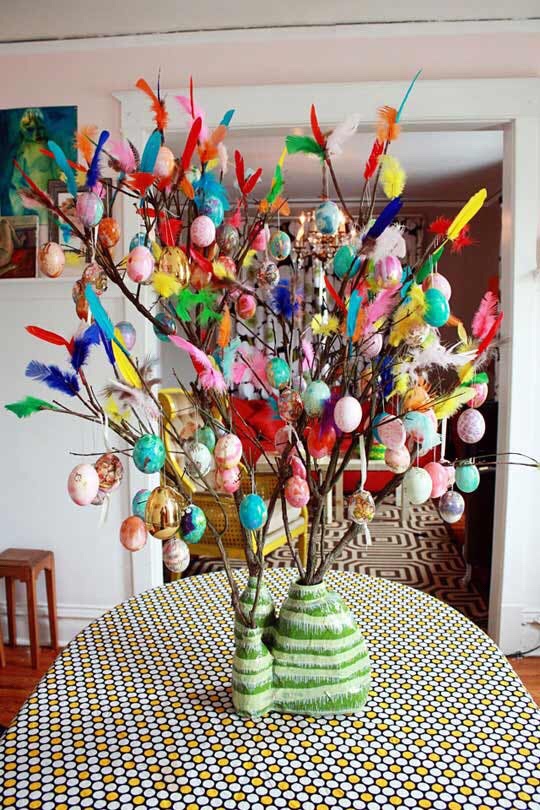
This Easter tree, known as ‘påskris’, is a handful of twigs and sticks (usually birch) installed in a vase with coloured feathers attached to the ends. People often hang painted eggs and other decorations such as chickens in their installation. The Easter tree can be seen all over the country at this time of year: outside shop entrances, in peoples’ living rooms, in gardens, in the middle of roundabouts.

The Easter tree is an interesting cultural phenomena – but where does it originate?

Wiping: Well, some Swedes say that it symbolises the wiping away of the winter. The twigs represent a broom and the feathers get caught in the broom as we sweep.

Witching: Others say that it represents witchcraft. The twigs represent a witch’s broomstick and the feathers indicate flight. This could also be why Swedish kids dress up as witches at Easter and do a kind of ‘trick or treating’ for Easter eggs.

Whipping: But, apparently the Easter tree has a completely different origin and symbolism. Swedish people, in the 1600’s, used to take twigs and sticks and beat each other with them on Good Friday to commemorate the suffering of Jesus. In the 1800’s and 1900’s, they started to be decorated and became a symbolic decoration for Easter.

So, wiping, witching or whipping. Who would have thought the colourful Easter tree would have such a colourful history?

The worst day in Sweden

Tomorrow, the 24th January, could arguably be the worst day of the year in Sweden. Dark, miserable, cold and poor.

The month of January is notoriously an impoverished month, following the financial excesses of December. Many people struggle through January with their evenings in front of the telly, their long walks at the weekends and their packed lunches at the office. And as the 24th arrives, this deprivation reaches its pinnacle.

You see, most Swedes are paid on the 25th of the month. New, fresh crowns rattle into bank accounts up and down the country. Pubs and restaurants fill up and Ikea is like rush hour in Piccadilly Circus as the consumerism treadmill grinds into action.

But not tomorrow. Tomorrow, the 24th January, sucks. And as we put our leftovers into the fridge to be eaten for lunch, we can be happy that this misery is soon over. On Thursday, we can drink a latte, buy an expensive lunchtime sour dough toast, and knock back a few gin and tonics after work. And maybe, just maybe, be a little less provoked by the sunny holiday pictures on social media.

So hold on, there is light at the end of this long, dark tunnel.

Sweden: the day before New Year’s Eve

New Years Eve is tomorrow – a Sunday. That means that it is not possible to buy alcohol as the shops controlled by the state-run alcohol monopoly are closed. If you want wine or spirits to toast in 2018, today is the last day to buy it. On a Sunday – no way! All over the country, Swedes thronged to buy their alcohol which resulted in queues and serious congestion. Here is a picture put up on Facebook today. A normal queue for the day I’m guessing – this one in Bromma in Stockholm.

What would you have done? Stayed in line or stormed off in a new year’s huff?!

Photo: Kim Nilsson

A Swedish Christmas tradition since 1960

In Sweden, since 1960, something has happened every day in the run up to Christmas. A tv series called ‘Julkalendern’ – Christmas calendar- is broadcast early in the mornings from Dec 1 to Dec 24. Sent in 15 minute episodes, it is a different story each year and often stars some of Sweden’s leading actors and comedians. It is very popular amongst children, and is a cozy seasonal tradition. After each episode, viewers can open the relevant door in their advent calendar, which accompanies the program. The stories can vary widely, but most usually there is a Christmas / winter theme and a moral message suited to the time of year.

‘Julkalendern’ sits deep in the souls and psyche of many Swedes. Most cherish fond childhood memories of getting up in the dark to watch an episode before heading off to school. In 1999, a competition was launched to identify the most popular ‘julkalender’ of all time. The winner was a spooky ghost story called ‘the mystery of Greveholm’. Closely behind were ‘Sune’s Christmas’, ‘The old woman who shrunk to the size of a teaspoon’ and ‘Magical times’.

This year, the story is called ‘Hunt for the crystal of time’ and is starring a very popular, recently-deceased Swedish actor as the obligatory evil bad guy. In the series, he plans to stop time the day before Christmas Eve and the only people who can stop him are three children who have to journey to the center of the universe to do so.

It’s all very exciting – what if they fail?! There will be no Christmas ever again!

We’d all better hope they succeed! In just 5 days, we’ll find out!!!!

‘Julkalendern’ can be watched on SvtPlay you’d like to catch up!

Swedish Music Aid

Children are not for sale!

Did you know that every minute, 4 children are sold into the sex industry around the world? An estimated 2,000,000 children are victims of sex trade and many more in human trafficking. These figures are hard to grasp, and even harder to process. Sexual trading of children can involve local boys who are abused by tourists, impoverished girls who are sold as sex slaves to rich families, or children who are ordered like fast food on the internet. The actions of the perpetrators are ruthless and the list of assaults is endless.

But we can do something about it.

‘Children are not for sale’ is the theme of this year’s charitable Music Aid (Musikhjälpen) project in Sweden. For the tenth year in a row, three radio hosts are locked into a glass cube for 6 days on a square in a town somewhere in Sweden. This year the event takes places in the northern city of Umeå, and the hosts broadcast music and tv non-stop day and night to gather donations for their good cause. To raise money one can, amongst other things, request a song, carry out a fund-raising action and bid in the various auctions that take place. This is Swedish solidarity at its very best.

Today, 17 Dec, is their final day of incarceration – the hosts are let out of their glass cube this evening and the total amount that has been raised will be announced. The millions of crowns that they gather will be spent on prevention of the child sex trade, protection of at-risk children and rehabilitation of children who have been victims.

It is still not too late for you to make a donation. Download the Musikhjälpen app (mh2017) and make a contribution! You can also go to http://www.musikhjalpen.se or find the same on Facebook. Every donation counts!

Your contribution can save a child from a terrible, terrible fate.

Please donate! Please share this blog with your friends and encourage them to do the same.