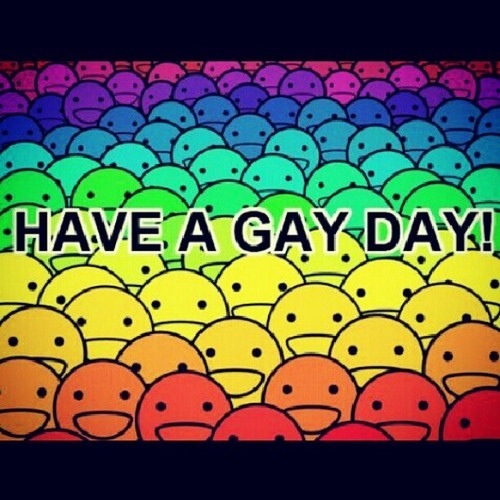
Have a Gay National Day!

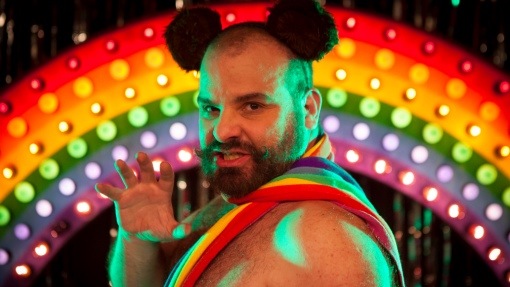
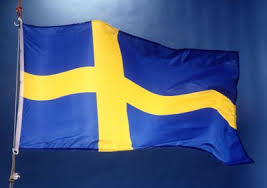
Tomorrow 6 June is Sweden’s National Day and there are many celebrations going on around the country to celebrate the nation. This is the day Swede’s gather to celebrate their Sweden, and they do it in a variety of ways. With the rise of extreme right wing parties in the EU and in Sweden, a National Day might seem dubious to some people. However, If you want to avoid the ‘traditional’ celebrations, one suggestion is that you make your way to Boulevard Teater on Götgatan on Södermalm in Stockholm. There, at 7pm, National Day is being celebrated with a twist. A very gay one.Stockholm’s Gay Choir are holding the first of three concerts. The second two concerts are at 3pm and 7pm on Saturday 7 June.

All of the songs have Swedish roots and reflect how the choir sees Sweden, what it means to the HBTQ community and why they love their country. The songs are a mixture of passion, glamour, tragedy, vulnerability and joy. In an environment of increasing intolerance, these songs are needed and Stockholm’s Gay Choir stand up for openness, love and acceptance. Tickets can be bought at www.stockholmsgaykor.se or on www.ticnet.se or the box office at the theatre.

So if you want a different kind of celebration, a modern and diverse perspective – have a Gay National Day!

See you there! 🙂

Please share and spread this blog!

20140605-154535.jpg

20140605-154623.jpg

The sub-culture of the Swedish ‘raggare’

Image

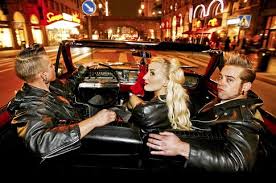
Yesterday afternoon in the centre of the quaint town Norrtälje, the silence was interrupted by the sound of ‘Let’s Twist Again’ blaring out from loud speakers from a car. The car was an old American brand, and had an American flag on the back of it. Two greasy guys sat in the front seats, elbows out of the windows and they cruised around the town centre looking pleased with themselves.  

These guys are called ‘raggare’ in Swedish. This fascinating sub-culture in Sweden is related to the ‘greaser’ culture in the USA and they are known for their love of rockabilly and 1950’s American pop culture. They dress in 50’s clothes, grease their hair back and dig the 50’s sound. Think James Dean. Think Rebel Without A Cause.The ‘raggare’ culture is very much associated with rural small towns and has a working class, somewhat ‘trashy’ feel.

You’d think that would mean these ‘raggare’ are young, like in the picture above, but often they’re not. They are mainly middle aged, paunchy Swedish men who enjoy meeting and showing off their retro American cars.

Nowadays, it seems that most Swedes look at the ‘raggare’ with a mixture of affection, amusement and mild disapproval. However, when the phenomenon began in the 1950’s it caused moral outrage in Sweden. Mainstream Swedes were worried about alcohol, drugs, violence and unprotected sex in the back seats of the cars and many campaigns were started to ban the ‘raggare’ from cruising the streets.

There are many events for ‘raggare’ every year. One well-known one is the long drive around Stockholm, playing loud music and drinking beer to rub rural rebellion in the faces of the city dwellers. Another event is ‘The Power Big Meet’ which happens in the town of Västerås and is actually the world’s largest classic car show.

Begging for clarity – Swedish EU politics

Image

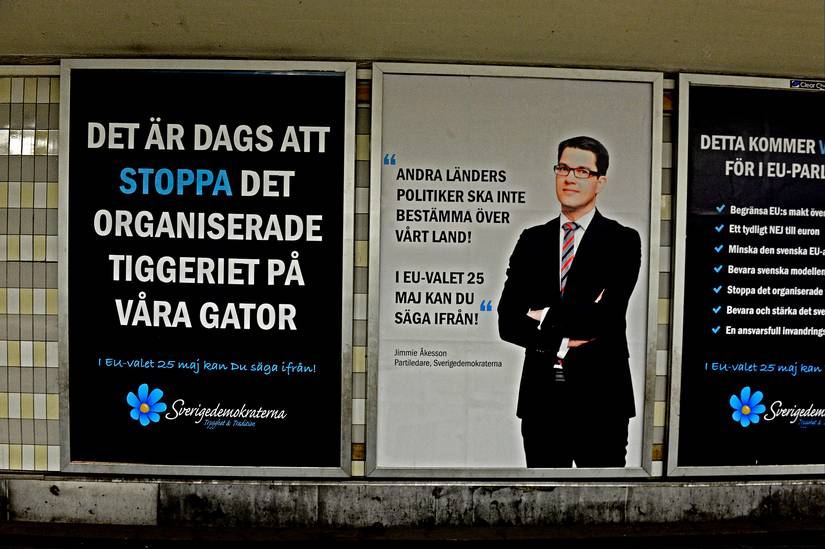
The EU campaigns are in full swing and Sweden’s right wing nationalistic party (SD) has already caused a stir. Huge signs have been put up in the underground and direct mail shots have been dumped in people’s letter boxes describing their policies. One particular policy is against ‘organized begging’.

From their program: ‘In Swedish Towns beggars from other EU countries have become a common sight…..The organized begging must be stopped. Visa requirements should be introduced for countries that abuse freedom of movement within the EU.’

This, and other policies, have caused outrage amongst many. People are calling for action against the SD, people are criticizing them for racist actions, people are burning, returning and even eating up their printed policy material.

But here’s the thing – SD are smart at rhetoric. Very smart. Just like other populistic nationalistic parties throughout history, they are very good at raising issues that ordinary people care about and they are not afraid of stating their position. Agree or not, they are the only party as far as I know to communicate an actionable position about the issue of begging.

And this is where I think the other parties are about to make a costly mistake. Almost everybody I know in Stockholm has an opinion about the influx of street beggars from other EU countries. Everybody is uncomfortable with it and doesn’t like it. It goes against the grain, and many Swedes are really divided as to whether they should ignore the beggars, buy food for them or give them cash. It is a daily challenge for many and a common topic of discussion. It is a modern dilemma, and, dear politicians…this makes it a pressing political issue! Ignoring the issue of begging will not make it go away. Ignoring it does not reduce anxieties nor does it deal with the underlying issues of poverty and inequality in our society.

The way for the Alliance, the Greens, Fi, the Left Party and the Social Democrats to deal with the SD is not only to express outrage and criticism. It is to state clearly, publicly and unequivocally what their party’s actionable policies are in relation to the increased begging on our streets.

Failure to do this is equivalent to pushing many voters straight into the hands of the SD.

Come dine with me, my place 7.30

ImageImage

As a Brit, I sometimes experience differences between myselves and Swedes. But this has never been more apparent than in the two TV cooking shows ‘Come Dine with Me’ in English and its equivalent Swedish program *Halv åtta hos mig’ (My place, 7.30).

Watching these two shows, many differences are obvious. The shows shine a very clear light on the differences between the UK and Sweden. The shows have the same format and are part of the same franchised concept, but cultural differences make them into two totally different programs.

The educationally entertaining Swedish program has the following:

  1. A focus on the food and the interesting recipes
  2. Polite, if somewhat stilted conversation, mostly about the food
  3. A female narrator that is slighty, but not too, sarcastic
  4. Participants who are friendly and polite and seem to have things in common with each other
  5. Participants ‘dressed up’ very nicely for the occasion
  6. Homes that are Nordically cool, clean and well-organized
  7. Carefully selected wine for the dinner, and not too much alcohol so that participants can focus on the food

The hysterical British version has the following:

  1. A focus on getting drunk and arguing with each other, the food is secondary
  2. Confrontational, loud conversation (as people are drunk) about all subjects under the sun, often toilets and sex and very little about the food
  3. A male narrator that is a complete bitch about the contestants and personally attacks the participants’ appearance
  4. Participants who have been cast for the show as they are complete opposites, very opinionated and at each others’ throats from the very first evening
  5. Participants often wearing themed fancy dress, such as prostitutes, Alice in Wonderland, disco, bling, pirates, gangsters. Often lots of short skirts and cleavage.
  6. Homes that are quirky at best, and unhygenic at worst
  7. Wine, wine, wine, vodka, gin, wine, wine, wine

Now what cultural conclusions can we draw about the Swedes and the Brits from these differences?

If you liked this blog, please share it!


The battle of the Swedish chocolate ball

Image

What you choose to call it – racist or politically correct?

The interesting thing about language and culture is that they are constantly in flux. As time goes on, languages develop and as more people travel or migrate, cultural behaviours change. This can be a scary thing for some people who don’t want to see change happening and who cannot embrace the new aspects of their culture. They fiercely hold on to the past, their old cultural identites and behaviours and actively work against the positive influences that a cultural mix brings.

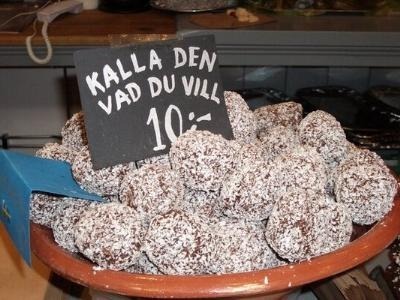
One such example of this is the chocolate ball, a kind of cake that is very popular in Sweden. Previously, in less enlightened times, these chocolate balls were called ‘negerbollar’. This translates as ‘nigger balls’ or ‘negro balls’. Understanding the offensive nature of the name, this chocolate delicacy was officially renamed some years ago. But a certain section of the population, who I am guessing are not black, hold on to their right to call them nigger balls. Yesterday, was so-called ‘negerbollen day’ on Facebook and 21 000 people had signed up their support to say ‘negerboll’. In a counter move, an organization refusing to use this title was set up claiming tomorrow as ‘Chocolate Ball Day’.

In a country with a self-image of tolerance, the chocolate ball has become a symbol of political correctness versus racism.

Sweden is a country with the right to self expression and freedom of speech. But with that right and freedom also comes responsibility. Just because we can say whatever we want doesn’t mean we should. If with our words we can cause harm, or personal offence, I think that we should choose other words. In cultural theory, there is a concept of the in-group and the out-group. One way to look at this is that the in-group is the group in the majority, they set the rules, the create the standards and decide the norms. The out-group is in the minority, and they are very aware of how injust some of the behaviours of the in-group are. The in-Group is usually blissfully ignorant of these things because they don’t have to think about it. But it is the in-Group that has the power to make the change. Chocolate balls are just one example of that. It’s not about being politically correct, it’s about realising that with the language we use, we create gaps in our society. We might not care if we say ‘nigger balls’ but as long as somebody else is offended then we should change our words. The majority of Sweden has done that, but not all.

We are all in in-Groups sometimes and all in Out-Groups sometimes. Maybe it’s our religion that puts us in the out-Group or our sexuality, skin colour, origin, profession, education, place we live, unemployed status, interests and hobbies, political beliefs, choice of clothes. If you reflect for a moment over a social out-group you identify with and then pick a derogatory word for that group. Then put that word in front of the word ‘cake’. How does that feel? Probably not ok.

So let’s think broader than our own perspectives. We have a history of language and culture to be proud over, but that doesn’t mean we can’t change it. A small word can make a huge difference to improving integration and harmony in a society.

So is ‘negerboll’ racist? It depends. If you are aware that it is loaded with multiple meaning, that you might seriously offend others and that you’re using it politically – then yes. It is extremely racist. If you live isolated in a part of the country where you do not know that ‘neger’ is an offensive word to others but you think that it just means chocolate – then no, it’s not racist. But you do need to get out more.

Afton – Swedes’ favourite celebration

20140419-235128.jpg

In the UK, we celebrate ‘Days’ such as Christmas Day & Easter Day. But in Sweden, it is always the Eve ( ‘afton’) that is the big celebration time. There’s Julafton, Påskafton, Valborgsmässoafton, Midsommarafton, nyårsafton, trettondagsafton. Why is this? Anyone know? Cos I’ve always wondered. Surely it can’t just be to get an extra day’s holiday?

Swedish Long Friday, English Good Friday

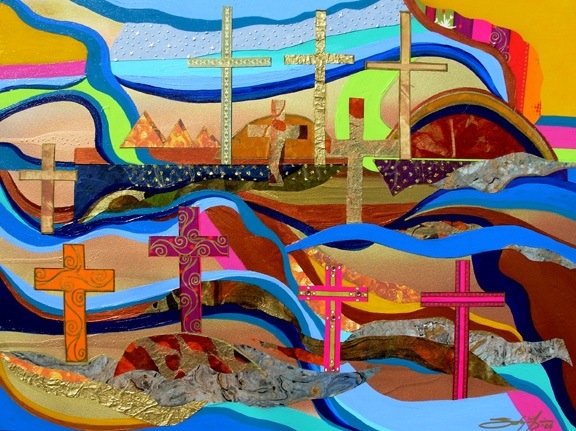
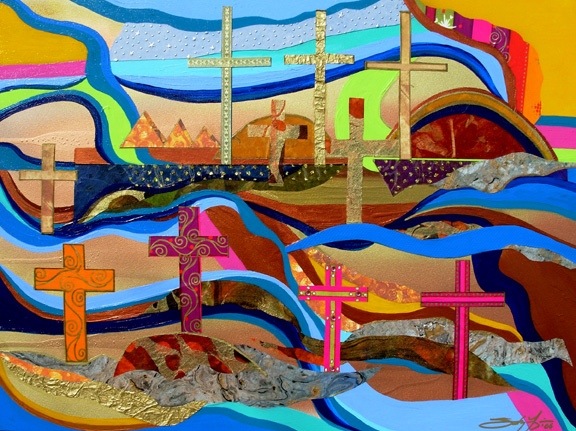
Today is Long Friday in Sweden, Good Friday in English-speaking countries. If you hold to the Christian belief, it’s the day Jesus was crucified on Golgata, outside of Jerusalem.

Why the differences in names for this day? In English-speaking countries, there are differences of opinions as to why it’s called Good Friday. Some people claim Good is an old English word meaning Holy – so Holy Friday. Others say it’s a development of the word God. And other theories say it is good because it is the day Jesus, dying on his cross, was victorious over sin, death and the devil and took upon him all the sins of Mankind. Heavy stuff.

In Sweden, it is called Long Friday as it was said to be a day of mourning for the long day of suffering that Jesus endured will being crucified.

In Sweden, as in the UK, today is a public holiday, people don’t need to dress in black anymore and all the shops and places of entertainment are open. Some people go to church, some paint eggs and decorate Easter trees, some prepare food for Easter Saturday.

I think it’s interesting to know the origins of our traditions. Often these origins are long forgotten. But understanding the history helps put things into perspective as we celebrate in the way we prefer, traditions that have been followed for centuries before and centuries to come.

20140418-082902.jpg

20140418-085041.jpg

Pink Thursday?

20140417-074309.jpg

Today is ‘Skärtorsdag’, or Maundy Thursday in English. In Sweden it’s celebrated by children dressing up as witches. This tradition originates from the belief centuries ago that tonight was the witches night, where witches would make their journey to Blåkulle – the Blue Mountain. It was a night of danger and evil, and Swedish people would bar their doors to their houses and barns and leave outside gifts that would make the witches’ journey easier – food, milk, clothes, broomsticks. Today, Swedes give the children sweets and money.

But why is it called Skärtorsdag’? The word ‘skär’ means ‘pink’. But does that make today Pink Thursday?

Actually not.

The word ‘skär’ has another, pre-Nordic meaning that is more relevant – ‘clean’.

If you know your bible stories, today being the day before Good Friday is the day when Jesus gathered his disciples together for the last supper, introduced communion, and was later betrayed by Judas, and condemned to death on the cross. It is the day evil was said to be released – hence the witches described earlier in this text.

Prior to the last supper, Jesus washed the feet of the disciples. And he washed them clean – a symbolic metaphor for purification and the washing away of sin.

So, today isn’t Pink Thursday – it’s Clean Thursday.

I’d better start mopping the kitchen floor then.

Sweden’s Got Talent

Image

All over the world. the franchised talent shows ‘Country’s got talent’ and ‘X Factor’ unveil contestants with surprising talents. We all know about Paul Potts, Susan Boyle and recently the fantastic Sam Bailey in the UK, who caused a storm when they opened their mouths and sang. This storm was mostly caused by the contradiction of their appearances and their incredible singing capabilities. The same applied to America’s Got Talent’s sweet singing, musical goth by the name of Andrew de Leon.

What about Sweden then? The current series of ‘Talang’ has shown a breadth of skill and inventiveness but I’ve felt, in comparison to the UK and the USA, it’s all a bit amateur. Until last night. Up on the stage walked Glenn Edell,a seemingly shy unemployed father. He stood on the stage, shaking and opened his mouth to sing. And he proved that Sweden’s got talent.

Still, the surprise factor was lacking a little. Compare it to this fantastic 8 year old Norwegian girl Angelina Jordan who recently blew audiences away with her bluesy, jazz voice. She’s so good, you almost suspect foul play.

So, Sweden does got some talent. But does Norway got more?