The battle of the Swedish chocolate ball

Image

What you choose to call it – racist or politically correct?

The interesting thing about language and culture is that they are constantly in flux. As time goes on, languages develop and as more people travel or migrate, cultural behaviours change. This can be a scary thing for some people who don’t want to see change happening and who cannot embrace the new aspects of their culture. They fiercely hold on to the past, their old cultural identites and behaviours and actively work against the positive influences that a cultural mix brings.

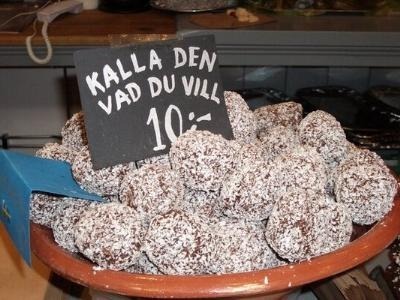
One such example of this is the chocolate ball, a kind of cake that is very popular in Sweden. Previously, in less enlightened times, these chocolate balls were called ‘negerbollar’. This translates as ‘nigger balls’ or ‘negro balls’. Understanding the offensive nature of the name, this chocolate delicacy was officially renamed some years ago. But a certain section of the population, who I am guessing are not black, hold on to their right to call them nigger balls. Yesterday, was so-called ‘negerbollen day’ on Facebook and 21 000 people had signed up their support to say ‘negerboll’. In a counter move, an organization refusing to use this title was set up claiming tomorrow as ‘Chocolate Ball Day’.

In a country with a self-image of tolerance, the chocolate ball has become a symbol of political correctness versus racism.

Sweden is a country with the right to self expression and freedom of speech. But with that right and freedom also comes responsibility. Just because we can say whatever we want doesn’t mean we should. If with our words we can cause harm, or personal offence, I think that we should choose other words. In cultural theory, there is a concept of the in-group and the out-group. One way to look at this is that the in-group is the group in the majority, they set the rules, the create the standards and decide the norms. The out-group is in the minority, and they are very aware of how injust some of the behaviours of the in-group are. The in-Group is usually blissfully ignorant of these things because they don’t have to think about it. But it is the in-Group that has the power to make the change. Chocolate balls are just one example of that. It’s not about being politically correct, it’s about realising that with the language we use, we create gaps in our society. We might not care if we say ‘nigger balls’ but as long as somebody else is offended then we should change our words. The majority of Sweden has done that, but not all.

We are all in in-Groups sometimes and all in Out-Groups sometimes. Maybe it’s our religion that puts us in the out-Group or our sexuality, skin colour, origin, profession, education, place we live, unemployed status, interests and hobbies, political beliefs, choice of clothes. If you reflect for a moment over a social out-group you identify with and then pick a derogatory word for that group. Then put that word in front of the word ‘cake’. How does that feel? Probably not ok.

So let’s think broader than our own perspectives. We have a history of language and culture to be proud over, but that doesn’t mean we can’t change it. A small word can make a huge difference to improving integration and harmony in a society.

So is ‘negerboll’ racist? It depends. If you are aware that it is loaded with multiple meaning, that you might seriously offend others and that you’re using it politically – then yes. It is extremely racist. If you live isolated in a part of the country where you do not know that ‘neger’ is an offensive word to others but you think that it just means chocolate – then no, it’s not racist. But you do need to get out more.
Afton – Swedes’ favourite celebration

20140419-235128.jpg

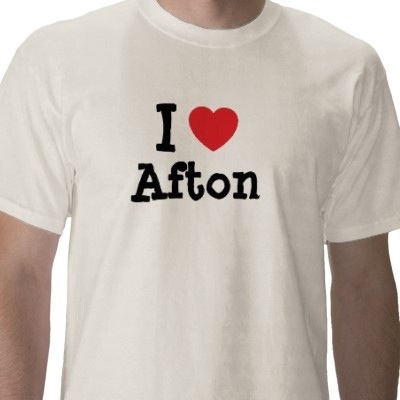
In the UK, we celebrate ‘Days’ such as Christmas Day & Easter Day. But in Sweden, it is always the Eve ( ‘afton’) that is the big celebration time. There’s Julafton, Påskafton, Valborgsmässoafton, Midsommarafton, nyårsafton, trettondagsafton. Why is this? Anyone know? Cos I’ve always wondered. Surely it can’t just be to get an extra day’s holiday?

Swedish Long Friday, English Good Friday

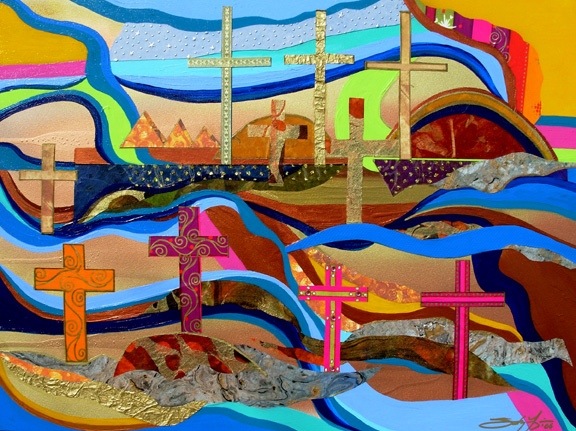
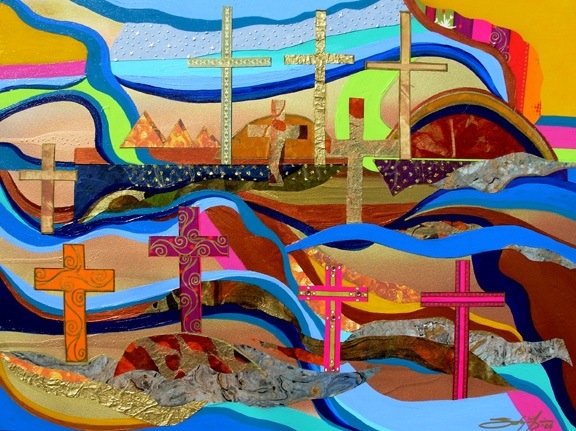
Today is Long Friday in Sweden, Good Friday in English-speaking countries. If you hold to the Christian belief, it’s the day Jesus was crucified on Golgata, outside of Jerusalem.

Why the differences in names for this day? In English-speaking countries, there are differences of opinions as to why it’s called Good Friday. Some people claim Good is an old English word meaning Holy – so Holy Friday. Others say it’s a development of the word God. And other theories say it is good because it is the day Jesus, dying on his cross, was victorious over sin, death and the devil and took upon him all the sins of Mankind. Heavy stuff.

In Sweden, it is called Long Friday as it was said to be a day of mourning for the long day of suffering that Jesus endured will being crucified.

In Sweden, as in the UK, today is a public holiday, people don’t need to dress in black anymore and all the shops and places of entertainment are open. Some people go to church, some paint eggs and decorate Easter trees, some prepare food for Easter Saturday.

I think it’s interesting to know the origins of our traditions. Often these origins are long forgotten. But understanding the history helps put things into perspective as we celebrate in the way we prefer, traditions that have been followed for centuries before and centuries to come.

20140418-082902.jpg

20140418-085041.jpg

Pink Thursday?

20140417-074309.jpg

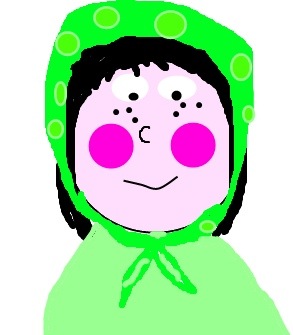
Today is ‘Skärtorsdag’, or Maundy Thursday in English. In Sweden it’s celebrated by children dressing up as witches. This tradition originates from the belief centuries ago that tonight was the witches night, where witches would make their journey to Blåkulle – the Blue Mountain. It was a night of danger and evil, and Swedish people would bar their doors to their houses and barns and leave outside gifts that would make the witches’ journey easier – food, milk, clothes, broomsticks. Today, Swedes give the children sweets and money.

But why is it called Skärtorsdag’? The word ‘skär’ means ‘pink’. But does that make today Pink Thursday?

Actually not.

The word ‘skär’ has another, pre-Nordic meaning that is more relevant – ‘clean’.

If you know your bible stories, today being the day before Good Friday is the day when Jesus gathered his disciples together for the last supper, introduced communion, and was later betrayed by Judas, and condemned to death on the cross. It is the day evil was said to be released – hence the witches described earlier in this text.

Prior to the last supper, Jesus washed the feet of the disciples. And he washed them clean – a symbolic metaphor for purification and the washing away of sin.

So, today isn’t Pink Thursday – it’s Clean Thursday.

I’d better start mopping the kitchen floor then.

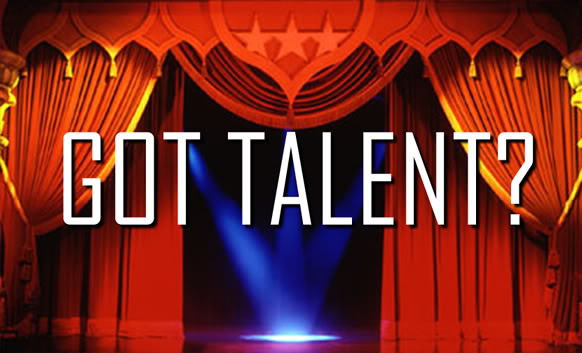
Sweden’s Got Talent

Image

All over the world. the franchised talent shows ‘Country’s got talent’ and ‘X Factor’ unveil contestants with surprising talents. We all know about Paul Potts, Susan Boyle and recently the fantastic Sam Bailey in the UK, who caused a storm when they opened their mouths and sang. This storm was mostly caused by the contradiction of their appearances and their incredible singing capabilities. The same applied to America’s Got Talent’s sweet singing, musical goth by the name of Andrew de Leon.

What about Sweden then? The current series of ‘Talang’ has shown a breadth of skill and inventiveness but I’ve felt, in comparison to the UK and the USA, it’s all a bit amateur. Until last night. Up on the stage walked Glenn Edell,a seemingly shy unemployed father. He stood on the stage, shaking and opened his mouth to sing. And he proved that Sweden’s got talent.

Still, the surprise factor was lacking a little. Compare it to this fantastic 8 year old Norwegian girl Angelina Jordan who recently blew audiences away with her bluesy, jazz voice. She’s so good, you almost suspect foul play.

So, Sweden does got some talent. But does Norway got more?

Austrian stereotypes of Swedes

I was in Vienna at a wedding this weekend and mingled with the other guests. When they found out I lived in Sweden, they wanted to talk about Stockholm and Swedish people. They were very pleasant and what was interesting is how stereotypes persist. Amongst other stereotypes, they thought Swedes were reserved and formal. When I explained that maybe some are but it’s not the case entirely,they actually looked sceptical.

This is the funny thing about stereotypes – they’re often outdated and almost always wrong. How can a single characteristic be applied to 9,000,000 Swedes, or 70 million Brits, and still be accurate? Stereotypes can be fun to talk about but if we start believing them, we’re in trouble. Instead, let’s look at the individual to form our perceptions of that person (understanding we can still be wrong) and try to avoid sweeping condemnations of the collective. I think we’ll get a lot further in our cultural sensitivity that way.

Swedes – the healthiest in the EU?

Image

The image of the healthy, well-trained Swede has found support in some research from the Europabarometer released recently.

 According to this research, ‘41% of Europeans exercise or play sport at least once a week, while an important proportion of EU citizens (59%) never or seldom do so.’

Generally speaking, ”citizens in the Northern part of the EU are the most physically active. The proportion that exercises or plays sport at least once a week is 70% in Sweden, 68% in Denmark, 66% in Finland, 58% in the Netherlands and 54% in Luxembourg. The lowest levels of participation are clustered in the Southern EU Member States. Most respondents who never exercise or play sport can be found in Bulgaria (78%), Malta (75%), Portugal (64%), Romania (60%) and Italy (60%).”

So, Sweden tops this research at 70% of interviewees saying the exercise at least once a week, closely followed by Denmark and Finland. Why might this be? Why could there be such a difference between Scandinavian countries and the Southern European countries?

  • One answer could be the climate – maybe the long, dark winters require some kind of exercise regime in order for us to survive?  
  • Another answer might be ‘peer pressure’ or ‘training hysteria’ as it’s sometimes called in Sweden. Does a tendency to Group Think mean that we follow what others are doing in order to be ‘in’?

I think a major contributing factor is values. We all know that values differ from group to group , and that those values often determine the desired behaviours of the people.

According to the respected ‘World Values Survey’, in Scandinavia, and in Sweden especially, a strong value is self-actualisation, or self-realisation. In other words, we as individuals have the right to be who we want to be, live how we want to live, think what we want to think and make the most of ourselves in the way we choose.

While other countries, such as Bulgaria and Romania, are focusing on how to survive the day, many Swedes are focusing on self-development, education, environmentalism and, not least, physical appearance and health.

So that Sweden comes out top in this research is not surprising. In Sweden, most of the serious ‘survival problems’ of life have already been solved, allowing many citizens to focus on other things.

Such as themselves.

If you’re interested in reading more about the research, find it here.

Please like and share this blog


Dirty Swedes and their bad language

Image

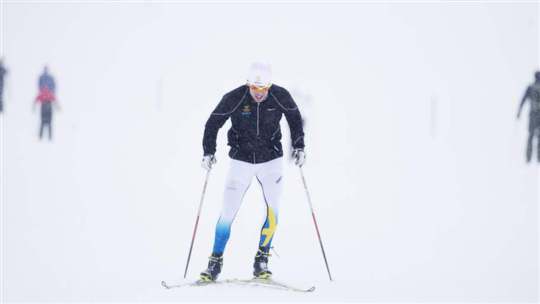
When watching the aftermath of the long-distance skiing on the TV, one of the participating in skiers described the track as difficult. A lot of snow had suddenly come and the interviewee described it as ‘kräksnö’. Directly translated this means ‘vomit snow’ – big flakes that dump into piles on the floor.

What is it with the Swedish fascination for creating emphasis by adding disgusting words to other words???

Other examples are:

 – ‘Snordyrt’ – Snot expensive

 – ‘Asfult’ – Cadavre ugly

– ‘Skitroligt’ – Shit fun

– ‘Knullrufs‘ – Fuck hair

– ‘Kukjävel’ – Cock idiot

– ‘Fisförnäm‘ – Fart noble (snobby)


And you thought Swedes were politely spoken?!