Today is a Swedish squeeze day

Today is a ‘squeeze day’ in Sweden. What, you may wonder, is a squeeze day?

– It is not a day when everybody goes around hugging each other.

– Nor is it a day when people pinch each other’s cheeks or rear ends.

– It is not either a day of drinking copious amounts of fresh citrus juice.

No, a ‘squeeze day’, or ‘klämdag’ in Swedish, is a day of the week that falls between a public holiday and a weekend.

In Sweden, when a public holiday occurs on a Tuesday or a Thursday, a common custom is to take the day between the holiday and the weekend as a day off. Sometimes this is subsidized by the employer. In English, this is called a ‘bridge day’ but in Swedish it’s cutely referred to as a ‘squeeze day’.

In Sweden, there are 11 public holidays (known as ‘red days’) and there are masses of squeeze days this year. New Year’s Day was a Tuesday this year. Yesterday, Thursday, was Ascension Day (which is always on a Thursday) and so today is often taken as a holiday. This year, there are many floating ‘squeeze days’. Next week, National Day on the 6th of June, falls on a Thursday, so the following Friday is also a day off for many. Coming up, this year Christmas Eve is a Tuesday, Boxing Day is a Thursday, and even New Year’s Eve is a Tuesday.

So, Swedes this year are having a lot of time off work. Add to this, the Swedish concept of the de facto holiday – the day before a bank holiday is taken off, either as a full day or a half day. Most employers recognise and allow for this.

It’s a good job that Swedes are so efficient when they do work – otherwise the country would grind to a halt!
Why is May 1st celebrated in Sweden?

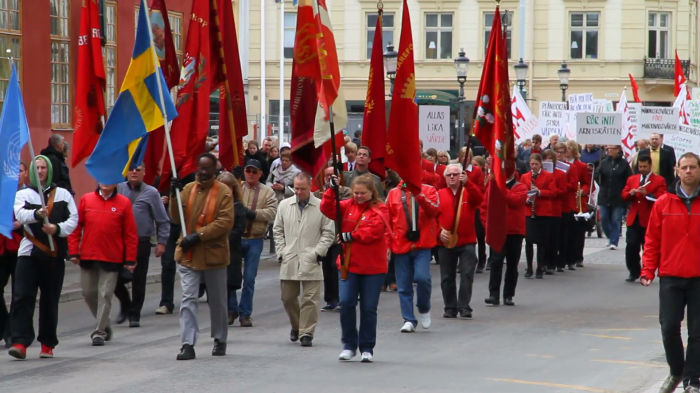
In Sweden, and in many other countries, May 1st has been embraced as the International Workers’ Day. In 1938, May 1st became Sweden’s first non-religious public holiday and has been an important celebration of labourers and the working classes since then.

But why specifically May 1st?

The answer is found in a massacre in the USA. On 1 May 1886, laborers in Chicago went out on strike for an 8 hour working day. On 4 May 1886, Chicago police and the demonstrators clashed and 11 people died. The event is called the Haymarket massacre. Seven of the demonstrators were sentenced to death, despite lack of evidence. To commemorate the massacre, the socialist organization suggested that 1 May should become day of demonstrations every year.

Around Sweden, traffic is shut off, huge flag-waving demonstrations are held and people gather to hear speeches from their politicians and representatives – most commonly from the political left.

Contrary to the stereotype however, not everybody in Sweden supports left wing political groups. Many Swedes lean towards the centre or the right. For them, today is just a day off work – an opportunity to perhaps nurse hangovers from the festivities of the previous evening or to relax, watch Netflix, meet friends and enjoy the day.

Nowadays, there is always a racist shadow over May 1st celebrations. According to the Swedish law, even their right to demonstrate is protected. This year, the extreme right-wing Party ‘Nordiska motståndsrörelse’ will also be marching in the small towns of Ludvika, Fagersta and Kungälv. This inevitably means a counter-demonstration will occur and a potentially violent exchange of opinions will develop.

If you’re in Stockholm, head to Humlegården or Medborgarplatsen around 12.00 ish to catch the start of two demonstrations.

Walpurgis Eve – when spring arrives in Sweden

Today, 30 April, is Walpurgis Eve, called Valborgsmässoafton in Swedish. The name Walpurgis is taken from the eighth-century Saint Walburga, and in Sweden this day marks the arrival of spring.

On this evening, Swedes gather to celebrate together. The forms of celebration vary in different parts of the country and between different cities. Essential celebrations include lighting a large bonfire, listing to choirs singing traditional spring songs and a speech to honour the arrival of the spring season. Walpurgis bonfires are an impressive thing to see and are part of a Swedish tradition dating back to the early 18th century. At Walpurgis, cattle was put out to graze and bonfires lit to scare away predators.

The weather is often unpredictable on Walpurgis Eve. This year looks like it could be a warm evening, and some bonfires have even been forbidden due to fire risk after the exceptionally dry April that has passed.

However, it’s not unusual that it snows on 30 April! Despite bad weather, Swedes still shiver around the bonfires and ironically celebrate the arrival of Spring.

Where does the Swedish word for Easter -‘Påsk’- come from?

The English word Easter has a mythical etymology. It originates from the Germanic goddess of fertility – Eostre. Prior to the 300’s, pagan festivities were held in her honour in the month of April. These festivities were slowly replaced by Christian traditions from the 400’s to celebrate the resurrection of Christ – and given the ‘recognisable’ name Easter.

But what about the Swedish word for Easter – Påsk? Where does that originate?

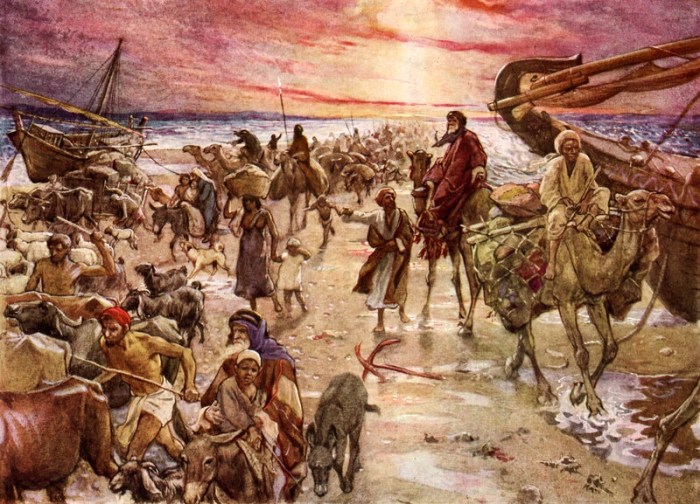
During the same period as Easter, the world’s Jews celebrate a holiday of Passover to mark their liberation by God from slavery in ancient Egypt and their freedom as a nation under the leadership of Moses. Passover commemorates the story of the Exodus as described in the ‘Book of Exodus’, in which the Israelites were freed from slavery in Egypt. The name of this celebration is ‘Pesach‘.

Originating in this word ‘pesach’ is the Aramaic word ‘paska‘. And from ‘paska’ comes the Swedish word ‘Påsk‘.

So, interestingly, the more secular country of Sweden actually has the most religious origin of the word Easter.

Who is Sweden’s Patron Saint?

Last night I was at a party (not the picture above). I was clad in green, and wearing a green sign saying Lucky and depicting a pot of gold. Over the speakers, a mix of folk music, U2 and the Cranberries blasted out. Offensive green-coloured beer was served.

Today, 17 March, is St Patrick’s Day. St Patrick, the Patron Saint of Ireland, is being celebrated all over the world. And just like me last night, people are donning green clothes, dancing to fiddely-diddely music and downing beer.

Out of curiosity, I wondered who Sweden’s Patron Saint is. So I researched and I have to say the answer wasn’t totally clear. One Saint in particular kept popping up, but in only one case did I see her referred to as the Patron Saint of Sweden. She is however one of Europe’s 6 Patron Saints.

Do you know who I’m referring to?

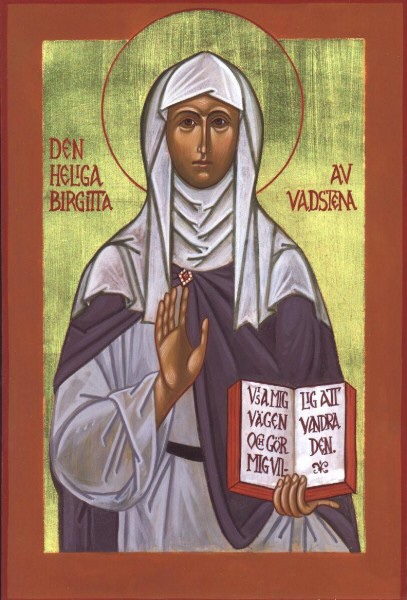
I am referring to Saint Brigit, known in Swedish as Saint Birgitta. She is definitely the most celebrated saint of Sweden. Born 1303 into a wealthy noble family, she entered a Catholic convent after the death of her husband. By this time she was 41 and had 8 children. In 1350, she went to Rome to meet the Pope and there she remained until her death at the age of 70. Her feast day is 23 July, the day she died. Brigit established the Swedish religious community which was to become the Order of the Most Holy Saviour, or the Brigittines at the Swedish town of Vadstena.

Brigit is known for her many influential visions. In her first, at the age of 10, she saw Jesus suspended on a cross. Ages. Her visions of the birth of Jesus came to affect nativity art for centuries to comethe infant Jesus lying on the ground and emitting light himself, the Virgin as blond-haired, a single candle attached to the wall, and the presence of God the Father above. Her visions were recorded in Revelationes coelestes (“Celestial revelations”) and made her a revered and controversial celebrity in the Middle

In Sweden people know vaguely who Birgitta is. I wonder if many know that she is the Patron Saint of the country. She is fairly far from the minds of most Swedes and, unlike the Irish St Patrick, or the Welsh St David, not at all integrated into Swedish identity.

Probably because of her ‘invisibility’, I actually haven’t heard of annual celebrations in Sweden to commemorate Brigit. I’m guessing it’s a low-key affair for the converted. I’m guessing it’s about prayer, meditation and reverence. I’m guessing it’s not about dressing in a unified colour and dancing the jig. And I assume very little beer guzzling is involved.

It’s fatty Tuesday – Swedish style!

Today it’s ‘Fat Tuesday’ in Sweden, known as Shrove Tuesday or Mardi Gras around the world.

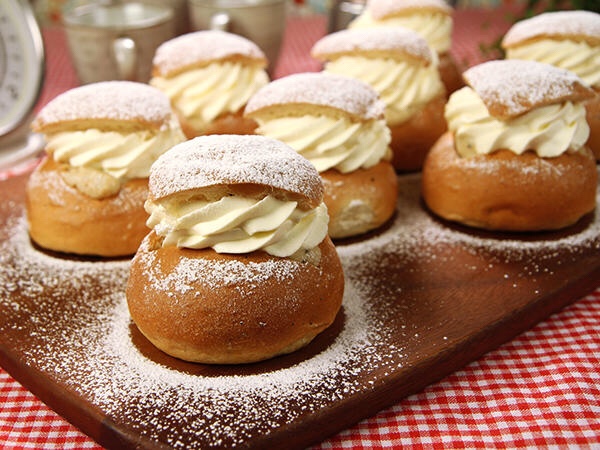
While in the UK we eat pancakes (today is even called Pancake Day) and in Latin America they scoff down fried bread, Swedes celebrate by eating the traditional cream Lent bun – the ‘semla’. I’m also clearly going to indulge. In fact, my mouth is watering just writing this post.

The semla is a creamy bun filled with delicious almond paste. They were eaten traditionally in Sweden to commemorate the start of Lent and the great Fast, leading up to Easter. In the south of Sweden, they still refer to them as ‘fastlagsbullar’ – Shrovetide buns. Nowadays however, semlas are usually sold anytime between Christmas and Easter.

I just love them. I could eat a barrel load. But I’d end up looking like a barrel if I did. I love the taste of them, and the feeling of luxurious indulgence. I also love the knowledge that as you take a bite into a creamy semla, you are biting into over 500 years’ history of Scandinavian baking.

The word ‘semla’ comes from the Latin ‘simila’ which means fine flour and originally referred just to the bun without any filling. As long ago as the 1500’s, bakers started to hollow out the middle of the bun and fill it with cream and butter. As ingredients became more available, bakers started adding almond and cardemon and the type of semla that we know today developed towards the end of the 1800’s. After rationing of sugar and dairy products ceased at the end of WW2, the semla took off and became very popular.

Nowadays the semla trend has reached new heights. Every year bakers around the country try to launch new types of semla, with their own spin on it -for example, the semla wrap, the semla burger, the semla layer cake, the semla cocktail, the chocolate semla, the vanilla semla, the lactose-free, gluten-free vegan semla. This year, the gross-sounding fermented Baltic herring semla was revealed.

But I’m a traditionalist in this matter. Give me a round fluffy cardemon-scented wheat bun brimming over with whipped cream and almond paste.

And give it to me NOOOOWWW!!!

Friday nights in Sweden = ‘Fredagsmys’!


fredagsmys2

I was just in my local supermarket doing a quick bit of food shopping. Although the place was relatively empty at that time of day,  I noticed that a few of the aisles were the most popular. Throngs of people gathered in the TexMex aisle, the soft drinks aisle and the aisle displaying crisps.

Of course, I thought! It’s Friday! And in Sweden, that means Fredagsmys!

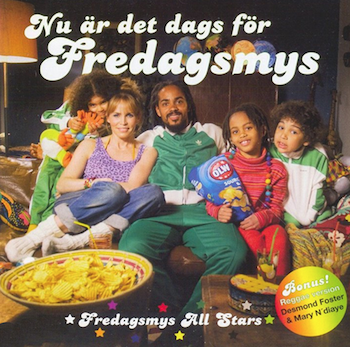
‘Fredagsmys’ is loosely translated as ‘Friday Cosying’, and it is a relatively modern ritual in Sweden established in the 90’s. Prevalent up and down the country, ‘fredagsmys’ is when friends and families gather together to mark the end of the working week. it’s mostly associated with families and children and traditions differ family to family. However,  one common denominator seems to be that food should be easy and quick to make. In other words, Friday night is a huge night for tacos and pizza in Sweden.

Gathering around food for cosy family evenings has a long tradition in Sweden. In the 1800’s and 1900’s something called ‘Söndagsfrid’ (Sunday peace) was popular. Then in the 1970’s ‘kvällsgott’ (Evening Goodies) became a concept.

The concept ‘fredagsmys’ became popularised in a high-profile advertising campaign for crisps. With the perky slogan ”Now it’s the end of the week, it’s time for Friday cosying”, (really, it’s perky in Swedish), they captured the Swedish market and encouraged the consumer to devour potato chips on Friday nights. In 2006, the word ‘fredagsmys’ entered the Swedish dictionary.

So how does your Friday night look?

What kind of cosying are you planning?

Swedish winter break – take those kids away!

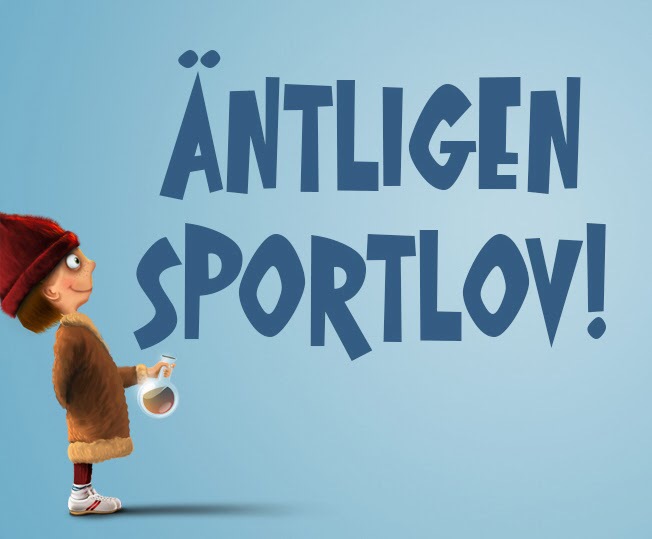
Around this time of the year, schools In Sweden have a week’s holiday. Called ‘Sportlov‘, it’s a traditional time for a winter sport break. 

This tradition was introduced in the early years of WW2 as a way to save energy. Heating up schools cost money and, due to rationing, councils were instructed to drastically reduce their heating expenses. So shutting the schools seemed like a good idea.

To give the pupils something meaningful to do while the school was shut, the authorities organised various activities, many focused on being outdoors and exercising.

Serendipitously, experts realised, during the 1950’s, that infection spread less widely at this time of the year if schools were closed for a week. So the winter sport break became cemented as an official disease control method. 

Nowadays, many families head off to the mountains to go skiing, some head off to the Alps for the same purpose. Others may fly away to the sunny beaches of the world.

For those of us left in town, it’s sheer bliss. 

The gym is empty. The streets are spacious. There is hardly anybody on the buses and tube, traffic is significantly thinner and less noisy and it’s easy to get a seat at lunch time. 

And the fact that there are hardly any children in town means something great for the rest of us.

We don’t get infected with diabolical kid bacteria that would knock us out until mid March.

6 reasons why Swedes take Eurovision so seriously

We are in the middle of the Eurovision qualification rounds (known colloquially as ‘Mello’) in Sweden – three weeks in, three weeks to go. This extended selection period occupies every Saturday night for 6 weeks, and results in the song and artist who will represent the country in the big final in Israel.

People gather up and down the country to have ‘Mello’ parties. Social media and traditional media are full of comments about the bad quality of the contestants this year (and every year). People are raging that the wrong songs are voted to move on in the league table.

Nobody, and I mean nobody takes their Eurovision (ESC) more seriously than the Swedes.

But why is that? Here are a few theories:

Brightening up the winter blues. Mello comes during the deepest, darkest, dreariest time of the year. The glittery colourfulness of Mello brightens up February and early March, when nothing much else happens.

Reliving the glory days. ABBA’s legacy is a constant reminder to Swedes that they once reached long-lasting global fame and it all started at ESC. Every year is a hunt for the next big thing, when the international light will shine once more on this little country in the north.

Organized ‘religion‘. Sweden is, relatively speaking, not a religious country. So the human need for organising ourselves into a collective manifests itself in other ways. Hockey and football become a form of organized religion. And ‘Mello’ is another variation on the same theme. Ask Swedes why they like Mello and many use the word ‘folk fest’ – a ‘national party for the people.’

Swedish traditions. Sweden is a country that is good at holding on to traditions – crayfish parties, snaps songs, semla cream buns, Easter trees – to name just a few. Therefore it is easy for this society to absorb, and structure, new traditions. Halloween is now a thing here. So is Valentine’s Day. So Mello becomes another tradition and slots nicely into the national calendar.

Vicarious extrovertism. Swedes are not generally known for being outgoing and extroverted, although there are of course exceptions. This means that Mello becomes so attractive, as it’s an opportunity for Swedes to live vicariously through the ‘crazy’ performers who dance around in sequins and funny outfits. It’s also an opportunity to push your own boundaries and wear a glittery hat or a pink feather boa. And all under organised, acceptable conditions.

Love of music. Because some Swedes actually like the music.

Which theory is most accurate do you think? Do you have another theory?

Yum Yum Sweden!

Working with many non-Swedes, I often hear the complaint that Swedish food is bland, boring and tasteless. But the truth is that Sweden prides itself on its good food and its number of top-notch, often experimental, restaurants.

The Scandinavian kitchen is full of mouthwatering delights such as warm-smoked salmon, creamed dill potatoes and shellfish by the bucket load. No surprise then that there’s a lot of expressions in the Swedish language for food being delish. When we in English might say ‘yum, yum’ or ‘scrummy’, the Swedes also have a plethora of words to use. Here are a few:

  • Smaskens
  • Smaskig
  • Läcker
  • Mumsig
  • Namnam
  • Gött
  • Smarrig
  • Delikat
  • Skitgott
  • Utsökt

So many foreigners might not think that Swedish food is great – but it’s clear that the Swedes do!

Let me know what Swedish food you think is ‘smarrig’!

Follow me on Instagram #watchingtheswedes