WtS Advent Calendar Dec 5: Julmust

Welcome to the Watching the Swedes (WtS) Advent Calendar. Every day, I will open a window containing a Swedish word that has something to do with Christmas and the festive season.

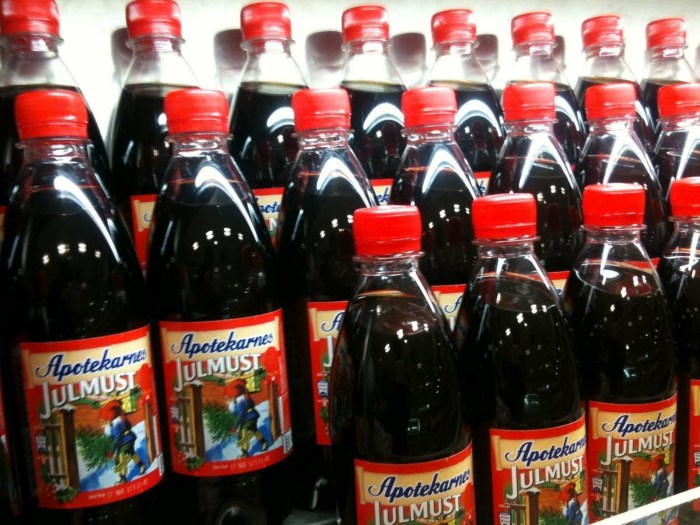
Today’s word is ‘Julmust‘ which is a fizzy Christmas beverage.

I would venture to say every Swede likes to drink at least one glass of julmust at Christmas. However, according to statistics it is even more! Apparently Swedes drink an average of 5 litres per person of the fizzy drink during December. The alcohol-free soft drink is bought in bottles at the supermarket and comes in different sizes, fully sugared and also in a diet form.

Said to include over 30 ingredients, its actual recipe is top secret, only known to three people. Despite all the cloak and dagger stuff, the connoisseur can detect the flavour of hops and malt. The taste is reminiscent of the old-fashioned ‘Dandelion and Burdock’ drink for those of you that understand that British reference.

Julmust was invented by a teetotaler and sales began in 1910 as an alternative to ale and port. Although intended to be alcohol-free, the drink is often blended into Christmassy cocktails or mixed with porter or stout and other ingredients to create a Christmas drink called Mumma.

I have even drunk it mixed with red wine – a so called Kalimusto. I recommend trying the experience – although it actually is a fairly unpleasant one!

Advent Calendar Dec 3: Gävlebocken

Every day, I will open a window containing a Swedish word that has something to do with the festive season.

Today’s word is ‘Gävlebocken‘ which translates as ‘The Gävle Goat’.

This strange tradition takes place in the Swedish town of Gävle. Every year, a giant handcrafted straw goat is built on the town’s Castle Square. And almost every year, it gets burned to the ground by a pyromaniac.

One year, it was even burned down before its inauguration. Consequently, the local authority have increased security and have managed to prevent the burning for the last three years.

The symbol of the goat is a traditional Christmas decoration in Sweden, called a ‘julbock’ – a Christmas goat. Usually made of straw, a goat is placed under the Christmas tree or small goats are hung from the branches. The symbol of the goat has ancestry in Scandinavia far back in Nordic mythology and, up to the 1800’s, it was the goat who brought presents during the festive season. A kind of precursor to Santa Claus.

So although the Christmas goat has endured for centuries, it remains to be seen if the Gävle goat survives until the New Year.

WtS Advent Calender Dec 2 – Pepparkaka

Welcome to the Watching the Swedes (WtS) Advent Calendar

Every day leading up to Christmas, I will open a window containing a Swedish word that has something to do with Christmas and the festive season.

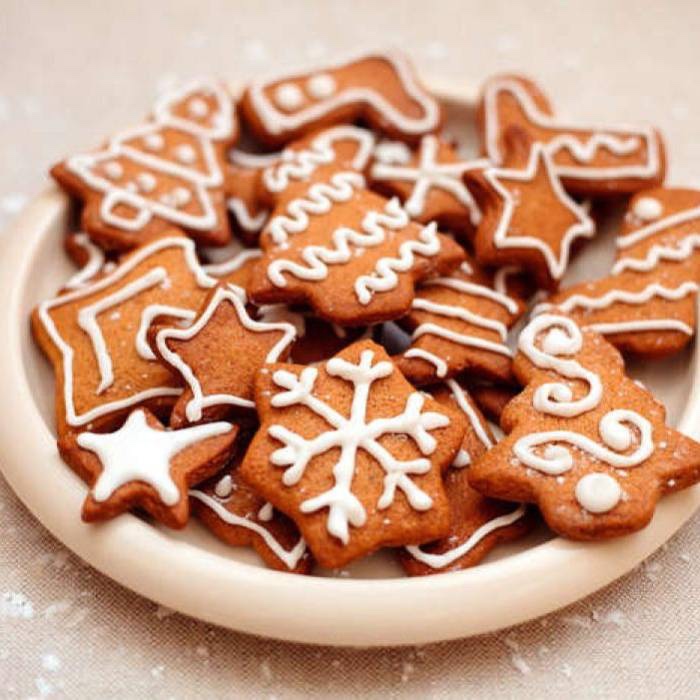
Today’s word is ‘pepparkaka‘, which translates as gingerbread.

Other than glögg, nothing else is more synonymous with the Swedish festive season than pepparkaka (gingerbread). The Swedish version of gingerbread comes in the form of thin crispy biscuits flavoured with cinnamon, cardamon, ginger and cloves. Formed in different shapes such as hearts, trees, and stars, gingerbread is eaten plain or decorated with icing. Many people buy squeezy blue cheese in a tube and squirt it onto the biscuit before consumption. Some people build gingerbread houses as part of their Christmas decorations.

Making your own pepparkaka is a cosy a Christmas tradition – here is a typical recipe. However, most people buy their gingerbread ready-made.

Pepparkaka has been associated with Christmas in Sweden since the 1800’s but was eaten much earlier than that. The first documented record of pepparkaka in Sweden is from 1335 for a royal wedding. In a recipe from the 1400’s, gingerbread included pepper, which could be why it has the name pepparkaka. But nobody is really sure.

Ever wondered why Swedish people are so nice? Well, the answer lies in an old myth – apparently the very eating of pepparkaka is what makes you nice.

WtS Advent Calendar Dec 1 – Glögg

Welcome to the Watching the Swedes (WtS) Advent Calendar

Every day leading up to Christmas, I will open a window containing a Swedish word that has something to do with Christmas and the festive season. Today’s word is the fantastic-to-say ‘glögg‘. (Pronounced ‘glugg’)

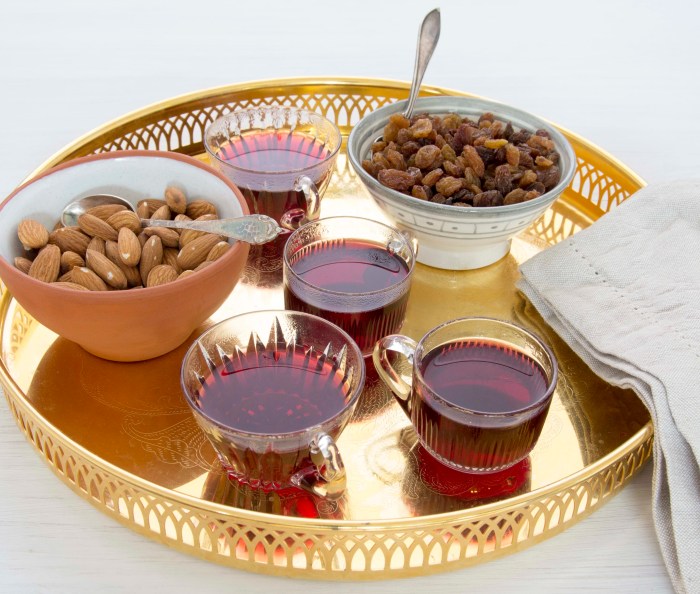
Glögg is festive Swedish mulled wine: heated wine, most commonly red, with spices. It is drunk together with almonds and raisins added in. And it is delicious! Glögg is very popular, having been drunk in Sweden around Christmas since the 1890’s. However, the earliest record of drinking heated wine dates back to the 1500’s. The word glögg comes from the Old Swedish word ‘glödg’, and the verb ‘glögda’ – to heat up. This, in turn, has its origins in the verb glöder (to glow).

Some make their own glögg, here is a typical recipe.

But most people buy their glögg ready-made in a bottle. In addition to the traditional flavours, each year a new flavour of the nectar is released and there’s always a debate regarding its success. This year’s glögg (2019) is called Aloha and is an infusion of passion fruit, hibiscus, coconut and coffee. Yummy!

161 years old today!

If Selma Ottilia Lovisa Lagerlöf was alive today, she would be celebrating her 161st birthday.

Born 20 November 1858, Selma Lagerlöf was a Swedish author, publishing her first novel, ‘Gösta Berling’s Saga’, at the age of 33. She is considered to be one of Sweden’s most significant writers throughout history.

She was a woman of firsts. She was the first female writer to win the Nobel Prize in Literature, which she was awarded in 1909.

Additionally, she was the first female to be granted a membership in The Swedish Academy in 1914 – the famous literary committee that selects the Nobel prize laureate amongst other things.

She wrote prolifically – mostly novels, religious texts and short stories. Other than ‘Gösta Björlings Saga’, her most famous works are probably ‘Jerusalem’, ‘The Treasure’ and ‘The Wonderful Adventures of Nils Holgersson’. The latter has been translated into over 30 languages.

Selma was a politically active woman – involved as a speaker for the Swedish Suffragette movement, and herself living in a controversial same sex relationship. She was also a vocal anti-nazi.

The house where Selma Lagerlöf was born on 20 Nov 1958, grew up and later lived is today open to the public as a museum. If you’d like to visit, it’s in the county of Värmland and can be checked out at Mårbacka

Sweden’s most common surnames

Surprisingly there are 9 people in Sweden who have the same surname as me. I’m very curious to know who they are.

According to the Swedish Statistics Bureau, which surnames are then the most common in Sweden? Any guesses?

Here is the latest top 10 list from 2018:

  1. Andersson
  2. Johansson
  3. Karlsson
  4. Nilsson
  5. Eriksson
  6. Larsson
  7. Olsson
  8. Persson
  9. Svensson
  10. Gustafsson

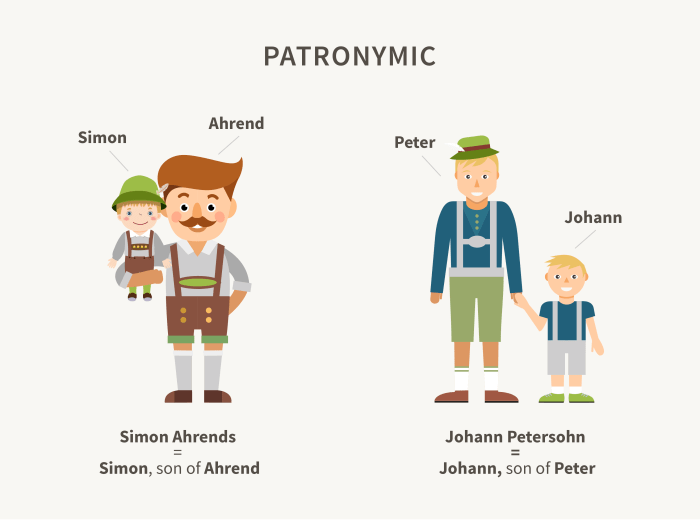
Notice a pattern?! In fact, the first name that doesn’t end in the patronymic ‘son’ is the name Lindberg which lands in 17th position.

Interestingly there are a few more ‘sons’ after that and then Lindström, Lindqvist and Lindgren are the next ones. So ‘Lind’, which is a small tree, is also very common.

The first ‘non-Swedish’ name on the list is Ali, which lands in 44th position.

If you’re interesting in knowing about your name, go to scb and check it out under ‘namnstatistik’.

What have Denmark, Norway, Iceland and Finland had – but Sweden hasn’t?

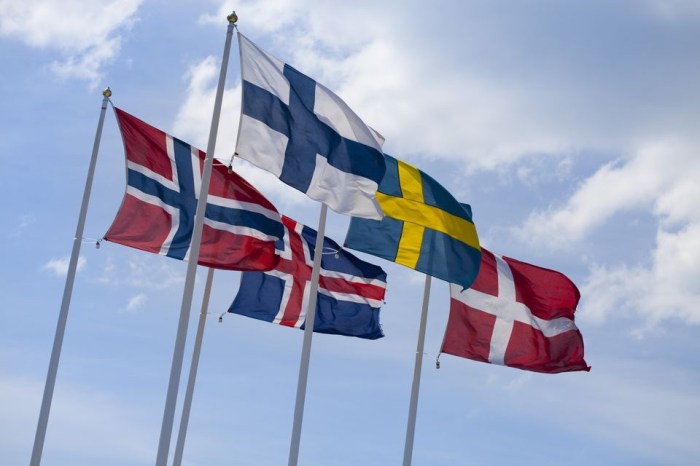
To date there is something that Denmark, Norway, Iceland and Finland has had, but that Sweden hasn’t. And it’s quite intriguing as to why. The UK has had two. India has had one. Norway has had the most of any country. Currently 27 countries have one. In fact, 76 countries in the world have had one.

Do you know what I’m talking about?

Elected and appointed female heads of state and government.

In the long history of Swedish politics, there has never been a female Swedish Prime Minister. There are female party leaders, mostly of the smaller political parties. Sweden currently has a female Deputy Prime Minister and a female Foreign Minister. But never the head of state.

According to Wiki, ‘Khertek Anchimaa-Toka, of the Tuvan People’s Republic, is regarded as “first ever elected woman head of state in the world” in 1940. The first woman to become prime minister of a country was Sirimavo Bandaranaike of present-day Sri Lanka in 1960. The first woman to serve as president of a country was Isabel Martínez de Perón of Argentina, who as vice-president succeeded to the presidency in 1974 after the death of her husband. The first woman elected president of a country was Vigdís Finnbogadóttir of Iceland, who won the 1980 presidential election and three others to become the longest-serving female head of state in history (exactly 16 years in office).’

So why not in Sweden? I don’t have a theory I’m afraid, but I do think it’s strange that a country that prides itself on leading the politics of equality has only had men as Prime Minister. White, middle-aged, assumably straight, men.

And it doesn’t look like there’ll be any change to that in the coming years. Not unless one of the three largest parties elects a female leader to replace the three men who currently hold those positions.

It’s been almost 100 years since the first woman was elected as a Member of Parliament in Sweden and currently, in the Swedish Parliament, 46% are women. Isn’t it time for a woman to also hold the highest elected political office in the country?

Then Sweden could show its equal par with Denmark, Norway, Iceland and Finland – and 72 other countries around the world.

How Sweden exposed the Chernobyl catastrophe

If you haven’t seen the HBO series ‘Chernobyl’, do so. Probably one of the best series ever made, it depicts the events of the nuclear disaster that happened in the Soviet Union in 1986 killing up to an estimated 200,000 people (ref Greenpeace). It’s a vivid reminder of the perils of nuclear energy, and highly relevant to the growing debate in Sweden about the expansion of this form of energy production.

The series is directed by Swede Johan Renck, and stars many Swedish actors such as Stellan Skarsgård. However, what I didn’t know was how important Sweden’s involvement was in the discovery of the disaster.

Here’s how, taken from the European Parliament news page:

The alarm sounded at Forsmark, Sweden’s second largest nuclear power plant, when one of the employees passed one of the radiation monitors on his way back from the restroom. When it showed high levels of radiation coming from his shoes, staff at first worried an accident had taken place at the power plant. However, a thorough scan discovered that the real source of the radiation was some 1,100 kilometres away in the Ukrainian town of Chernobyl.

The early detection by the Forsmark plant, one hour north of Stockholm, played a crucial role in forcing Soviet authorities to open up about the disaster that happened in Chernobyl in April 1986.

Thanks to the power plant’s early detection, they could inform the Swedish authorities at an early stage, who then told the world about the radioactive pollution coming from the disaster in the Soviet Union.

Today, most harmful materials have decayed. But some harmful materials, such as Caesium and Plutonium, will remain in the environment over a longer period of hundreds, even thousands, of years, though at lower levels.’

Sweden was affected in other ways by the radioactive cloud that blew from Ukraine across the Baltic. Still today, people in the north of Sweden are dying of cancer brought on by exposure. As recently as 2017, hunters found a pack of wild boar containing more than 10 times the safe level of radiation.

In Norway, the levels of radioactivity have reduced over time but there are still exceptions. Most recently in 2018, values detected in meat and milk suddenly doubled. The reason turned out to be an unusually widespread crop of mushrooms that year. Fungi have the ability to absorb a lot of radioactivity, up to 1,000 times more than plants. Those yearly variations mean that there will be a need for control for many years to come.

Thanks to its geographical location, Sweden played an important role in the revealing of the Chernobyl nuclear catastrophe. But it also paid a high price, the effects of which will still be felt for generations to come.

Today, Sweden has 8 nuclear power plants producing about 40% of the country’s energy. This is despite a national referendum that voted to phase nuclear energy out by 2010. In 2015, decisions were made to phase out four older plants by 2020.

The constant question is can a disaster like Chernobyl happen again? And are we willing to take that risk?

One thing is for certain, the Chernobyl disaster showed us all that pollution has no borders.

Chicago – Sweden’s second largest city…

I’m currently in Chicago, and intrigued to learn more about its Swedish connections.

During the 19th and 20th centuries there was a mass emigration of Swedes to the USA. About 1.3 million people, an enormous number, are estimated to have left Sweden due to starvation, poverty and oppression.

By 1890 the U.S. census reported a Swedish-American population of nearly 800,000. Most immigrants became pioneers, clearing and cultivating the prairie in the Midwest, but some forces pushed the new immigrants towards the cities, particularly Chicago. At one point there were more Swedish people in Chicago than in any Swedish city except Stockholm. Chicago was Sweden’s second largest city in terms of population!

In Chicago, there are some remnants of Swedish history left. There are a number of famous Swedes hiding in Chicago. Carl Linnaeus has two statues, one on the University of Chicago campus in Hyde Park and one in the Heritage Garden of the Chicago Botanic Garden. Another icon Emanuel Swedenborg has a bust on Lake Shore Drive.

To the north of Chicago, there’s a neighborhood called Andersonville. Andersonville’s roots as a community extend well back into the 19th century, when immigrant Swedish farmers started moving north into what was then a distant suburb of Chicago. Swedish immigrants continued to arrive in Andersonville through the beginning of the 20th century, settling in the newly built homes surrounding Clark Street. Before long, the entire commercial strip was dominated by Swedish businesses. Today, Andersonville is a popular place to live and has festivities such as the Midsommarfest – one of Chicago’s largest and most popular street festivals.

The Swedish American Museum was founded in Andersonville in 1976, by Kurt Mathiasson, to preserve and disseminate the history of the great contributions of early Swedish immigrants to Chicago. The Museum was opened to the public in a ceremony attended by King Carl XVI Gustaf of Sweden.

Andersonville remains one of the most concentrated areas of Swedish heritage in the United States, but its residents and businesses represent a wide array of cultures.

Today’s Swedes in Chicago are usually tourists visiting the Magnificent Mile and taking selfies in the mirrored bean statue. But it’s fascinating to remember that centuries before, a very different type of Swede trod these city streets.

Why is May 1st celebrated in Sweden?

In Sweden, and in many other countries, May 1st has been embraced as the International Workers’ Day. In 1938, May 1st became Sweden’s first non-religious public holiday and has been an important celebration of labourers and the working classes since then.

But why specifically May 1st?

The answer is found in a massacre in the USA. On 1 May 1886, laborers in Chicago went out on strike for an 8 hour working day. On 4 May 1886, Chicago police and the demonstrators clashed and 11 people died. The event is called the Haymarket massacre. Seven of the demonstrators were sentenced to death, despite lack of evidence. To commemorate the massacre, the socialist organization suggested that 1 May should become day of demonstrations every year.

Around Sweden, traffic is shut off, huge flag-waving demonstrations are held and people gather to hear speeches from their politicians and representatives – most commonly from the political left.

Contrary to the stereotype however, not everybody in Sweden supports left wing political groups. Many Swedes lean towards the centre or the right. For them, today is just a day off work – an opportunity to perhaps nurse hangovers from the festivities of the previous evening or to relax, watch Netflix, meet friends and enjoy the day.

Nowadays, there is always a racist shadow over May 1st celebrations. According to the Swedish law, even their right to demonstrate is protected. This year, the extreme right-wing Party ‘Nordiska motståndsrörelse’ will also be marching in the small towns of Ludvika, Fagersta and Kungälv. This inevitably means a counter-demonstration will occur and a potentially violent exchange of opinions will develop.

If you’re in Stockholm, head to Humlegården or Medborgarplatsen around 12.00 ish to catch the start of two demonstrations.