The Swedish market of Jokkmokk

On the first weekend in February since 1606, Jokkmokk market and festival has taken place in Swedish Lapland. But not this year. Corona has, as with many other events, caused this year’s event to be cancelled.

Jokkmokk is the cultural center of the Sami population. At the market, you can buy local produce, arts and crafts and also learn about Sami culture and history. Live music and performances are also a feature of the market.

Warm clothes are a must, as temperatures can drop below a terrifying minus 30 degrees! However, this year the festival can be enjoyed from the warmth of your living room. Go to http://www.jokkmokksmarknad.se to participate via the live stream.

For more info about go to http://www.swedishlapland.com

The Swedish market of Jokkmokk

On the first weekend in February since 1606, Jokkmokk market and festival has taken place in Swedish Lapland. But not this year. Corona has, as with many other events, caused this year’s event to be cancelled.

Jokkmokk is the cultural center of the Sami population. At the market, you can buy local produce, arts and crafts and also learn about Sami culture and history. Live music and performances are also a feature of the market.

Warm clothes are a must, as temperatures can drop below a terrifying minus 30 degrees! However, this year the festival can be enjoyed from the warmth of your living room. Go to http://www.jokkmokksmarknad.se to participate via the live stream.

For more info about go to http://www.swedishlapland.com

2020 – the year most Swedes want to forget

A quick look at social media reveals the general Swedish attitude to 2020 – ‘a shit year’, ‘throw the year in the bin’, ‘go to hell 2020’.

Obviously, people are referring to the global pandemic that swept the world, limiting our freedoms, making us sick and killing 8727 people in Sweden. So far, about 10% of the Swedish population has had Covid 19, and as we enter 2021, that number is quickly rising.

However devastating the pandemic is, 2020 wasn’t all doom and gloom. There were some positive news stories in Sweden as well, even though media coverage was totally dominated by the virus. Let’s reflect over some of the rays of light:

– The Convention on the Rights of the Child became enshrined in Swedish law. This expands legal protection to children.

– The planet got a much-needed breathing space. Fewer planes in the sky and cars on the roads improved air quality and reduced pollution. Biggest impacts of this were seen in other places, such as New Delhi, where the sky turned blue again.

– Despite physical distance, people showed solidarity and care for each other. People shopped for each other, walked each other’s dogs, serenaded each other and checked in on each other. 2020 was a year of neighborliness.

– People gathered up and down the country to protest against oppression and racism as part of the global BLM movement. While gatherings might have been illegal, it showed a strong commitment to equality in Swedish society.

– The Golden bridge was inaugurated in Stockholm by the King. This feat of engineering, manufactured in and shipped from China, creates an important link at the hub between Södermalm and the Old Town.

– Pope Francis defended the right of same sex couples to enter into legal partnership. This political statement was welcomed by catholic LGBT people in Sweden and abroad.

– Swedish pole vaulter Armand Duplantis broke the world record – twice! And Swedish biathletes gave a sense of national pride as they repeatedly crushed their competition, especially the Norwegians.

– The Swedish economy recovered better than expected, with a growth in GDP. Good news for everybody given the global impact of the pandemic. And a glimmer of hope for 2021 and beyond.

Swedish must-reads 10: ‘Doctor Glas’

In ten posts, I am recommending good Swedish reads to enjoy during the dark days and pandemic lock down. This is the tenth, and final, one, and it’s a classic – ‘Doctor Glas’- written in 1905 by Hjalmar Söderberg.

The gripping tale of a young doctor who falls in love with a married woman. The woman is wedded to a sadistic minister and divorce is out of the question. To free the woman he loves, and enact revenge on her husband, Dr Glas is faced with a terrible dilemma. Söderberg is considered an important figure in Swedish literary history, and wrote several novels. Another of his famous works is ‘The Serious Game’.

Swedish must reads 8: ’The People of Hemsö’

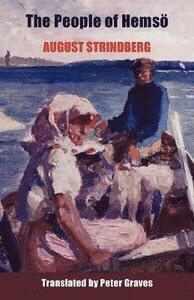
In ten posts, I am recommending great Swedish reads to enjoy during the dark days. This is the eighth one – ‘The People of Hemsö’ – written in 1887 by legendary Swedish author August Strindberg.

Carlsson is on his way to the island of Hemsö in the Stockholm archipelago to work at widow Flod’s farm. With Flod’s husband dead, the farm is falling part. Drama ensues. A classic tale of greed, jealousy, love, lust and lies.

Swedish must reads 7: ’Popular Music from Vittula’

Over 10 posts, I will give you a recommendation of a Swedish book, translated into English, that is well worth a read. The sixth recommendation is ’Popular Music from Vittula’ from 2000, written by Mikael Niemi.

This brilliant book is set in the very north of Sweden during the 60’s and 70’s and is a young boy’s coming of age story. Based on the author’s own childhood, we get to experience a distant time in a remote region of Sweden influenced by communism, alcoholism, machoism, and rock and roll.

Swedish serenity in the cemetery

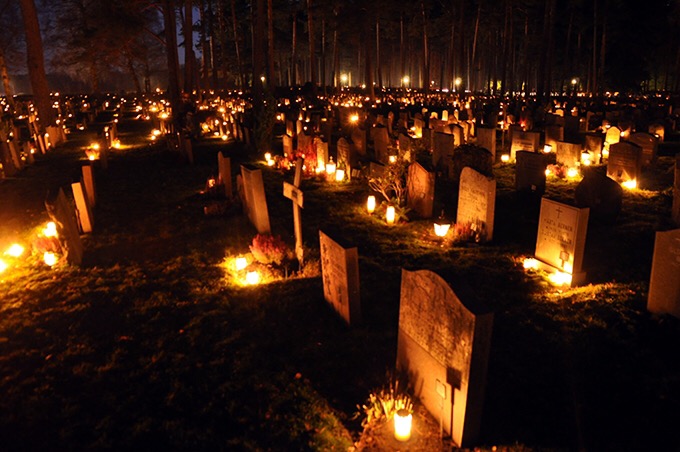
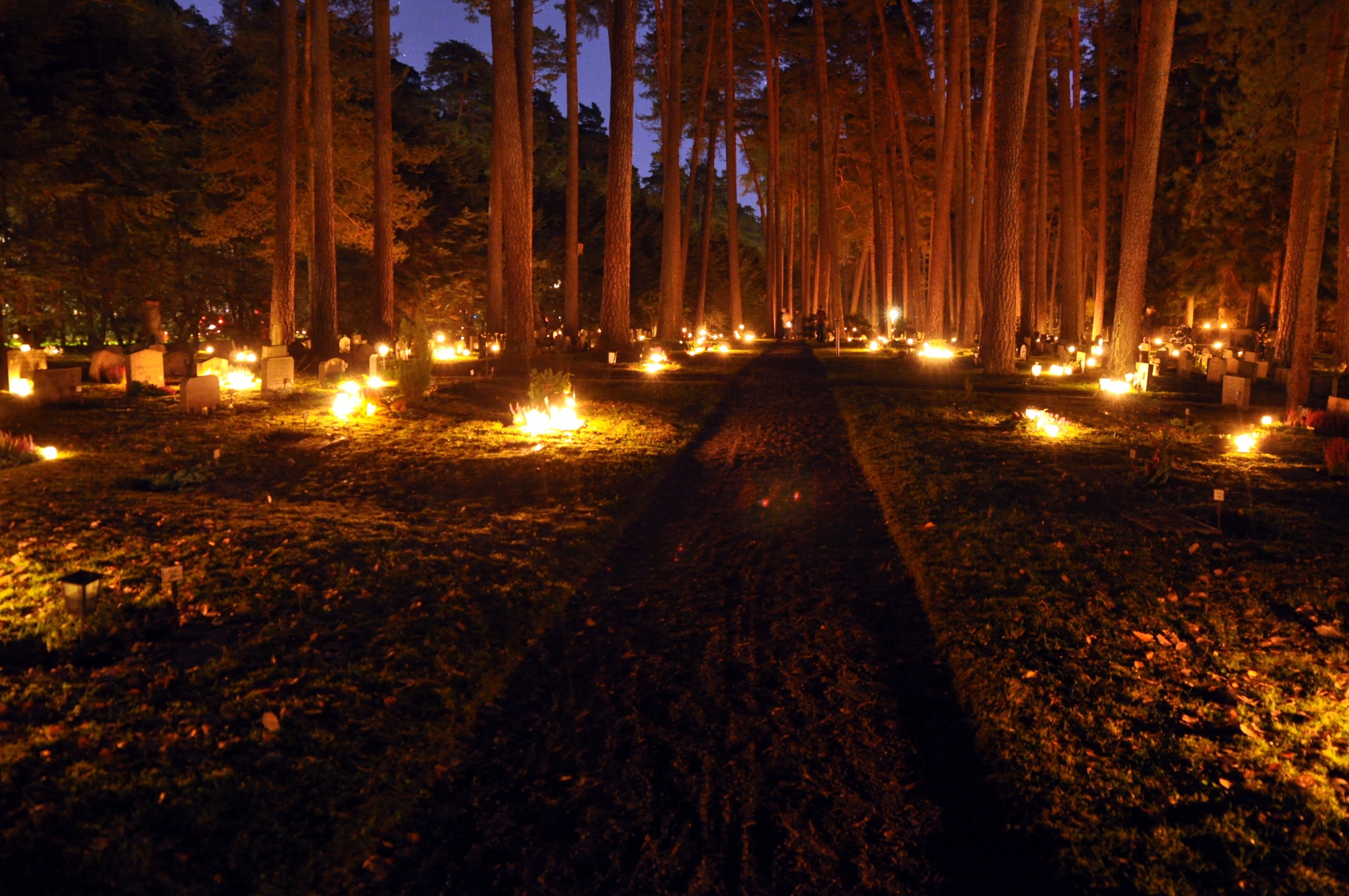
I remember walking around Stockholm when I had recently moved here. It was a pitch black Saturday evening in November, cold and crisp. As I approached a majestic church, I noticed that it was shimmering from the grave yard. This yellow and white light slowly flickered and cast shadows on the gravestones and the church wall. As if drawn by a magic spell, I walked up to the church and looked over the wall.

The sight that met my eyes was spectacular and serene at the same time. Hundreds of candles were spread around the cemetery, decorating each of the graves. In the memory grove a bright blazing blanket of candles lit up the area. It was as if the spirits of the dead had come out to play.

In Sweden, the Saturday between 31 October and 6 November is All Saints’ Day (the Sunday after All Saints’ Day is called All Souls’ Day to separate between the saints and the dead). Since the 1800’s Swedes have, during this weekend, made pilgrimage to graveyards up and down the country to decorate the graves with candle light and to pay respect to the dead.

It is a much more elegant and atmospheric tradition than the typical Halloween parties that otherwise have become very popular in Sweden. It is a truly beautiful experience to walk through the churchyards this weekend. In the pitch black November Nordic darkness, it is a peaceful reminder of those who have gone before us.

This year is a bit different however. The corona pandemic has led to restrictions and there is a recommendation to refrain from going to cemeteries this weekend. We should honour our dead, but try not to contribute to the spread of the virus at the same time. So if you plan to head to your nearest cemetery anyway, make sure to keep distance to the other visitors, and make the visit quick. Alternatively, light a candle in your own garden, or balcony this year.

Historical day in Stockholm – the Golden Bridge

In the center of Stockholm, a large building project is starting to take shape. The Slussen Project started 5 years ago and is an enormous feat of engineering that aims to replace a current structure connecting the southern island of Södermalm to the Old Town. The current concrete structure has been in place since the 1930’s and is literally crumbling. The entire structure needs to be demolished and constructed from scratch.

Ever since 1642, there has been a lock between Södermalm and the Old Town in Stockholm. It has been rebuilt four times. This is the fifth, and it is not without controversy.

Today, an important milestone in the project was reached. An enormous new bridge, known colloquially as the Golden Bridge (although it is in fact ockra), was inaugurated by the Swedish King. The bridge connects the two parts of the city, but divides the residents of Stockholm. Some think it’s very effective and attractive, others think it is a monstrous metal clump.

It really doesn’t matter what people think, the Golden Bridge (correct name Slussbron) is now in place and opens tomorrow at 5am for traffic. Then, the demolishing of the rest of the old structure will begin. The whole project is due to be completed in 2025, assuming no delays.

In the meantime, Stockholmers can walk, cycle and drive over the Golden Bridge knowing they are an integral part of the city’s urban history.

Swedish expression – ‘Cool as a bowl of fermented milk’

In English, we have the expression ‘cool as a cucumber’. It was first recorded in a poem by John Gay in 1732. The Swedish version of this is ‘cool/calm as a bowl of fermented milk’, or ‘lugn som en filbunke’ in Swedish.

What, you might be asking, is a filbunke? Well, according to the dictionary it is ‘milk that has fermented, unstirred, in small bowls. Has a pudding-like consistency. Traditionally made in small bowls from (unpasteurized and unhomogenized) raw milk, which normally contains some cream. The cream forms a yellowish layer of sour cream on top. Comes unflavoured and flavoured.’

We don’t have an equivalent dish in English as far as I know.

Although the dish has been around since the 1600’s, the expression ‘cool as a filbunke’ entered the Swedish language in 1845. Playwright Johan Jolin wrote in his play ‘A Comedy’ – ‘I’m cool, cool as a filbunke’. It was met with much hilarity. I guess he thought there was something chilled out about a bowl of fermented milk.

Sweden’s 7th city at the meeting of 7 roads

Sweden is rich with history and historical places. One such place is the city of Örebro. This city is built on the Black River that flows into the Lake Hjälmaren, in the southern third of this long, narrow country. From Stockholm, it takes about 2 hours in a car.

Örebro became an official town in the 1200’s but a settlement pre-dates this by a few hundred years. The name Örebro means ’bridge over a gravel bank’. ’Öre’ is a deviation of ‘eyrr’ which is a old Norse word for gravel bank. At this point, the Black river was shallow and it made sense to build a bridge, so that passers-by didn’t have to wade through the water to cross it.

The position of Örebro in time became very strategic and was a junction between 7 different ancient roadways. These roadways are still preserved today. Because of the usefulness of this geographic position, King Magnus Eriksson built a fortress in 1350 in an attempt to defend the site. Over time, this site has been involved in a great many conflicts and wars. In 1573, the fortress was then transformed into a magnificent Renaissance castle, similar to the one that we see today. The Castle of Örebro is one of the city’s most famous and recognisable landmarks and it certainly is a proud building towering up in the middle of the city. For more information about the castle, go to http://www.orebroslott.se

Today, the Örebro area has about 160,000 residents, making it Sweden’s 7th largest city.

If you, like me, are on a road trip in this area of the country, it is well worth a stop over.