Swedish icons 3: Greta Garbo

I can’t write a series about Swedish icons without mentioning Greta Garbo, perhaps the most famous Swedish film star of all time.

Born Greta Gustafsson in Stockholm in 1905, she first rose to international fame in the silent movies of the 1920’s. In 1930, she made a successful transition into talkies, in the film Anna Christie, which was marketed under the slogan ‘Garbo talks!’ Her first line was an iconic ‘Give me a whisky, ginger ale on the side, and don’t be stingy baby’, which was delivered with a deliberately heavy and husky Swedish accent.

She appeared in classic films such as ‘Queen Christina’, ‘Anna Karenina’, ‘Mata Hari’ and ‘Camille’. Noted for her flawless beauty, cool persona and melancholy, she retired from the screen aged 35. For the rest of her life, she lived as a recluse, which passingly echoed her most famous film line from Grand Hotel – ‘I want to be alone’.

Garbo died in 1990, and her ashes are interred in Stockholm. In the Stockholm neighbourhood of Södermalm, there is a square called Greta Garbo Square, not far from where she was born.

Swedish expression: ‘to suspect owls in the moss’

In English, when we suspect something isn’t quite right we ‘smell a rat’. In Swedish, they suspect ‘owls in the moss’.

The expression – ‘att ana ugglor i mossen’ – has Danish origin. The original saying dates to the 1600’s and was ‘det är ulve i mosen’ which translates as ‘there’s a wolf in the moss’. The expression makes sense and was used when a dangerous situation was suspected.

So, how did a wolf turn into an owl? There are two theories. One theory is that it happened as a mistake. The sound of the Danish word for wolf ‘ulve’ was misheard as ‘uggla’ the word for owl – and the creature hiding in the moss became a wise bird rather than a viscous predator.

Another theory is that the saying was consciously changed when wolves disappeared from Denmark. The wolf was replaced by an owl because it hoots a warning at the presence of danger.

Swedish icons 2: Ingrid Bergman

Swedish actor Ingrid Bergman is considered one of Sweden’s best, and most famous, actors ever. Born in 1915 in Stockholm, she moved to USA in 1939 and took the world by storm. Her poise, her beauty and her talent were showcased in classic films such as Casablanca, For Whom the Bell Tolls, Notorious and The Bells of St Mary’s.

The mother of actor Isabella Rossellini, Ingrid Bergman was highly decorated, winning three Oscars for best actress in Gaslight and Anastasia and for supporting actress in Murder on the Orient Express. She has been described by the American Film Institute as one of the world’s Top 50 most significant actors throughout history.

Ingrid Bergman died of breast cancer in 1982 in London and she is buried in Stockholm.

Swedish Icons 1: Anita Ekberg

Swede Anita Ekberg, from Malmö in Skåne, played an iconic leading role in Federico Fellini’s La Dolce Vita (1961). She is notably remembered for the scene where she bathed in la Fontana di Trevi. Born in 1931, she won the Miss Sweden title at the age of 20, and then went to USA to compete in Miss Universe. Although she didn’t win, she worked as a model and a hostess and got small film roles.

She was famously opinionated and refused to change her surname saying that if she became famous everybody would learn her name, and if she didn’t it wouldn’t matter.

Ekberg appeared in many films, but interestingly never a Swedish one. She retired from acting in 2002 and died in 2015 at age 83 in Rome.

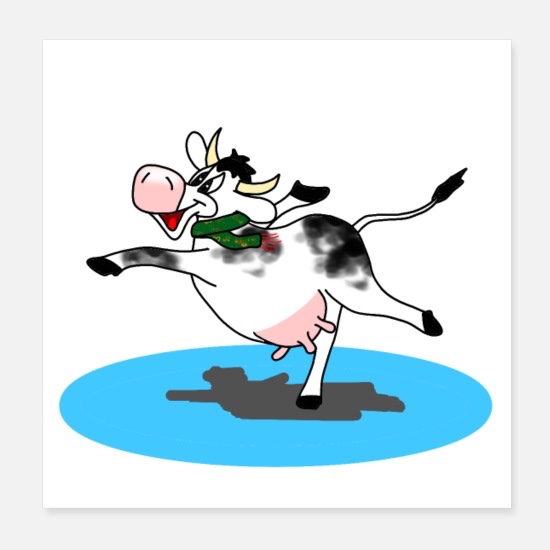
Swedish expression: ’There is no cow on the ice’.

With all the open air ice skating going on at the moment, I am reminded of the Swedish expression ‘Det är ingen ko på isen’ or ’there’s no cow on the ice’. This expression is used to mean there is ‘ no need for worry’ or ‘don’t be concerned’. So, where does the expression originate?

Well, like many Swedish expressions, this one also has a rural origin. In the old days, farmers that had no running water would take their cows down to the lake to drink. As long as the cows stayed on land, and didn’t venture onto the frozen waters, there was no risk of them falling through the ice and drowning. In fact, the expression is an abbreviation of the longer saying ‘there’s no cow on the ice as long as their rear end is on land’. (Det är ingen ko på isen så länge stjärten är i land.) As long as they had a firm footing, they could rescue themselves if the ice broke around the periphery of the lake.

So it would seem that the original meaning of the saying might have been ‘there is no need for worry as long as you take precautions.’

Swedish expression: ’There is no cow on the ice’.

With all the open air ice skating going on at the moment, I am reminded of the Swedish expression ‘Det är ingen ko på isen’ or ’there’s no cow on the ice’. This expression is used to mean there is ‘ no need for worry’ or ‘don’t be concerned’. So, where does the expression originate?

Well, like many Swedish expressions, this one also has a rural origin. In the old days, farmers that had no running water would take their cows down to the lake to drink. As long as the cows stayed on land, and didn’t venture onto the frozen waters, there was no risk of them falling through the ice and drowning. In fact, the expression is an abbreviation of the longer saying ‘there’s no cow on the ice as long as their rear end is on land’. (Det är ingen ko på isen så länge stjärten är i land.) As long as they had a firm footing, they could rescue themselves if the ice broke around the periphery of the lake.

The Swedish hot wall – a murderous treat

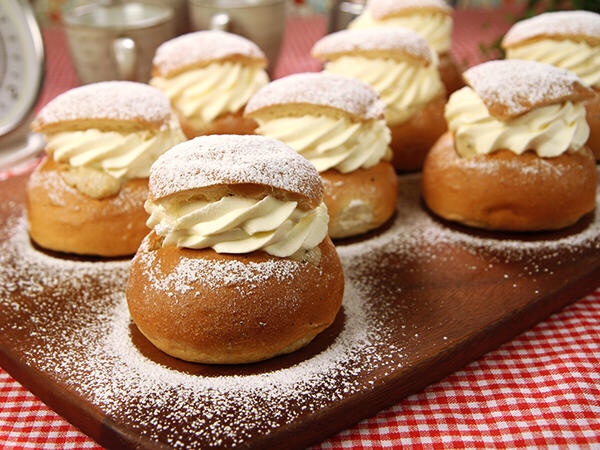
I’ve written previously about the cream bun called a semla that is eaten around this time of year in Sweden. Traditionally consumed on Shrove Tuesday, this is a sweet, wheat bun filled with whipped cream and almond paste. And it is de-lish-us.

However, there is a way to eat it that I have never got on board with. A traditional method called the ‘hetvägg’, which translates literally a ‘hot wall.’ This is when the semla is placed into a bowl of warm milk, and eaten with a spoon. The result is a sugary, creamy slop.

The ‘hetvägg’ has a long history, going way back to the 1700’s when a warm, wedge-shaped spiced bun was served in a bowl of warm milk. This was eaten around Europe. In fact, the name ‘hetvägg’ has nothing to do with ‘hot wall’, but comes from the German for ‘hot wedge’ – “heisse wecke”. The top of today’s semla is often wedge-shaped as a historical nod to the original bun.

It is said that King Adolf Fredrik died from eating too many ‘hetvägg’ in 1771, but in fact it was a heart attack. Granted, he was a gluttonous man, and eating ‘hetvägg’ was indeed part of his questionable diet. After his death, there was a call to ban the sugary treat, as it was rumoured to have murdered the king.

The ‘hetvägg’ wasn’t banned and today it is still a popular way to consume the semla. I personally prefer mine dry and fluffy. But, hey, as they say in Swedish – ‘taste is like the backside – divided!’

It’s fatty Tuesday – Swedish style!

Today it’s ‘Fat Tuesday’ in Sweden, known as Shrove Tuesday or Mardi Gras around the world.

While in the UK we eat pancakes (today is even called Pancake Day) and in Latin America they scoff down fried bread, Swedes celebrate by eating the traditional cream Lent bun – the ‘semla’. I’m also clearly going to indulge. In fact, my mouth is watering just writing this post.

The semla is a creamy bun filled with delicious almond paste. They were eaten traditionally in Sweden to commemorate the start of Lent and the great Fast, leading up to Easter. In the south of Sweden, they still refer to them as ‘fastlagsbullar’ – Shrovetide buns. Nowadays however, semlas are usually sold anytime between Christmas and Easter.

I just love them. I could eat a barrel load. But I’d end up looking like a barrel if I did. I love the taste of them, and the feeling of luxurious indulgence. I also love the knowledge that as you take a bite into a creamy semla, you are biting into over 500 years’ history of Scandinavian baking.

The word ‘semla’ comes from the Latin ‘simila’ which means fine flour and originally referred just to the bun without any filling. As long ago as the 1500’s, bakers started to hollow out the middle of the bun and fill it with cream and butter. As ingredients became more available, bakers started adding almond and cardemon and the type of semla that we know today developed towards the end of the 1800’s. After rationing of sugar and dairy products ceased at the end of WW2, the semla took off and became very popular.

Nowadays the semla trend has reached new heights. Every year bakers around the country try to launch new types of semla, with their own spin on it -for example, the semla wrap, the semla burger, the semla layer cake, the semla cocktail, the chocolate semla, the vanilla semla, the lactose-free, gluten-free vegan semla. This year, the gross-sounding fermented Baltic herring semla was revealed.

But I’m a traditionalist in this matter. Give me a round fluffy cardemon-scented wheat bun brimming over with whipped cream and almond paste.

And give it to me NOOOOWWW!!!

It’s fatty Tuesday – Swedish style!

Today it’s ‘Fat Tuesday’ in Sweden, known as Shrove Tuesday or Mardi Gras around the world.

While in the UK we eat pancakes (today is even called Pancake Day) and in Latin America they scoff down fried bread, Swedes celebrate by eating the traditional cream Lent bun – the ‘semla’. I’m also clearly going to indulge. In fact, my mouth is watering just writing this post.

The semla is a creamy bun filled with delicious almond paste. They were eaten traditionally in Sweden to commemorate the start of Lent and the great Fast, leading up to Easter. In the south of Sweden, they still refer to them as ‘fastlagsbullar’ – Shrovetide buns. Nowadays however, semlas are usually sold anytime between Christmas and Easter.

I just love them. I could eat a barrel load. But I’d end up looking like a barrel if I did. I love the taste of them, and the feeling of luxurious indulgence. I also love the knowledge that as you take a bite into a creamy semla, you are biting into over 500 years’ history of Scandinavian baking.

The word ‘semla’ comes from the Latin ‘simila’ which means fine flour and originally referred just to the bun without any filling. As long ago as the 1500’s, bakers started to hollow out the middle of the bun and fill it with cream and butter. As ingredients became more available, bakers started adding almond and cardemon and the type of semla that we know today developed towards the end of the 1800’s. After rationing of sugar and dairy products ceased at the end of WW2, the semla took off and became very popular.

Nowadays the semla trend has reached new heights. Every year bakers around the country try to launch new types of semla, with their own spin on it -for example, the semla wrap, the semla burger, the semla layer cake, the semla cocktail, the chocolate semla, the vanilla semla, the lactose-free, gluten-free vegan semla. This year, the gross-sounding fermented Baltic herring semla was revealed.

But I’m a traditionalist in this matter. Give me a round fluffy cardemon-scented wheat bun brimming over with whipped cream and almond paste.

And give it to me NOOOOWWW!!!

The Swedish hot wall – a murderous treat

I’ve written previously about the cream bun called a semla that is eaten around this time of year in Sweden. Traditionally consumed on Shrove Tuesday, this is a sweet, wheat bun filled with whipped cream and almond paste. And it is de-lish-us.

However, there is a way to eat it that I have never got on board with. A traditional method called the ‘hetvägg’, which translates literally a ‘hot wall.’ This is when the semla is placed into a bowl of warm milk, and eaten with a spoon. The result is a sugary, creamy slop.

The ‘hetvägg’ has a long history, going way back to the 1700’s when a warm, wedge-shaped spiced bun was served in a bowl of warm milk. This was eaten around Europe. In fact, the name ‘hetvägg’ has nothing to do with ‘hot wall’, but comes from the German for ‘hot wedge’ – “heisse wecke”. The top of today’s semla is often wedge-shaped as a historical nod to the original bun.

It is said that King Adolf Fredrik died from eating too many ‘hetvägg’ in 1771, but in fact it was a heart attack. Granted, he was a gluttonous man, and eating ‘hetvägg’ was indeed part of his questionable diet. After his death, there was a call to ban the sugary treat, as it was rumoured to have murdered the king.

The ‘hetvägg’ wasn’t banned and today it is still a popular way to consume the semla. I personally prefer mine dry and fluffy. But, hey, as they say in Swedish – ‘taste is like the backside – divided!’