Advent Calendar Dec 3: Gävlebocken

Every day, I will open a window containing a Swedish word that has something to do with the festive season.

Today’s word is ‘Gävlebocken‘ which translates as ‘The Gävle Goat’.

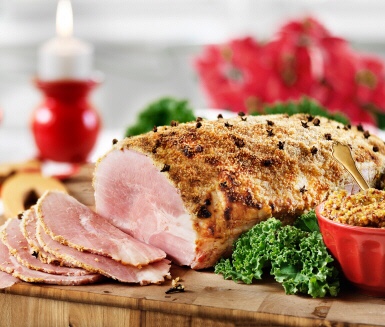
This strange tradition takes place in the Swedish town of Gävle. Every year, a giant handcrafted straw goat is built on the town’s Castle Square. And almost every year, it gets burned to the ground by a pyromaniac.

One year, it was even burned down before its inauguration. Consequently, the local authority have increased security and have managed to prevent the burning for the last three years.

The symbol of the goat is a traditional Christmas decoration in Sweden, called a ‘julbock’ – a Christmas goat. Usually made of straw, a goat is placed under the Christmas tree or small goats are hung from the branches. The symbol of the goat has ancestry in Scandinavia far back in Nordic mythology and, up to the 1800’s, it was the goat who brought presents during the festive season. A kind of precursor to Santa Claus.

So although the Christmas goat has endured for centuries, it remains to be seen if the Gävle goat survives until the New Year.

WtS Advent Calender Dec 2 – Pepparkaka

Welcome to the Watching the Swedes (WtS) Advent Calendar

Every day leading up to Christmas, I will open a window containing a Swedish word that has something to do with Christmas and the festive season.

Today’s word is ‘pepparkaka‘, which translates as gingerbread.

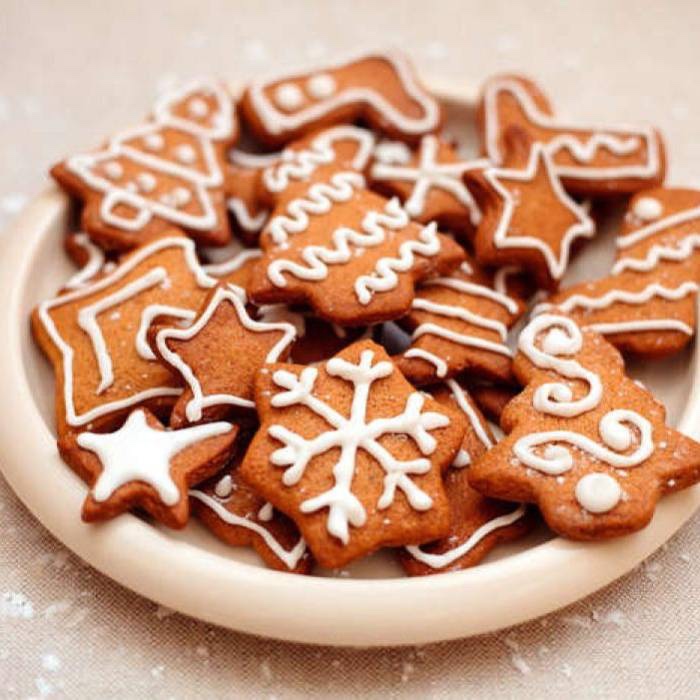
Other than glögg, nothing else is more synonymous with the Swedish festive season than pepparkaka (gingerbread). The Swedish version of gingerbread comes in the form of thin crispy biscuits flavoured with cinnamon, cardamon, ginger and cloves. Formed in different shapes such as hearts, trees, and stars, gingerbread is eaten plain or decorated with icing. Many people buy squeezy blue cheese in a tube and squirt it onto the biscuit before consumption. Some people build gingerbread houses as part of their Christmas decorations.

Making your own pepparkaka is a cosy a Christmas tradition – here is a typical recipe. However, most people buy their gingerbread ready-made.

Pepparkaka has been associated with Christmas in Sweden since the 1800’s but was eaten much earlier than that. The first documented record of pepparkaka in Sweden is from 1335 for a royal wedding. In a recipe from the 1400’s, gingerbread included pepper, which could be why it has the name pepparkaka. But nobody is really sure.

Ever wondered why Swedish people are so nice? Well, the answer lies in an old myth – apparently the very eating of pepparkaka is what makes you nice.

WtS Advent Calendar Dec 1 – Glögg

Welcome to the Watching the Swedes (WtS) Advent Calendar

Every day leading up to Christmas, I will open a window containing a Swedish word that has something to do with Christmas and the festive season. Today’s word is the fantastic-to-say ‘glögg‘. (Pronounced ‘glugg’)

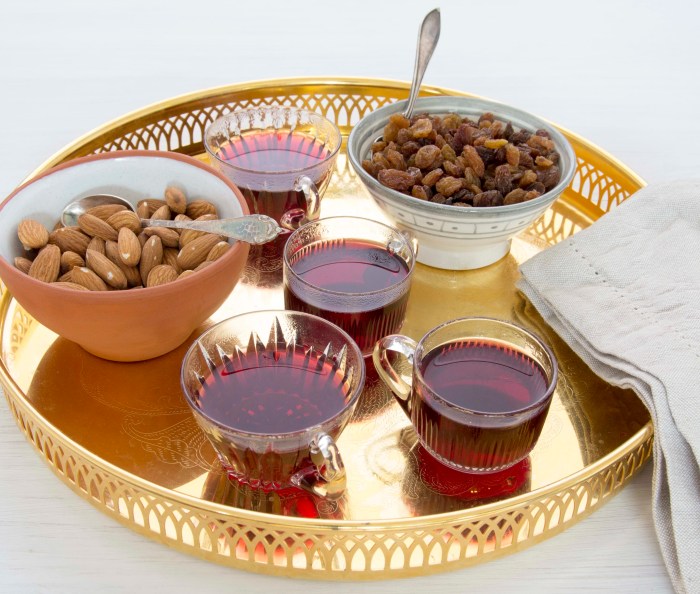
Glögg is festive Swedish mulled wine: heated wine, most commonly red, with spices. It is drunk together with almonds and raisins added in. And it is delicious! Glögg is very popular, having been drunk in Sweden around Christmas since the 1890’s. However, the earliest record of drinking heated wine dates back to the 1500’s. The word glögg comes from the Old Swedish word ‘glödg’, and the verb ‘glögda’ – to heat up. This, in turn, has its origins in the verb glöder (to glow).

Some make their own glögg, here is a typical recipe.

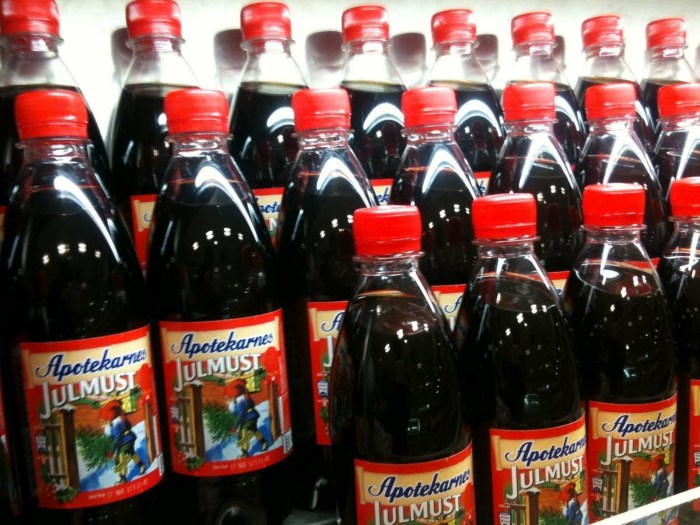
But most people buy their glögg ready-made in a bottle. In addition to the traditional flavours, each year a new flavour of the nectar is released and there’s always a debate regarding its success. This year’s glögg (2019) is called Aloha and is an infusion of passion fruit, hibiscus, coconut and coffee. Yummy!

161 years old today!

If Selma Ottilia Lovisa Lagerlöf was alive today, she would be celebrating her 161st birthday.

Born 20 November 1858, Selma Lagerlöf was a Swedish author, publishing her first novel, ‘Gösta Berling’s Saga’, at the age of 33. She is considered to be one of Sweden’s most significant writers throughout history.

She was a woman of firsts. She was the first female writer to win the Nobel Prize in Literature, which she was awarded in 1909.

Additionally, she was the first female to be granted a membership in The Swedish Academy in 1914 – the famous literary committee that selects the Nobel prize laureate amongst other things.

She wrote prolifically – mostly novels, religious texts and short stories. Other than ‘Gösta Björlings Saga’, her most famous works are probably ‘Jerusalem’, ‘The Treasure’ and ‘The Wonderful Adventures of Nils Holgersson’. The latter has been translated into over 30 languages.

Selma was a politically active woman – involved as a speaker for the Swedish Suffragette movement, and herself living in a controversial same sex relationship. She was also a vocal anti-nazi.

The house where Selma Lagerlöf was born on 20 Nov 1958, grew up and later lived is today open to the public as a museum. If you’d like to visit, it’s in the county of Värmland and can be checked out at Mårbacka

Sweden’s most common surnames

Surprisingly there are 9 people in Sweden who have the same surname as me. I’m very curious to know who they are.

According to the Swedish Statistics Bureau, which surnames are then the most common in Sweden? Any guesses?

Here is the latest top 10 list from 2018:

  1. Andersson
  2. Johansson
  3. Karlsson
  4. Nilsson
  5. Eriksson
  6. Larsson
  7. Olsson
  8. Persson
  9. Svensson
  10. Gustafsson

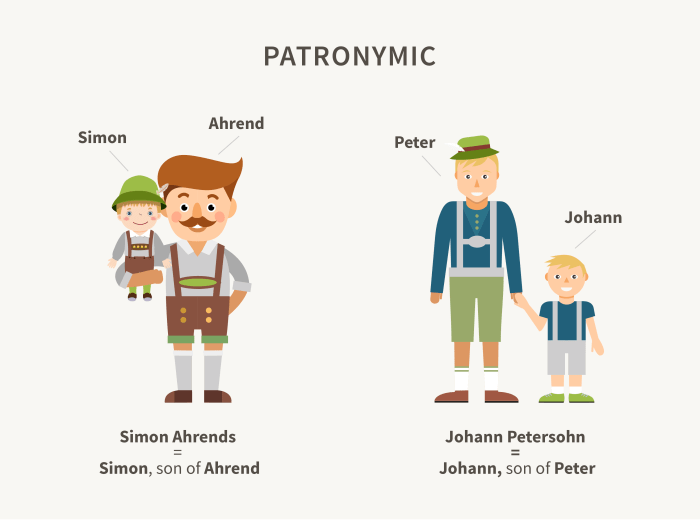
Notice a pattern?! In fact, the first name that doesn’t end in the patronymic ‘son’ is the name Lindberg which lands in 17th position.

Interestingly there are a few more ‘sons’ after that and then Lindström, Lindqvist and Lindgren are the next ones. So ‘Lind’, which is a small tree, is also very common.

The first ‘non-Swedish’ name on the list is Ali, which lands in 44th position.

If you’re interesting in knowing about your name, go to scb and check it out under ‘namnstatistik’.

What does it mean to be Swedish?

SWEDEN

I was born in the UK and I am proud to live in Sweden and I am proud, and fortunate, to have received Swedish citizenship. This is a country that, in my mind, builds on equality and solidarity. This a country that tries to do the best for its people. This is a country that stands up and does the humane thing, even in difficult circumstances. I wouldn’t want to live anywhere else.

I try to look at the world with open eyes. Sweden, like all other countries, has its problems: an ageing population and an expensive welfare state, challenges of integration and inclusion, social problems, unrest and crime. Of course this exists. To claim these didn’t exist would be naive. And of course crime should be fought. But I truly believe that Sweden can solve these issues. And I truly believe that the way forward is the continued path of openness and solidarity. Not fear and defensiveness. Not nationalism. And not lies.

I am proud to be Swedish and live in Sweden. And I am patriotic. But being a Swede is not about eating meatballs, or herring, or chocolate balls, or flying the flag or singing the national anthem. And it is not about being blonde or blue-eyed.

What does it mean to be Swedish then (to me)?

  • Swedes take in thousands of people in their direst need
  • Swedes help people survive war and starvation
  • Swedes lead the way  in social and humanitarian issues
  • Swedes do not criminalize poverty
  • Swedes flourish in a diverse and multicultural society
  • Swedes stand up for human rights and equality between men and women
  • Swedes believe in self-fulfillment –  you can be whoever you want to be
  • Swedes respect children
  • Swedes believe in self expression and the right of free speech
  • Swedes understand the work life balance
  • Swedes cherish the environment

In my mind, this is what it is to be Swedish. These are the very things that brought me to Sweden and made me fall in love with the country and its residents.

This is my call to action. Do not buy into the lies and falsehoods that are spread about this country. Do not buy into the fearmongering of power-hungry conservative politicians. Do not buy into the nationalistic rhetoric.

On social media, on the streets and in your life, question the source of all information. Challenge racism. Do not just swallow the bullshit. And whenever you disagree, stand up and be a proud Swede!

Have no fear – the Swede is here!
Why Gothenburg is better than Stockholm

I’m currently in Sweden’s second city – Gothenburg – on the country’s west coast.

Home to 600,000 people, Gothenburg isn’t huge but the rivalry towards Stockholm seems to be. So out of curiosity I googled ‘what’s so good about Gothenburg‘ and I stumbled upon an article entitled ‘10 reasons why you should visit Gothenburg over Stockholm.

These are the reasons it cited. What do you think? Is there truth in it? Is Gothenburg better?

  • It’s cheaper
  • It’s less crowded
  • It’s closer to the continent
  • Better seafood
  • A better theme park
  • Better independent cafes
  • Better football
  • The music scene
  • The Way Out West festival
  • The people are nicer

If you’d like to read the article, here’s the link:

10 reasons to visit Gothenburg over Stockholm

Swedish Saints, Souls and shimmering cemeteries

Swiping through social media channels, it’s clear to see that dressing up as witches, vampires and other ghoulish things has become increasing popular in Sweden. Halloween parties are scheduled, not just on the 31st October, but at any time over the few weeks at the end of October and beginning of November.

I’m casting no shade over the masquerade, but personally I am much more enchanted by the traditional Swedish way of celebrating this time of year – it is so serene and reflective.

In Sweden, the first Saturday in November is All Saints’ Day – not necessarily November 1st as in most other countries. In 1983, the Sunday after All Saints’ Day was given the official name All Souls’ Day to separate between the saints and the dead.

Since the 1800’s Swedes have, during this weekend, made pilgrimage to graveyards up and down the country to decorate the graves with candle light.

It is a beautiful experience to walk through the churchyards this weekend. In pitch black November, it is a shimmering reminder of those who have gone before us. Individual graves blink in the Nordic darkness, and memory groves blaze with the collective light of hundreds of flames.

If you are in Sweden today, go to a cemetery. If you happen to be in Stockholm, head for the Forest graveyard (Skogskyrkogården) for a specifically spectacular experience. 

How Swedes agree

Most anthropologists agree that the origin of language is its social function. Language developed as a way of binding together people and cultures in order to better survive. And the words that helped people bond together were the positive words of acknowledgement and agreement, such as ‘sure’, ‘absolutely’ and ‘that’s right’.

These types of words go in and out of fashion of course. Sweden’s current popular one seems to be ‘men verkligen’.

What are some other ways to concur in Swedish?

  • Absolut
  • Precis
  • Visst
  • Jajamensan
  • Jovars
  • Klockers
  • Super
  • Jag instämmer
  • Jag håller med
  • Du har så rätt
  • Jomenvisst
  • Visserligen
  • Förvisso
  • Sant

Why does Swedish seem to have so many phrases of agreement? Is it these that have helped develop the neutral, respectful, non confrontational communication style we traditionally connect with Swedes?

Singing Swedes – the phenomenon of the choir

Choir singing is an an extremely popular pastime in Sweden. In fact, it’s a bit of a national movement with an estimated 600,000 people singing in a choir. That’s around 17% of the population. I myself sing in a choir and I’d say it’s a challenging but cathartic hobby.

Why is choir singing so common in Sweden? Maybe it’s a nice indoor distraction to have during the long dark winter nights? Maybe it appeals to the Swedish collectivist spirit? Maybe it springs from a long history of hymns, folk songs, drinking songs and contemporary music?

Whatever the reason, it’s very popular! And it’s a brilliant way to make Swedish friends!

The oldest still-active choir in Sweden is said to be the church choir of Ytterlännäs with its almost 200 year history. The oldest academic choir is Allmänna Sången from Uppsala University with 160 years on record. Stockholm’s Gay Choir is not only the oldest gay choir in Sweden, but in Europe – founded in 1982.

According to the Choir Society, the average age of a choir singer in Sweden is 56.6 years. So it doesn’t seem to be a pastime for youngsters once they’ve left school. Part of the challenge for many choirs is the process of rejuvenation as more young people are needed to bolster the aging ranks and its harder to attract them. Choirs with specific focuses seem to find it easier to attract fresh blood – such as Stockholm’s Indie Choir, where the waiting list to get in is long.

One of the most well-known specific choirs in Sweden is, not surprisingly, the ABBA choir. Dressed in ABBA outfits they sing, well, ABBA songs at ABBA tributes. And they love it!

In Sweden, choir song is also a popular way to bring people together, such as in integration choirs. Established Swedes meet newly arrived people and they sing together. The Östersund choir ‘The Rocking Pots’ is a great example of this.

Which town in Sweden has the most choirs do you think? Well according to the statistics, the town of Sundsvall seems to have the most song birds!

Choir festivals are also popular, bringing together choirs from within Sweden and around the world.

One example of this is the upcoming choir festival ‘Queertune’ which on 27-29 September 2019 brings together 14 LGBTQI choirs from Sweden, Norway, Denmark and Finland.

If you’re interested in listening to the concerts, go to the website http://www.queertune.se to read all about it.

If you’re tempted to join a choir, a good place to look is http://www.sverigeskorforbund.se

Check it out and see what’s available where you live.

So join the Swedes and get singing!