Swedish ways to die #4 Death by Ice

I am continuing my look into Swedish death and have come to Part 4 – Death by Ice.

Although it’s hard to imagine when the sun is shining, and we are baking in summer temperatures, Sweden is often covered in snow and ice. This slippery, freezing covering often leads to many a treacherous way to come to a sticky end.

1. Ice bombs. Walking the streets of any town in Sweden is often a dangerous pastime. The snow and ice that forms on the roofs loosens as the weather improves or the ice gets too heavy. This leads to an avalanche of snow which plummets to the street beneath. For any unfortunate walking along the street this can mean a rendezvous with death. As the snow and the ice rushes down, it hits the walker on the head. In best case, a concussion. In worst case, a permanent surprise.

2. Ice rafts. As the frozen lakes of Sweden break up, they form sheets of ice floating on the surface. These rafts of ice occur suddenly leaving any unsuspecting person or animal trapped afloat. In best case, you are rescued. In worse case, you drown in the frozen waters.

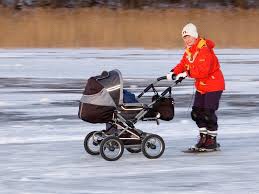
3. Skating. A safe sport when contained to a rink, the danger increases when Swedes take their skates out onto open sea. The notion of skating close to the edge where the ice becomes water is the main thrill. But if you’ve eaten one too many cinnamon buns the ice may break beneath you, and you plunge, in worse case, to a watery grave.

4. Pavement runs. Did you know that pavements kill? Well they do in Sweden. Black ice, shifting temperatures and substandard street-cleaning combine to turn the pavements into to bobsleigh runs. Many a broken bone occurs on the lethal streets of Swedish cities. And in worse case, broken necks.

So there you have it – four very Swedish icy ways to perish.
Swedish ways to die #3 Death by cyclist

In this short series, I explore how death can also be cultural. Here is number 3.

The summer season is well and truly here. It brings with it wonderful things such as picnics, batheable water, barbecues, sun tans and crispy pink wine.

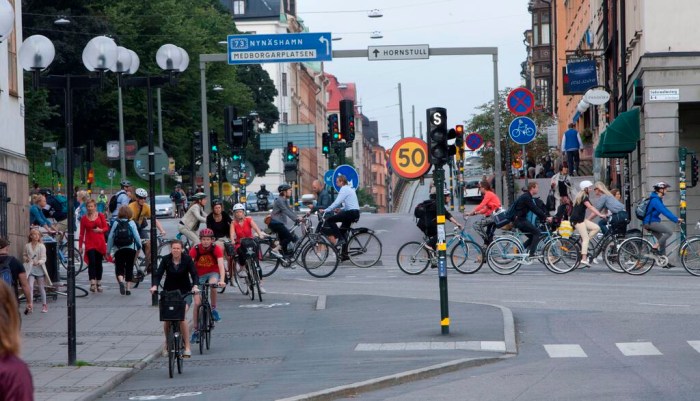
However, there is a downside. The summer also presents some horrors such as disease-spreading ticks, pollen explosions, forest fires and demons on two wheels. Yes, cyclists. Of all the plagues to tarnish the summer, the cyclists are probably the worst. They can be the harbingers of death.

In Stockholm, cyclists often move in swarms. Like a disturbed hive, they flourish over the horizon and zoom down the streets, mercilessly crushing everything in their path. God help the poor pedestrian who gets in the way. In the best case, you receive abuse, in the worst case a collision occurs which causes the pedestrian to literally and metaphorically, bite the dust.

Most accidents and deaths happen on crossings. Arrogant, egocentric Swedish cyclists don’t seem to think that traffic rules apply to them. So a red stop light only applies to cars. For the cyclist it means ‘no, not you, please keep cycling, and preferably really fast’.

The morbid scenario is easy to envisage. The pedestrian stands patiently and waits to cross the street. Finally, he or she receives the signal from the green man. He or she steps confidently onto the crossing and BAAM! Death by cyclist! A rather Swedish way to die.

Swedish ways to die #2 Death by fishing

I have it from a reliable source that death by fishing is a very Swedish way to die.

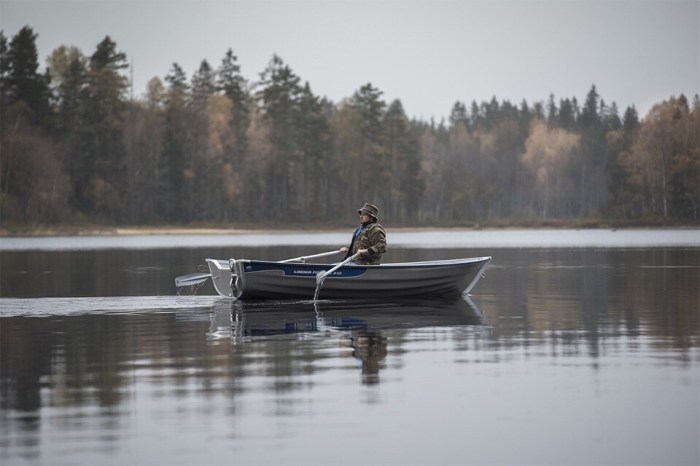
Sweden is populated with many, many lakes. There are over 100,000 lakes larger than a hectare and countless lakes smaller than that. Given the access to so much water, fishing is a popular pastime amongst Swedes. But it is not all smooth sailing, it can lead to a watery grave.

Apparently of all the deaths that occur in Sweden connected to fishing, there is a strange pattern connected to most of them. Often older men and often near the shore in shallow water. Upon further investigation, I found the reason – the drunk stubborn Swede.

Imagine this: a man decides to go fishing, sits in the middle of the lake drinking copious amounts of beer, realises he needs a pee, rows to the shore to relieve himself, steps out of the boat, trips over because he is not sober, face plants amongst the reeds, and drowns. Of course, this is highly irregular. One should climb out of the boat at a safe spot and go on to land to urinate. But these Swedes do it their own stubborn way – and pay the ultimate price.

So, death by fishing – a very Swedish way to die.

NB please note the picture has nothing to do with dying while fishing.

Swedish ways to die #1 In the lift

There is one thing that unites us all. We all die. That said, there are many ways in which we can shuffle off this mortal coil. Just like our lives are unique, so probably are our deaths.

Living in Sweden, I am often struck by the many ways one can die. Perhaps not specific to this country, but at least very cultural.

Here’s the first way: ‘the careless accident in the lift’ – a tragic way to pop your clogs.

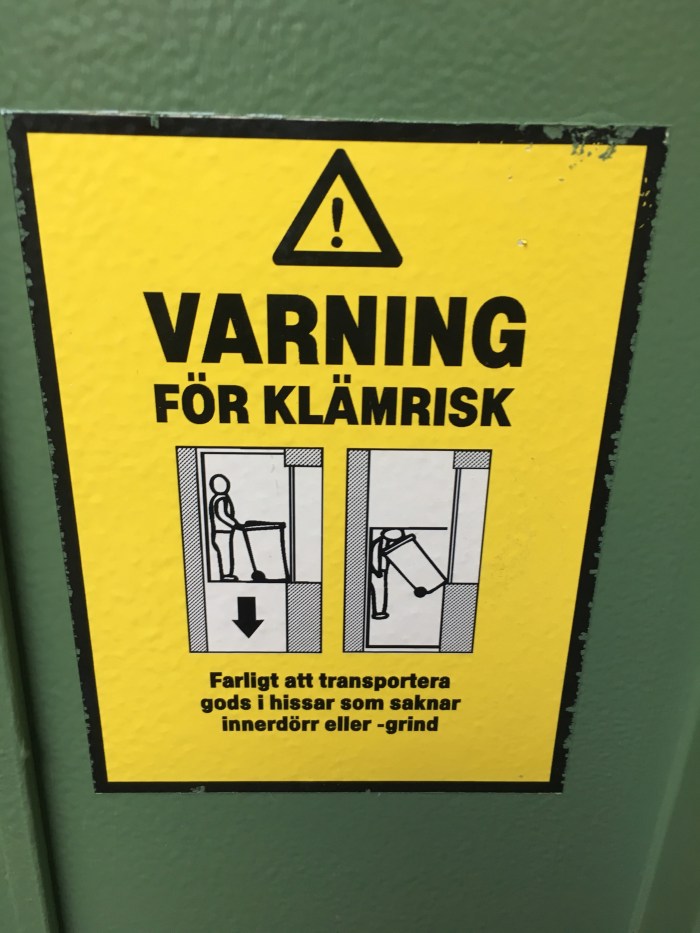
Many Swedish lifts don’t have inner doors. As the lift descends, the floors slide by visibly. If you have a large article with you, for example, a wheely bin, it can fasten on the edge of the lift. The bin gets stuck, the lift keeps descending and voila, you are crushed to death or decapitated. A very Swedish way to die.

Below, you see a sign on the door to the lift in my apartment building. It says ‘warning – risk of crushing. It is dangerous to transport goods in lifts without inner doors or gates.’

15 Swedish words for getting married

With the UK, and probably the USA, in a Royal wedding frenzy at the moment, it made me think about Swedish words for getting married. In English, we have for example ‘tie the knot’, ‘take the leap’ and ‘get hitched’, so I did some research. And I found the following formal, and less formal expressions for getting wed.

  1. gifta sig – to get married
  2. ingå äktenskap – to enter into marriage
  3. äkta – to wed
  4. ingå giftermål – to enter into marriage
  5. Gå träda i brudstol – ‘step onto the bridal chair’ (tradition from the 1600’s)
  6. Ingå förmälning – enter into marriage
  7. Gå brud – ‘go bride’
  8. Vigas – get married
  9. Föra till altaret – lead to the alter
  10. Knyta hymens band – tie the wedding band
  11. Bygga hjonelag – ‘build a marriage’
  12. Slå sina påsar ihop – ‘join your bags’
  13. Förena sina öden – unite your destinies
  14. Gänga sig – get married
  15. Stadga sig – settle down

Interestingly, the most used word for married in Swedish is the same as the word for poison – ‘gift’!

Sweden Pride

This year EuroPride comes to Sweden, being held in double cities Stockholm and Gothenburg. The whole concept of LGBT Pride has taken strong root in Sweden, and many towns up and down the country hold their own celebration. For example, today is Springpride in the midland city of Eskilstuna.

Currently there are 73 Pride festivals in Sweden during the year. From Arctic Pride way up in the north to Malmö Pride in the south, it is possible to celebrate throughout the year.

Swedes seem to have embraced the concept of Pride with open arms. There is, of course, a commercial benefit but the main reason seems to be that LGBT Pride resonates well with the societal Swedish values of equality, tolerance and acceptance. However, like everything, it has its opponents. Right wing groups occasionally organize counter demonstrations or, as in Eskilstuna yesterday, decide to put up homophobic, anti-Pride propaganda. Thankfully, these groups are small and as long as the majority of Swedes continue to stand up for Pride, they have little impact.

If you’d like to know where a Pride is near you, go to http://www.svenskapride.se which collects all the National events in one place.

Sweden’s history of LGBT rights is a comparatively progressive story. Changes didn’t happen automatically however. Thanks to the hard work of campaigners, lobbyists, and politicians, society can enjoy one of the most egalitarian legislations in the world. According to wiki:

‘ Same-sex sexual activity was legalized in 1944 and the age of consent was equalized in 1972. Homosexuality was declassified as a mental illness in 1979. Sweden also became the first country in the world to allow transgender persons to change their legal gender post-surgery in 1972 whilst transvestism was declassified as an illness. Transgenderism was declassified as a mental illness in 2008 and legislation allowing gender change legally without hormone replacement therapy and sex reassignment surgery was passed in 2013. After allowing same-sex couples to register for partnership in 1995, Sweden became the seventh country in the world to legalize same-sex marriage countrywide in 2009. Discrimination on the basis of sexual orientation and gender identity and expression has been banned since 1987. Also, since 2003, gay and lesbian couples can adopt children, and lesbian couples have had equal access to IVF and assisted insemination since 2005. Sweden has been recognized as one of the most socially liberal countries in Europe and in the world, with recent polls indicating that a large majority of Swedes support LGBT rights and same-sex marriage.’

The Nobel Prize of SHAME

SvAka_1_pms

In egalitarian Sweden, there is an elitist, powerful, elected-for-life committee called The Swedish Academy. This (royal) Academy is an appointed committee of 18 members whose purpose is to further the ‘purity, strength, and sublimity of the Swedish language.’ To this aim, they are guardians of the Swedish dictionary, and they award many prizes and scholarships to domestic authors. A mostly dusty, bourgeois old bunch, they also are responsible for awarding the prestigious Nobel Prize for Literature every year.

But not this year. Sex and shame has stopped them.

Today, the Academy announced they will not be awarding a 2018 prize. This has only happened 6 times since its beginnings in 1901  – during the world wars and in 1935, when no worthy winner was identified.

On its website, the academy writes ‘The present decision was arrived at in view of the currently diminished Academy and the reduced public confidence in the Academy.”

The ‘reduced confidence’ they are referring to is the rampaging sexual assault scandal that has engulfed the organisation. Several members of the academy have been slandered, scapegoated and forced out, or left at the own volition.

So no prize in literature this year, but most certainly a prize in shame.

It all started last November in regard to the husband of author Katarina Frostenson who is a member of the Academy. Her husband, photographer Jean-Claude Arnault, who ran a cultural project, with funding from the Swedish Academy itself, was accused by 18 women of sexual assault and harassment. Some of this allegedly happened in Academy premises. It has later been suggested that he even groped Sweden’s Crown Princess Victoria at a formal event.  Naturally, Mr Arnault denies the allegations.

This threw the Academy into turmoil. What unfolded in front of us was a drama of betrayal, sexism, power struggle, internal conflict, dishonesty and manipulation. It was like ‘Culture News’ meets ‘Downton Abbey’. Subsequently, a wave of resignations followed, including Ms Frostenson and the head of the academy, Sara Danius.

Today, there are only 11 members in place but the diminished academy requires a quorum of 12 to vote in any new members.

Since its beginning in 1786, the Academy has only ever allowed 9 women to sit in the committee. 9 women! It is clearly yet another example of a white, male-dominated, middle-class organisation. Can it change? Maybe the only way is to rip down this tower and build it up again in a more egalitarian spirit? Surely, the Academy should represent the population in ethnicity and gender at the very least?

The Academy’s slogan is ‘snille och smak’ – which translates as ‘talent and taste’.

Ironic isn’t it, that they are currently demonstrating neither of them.

Swedes on the march

Around Europe, May 1st still contains many ancient pagan spring rites festivities, such as dancing around maypoles, drinking, reveling and welcoming the spring. In Sweden, these festivities have been moved to the festivity of ‘Valborg’ on April 30th, and May 1st has been embraced as the International Workers’ Day.

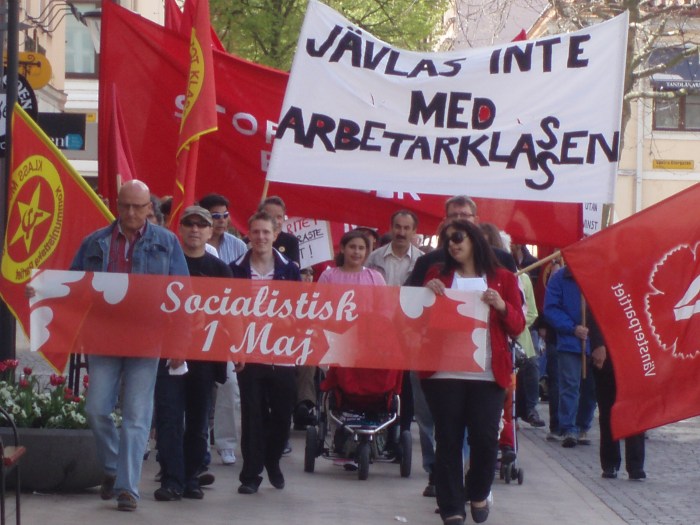
Since 1938, May 1st has been a public holiday and an important celebration of labourers and the working classes in Sweden. Around the country, traffic is shut off, huge flag-waving demonstrations are held and people gather to hear speeches from their politicians and representatives. Today is especially important for politicians on the left side of the political spectrum, and Sweden’s current government the Social Democrats. For decades, they have held their rally in a square in central Stockholm, known as Norra Bantorget, where the Swedish Trade Union Federation is located.

May Day celebrations are of course not unique to Sweden – many countries around the world have similar events. The day is also a public holiday in many countries – though interestingly not in Sweden’s neighbouring Denmark.

Contrary to the stereotype however, not everybody in Sweden supports the left wing political groups. Many Swedes lean towards the centre or the right. For them, today is just a day off work – an opportunity to perhaps nurse hangovers from the festivities of the previous evening or to relax, meet friends and enjoy the day.

Nowadays, there is always a populist shadow over May 1st celebrations. This year, the nationalistic extreme right-wing Party ‘Nordiska motståndsrörelse’ will also be marching in the small towns of Ludvika and Boden. This inevitably means a counter-demonstration will occur and a potentially violent exchange of opinions will develop.

Wondering about Sweden in the middle of the night

It’s 4am and I can’t sleep. One of those nights with a million thoughts churning around in my mind. Outside, the city of Stockholm is quiet. Daylight is starting to slowly break. As I lie here, a question about Sweden pops into my head. Something I’ve never thought of before.

Where does the English name ‘Sweden’ come from?

I should be sleeping, but I decide to google for the answer and I am catapulted into the world of historical research, language theory and ethno-cultural writing. And now I have the explanation and hopefully I can sleep.

Would you like to know? Here’s what I found:

The English name for Sweden was loaned from Dutch in the 17th century to refer to Sweden as an emerging power. Before Sweden’s imperial expansion, Early Modern English used Swedeland.

The Old English name of Sweden was Sweoland or Sweorice, land or realm of the Sweonas – the Germanic tribes of the Sviar. The name of the Sviar itself is derived from a proto-Norse Swihoniz, presumably a self-designation containing the Germanic reflexive ‘swe’ – one’s own, self”.

The modern English name Sweden

was loaned from Dutch. It is based on Zweden, the Dutch name of Sweden, and in origin the dative plural of Zwede. It has been in use in English from about 1600, first recorded in Scottish Swethin, Swadne.

So there you go. Perhaps I can now zleep. Zzzzzzz.