Confusing Swedish greetings of the festive season

It’s that time of year when people greet each other with more than a simple ‘Hej’ (hello), or ‘tjena’ (hi). There are various ways to do it, depending on the day, and it is a bit confusing for the uninitiated.

The last time you see somebody before Christmas, you say ‘God Jul’ (Merry Christmas). This is assuming Christmas is close of course, and does not apply if the last time you see somebody is October. ‘God Jul’ continues through Christmas Eve and Christmas Day.

Around Boxing Day, the greeting changes to ‘God Fortsättning’ (Good Continuation).

Then, around Dec 30/31, ish, it changes to ‘Gott Slut’ (Good Ending) before changing to ‘Gott Nytt År’ (Happy New Year) at the strike of midnight on Jan 1st.

’God Fortsättning’ (Good Continuation) takes over again around Jan 2 and then fizzles out after two weeks. The absolute final date for any form of festive greeting is Jan 13th. This day is called ‘Tjugondag Knut’ and is when Christmas is over in Sweden and the Christmas tree and decorations are traditionally thrown out. After that, it’s back to ’Hej’ again.

So as today is Dec 27, I’d like to wish you all a ‘God Fortsättning’.
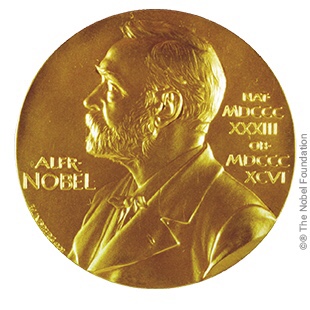
The Nobel prizes. What is your legacy?

Today is Nobel Day when the winners of the five Nobel prizes are celebrated. This year is a digital ceremony and the usual concert and grand banquet have been cancelled to avoid crowding.


But how did the Nobel prizes come about? Well, the story goes like this. Alfred Nobel, the inventor of dynamite, woke up one day to his own obituary in the newspaper. Mistakenly, the paper had declared him dead, when in fact it was his brother. As a title for the obituary, the newspaper had written a rather unflattering ‘The angel of death is dead‘. The journalist also wrote that Alfred Nobel had made it possible to kill more people than anyone who had ever lived.


Suddenly Alfred Nobel understood this is how he would be remembered and, to change it, he founded the Nobel Prizes. Now his name is synonymous with science, literature and peace.


It makes for an interesting reflection. If you could read your own obituary, would you be proud of what you read? Would you also change your behaviours to influence the memory of you? And, if that’s the case – why not get out there and do it now?

‘The Crown’ – Swedish style

The Netflix series ‘The Crown’ which depicts the British monarchy has just started its 4th season. Featuring the sad destiny of Diana, and including events like the Falklands war, it is set to be a dramatic ride.

It got me thinking if they made a Swedish version, probably called ‘Kronan’, who would be the ideal cast? Which Swedish actors would fit the bill? Any suggestions?

Swedish must-reads 10: ‘Doctor Glas’

In ten posts, I am recommending good Swedish reads to enjoy during the dark days and pandemic lock down. This is the tenth, and final, one, and it’s a classic – ‘Doctor Glas’- written in 1905 by Hjalmar Söderberg.

The gripping tale of a young doctor who falls in love with a married woman. The woman is wedded to a sadistic minister and divorce is out of the question. To free the woman he loves, and enact revenge on her husband, Dr Glas is faced with a terrible dilemma. Söderberg is considered an important figure in Swedish literary history, and wrote several novels. Another of his famous works is ‘The Serious Game’.

Swedish must reads 7: ’Popular Music from Vittula’

Over 10 posts, I will give you a recommendation of a Swedish book, translated into English, that is well worth a read. The sixth recommendation is ’Popular Music from Vittula’ from 2000, written by Mikael Niemi.

This brilliant book is set in the very north of Sweden during the 60’s and 70’s and is a young boy’s coming of age story. Based on the author’s own childhood, we get to experience a distant time in a remote region of Sweden influenced by communism, alcoholism, machoism, and rock and roll.

Swedish serenity in the cemetery

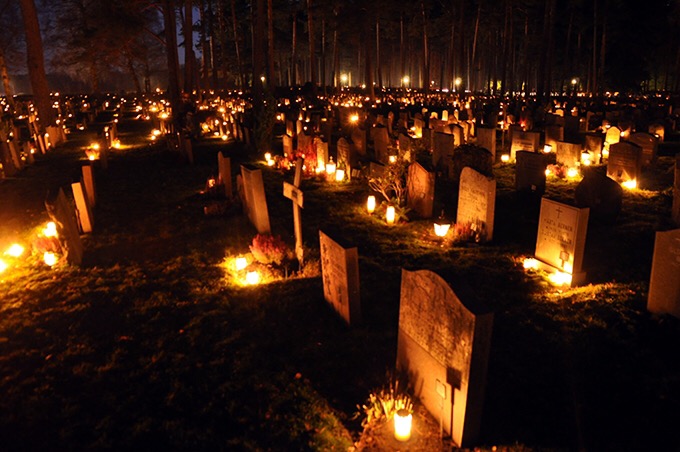
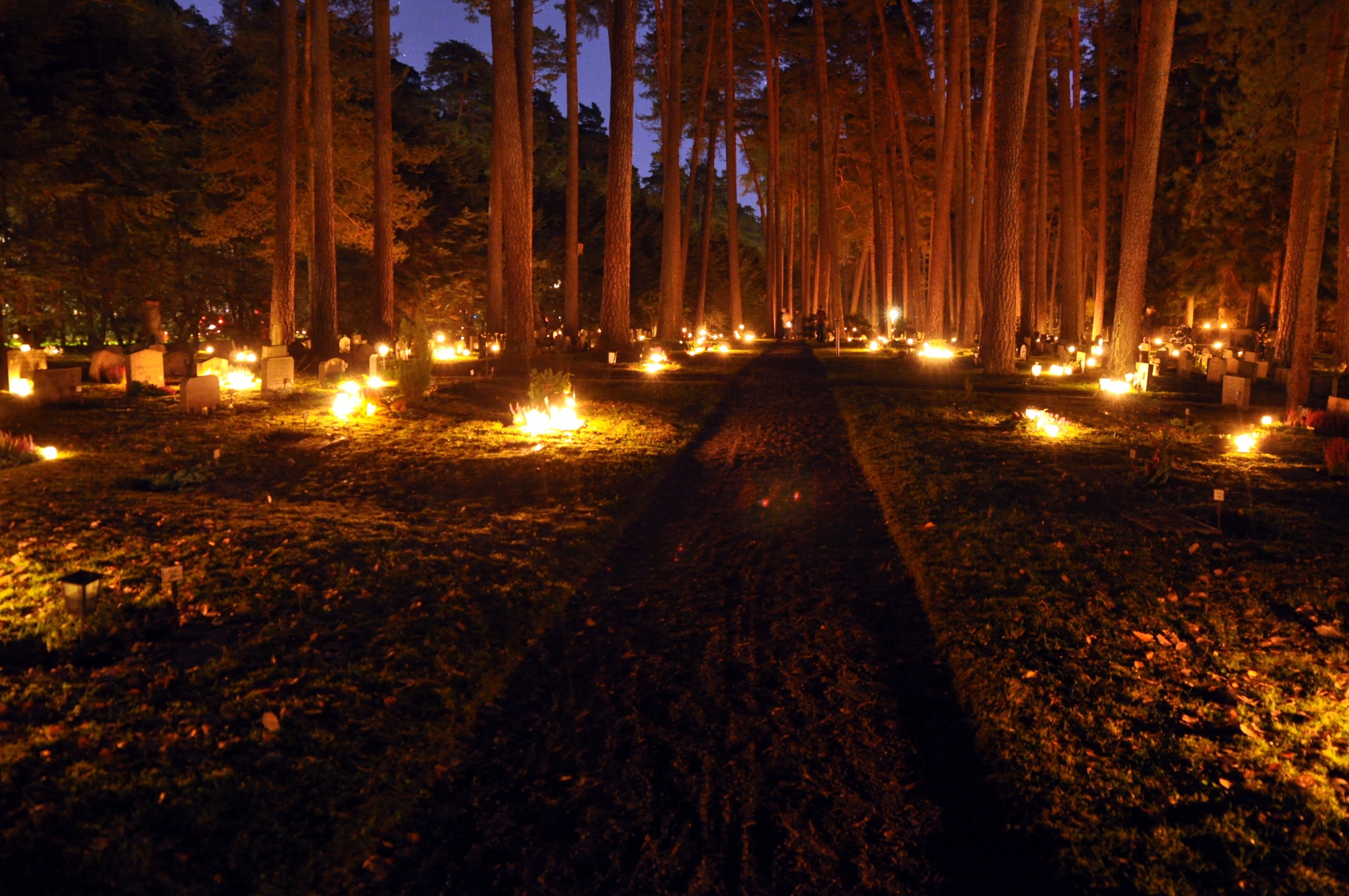
I remember walking around Stockholm when I had recently moved here. It was a pitch black Saturday evening in November, cold and crisp. As I approached a majestic church, I noticed that it was shimmering from the grave yard. This yellow and white light slowly flickered and cast shadows on the gravestones and the church wall. As if drawn by a magic spell, I walked up to the church and looked over the wall.

The sight that met my eyes was spectacular and serene at the same time. Hundreds of candles were spread around the cemetery, decorating each of the graves. In the memory grove a bright blazing blanket of candles lit up the area. It was as if the spirits of the dead had come out to play.

In Sweden, the Saturday between 31 October and 6 November is All Saints’ Day (the Sunday after All Saints’ Day is called All Souls’ Day to separate between the saints and the dead). Since the 1800’s Swedes have, during this weekend, made pilgrimage to graveyards up and down the country to decorate the graves with candle light and to pay respect to the dead.

It is a much more elegant and atmospheric tradition than the typical Halloween parties that otherwise have become very popular in Sweden. It is a truly beautiful experience to walk through the churchyards this weekend. In the pitch black November Nordic darkness, it is a peaceful reminder of those who have gone before us.

This year is a bit different however. The corona pandemic has led to restrictions and there is a recommendation to refrain from going to cemeteries this weekend. We should honour our dead, but try not to contribute to the spread of the virus at the same time. So if you plan to head to your nearest cemetery anyway, make sure to keep distance to the other visitors, and make the visit quick. Alternatively, light a candle in your own garden, or balcony this year.

Historical day in Stockholm – the Golden Bridge

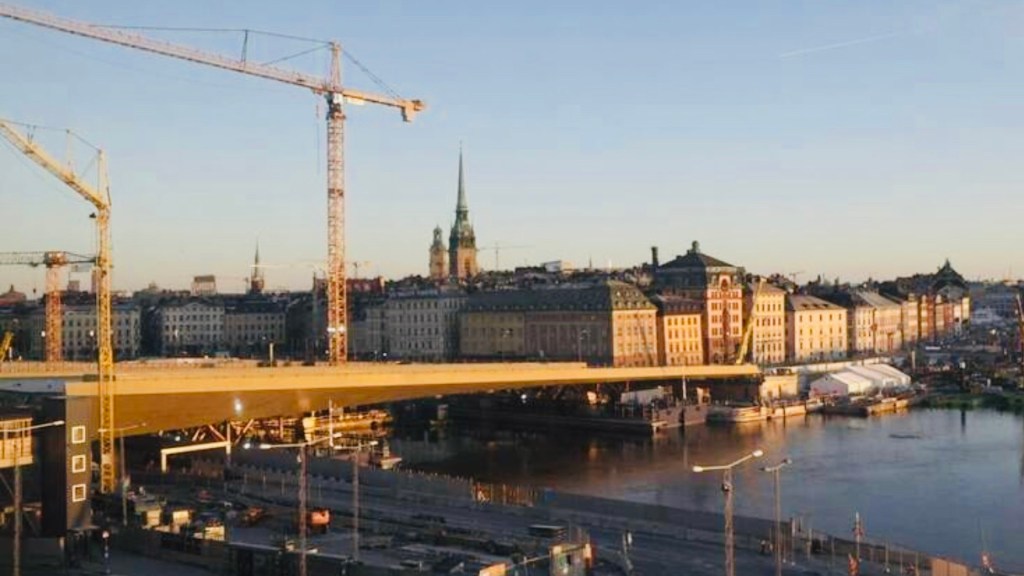
In the center of Stockholm, a large building project is starting to take shape. The Slussen Project started 5 years ago and is an enormous feat of engineering that aims to replace a current structure connecting the southern island of Södermalm to the Old Town. The current concrete structure has been in place since the 1930’s and is literally crumbling. The entire structure needs to be demolished and constructed from scratch.

Ever since 1642, there has been a lock between Södermalm and the Old Town in Stockholm. It has been rebuilt four times. This is the fifth, and it is not without controversy.

Today, an important milestone in the project was reached. An enormous new bridge, known colloquially as the Golden Bridge (although it is in fact ockra), was inaugurated by the Swedish King. The bridge connects the two parts of the city, but divides the residents of Stockholm. Some think it’s very effective and attractive, others think it is a monstrous metal clump.

It really doesn’t matter what people think, the Golden Bridge (correct name Slussbron) is now in place and opens tomorrow at 5am for traffic. Then, the demolishing of the rest of the old structure will begin. The whole project is due to be completed in 2025, assuming no delays.

In the meantime, Stockholmers can walk, cycle and drive over the Golden Bridge knowing they are an integral part of the city’s urban history.

Swedish expression with no English equivalent?

Talking to friends last night the expression ‘en katt bland hermelinerna’ arose. This literally translates as ‘a cat among the ermines’, an ermine being a type of stoat or weasel.

The phrase originated in a couplet by Swedish performer Karl Gerhard in 1955. Karl Gerhard is one of Sweden’s historical entertainers who wrote songs and couplets as well as a large number of sketches, dialogues and monologues. During the Second World War, he wrote humorous pieces with strong anti-fascist statements criticising the Swedish government’s apathy towards Nazi Germany.

So, he coined the comical expression ‘en katt bland hermelinerna’. It’s not the same as our ‘cat amongst the pigeons’ which means somebody is causing chaos and panic. The expression refers to a person who has insinuated themselves into an environment where they do not belong, because they are not from the same social class. In other words, someone who isn’t fancy enough for the rest of the people in their company.

As far as I am aware, there is no expression for this in English. But I hope I’m wrong. Can any of you readers help me out here? Do you know of an English equivalent?

Digital Stockholm Pride

Today is typically the day that the LGBT Pride parade takes place in Stockholm. Up to 500,000 fill the streets making it the largest event in Scandinavia. However, this year it has been cancelled due to the pandemic. Instead it is being carried out digitally, with an opening speech by Crown Princess Victoria. If you are interested, you can view the live stream here: http://www.stockholmpride.org

It runs 12.00-14.00.

The whole concept of LGBT Pride has taken strong root in Sweden. LGBT Pride resonates well with the societal Swedish values of equality, tolerance and acceptance.

Sweden’s history of LGBT rights is a comparatively progressive story. Changes didn’t happen automatically however. Thanks to the hard work of campaigners, lobbyists, and politicians, society can enjoy one of the most egalitarian legislations in the world.

According to wiki: ‘ Same-sex sexual activity was legalized in 1944 and the age of consent was equalized in 1972. Homosexuality was declassified as a mental illness in 1979. Sweden also became the first country in the world to allow transgender persons to change their legal gender post-surgery in 1972 whilst transvestism was declassified as an illness. Transgenderism was declassified as a mental illness in 2008 and legislation allowing gender change legally without hormone replacement therapy and sex reassignment surgery was passed in 2013.

After allowing same-sex couples to register for partnership in 1995, Sweden became the seventh country in the world to legalize same-sex marriage countrywide in 2009. Discrimination on the basis of sexual orientation and gender identity and expression has been banned since 1987. Also, since 2003, gay and lesbian couples can adopt children, and lesbian couples have had equal access to IVF and assisted insemination since 2005.

Sweden has been recognized as one of the most socially liberal countries in Europe and in the world, with recent polls indicating that a large majority of Swedes support LGBT rights and same-sex marriage.’

So, enjoy Pride today!

Sweden’s 7th city at the meeting of 7 roads

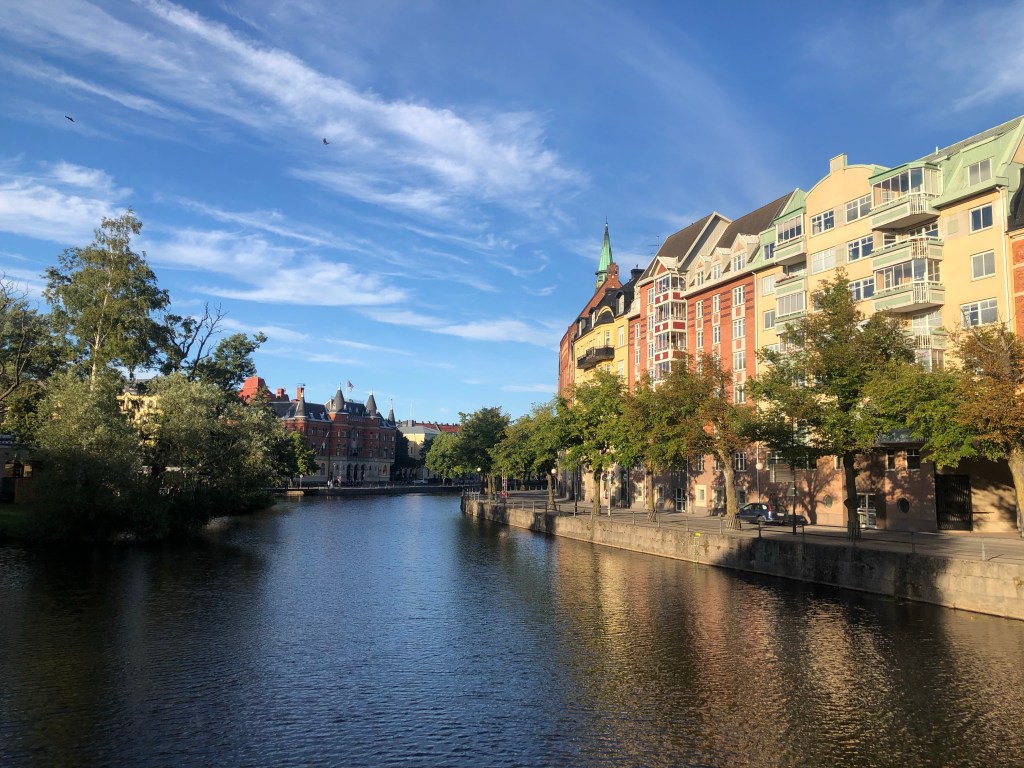
Sweden is rich with history and historical places. One such place is the city of Örebro. This city is built on the Black River that flows into the Lake Hjälmaren, in the southern third of this long, narrow country. From Stockholm, it takes about 2 hours in a car.

Örebro became an official town in the 1200’s but a settlement pre-dates this by a few hundred years. The name Örebro means ’bridge over a gravel bank’. ’Öre’ is a deviation of ‘eyrr’ which is a old Norse word for gravel bank. At this point, the Black river was shallow and it made sense to build a bridge, so that passers-by didn’t have to wade through the water to cross it.

The position of Örebro in time became very strategic and was a junction between 7 different ancient roadways. These roadways are still preserved today. Because of the usefulness of this geographic position, King Magnus Eriksson built a fortress in 1350 in an attempt to defend the site. Over time, this site has been involved in a great many conflicts and wars. In 1573, the fortress was then transformed into a magnificent Renaissance castle, similar to the one that we see today. The Castle of Örebro is one of the city’s most famous and recognisable landmarks and it certainly is a proud building towering up in the middle of the city. For more information about the castle, go to http://www.orebroslott.se

Today, the Örebro area has about 160,000 residents, making it Sweden’s 7th largest city.

If you, like me, are on a road trip in this area of the country, it is well worth a stop over.