Celebrating your birthday in Sweden

Today is my birthday, but it’s not the first time I’m celebrating in Sweden. I must have had at least 20 birthdays here. This year is a bit special since big parties are not allowed, so it got me thinking what is typical about celebrating birthdays in Sweden?

1) Wake up call – Swedes who do not live in a single household are usually woken up early in the morning by friends or family coming into the bedroom with bubbly, breakfast, and gifts. The breakfast tray is often adorned with a candle. This is a lovely way to wake up, unless you’re not a morning person that is.

2) Singing – Swedes love to sing, in general, and they usually sing when they carry out the morning wake up call. The Swedish birthday song is a cheerful melody entitled ‘ja, må han/hon leva’. This translates as ‘yes, may he/she live (for a hundred years)..’ Curiously, there’s no mention of birthday in the Swedish song, unlike the English ‘Happy Birthday to You.’ After the singing, there is traditionally a ‘hurra’ at the end of the song. In most of Sweden, there are four ‘hurras’ but in the county of Skåne only three – hurra, hurra, hurra!

3) Green cake. A popular birthday cake is a green, marzipan clad cake called a ’Princesstårta’. Full of whipped cream, it’s a sickly treat. It seems ungracious but in Sweden, the celebrant themselves is responsible for bringing their own cake with them if they want to be celebrated in the work place.

4) Gift giving is usual in Sweden when somebody has their birthday. Usually, gifts are unostentatious such as flowers, chocolates, wine or something small and meaningful. Gifts for children tend to be more plentiful. A common group gift is to take the celebrant out to a restaurant. At some point during the dinner, a slightly self-conscious ‘Ja, må hon/han leva’ is sung.

5) The round number. Birthdays that end with a ‘0’ tend to be celebrated larger than others in Sweden as they are seen as a milestone. Swedes will often have a big party or will travel away with friends and family to warmer climes. Since neither are currently permitted in the shadow of the pandemic, birthdays with round numbers are celebrated in a smaller fashion or postponed to a later year.

Celebrating birthdays in Sweden became popular during the 1600’s in the Royal Court. Towards the end of the 1800’s it made its way into the general population. Important birthdays that are celebrated a little extra are 18, when a person comes of age, 20 when a person can legally buy alcohol and 65, when they retire. At the age of 100, Swedes receive a telegram from the monarch. According to Sweden’s Statistic Agency, the most common birthday in Sweden is 15 April. The least common, other than 29 February, is the 21 November.

The Swedish Law of Sexual Consent

I’ve been watching the interesting Martin Scorsese documentary series on Netflix called ‘Pretend it’s a City.’ The programme is based on a series of interviews with sardonic writer Fran Lebowitz. In one episode, she talks about MeToo, and how when a woman accuses a man of rape the focus has shifted from ‘prove to me that she’s telling the truth’ to ‘prove to me that she’s lying.’

This is merely a change of perspective in most places and not enshrined in law. Except in a few countries, including Sweden. In 2018, a new law was introduced in Sweden – called the samtyckeslag – the Law of Sexual Consent. The basic principle of the law is that sex should be voluntary and that sex without explicit consent is considered rape. This applies whatever the gender.

The Swedish verb for ‘to rape’ is ‘våldta’ which literally translates as ‘to take by violence’. This reflects the previous definition of rape which involved some form of violence, force or threat or that the victim had been in a vulnerable position. An important part of the previous legislation was that the victim decisively said ‘no’. Since 2018, this is not the case.

A crime called ‘negligent rape’ was introduced which is a sexual act that occurs when there has not been an explicit statement of consent, but in which the perpetrator had not intended to commit rape or assault. In other words, before sex there has to be a clear ‘yes’ or active demonstration of consent. If there isn’t, it is rape.

Today, if a woman accuses a man of rape, she does not have to provide evidence that he was violent or coercive, that she had to fight him off or prove that she said ‘no’. The victim does not have to prove she is telling the truth, the accused has to prove she is lying.

The new law has been significant in many convictions in recent years. In one case, the Supreme Court wrote: ‘A person who is subjected to sexual acts against their will does not have any responsibility to say no or express their reluctance in any other way.’

So a ‘yes’ is a ‘yes’. And a lack of a ‘yes’ is a ‘no’

The Swedish market of Jokkmokk

On the first weekend in February since 1606, Jokkmokk market and festival has taken place in Swedish Lapland. But not this year. Corona has, as with many other events, caused this year’s event to be cancelled.

Jokkmokk is the cultural center of the Sami population. At the market, you can buy local produce, arts and crafts and also learn about Sami culture and history. Live music and performances are also a feature of the market.

Warm clothes are a must, as temperatures can drop below a terrifying minus 30 degrees! However, this year the festival can be enjoyed from the warmth of your living room. Go to http://www.jokkmokksmarknad.se to participate via the live stream.

For more info about go to http://www.swedishlapland.com

Sweden closes its borders

In a historical move, Sweden is closing its borders to foreigners from Saturday 6 February. The only way in to the country is if travellers can show evidence of a negative COVID 19 test taken within the previous 48 hours.

The government says that this is to prevent the spread of the British strain into Sweden. Although, the strain is already here the hope is that this entry ban will significantly reduce its progress.

The ban will last until 31 March 2021.

So if you are planning a trip to Sweden, make sure you take a test before you depart. And make sure you bring evidence of your negative result with you. Tests will not be offered at the Swedish border, and you will be sent back home.

2020 – the year most Swedes want to forget

A quick look at social media reveals the general Swedish attitude to 2020 – ‘a shit year’, ‘throw the year in the bin’, ‘go to hell 2020’.

Obviously, people are referring to the global pandemic that swept the world, limiting our freedoms, making us sick and killing 8727 people in Sweden. So far, about 10% of the Swedish population has had Covid 19, and as we enter 2021, that number is quickly rising.

However devastating the pandemic is, 2020 wasn’t all doom and gloom. There were some positive news stories in Sweden as well, even though media coverage was totally dominated by the virus. Let’s reflect over some of the rays of light:

– The Convention on the Rights of the Child became enshrined in Swedish law. This expands legal protection to children.

– The planet got a much-needed breathing space. Fewer planes in the sky and cars on the roads improved air quality and reduced pollution. Biggest impacts of this were seen in other places, such as New Delhi, where the sky turned blue again.

– Despite physical distance, people showed solidarity and care for each other. People shopped for each other, walked each other’s dogs, serenaded each other and checked in on each other. 2020 was a year of neighborliness.

– People gathered up and down the country to protest against oppression and racism as part of the global BLM movement. While gatherings might have been illegal, it showed a strong commitment to equality in Swedish society.

– The Golden bridge was inaugurated in Stockholm by the King. This feat of engineering, manufactured in and shipped from China, creates an important link at the hub between Södermalm and the Old Town.

– Pope Francis defended the right of same sex couples to enter into legal partnership. This political statement was welcomed by catholic LGBT people in Sweden and abroad.

– Swedish pole vaulter Armand Duplantis broke the world record – twice! And Swedish biathletes gave a sense of national pride as they repeatedly crushed their competition, especially the Norwegians.

– The Swedish economy recovered better than expected, with a growth in GDP. Good news for everybody given the global impact of the pandemic. And a glimmer of hope for 2021 and beyond.

Confusing Swedish greetings of the festive season

It’s that time of year when people greet each other with more than a simple ‘Hej’ (hello), or ‘tjena’ (hi). There are various ways to do it, depending on the day, and it is a bit confusing for the uninitiated.

The last time you see somebody before Christmas, you say ‘God Jul’ (Merry Christmas). This is assuming Christmas is close of course, and does not apply if the last time you see somebody is October. ‘God Jul’ continues through Christmas Eve and Christmas Day.

Around Boxing Day, the greeting changes to ‘God Fortsättning’ (Good Continuation).

Then, around Dec 30/31, ish, it changes to ‘Gott Slut’ (Good Ending) before changing to ‘Gott Nytt År’ (Happy New Year) at the strike of midnight on Jan 1st.

’God Fortsättning’ (Good Continuation) takes over again around Jan 2 and then fizzles out after two weeks. The absolute final date for any form of festive greeting is Jan 13th. This day is called ‘Tjugondag Knut’ and is when Christmas is over in Sweden and the Christmas tree and decorations are traditionally thrown out. After that, it’s back to ’Hej’ again.

So as today is Dec 27, I’d like to wish you all a ‘God Fortsättning’.

The Nobel prizes. What is your legacy?

Today is Nobel Day when the winners of the five Nobel prizes are celebrated. This year is a digital ceremony and the usual concert and grand banquet have been cancelled to avoid crowding.


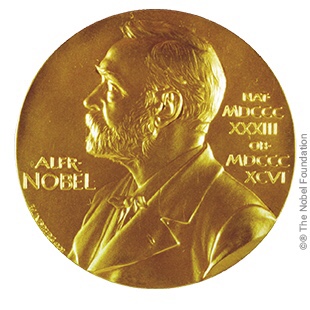
But how did the Nobel prizes come about? Well, the story goes like this. Alfred Nobel, the inventor of dynamite, woke up one day to his own obituary in the newspaper. Mistakenly, the paper had declared him dead, when in fact it was his brother. As a title for the obituary, the newspaper had written a rather unflattering ‘The angel of death is dead‘. The journalist also wrote that Alfred Nobel had made it possible to kill more people than anyone who had ever lived.


Suddenly Alfred Nobel understood this is how he would be remembered and, to change it, he founded the Nobel Prizes. Now his name is synonymous with science, literature and peace.


It makes for an interesting reflection. If you could read your own obituary, would you be proud of what you read? Would you also change your behaviours to influence the memory of you? And, if that’s the case – why not get out there and do it now?

‘The Crown’ – Swedish style

The Netflix series ‘The Crown’ which depicts the British monarchy has just started its 4th season. Featuring the sad destiny of Diana, and including events like the Falklands war, it is set to be a dramatic ride.

It got me thinking if they made a Swedish version, probably called ‘Kronan’, who would be the ideal cast? Which Swedish actors would fit the bill? Any suggestions?

Swedish nicknames – male or female?

In English, nicknames for men are often abbreviations of their name. Robert becomes Bob, Richard becomes Dick, Andrew becomes Andy. In Swedish, it’s not so. Usually, the nicknames get a bit longer and are signified by an ending that has a double consonant and ‘e’.

If you hear a Swedish name ending in double consonant and ‘e’, it is almost always a male name. The ‘e’ is pronounced ‘eh’. Jan becomes Janne, Dan is Danne, Leif is Leffe. Others are Olle, Beppe, Kalle, Chrille and Fredde. Some female nicknames ending with ‘e’ are Madde (Madeleine), and Mirre (Mariana), but female nicknames with double consonant and ‘e’ are quite unusual.

Names ending with ‘a’ are usually female names – Mia, Moa, Nadja and Ebba. If you hear a name ending in ‘a’ it is almost always a female name. There are a few male names, such as Gösta, Ola, Noa and Joshua but it is overwhelmingly female names that end with ‘a’.

Nicknames for women usually get shorter and often have ‘an’ on the end. Elisabeth becomes Bettan, Birgitta is Gittan, Therese becomes Tessan, Mikaela is Mickan.

So, how many men and how many women are in the following example?

I saw Nisse, Tobbe, Lottan and Nillan yesterday. They were sitting with Bosse, Kjelle and Affe. I’m not sure where Maggan, Nettan or Pelle were.

Swedish must-reads 10: ‘Doctor Glas’

In ten posts, I am recommending good Swedish reads to enjoy during the dark days and pandemic lock down. This is the tenth, and final, one, and it’s a classic – ‘Doctor Glas’- written in 1905 by Hjalmar Söderberg.

The gripping tale of a young doctor who falls in love with a married woman. The woman is wedded to a sadistic minister and divorce is out of the question. To free the woman he loves, and enact revenge on her husband, Dr Glas is faced with a terrible dilemma. Söderberg is considered an important figure in Swedish literary history, and wrote several novels. Another of his famous works is ‘The Serious Game’.