Cleaning up the Swedish language


Every year, SAOL, the Swedish Academy Ordlista (word list), is published. This list includes new additions to the Swedish language and removes or updates old words that are no longer in use. 2015’s list is due to be released next month, and this time, the Academy have made suggestions that clean up the Swedish language by suggesting that we do not use offensive and controversial words. 

Instead of ‘neger’ (nigger), they are suggesting Swedes say ‘black’

Instead of ‘Lapp’, they are recommeding ‘Same’

Instead of ‘zigenare’ (gypsy), they are suggesting ‘Roma’

For me, this is a no-brainer. It is extraordinarily old-fashioned and offensive to continue to use the three listed words above.  I would hope in 2015 that we had come further than this. There are people who will defend the use of these words by saying that they have the right to use what vocabulary they want. Of course, they are correct. That’s called freedom of speech. But having the right to do something doesn’t mean doing it. If by exercising my right I am violating or oppressing others, then I would suggest we make other choices. 
25 words for snow!

2015/01/img_4847.jpg

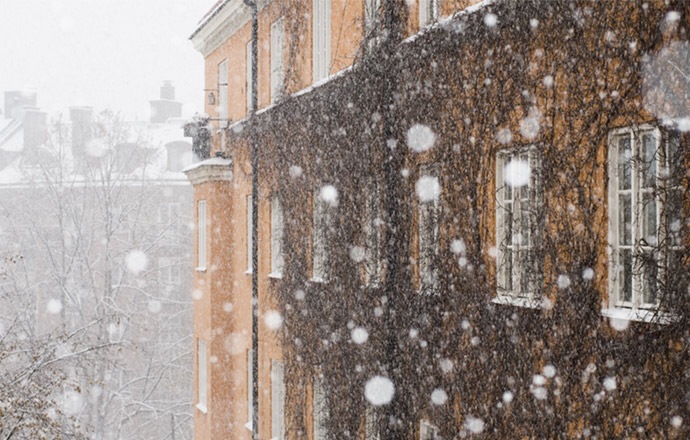
As the snow tumbles down over the city, I am reminded of the many different words for snow that Swedes have. Not surprisingly when living in a country where it snows a lot, people start to see differences and nuances in the type of snow, whereas in English the word might just be an unsatisfactory ‘snow’.

1) Blötsnö – wet, slushy snow
2) Drivsnö – snow that is blown into troublesome snow drifts
3) Aprilsnö – snow in April, according to suspicion signifies plenty of food for the coming season
4) Hårdsnö – compacted hard snow
5) Konstsnö – artificial snow
6) Kramsnö – squeezy snow, perfect for making snowballs
7) Julesnö – snow at Christmas
8) Klabbsnö – wet, warm snow for building snowmen
9) Kolsyresnö – frozen carbondioxide
10) Kornsnö – small white snow breadcrumbs
11) Lappvante – thick, falling snow
12) Lössnö – snow that can loosen and be dangerous
13) Majsnö – surprising and unwelcome snow in May
14) Modd – snow that has partly melted due to salt
15) Natursnö – real snow (as opposed to artificial)
16) Nysnö – fresh snow, crisp and white
17) Pudersnö – powder snow
18) Rekordsnö – an unusual amount of snow, breaking previous snow records
19) Slask – slushy snow mixed with rain and dirt on the ground
20) Snö – snow
21) Snöblandat regn – snow mixed with rain
22) Snömos – sloppy snow that resembles mashed potato
23) Snörök – faint particles of snow that look like smoke
24) Yrsnö – snow being whipped around by the wind in all directions
25) Åsksnö – snow that pours down during a thunder storm

A literal Swedish Christmas

/home/wpcom/public_html/wp-content/blogs.dir/6dc/32262531/files/2014/12/img_4734.jpg

Swedish is often a very literal language. Today, the 26th December, is a good example of that.

In the UK, today is known as ‘Boxing Day’. In Finland, it’s ‘Stefani Day’. In Ireland it’s ‘Wren’s Day’. In South Africa, it’s the ‘Day of Goodwill’.

And in Sweden? Well, here comes the literalness.

It’s called ‘Second Christmas Day’.

How many minority languages are there in Sweden?

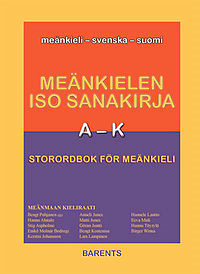
meänkielen

Swedish is Sweden’s official language and is spoken by most of the 9 million people who live here. Of course, people who live in Sweden speak an array of languages such as English, French, Hindi, Persian and Arabic. But did you know that there are 5 official minority languages in Sweden? In 1999, the Minority Language Committee of Sweden formally declared these five official minority languages.

Finnish – Ethnic Finns make up about 5% of the population of Sweden, and the Finnish language is used by over 200,000 people.

Meänkieli – Spoken by the people of the Torne Valley, it is so closely related to Finnish and is sometimes considered a dialect of Finnish. Between 40,000 and 70,000 people speak Meänkieli as their first language.

Sami – Sami people (formerly known as Lapps) are a people indigenous to the northern regions and who speak a closely related group of languages usually grouped together under the name “Sami”, although at least three separate Sami languages are spoken in Sweden. Between 15,000 and 20,000 Sami people live in Sweden of whom 9,000 are Sami-language speakers. Worldwide, between 20,000 and 40,000 people speak Sami languages (most Sami now speak Swedish, Norwegian, Finnish, or Russian as their first language, depending on the country in which they reside).

Romani – Romani is the language spoken by the Roma people, a nomadic ethnic group originating in northern India. Romani is an Indo-Aryan language, closely related to languages spoken in today’s India, and sometimes written with an Indic Script. Approximately 9,500 people in Sweden speak Romani.

Yiddish – Yiddish is a language formerly spoken by most Ashkenazic Jews. Although the Jewish population of Sweden was traditionally sephardic, after the 18th century, ashkenazic immigration began, and the immigrants brought with them their Yiddish language. There are around 18,000 Jews in Sweden, and about 4,000 speak Yiddish.

Tippetopptranslations

tippetopp3

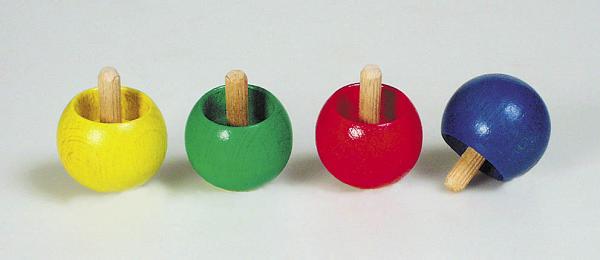
A friend today asked me to translate a Swedish word for him – ‘tippetopp’.

Not being familiar with the word, I researched it and found that it is an old-fashioned toy that you spin and then it rolls over to spin on its topside. It flips over. Goes all kind of topsy-turvy. Never having seen one of these before, my initial thought was to call it a ‘spinning top’ which is a similar toy we have in the UK. But then I researched further and found it’s proper translation.

The English word for ‘tippetopp’ is ‘tippe top’.

Yes, sometimes it is that easy!

Strange Swedish words

Swedish words

It has been said that the Swedish language is a poor language, especially when compared to English. However, in an informal survey on Facebook, I asked people for their favourite word that existed in Swedish but not in English, and I got very many fun suggestions. Here come a few of the highlights:

Sladdbarn – a child to the same parents many years after the birth of their brothers and sisters – usually as a surprise – but proof that the sexual activity of Swedes does not stop at 40
Fredagsmys – a cosy time on Fridays when Swedish families get together and eat pizza or tacos and watch the TV – and usually fall asleep
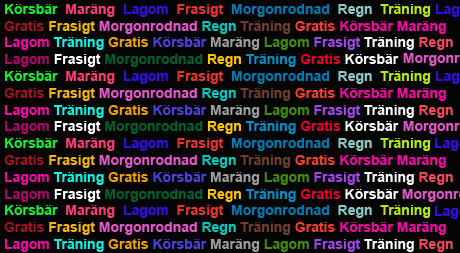
Lagom – a concept that filters through Swedish socíety and behaviour – roughly translated as ‘average, moderate, just enough, not too much’. Others translate it as ‘mediocre’
Lurifax – a sly trickster that you can’t trust (yes, they do exist even in Sweden)
Sol och vårare – a person who pretends the future is bright but actually is a confidence trixter who will then trick a person out of, for example, their kronor
Fika – the cultural process of having a coffee and cake with friends at work, at home or out on the town. One of many Swede’s favourite pass times
Möbeltass – a cotton padding that you put under the legs of furniture to stop them from damaging the floor. Directly translated as ‘furniture paw’. A necessity in the country of wooden floors and IKEA.
Julgransplundring – the event at which you dance around a whithered Christmas tree, undecorate it and then throw it out. Often aimlessly onto the street where it stays until mid March.
Jajamensan – a very jolly way of agreeing emphatically
Orka – a word commonly used by Swedish teenagers to mean that they do not have the energy to do anything, such as getout of bed, or clean up after themselves
Curlingföräldrar – a name to describe parents of the above teenagers who put no demands on them and do everything to make their lives easy

Any other words that you can suggest?

Swedish Swedish Sex Stereotypes

A funny sketch is circulating around the internet from Saturday Night Live where the comedians are acting out a Swedish chat show. Full of stereotypes, it goes something like this:

‘Hurdy gurdy flurdy ja ja my vagina lurdy flurdy gago?’

‘Liga gargy murdy flurdy rollga buggla hurdy gurdy you bitch.’

And so on, you get the picture. Everyone was stereotypically blond and all of the understandable words were sex-related – yet another Swedish stereotype.

As I watched the clip, I couldn’t help laughing because, without knowing it, the comedians were actually right on the ball. I’m not talking about the Swedish chef style way of communicating but the Swedish preference for chucking English words into sentences when there is a perfectly good Swedish word to use. Why is this such a preference? Is it to sound international? Or to impress? I don’t know the answer, but it something very noticeable as you listen to Swedes conversing with each other.

Only the other day,  I was listening to the radio and, although I can speak Swedish, I imagined what it would be like if I couldn’t. As it happened, the hosts were talking about sex toys, and the conversation went something like this:

‘Swedish, Swedish, Swedish, Swedish, dildo, Swedish, Swedish’

‘Swedish, Swedish, sex, Swedish, Swedish, swingers’

‘Swedish, Swedish, rimming, Swedish, Swedish, Swedish, butt plug’

Seems like the comedians weren’t that far off!

 SNL Link: http://feber.se/video/art/242494/swenglish_med_snl/


Favourite Swedish expressions

I have a Swedish expression that I really like – ‘Inget ont som inte har något gott med sig’. With every bad thing, there’s always something good. It’s a little like the English ‘every cloud has a silver lining’.

A couple of days ago I asked people on Facebook to let me know their favourite Swedish expression or words and, why. This is what some of them said:

‘Skit gott’ (Shit good)- What a contradiction of words…Poop good???
onsdag kl. 06:52 · Gilla.

‘Nu går skam på torra land’ – (shame walks on dry land???) – Jättekul uttryck 🙂 used when somebody has done something he/she should be ashamed of
onsdag kl. 07:05 · Gilla.

‘Skamlös’ – (Shameless)- A wonderful word if you think about it.
onsdag kl. 07:27 · Gilla.

‘Jag älskar dig…’ – (I love you) – Because it is fantastic when you can say it to somebody. I get warm inside everytime I say it.
onsdag kl. 07:31 · Gilla · 1 person.

‘Det fixar sig” – (It’ll all work out) – Either exaggerated belief in the future or the irresponsible abandonment of your own fate into the hands of another.
onsdag kl. 08:00 · Gilla.

‘When people mix up phrases and don’t react themselves, such as “jag har många bollar i luften” + “jag har många järn i elden” = “jag har många bollar i elden”
(I have many balls in the air + I have many irons in the fire = I have many balls in the fire.)
onsdag kl. 21:08 · Gilla · 1 person.

What’s your favourite Swedish expression, and why?

Reality check in Söderköping

Visiting the small town of Söderköping in Östergötland seemed like the perfect romantic and quiet weekend. But, boy, were we wrong.

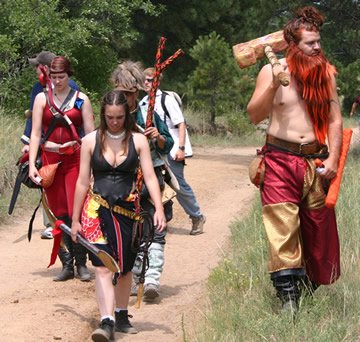
Arriving in the town was initially unspectacular. We parked the car and walked towards the hotel. But on the streets, we noticed something different. All the people of Söderköping were wearing unusual clothes – long cloaks and capes, pointy hats with bells on, baggy linen trousers. They carried staffs and walking sticks. Some of the men had long beards and the women had shawls wrapped around their heads and shoulders. What was this? Is this small town, 2 hours south of Stockholm, stuck in time? It was like walking into a scene from Harry Potter or Lord of the Rings. There goes Gandalf. Oh look, it’s Dumbeldore.

It didn’t take long for us to realize that this particular weekend Söderköping was hosting a Medieval festival. As night fell over the town, torches were lit to mark the dark paths and bonfires were set ablaze. The local park was turned into a muddy arena with jousting, live music and fire dancers. The place would, however, have looked more authentic without the big ‘Sponsored by Swedbank’ sign. This arena was packed with Swedes in their costumes, many really getting into the role. Many of these people were probably what, in Swedish, is called a ‘lajvare’.

‘Lajvare’s are the Swedish equivalent to the English ‘Larpies’ – people who participate in a role-play and physically dress up and act out their character’s actions. These live-action role-playing games (LARPs)are not a new phenomenon, dating back to the late 70’s and gaining popularity through the 80’s and 90’s. LARPs range in size from small private events lasting a few hours to huge public events with thousands of players lasting for days, rather like the one in Söderköping.

Culturally, this phenomena is very intriguing. Traditionally entertainment has meant spectating but participants in a LARP cast off the role of passive observer, and take on new roles that are often outside of their daily life and contrary to their culture. But, why? What’s the attraction?

Is the daily drudge of life in Sweden so tedious that ‘larping’ is the best solution? For some, I guess.

But for me, well, I enjoyed the night in the small Medieval town of Söderköping but I was happy to climb into the BMW, switch on my Ipod and head back to the big city.

Love kilos

The Swedish value of equality manifested itself recently in some interesting research.

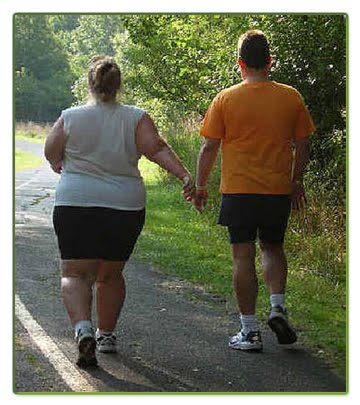
Research released from Ohio State University has shown that in heterosexual marriages in the USA, women tend to put on a few kilos after marriage. Men, however, tend to put on weight after a divorce.

Apparently, this is not the case in Sweden. According to experts at Karolinska Institute, it isn’t only women who increase in weight after a marriage. It is both men and women. There’s equality for you!

In Swedish, these extra kilos even have a name – ‘kärlekskilo’ (love kilos) or ‘trivselkilo’ (satisfaction kilos).

So the extra weight deosn’t sound that bad then does it?