Diverse Sweden Part 2: Swedish Muslims

diversity

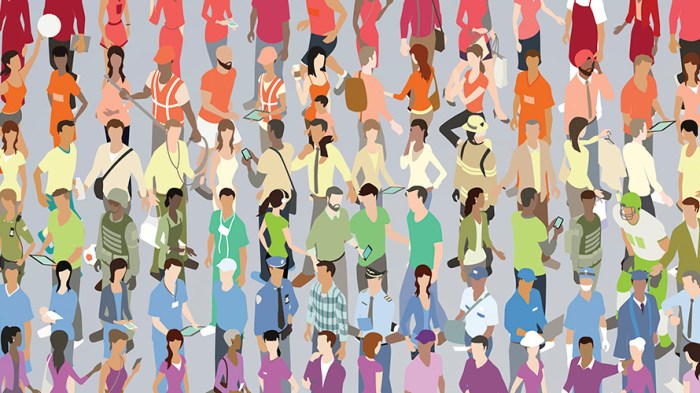
Sweden is a fairly diverse country – ethnically, religiously and culturally. About 25% of the population is born abroad or has both parents born outside of Sweden. Extend that to one parent and the number increases to around a third of the Swedish population.

I am a true believer in cultural diversity. So, I am continuing a series of posts that will shine the light on various religious and ethnic groups that exist amongst people with Swedish citizenship. My hope is that it will dispel some of those stereotypes of Swedes that exist and that it will broaden your mind regarding what it means to be Swedish.

Part 2…..Islam
Happy-Eid-Al-Fitr-Wishes-Picture

This week on Wednesday 5th of June is the great Islamic festival of Eid Al Fitr. This is a three day festivity consisting of celebration, good food, prayer, gifts to the children and charity to the needy. The festival marks the end of Ramadan, the month in which followers are taught the Quran was revealed to the prophet Muhammad.  During Ramadan, practicing muslims do not eat or drink during daylight hours from dawn to sunset. You can imagine the challenge of this in Sweden, when we almost have daylight 24 hours of the day. In Stockholm, the fast lasts 20 hours per day which must be really exhausting. In the north of Sweden, where the sun never sets, muslims have solved this by fasting according to the daylight schedule of Mecca, or other chosen location. The idea of the fast is to bring practicing muslims closer to God.

Islam is the second largest religion in the world, about 25% of the world’s popluation. Muslims make up approximately 8% of the Swedish population, according to research from the Pew Center. This makes them the second-largest immigrant group in Sweden after the Finns. About 90% of muslims in the world are Sunni muslims, with the rest following Shia islam.

Islam is a religion which appreciates practice. There are five basic religious acts in Islam, collectively known as ‘The Pillars of Islam’ which are considered obligatory for all believers. The Quran presents them as a framework for worship and a sign of commitment to the faith. They are:

  • Shahada, the creed
  • Salah, daily prayer
  • Zakat, alms giving
  • Rawm, fasting during Ramadan
  • Hajj, the pilgrimage to Mecca

Other than the fasting of Ramadan, the practice most noticeable to non-Muslims is probably the one of prayer. Performing prayers five times a day is compulsory but flexibility in the timing specifics is allowed depending on circumstances. Many companies in Sweden have prayer rooms to accommodate this.

First-generation muslims in Sweden most often originate from Irak, Iran, Turkey, Bosnia-Herzegovina and Kosovo. Two growing groups are from Syria and Somalia. Since the 1960’s, about 3500 people in Sweden have converted to Islam. There are nine purpose-built mosques in Sweden, with the notable ones in the main cities. In Stockholm, the mosque is on the residential island of Södermalm. From this location, the Islamic Association of Sweden is run. This is an umbrella organisation encompassing, amongst other things, the Muslim Council of Sweden, Muslim Youth Organisation and Muslim Relief.

The first muslims actually emigrated to Sweden during the Viking era but it wasn’t until the 1950’s and 1960’s that a large number arrived from Turkey seeking employment. Another wave in the 80’s brought muslim refugees from the war-torn Balkan region. Most of the muslims who arrive in Sweden today are fleeing dictatorship and armed conflict, and are seeking refuge in another country. Today, a great number of people who follow Islam were born in Sweden, conditioned in Swedish values and society and educated though the Swedish school system.

Like many places around the western world, there are conflicts in Sweden between the original Christian-based society and the Islam society. Some of the conflicts originate in religious difference, fuelled by extremist thinking on both sides. However, most of the conflict comes from an ethno-racist perspective or a concern about the impact of immigration on the structure and values of Swedish society. The Swedish governments of the past have not necessarily succeeded in the integration of the two parties and many people today witness ‘two Swedens’ operating in parallel to each other.

There is no doubt that muslims are well and truly a part of Sweden and Swedish culture. How we choose to move forward to one Sweden is for us all to decide.

More information


Please share this post

  • If you like this post, please share it in your media.
  • Also follow me on Instagram #watchingtheswedes
 

Why fascists should be allowed no platform in Sweden

The trouble with being empathetic‘, somebody once said, ‘is that you also feel sorry for assholes.’

But I have had enough! I have had enough!

I’m sick of being liberal and accepting and allowing. I’m done with it. Although far from everybody, Sweden and Europe is full of assholes.

Yesterday in Sweden, a left wing politician was physically attacked by members of the nazi party on the street. This is only one of many anti democratic incidents we are witnessing in our society.

After the EU election, it is abundantly clear that a climate of Islamophobia and anti-immigrant racism is being stoked in Europe and Sweden.

There are many examples. In Sweden, like in many other countries, the main nationalistic party (called SD) gained ground. White supremists demonstrate openly on the streets of Sweden. Last week, in Sweden, RFSL (The Swedish Federation for Lesbian, Gay, Bisexual, Transgender and Queer Rights) said they would not participate in Sweden’s politics week due to threats from a nazi party.

Enough!

The democratic dilemma

As liberals, we have a dilemma on how to handle this spiraling situation. As self-identified beacons of democracy, we believe that freedom of speech should apply to everybody – even if their ideas are heinous. Banning opinion is, in itself, a fascistic move. Or is it?

I am a democrat. I believe in freedom of speech. But for me the solution is simple. The fascist opinion is not like any other opinion. It is filled with violence and hatred and should be allowed no platform in an open society.

No platform for fascists

When I say that there should be no platform for fascists, I mean that pro-democratic legislation should be stricter. I mean far right supremist groups should be criminalized in Sweden. I mean fascist meetings should be shut down, their attempts to rally and march should be prevented, counter-picketed and blocked.

It is not just because what they say is offensive. It is not a question of whether I like or agree with what they have to say. It is because hate speech does not end as speech. It is a call to violence, a tool to organize attacks on vulnerable communities.

When fascists get a platform, violence against minorities goes up. This we know. This we are seeing.

Fascism is a disease

Fascism is a disease in Swedish society. It aims to destroy our democracy and concentrate power in the hands of a “racially superior” minority. To succeed, it requires the destruction of freedom of speech. It requires destroying mass organizations of working people and unions. It requires the dismantling of free press, as SD has suggested the privatisation of public service radio. It uses an army of internet trolls. Fascism uses the blinkered limitations of liberalism to destroy itself.

Today’s fascists in Sweden and Europe try to re-brand themselves as something less threatening than their past incarnations. They are “alt-right” and pretend to be champions of free speech. They are not. They wear suits and smile into the camera. They claim they are anti-establishment and present themselves as scapegoats. They pander to the sick and the elderly by offering them more money. They pretend they aren’t racists or homophobes, just champions of white people and Swedish culture and “values”. They try to keep their real ideas and aims in the dark.

Freedom of speech

Freedom of speech is not absolute. When thugs disrupt Pride parades that is not free speech. When fascists demonstrate during the May 1st celebrations, it is not free speech – it is intimidation and an attempt to incite violence. We have a right and a duty to prevent it, through the law, superior numbers and organization.

Unfortunately, racism cannot be defeated by logical argument. Racism, and fascism, grows by an appeal to the irrational, fear and hatred. It has to be smashed.

You might think I’m a drama queen who is making a mountain out of a mole hill. But I have had enough! I’m sick of allowing undemocratic people access to our democracy.

We cannot under-estimate the threat fascism poses in Sweden, our communities, schools and workplaces. Pro-democrats must make it a top priority to expose it and organize to stomp it out wherever we find it. We must unite in saying – not here, not on our watch, not in Sweden.

Sweden, that means: no platform for fascists.

Today is a Swedish squeeze day

Today is a ‘squeeze day’ in Sweden. What, you may wonder, is a squeeze day?

– It is not a day when everybody goes around hugging each other.

– Nor is it a day when people pinch each other’s cheeks or rear ends.

– It is not either a day of drinking copious amounts of fresh citrus juice.

No, a ‘squeeze day’, or ‘klämdag’ in Swedish, is a day of the week that falls between a public holiday and a weekend.

In Sweden, when a public holiday occurs on a Tuesday or a Thursday, a common custom is to take the day between the holiday and the weekend as a day off. Sometimes this is subsidized by the employer. In English, this is called a ‘bridge day’ but in Swedish it’s cutely referred to as a ‘squeeze day’.

In Sweden, there are 11 public holidays (known as ‘red days’) and there are masses of squeeze days this year. New Year’s Day was a Tuesday this year. Yesterday, Thursday, was Ascension Day (which is always on a Thursday) and so today is often taken as a holiday. This year, there are many floating ‘squeeze days’. Next week, National Day on the 6th of June, falls on a Thursday, so the following Friday is also a day off for many. Coming up, this year Christmas Eve is a Tuesday, Boxing Day is a Thursday, and even New Year’s Eve is a Tuesday.

So, Swedes this year are having a lot of time off work. Add to this, the Swedish concept of the de facto holiday – the day before a bank holiday is taken off, either as a full day or a half day. Most employers recognise and allow for this.

It’s a good job that Swedes are so efficient when they do work – otherwise the country would grind to a halt!

Chicago – Sweden’s second largest city…

I’m currently in Chicago, and intrigued to learn more about its Swedish connections.

During the 19th and 20th centuries there was a mass emigration of Swedes to the USA. About 1.3 million people, an enormous number, are estimated to have left Sweden due to starvation, poverty and oppression.

By 1890 the U.S. census reported a Swedish-American population of nearly 800,000. Most immigrants became pioneers, clearing and cultivating the prairie in the Midwest, but some forces pushed the new immigrants towards the cities, particularly Chicago. At one point there were more Swedish people in Chicago than in any Swedish city except Stockholm. Chicago was Sweden’s second largest city in terms of population!

In Chicago, there are some remnants of Swedish history left. There are a number of famous Swedes hiding in Chicago. Carl Linnaeus has two statues, one on the University of Chicago campus in Hyde Park and one in the Heritage Garden of the Chicago Botanic Garden. Another icon Emanuel Swedenborg has a bust on Lake Shore Drive.

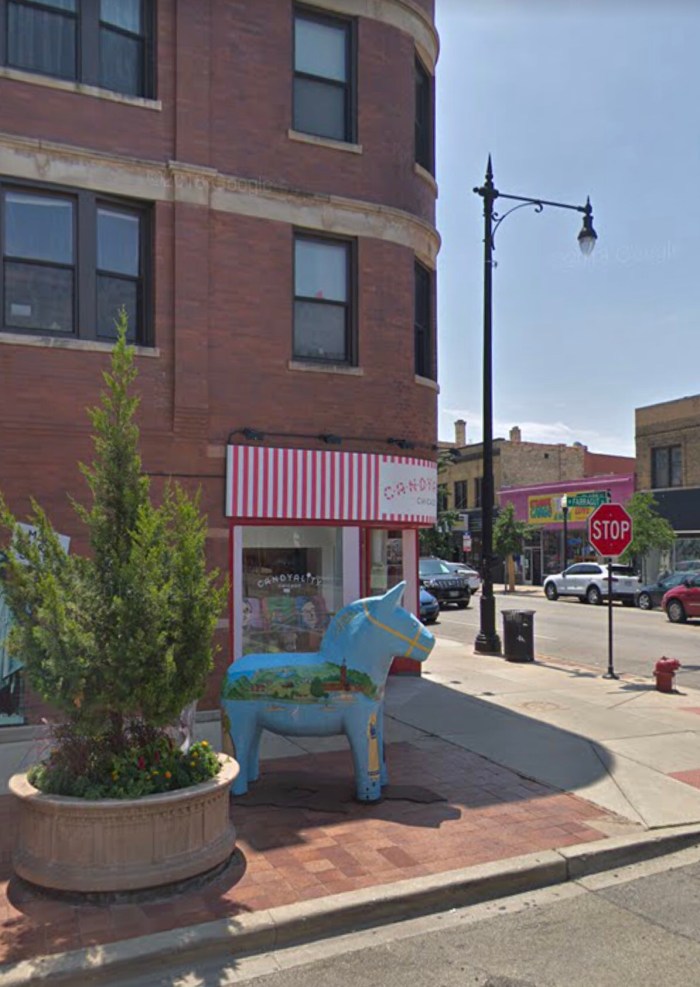
To the north of Chicago, there’s a neighborhood called Andersonville. Andersonville’s roots as a community extend well back into the 19th century, when immigrant Swedish farmers started moving north into what was then a distant suburb of Chicago. Swedish immigrants continued to arrive in Andersonville through the beginning of the 20th century, settling in the newly built homes surrounding Clark Street. Before long, the entire commercial strip was dominated by Swedish businesses. Today, Andersonville is a popular place to live and has festivities such as the Midsommarfest – one of Chicago’s largest and most popular street festivals.

The Swedish American Museum was founded in Andersonville in 1976, by Kurt Mathiasson, to preserve and disseminate the history of the great contributions of early Swedish immigrants to Chicago. The Museum was opened to the public in a ceremony attended by King Carl XVI Gustaf of Sweden.

Andersonville remains one of the most concentrated areas of Swedish heritage in the United States, but its residents and businesses represent a wide array of cultures.

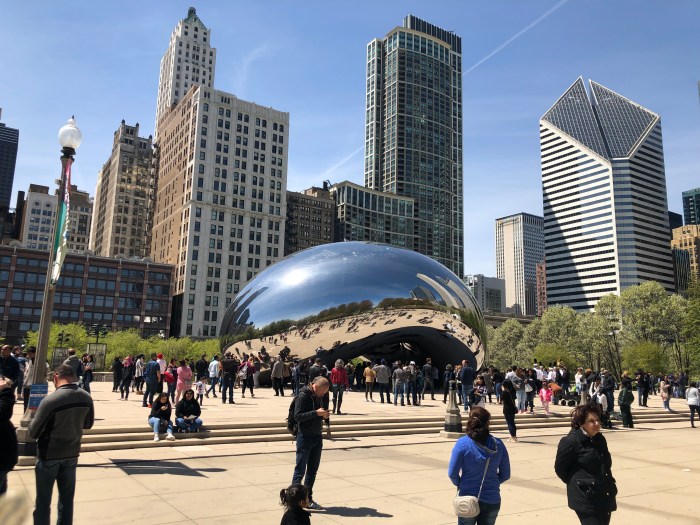
Today’s Swedes in Chicago are usually tourists visiting the Magnificent Mile and taking selfies in the mirrored bean statue. But it’s fascinating to remember that centuries before, a very different type of Swede trod these city streets.

Why is May 1st celebrated in Sweden?

In Sweden, and in many other countries, May 1st has been embraced as the International Workers’ Day. In 1938, May 1st became Sweden’s first non-religious public holiday and has been an important celebration of labourers and the working classes since then.

But why specifically May 1st?

The answer is found in a massacre in the USA. On 1 May 1886, laborers in Chicago went out on strike for an 8 hour working day. On 4 May 1886, Chicago police and the demonstrators clashed and 11 people died. The event is called the Haymarket massacre. Seven of the demonstrators were sentenced to death, despite lack of evidence. To commemorate the massacre, the socialist organization suggested that 1 May should become day of demonstrations every year.

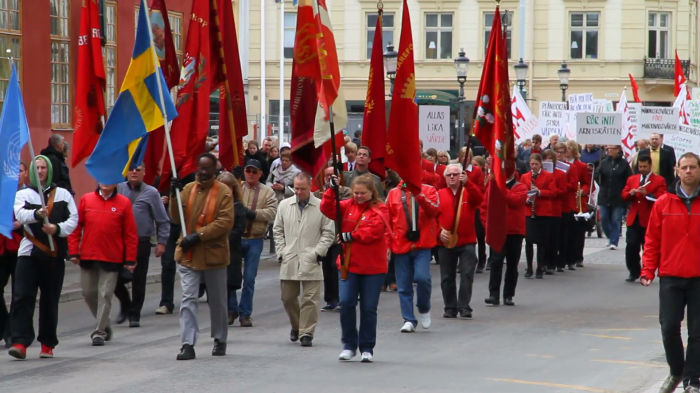
Around Sweden, traffic is shut off, huge flag-waving demonstrations are held and people gather to hear speeches from their politicians and representatives – most commonly from the political left.

Contrary to the stereotype however, not everybody in Sweden supports left wing political groups. Many Swedes lean towards the centre or the right. For them, today is just a day off work – an opportunity to perhaps nurse hangovers from the festivities of the previous evening or to relax, watch Netflix, meet friends and enjoy the day.

Nowadays, there is always a racist shadow over May 1st celebrations. According to the Swedish law, even their right to demonstrate is protected. This year, the extreme right-wing Party ‘Nordiska motståndsrörelse’ will also be marching in the small towns of Ludvika, Fagersta and Kungälv. This inevitably means a counter-demonstration will occur and a potentially violent exchange of opinions will develop.

If you’re in Stockholm, head to Humlegården or Medborgarplatsen around 12.00 ish to catch the start of two demonstrations.

Walpurgis Eve – when spring arrives in Sweden

Today, 30 April, is Walpurgis Eve, called Valborgsmässoafton in Swedish. The name Walpurgis is taken from the eighth-century Saint Walburga, and in Sweden this day marks the arrival of spring.

On this evening, Swedes gather to celebrate together. The forms of celebration vary in different parts of the country and between different cities. Essential celebrations include lighting a large bonfire, listing to choirs singing traditional spring songs and a speech to honour the arrival of the spring season. Walpurgis bonfires are an impressive thing to see and are part of a Swedish tradition dating back to the early 18th century. At Walpurgis, cattle was put out to graze and bonfires lit to scare away predators.

The weather is often unpredictable on Walpurgis Eve. This year looks like it could be a warm evening, and some bonfires have even been forbidden due to fire risk after the exceptionally dry April that has passed.

However, it’s not unusual that it snows on 30 April! Despite bad weather, Swedes still shiver around the bonfires and ironically celebrate the arrival of Spring.

Who is Sweden’s Patron Saint?

Last night I was at a party (not the picture above). I was clad in green, and wearing a green sign saying Lucky and depicting a pot of gold. Over the speakers, a mix of folk music, U2 and the Cranberries blasted out. Offensive green-coloured beer was served.

Today, 17 March, is St Patrick’s Day. St Patrick, the Patron Saint of Ireland, is being celebrated all over the world. And just like me last night, people are donning green clothes, dancing to fiddely-diddely music and downing beer.

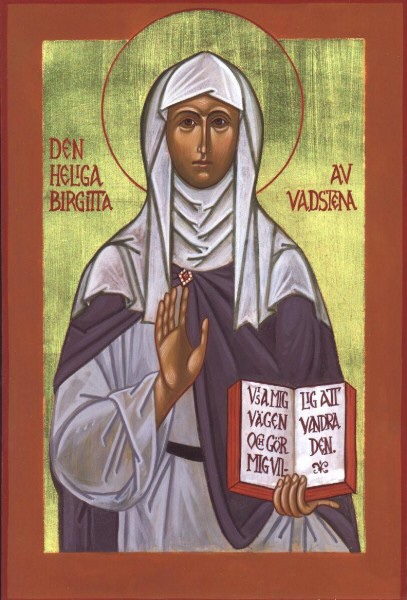
Out of curiosity, I wondered who Sweden’s Patron Saint is. So I researched and I have to say the answer wasn’t totally clear. One Saint in particular kept popping up, but in only one case did I see her referred to as the Patron Saint of Sweden. She is however one of Europe’s 6 Patron Saints.

Do you know who I’m referring to?

I am referring to Saint Brigit, known in Swedish as Saint Birgitta. She is definitely the most celebrated saint of Sweden. Born 1303 into a wealthy noble family, she entered a Catholic convent after the death of her husband. By this time she was 41 and had 8 children. In 1350, she went to Rome to meet the Pope and there she remained until her death at the age of 70. Her feast day is 23 July, the day she died. Brigit established the Swedish religious community which was to become the Order of the Most Holy Saviour, or the Brigittines at the Swedish town of Vadstena.

Brigit is known for her many influential visions. In her first, at the age of 10, she saw Jesus suspended on a cross. Ages. Her visions of the birth of Jesus came to affect nativity art for centuries to comethe infant Jesus lying on the ground and emitting light himself, the Virgin as blond-haired, a single candle attached to the wall, and the presence of God the Father above. Her visions were recorded in Revelationes coelestes (“Celestial revelations”) and made her a revered and controversial celebrity in the Middle

In Sweden people know vaguely who Birgitta is. I wonder if many know that she is the Patron Saint of the country. She is fairly far from the minds of most Swedes and, unlike the Irish St Patrick, or the Welsh St David, not at all integrated into Swedish identity.

Probably because of her ‘invisibility’, I actually haven’t heard of annual celebrations in Sweden to commemorate Brigit. I’m guessing it’s a low-key affair for the converted. I’m guessing it’s about prayer, meditation and reverence. I’m guessing it’s not about dressing in a unified colour and dancing the jig. And I assume very little beer guzzling is involved.

Why Germans don’t like Swedish curtains

Ask people to think about Sweden and invariably they will say IKEA. The massive flat-pack corporation has world dominance when it comes to home furnishings. However, in Germany, Swedish curtains are not necessary an attractive option.

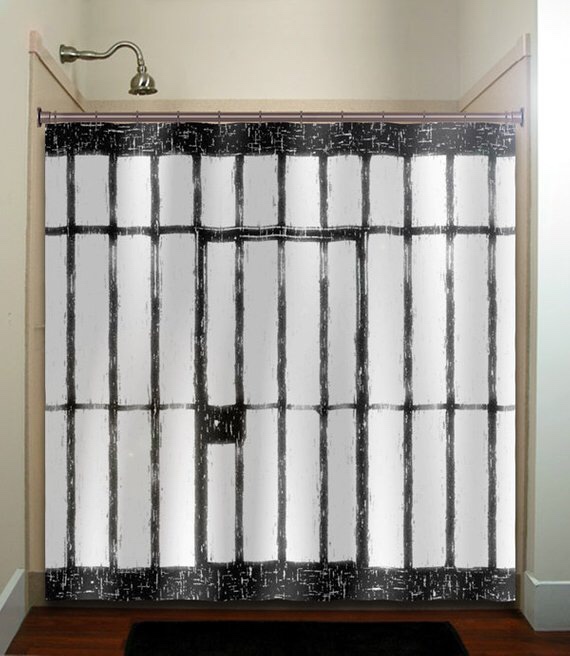
To be ‘hinter schwedischen Gardinen’ (behind Swedish curtains) in colloquial German means to be in prison.

Not entirely sure of the reason but one theory is as follows:

German bars used to be made from strong Swedish steel, as they were particularly strong and escape-proof. When the bars formed a grille, they became the kind of ‘curtain’ that you don’t want to be behind!

Please share this post if you found it interesting.

Follow me at #watchingtheswedes

‘Don’t act like you’re a Swede!’

Unfortunately I can’t speak Spanish very well. However, I have heard a phrase in Spanish that is somewhat derogatory to the Swedes.

In Spanish there is a well-known expression ‘no te hagas el suecowhich means ‘Don’t act like you’re a Swede.’ A related expression is ‘hacerse el sueco‘ which means ‘to play Swedish’.

The expression apparently means ‘don’t pretend you don’t understand’ or ‘don’t act dumb’. It is often used when somebody is trying to get out of taking responsibility for something.

Clearly there’s an element of dishonesty underlying this expression and that’s not particularly favorable towards Swedes.

I wonder what has happened in Spanish history that was the catalyst for this well-known and well-used expression? I’m not playing dumb, I’m afraid I don’t know.

Oh my God! Am I pretending to be Swedish?!!

Please share this post and follow me at #watchingtheswedes

It’s fatty Tuesday – Swedish style!

Today it’s ‘Fat Tuesday’ in Sweden, known as Shrove Tuesday or Mardi Gras around the world.

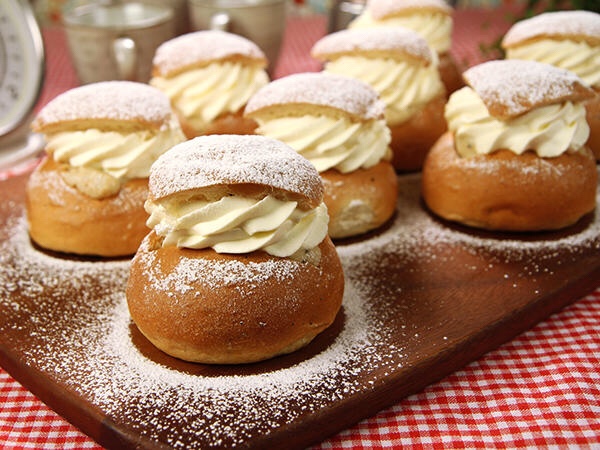
While in the UK we eat pancakes (today is even called Pancake Day) and in Latin America they scoff down fried bread, Swedes celebrate by eating the traditional cream Lent bun – the ‘semla’. I’m also clearly going to indulge. In fact, my mouth is watering just writing this post.

The semla is a creamy bun filled with delicious almond paste. They were eaten traditionally in Sweden to commemorate the start of Lent and the great Fast, leading up to Easter. In the south of Sweden, they still refer to them as ‘fastlagsbullar’ – Shrovetide buns. Nowadays however, semlas are usually sold anytime between Christmas and Easter.

I just love them. I could eat a barrel load. But I’d end up looking like a barrel if I did. I love the taste of them, and the feeling of luxurious indulgence. I also love the knowledge that as you take a bite into a creamy semla, you are biting into over 500 years’ history of Scandinavian baking.

The word ‘semla’ comes from the Latin ‘simila’ which means fine flour and originally referred just to the bun without any filling. As long ago as the 1500’s, bakers started to hollow out the middle of the bun and fill it with cream and butter. As ingredients became more available, bakers started adding almond and cardemon and the type of semla that we know today developed towards the end of the 1800’s. After rationing of sugar and dairy products ceased at the end of WW2, the semla took off and became very popular.

Nowadays the semla trend has reached new heights. Every year bakers around the country try to launch new types of semla, with their own spin on it -for example, the semla wrap, the semla burger, the semla layer cake, the semla cocktail, the chocolate semla, the vanilla semla, the lactose-free, gluten-free vegan semla. This year, the gross-sounding fermented Baltic herring semla was revealed.

But I’m a traditionalist in this matter. Give me a round fluffy cardemon-scented wheat bun brimming over with whipped cream and almond paste.

And give it to me NOOOOWWW!!!