In a historical move, Sweden is closing its borders to foreigners from Saturday 6 February. The only way in to the country is if travellers can show evidence of a negative COVID 19 test taken within the previous 48 hours.
The government says that this is to prevent the spread of the British strain into Sweden. Although, the strain is already here the hope is that this entry ban will significantly reduce its progress.
The ban will last until 31 March 2021.
So if you are planning a trip to Sweden, make sure you take a test before you depart. And make sure you bring evidence of your negative result with you. Tests will not be offered at the Swedish border, and you will be sent back home.
A quick look at social media reveals the general Swedish attitude to 2020 – ‘a shit year’, ‘throw the year in the bin’, ‘go to hell 2020’.
Obviously, people are referring to the global pandemic that swept the world, limiting our freedoms, making us sick and killing 8727 people in Sweden. So far, about 10% of the Swedish population has had Covid 19, and as we enter 2021, that number is quickly rising.
However devastating the pandemic is, 2020 wasn’t all doom and gloom. There were some positive news stories in Sweden as well, even though media coverage was totally dominated by the virus. Let’s reflect over some of the rays of light:
– The Convention on the Rights of the Child became enshrined in Swedish law. This expands legal protection to children.
– The planet got a much-needed breathing space. Fewer planes in the sky and cars on the roads improved air quality and reduced pollution. Biggest impacts of this were seen in other places, such as New Delhi, where the sky turned blue again.
– Despite physical distance, people showed solidarity and care for each other. People shopped for each other, walked each other’s dogs, serenaded each other and checked in on each other. 2020 was a year of neighborliness.
– People gathered up and down the country to protest against oppression and racism as part of the global BLM movement. While gatherings might have been illegal, it showed a strong commitment to equality in Swedish society.
– The Golden bridge was inaugurated in Stockholm by the King. This feat of engineering, manufactured in and shipped from China, creates an important link at the hub between Södermalm and the Old Town.
– Pope Francis defended the right of same sex couples to enter into legal partnership. This political statement was welcomed by catholic LGBT people in Sweden and abroad.
– Swedish pole vaulter Armand Duplantis broke the world record – twice! And Swedish biathletes gave a sense of national pride as they repeatedly crushed their competition, especially the Norwegians.
– The Swedish economy recovered better than expected, with a growth in GDP. Good news for everybody given the global impact of the pandemic. And a glimmer of hope for 2021 and beyond.
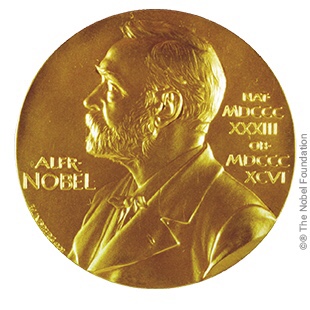
Today is Nobel Day when the winners of the five Nobel prizes are celebrated. This year is a digital ceremony and the usual concert and grand banquet have been cancelled to avoid crowding.
But how did the Nobel prizes come about? Well, the story goes like this. Alfred Nobel, the inventor of dynamite, woke up one day to his own obituary in the newspaper. Mistakenly, the paper had declared him dead, when in fact it was his brother. As a title for the obituary, the newspaper had written a rather unflattering ‘The angel of death is dead‘. The journalist also wrote that Alfred Nobel had made it possible to kill more people than anyone who had ever lived.
Suddenly Alfred Nobel understood this is how he would be remembered and, to change it, he founded the Nobel Prizes. Now his name is synonymous with science, literature and peace.
It makes for an interesting reflection. If you could read your own obituary, would you be proud of what you read? Would you also change your behaviours to influence the memory of you? And, if that’s the case – why not get out there and do it now?
The Netflix series ‘The Crown’ which depicts the British monarchy has just started its 4th season. Featuring the sad destiny of Diana, and including events like the Falklands war, it is set to be a dramatic ride.
It got me thinking if they made a Swedish version, probably called ‘Kronan’, who would be the ideal cast? Which Swedish actors would fit the bill? Any suggestions?
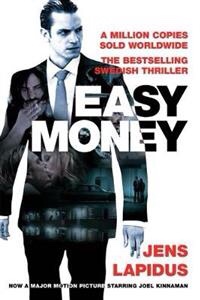
In ten posts, I am recommending good Swedish reads to enjoy during the dark days and pandemic lock down. This is the ninth one – ‘Easy Money’ – written in 2006 by Jens Lapidus.
This book takes us into the brutal, criminal underworld of Stockholm. A thriller, the story follows the destinies of a group of young men all trying to get filthy rich, but paying a heavy price along the way. Jens Lapidus has written several books on the same theme and several have been made into movies.
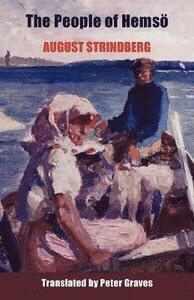
In ten posts, I am recommending great Swedish reads to enjoy during the dark days. This is the eighth one – ‘The People of Hemsö’ – written in 1887 by legendary Swedish author August Strindberg.
Carlsson is on his way to the island of Hemsö in the Stockholm archipelago to work at widow Flod’s farm. With Flod’s husband dead, the farm is falling part. Drama ensues. A classic tale of greed, jealousy, love, lust and lies.
Over 10 posts, I will give you a recommendation of a Swedish book, translated into English, that is well worth a read. The sixth recommendation is ’Popular Music from Vittula’ from 2000, written by Mikael Niemi.
This brilliant book is set in the very north of Sweden during the 60’s and 70’s and is a young boy’s coming of age story. Based on the author’s own childhood, we get to experience a distant time in a remote region of Sweden influenced by communism, alcoholism, machoism, and rock and roll.
Over 10 posts, I will give you a recommendation of a Swedish book, translated into English, that is well worth a read. The sixth recommendation is ’The Hundred Year Old Man Who Climbed Out of the Window and Disappeared’ from 2009, written by Jonas Jonasson.
The book follows Allan Karlsson who escapes his old people’s home on his 100th birthday, and embarks on a remarkable journey through Sweden, with the police and bad guys hot in his heels. It is a funny book full of historical reference. It was made into a film in 2013. Jonas Jonasson also wrote ‘The Girl who Saved the King of Sweden’ which is also well worth a read.
As the autumn darkness envelops us, what better than snuggling under a blanket with a good book? Over 10 posts, I will give you a recommendation of a Swedish book, translated into English, that is well worth a read. The fifth recommendation is ’Hanna’sDaughters’ from 1994, written by Marianne Fredriksson.
Set against the majestic isolation of Scandinavian lakes and mountains, this is a story of three generations of women from the same family. It is a moving testament of a time forgotten and an epic romance in every sense of the word. It also reflects Swedish society and a journey from poverty to prosperity.
I remember walking around Stockholm when I had recently moved here. It was a pitch black Saturday evening in November, cold and crisp. As I approached a majestic church, I noticed that it was shimmering from the grave yard. This yellow and white light slowly flickered and cast shadows on the gravestones and the church wall. As if drawn by a magic spell, I walked up to the church and looked over the wall.
The sight that met my eyes was spectacular and serene at the same time. Hundreds of candles were spread around the cemetery, decorating each of the graves. In the memory grove a bright blazing blanket of candles lit up the area. It was as if the spirits of the dead had come out to play.
In Sweden, the Saturday between 31 October and 6 November is All Saints’ Day (the Sunday after All Saints’ Day is called All Souls’ Day to separate between the saints and the dead). Since the 1800’s Swedes have, during this weekend, made pilgrimage to graveyards up and down the country to decorate the graves with candle light and to pay respect to the dead.
It is a much more elegant and atmospheric tradition than the typical Halloween parties that otherwise have become very popular in Sweden. It is a truly beautiful experience to walk through the churchyards this weekend. In the pitch black November Nordic darkness, it is a peaceful reminder of those who have gone before us.
This year is a bit different however. The corona pandemic has led to restrictions and there is a recommendation to refrain from going to cemeteries this weekend. We should honour our dead, but try not to contribute to the spread of the virus at the same time. So if you plan to head to your nearest cemetery anyway, make sure to keep distance to the other visitors, and make the visit quick. Alternatively, light a candle in your own garden, or balcony this year.