Thirteenth Day in Sweden

Today, 6 January, is a national holiday in Sweden and in many places around the world. In Sweden, not a lot happens on this day – it is just another day off. If it lands on a weekend, the bank holiday is forfeited, unlike in many other countries where the following Monday is taken off in lieu.

So what does the 6 January celebrate?

In orthodox churches, the 6 January is celebrated as the day of Jesus’ birth.

In western Christianity, the 6 January notes the arrival of the three wise men (the magi) to Bethlehem to visit the baby Jesus in his cradle. These wise men are said to represent the three continents of Europe, Africa and Asia.

In Eastern Christianity, today celebrates the baptism of Jesus in the Jordan river and his manifestation to the world as the son of God.

January 6 also commemorates the legend of the Wedding at Cana, where Jesus exercised his divinity by turning water into wine.

Epiphany

In English, today is called Epiphany – which comes from the Greek word ἐπιφάνεια, epipháneia, meaning ‘manifestation’ or ‘appearance’. It is derived from the verb φαίνειν, phainein, meaning “to appear”. It signifies the day when Jesus first appeared to the Gentiles, in his cradle.

In the practical language of Swedish, there is no reference to manifesting or appearing. Today is given the name of Trettondag Jul (Thirteenth Day Yule) – literally thirteen days after Christmas Eve.

Pea Soup and Pancakes

In all cultures, there is an element of predicatability. Some things that you can feel will always happen. Things that give you a sense of security because you can depend on them.

In Sweden, it’s pea soup and pancakes.

Today is Thursday. In most lunch restaurants and every staff canteen that sells Swedish food, pancakes are on the menu. You can rely on it. It feels dependable. The pancakes are served in a particular way – with whipped cream and jam – and always, always served together with a bowl of steaming pea soup and bread.

Pea soup and pancakes have been consumed in Sweden since the 1200’s. It’s believed that because Friday was a day of fasting, people ate as much filling food as possible on the Thursday before. And that’s how the tradition was born.

It’s fun to watch Swedes on Thursdays. In the staff canteen, grown men queue up to ladle their soup into their bowls and pile pancake after pancake onto a plate like a Scooby snack. Then they gleefully paste on the jam and smother it with whipped cream. It’s like watching a jelly and ice cream party for 10-year olds.

Pancakes on Thursdays is especially interesting for us Brits. Traditionally, we only get to eat pancakes once a year – on ‘Pancake Day’ – Shrove Tuesday. On this day, when Swedes traditionally tuck into the Lent bun called ‘semla’, we Brits make pancakes and cover them with sugar, lemon juice and chocolate sauce.

Thirteenth Day in Sweden

Today, 6 January, is a national holiday in Sweden and in many places around the world. In Sweden, not a lot happens on this day – it is just another day off. If it lands on a weekend, as it does this year, the bank holiday is forfeited, unlike in many other countries where the following Monday is taken off in lieu.

So what does the 6 January celebrate?

In orthodox churches, the 6 January is celebrated as the day of Jesus’ birth.

In western Christianity, the 6 January notes the arrival of the three wise men (the magi) to Bethlehem to visit the baby Jesus in his cradle. These wise men are said to represent the three continents of Europe, Africa and Asia.

In Eastern Christianity, today celebrates the baptism of Jesus in the Jordan river and his manifestation to the world as the son of God.

January 6 also commemorates the legend of the Wedding at Cana, where Jesus exercised his divinity by turning water into wine.

Epiphany

In English, today is called Epiphany – which comes from the Greek word ἐπιφάνεια, epipháneia, meaning ‘manifestation’ or ‘appearance’. It is derived from the verb φαίνειν, phainein, meaning “to appear”. It signifies the day when Jesus first appeared to the Gentiles, in his cradle.

In the practical language of Swedish, there is no reference to manifesting or appearing. Today is given the practical name of Trettondag Jul (Thirteenth Day Yule) – literally thirteen days after Christmas Eve.

Sweden’s 3 wisest men

Today is Twelfth Night, called ‘Trettondagsafton’ in Swedish. Tomorrow is Epiphany and in Sweden, like many places around the world, it is a National Holiday – ‘Trettondagen’. (6 January)

In Sweden, not a lot happens on this day. Unlike the southern parts of Europe where it is the beginning of the carnival season, in the frozen north it is just another day off.

The day celebrates the arrival of the three wise men to Bethlehem to visit the savior in his cradle. These three wise men are said to represent the three continents of Europe, Africa and Asia.

This got me thinking about Sweden’s three wisest living men. Here is my triad – a highly subjective list of names! Who would you add to this list?

Wise man number 1 – Jan Eliasson. A Swedish diplomat who has been Deputy Secretary-General of the United Nations, Sweden’s Foreign Minister and the Chairman of the International Peace Research Institute. He has worked to resolve conflict in Iran, Iraq, Somalia, Kongo, Sudan, Israel – amongst others. Since 2017, there is a Global Leadership Prize named after him.

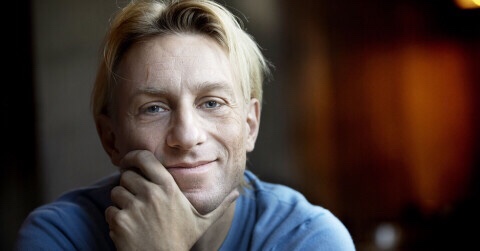
Wise man number 2 – Anders Hansen. A Swedish psychiatrist, doctor and brain expert. He has written numerous books on how our brain works and led several tv programs on the subject. He has been given several awards, amongst them the Mensa Prize. He is an ambassador for Generation Pep – a non profit organisation that focuses on the mental health and well-being of young people.

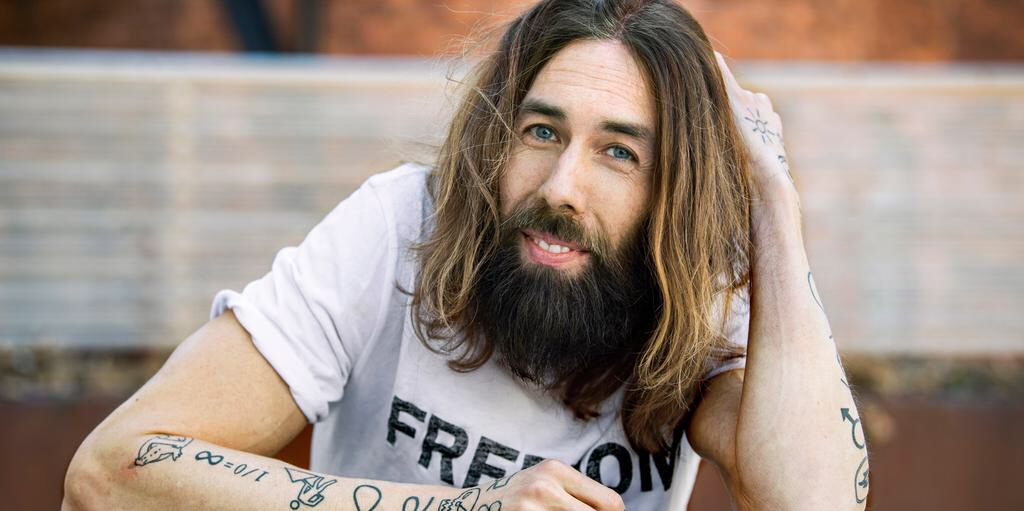
Wise man number 3 – Micael Dahlen. A Swedish economist, and Professor at Stockholm School of Economics. His most popular books are Kaosologi, Nextopia and Monster. Kaosologi is about how to change habits, Nextopia is about what he calls ‘expectation society’ and Monster is about his research and interviews with 5 serial killers. He is the only Swede to have interviewed Charles Manson. He is on the board of numerous organisations and has won many awards. He is a popular lecturer, and advisor.

While these three wise men wouldn’t bring gold, frankincense and myrrh, they would bring peace-keeping, mental health and mind-boggling theories.

World Book Day – and my book on Sweden

Today is UNESCO World Book Day, to celebrate books and promote reading. The 23 April is a significant day as it commemorates the death of many famous writers such as William Shakespeare, Miguel de Cervantes and Inca Garcilaso de la Vega.

Every year a World Book Capital is nominated. The first one, in 2001, was Madrid, Spain. This year it is Guadalajara in Mexico.

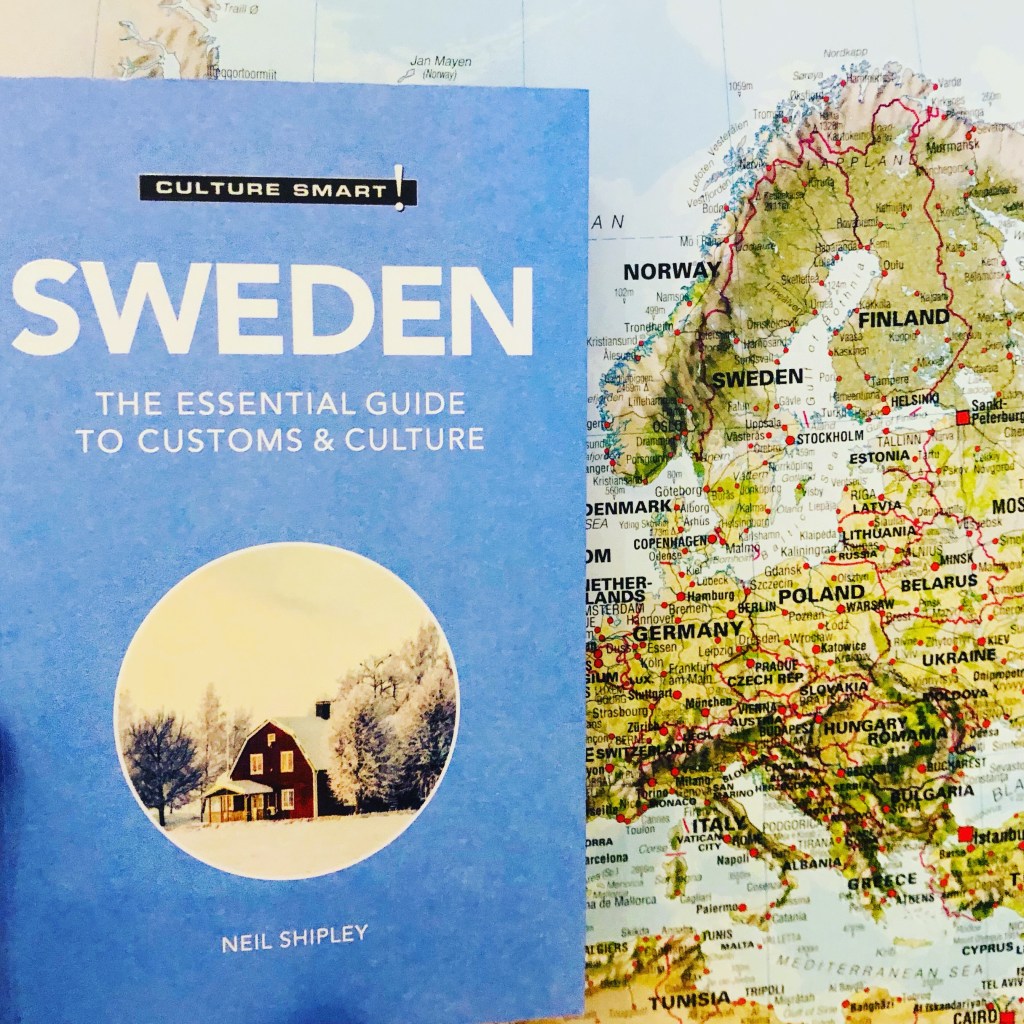
So today is a good day to buy a book, or to gift one. If you know anybody who is interested in learning about Sweden, or planning on visiting Sweden, then my guide book is a good match! I published it in 2021.

You can buy it on Amazon, Bokus, Akademibokhandeln and Adlibris amongst other online stores. Sweden, by Neil Shipley, published by Kuperard 2021. You can also buy it straight from the publisher at http://www.culturesmartbooks.co.uk

I still have a few copies left, so if you’d like to buy a signed copy, just let me know!

My book on Sweden – the Essential Guide!

My book is doing really well, which I’m very proud of. You can buy it on Amazon, Bokus, Akademibokhandeln and Adlibris amongst other online stores. Sweden, by Neil Shipley, published by Kuperard 2021.

I still have a few copies left, so if you’d like to buy a signed copy, just let me know!

Swedish expression: Lazy Dog

I was listening to a presentation the other day and the presenter kept saying that he would provide users with a ‘lazy dog’. In Swedish, the expression makes sense, but in English it makes no sense – it means literally a dog that is lazy.

The Swedish word ‘lathund’ or ‘lazy dog’, is the word for a quick reference guide, or a cheat sheet. If you need support to follow a process, for example, you can follow a ‘lazy dog’. It is designed to make life easier and for things to go faster.

The word ‘lazy dog’ has been around in the Swedish language since the 1600’s. However, at that time it was used as an insult to a lazy person – ‘you lazy dog’. In the 1800’s, it changed to its current meaning – but its implication is the same. A person who uses a ‘lathund’ is a person looking for quick fixes and short cuts – in other words ‘lazy’.

12 ways to describe Swedish money

I’ll never forget how I learned the Swedish word for money. New in Sweden, I went to see a performance of Cabaret at the National Theatre. The musical was in Swedish but I figured it would be ok as I knew the story line. It was fairly entertaining but, to be honest, a bit boring. Until the song ‘Money makes the world go round’ came on. In this song, there’s a line that goes ‘money, money, money, money, money, money, money, money’. The singers pranced around the stage and sang ‘pengar, pengar, pengar, pengar, pengar, pengar, pengar, pengar’. It was repeated so often that I never forgot the word ‘pengar’ ever again.

However ‘pengar’ is just the formal word for money in Swedish. Like the US has its ‘buck’ and the UK has its ‘quid’, Swedish also has a lot of colloquial words for the Swedish krona (crown). Here are some examples:

Deg – dough – possibly related to putting food on the table in olden days

Lax – literally a salmon – meaning a thousand crowns. In the early 1900’s, the 1000 crown bill was pink.

Röding – literally a char – meaning 500 crowns

Selma – an old word for 20 crowns. The name is taken from the portrait of author Selma Lagerlöf on the 20 crown note.

Pix – meaning crowns

Kosing – cash

Stålar – cash – refers to steel/metal that coins are made of

Kova – cash. The expression ‘kova raha’ was on 1700’s money. This is Finnish for ‘hard money’.

Pluring – cash. Possibly related to the Latin ‘plures’ meaning many. The word ‘pluring’ was originally used to refer to large amounts of money.

Bagis – a crown. From an older word ‘bagare’ which means baker. Referring probably to the original silver coins that were as white as flour.

Spänn – a crown. Probably borrowed from German ‘späne’ which is slang for money, or English ‘spend’.

Flis – money. Flis also means small wood chips, so it may have originated in Swedish to mean small values of money.

I’m sure there are a lot more words! Please feel free to add them here!

IKEA’s secret Swedish code


Anyone who’s ever been in one of the 350 + IKEAs in the world, has experienced a tiny slice of Sweden. 

In the stores, one thing that reflects Swedish and Scandinavian culture is the name of the thousands of products. 

What many people don’t know is that there are strict rules for the naming of the merchandise. Fascinatingly, these rules were devised by IKEA’s founder Ingvar Kamprad because he struggled with dyslexia and had trouble remembering the order of numbers in item codes of the inventory. 

So what’s the secret? Here are the guidelines: 

  • Bathroom articles = Names of Swedish lakes and bodies of water
  • Bed textiles = Flowers and plants
  • Beds, wardrobes, hall furniture = Norwegian place names
  • Bookcases = Professions, Scandinavian boy’s names
  • Bowls, vases, candle and candle holders = Swedish place names, adjectives, spices, herbs, fruits and berries
  • Boxes, wall decoration, pictures and frames, clocks = Swedish slang expressions, Swedish place names
  • Children’s products = Mammals, birds, adjectives
  • Desks, chairs and swivel chairs = Scandinavian boy’s names
  • Fabrics, curtains = Scandinavian girl’s names
  • Garden furniture = Scandinavian islands
  • Kitchen accessories = Fish, mushrooms and adjectives
  • Lighting = Units of measurement, seasons, months, days, shipping and nautical terms, Swedish place names
  • Rugs = Danish place names
  • Sofas, armchairs, chairs and dining tables = Swedish place names

There are some exceptions to these rules where the product’s name is a Swedish verb reflecting the function of the item, eg a spice mill called ‘krossa’ (to crush) or a lamp called ‘böja’ (to bend). 

Obviously, IKEA’s branders try to vet any words that are offensive locally. And with a few notable exceptions, they seem to succeed. More about this in a later blog.