Stockholm A-Z: Hipsters

IMG_4386.JPG

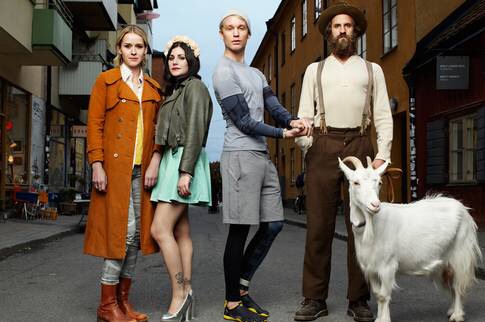
When you understand the definition of hipster as middle-class young bohemians residing in gentrifying areas with an interest in alternative music, vintage, progressive politics, organic, artisanal foods and alternative lifestyles, there’s one neighbourhood in Stockholm that stands out. Recently voted in Vogue magazine as one of the coolest city areas in the world, the island of Södermalm lives up to its reputation as a hipster heaven. Divided into distinct areas, the island offers lots to see and do. On the western side of the island, is Hornstull. Here you will find groovy restaurants, shops, a vibrant music scene, a craft market, an independent cinema, bathing areas and Tantolunden – a popular green area for hanging out in. In the centre of the island, you will find Medborgarplatsen – or ‘Citizen square’. Hipster life is non-existent in this area but the square offers lots of mainstream cafés and restaurants and late night bars. Political rallies are often held here. On the eastern side, you will find an area known as Sofo, the birthplace of the hipster movement in Sweden, which has become such an identifiable brand it has even been ridiculed in a TV comedy based in the area. Sofo is packed with bars, restaurants, cafés, butique shops, vintage places and artisan fooderies. It’s well worth a visit and a stroll about on a sunny day. Much of the life circulates around the few streets between Nytorget, Götgatan and Folkungagatan. On some Saturdays, there is a farmer’s market lining one of the main arteries. For an alternative music and theatre scene, it’s worth visiting the venue Mosebacke with its outside terrace and view over Stockholm.

Stockholm A-Z: Gondolen

IMG_4385.JPG

If you want to experience a breathtaking view of Stockholm, while enjoying a fantastic cocktail or meal, very little beats Gondolen. Perched 33 meters above Slussen in a glass tongue, the restaurant serves critically acclaimed food and offers sweeping vistas of the lake Mälaren to the left, the city and the Baltic Sea to the right. Gondolen is a perfect location in the winter months, when the cold winds and icy temperatures envelop Stockholm. From inside, you can look out over the glittering winterscape while sipping on an elegant Rasperritini and tucking into a bleak roe toast.

The restaurant has historical merit, as it was inaugurated in 1935 as part of an inner city generation project. And history tends to repeat itself. The area where Gondolen is positioned is being heavily renovated again with a lot of demolition and remodelling. However, I believe this Stockholm classic will remain a jewel in the city’s crown for many many years to come.

Stockholm A-Z: Ferries

IMG_4382.JPG

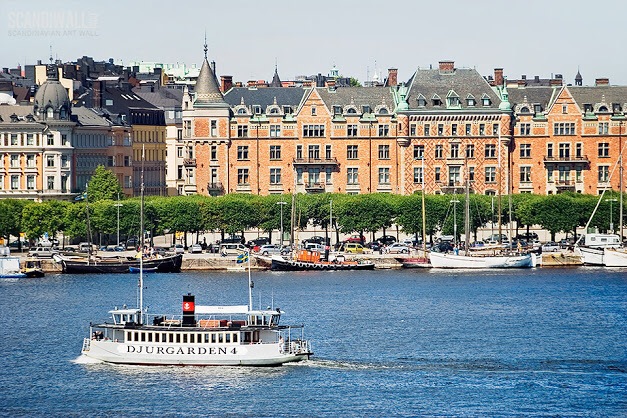
Considering Stockholm is a city built on many small islands, it’s not surprising that a favorite mode of transport is the ferry. In the city, there are several ferries used both by commuters and by pleasure trippers. The Djurgårds ferry takes people from Slussen on Södermalm to the museum and activity island of Djurgården. It’s a cute little boat that looks like a toy that a giant has flicked with his finger and thumb as it catapults over the waterway to the other side. This ferry also carries visitors to Östermalm and to Skeppsholmen, an Island located in the middle of the harbour, and is very well patronized by the city’s inhabitants.

Three other ferries in Stockholm are the ones taking well-heeled dwellers from the docklands development of Hammarby Sjöstad to Södermalm, and from Hammarby Sjöstad into the city, and the ferry that shuttles passengers from the Old Town to the suburb of Nacka and the islands of Fjäderholmarna.

But perhaps the most noticeable ferries are the giant liners positioned in Stockholm’s harbour that take passengers and vehicles to the Baltic Island of Åland and to Finland. These ferries satisfy various needs for Stockholmers. Some use them as a mode of transportation between Sweden’s capital and the Finnish cities of Helsinki and Åbo, maybe to work or to deliver goods or visit family. Others use the ferries as pleasure cruises, an opportunity for a trip out to sea, to eat well and maybe watch a show. Others use them as a way of buying cheaper duty free alcohol as the ferry bobs around in international waters. And other Swedes use them in a way that has gained these ferries notoriety – as a booze cruise. A popular weekend pastime is to embark the ferry on a Friday, drink, dance and party, and disembark, somewhat frazzled, when it returns to Stockholm 48 hours later.

Whatever the reason for taking one of Stockholm’s many ferries, this mode of transport is an undeniable part of the waterscape of this city and it certainly does contribute to Stockholm’s description as ‘the Venice of the North’.

Swedish Anglophiles

20140921-171056-61856967.jpg

Now I know many Swedes are Anglophiles but today it was proved. In Stockholm, a new cafe has opened. Run by Brits, they offer full English breakfast and tea, eggs in all forms, Pimms, you name it. All very British. And I love it. For a while it’s been a well-kept secret but today it seems like the cat’s out of the bag. Approaching the place today, we noticed a gathering of people outside. Probably just a group of friends we thought. But no. It was a queue! The place was packed and there was a waiting list to get in. It seems like more people want beans on toast than me. Now I’m really happy for the owners of this cafe, it’s great that business is going well. But I’m gutted that knowledge of the place has got out. Can’t anybody keep a secret these days?

The seriousness of xenophobia

us and them

In Greek, the word xenos means strange or foreigner. The word phobos as we know means fear. Putting those together gives us the well-known concept of xenophobia – the deep-rooted, irrational fear of something strange or foreign. Xenophobia can present itself in many ways, including the fear that immigrants and refugees are too abundant in a society.

In cultural research, we often talk about in-groups and out-groups. The in-group is usually the majority who belong to a somewhat homogenous culture. The out-group are the ‘others’ who live side by side but rarely amongst the in-group. One way to look at xenophobia is to see it as the relations and perceptions of an in-group towards an out-group. This may include a fear of losing identity, suspicion of the out-group’s activities, aggression, and desire to eliminate their presence to ensure a presumed security.

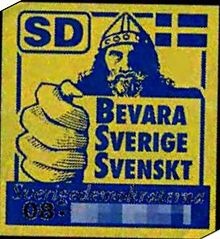
Xenophobia in a society is often aimed at a group of people who are not considered part of that society, eg beggars from Rumania and refugees from Northern Africa. When xenophobia becomes systematised it often leads to hostile and violent reactions, such as the phsyical attacks on beggars that we are seeing in Sweden or the call for expulsion of immigrants by SD voters. In extreme cases of systemitised xenophobia, genocide becomes the result.

To combat this issue, the Council of Europe in 1993 formed “The European Commission Against Racism and Intolerance”>. This is an independent human rights monitoring body specialised in combating racism, discrimination, xenophobia, antisemitism and intolerance. The organisation produced The Vienna Declaration and Programme of Action, also known as VDPA – a human rights declaration. In this declaration it clearly states the following:

”the VDPA urges all governments to take immediate measure and to develop strong policies to prevent and combat all forms and manifestations of racism, xenophobia or related intolerance, where necessary by enactment of appropriate legislation, including penal measure.’

We know that the winds of fear are sweeping over Sweden and Europe. And we know that governments can do what they can to combat this – changing policy, engaging in dialogue, ignoring the issue, closing the borders. But as soon as there is a manifestation of racism or xenophobia I think Sweden should have a zero tolerance policy. This might include infringing on civil liberties such as freedom of speech and right to demonstrate, but xenophobia is a creeping cancer that leads to horrific actions. We just have to take a look through history to understand that.
Sweden in shock

20140915-144739-53259286.jpg

At midnight last night, I was glued to the television in shock. The results of the Swedish General Elections were confirmed. The shock wasn’t that there was a shift of power from right to left, nor that the current Prime Minister resigned. The shock was that 12.9 percent of the voters elected the right wing, populistic, nationalist party The Swedish Democrats (SD).

Positive thinkers focus on the fact that 87 percent didn’t vote that way, but the fact remains that around 800 000 Swedish people chose to put their vote on a party with origins in the nazi party. This action has resulted in a very unstable parliamentary structure and a minority government.

This election highlighted just how split the nation is. The 87 percent who didn’t vote SD are all over the political spectrum, from left to centre to right. The biggest party secured only 31 percent of the vote. The cities voted differently from the provincial areas. The province of Skåne in the south of Sweden reinforced its position as the stronghold of SD.

This is now Sweden’s reality. The question is how to address it for the next election. SD are not going away, no matter how much the established parties wish for it. The issues they represent resonate in the heads and hearts of a significant number of people in society – restricted immigration, tougher punishment for criminals and better conditions for pensioners. I believe the people who vote SD don’t perceive themselves as racists. So calling them racist probably doesn’t change their perceptions. With their vote, they have communicated their concerns on the development of Swedish society. They lack feasible alternatives so they choose the simplistic but concrete policies of SD.

It is time for the established parties to address these and not skirt the issues with abstract theories and ideological arguments. They have to offer the electorate concrete solutions for immigration, integration, crime, begging, healthcare. They need to work to reduce dissatisfaction in society and to bridge the gaps between people. If they can do this, then maybe SD’s policies won’t seem as attractive any more.

There’s a cold wind blowing over Sweden today. Winter’s coming. Let’s hope it doesn’t last too long.

Ett öppet brev till Jimmie Åkesson

20140913-111047-40247371.jpg

Dear Jimmie
När jag flyttade till Sverige för 20 år sen kom jag till ett land som välkomnade mig med öppna armar, som såg mig som en individ som kunde bidra till svenskt samhället både ekonomiskt och kulturellt. Jag fattade rätt snabbt att jag tillhörde en priviligierade grupp – den engelsktalande invandrare. Min invandring sågs inte som ett problem, folk tyckte det var roligt att prata engelska med mig och vi enkelt hittade gemensamma beröringspunkter. Jag undrar ofta hur min integration hade varit annorlunda om jag hade kommit från Somalia eller Rumänien. Saken är så här, det som jag bidrar med till Sverige sitter inte i mitt ursprungsland. Det som jag bidrar med är mänskligt. Alla vi har nåt att bidra med och genom det berikar vi det samhället som vi lever i. Du Jimmie vill begränsa invandring, du vill stänga dörren till livrädda människor som söker fristad en stund. Du ser bara parasiter och inte människor. Du ser inte vad de kan ge utan vad de tar.

Jag antar att du liksom jag aldrig upplevt krig. Du har inte behövt genomlida smärta, rädsla och hot. Du har levt ett tryggt liv i Sverige. Det är kanske därför du verkar sakna empati. Jag tycker vi som har det tryggt har en skyldighet att ta hand om dem som behöver vår hjälp och det gäller de inom och utanför Sveriges gränser. Du snackar så fint om att hjälpa folk på plats bara dem inte försöker komma hit. Sverige hjäper behövande lokalt redan, och du vill faktiskt minska budgeten för det. Du pratar om integration men du menar assimilering. Att leva i ett integrerat och pluralistiskt samhälle betyder att man öppnar sig för skillnader, man söker synergier, man lever tillsammans och parallellt. Det betyder inte att man gör allt man kan för att hålla Sverige svenskt. Man omvärderar och omdefinierar vad det betyder att vara svenskt. Vi kan leva tillsammans och fortsätta att bygga Sverige. Det är möjligt. Men det krävs empati, mod och öppenhet. Och tyvärr verkar det vara brist på det hos dig.

På Söndag är det val, Sverige är ju en demokrati. Vi får se hur mycket stöd du har bland svenska folket. Jag vet att jag kommer inte rösta på er. Jag kommer satsa på ett parti som värdesätter olikheter och har en färgglad vision av Sverige. Med dig är framtiden bara mörkt.

My privileged Swedish bubble

I live a very privileged life in Sweden. I know it. I have a great job, a decent income, I own my flat in Stockholm’s trendiest inner-city area, I travel, I eat out at restaurants, I consume. I’m happily married, we have lots of friends, a BMW, trips to the theatre and to dinner parties. We have a country house. Everything’s smooth. Even at the A&E on Sunday after I sprained my ankle, I was in and out in less than 2 hours. Sweden has made this lifestyle possible for me, and many others. But it’s a privileged bubble we live in. We’re not confronted by the poverty in the suburbs, by the substance abuse in families. We don’t witness the children who fall out of the system because they happen to be born in a certain area, to certain parents. Our children are well-groomed, well-fed and well educated. We don’t see the horrors in old people’s homes, nor do we have to scrape together every last krona just to put food on the table because we’re sick, or injured or unable to find work. But this exists in Sweden. From our little bubble we just don’t see it. But it’s there. There are widening gaps in Swedish society between the old and the young, the rich and the poor, the educated and the uneducated, the sick and the healthy, the urban and the suburban, the always beens and the newly arrived. And the uncomfortable truth is the wider these gaps become, the more stretched our bubble becomes. And one day this bubble will explode.

Voting in an election is our democratic right. The dilemma is how we vote. Do we vote for what is good for ourselves or for what is good for our society? Do we protect ourselves or do we lift our eyes and look out of our bubble and see that what benefits society in the long run benefits all of us?

On Sunday, we make that choice.

Dispelling the Swedish myth

swedish flag

One myth about Sweden is the one of the socialised society where schools, hospitals and care of the elderly is free and open for all and of the highest quality.

As the years have progressed since the haydays of the 50’s and 60’s, this has become a myth – a very stubborn stereotype.

Privatisation and deregulation of education and health care, supported by political parties on both sides of the ideological spectrum, has seen to it that the model of the past is almost unrecognisable today. Many believe that Sweden has sold out their heritage – a unique system based on solidarity has become an individualistic system based on profit and an illusion of free choice.

To start with health care in Sweden is not free. It is cheap, but it’s not free. A visit to the hospital, or the doctor, costs around 200 Swedish crowns. Dental and optical care is astronomical and medicine, though subsidised, is costly.

Many hospitals, medical centes and schools are run for profit. Private shareholders run these services, funded by taxes, and streamline the business in order to take out a profit at the end of the year. This is never more apparent than in the educational branch. In the 90’s a reform allowed for parents and children to choose the school they wanted to go to and that the tax funding for the child’s education would follow them regardless of which school they attended. The reform opened up for so-called ‘free schools’ – privately run enterprises that could offer attractive school services. The more children chose these particular schools, the more income the school would receive in the form of the tax funding that they brought with them. The idea was to improve competition, increase quality and promote choice. And that is great if it works. But time and time again, we see unserious players jumping on the opportunity to make a fast buck and caring too little for the quality of the service they provide their consumers.

Overseas Investors profit from Swedish tax payers. A wave of overseas private venture capitalists have now seen the opportunity to make money out of the school and health care system in Sweden. Funded by Swedish tax payers, they can in a short period make a lot of profit, if they are skilled at cutting back and ‘effectivising’ their service. Making the most money requires that the child’s education, or the elderly person’s care, must take a back seat. If more educated staff are required, or better equipment or premises are needed, this is often not prioritized as it eats directly into shareholder return. There have been cases of schools going bankrupt, leaving thousands of pupils out in the cold – with incomplete education and a sabotaged future.

The question is can this system be maintained and, if so, how is quality ensured so that the lives of children and the sick are not jeopardised for profit?

So, many aspects of the original Swedish social model have been reformed away. While the myth outside of Sweden might be of a systemised caring eutopia, the reality is somewhat different.

Swedish obsession

20140724-095102-35462304.jpg

What is it with Swedes and their obsession with temperature? The whole of the summer, you hear people discussing the temperature in various parts of the country, the temperature of the water, the night temperature, the evening temperature. It seems like a very factual and logical way to describe an experience, as opposed to using emotional words such as hot, balmy, lovely, refreshing etc.

Even in the winter, the temperature obsession continues, this time to describe how many ‘degrees cold’ it is. And being sick with a cold is often determined by your temperature rather than how you actually feel.

I guess it’s not surprising in a country with such shifting seasons that people are obsessed by the weather and how hot or cold it is. It’s also a useful small talk point, everybody knows the answer!

Anyhow gotta go, it’s 26 degrees outside and it’s 22 degrees in the sea!