December 8th window: ‘Ernst‘ which translates as, well… Ernst.
What on earth is an Ernst you might wonder? Well, the question should rather be ‘who’ is Ernst.
Ernst Kirschsteiger is a person who, by many, is considered to be Mr Christmas in Sweden. He is a very popular interior designer. After a hiatus, the 65-year old is back this year with his TV program called Ernst’s Christmas.
In his program he simply explodes festive spirit. He decorates and bakes and creates. He wallpapers and chisels and hammers. He sews and paints and he crafts. I would describe his design ethic as a nature-oriented retro scandi chic. He has a poetic, philosophical attitude to interior design coupled with practical solutions.
One week he made, for example, Christmas decorations out of mandarin peel and wire and inspired us with a wreath of dried garden flowers, moss and brussel sprouts.
Some people find him very cheesy and goofy but he has definitely cornered the market on Christmas coziness. Many viewers see him as the idea of male perfection – a sensitive man who cooks, builds and decorates the home – all wrapped up in one sweet Christmas treat.
Since his tv debut in 2000, Ernst Kirschsteiger has grown to be a phenomena who only needs referring to by his first name, like Cher, Madonna and Prince. So popular is he that a book of his quotes and poetic wisdoms called ‘Ernstologi’ was released in 2006 and became a popular Christmas present that year.
If you want to witness the phenomena (in Swedish however), watch this YouTube clip and enjoy!
Window 6: Today’s word is ‘Julmarknad‘ which translates as ‘Christmas Market’
A popular recurring event during the weeks leading up to Christmas in Sweden is the Julmarknad – the Christmas Market.
Christmas markets are a very cosy affair. Here you can walk around and enjoy the smell of glögg and roasted chestnuts. You can listen to the sound of Christmas carols echoing through the air. You can bathe in the lights and decorations strewn around the marketplace. And you can see traditional handicrafts and locally produced goods on sale, such as scarves, hats, festive food and decorations. If you’re lucky, snow is tumbling down and crunching under foot. The whole thing feels like being momentarily caught in a giant snow globe.
Christmas markets have been around in Sweden since the 1800’s and take place up and down the country on town squares, in gardens, in museums, farms, barns, greenhouses, castles, garden centers and stately homes.
In Stockholm, the most popular markets are in Skansen and on the main square in the Old Town. The Royal Palace of Drottningholm and Taxinge Castle outside Stockholm are also popular, as is the small picture-postcard town of Sigtuna about an hour north of the capital.
In Gothenburg, the market at Liseberg is a popular experience and in Malmö head to the market on Gustav Adolf Square.
Today, the first of Advent, the light shines strong in the darkness.
Since the 1930’s Swedes have decorated their homes with lights from the first of Advent. The tradition was inspired from Germany, where the Advent star had been a popular decoration since the 1880’s. The star symbolizes the star of Bethlehem that guided the three wise men to the stable, where the baby Jesus lay in a manger.
Today, the star has lost most of its religious symbolism. In Sweden, illuminated advent stars are hung in windows. On window ledges, electric advent candles are placed. Gardens and balconies are decorated with fairy lights. On tables, four candles are positioned and one is lit every Sunday up until Christmas. Small candles, often red, are dotted about the home. Some people change curtains and populate their homes with small gnomes and fragrant flowers.
Since November is often a grim month, the collective advent decoration is a welcome arrival as light is spread into the murky places. From the dark street, it is lovely to see windows lit up in every apartment.
This weekend is also the starting signal for the Swedish ‘glöggfest’. People go to each other’s homes and drink ‘glögg’ (mulled wine), eat gingerbread and saffron buns. It is a very cosy time of year.
Every day, I will open a window containing a Swedish word that has something to do with the festive season.
Today’s word is ‘Gävlebocken‘ which translates as ‘The Gävle Goat’.
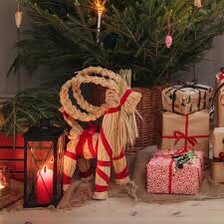
This strange tradition takes place in the Swedish town of Gävle. Every year, since 1966, a giant handcrafted straw goat is built up. And almost every year, it gets burned to the ground by a pyromaniac.
One year, it was even burned down before its inauguration. Consequently, the local authority have increased security and have managed to prevent the burning for the last three years.
The symbol of the goat is a traditional Christmas decoration in Sweden, called a ‘julbock’ – a Christmas goat. Usually made of straw, a goat is placed under the Christmas tree or small goats are hung from the branches. The symbol of the goat has ancestry in Scandinavia far back in Nordic mythology and, up to the 1800’s, it was the goat who brought presents during the festive season. A kind of precursor to Santa Claus.
So although the Christmas goat has endured for centuries, it remains to be seen if the Gävle goat survives until the New Year.
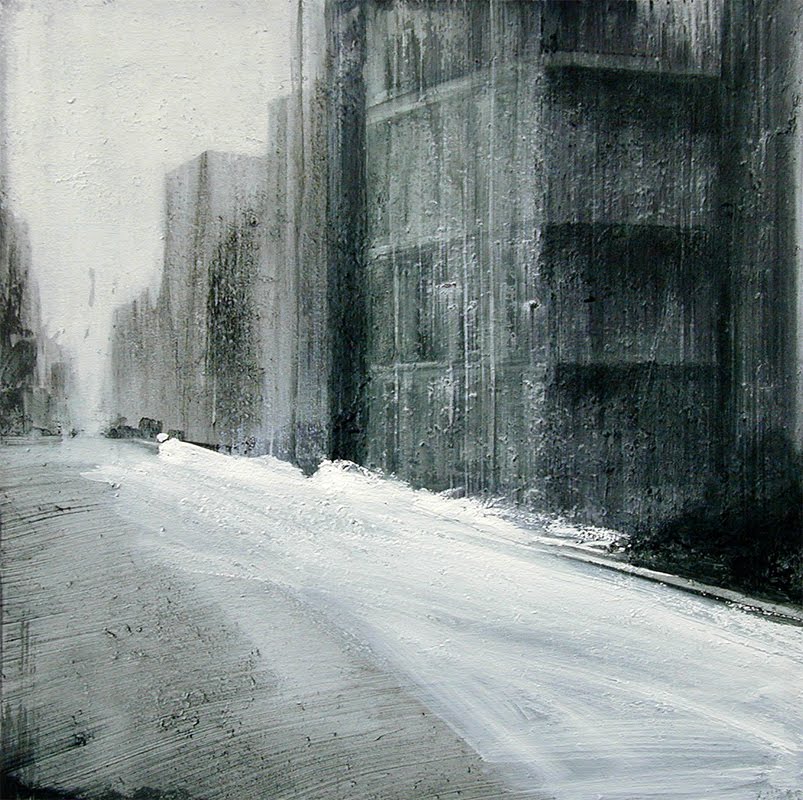
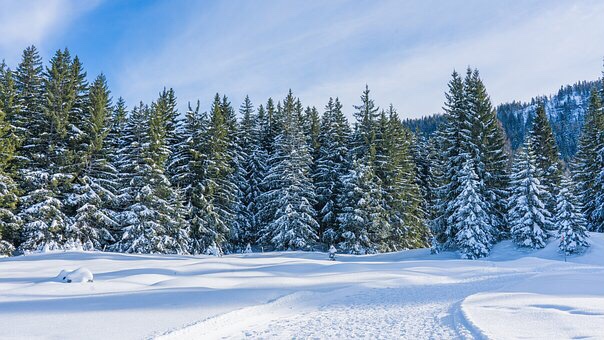
A couple of days ago, a major snow storm of hit Stockholm and many other parts of Sweden. Roads were closed off, buses and trains were cancelled, the tube was chaotic. During all this mayhem, I was reminded of an old realisation I had years ago.
Previously, I found snow in the city irritating. Your shoes get ruined, you slip and slide unelegantly around, your face gets battered, your hair gets mushed. In general, very irritating. But my perspective has changed – I have realised that snow is all about democracy.
No matter how ugly something is, when it is covered with snow it is beautiful.
No matter how dirty something is, when it is covered with snow, it is clean.
Now matter how shabby something is, when it is covered with snow, it gets a new, fresh start.
The snow kind of evens everything out.
Now if that’s not democratic, I don’t know what is.
Today it’s ‘Fat Tuesday’ in Sweden, known as Shrove Tuesday or Mardi Gras around the world.
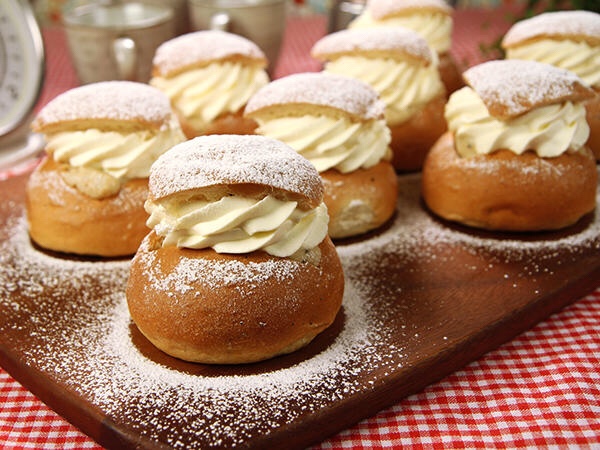
While in the UK we eat pancakes (today is even called Pancake Day) and in Latin America they scoff down fried bread, Swedes celebrate by eating the traditional cream Lent bun – the ‘semla’. 40 million of them every year! I’m also clearly going to indulge. In fact, my mouth is watering just writing this post.
The semla is a creamy bun filled with delicious almond paste. Traditionally, they were only eaten in Sweden to commemorate the start of Lent and the great Fast, leading up to Easter. In the south of Sweden, they still refer to them as ‘fastlagsbullar’ – Shrovetide buns. Nowadays however, semlas are usually sold anytime between Christmas and Easter.
I just love them. I could eat a barrel load. But I’d end up looking like a barrel if I did. I love the taste of them, and the feeling of luxurious indulgence. I also love the knowledge that as you take a bite into a creamy semla, you are biting into over 500 years’ history of Scandinavian baking.
The word ‘semla’ comes from the Latin ‘simila’ which means fine flour and originally referred just to the bun without any filling. As long ago as the 1500’s, bakers started to hollow out the middle of the bun and fill it with cream and butter. As ingredients became more available, bakers started adding almond and cardemon and the type of semla that we know today developed towards the end of the 1800’s. After rationing of sugar and dairy products ceased at the end of WW2, the semla took off and became very popular.
Newspapers often have the ‘Semla of the Year’ award, and nominate the best semla in town. Consequently, Swedes flock like sugar-addicted lemmings to the winning bakery, and you can stand in a queue for an hour to get your hands on one.
Nowadays the semla trend has reached new heights. Every year bakers around the country try to launch new types of semla, with their own spin on it -for example, the semla wrap, the semla burger, the semla layer cake, the semla cocktail, semla ice cream, semla nachos, semla langos, the chocolate semla, the vanilla semla, the lactose-free, gluten-free vegan semla. In 2021, the gross-sounding fermented Baltic herring semla was revealed.
But I’m a traditionalist in this matter. Give me a round fluffy cardemon-scented wheat bun brimming over with whipped cream and almond paste.
Today is the official last day of Christmas in Sweden. Known as ‘Tjugondedag jul’ (twentieth day of Christmas) or ‘tjugodag Knut’ (twentieth day Knut), it marks the twentieth, and final, day of the festive season.
The name ‘Knut’ comes from the fact that today is St Knut’s Day in Sweden – commemorating the Danish king who was assassinated in 1131. One of laws Knut introduced was that nobody should fast during twenty days of Christmas, and that January 13 was the official end of the period.
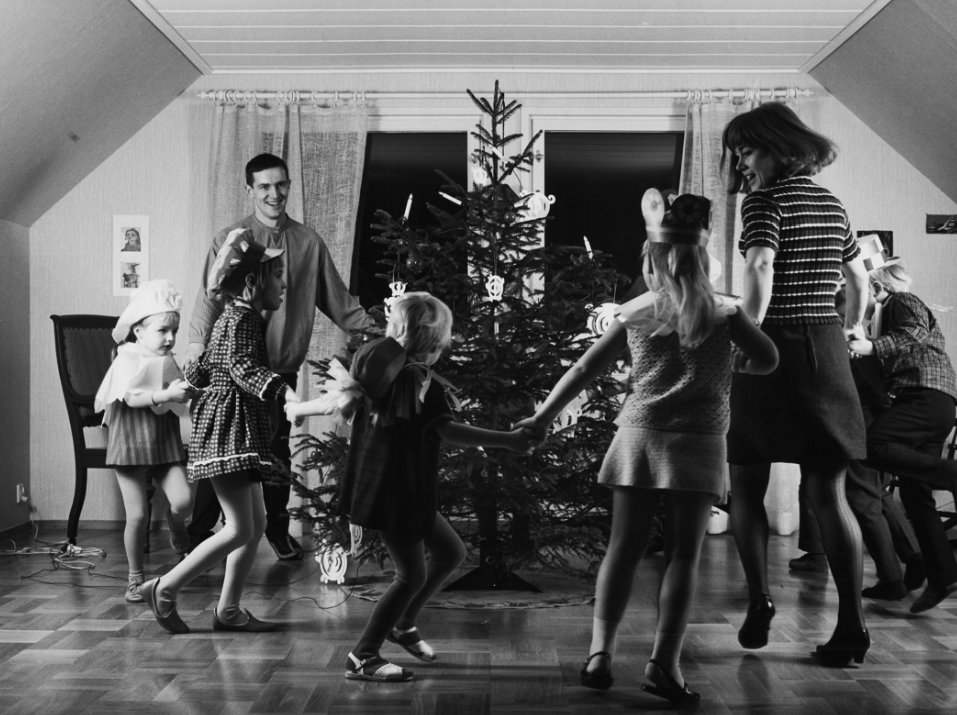
In Sweden, today is the day when Christmas should be ‘danced out’. Traditionally, the Christmas tree is removed in a process called ‘julgransplundring’ (Christmas tree plundering), in which Swedes remove decorations, eat the edible ones, dance around the tree and throw it out. This is known as the St Knut’s Party and originated in the mid 1800’s.
On a more practical note, the discarded Christmas trees are gathered by the local councils and burned to provide heating or used on the traditional bonfires in April.
Long before the Christianity swept over Europe, the Norse people celebrated the Midwinter Solstice in a festival called Yòl. (Yule/jul). Eventually this festival blended with Christmas and gave us many of the traditions we have today.
So, what are 5 ways in which the Norse traditions impacted Christmas?
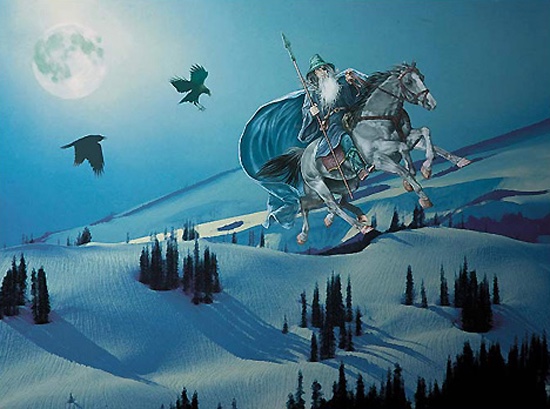
1) Father Christmas – Odin, King of the Norse Gods, was a bearded old man in a hat and cloak. He rode Sleipnir – an 8-legged horse – across the night sky and delivered gifts to those below. This morphed into the Christian St Nicholas, and 8 reindeer to complete the saga of Santa.
2) The Twelve Days of Christmas – the ancient Norse celebrated their midwinter festival for twelve days, beginning on the day of the winter solstice. It was believed that Odin rode the sky for these 12 days so it was forbidden to hang out laundry in case he got entangled. This was known as ‘the Great Hunt’.
3) Christmas Tree – many of us know that the indoor Christmas tree originates in Germany and was made popular in the Victorian era. However, it in fact pre-dates this. The Norse people believed that evergreens were the divine plant of their sun God Balder (the son of Odin) because they remained green though-out the winter. They took this as a sign that spring was advancing. To encourage the oncoming season, they would decorate the branches of the trees with ornaments, runes and offerings of food. With Christianity, these decorations became stars, and other biblical symbols.
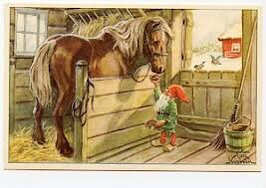
4) Christmas Elf – no story of Santa’s workshop is complete without his little helpers. In Norse mythology, there is the ‘nisse’ or ‘tomte’. These little creatures were small, bearded and wore little pointy hats. They were believed to live in the barns in the farmstead and they would guard the property and the inhabitants, and even fix broken things. They were loyal and industrious but you had to treat them with respect, otherwise their vengeance would be swift and angry. They also loved playing practical jokes and mischief, rather like the elves in Santa’s workshop. The word ‘elf’ comes from the Norse word álfar, which means ‘concealed people’.
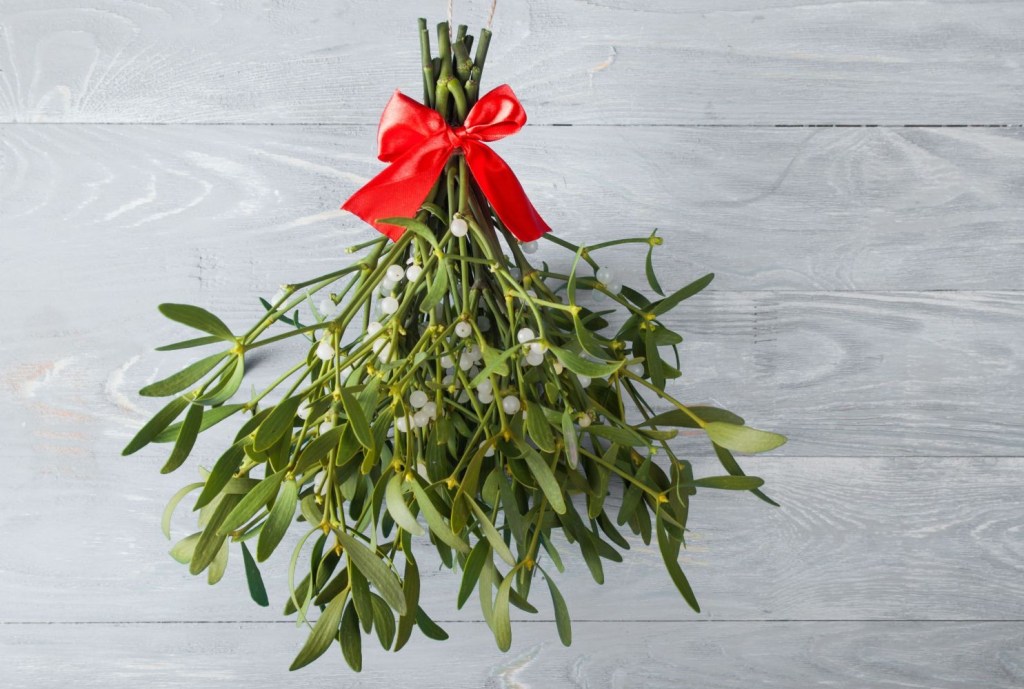
5) Mistletoe – ever kissed somebody under the mistletoe? In doing so, you have fulfilled a Norse legend. In the legend, the God Balder had been prophesied to die. His mother, Frigg, in desperation, secured an oath from everything that they would not hurt him. However, she forgot to ask the mistletoe. The envious God Loki carved an arrow out of mistletoe and killed Balder. Frigg’s tears of sorrow fell onto the mistletoe turning the red berries white, and resurrected her son. She then vowed to kiss anybody who passed underneath it, and the plant came to represent love and renewal.
Another Norse influence on our Christmas celebrations is the Christmas Goat. The goat has lost its significance in most countries, but is still a symbol in Scandinavia, where it is a decoration made of straw. The goat originates in Norse tradition from the kid goat that was sacrificed in honour of Njord, the God of the Sea, the Weather and Prosperity. Later on, in Sweden, the Yule goat was believed to be an invisible spirit that would appear before Christmas to make sure that the holiday preparations were done correctly. Eventually, the goat took on the role of the gift giver, instead of or together with Santa Claus (called Jultomten in Swedish).
Other traditions that originate from the Norse jòl are the Christmas Ham, the Yule Log, the Yule Wreath, and Christmas caroling, or ‘wassailing’.
So, while the message of Christmas is the Christian story, many of the surrounding symbols and traditions are in fact from another source altogether.
While the English word Christmas (Christ’s mass), and the German Weihnachen (Holy Night) are clearly connected to the celebrated Christian birth, the Swedish word ‘Jul’ has a much more vague origin.
Like with the English word ‘yule’, experts do not fully agree on where it originates. However, it is deemed likely that it comes from the Proto-Germanic word ‘jehwla’ which could have meant ‘party’ or ‘celebration’.
The word was taken early into the Nordics via the Old Finnish language in the form of ‘juhla’ meaning ‘festival’, and then again as ‘joulu’ meaning ‘jul’. There was already a big celebration of the winter solstice and the winter hunt around this time that was given the name ‘jol’ in Old Norse.
After the surge of Christianity through Europe in the 900’s, England and Germany aligned their word for Christmas, but in the Nordics they kept word ‘jul’. Instead they scheduled their pagan celebrations to occur at the same time as the Christian one, and eventually the two melted together. In the Nordic countries, we still see elements of the pagan ‘jol’ at Christmas time with the ‘Christmas goat’ for example.
In Sweden, Denmark and Norway, Christmas is called ‘jul’. In Finland, it is called ‘joulou’. In Iceland it is called ‘Jol’ and in Estonia, ‘joulud’.
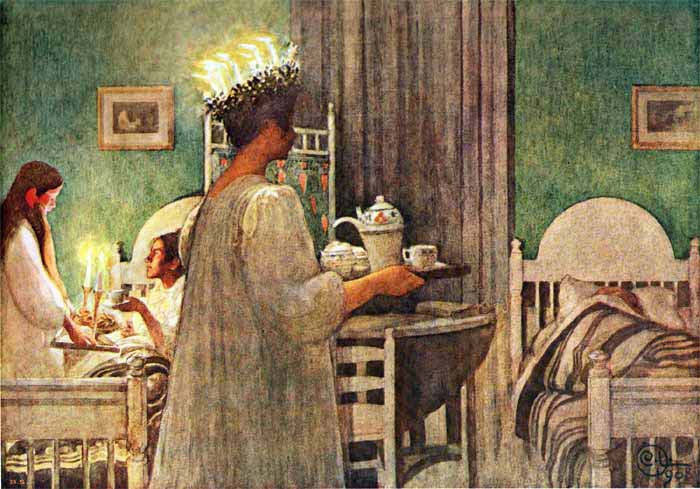
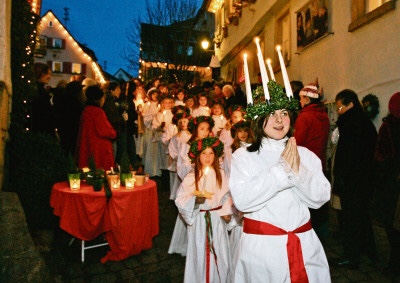
At the darkest time of the year, Santa Lucia (St Lucy) pays us a visit early in the morning on December 13th. Lucia has candles in her hair and is surrounded by her handmaidens and boys, and shines light into the dark depths of our spirits. And slowly, slowly, the day awakens.
Santa Lucia is believed to have been a Sicilian saint who suffered a martyr’s death in Syracuse, Sicily around AD 310. She was seeking help for her mother’s long-term illness at the shrine of Saint Agnes, in her native Sicily, when an angel appeared to her in a dream beside the shrine. As a result of this, Lucia became a devout Christian and refused to compromise her virginity in marriage.
Officials threatened to drag her off to a brothel if she did not renounce her Christian beliefs, but were unable to move her, even with a thousand men and fifty oxen pulling. So they stacked materials for a fire around her instead and set light to it, but she would not stop speaking.
One of the soldiers stuck a spear through her throat to stop her, but to no effect. Soon afterwards, the Roman consulate in charge was hauled off to Rome on charges of theft from the state and beheaded. Lucia was able to die only when she was given the Christian sacrement.
The tradition of Santa Lucia is said to have been brought to Sweden via Italian merchants and the idea of lighting up the dark appealed so much that the tradition remained. The current tradition of having a white-dressed woman with candles in her hair appearing on the morning of the Lucia day started in the area around Lake Vänern in the late 18th century and spread slowly to other parts of the country during the 19th century.
The modern tradition of having public processions in the Swedish cities started in 1927 when a newspaper in Stockholm elected an official Lucia for Stockholm that year. The initiative was then followed around the country through the local press. Today most cities in Sweden appoint a Lucia every year. Schools elect a Lucia and her maids among the students. The regional Lucias will visit shopping malls, old people’s homes and churches, singing and handing out gingerbread.
Not only does Lucia represent tradition, but there is also a symbolic meaning. Never more important than this year when the world is in turmoil. So remember, it might be cold and dark right now, but after the darkness comes the light.


 Watching the Swedes