11 hacks for surviving Swedish midsummer

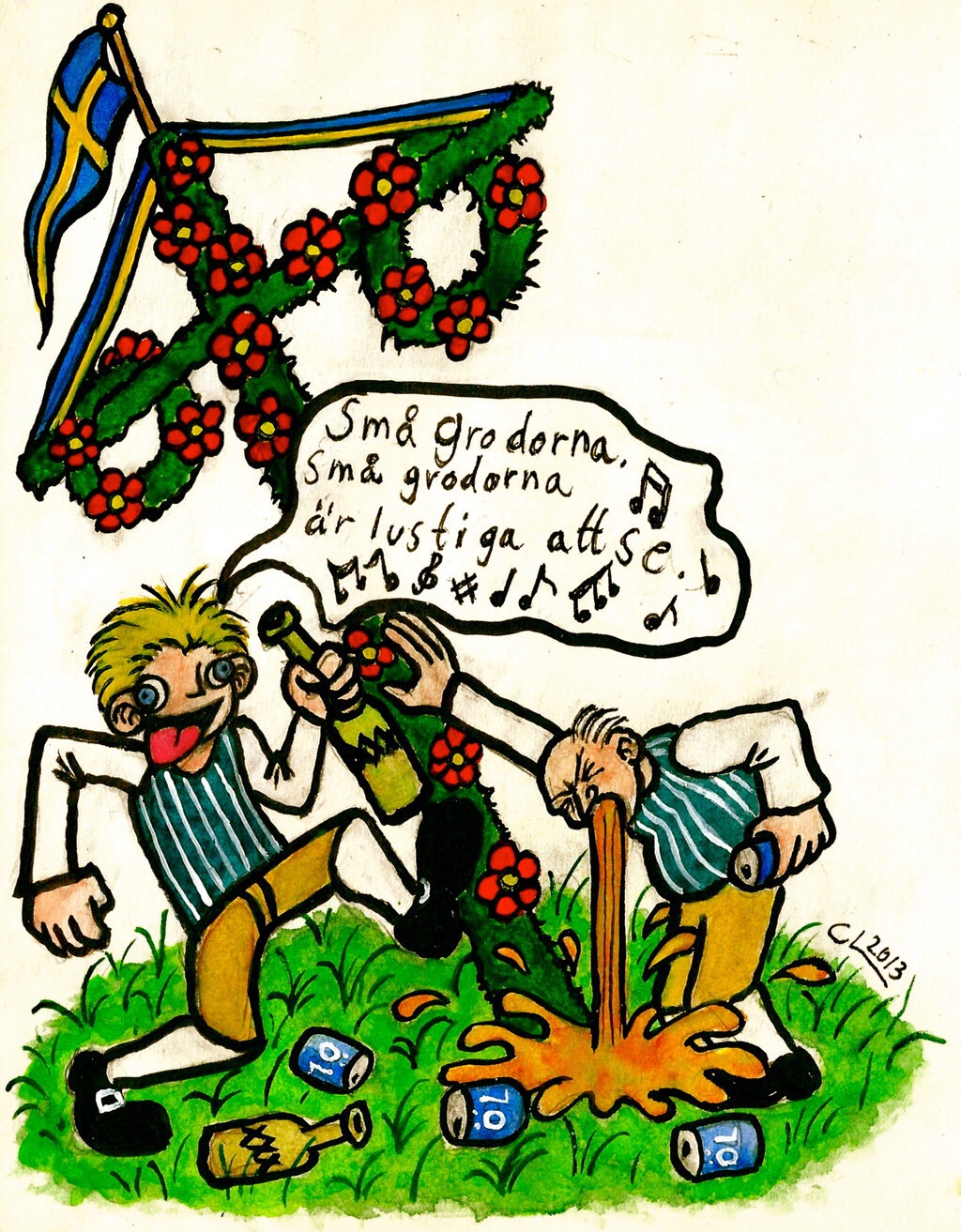
With Midsummer arriving on Friday, it is time to start planning for your survival. Midsummer’s Eve is the craziest custom in the Swedish calender and the time of the year when Swedes go a little bonkers. As a non-Swede, get ready to brace yourself. Here are a few hacks to make sure you make it to Midsummer’s Day in one piece.

Greet like a Swede. In Sweden it is considered polite to greet everybody individually, even if you plan to never speak to them again or remember their name. The appropriate way is to stand 1-2 meters away, look directly in their eyes, say ‘hej’ followed by your name. They will do the same. You might even give a small wave or shake hands if you are comfortable doing so. If you are feeling adventurous, follow up your ‘Hej’ with a ‘trevligt’ or even a ‘Glad Midsommar’. Job done. Now you can hit the booze.

Snaps is not the same as a shot. A lot of alcohol gets drunk on Midsummer’s Eve, especially beer and snaps With the popularity of shots in recent years, it’s easy to make the mistake that Swedish snaps is the same thing. Believe me, it is not. Snaps can be up to 40% proof, considerably more than your normal shot. So, go easy and sip the snaps or see yourself slipping sideways off your chair before the strawberry dessert has even been put on the table.

Take tissue. Midsummer’s Eve is a looong day and you probably will need the loo at some point. The trouble is, so will everybody else – to the detriment of the supply of toilet paper. There’s a big chance you will be seeking relief in the woods so come equipped with the appropriate amounts of paper for your needs.

If shy, bring swimwear. Bathing in the icy June waters is a common activity at Midsummer. Swedes generally are not afraid of skinny dipping when they do this. If you are, then come prepared with swimwear and a towel.

Shelve your maturity. Part of Midsummer is dancing around the maypole, playing silly games, pretending to be a frog, participating in competitions. To survive these activities, it helps to conjour up your inner child and forget you are an adult for a while.

Protect yourself. Given the amount of alcohol consumed at Midsummer, it is no surprise that the many babies in Sweden are made on this day. It you don’t want to join the ranks of parents, remember to put it on before you put it in.

Throw in the thermals. It looks like it might be super sunny and warm this Midsummer’s Eve. One of the warmest ever! But it is good to be prepared. It is not unusual that temperatures fall into single figures and that pesky rain pours down onto the smorgasbord. So bring a jumper, a rain jacket and even thermals to enhance your experience.

Don’t expect culinary miracles on Midsummer’s Eve. The food is exactly the same as is eaten at Christmas and Easter, with a few small summery exceptions – strawberries, cream, dill and new potatoes. Remember to use hand disinfectant before you attack the buffet.

Learn a drinking song. On Midsummer’s Eve, food and alcohol is accompanied by Swedish drinking songs. Learn one in advance and shine at the table. Even better sing one in your own language and you are guaranteed to use those rubbers you packed just for the occasion. For me, ‘what shall we do with the drunken sailor’ works every time.

Argue over the rules. At Midsummer a popular Swedish garden game is called kubb. Involving the throwing of sticks, everybody seems to have their own understanding of the way to play. If you want to feel really Swedish, make sure you start an argument about the rules.

Take pills. Of varying types. Allergy pills are good because there are flowers everywhere: on the table, in the maypole, on peoples’ heads. Pain killers are good as a lot of snaps is consumed. Indigestion pills are good as the food is oily, fatty, acidic, smoky and rich. The after day pill is good, well… because…

That’s it! Follow this guide and you are sure to have a wonderous Midsummer’s Eve in Sweden.

Glad Midsommar!

Please share this post to help others get ready for the big day!
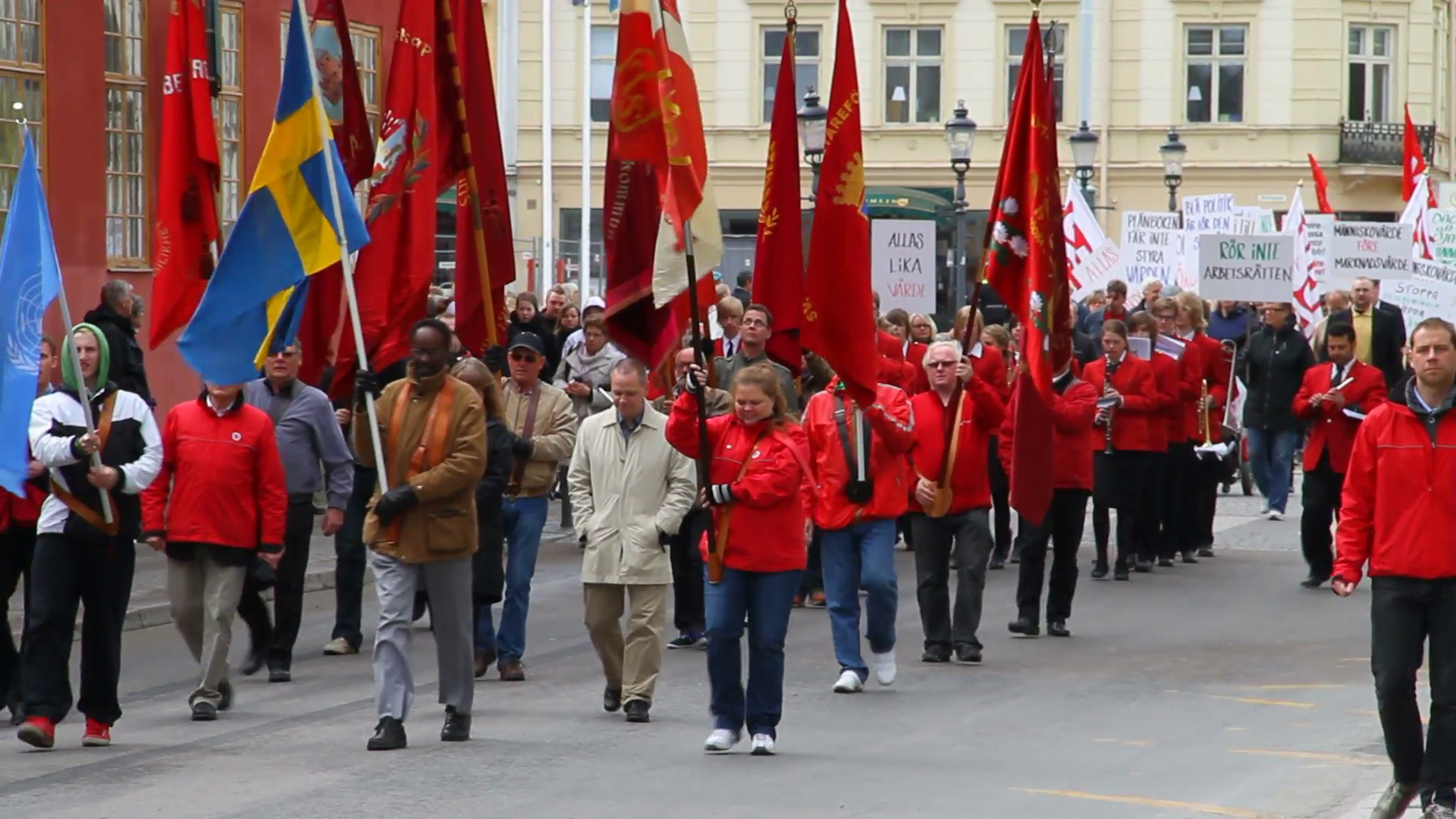
Why is May 1st celebrated in Sweden?

In Sweden, and in many other countries, May 1st has been embraced as the International Workers’ Day. In 1938, May 1st became Sweden’s first non-religious public holiday and has been an important celebration of labourers and the working classes since then.

But why specifically May 1st?

The answer is found in a massacre in the USA. On 1 May 1886, laborers in Chicago went out on strike for an 8 hour working day. On 4 May 1886, Chicago police and the demonstrators clashed and 11 people died.

The event is called the Haymarket massacre. Seven of the demonstrators were sentenced to death, despite lack of evidence. To commemorate the massacre, the socialist organization suggested that 1 May should become day of demonstrations every year around the world.

In Sweden, traffic is shut off, huge flag-waving demonstrations are held and people gather to hear speeches from their politicians and representatives.

The demonstrations represent people from various parties. However, since most of them are from the political left, the streets are awash with bright red flags and banners.

Contrary to the stereotype, not everybody in Sweden supports left wing political groups. There are 8 political parties, of which only 2 have a self-proclaimed left-orientation. If you ask a Swede if they are demonstrating, you will either get a ‘yes, of course!’, or as I got yesterday when I asked someone, ‘Hell no! I’m not red!

This means that for many Swedes, today is just a day off work – an opportunity to perhaps nurse a hangover from the festivities of the previous evening or to relax, go for a walk and enjoy the day.

Walpurgis Eve – when spring arrives in Sweden

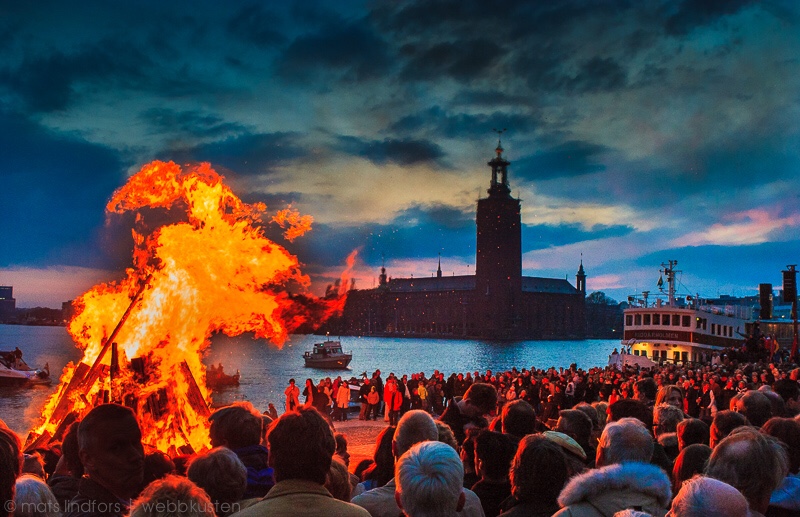
Today, 30 April, is Walpurgis Eve, called Valborgsmässoafton in Swedish, or ‘Valborg’ for short. The name Walpurgis is taken from the eighth-century Saint Walburga, and in Sweden this day marks the arrival of spring.

In a cold, dark country like Sweden, residents have suffered through a long, miserable winter. So it is no surprise that the arrival of spring is an occasion to mark. On the evening of Valborg, Swedes usually gather to celebrate together.

The forms of celebration vary in different parts of the country and between different cities. However, essential celebrations include lighting a large bonfire, listing to choirs singing traditional spring songs and a speech to honour the arrival of the spring season. Some of the traditional spring songs are titled ‘Beautiful May – Welcome!’ and ‘Longing for the countryside – winter rushes out’. You can see a clip below.

Walpurgis bonfires are an impressive thing to see and are part of a Swedish tradition dating back to the early 18th century. At Walpurgis, cattle was put out to graze and bonfires lit to scare away predators.

The weather is often unpredictable on Walpurgis Eve. It can be sunny and warmish, or it can still snow on 30 April! Today looks like it’ll be a cold one.

Despite bad weather, Swedes still shiver around the bonfires and ironically celebrate the arrival of Spring.

Sweden’s Freedom of Expression – a cornerstone of democracy.

Given recent provocative manifestations, some people are starting to question Sweden’s freedom of expression laws. This criticism is even being used as a way to prevent the ratification of Sweden’s membership of NATO.

English writer Evelyn Beatrice Hall wrote in her biography of Voltaire – ‘I disapprove of what you say, but I will defend to the death your right to say it’. This phrase is frequently used to describe the principal of freedom of speech.

Sweden’s democracy is built on the principle of freedom of expression. It is a fundament of society, together with freedom of information, freedom to demonstrate and freedom of assembly. The individual’s right to freedom of religion is also strongly protected by the Constitution. Freedom of Expression is also enshrined as Article 10 in the Human Rights Act.

There are people in Sweden with, in my opinion, disgusting views, who manifest these in public demonstrations. However, under Swedish law, they have a right to express what they believe. I don’t have to agree with what they believe – that is also my right.

Sweden’s freedom of expression is a ‘constitutionally protected right including the right to express thoughts, opinions and feelings through speech, writing or images without interference by the authorities.’

Freedom of expression does not however mean the freedom to always say practically anything at all. For example, this freedom ‘does not extend to slander or committing an act involving threats or agitation against a national or ethnic group. On the other hand, religions as such are not protected against expressions of opinion that challenge religious messages or that may be perceived as hurtful to believers.’

To be honest, I would probably prefer some conservative opinions not to be expressed, as I feel they are deliberately provocative and lead to agitation and unrest. However, without a doubt, I would rather live in a country where individuals are free to express what they think, than in a country where religious or political powers suppress this.

If we start to limit freedom of expression, and censor opinion, we are dismantling our democracy. And where does it end? We don’t have to look very far to get the answer…..

5 ways that the Vikings impact Christmas

Long before the Christianity swept over Europe, the Norse people celebrated the Midwinter Solstice in a festival called Yòl. (Yule/jul). Eventually this festival blended with Christmas and gave us many of the traditions we have today.

So, what are 5 ways in which the Norse traditions impacted Christmas?

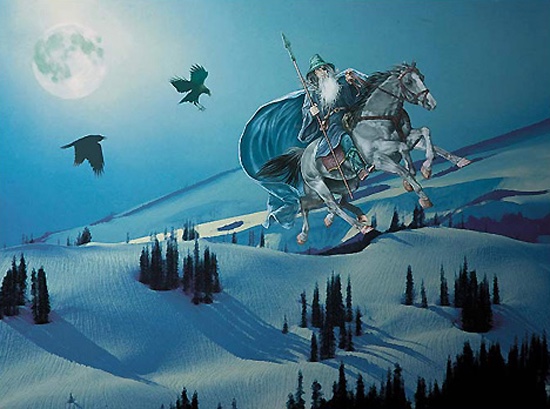
1) Father Christmas – Odin, King of the Norse Gods, was a bearded old man in a hat and cloak. He rode Sleipnir – an 8-legged horse – across the night sky and delivered gifts to those below. This morphed into the Christian St Nicholas, and 8 reindeer to complete the saga of Santa.

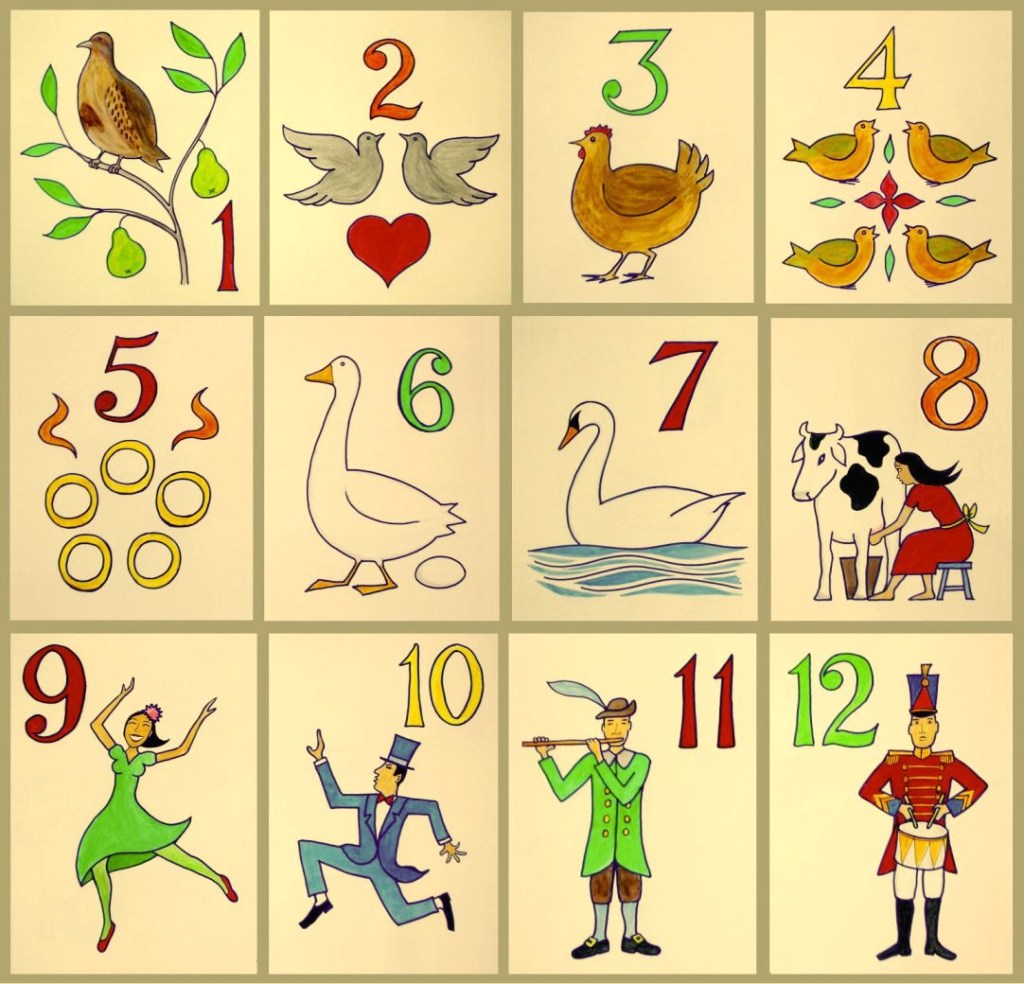
2) The Twelve Days of Christmas – the ancient Norse celebrated their midwinter festival for twelve days, beginning on the day of the winter solstice. It was believed that Odin rode the sky for these 12 days so it was forbidden to hang out laundry in case he got entangled. This was known as ‘the Great Hunt’.

3) Christmas Tree – many of us know that the indoor Christmas tree originates in Germany and was made popular in the Victorian era. However, it in fact pre-dates this. The Norse people believed that evergreens were the divine plant of their sun God Balder (the son of Odin) because they remained green though-out the winter. They took this as a sign that spring was advancing. To encourage the oncoming season, they would decorate the branches of the trees with ornaments, runes and offerings of food. With Christianity, these decorations became stars, and other biblical symbols.

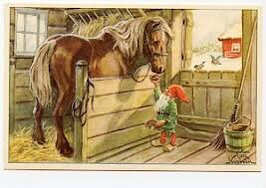
4) Christmas Elf – no story of Santa’s workshop is complete without his little helpers. In Norse mythology, there is the ‘nisse’ or ‘tomte’. These little creatures were small, bearded and wore little pointy hats. They were believed to live in the barns in the farmstead and they would guard the property and the inhabitants, and even fix broken things. They were loyal and industrious but you had to treat them with respect, otherwise their vengeance would be swift and angry. They also loved playing practical jokes and mischief, rather like the elves in Santa’s workshop. The word ‘elf’ comes from the Norse word álfar, which means ‘concealed people’.

5) Mistletoe – ever kissed somebody under the mistletoe? In doing so, you have fulfilled a Norse legend. In the legend, the God Balder had been prophesied to die. His mother, Frigg, in desperation, secured an oath from everything that they would not hurt him. However, she forgot to ask the mistletoe. The envious God Loki carved an arrow out of mistletoe and killed Balder. Frigg’s tears of sorrow fell onto the mistletoe turning the red berries white, and resurrected her son. She then vowed to kiss anybody who passed underneath it, and the plant came to represent love and renewal.

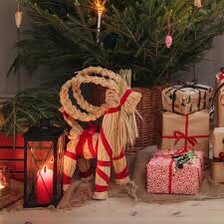
Another Norse influence on our Christmas celebrations is the Christmas Goat. The goat has lost its significance in most countries, but is still a symbol in Scandinavia, where it is a decoration made of straw. The goat originates in Norse tradition from the kid goat that was sacrificed in honour of Njord, the God of the Sea, the Weather and Prosperity. Later on, in Sweden, the Yule goat was believed to be an invisible spirit that would appear before Christmas to make sure that the holiday preparations were done correctly. Eventually, the goat took on the role of the gift giver, instead of or together with Santa Claus (called Jultomten in Swedish).

Other traditions that originate from the Norse jòl are the Christmas Ham, the Yule Log, the Yule Wreath, and Christmas caroling, or ‘wassailing’.

So, while the message of Christmas is the Christian story, many of the surrounding symbols and traditions are in fact from another source altogether.

Why is Christmas called ‘Jul’ in Swedish?

While the English word Christmas (Christ’s mass), and the German Weihnachen (Holy Night) are clearly connected to the celebrated Christian birth, the Swedish word ‘Jul’ has a much more vague origin.

Like with the English word ‘yule’, experts do not fully agree on where it originates. However, it is deemed likely that it comes from the Proto-Germanic word ‘jehwla’ which could have meant ‘party’ or ‘celebration’.

The word was taken early into the Nordics via the Old Finnish language in the form of ‘juhla’ meaning ‘festival’, and then again as ‘joulu’ meaning ‘jul’. There was already a big celebration of the winter solstice and the winter hunt around this time that was given the name ‘jol’ in Old Norse.

After the surge of Christianity through Europe in the 900’s, England and Germany aligned their word for Christmas, but in the Nordics they kept word ‘jul’. Instead they scheduled their pagan celebrations to occur at the same time as the Christian one, and eventually the two melted together. In the Nordic countries, we still see elements of the pagan ‘jol’ at Christmas time with the ‘Christmas goat’ for example.

In Sweden, Denmark and Norway, Christmas is called ‘jul’. In Finland, it is called ‘joulou’. In Iceland it is called ‘Jol’ and in Estonia, ‘joulud’.

Songs about Sweden 6: Gothenburg

Don’t feel sorry for me, Gothenburg’ is a very popular song by Swedish artist Håkan Hellström. In Swedish, the track is called ’Känn ingen sorg för mig Göteborg’. It was released in 2000 on his solo debut album of the same name, selling platinum in Sweden.

Håkan Hellström is one of the Swedish artists who can sell out concerts in venues that hold 75,000 people. Very few other singers epitomize Gothenburg quite as much as Håkan, and the song has become synonymous with the singer and Sweden’s second city.

What other songs do you know that are about Sweden or a Swedish town?

Songs about Sweden 4: ‘Sverige’ (Sweden)

There have been many songs written about Sweden and Swedish towns. In this series, I will share a few with you.

In 2002, the Swedish rock band Kent released a ballad called ‘Sverige’ (Sweden). it quickly shot up the charts and has, since then, become a popular track praising this country in the north. Many people feel that the song should be Sweden’s national anthem.

The song, written by Joakim Berg, includes a chorus with lyrics such as, ‘Welcome, welcome here, whoever you are. Whatever you are.’

In the last 20 years, the song has been covered by many other Swedish artists and continues to be successful in the Swedish charts.

Songs about Sweden 2: ‘Stockholm tonight’

There have been many songs written about Sweden and Swedish towns. In this series, I will share a few with you.

The second is a song in Swedish called ‘Stockholm inatt’, which translates as ‘Stockholm tonight’. The original song was released in 2007 by artist Peter Jöback, and is about a night out in central Stockholm. The lyrics take in classic locations and venues in the city.

However, it was covered in 2021 by soul singer Cherrie in a tribute show where artists interpret each other’s songs. She modernized the lyrics and placed the song partially in the suburbs of Stockholm. This re-working gave the song a huge renaissance, and a hit for Cherrie.

Sweden’s most famous Gay

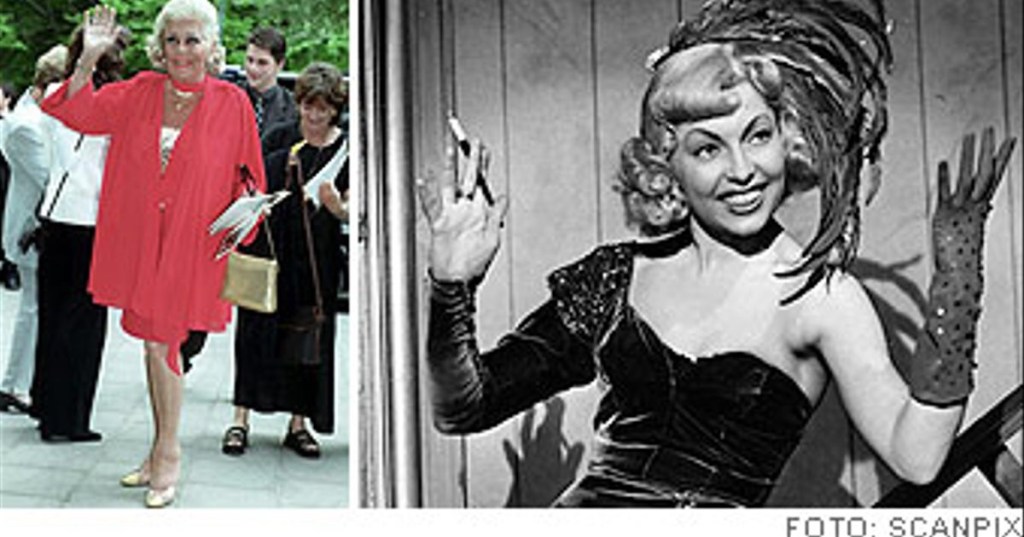
Today, 2 July, marks 15 years since the death of the Swedish actress, singer and femme fatale Git Gay. Born in Karlshamn in 1921, she went on to become one of Sweden’s most popular and notorious prima donnas.

A classically trained concert pianist, Git Gay made her name as an extravagant review artist and larger-than-life tv host. She was given her stage name in 1949 by review artist Karl Gerhard, who undoubtably thought it was more showbiz than her real name Birgit Agda Carp.

By the end of her career, she had appeared in many films and shows as well as recorded numerous records, and the name Git Gay was synonymous with glamour and glitz. In fact, the word ‘kalaspingla’, roughly meaning party babe, is said to have been of her making.

After her death, in accordance with her will, a foundation was set up in her name to give cash awards to working Swedish musical and theatrical artists. The last award was given in a grand gala, Git Gay style, in 2018.