The streets and squares of Sweden: Birger Jarlsgatan

You can learn a lot about a culture from the names of its streets and squares. From heros, to events, and significant dates, you often find cultural concepts immortalised in the names the citizens choose to give their roads. This is my next series of posts – the streets and squares of Sweden.

First out – Birger Jarlsgatan, a major road cutting through the center of Stockholm. The word ‘gata’ means street.

But who then was Birger Jarl?

Birger Jarl was a Swedish statesman, and later regent, who played an important role in the consolidation of Sweden. He lived 1210-1266 and is attributed with the foundation of Stockholm. He was a significant character in Sweden’s history.

Not only is he commemorated with his own street, but he also has his own city square, decorated with a bronze statue of the man himself.

Additionally, Sweden’s most well known cenotaph – outdoors at the foot of the tower at Stockholm City Hall – was intended to hold his remains when it was built in 1923. However, the local parish in Vadstena refused to release them. So, the grand sarcophagus has remained empty – unlike the street that bears his name and is one of the busiest in the city.

Birger Jarlsgatan.

Advent Calendar – Dec 10: Nobeldagen

Window number 10. Today’s word is ‘Nobeldagen‘ which translates as ‘Nobel Day’.

Nobel Day is not actually anything to do with Christmas. However, it is a traditional part of the lead up to Christmas. Every year on 10 December, since 1901, the Nobel Prizes are awarded. The date commemorates the death of Alfred Nobel in 1896.

Nobel prizes are awarded in the 6 categories of Literature, Chemistry, Physics, Medicine or Physiology, Economics and Peace. All prizes are awarded in Stockholm, except the peace prize which is awarded in Oslo. Laureates receive a gold medal, a diploma and 10 million Swedish crowns.

Most laureates are happy to accept their prize and the accolade. However, Jean Paul Satre famously declined the Literature Prize in 1964, claiming he did not want to be institutionalized.

In 1974 he was joined by Le Duc Tbo who refused to accept the Peace Prize for his work to end the Vietnam War, saying ‘peace has not yet been established.’

In 1935, German journalist Carl von Ossietzky – a vocal critic of Hitler- won the Peace Prize. This led Hitler to bar all Germans from accepting a Nobel Prize. Three German laureates were subsequently forced to decline their awards. However, they later were presented with their diplomas and medals.

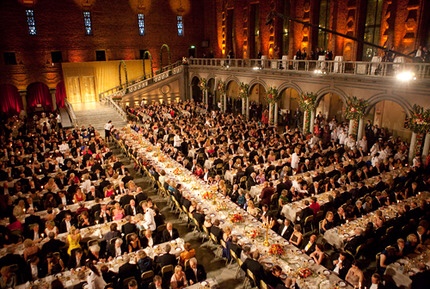
With celebratory lectures, conversations, ceremonies and concerts, Nobel Day culminates with a banquet in the Stockholm City Hall. The banquet lasts about 3 and a half hours and is televised. It is an extremely grand and formal occasion. Everything from the porcelain to the floral arrangements to the dresses, the entertainment and the menu are under scrutiny for the tv viewers.

The guests include not only the Nobel laureates and their families, but also Swedish royals and aristocrats, politicians, ministers, celebrities and other notable people. Even though there are 1300 guests, is virtually impossible for ordinary folk to get an invitation to the banquet. We have to enjoy it from afar, via the screens in our living rooms.

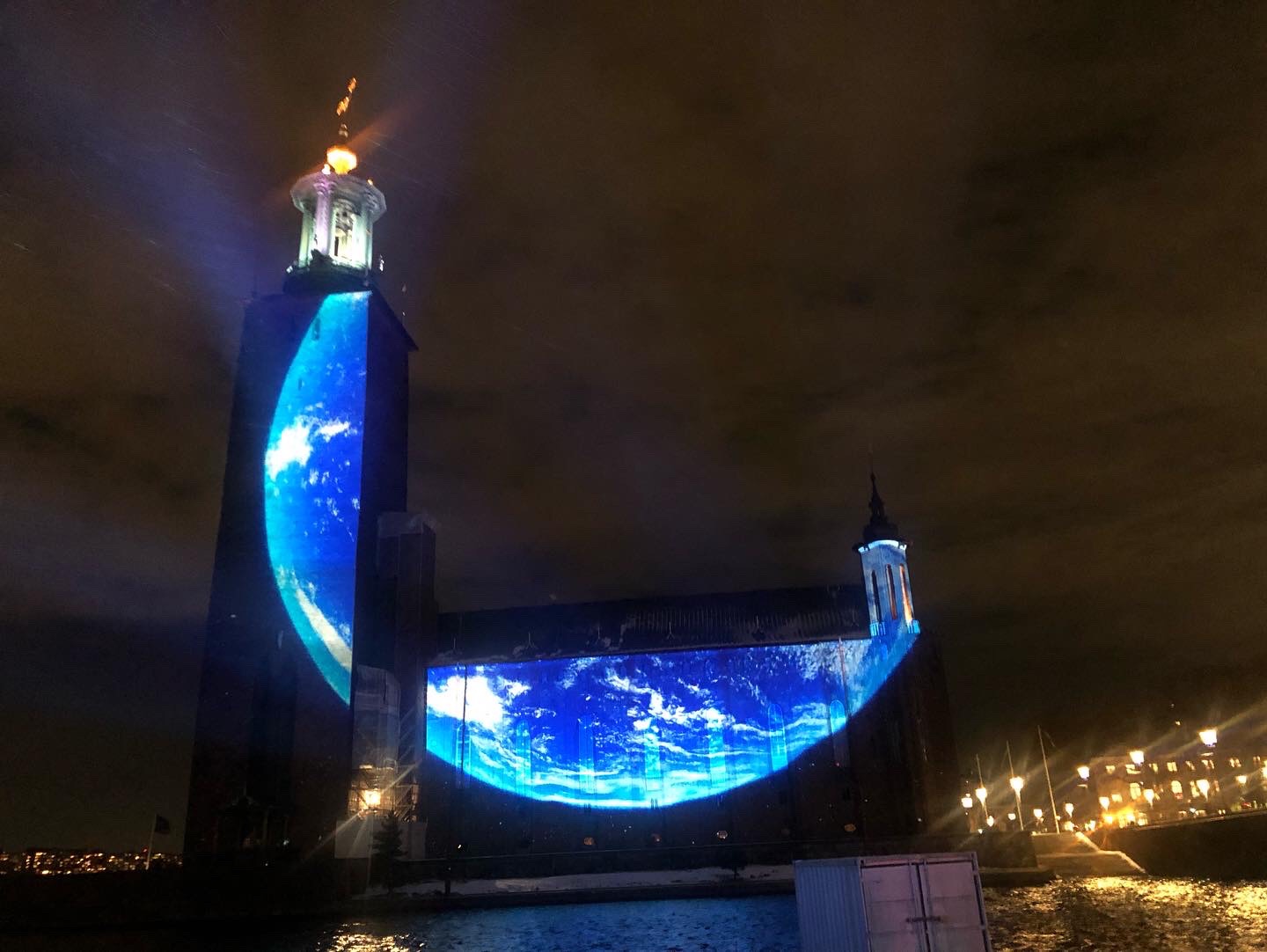
However exclusive the whole thing might be, it is still a welcome splash of glamour in the dark approach to Christmas. Stockholmers are also treated to the light festival called Nobel Lights, which takes place around the city. For a guide to where the various light installations are, check this out: https://nobelweeklights.se/

The ABC of Swedish town planning

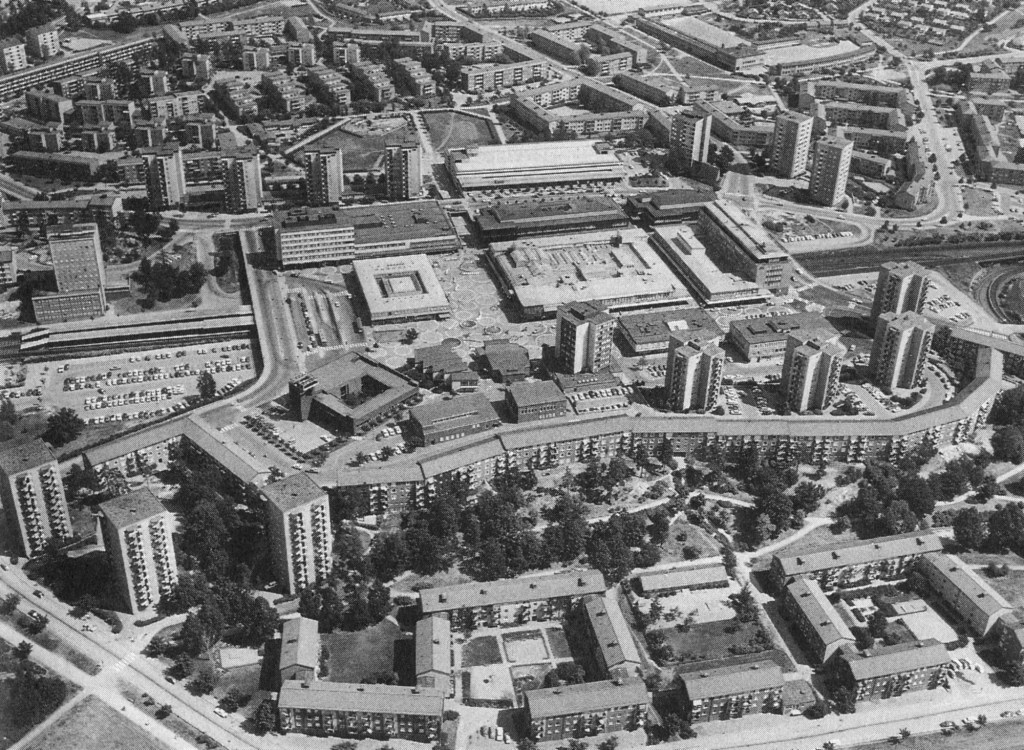
ABC is a concept in Swedish town planning, said to have been minted by Stockholm city planner Sven Markelius around 1952. ABC refers to the approach of building a suburb where modern families have easy access to work, dwelling and services, such as shops. A stands for ‘arbete’ (work), B stands for ‘bostad’ (accommodation) and C stands for ‘centrum’ (center for services and shops).

ABC city planning was introduced mid 1950’s and it expanded suburban Stockholm to the north and south. This growth was spurred on by the influx of people to the capital after the Second World War, and the severe shortage of accommodation.

In the original development plan from 1952, Markelius suggests that blocks of flats should be constructed within 450m of the centre, small houses should be built within 900m of the centre and light industry 600m from the centre. Everything should be built compactly in order to facilitate daily life for its 16000 residents. An underground system would connect the ABC suburb to the rest of the city and Stockholm’s downtown.

If you’d like to visit an ABC suburb, the two that are mostly still in tact are Vällingby to the north of Stockholm, and Farsta to the south.

NATO – an extraordinary day in Sweden’s history

So Sweden is now an official member of NATO, the military defense alliance.

As the 32nd country to join the alliance, Sweden will be protected under Article 5 – the ultimate guarantee of allie’s freedom and security.

To the outside world, this might not be that significant. But for Sweden, March 7th 2024 is a day that will be recorded as one of the most momentous in history.

By becoming a member of NATO, Sweden ends over 200 years of official non alignment. This neutrality stretched back to the Napoleonic wars.

Sweden joining NATO was inconceivable just over two years ago, and the Swedish population had little appetite to join a military alliance.

The country remained neutral in both World Wars but when Russian troops began marching toward Kyiv in February 2022, Sweden – and neighbour Finland – became alert to the threat Moscow could pose to nearby countries outside the alliance.

And everything changed.

Finland joined NATO in April 2023, and Sweden, after lots of head-butting with Turkey and Hungary, formally joined yesterday.

It is currently unknown how the membership will affect the lives of Swedes. Hopefully, not noticeably.

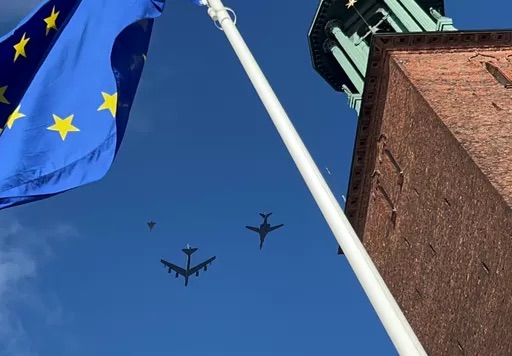
But it was very apparent on Tuesday when two American bomb planes, B52 and B1B, flew at a low altitude over central Stockholm – that things have changed in this formally-neutral country in the north.

Advent Calendar – Dec 10: Nobeldagen

Window number 10. Today’s word is ‘Nobeldagen‘ which translates as ‘Nobel Day’.

Nobel Day is not actually anything to do with Christmas. However, it is a traditional part of the lead up to Christmas. Every year on 10 December, since 1901, the Nobel Prizes are awarded. The date commemorates the death of Alfred Nobel in 1896.

Nobel prizes are awarded in the 6 categories of Literature, Chemistry, Physics, Medicine or Physiology, Economics and Peace. All prizes are awarded in Stockholm, except the peace prize which is awarded in Oslo. Laureates receive a gold medal, a diploma and 10 million Swedish crowns.

Most laureates are happy to accept their prize and the accolade. However, Jean Paul Satre famously declined the Literature Prize in 1964, claiming he did not want to be institutionalized.

In 1974 he was joined by Le Duc Tbo who refused to accept the Peace Prize for his work to end the Vietnam War, saying ‘peace has not yet been established.’

In 1935, German journalist Carl von Ossietzky – a vocal critic of Hitler- won the Peace Prize. This led Hitler to bar all Germans from accepting a Nobel Prize. Three German laureates were subsequently forced to decline their awards. However, they later were presented with their diplomas and medals.

With celebratory lectures, conversations, ceremonies and concerts, Nobel Day culminates with a banquet in the Stockholm City Hall. The banquet lasts about 3 and a half hours and is televised. It is an extremely grand and formal occasion. Everything from the porcelain to the floral arrangements to the dresses, the entertainment and the menu are under scrutiny for the tv viewers.

The guests include not only the Nobel laureates and their families, but also Swedish royals and aristocrats, politicians, ministers, celebrities and other notable people. Even though there are 1300 guests, is virtually impossible for ordinary folk to get an invitation to the banquet. We have to enjoy it from afar, via the screens in our living rooms.

However exclusive the whole thing might be, it is still a welcome splash of glamour in the dark approach to Christmas. Stockholmers are also treated to the light festival called Nobel Lights, which takes place around the city.

Why does Sweden still need Pride?

This week is Stockholm Pride. It culminates on Saturday with a huge parade. The event celebrates 25 years this year, and some people question if it is still needed or relevant.

The answer, unfortunately, is more than ever.

But we’ll come to that later.

Currently there are 73 Pride festivals in Sweden during the year. From Arctic Pride way up in the north to Malmö Pride in the south, it is possible to celebrate throughout the year.

This indicates that many Swedes seem to have embraced the concept of Pride with open arms. There is, of course, a commercial benefit but the main reason seems to be that LGBT+ Pride resonates well with the societal Swedish values of equality, tolerance and acceptance.

However, like everything, it has its opponents.

Sweden’s current conservative government is in power, solely with the support of a right-wing populistic party. This party has consistently attacked LGBT people and the Pride movement. For example, this week, one of their politicians tweeted that Pride legitimizes pedophilia.

It is comments like this that plant the seeds of aggressive counter demonstrations, homophobic, anti-Pride propaganda and personal physical attacks. LGBT+ people are still regularly abused, discriminated against and attacked in Sweden. And if we lift our eyes to the broader world, we see examples of LGBT + rights being restricted or removed, and same sex relations being criminalized and punishable with the death penalty.

This is why Pride is still needed, not only as a celebration, but as a political manifestation of human rights.

If you’d like to know where a Pride is near you, go to http://www.svenskapride.se which collects all the Swedish events in one place.

Is Sweden Islamophobic?

More than 90,000 articles have been written about the Koran burning in Stockholm that occurred last week. Many of these articles are declaring Sweden as Islamophobic. The action has led to international public protests, storming of embassies, burning of the Swedish flag, and condemnation from everyone from Turkey’s Erdogan to the Pope.

So, is this true? Is liberal-minded, egalitarian Sweden, in fact Islamophobic? Like everything the answer lies in your definition, and perspective.

It all boils down to understanding Swedish freedom of speech. In Sweden, you are allowed to publicly comment on, demonstrate against and criticize anything.

Influential powers such as the royal family, industry giants or organized religions cannot legally stop or influence this.

In Sweden, you are free to follow any religion you want. Likewise you are free to criticize any religion you want. That is the basis of democracy in Sweden.

With this understanding, you can see how the burning of any religious scripture is allowed and not, per se, limited only to the Koran.

So you have to separate the law from ethics. This is why the Swedish government condemns the action but at the same time defends self expression.

That said, there are other laws in Sweden that restrict public speech. For example, if it is considered hate speech, or incitement to violence, or against the interests of national security.

In the case of the recent Koran burning, outside a mosque on the first day of Eid, and with today’s political instability, one can seriously question the police’s choice to allow a such a demonstration to occur. Personally, I think it shows a poor sense of judgement and disregard for public safety and national security. But it wasn’t illegal, and fully in line with freedom of speech.

So, is Sweden islamophobic? From this one action, no. If you want to burn a bible or the tora, you can. Is Sweden Islamophobic in other regards? Maybe. Were the actions of the individual demonstrator islamophobic? Maybe, although he himself is Muslim. He claims his action to be politically motivated.

Time will tell what the outcome is of this. The man who carried out the act is currently living under police security, and amongst other things is being charged with starting a fire during a fire ban.

Terror on the streets of Stockholm 

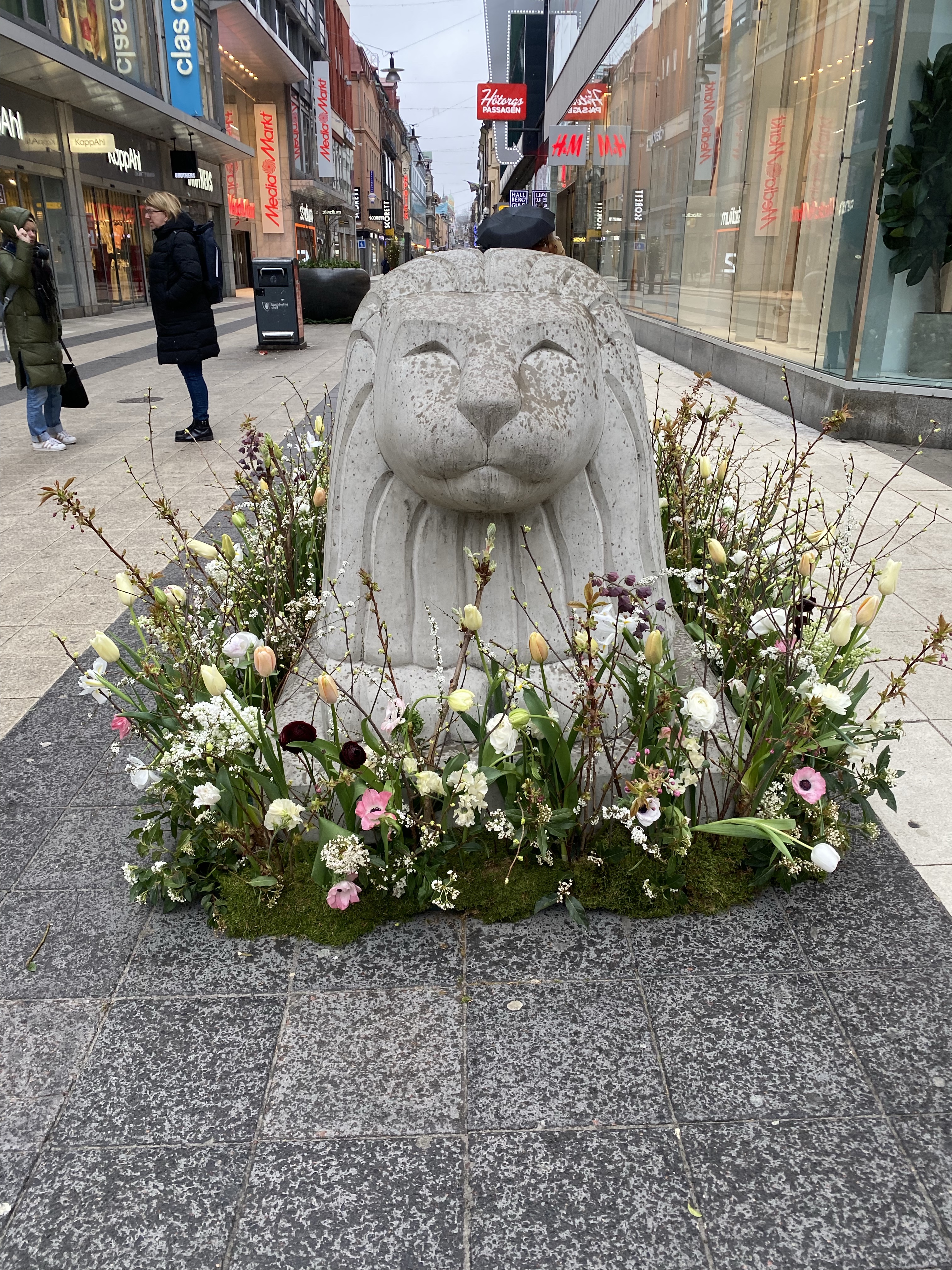
5 years ago today, Sweden experienced a hateful terrorist attack. Today, flowers have been placed along the city street where it occurred. My thoughts go to those who were murdered, and their families and friends.
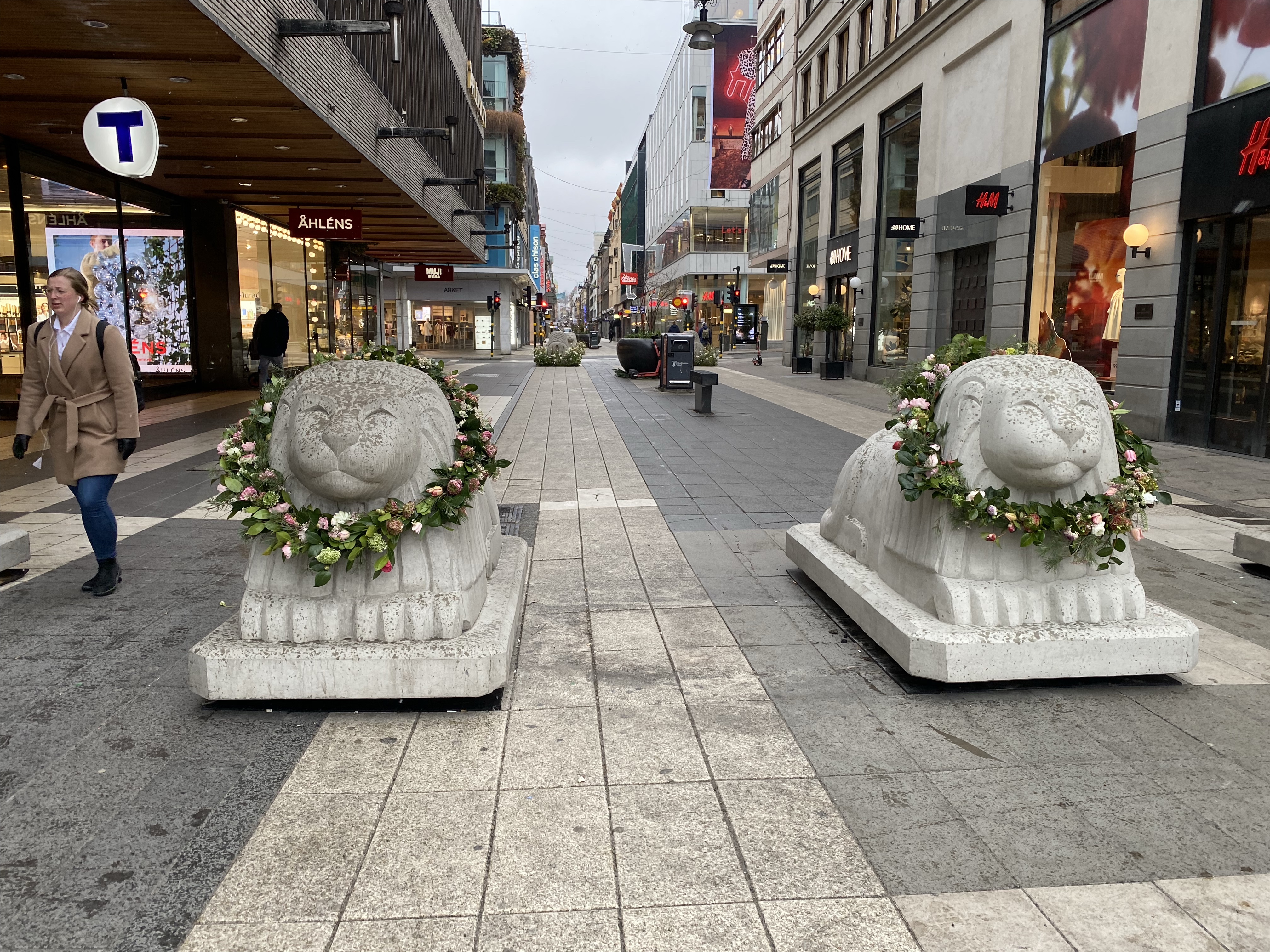
If you would like to read my post from that attack 5 years ago – here it is again….

At 2.30pm yesterday, a masked man stole a delivery truck from outside of a restaurant. The delivery man tried to stop the thief by standing in front of his truck.  However, the thief pushed over the driver, picked up speed and proceeded to drive zig zag down Stockholm’s main pedestrian shopping street, ploughing into people as he went. The truck’s final destination was one of Sweden’s largest department stores, into which it smashed in a billowing cloud of smoke. 

Like everybody else I was really shaken up by this act of violence.  I, and my nearest and dearest, were all in safety and my phone rang and beeped frenetically as we contacted and reassured each other. 

Stories reached me about friends being locked into their offices or hiding out in shops and restaurants. The streets were awash with armed police, and the whole city was shut down within 20 minutes – trains, buses and the underground were all stopped and roads were cordoned off as residents and tourists were rapidly ushered out of the city center. 

In the midst of the chaos, Stockholmers reached out to each other in support. People opened their homes to provide sanctuary to each other, cafes provided food and beverages, social media was flooded with people offering to help and offering protection. In this emergency, love prevailed – which was moving and heart-warming. I myself was in a gym, and the doors were locked. The staff went straight to action providing us with support and offering food and drink and unscheduled training classes for those who wanted a distraction. 

The latest news at time of writing this blog is that 4 people and 1 dog were killed, and 15 seriously injured. The driver has been arrested.  Another person is in custody believed to have some connection to the driver. Border control has been tightened up and there are still disturbances in local traffic. 

Stockholm now joins the long line of cities such as London, Berlin, St Petersburg, Paris and Nice, who have suffered under terrorist attack. 

No matter who is responsible for this act of violence, be it an organisation or an individual, we must never give into them.  The nature of terrorism is to spread fear by using intentionally indiscriminate acts of violence. It’s its indiscriminate approach that makes it difficult to predict and we are often powerless to influence it. Therefore we should do what we do best – not bow down to it but stand up and keep going. It is by living our lives in our open, democratic societies that we win.

I sincerely hope that Stockholm does not become a fearful, suspicious, closed city. This place that I love is a target because of its freedom and that is a freedom we should protect by continuing to live our lives. 

Terror will never win. It is designed to exploit our human fear. It is the ultimate act of intimidation. We must not let it win. My heart goes out to the victims and their families. Yesterday, we showed love to each other. Let’s continue to do that. We do not need more hate. 

We must prevail. 
Advent Calendar – Dec 9: Julbelysning

Every day, I will open a window containing a Swedish word that has something to do with Christmas and the festive season.

Today’s word is ‘Julbelysning‘ which translates as ‘Christmas lights’.

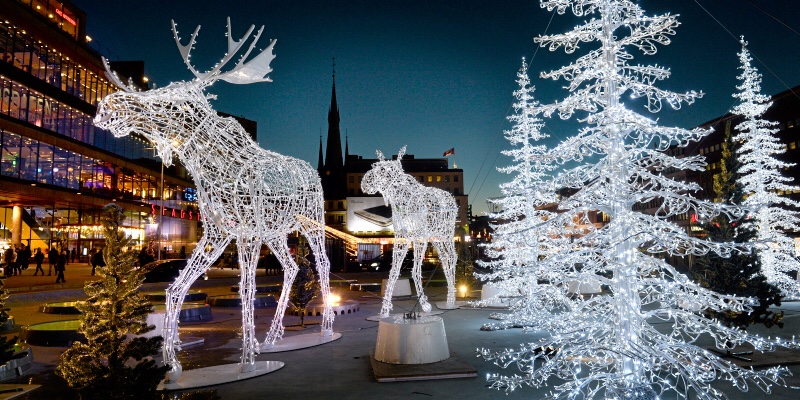
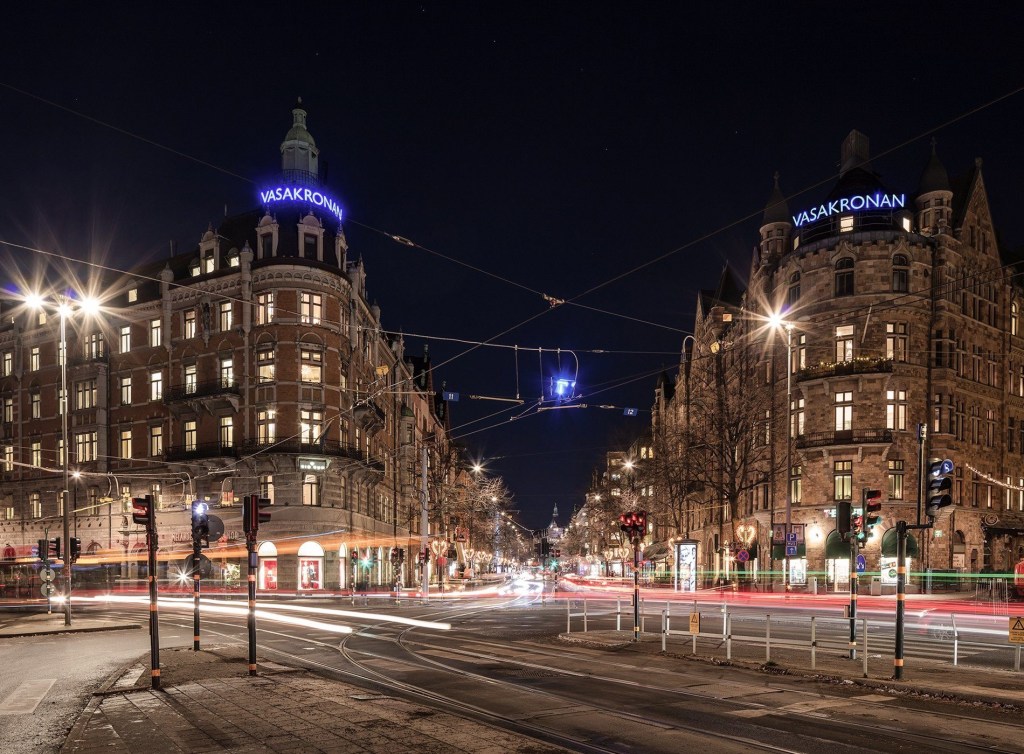
Like others around the world, Sweden’s cities and towns install public Christmas lights this time of the year. These decorations illuminate the dark December days and are an important part of building up the Christmas cheer at an otherwise miserable time of the year.

Currently Stockholm is populated with twinkling elk, reindeer, pine cones, angels, stars and fir trees. The same applies to Gothenburg, where there is also a giant red love heart on Lejontrappan. In Malmö, 1000,000 lights have been switched on and a festival called Vinter i City (Winter in the City) lasts for a month up to Christmas. More information on http://www.ilovegoteborg.se and http://www.malmo.se

Since 1996, on Skeppsbron in Stockholm, the city’s largest Christmas tree has been positioned. An enormous, impressive tree that towers over the buildings of the Old Town and spreads its light over the harbour. The tree in actual fact isn’t a real tree – it is constructed over a central pole with branches attached to it. In doing so, the tree is pleasingly symmetrical.

If you’d like to walk around and see the lights in Stockholm, the city has produced a map which you can find on http://www.stockholmsjul.se

This week is also Nobel week in Stockholm and a light festival called Nobel Lights is taking place. Monuments and buildings around the city are decorated and transformed with projected light shows. More information on http://www.nobelweeklights.se

My book on Sweden – the Essential Guide!

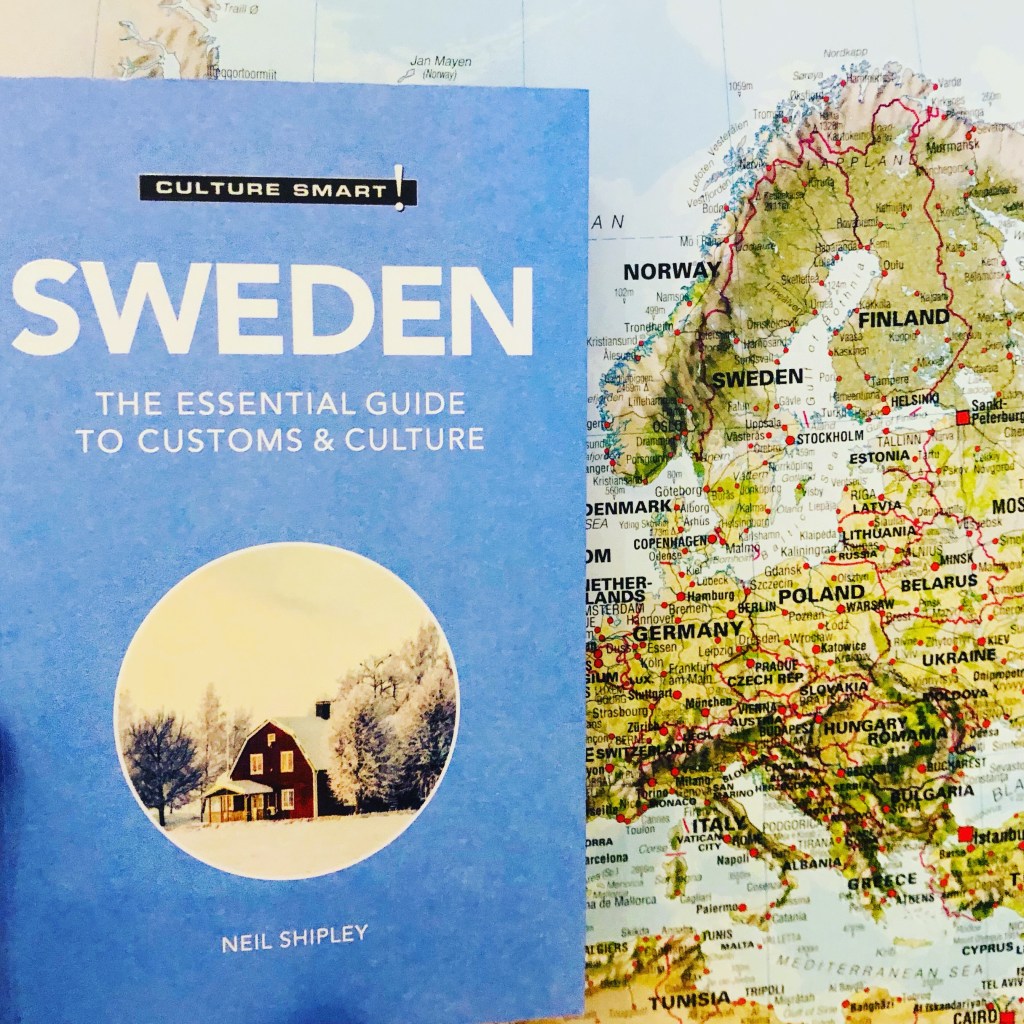
My book is doing really well, which I’m very proud of. You can buy it on Amazon, Bokus, Akademibokhandeln and Adlibris amongst other online stores. Sweden, by Neil Shipley, published by Kuperard 2021.

I still have a few copies left, so if you’d like to buy a signed copy, just let me know!