The pagan origins of Sweden’s Midsummer celebrations

The long Midsummer weekend is drawing to a close in Sweden. Known as “Midsommar”, it is one of the most significant and widely celebrated holidays in the country. Its history blends ancient pagan traditions with later Christian influences and remains a vital part of Swedish cultural identity.

The origins of Midsummer in Sweden are rooted in pre-Christian solstice celebrations. Ancient peoples marked the summer solstice, the longest day of the year, with rituals to honour nature, fertility, and the sun. These rituals often involved dancing, feasting, and the lighting of bonfires, believed to ward off evil spirits and ensure a good harvest.

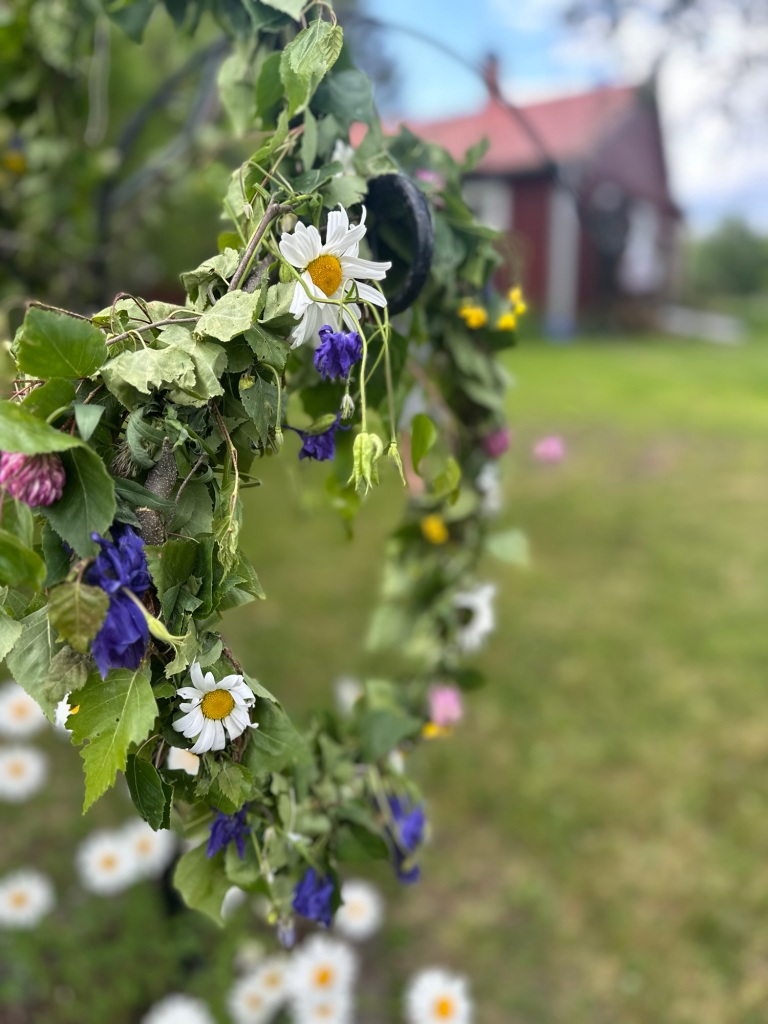
Flowers and greenery played an important role, symbolising fertility and the power of nature at its peak. It was also a time associated with magic and love, when people believed that plants had healing powers and that dreams could foretell the future—especially for young women seeking to glimpse their future husbands.

With the spread of Christianity in Scandinavia during the early Middle Ages, many pagan customs were adapted into the Christian calendar. The Church linked Midsummer celebrations to the feast of St John the Baptist, celebrated on 24 June. As a result, Swedish Midsummer traditionally falls around this date, although in modern times it is observed on the Friday between 19 and 25 June, followed by Midsummer Day on the Saturday.

Despite this Christian connection, the festival retained much of its pagan character, particularly the focus on nature and fertility, rather than religious observance.

Today, Midsummer remains the major secular celebration in Sweden. It marks the unofficial start of the summer holidays, when many Swedes leave cities for the countryside or their summer cottages (sommarstugor).

The festival is a strong symbol of national identity, with its emphasis on community, connection to nature, and timeless traditions. It is a day when Swedes of all ages participate in shared customs that span generations.
Swedish Midsummer – food and drink

Swedish Midsummer celebrates abundance and as such, a great deal of food and drink is consumed. After guests arrive and have their first drink(s), the wreaths start to get made, the potatoes peeled, strawberries topped and the maypole gets decorated with flowers and leaves. Once erected, and danced around, it’s time for lunch.

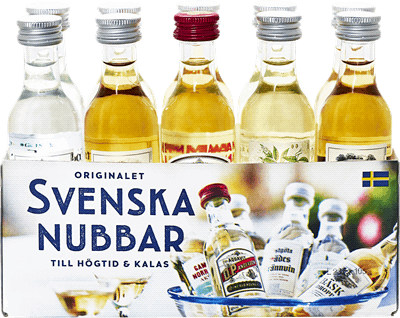
As far as drinking goes, ‘nubbe’, or snaps, is a common tipple accompanied by traditional drinking songs and washed down with beer. A popular brand of snaps is OP Anderson which is flavored with aniseed and fennel and is 40% proof. The drink has been around for 130 years on the market – the first snaps being sold in 1891! Another popular nubbe , the Danish Jubileums, is 40% proof and tastes of dill, coriander and bitter orange. There are also small-sized bottles than can be bought in fun packages that have a mixture of flavorings.

When it comes to the food, in the evening it has become popular in recent years to have a barbecue. But it is at lunch time when the traditional food is consumed, with a Midsummer smorgasbord (buffet).

On this buffet, it is common to find various types of pickled herring, soused herring, boiled new potatoes, gravlax with ‘hovmästare’ sauce, smoked salmon, Västerbotten cheese pie, crisp bread and mature cheese, chopped herbs, red onion, egg halves, ‘silltårta’ (herring cake), various sauces and mixes, fresh and smoked shrimps, fish roe.

As you can imagine, this food is very rich and fatty, which is why it is usually eaten together with the alcoholic snaps.

For dessert, the only thing to eat are Swedish strawberries and cream or a home-made strawberry cake. Anything else would be sacrilege. Some families also eat rhubarb pie.

After lunch, bolstered by the snaps, it’s usually time for garden games, a walk in the woods or a quick dip in the not-quite-yet-warm-enough lake or sea.

If the party lasts really late into the night, then there can also be a ‘vickning’. This is a ‘midnight meal’ designed to sober up drunk guests. It often includes some leftovers from the day, or can also be a very welcome hot dog. 🌭

Baby we’re burning – Swedes, songs and Satanists

valbiorg

Tonight, the 30th April, in Sweden is Valborgsmässoafton. Yes, another one of those long indecipherable Swedish words.

This one translates as Walpurgis Eve, and is celebrated in many European countries such as Germany, Holland, the Czech Republic, Lithuania, Latvia, Estonia and Finland. 

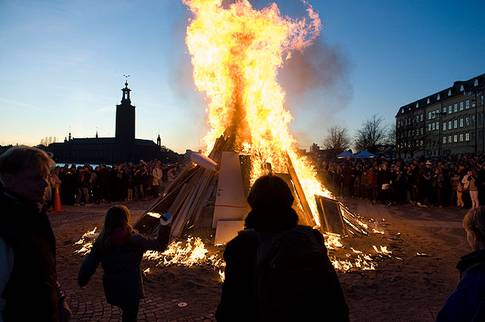
The name ‘Valborg’ is from an English Saint but, despite that, this isn’t really a religious celebration. It’s more to do with the welcoming of spring, and feels rather pagan actually. In the evening on Valborgsmässafton, Swedes gather around huge bonfires and listen to songs. These songs are in the form of traditional choir music designed especially for this occasion to shake off  the nasty dark winter and celebrate the burgeoning buds of the lighter season.

And like many traditions in Sweden, this one also has a rural origin. These bonfires are part of a Swedish tradition dating back to the early 18th century. On this day, farm animals were let out to graze and bonfires lit to scare away predators and other evil beings. This is rather ironic as Walpurgis Eve is also an important holiday in Satanism at it marks the founding of the Church of Satan.

But religion aside. On Walpurgis eve, we are joined in the knowledge that we survived another winter, and summer is coming!

Thirteenth Day in Sweden

Today, 6 January, is a national holiday in Sweden and in many places around the world. In Sweden, not a lot happens on this day – it is just another day off. If it lands on a weekend, the bank holiday is forfeited, unlike in many other countries where the following Monday is taken off in lieu.

So what does the 6 January celebrate?

In orthodox churches, the 6 January is celebrated as the day of Jesus’ birth.

In western Christianity, the 6 January notes the arrival of the three wise men (the magi) to Bethlehem to visit the baby Jesus in his cradle. These wise men are said to represent the three continents of Europe, Africa and Asia.

In Eastern Christianity, today celebrates the baptism of Jesus in the Jordan river and his manifestation to the world as the son of God.

January 6 also commemorates the legend of the Wedding at Cana, where Jesus exercised his divinity by turning water into wine.

Epiphany

In English, today is called Epiphany – which comes from the Greek word ἐπιφάνεια, epipháneia, meaning ‘manifestation’ or ‘appearance’. It is derived from the verb φαίνειν, phainein, meaning “to appear”. It signifies the day when Jesus first appeared to the Gentiles, in his cradle.

In the practical language of Swedish, there is no reference to manifesting or appearing. Today is given the name of Trettondag Jul (Thirteenth Day Yule) – literally thirteen days after Christmas Eve.

Advent Calendar – Dec 24: Kalle Anka

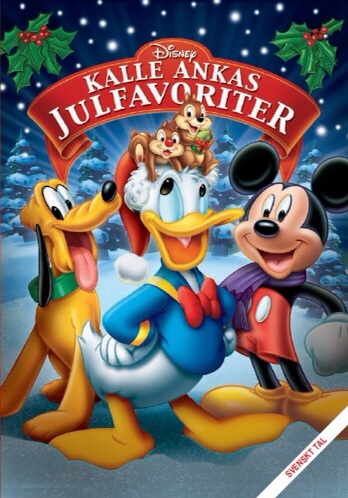
Window 24. As I am following the Swedish system of advent calendars, today is the last window, not the 25th as in the UK. So here is the final word: Kalle Anka. This is the Swedish name for Donald Duck – a Disney character with a strong, and unexpected, connection to Swedish Christmas.

Traditional Christmas celebrations on Christmas Eve in Sweden get off to a slow start. It all begins with a Christmas breakfast, consisting of rice porridge, wort bread, ham and Christmas cheese, amongst other things. After breakfast, some people go for a walk, some go to church, others begin the preparation for the Christmas julbord (buffet).

When to eat julbord differs from family to family. For some, it’s at lunch time, for others it more towards late afternoon. One surprising time marker is Kalle Anka (Donald Duck).

Every Christmas Eve since 1960, the Disney show ‘From All of Us to All of You’ featuring Donald Duck and his friends has been broadcasted on Swedish television at 3pm (now 3.05pm). Every single year. A very weird tradition for someone like me who grew up listening to the Queen’s speech on Christmas Day at 3pm. In the UK we have the monarch. In Sweden, Donald Duck.

So the discussion in Swedish homes is ‘should we eat before or after Kalle?’.

Today, Kalle Anka is watched as a sentimental tradition, or as background noise on Christmas Eve. But in the 1960’s when it began, it was the only time of the year that cartoons were shown on tv, so it was a Christmas treat. Since it’s been broadcast for almost 60 years, it is an integral part of what many Swedes associate with Christmas.

After Kalle Anka och julbord, it’s time for a visit from Tomten with gift-giving. This is followed usually by more food and drink. Some people conclude the day with a Midnight service at their local church.

Christmas is, like many places around the world, a time of overconsumption. Enormous amounts of food are left over and eaten during the following days.

In Sweden, Christmas Day and Boxing Day are both Public holidays – and the official end of Christmas is January 13th. Then it is time to traditionally throw out the Christmas tree. The lights in the windows have usually disappeared by February.

And as the daylight slowly returns to Sweden, people start planning for the lighter and warmer time of the year. And Christmas fades into memory…until next December.

Advent Calendar – Dec 13: Lucia

Window 13: Today’s word is ‘Lucia‘ – a light-bringing saint who is commemorated today.

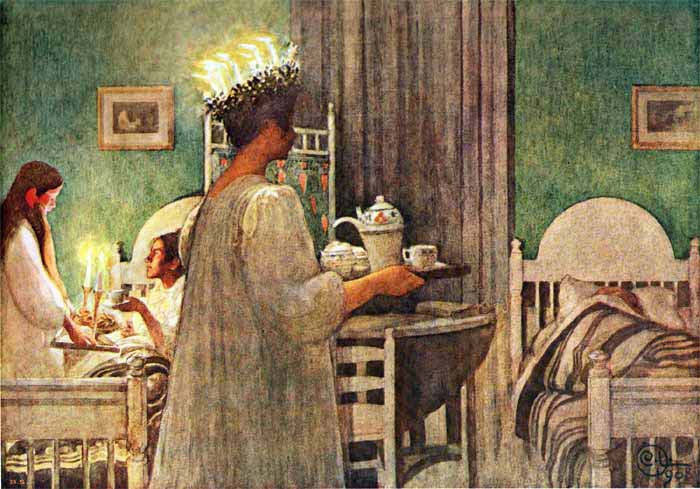
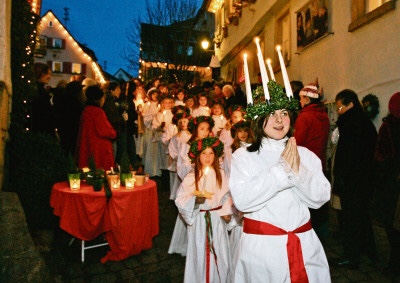
At the darkest time of the year, Santa Lucia (St Lucy) pays us a visit early in the morning. Lucia has candles in her hair and is surrounded by her handmaidens and boys, and shines light into the dark depths of our spirits. And slowly, slowly, the day awakens.

Santa Lucia is believed to have been a Sicilian saint who suffered a martyr’s death in Syracuse, Sicily around AD 310. She was seeking help for her mother’s long-term illness at the shrine of Saint Agnes, in her native Sicily, when an angel appeared to her in a dream beside the shrine. As a result of this, Lucia became a devout Christian and refused to compromise her virginity in marriage.

Officials threatened to drag her off to a brothel if she did not renounce her Christian beliefs, but were unable to move her, even with a thousand men and fifty oxen pulling. So they stacked materials for a fire around her instead and set light to it, but she would not stop speaking.

One of the soldiers stuck a spear through her throat to stop her, but to no effect. Soon afterwards, the Roman consulate in charge was hauled off to Rome on charges of theft from the state and beheaded. Lucia was able to die only when she was given the Christian sacrement.

The tradition of Santa Lucia is said to have been brought to Sweden via Italian merchants and the idea of lighting up the dark appealed so much that the tradition remained. The current tradition of having a white-dressed woman with candles in her hair appearing on the morning of the Lucia day started in the area around Lake Vänern in the late 18th century and spread slowly to other parts of the country during the 19th century.

The modern tradition of having public processions in the Swedish cities started in 1927 when a newspaper in Stockholm elected an official Lucia for Stockholm that year. The initiative was then followed around the country through the local press. Today most cities in Sweden appoint a Lucia every year. Schools elect a Lucia and her maids among the students. The regional Lucias will visit shopping malls, old people’s homes and churches, singing and handing out gingerbread.

So, it might be cold and dark outside, but remember – after darkness comes the light.

Sweden’s Freedom of Expression – a cornerstone of democracy.

Given recent provocative manifestations, some people are starting to question Sweden’s freedom of expression laws. This criticism is even being used as a way to prevent the ratification of Sweden’s membership of NATO.

English writer Evelyn Beatrice Hall wrote in her biography of Voltaire – ‘I disapprove of what you say, but I will defend to the death your right to say it’. This phrase is frequently used to describe the principal of freedom of speech.

Sweden’s democracy is built on the principle of freedom of expression. It is a fundament of society, together with freedom of information, freedom to demonstrate and freedom of assembly. The individual’s right to freedom of religion is also strongly protected by the Constitution. Freedom of Expression is also enshrined as Article 10 in the Human Rights Act.

There are people in Sweden with, in my opinion, disgusting views, who manifest these in public demonstrations. However, under Swedish law, they have a right to express what they believe. I don’t have to agree with what they believe – that is also my right.

Sweden’s freedom of expression is a ‘constitutionally protected right including the right to express thoughts, opinions and feelings through speech, writing or images without interference by the authorities.’

Freedom of expression does not however mean the freedom to always say practically anything at all. For example, this freedom ‘does not extend to slander or committing an act involving threats or agitation against a national or ethnic group. On the other hand, religions as such are not protected against expressions of opinion that challenge religious messages or that may be perceived as hurtful to believers.’

To be honest, I would probably prefer some conservative opinions not to be expressed, as I feel they are deliberately provocative and lead to agitation and unrest. However, without a doubt, I would rather live in a country where individuals are free to express what they think, than in a country where religious or political powers suppress this.

If we start to limit freedom of expression, and censor opinion, we are dismantling our democracy. And where does it end? We don’t have to look very far to get the answer…..

World Book Day – and my book on Sweden

Today is UNESCO World Book Day, to celebrate books and promote reading. The 23 April is a significant day as it commemorates the death of many famous writers such as William Shakespeare, Miguel de Cervantes and Inca Garcilaso de la Vega.

Every year a World Book Capital is nominated. The first one, in 2001, was Madrid, Spain. This year it is Guadalajara in Mexico.

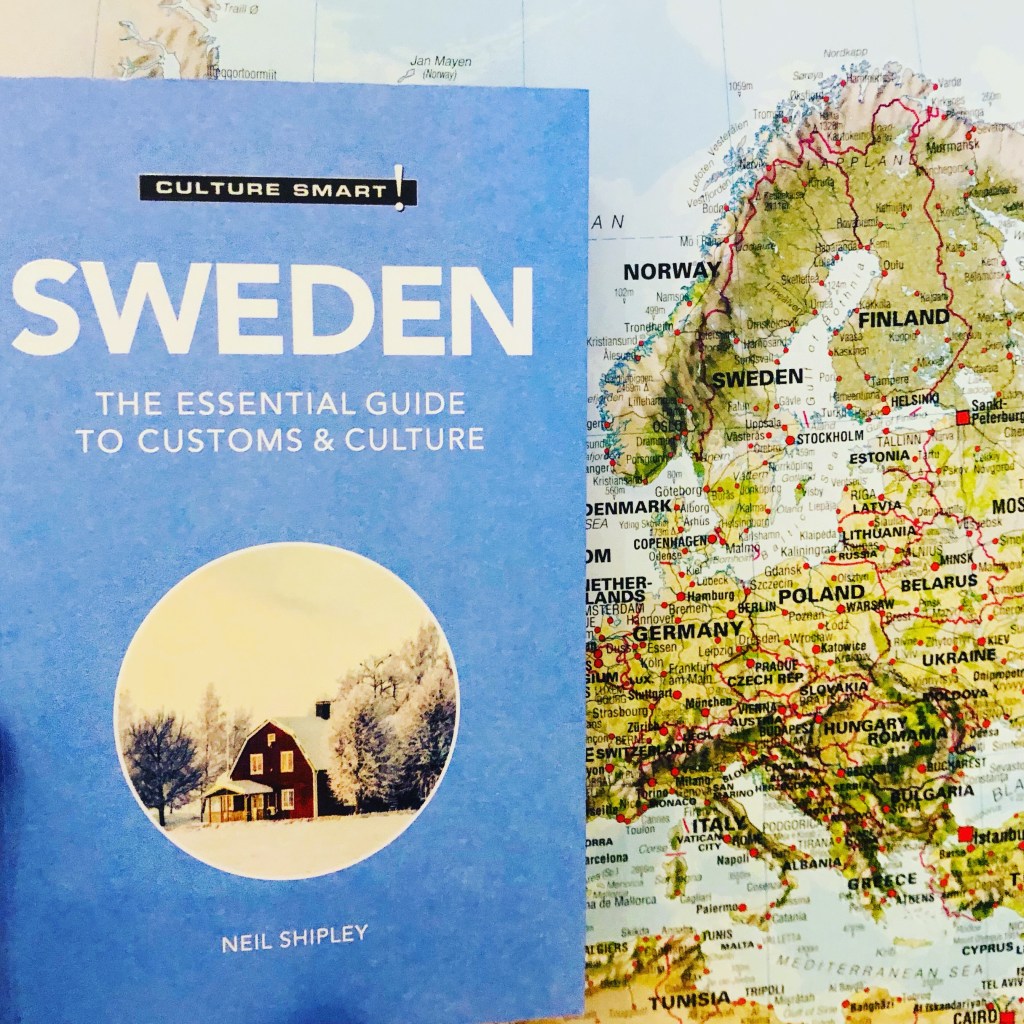
So today is a good day to buy a book, or to gift one. If you know anybody who is interested in learning about Sweden, or planning on visiting Sweden, then my guide book is a good match! I published it in 2021.

You can buy it on Amazon, Bokus, Akademibokhandeln and Adlibris amongst other online stores. Sweden, by Neil Shipley, published by Kuperard 2021. You can also buy it straight from the publisher at http://www.culturesmartbooks.co.uk

I still have a few copies left, so if you’d like to buy a signed copy, just let me know!

Riots on the streets of Sweden

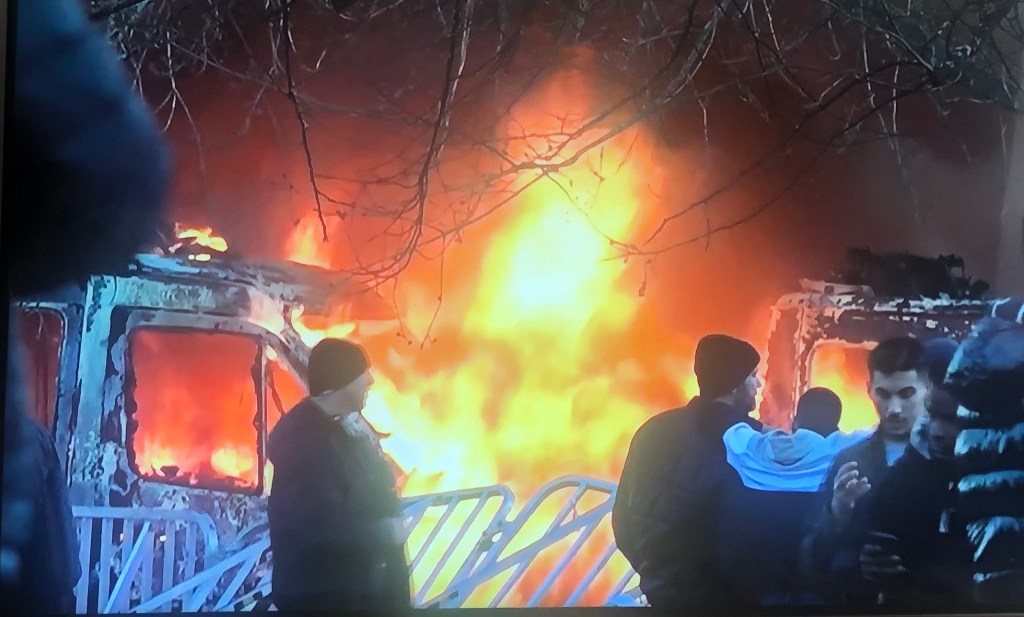
Over the Easter weekend, there were several riots in different parts of Sweden in which participants violently attacked the police and other emergency services. Screaming, trashing, burning, destroying, threatening and killing.

The riots were in response to anti-Islam events organised by radical, far-right Danish party Stram Kurs (Hard Line). The leader Rasmus Paladan, who is half Swedish, had been given permission to hold public rallies and burn the Qur’an.

While it is not illegal in Sweden to burn a religious scripture of any denomination, it is a clear and fully-intended provocation, leading to public outcry and reaction.

Let me be clear – I in no way condone the criminal actions of the rioters. They need to be identified, and prosecuted. I also do not condone the burning of the Qur’an. It is a senseless and racist affront intended only to aggravate.

The whole situation has put Swedish politicians in a pickle. Like most democratic countries, the concept of freedom of speech is central. Everybody has the right to say what they think, even if it is heinous. As a democracy, we have to accept it. We meet our combatants in debate and not in violent action.

So, the question becomes is burning the Islamic scripture an expression of this democratic right? Or is it incitement of hate, which is illegal in Sweden?

The politicians have skilfully dodged the question and passed it on to the police, to whom Rasmus Paladan has applied for permission to continue his tour of Sweden, despite ongoing public unrest.

It will be interesting to see what happens next in this historical moment in Swedish history.

International Romani Day-Roma in Sweden

Today, 8 April, is International Romani Day. It marks the first World Romani Congress that was held in London in 1971. The day exists to shine a light on the ongoing persecution and abuse that the Roma population of the world has been forced to endure throughout history.

The Romani originate from northern India. They are dispersed, and their most concentrated populations are located in Europe, and Western Asia, since around 1007. Nobody really knows why the Roma left India in the first place, as no records were kept. However theories abound: from early persecution based on caste, to banishment from angering the king, and religious war.

The estimated 12 million Roma are consequently a nomadic people with no land to call their own. Their mobility and the fact that they lived in temporary camps contributed through the centuries to associations with poverty and accusations of high rates of crime. The discomfort that others felt about their presence led to perceptions of the Roma as antisocial, unsophisticated or even dangerous. Partly for this reason, discrimination against the Romani people has continued to the present day.

Romani have existed in Sweden since at least the 1500’s and today they are classed as one of Sweden’s five national minority groups (together with Jews, Sami, Swedish Finns and Tornedalers). Romani chib has the status of official minority language.

Over the centuries, the people of Sweden discriminated against, marginalised and excluded its Roma population. For 40 years, up to 1976, Sweden had a legal policy of enforced sterilization of people to avoid ‘unacceptable offspring’. Much suggests that Roma women were particularly subjected to this abuse.

The Pew Research Poll of 2016 found that 42% of Swedes held strong anti-Roma views (compared to 82% in Italy, and 37% in Holland).

A Romani political activist in Sweden was Singoalla Millon, who died in 2020, and spent her entire life fighting for education, housing and acceptance. Another was Katarina Taikon who dedicated herself to improving conditions for Romani people in Sweden. She tried to convince the Swedish government to see the Romani as political refugees. She died in 1995. Today, the politician Soraya Post has worked as an EU politician defending the rights of the Romani and other minorities.

In 2012, the Swedish government introduced an 20-year equal opportunities strategy for Roma people. The strategy includes objectives and measures within several areas such as schooling, employment; housing, health, social care, culture and language. Of course, discrimination and marginalization are still very real in Sweden, but this is at least a step in the right direction.