Why does Sweden still need Pride?

This week is Stockholm Pride. It culminates on Saturday with a huge parade. The event celebrates 25 years this year, and some people question if it is still needed or relevant.

The answer, unfortunately, is more than ever.

But we’ll come to that later.

Currently there are 73 Pride festivals in Sweden during the year. From Arctic Pride way up in the north to Malmö Pride in the south, it is possible to celebrate throughout the year.

This indicates that many Swedes seem to have embraced the concept of Pride with open arms. There is, of course, a commercial benefit but the main reason seems to be that LGBT+ Pride resonates well with the societal Swedish values of equality, tolerance and acceptance.

However, like everything, it has its opponents.

Sweden’s current conservative government is in power, solely with the support of a right-wing populistic party. This party has consistently attacked LGBT people and the Pride movement. For example, this week, one of their politicians tweeted that Pride legitimizes pedophilia.

It is comments like this that plant the seeds of aggressive counter demonstrations, homophobic, anti-Pride propaganda and personal physical attacks. LGBT+ people are still regularly abused, discriminated against and attacked in Sweden. And if we lift our eyes to the broader world, we see examples of LGBT + rights being restricted or removed, and same sex relations being criminalized and punishable with the death penalty.

This is why Pride is still needed, not only as a celebration, but as a political manifestation of human rights.

If you’d like to know where a Pride is near you, go to http://www.svenskapride.se which collects all the Swedish events in one place.
Is Sweden Islamophobic?

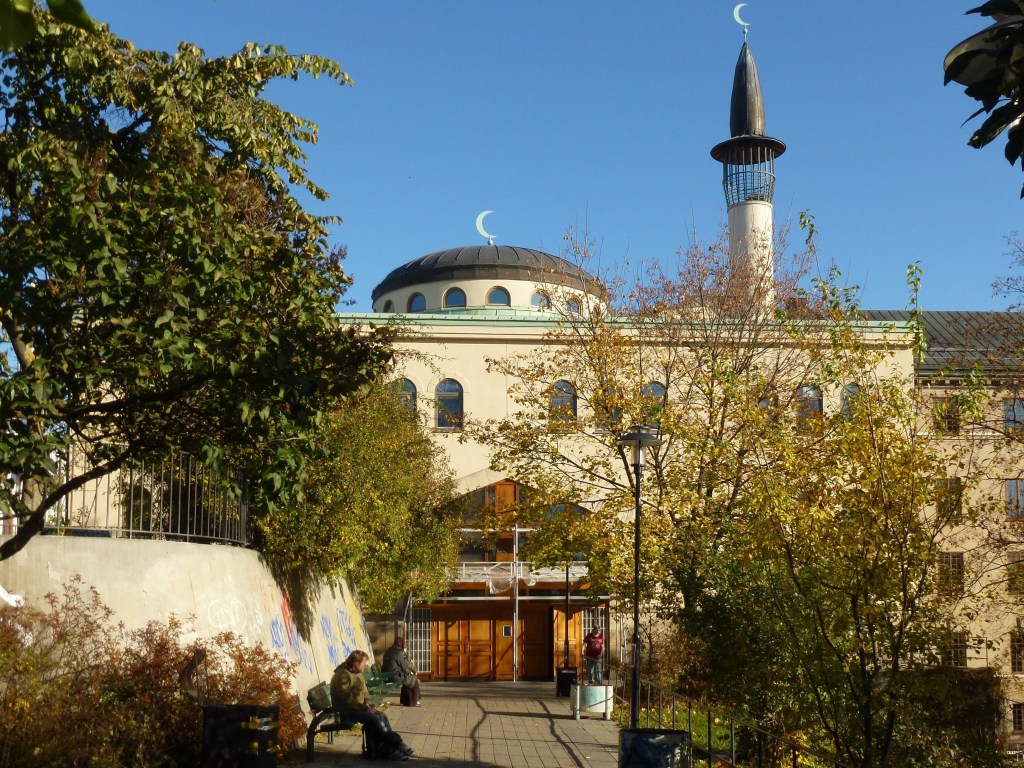
More than 90,000 articles have been written about the Koran burning in Stockholm that occurred last week. Many of these articles are declaring Sweden as Islamophobic. The action has led to international public protests, storming of embassies, burning of the Swedish flag, and condemnation from everyone from Turkey’s Erdogan to the Pope.

So, is this true? Is liberal-minded, egalitarian Sweden, in fact Islamophobic? Like everything the answer lies in your definition, and perspective.

It all boils down to understanding Swedish freedom of speech. In Sweden, you are allowed to publicly comment on, demonstrate against and criticize anything.

Influential powers such as the royal family, industry giants or organized religions cannot legally stop or influence this.

In Sweden, you are free to follow any religion you want. Likewise you are free to criticize any religion you want. That is the basis of democracy in Sweden.

With this understanding, you can see how the burning of any religious scripture is allowed and not, per se, limited only to the Koran.

So you have to separate the law from ethics. This is why the Swedish government condemns the action but at the same time defends self expression.

That said, there are other laws in Sweden that restrict public speech. For example, if it is considered hate speech, or incitement to violence, or against the interests of national security.

In the case of the recent Koran burning, outside a mosque on the first day of Eid, and with today’s political instability, one can seriously question the police’s choice to allow a such a demonstration to occur. Personally, I think it shows a poor sense of judgement and disregard for public safety and national security. But it wasn’t illegal, and fully in line with freedom of speech.

So, is Sweden islamophobic? From this one action, no. If you want to burn a bible or the tora, you can. Is Sweden Islamophobic in other regards? Maybe. Were the actions of the individual demonstrator islamophobic? Maybe, although he himself is Muslim. He claims his action to be politically motivated.

Time will tell what the outcome is of this. The man who carried out the act is currently living under police security, and amongst other things is being charged with starting a fire during a fire ban.

The Finnish island where everyone speaks Swedish

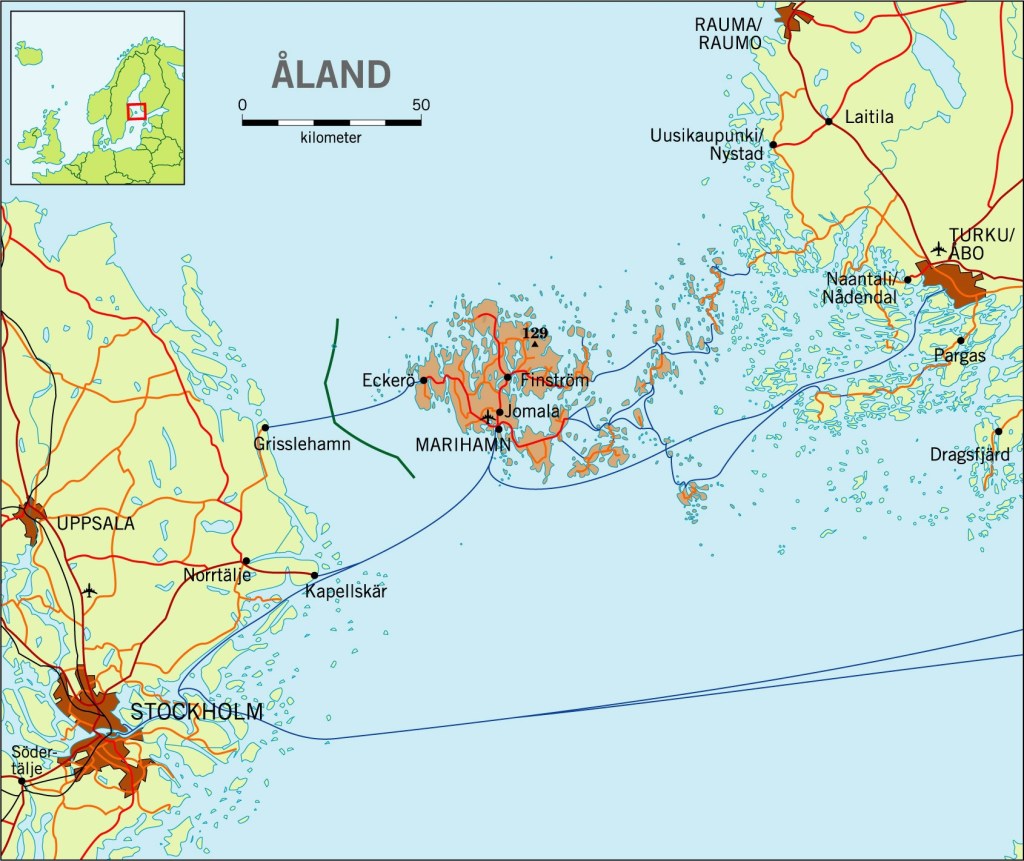
I am currently on an island in the Baltic Sea, at the mouth of the Bay of Bothnia. It is a Finnish island called Åland. The island is about 170 km from Stockholm and 160 km from Åbo in Finland. Åland consists of Fasta Åland on which 90% of the population resides and about 6,500 skerries and islands, of which 60–80 are inhabited. The capital city, where I am, is called Mariehamn where around 15,000 people live.

So how come the official language of Åland is Swedish?

The island was originally a part of the Swedish Empire, but has also belonged to Russia, France, Germany and Sweden again, before becoming a part of Finland. After much conflict, the League of Nations decided in 1920 that, although belonging to Finland, the island would be independent and self-governing. By law, Åland is politically neutral and entirely demilitarised, and residents are exempt from conscription. Åland was granted extensive autonomy by new legislation of the same name in 1951 and 1991. Åland remains exclusively Swedish-speaking by this act.

Speaking to the locals, the accent sounds like an interesting blend of Swedish, Finnish and Gotlandic (another Baltic island).

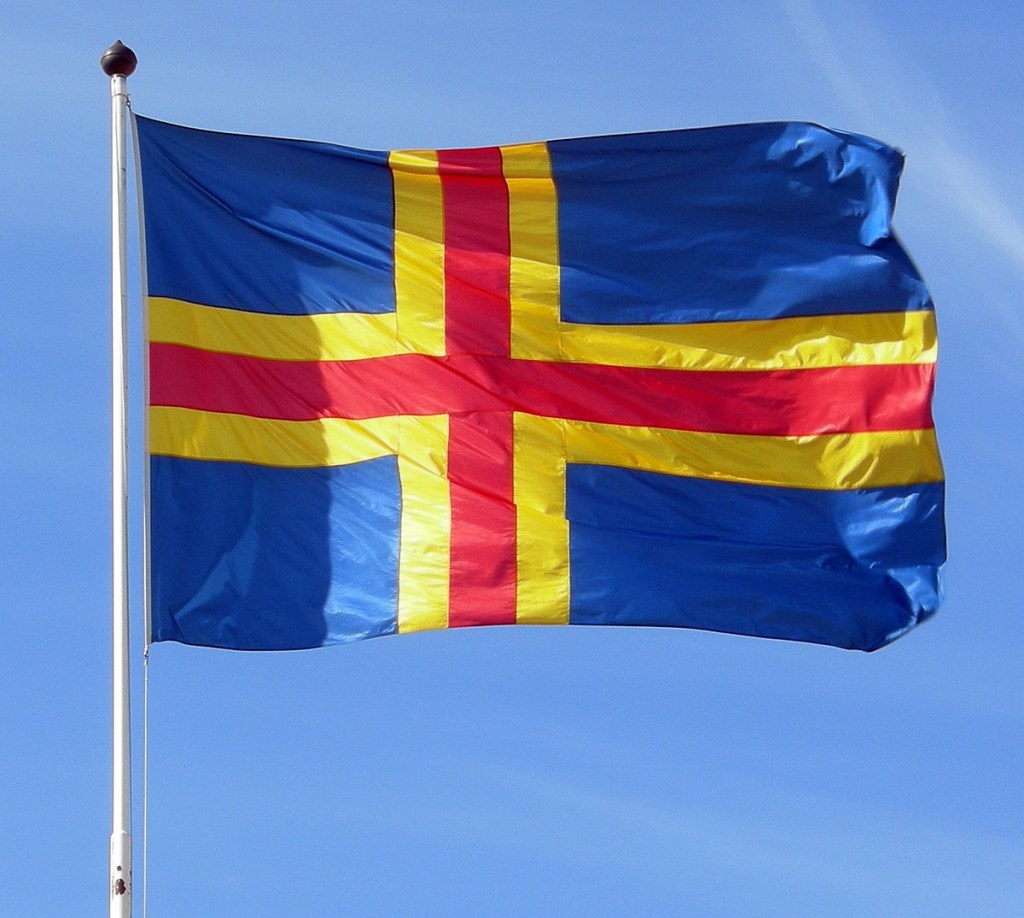
Åland, as an autonomous region, has its own parliament, police force, bank, postal service and flag. It is also a tax-free zone, and is a daily stopping point for ferries from Sweden and Finland where passengers are able to buy duty-free alcohol, tobacco and other goods. In fact, about 2 million people a year visit Åland, but usually only to switch boats. I have to confess this has been the way for me also. This trip is the first time I’ve actually ventured into the town and further onto this beautiful island.

Why is May 1st celebrated in Sweden?

In Sweden, and in many other countries, May 1st has been embraced as the International Workers’ Day. In 1938, May 1st became Sweden’s first non-religious public holiday and has been an important celebration of labourers and the working classes since then.

But why specifically May 1st?

The answer is found in a massacre in the USA. On 1 May 1886, laborers in Chicago went out on strike for an 8 hour working day. On 4 May 1886, Chicago police and the demonstrators clashed and 11 people died.

The event is called the Haymarket massacre. Seven of the demonstrators were sentenced to death, despite lack of evidence. To commemorate the massacre, the socialist organization suggested that 1 May should become day of demonstrations every year around the world.

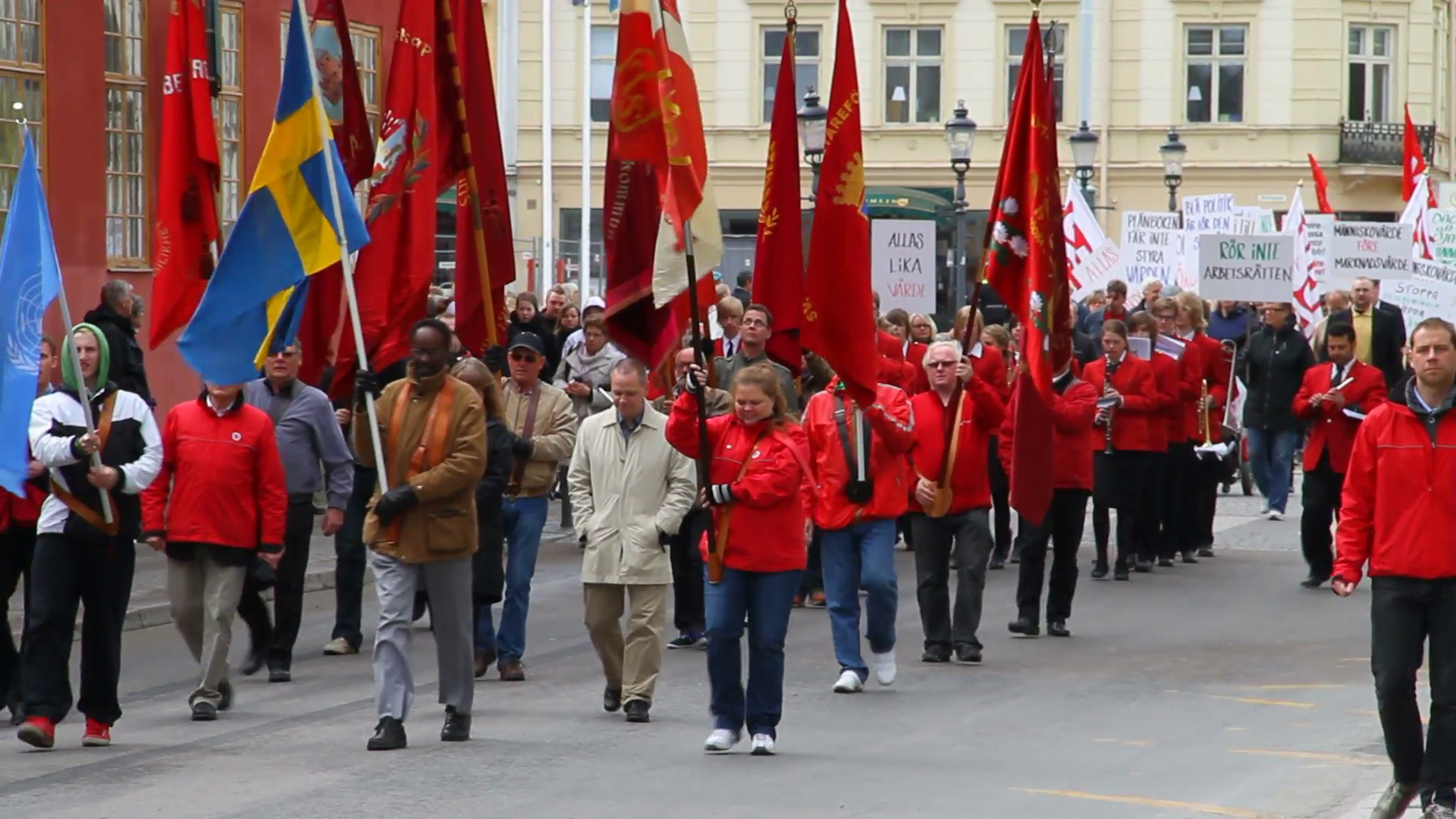
In Sweden, traffic is shut off, huge flag-waving demonstrations are held and people gather to hear speeches from their politicians and representatives.

The demonstrations represent people from various parties. However, since most of them are from the political left, the streets are awash with bright red flags and banners.

Contrary to the stereotype, not everybody in Sweden supports left wing political groups. There are 8 political parties, of which only 2 have a self-proclaimed left-orientation. If you ask a Swede if they are demonstrating, you will either get a ‘yes, of course!’, or as I got yesterday when I asked someone, ‘Hell no! I’m not red!

This means that for many Swedes, today is just a day off work – an opportunity to perhaps nurse a hangover from the festivities of the previous evening or to relax, go for a walk and enjoy the day.

Sweden’s vagina debate

In Sweden recently, a man accused of rape was acquitted by a panel of judges over a word. The victim, a 10-year old girl, accused the 50-year old man of putting a finger inside her ‘snippa’.

Reportedly, the judges were unfamiliar with the word and looked it up in a dictionary. In the dictionary, ‘snippa’ is defined as ‘the outside part of female genitalia’. Because if this, the judges freed the 50-year old man, as the Swedish definition of rape requires a physical penetration.

This has caused an enormous outcry in Sweden. A viral hashtag has appeared called #jagvetvadensnippär or ’I know what a snippa is’. The debate is inflamed in main stream and social media.

Although defined in one way in the dictionary, the word ‘snippa’ is taught and commonly used to mean vagina, and not only vulva. A 10-year old girl would definitely use this word to describe her vagina – and in this case she also clearly used the preposition ‘inside’. It is unlikely she would use the Latin word vagina, or the significantly more adult word ‘slida’.

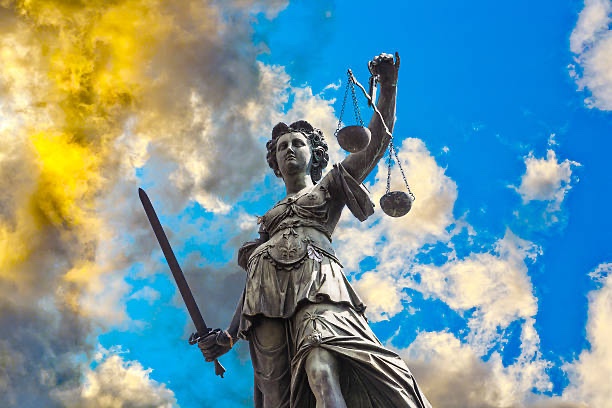
This case casts a light on what can happen when a board of judges is out of touch with reality, or when the legal system does not use the same language as the general population.

It is a huge concern that a group of middle-aged men are incapable of equating the word ‘snippa’ and the proposition ‘inside’ – especially when expressed by a child. It seriously feels like they all need some education in female anatomy as well as in linguistics.

This case shows us, yet again, how the legal system places the responsibility to prove guilt on the victim of the crime and not the perpetrator – ‘she didn’t express herself clearly’, ‘she wore provocative clothes’, ‘she used the wrong word’, ‘she’d been drinking’, ‘she didn’t say no’.

We will see what the long-reaching consequences of this decision are. Hopefully an appeal will come, and hopefully a modernisation of the legal system. As they say, watch this space….

Sweden’s Freedom of Expression – a cornerstone of democracy.

Given recent provocative manifestations, some people are starting to question Sweden’s freedom of expression laws. This criticism is even being used as a way to prevent the ratification of Sweden’s membership of NATO.

English writer Evelyn Beatrice Hall wrote in her biography of Voltaire – ‘I disapprove of what you say, but I will defend to the death your right to say it’. This phrase is frequently used to describe the principal of freedom of speech.

Sweden’s democracy is built on the principle of freedom of expression. It is a fundament of society, together with freedom of information, freedom to demonstrate and freedom of assembly. The individual’s right to freedom of religion is also strongly protected by the Constitution. Freedom of Expression is also enshrined as Article 10 in the Human Rights Act.

There are people in Sweden with, in my opinion, disgusting views, who manifest these in public demonstrations. However, under Swedish law, they have a right to express what they believe. I don’t have to agree with what they believe – that is also my right.

Sweden’s freedom of expression is a ‘constitutionally protected right including the right to express thoughts, opinions and feelings through speech, writing or images without interference by the authorities.’

Freedom of expression does not however mean the freedom to always say practically anything at all. For example, this freedom ‘does not extend to slander or committing an act involving threats or agitation against a national or ethnic group. On the other hand, religions as such are not protected against expressions of opinion that challenge religious messages or that may be perceived as hurtful to believers.’

To be honest, I would probably prefer some conservative opinions not to be expressed, as I feel they are deliberately provocative and lead to agitation and unrest. However, without a doubt, I would rather live in a country where individuals are free to express what they think, than in a country where religious or political powers suppress this.

If we start to limit freedom of expression, and censor opinion, we are dismantling our democracy. And where does it end? We don’t have to look very far to get the answer…..

Sweden’s Freedom of Expression – a cornerstone of democracy.

Given recent provocative manifestations, some people are starting to question Sweden’s freedom of expression laws. This criticism is even being used as a way to prevent the ratification of Sweden’s membership of NATO.

English writer Evelyn Beatrice Hall wrote in her biography of Voltaire – ‘I disapprove of what you say, but I will defend to the death your right to say it’. This phrase is frequently used to describe the principal of freedom of speech.

Sweden’s democracy is built on the principle of freedom of expression. It is a fundament of society, together with freedom of information, freedom to demonstrate and freedom of assembly. The individual’s right to freedom of religion is also strongly protected by the Constitution. Freedom of Expression is also enshrined as Article 10 in the Human Rights Act.

There are people in Sweden with, in my opinion, disgusting views, who manifest these in public demonstrations. However, under Swedish law, they have a right to express what they believe. I don’t have to agree with what they believe – that is also my right.

Sweden’s freedom of expression is a ‘constitutionally protected right including the right to express thoughts, opinions and feelings through speech, writing or images without interference by the authorities.’

Freedom of expression does not however mean the freedom to always say practically anything at all. For example, this freedom ‘does not extend to slander or committing an act involving threats or agitation against a national or ethnic group. On the other hand, religions as such are not protected against expressions of opinion that challenge religious messages or that may be perceived as hurtful to believers.’

To be honest, I would probably prefer some conservative opinions not to be expressed, as I feel they are deliberately provocative and lead to agitation and unrest. However, without a doubt, I would rather live in a country where individuals are free to express what they think, than in a country where religious or political powers suppress this.

If we start to limit freedom of expression, and censor opinion, we are dismantling our democracy. And where does it end? We don’t have to look very far to get the answer…..

A New Sweden

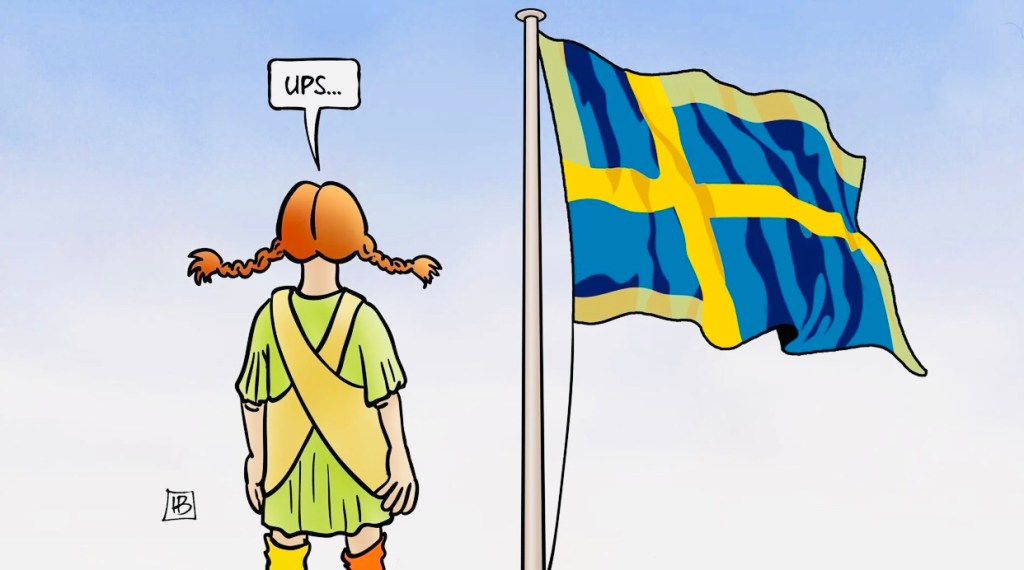
A satirical cartoon drawn by German artist Harm Bengen shows Pippi Longstocking staring up at the Swedish flag – a flag that has turned into a Nazi swastika.

The picture is a comment on the fact that Sweden’s new coalition government rests on the support of a party founded by new nazis.

It is no coincidence that the picture shows Pippi Longstocking reacting. The beloved children’s character stands for everything that the new government isn’t – kindness, curiosity and courage. She stands up for the weak and the oppressed. The picture clearly illustrates this contrast, as well as the shift in Swedish society, and even the polarization that exists.

Sweden’s new conservative government only has 39% of the vote and are therefore reliant on support from a right-wing extreme party in order to govern. In the recent election, this party grew and have over 20%, making them Sweden’s second largest party. The new government is at their mercy – and cannot get anything done without their approval. And this is clear in many of the government’s policies.

This is the new Sweden. Pippi’s Sweden was post war – Europe had just defeated the nazis. And here we are, almost 80 years later. The majority of the Swedish people have handed power to a party that was built on nazi doctrine and is contaminated with nationalistic beliefs. I have never been more disappointed with Sweden than I am now.

But I do love democracy. And I guess this is what it is all about. Sometimes you like the result, and sometimes you really don’t.

Swedish politics week – a summer tradition

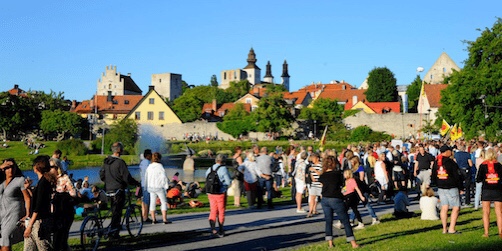
Once a year, with exception of the last two pandemic years, there is a summer politics week in Sweden. The week is happening now, the first since 2019. It takes place in a park called Almedalen on the Baltic island of Gotland, and attracts heavy media coverage.

During the week, the leaders of the eight parliamentary parties deliver speeches – their view of Sweden’s future. This year is especially interesting as there is a General Election in September. The Economy, Crime and Punishment and Education seem to be the top issues so far.

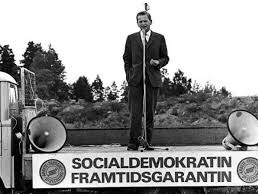
The Almedalen politics week started when legendary Swedish Prime Minister Olof Palme spoke publicly, from the back of a truck, during a summer visit to Gotland. It was at the end of the 60s and there was an audience of a few hundred people. It very quickly became a tradition.

Now Almedalen politics week attracts thousands of participants and is intended to involve the man on the street in politics and to protect the strong Swedish value of democracy and free speech. The idea is that at Almedalen politics week, we meet each other in debate. And in debate and discussion, we influence each other and our environment.

However, Almedalen Politics Week has also been heavily criticized for being elitist. The event has become a popular opportunity for businesses to meet and network with each other.

In a parallel existence, some people go to Almedalen only for this purpose and not to participate in any political activities. Social media has, in previous years, been awash with images of participants mingling, drinking rose wine, partying, dancing and taking drunken groupies.

Post Covid, we all have an opportunity to make changes. We don’t have to go back to the way things were before. The pandemic was a kind of system crash. It will be interesting to see how Almedalen politics week renews itself this year.

World Book Day – and my book on Sweden

Today is UNESCO World Book Day, to celebrate books and promote reading. The 23 April is a significant day as it commemorates the death of many famous writers such as William Shakespeare, Miguel de Cervantes and Inca Garcilaso de la Vega.

Every year a World Book Capital is nominated. The first one, in 2001, was Madrid, Spain. This year it is Guadalajara in Mexico.

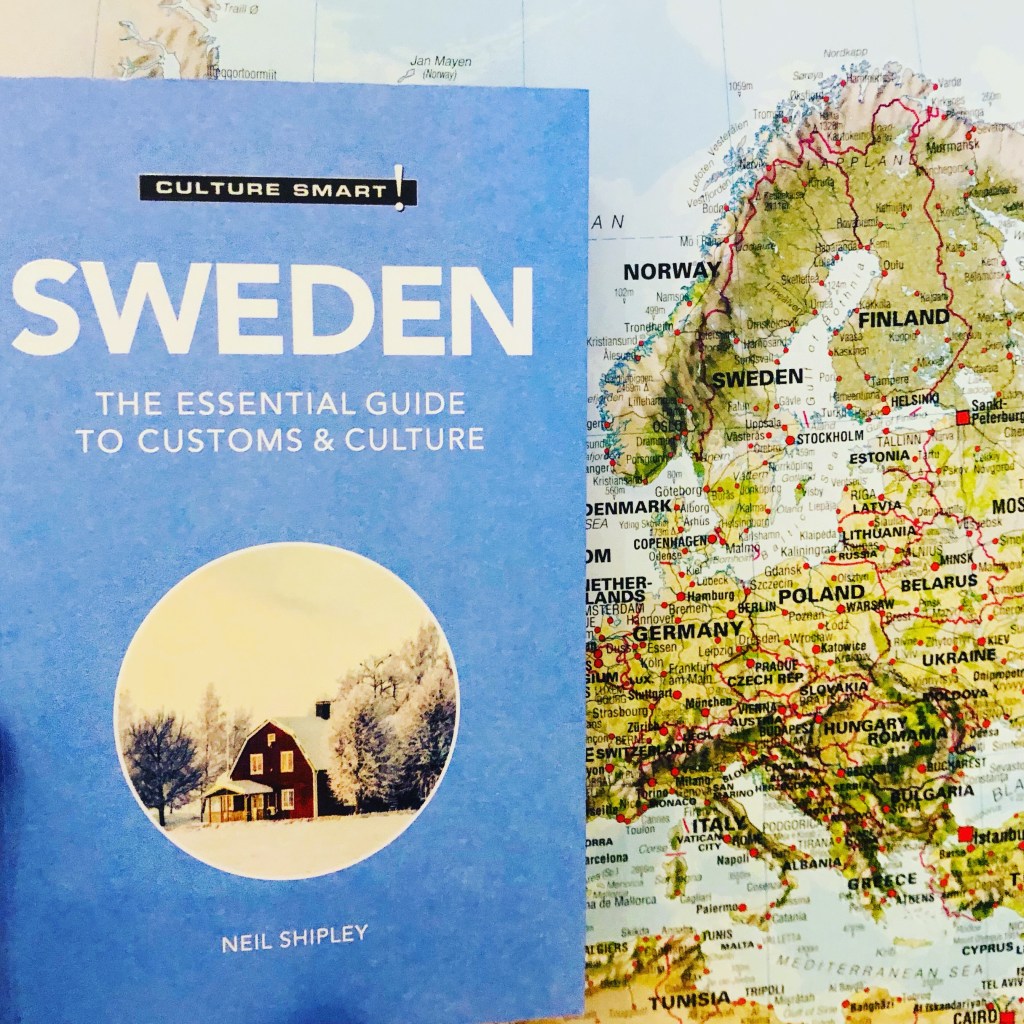
So today is a good day to buy a book, or to gift one. If you know anybody who is interested in learning about Sweden, or planning on visiting Sweden, then my guide book is a good match! I published it in 2021.

You can buy it on Amazon, Bokus, Akademibokhandeln and Adlibris amongst other online stores. Sweden, by Neil Shipley, published by Kuperard 2021. You can also buy it straight from the publisher at http://www.culturesmartbooks.co.uk

I still have a few copies left, so if you’d like to buy a signed copy, just let me know!