21 sexy Swedish words

There’s one stereotype of Swedes that seems like it will never go away – the stereotype that Swedes are sexually liberated. This impression started after the wave of Swedish films that came out in the 1960’s and which were considered erotic by the rest of the world. Equal gender rights, contraception, abortion rights and a relaxed attitude to nudity have reinforced this stereotype. Perpetuating it further over the decades is the regular supply of seductive and physically attractive Swedes in the media – Britt Ekland, Ulrika Jonsson, Anita Ekberg, Maud Adams, Dolph Lundgren, Victoria Silvstedt, Alexander Skarsgård to name a few.

I don’t know if Swedes are more sexually emancipated than other nations or if they indeed have more sex than anybody else.

One thing is for certain though, they do have lot of words and phrases for the sexual act. So, if they’re not doing it – they’re certainly talking about it!

Here are 21 words and phrases to expand your vocabulary. Any others you can think of?

  1. sex
  2. knulla
  3. göka
  4. ligga
  5. älskog
  6. nyp
  7. skjut
  8. samlag
  9. skaka lakan – ‘shake the sheets’
  10. pippa
  11. nuppa
  12. banka bäver
  13. doppa
  14. sätta på
  15. gömma korven – ‘hide the sausage’
  16. älska
  17. nuppilura
  18. pöka
  19. rajtan-tajtan
  20. fjuppa
  21. gänga

50 words for snow!

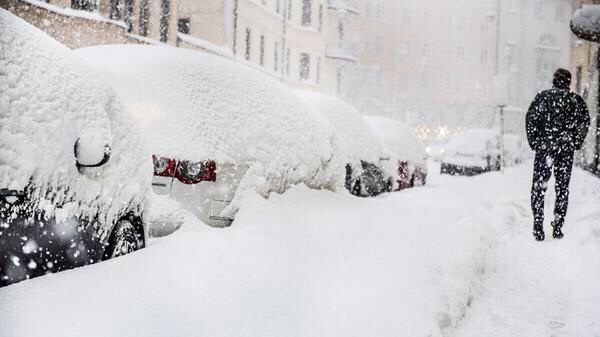
Last year, I started a list of Swedish words for snow and lost energy at 25. This year, as the snow tanks down outside and the cities are hit with ‘snow chaos’, I decided to expand the list from 25 to 50!

Not surprisingly when living in a country where it snows a lot, people start to see differences and nuances in the type of snow, whereas in English the word might just be an unsatisfactory ‘snow’. The Swedish language makes it easy to join words together to describe these nuances.

Here is a list of 50 Swedish words related to snow.

1) Blötsnö – wet, slushy snow
2) Drivsnö – snow that is blown into troublesome snow drifts
3) Aprilsnö – snow in April, according to suspicion signifies plenty of food for the coming season
4) Hårdsnö – compacted hard snow
5) Konstsnö – artificial snow
6) Kramsnö – squeezy snow, perfect for making snowballs
7) Julesnö – snow at Christmas
8) Klabbsnö – wet, warm snow for building snowmen
9) Kolsyresnö – frozen carbondioxide
10) Kornsnö – small white snow breadcrumbs
11) Lappvante – thick, falling snow
12) Lössnö – snow that can loosen and be dangerous
13) Majsnö – surprising and unwelcome snow in May
14) Modd – snow that has partly melted due to salt
15) Natursnö – real snow (as opposed to artificial)
16) Nysnö – fresh snow, crisp and white
17) Pudersnö – powder snow
18) Rekordsnö – an unusual amount of snow, breaking previous snow records
19) Slask – slushy snow mixed with rain and dirt on the ground
20) Snö – snow
21) Snöblandat regn – snow mixed with rain
22) Muohta – the Sami word for snow (it is said the Sami actually have 200 words for snow!)
23) Snörök – faint particles of snow that look like smoke
24) Yrsnö – snow being whipped around by the wind in all directions
25) Åsksnö – snow that pours down during a thunder storm

26) Snökanon – a sudden blast of snow that suddenly hits a place, and feels like snow has been dumped on you

27) Jungfrusnö – virgin snow

28) Snösmocka – a huge amount of snow

29) Snötäcke – snow on the ground

30) Sjösnö – snow over the sea that can roll in over land

31) Snöfall – snow in the air

32) Flingsnö – snow with larger crystals

33) Skarsnö – a crispy surface on a blanket of snow

34) Packsnö – thickly packed snow

35) Pärlsnö – snow like small pearls that hurts when it hits your face

36) Snöglopp – wet snow mixed with rain

37) Spårsnö – snow that allows footprints to be formed

38) Fjöcksnö – a light, fluffy snow

39) Flister – snow the consistency of salt that stings the face when it falls

40) Flaksnö – a sheet of snow

41) Upplega – snow on the upper side of a tree branch

42) Firn – liquid-like snow that can initiate an avalanche

43) Fimmel – sandy snow that falls at low temperatures

44) Själja – a thin layer of ice on top of the snow that resembles glass

45) Knarrsnö – crispy snow that creaks when you walk on it

46) Snöfyk – wet snow

47) Torrsnö – dry snow

48) Månsilver – a poetic word to describe the dusting of snow

49) Snöis – snow on cold water that forms an icy solid surface

50) Stöp – a mixture of snow and ice resembling porridge that forms on top of cold water

Swedish words for poo


In a restaurant in Stockholm last night, I happened to use the word ‘klutt’ to describe a small dollop of food. My dinner companions did a double take and asked me to repeat what I said. ‘En klutt’ I said. They looked at each other and burst into laughter. You see, a ‘klutt’ does describe a small dollop. But not food. It’s a small dollop of poo. Sometimes, speaking a foreign language just ends up going so wrong!
This led to a conversation on the different Swedish words for poo. I made a mental note of them, so I could share them with you. I also googled some other words. Here they are. Enjoy!

  • Bajs – poo
  • Bajskorv – poo sausage (a turd)
  • Klutt – a small dollop of poo
  • Skit – shit
  • Blaffa – a huge mound of poo
  • Lort – piece of poo, sometimes dried out
  • Avföring – defecation
  • Exkrement – excrement
  • Mocka – big pile of poo, often from cattle
  • Rövgröt – poo with the consistency of porridge
  • Lös avföring – diarrhea
  • Racerbajs – diarrhea that requires running to the toilet
  • Sprutlack – explosive poo that covers a large surface

Any other words I’m missing that just have to be on this list?

New Swedish words

Every year, the Swedish Language Institute announces which new words have made it into the Swedish dictionary.

Some of the words are totally new, some have been given a new meaning but all reflect the cultural and political influences of the year.

Here are 10 of the new words from 2017:

1) ‘alternativa fakta‘ – alternative facts. Coined by Trump minion Kellyanne Conway

2) ‘dabba‘ – to dab, a type of dance move

3) ‘döstäda‘ – to death clean. To clean out one’s possessions before death so that surviving family members don’t have to

4) ‘fejkade nyheter’ – fake news

5) ‘knäprotest‘ – to kneel in protest

6) #metoo

7) ‘plogga‘ – to jog and pick up rubbish at the same time

8) ‘serieotrohet‘ – series cheating – to watch an episode of a series without your partner (when you are supposed to be watching it together)

9) ‘skogsbad‘ – a form of therapy where one emerses oneself in the forest to reduce stress. Called ‘shinrin-yoku’ in Japanese.

10) ‘veganisera‘ – to make a vegan version of food that normally contains animal products.

To see the whole list, go to http://www.sprakochfolkminnen.se

A literal Swedish Christmas

Swedish is often a very literal language. Yesterday, the 26th December, is a good example of that.

In the UK, the 26th December is known as ‘Boxing Day’. In many countries it’s St Stephen’s day – in Finland, it’s ‘Stefani Day’. In Ireland it’s ‘Wren’s Day’. In South Africa, it’s the ‘Day of Goodwill’.

And in Sweden? Well, here comes the literalness.

It’s called ‘Second Christmas Day’.

So that’s what ‘Dackefejden’ means

As recently as today, I heard the Swedish expression ‘sedan Dackefejden’ (since the Dacke feud). It is used, often ironically, to describe something very old. ‘I haven’t heard this song since ‘dackefejden’, for example. Or ‘that car looks like something from dackefejden’.

I became curious to learn about this Dacke feud that everybody’s referring to. So I checked it out.

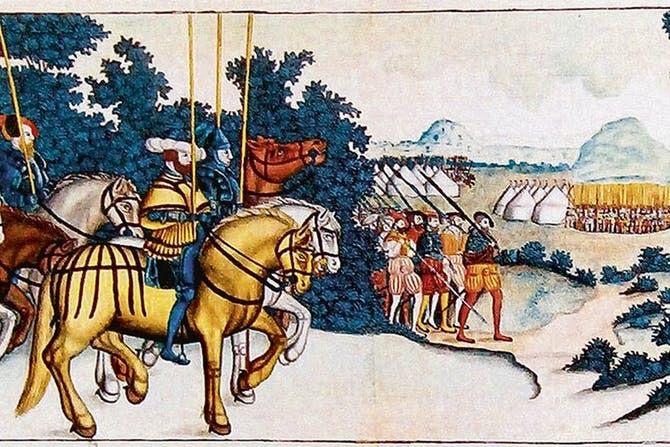
It happened 1542-1543, and was the biggest peasant uprising in Nordic history. It happened in the rural county of Småland in southern Sweden and was against King Gustav Vasa. The leader of the uprising was peasant Nils Dacke, and he was angry that the king had raised taxes and forbidden the sale of cattle and butter to the neighboring county of Blekinge, which at the time belonged to Denmark. Additionally, the king had plundered all the silver from their churches and wanted them to renounce their catholic faith.

So they rebelled, and took control of large parts of Småland and Östergötland. Such was their control, that Nils Dacke celebrated Christmas in Kronberg Castle outside of the town of Växjö.

Of course king Gustav Vasa wasn’t too happy about this feud and made various attempts to undermine the leaders. He offered sanctuary for those who surrendered, he slandered Nils Dacke as a false and unreliable person. And in 1543, he attacked – totally defeating and quashing the rebellion.

Nils Dacke was killed by the king’s soldiers. The people of Småland were punished with high taxes, the insurgents were banished to Finland, the leaders were executed and the whole of Dacke’s family was completely eradicated. So it really seemed to be a bad idea to argue with King Gustav Vasa.

And you literally won’t have met a member of the Dacke family ‘sedan dackefejden’.

Surviving November in Sweden

mörkt3

I’m looking out of my window into the blackness of the Swedish afternoon. It’s not even 4pm yet, and the weak rays of light that illuminated the day have long gone. It’s like somebody literally turned off the light on their way out.

This is November in Sweden – one of the darkest times of the year in Sweden. The night blanket roles in over the country mid afternoon and keeps its grip until mid morning the next day. Far up in the north of Sweden, the sun barely peeks over the horizon.

It can be a challenging time for those of us who live here – this period before the snow and the Christmas decorations light up the streets and windows.

Since language develops to describe our environments, it makes sense that in Swedish there are many words to describe the darkness.  Native Swedes can instinctively feel the difference between these words, but those of us who have Swedish as a second language have to resort to a dictionary to understand the nuances.

The word ‘svart’ is ‘black’ in Swedish. And there are several types of black – there’s ‘becksvart’ (pitch black), ‘korpsvart’ and ‘ramsvart’ (raven black) and there’s ‘kolsvart’ (coal black). I’m sure there are more, please let me know if you have any others.

But there are also lots of other words that describe the darkness. I’ve tried my best to translate some of these below.

  • Skymning – nightfall
  • Dunkel – dim
  • Skumrask – half dark
  • Sollös – without sun
  • Töcknig – misty darkness
  • Molndiger – cloudy darkness
  • Ljusfattig – poor light
  • Dyster – gloomy darkness
  • Grådaskig – dingy

With all these words in their vocabulary, some people complain about the darkness. And who can really blame them? It is a tough period to get through. The darkness can go a long way towards explaining the stereotypical Swedish melancholy.

So how to survive it? Maybe it’s about shifting perspective?

In the words of the well-used, and highly consoling Swedish expression:

‘Det är bättre att tända ett ljus än att förbanna mörkret.’

It is better to light a candle than to curse the darkness!

Take a breath – and speak Swedish.

Probably ‘antiestablishmentarianism’ is one of the most notorious long English words that exist. However, in general we don’t have so many long words in the English language. This is because we use the space bar to separate words. Unlike Swedish.

In the Swedish language, grammar rules allow many words that would be separated in English to be arbitrarily conjoined, making it one veeeerrry long word. This can be mind boggling for the new language learner trying to get a grip on the linguistic acrobatics of the Swedish language.

Here are some of the longest co-joined words in Swedish. Take a breath. And speak Swedish…

1) nagellacksborttagningmedel – nail polish remover

2) diskrimineringsombudsmannen – ombudsman for discrimination

3) realisationsvinstbeskattning – capital gains tax

4) hippopotomonstrosesquippedaliofobi – fear of long words!

5) blodsockerprovtagningsmaskin- blood sampling equipment

6) användervänlighetsundersökning – enquiry into user-friendliness

7) trafikavspärrningsarbetsupgifter – traffic barrier tasks

8) eurovisionsschlagerfestivalsfinalsdeltagare – eurovision finalist

9) korttidsanställdasommarlovspraktikanter – summer job workers with short term contracts

10) mindervärdighetskomplex – inferiority complex (what one gets trying to pronounce these words!)

And finally… try this one out. According to the Guiness Book of Records the longest Swedish word is nordvästersjökustartilleriflygspaningssimulatoranläggningsmaterielunderhållsuppföljningssystemdiskussionsinläggsförberedelsearbeten.

Non-binary Swedish and English

For a while now the non-binary pronoun ‘hen’ has been used in the Swedish language. ‘Hen’ is used to refer to somebody who does not relate or feel represented by the established pronouns for he (han) and she (hon). Initially met with ridicule by some people in Sweden, the ‘hen’ pronoun is slowly starting to gain in usage amongst Swedes and in ordinary vernacular.

I have long assumed that non-binary pronouns do not exist in English apart from the neutralizing use of ‘they’. Imagine my surprise when I read an article today in the Huffington Post which proved me wrong. The article talked about the queering of language. The guide to English non-binary pronouns are presented in the table.

It’ll certainly take some getting used to to add new pronouns into the vocabulary. However, language is one of our greatest tools for celebrating diversity and increasing inclusiveness.

For that alone, I think it’s worth the effort.

English words that tickle the Swedes

laughing minions

I have written a lot about funny Swedish words, such as prick, fart and slut.

I was wondering the other day about how many funny English words there are….words that Swedes find funny? To be honest, I could only actually think of a few.

Please help me to add to this list!

English words that Swedes find funny

  • Pink – a delightful color in English – means pee in Swedish
  • Kiss – a gesture of love in English – means pee in Swedish
  • Goodbyes – as in ‘saying your goodbyes’ – means good poo in Swedish
  • Pippa – the posh girl’s name as in Pippa Middleton – means to shag in Swedish
  • Bra – as in supportive underwear – means good in Swedish
  • Fan – a tool for cooling us down – means fuck (as in damn) in Swedish
  • Rap – the music form – ironically means burp in Swedish
  • Skit – as in a satirical sketch – means shit in Swedish