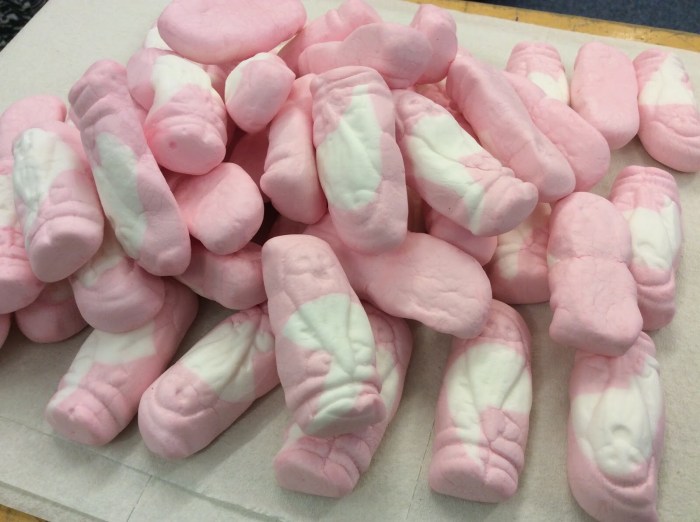
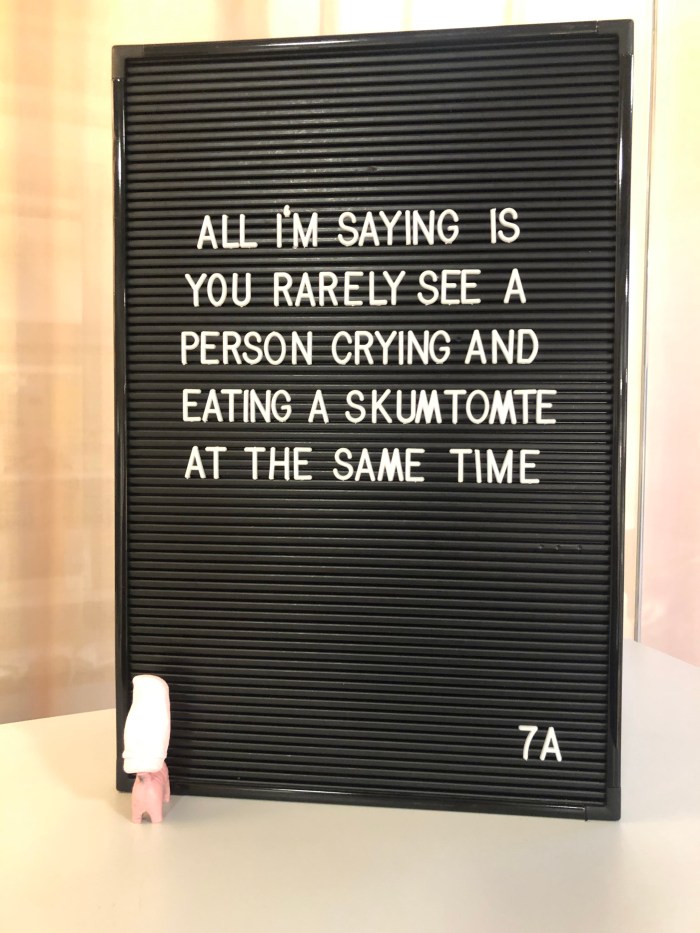
Window 18. Today’s word is ‘Skumtomte‘ which translates as ‘Marshmallow Santa’.
January is a month when it is often jam-packed at gyms up and down Sweden. This is usually due to the amount of food, snacks, and alcohol consumed over the Christmas and New Year period. The festive season is also one of the times of year when a lot of sugar and sweets are consumed.
One of the most popular sweets in yuletide Sweden is the ‘skumtomte’ – the marshmallow Santa. The skumtomte is traditionally pink and white and strawberry flavoured.
Thanks to the wonders of product development, new limited flavours have appeared in recent years: apple and cinnamon, blueberry, mint and gingerbread being some examples.
They have been manufactured since 1934, and every year over 194,000,000 are consumed in Sweden and Finland. It seems like it wouldn’t be Christmas without a jultomte.
Other sweet things that Swedes eat around Christmas are:
Ischoklad – ‘ice chocolate’ – chocolate with coconut fat in tiny cupcake forms
Ris a la Malta – a cold rice dessert with cream, vanilla and mandarines
Risgrynsgröt – rice porridge with sugar, cinnamon and milk
Knäck – butterscotch
Kola – toffee
Fudge – fudge
Marsipangris – marzipan pig
Lussekatt – saffron bun
Polkagris – Candy cane
Chokladtryffel – chocolate truffle
Dadlar – dates
Fikon – figs
Pepparkaka – ginger biscuits
Gröna kulor – marmalade balls
Aladdin and/or Paradis – popular boxes of chocolates
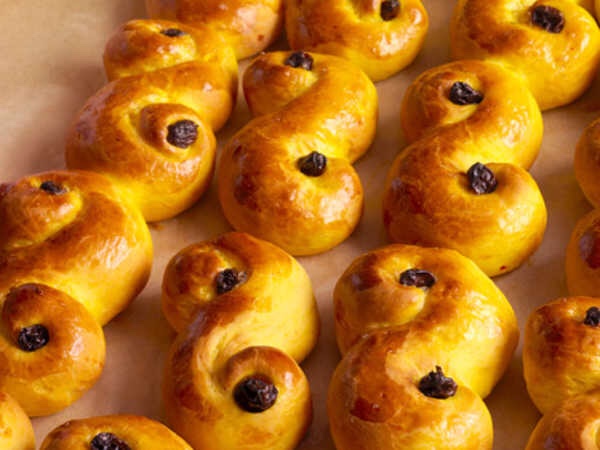
Window 14. Today’s word is ‘Lussekatt‘ which is a traditional saffron bun.
Generally, I love Swedish pastries but the lussekatt is not one of my favourites I’m sorry to say. I’m not a big fan of saffron. However, the sight and smell of the lussekatt screams Advent and Christmas in Sweden. The lussekatt, is a rich, spiced yeast-leavened sweet bun that is flavoured with saffron and usually contains raisins. In fact, saffron is a very popular ingredient at Christmas time with a whole cornucopia of baked goods being spiced with the expensive substance.
The lussekatt buns are baked into many shapes, of which the most common is a reversed S-shape. They are traditionally eaten during Advent, and especially on Saint Lucy’s Day, December 13. This could be the reason why it is called ‘lusse’ – a derivative of Lucy. However, there is a more sinister explanation.
In one theory, the lussekatt has its origins in Germany in the 1600’s. According to legend at that time, the devil used to appear as a cat, to torment children. To counteract this, people baked buns and colored them bright yellow to mimic the sun and scare away the devil. In West Sweden, the saffron buns were referred to as Devil’s buns (‘döbelskatt’) and the theory is that the name Lussekatt, comes from the word Lucifer. And the shape? Could it reflect a cat’s tail, or even the devil’s tongue?
Whatever the origin, the lussekatt remains a clear favourite in Sweden to eat at Christmas with pepparkaka and washed down with glögg.
If you’d like to bake your own lussekatt, you can find a recipe here
Window 13: Today’s word is ‘Lucia‘ – a light-bringing saint who is commemorated today.
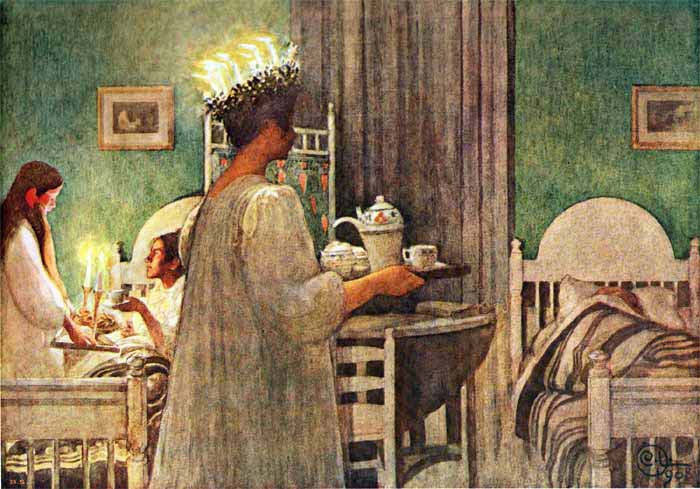
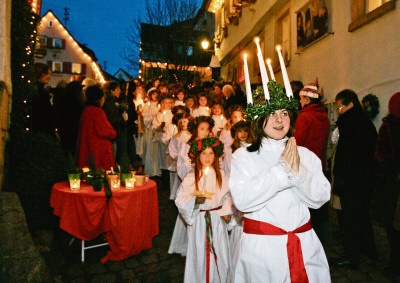
At the darkest time of the year, Santa Lucia (St Lucy) pays us a visit early in the morning. Lucia has candles in her hair and is surrounded by her handmaidens and boys, and shines light into the dark depths of our spirits. And slowly, slowly, the day awakens.
Santa Lucia is believed to have been a Sicilian saint who suffered a martyr’s death in Syracuse, Sicily around AD 310. She was seeking help for her mother’s long-term illness at the shrine of Saint Agnes, in her native Sicily, when an angel appeared to her in a dream beside the shrine. As a result of this, Lucia became a devout Christian and refused to compromise her virginity in marriage.
Officials threatened to drag her off to a brothel if she did not renounce her Christian beliefs, but were unable to move her, even with a thousand men and fifty oxen pulling. So they stacked materials for a fire around her instead and set light to it, but she would not stop speaking.
One of the soldiers stuck a spear through her throat to stop her, but to no effect. Soon afterwards, the Roman consulate in charge was hauled off to Rome on charges of theft from the state and beheaded. Lucia was able to die only when she was given the Christian sacrement.
The tradition of Santa Lucia is said to have been brought to Sweden via Italian merchants and the idea of lighting up the dark appealed so much that the tradition remained. The current tradition of having a white-dressed woman with candles in her hair appearing on the morning of the Lucia day started in the area around Lake Vänern in the late 18th century and spread slowly to other parts of the country during the 19th century.
The modern tradition of having public processions in the Swedish cities started in 1927 when a newspaper in Stockholm elected an official Lucia for Stockholm that year. The initiative was then followed around the country through the local press. Today most cities in Sweden appoint a Lucia every year. Schools elect a Lucia and her maids among the students. The regional Lucias will visit shopping malls, old people’s homes and churches, singing and handing out gingerbread.
So, it might be cold and dark outside, but remember – after darkness comes the light.
Window 11. Today’s word is ‘Nubbe‘ which is the colloquial word for an alcoholic shot known as snaps.
Nubbe, or snaps, is a really popular drink that Swedes enjoy at Christmas time. At its base, it is a strong spirit (30-38% alcohol content) called ‘brännvin’ which is distilled from potatoes or grain.
It can be plain and colourless, or flavoured with herbs and spices. Sometimes it can be sweet and infused with, for example blackcurrant, elderflower or raspberry. Others can be so bitter they make your toes curl – flavoured with for example aniseed, wort or wormwood. If it includes caraway or dill, it can according to EU patent protection be called akvavit.
A mouthful-size of ‘brännvin’ is called a snaps or a nubbe and it is drunk out of small glasses. Usually it is consumed when eating traditional food, and may also be accompanied by a ‘snapsvisa’ – a drinking song.
One popular drinking song at Christmas is called ‘Hej Tomtegubbar‘ which translates roughly as:
‘Hello goblins, fill your glasses and let’s be jolly together.
Hello goblins, fill your glasses and let’s be jolly together.
Our time is brief upon the earth, with many troubles and little mirth
Hello goblins, fill your glasses and let’s be jolly together.‘
After a few snapses, the party atmosphere usually begins – with more singing and speeches. For Swedes, snaps is such an important tradition that it is drunk not only at Christmas but at most festive times – such as Easter, Midsummer and autumn’s crayfish party.
According to The Swedish alcohol monopoly, Swedes have been flavouring their ‘brännvin’ since the 1500’s and the word ‘Nubbe’ as a slang word for snaps turned up first in 1892.
Window number 10. Today’s word is ‘Nobeldagen‘ which translates as ‘Nobel Day’.
Nobel Day is not actually anything to do with Christmas. However, it is a traditional part of the lead up to Christmas. Every year on 10 December, since 1901, the Nobel Prizes are awarded. The date commemorates the death of Alfred Nobel in 1896.
Nobel prizes are awarded in the 6 categories of Literature, Chemistry, Physics, Medicine or Physiology, Economics and Peace. All prizes are awarded in Stockholm, except the peace prize which is awarded in Oslo. Laureates receive a gold medal, a diploma and 10 million Swedish crowns.
Most laureates are happy to accept their prize and the accolade. However, Jean Paul Satre famously declined the Literature Prize in 1964, claiming he did not want to be institutionalized.
In 1974 he was joined by Le Duc Tbo who refused to accept the Peace Prize for his work to end the Vietnam War, saying ‘peace has not yet been established.’
In 1935, German journalist Carl von Ossietzky – a vocalcritic of Hitler- won the Peace Prize. This led Hitler to bar all Germans from accepting a Nobel Prize. Three German laureates were subsequentlyforced to decline their awards. However, they later were presented with their diplomas and medals.
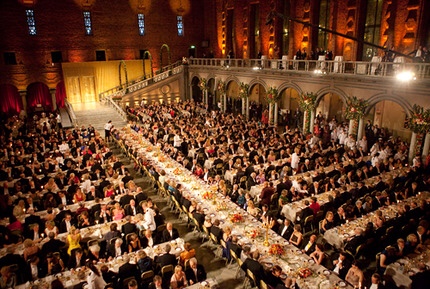
With celebratory lectures, conversations, ceremonies and concerts, Nobel Day culminates with a banquet in the Stockholm City Hall. The banquet lasts about 3 and a half hours and is televised. It is an extremely grand and formal occasion. Everything from the porcelain to the floral arrangements to the dresses, the entertainment and the menu are under scrutiny for the tv viewers.
The guests include not only the Nobel laureates and their families, but also Swedish royals and aristocrats, politicians, ministers, celebrities and other notable people. Even though there are 1300 guests, is virtually impossible for ordinary folk to get an invitation to the banquet. We have to enjoy it from afar, via the screens in our living rooms.
However exclusive the whole thing might be, it is still a welcome splash of glamour in the dark approach to Christmas. Stockholmers are also treated to the light festival called Nobel Lights, which takes place around the city.
Today, 30 April, is Walpurgis Eve, called Valborgsmässoafton in Swedish, or ‘Valborg’ for short. The name Walpurgis is taken from the eighth-century Saint Walburga, and in Sweden this day marks the arrival of spring.
In a cold, dark country like Sweden, residents have suffered through a long, miserable winter. So it is no surprise that the arrival of spring is an occasion to mark. On the evening of Valborg, Swedes usually gather to celebrate together.
The forms of celebration vary in different parts of the country and between different cities. However, essential celebrations include lighting a large bonfire, listing to choirs singing traditional spring songs and a speech to honour the arrival of the spring season. Some of the traditional spring songs are titled ‘Beautiful May – Welcome!’ and ‘Longing for the countryside – winter rushes out’. You can see a clip below.
Walpurgis bonfires are an impressive thing to see and are part of a Swedish tradition dating back to the early 18th century. At Walpurgis, cattle was put out to graze and bonfires lit to scare away predators.
The weather is often unpredictable on Walpurgis Eve. It can be sunny and warmish, or it can still snow on 30 April! Today looks like it’ll be a cold one.
Despite bad weather, Swedes still shiver around the bonfires and ironically celebrate the arrival of Spring.
Long before the Christianity swept over Europe, the Norse people celebrated the Midwinter Solstice in a festival called Yòl. (Yule/jul). Eventually this festival blended with Christmas and gave us many of the traditions we have today.
So, what are 5 ways in which the Norse traditions impacted Christmas?
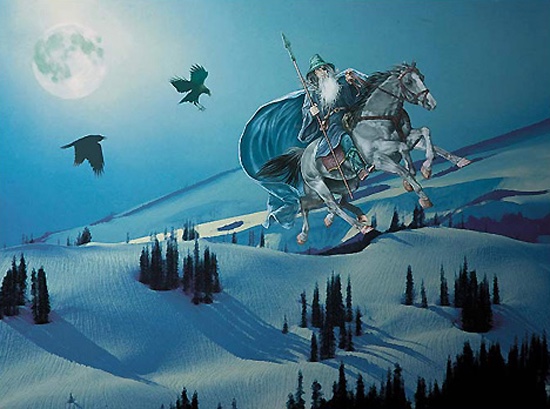
1) Father Christmas – Odin, King of the Norse Gods, was a bearded old man in a hat and cloak. He rode Sleipnir – an 8-legged horse – across the night sky and delivered gifts to those below. This morphed into the Christian St Nicholas, and 8 reindeer to complete the saga of Santa.
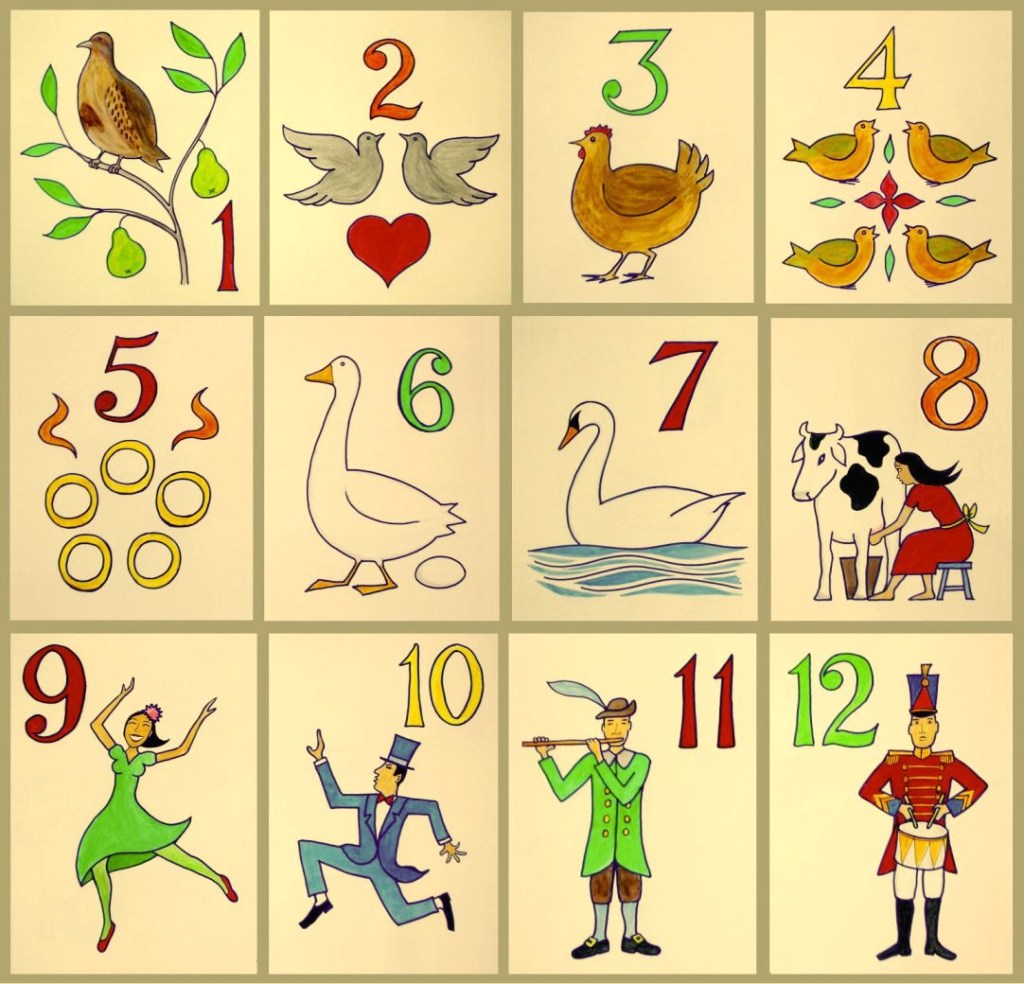
2) The Twelve Days of Christmas – the ancient Norse celebrated their midwinter festival for twelve days, beginning on the day of the winter solstice. It was believed that Odin rode the sky for these 12 days so it was forbidden to hang out laundry in case he got entangled. This was known as ‘the Great Hunt’.
3) Christmas Tree – many of us know that the indoor Christmas tree originates in Germany and was made popular in the Victorian era. However, it in fact pre-dates this. The Norse people believed that evergreens were the divine plant of their sun God Balder (the son of Odin) because they remained green though-out the winter. They took this as a sign that spring was advancing. To encourage the oncoming season, they would decorate the branches of the trees with ornaments, runes and offerings of food. With Christianity, these decorations became stars, and other biblical symbols.
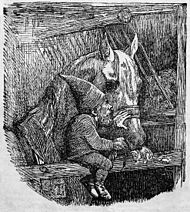
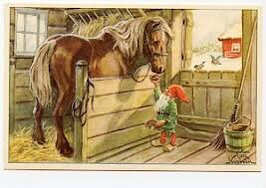
4) Christmas Elf – no story of Santa’s workshop is complete without his little helpers. In Norse mythology, there is the ‘nisse’ or ‘tomte’. These little creatures were small, bearded and wore little pointy hats. They were believed to live in the barns in the farmstead and they would guard the property and the inhabitants, and even fix broken things. They were loyal and industrious but you had to treat them with respect, otherwise their vengeance would be swift and angry. They also loved playing practical jokes and mischief, rather like the elves in Santa’s workshop. The word ‘elf’ comes from the Norse word álfar, which means ‘concealed people’.
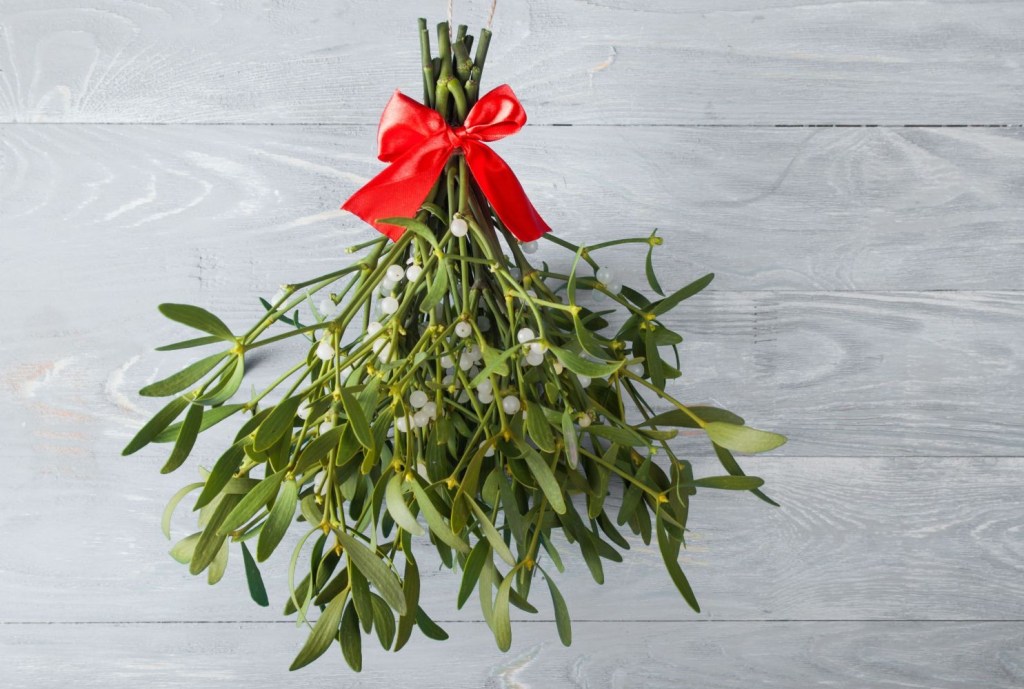
5) Mistletoe – ever kissed somebody under the mistletoe? In doing so, you have fulfilled a Norse legend. In the legend, the God Balder had been prophesied to die. His mother, Frigg, in desperation, secured an oath from everything that they would not hurt him. However, she forgot to ask the mistletoe. The envious God Loki carved an arrow out of mistletoe and killed Balder. Frigg’s tears of sorrow fell onto the mistletoe turning the red berries white, and resurrected her son. She then vowed to kiss anybody who passed underneath it, and the plant came to represent love and renewal.
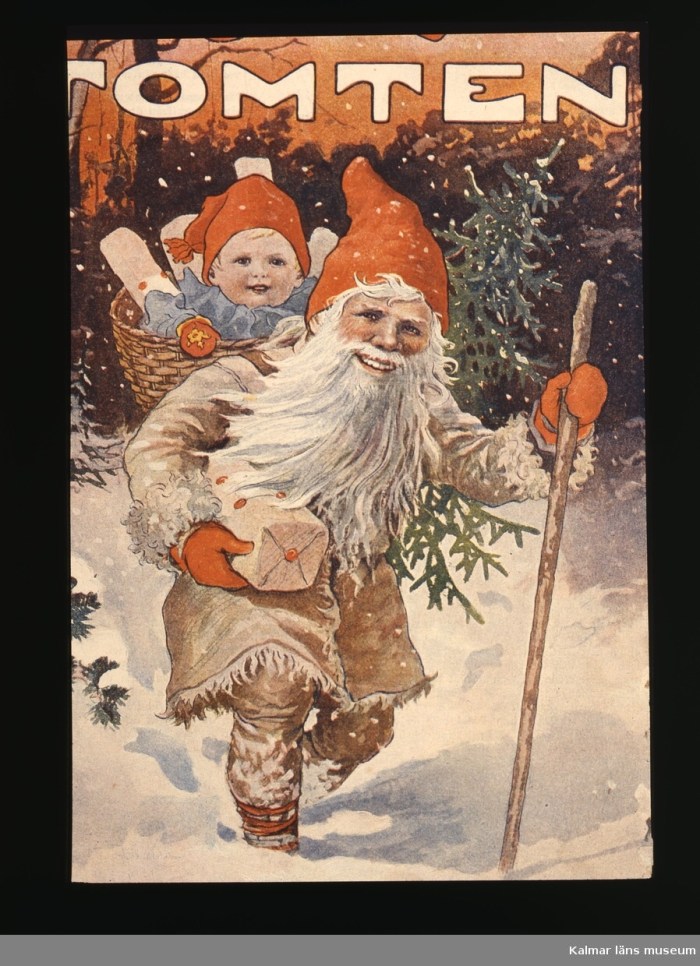
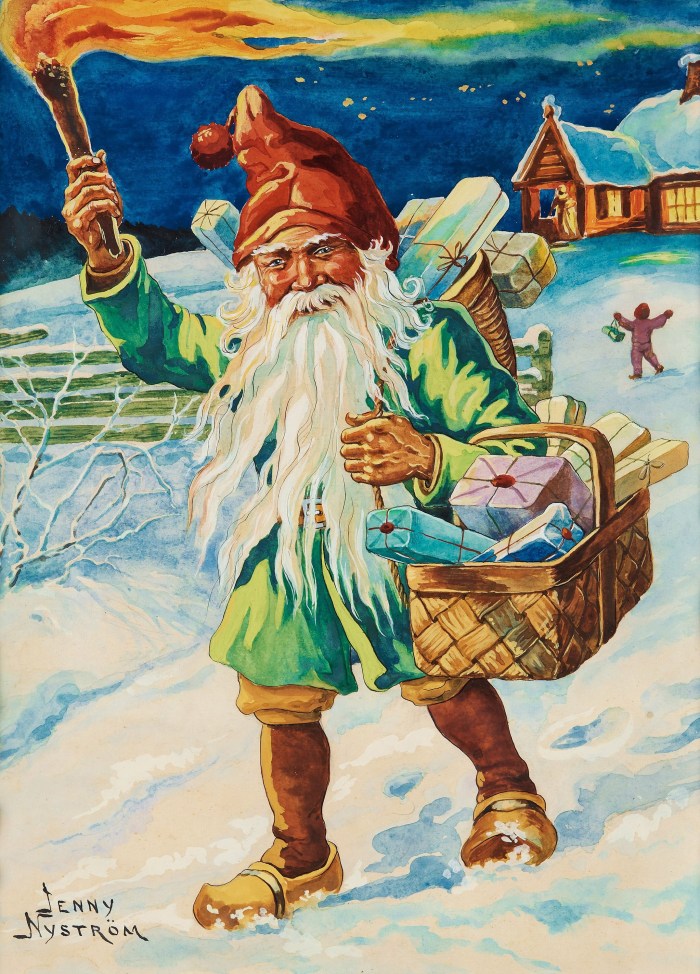
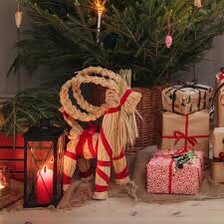
Another Norse influence on our Christmas celebrations is the Christmas Goat. The goat has lost its significance in most countries, but is still a symbol in Scandinavia, where it is a decoration made of straw. The goat originates in Norse tradition from the kid goat that was sacrificed in honour of Njord, the God of the Sea, the Weather and Prosperity. Later on, in Sweden, the Yule goat was believed to be an invisible spirit that would appear before Christmas to make sure that the holiday preparations were done correctly. Eventually, the goat took on the role of the gift giver, instead of or together with Santa Claus (called Jultomten in Swedish).
Other traditions that originate from the Norse jòl are the Christmas Ham, the Yule Log, the Yule Wreath, and Christmas caroling, or ‘wassailing’.
So, while the message of Christmas is the Christian story, many of the surrounding symbols and traditions are in fact from another source altogether.
Today is UNESCO World Book Day, to celebrate books and promote reading. The 23 April is a significant day as it commemorates the death of many famous writers such as William Shakespeare, Miguel de Cervantes and Inca Garcilaso de la Vega.
Every year a World Book Capital is nominated. The first one, in 2001, was Madrid, Spain. This year it is Guadalajara in Mexico.
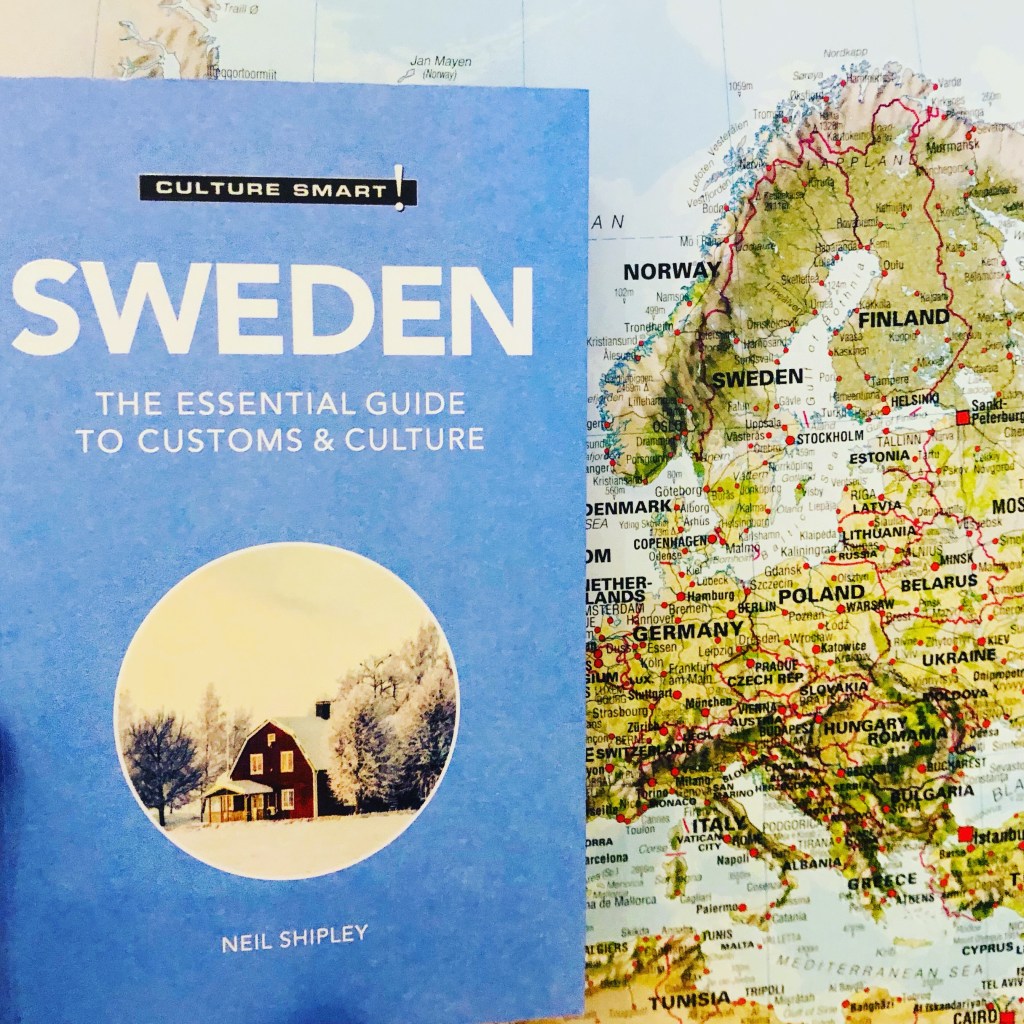
So today is a good day to buy a book, or to gift one. If you know anybody who is interested in learning about Sweden, or planning on visiting Sweden, then my guide book is a good match! I published it in 2021.
You can buy it on Amazon, Bokus, Akademibokhandeln and Adlibris amongst other online stores. Sweden, by Neil Shipley, published by Kuperard 2021. You can also buy it straight from the publisher at http://www.culturesmartbooks.co.uk
I still have a few copies left, so if you’d like to buy a signed copy, just let me know!
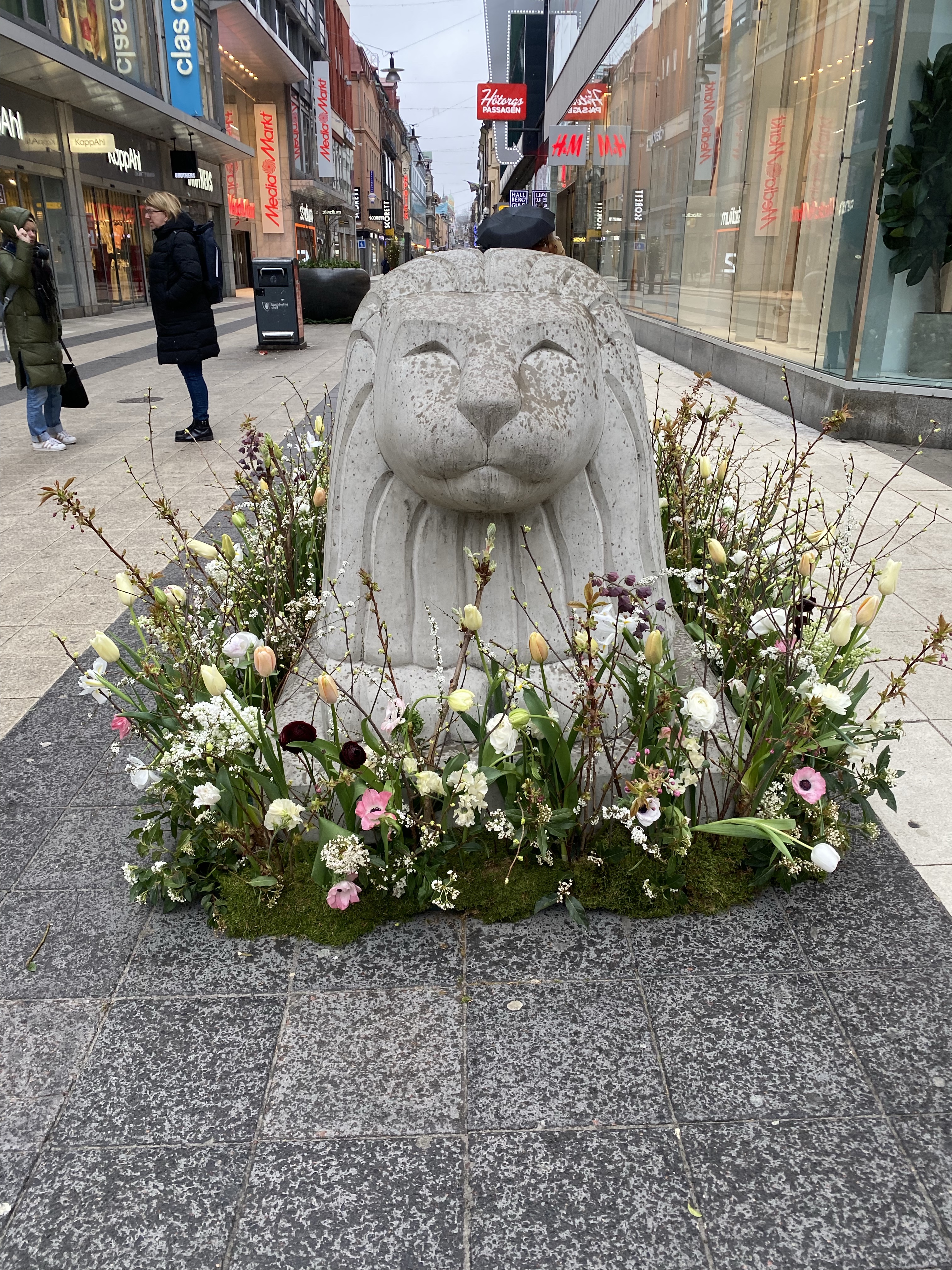
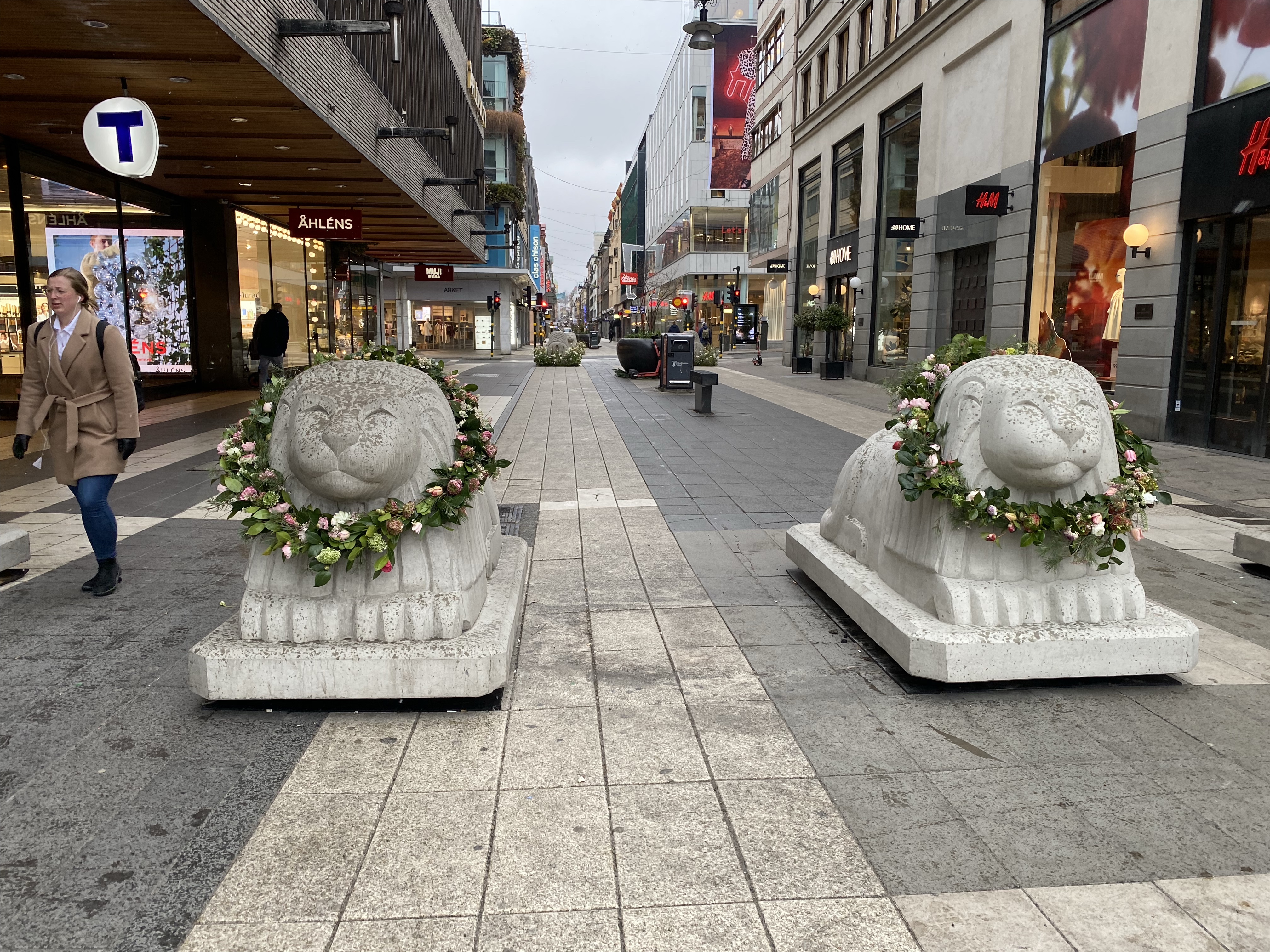
5 years ago today, Sweden experienced a hateful terrorist attack. Today, flowers have been placed along the city street where it occurred. My thoughts go to those who were murdered, and their families and friends.
If you would like to read my post from that attack 5 years ago – here it is again….
At 2.30pm yesterday, a masked man stole a delivery truck from outside of a restaurant. The delivery man tried to stop the thief by standing in front of his truck. However, the thief pushed over the driver, picked up speed and proceeded to drive zig zag down Stockholm’s main pedestrian shopping street, ploughing into people as he went. The truck’s final destination was one of Sweden’s largest department stores, into which it smashed in a billowing cloud of smoke.
Like everybody else I was really shaken up by this act of violence. I, and my nearest and dearest, were all in safety and my phone rang and beeped frenetically as we contacted and reassured each other.
Stories reached me about friends being locked into their offices or hiding out in shops and restaurants. The streets were awash with armed police, and the whole city was shut down within 20 minutes – trains, buses and the underground were all stopped and roads were cordoned off as residents and tourists were rapidly ushered out of the city center.
In the midst of the chaos, Stockholmers reached out to each other in support. People opened their homes to provide sanctuary to each other, cafes provided food and beverages, social media was flooded with people offering to help and offering protection. In this emergency, love prevailed – which was moving and heart-warming. I myself was in a gym, and the doors were locked. The staff went straight to action providing us with support and offering food and drink and unscheduled training classes for those who wanted a distraction.
The latest news at time of writing this blog is that 4 people and 1 dog were killed, and 15 seriously injured. The driver has been arrested. Another person is in custody believed to have some connection to the driver. Border control has been tightened up and there are still disturbances in local traffic.
Stockholm now joins the long line of cities such as London, Berlin, St Petersburg, Paris and Nice, who have suffered under terrorist attack.
No matter who is responsible for this act of violence, be it an organisation or an individual, we must never give into them. The nature of terrorism is to spread fear by using intentionally indiscriminate acts of violence. It’s its indiscriminate approach that makes it difficult to predict and we are often powerless to influence it. Therefore we should do what we do best – not bow down to it but stand up and keep going. It is by living our lives in our open, democratic societies that we win.
I sincerely hope that Stockholm does not become a fearful, suspicious, closed city. This place that I love is a target because of its freedom and that is a freedom we should protect by continuing to live our lives.
Terror will never win. It is designed to exploit our human fear. It is the ultimate act of intimidation. We must not let it win. My heart goes out to the victims and their families. Yesterday, we showed love to each other. Let’s continue to do that. We do not need more hate.
Since March 8th was International Women’s Day, I am republishing my series on Great Swedish Women, past and present. I hope you want to join me in celebrating them.
Part 5 – the vengeful Viking Blenda.
In the county of Småland in Southern Sweden, there is a legend about a brave Viking woman named Blenda.
According to legend, the menfolk of Småland were at war in Norway, leaving the women and children alone and defenceless. The Danes learned of this and chose this moment to invade and attack the region. Blenda was a woman of noble descent and she decided to rally the hundreds of women from Albo, Konga, Kinnevald, Norrvidinge and Uppvidinge. The women armies assembled on the Brávellir, which according to Smålandish tradition is located in Värend.
The women approached the Danes and told them how much they were impressed with Danish men. They invited the men to a banquet and provided them with food and drink. After a long evening, the Danish warriors fell asleep and the women killed every single one of them with axes and staffs.
When the king returned, he bestowed new rights on the women. They acquired equal inheritance with their brothers and husbands, the right always to wear a belt around their waists as a sign of eternal vigilance and the right to beat the drum at weddings and to wear armour.
There have been various disputes about the validity of this legend, if and when it happened. One theory is that it happened around the year 500. At this time, female soldiers existed in Sweden. Called Shieldmaidens, three hundred are known to have fought during the great Battle of Bråvalla in 750. If you’ve seen the successful series ‘Vikings’, you will be familiar with these women.
Blenda is perhaps the first known woman in a long line of strong Swedish women who defend themselves from aggressors and contribute to better equal rights between the sexes.