Great Swedish Women Part 6 – The Activist

Since March 8th,  I have been republishing a series to celebrate Great Swedish Women, past and present: women with strength and passion, women who create change.

aleksa

Part 7 – transactivist, journalist and actor Aleksa Lundberg.

Aleksa Lundberg was born with the wrong body. She was born with a boy’s body and at the age of 22, she underwent corrective surgery and became physically a woman. She is the first actor in Sweden to have undergone gender reorientation. She is a strong, proud Swedish woman. But her transition hasn’t necessarily been smooth sailing – as a transwoman, she has experienced hate, disgust, rejection and ridicule.

Today Aleksa is a transactivist and works hard to change society’s view about transgender men and women and to reinforce the trans perspective in society and politics. She is a vocal representative and a fierce, sometimes provocative, oponent who is frequently seen in debate programs on television and in other media.

Aleksa’s political message is actually very simple. She wants to strengthen the rights of transgender people and also change the whole of society. Everybody, regardless of gender, race, sexual orientation, handicap should feel accepted, needed and loved. In a recent interview, she says:

‘Our sexuality doesn’t choose men or women. In the end, it’s about choosing a person. For me, it’s more about politics than romance that love is the the meaning of life. I hope that we can have a world where everyone actually understands that.’

Who can argue with that? Love is the key. Long live Queen Aleksa.


Great Swedish Women -Part 5 – The Legend 

Since March 8th was International Women’s Day, I  am republishing my series on Great Swedish Women, past and present. I hope you want to join me in celebrating them.

Part 5 – the vengeful Viking Blenda.

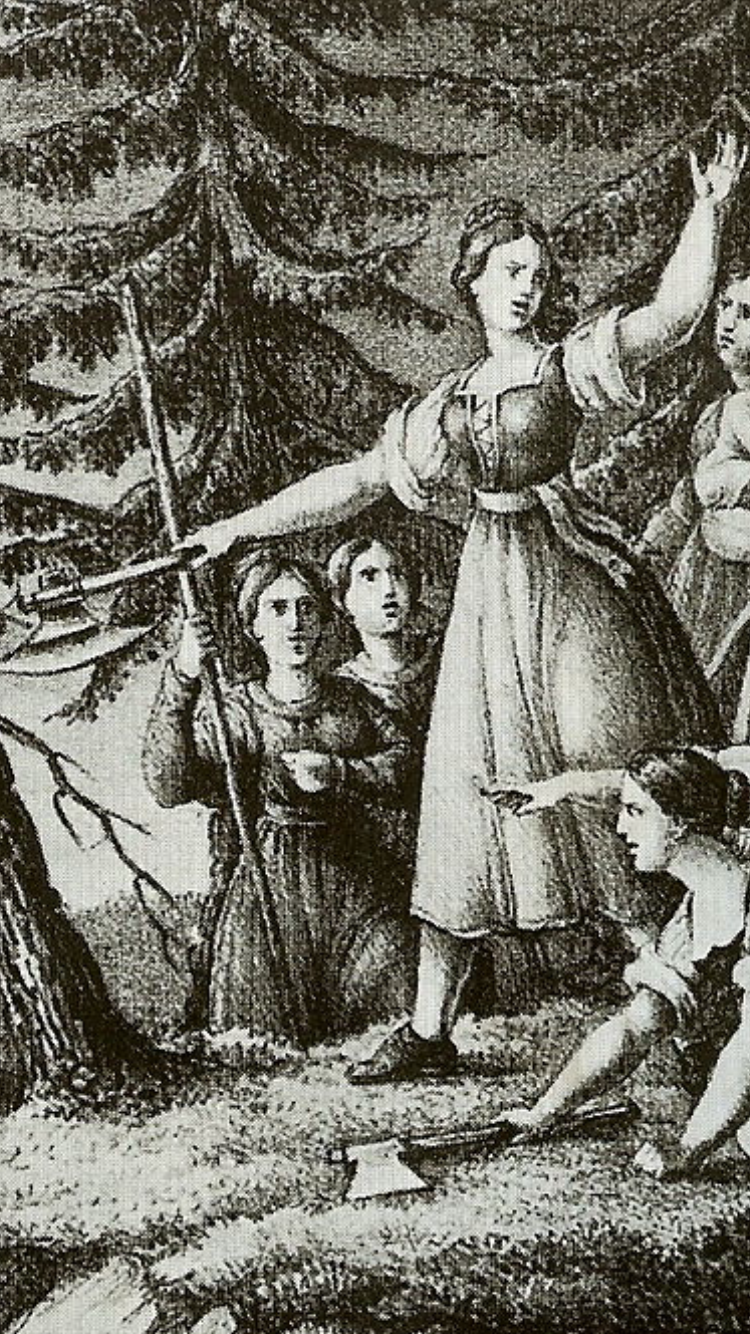
In the county of Småland in Southern Sweden, there is a legend about a brave Viking woman named Blenda.

According to legend, the menfolk of Småland were at war in Norway, leaving the women and children alone and defenceless. The Danes learned of this and chose this moment to invade and attack the region.  Blenda was a woman of noble descent and she decided to rally the hundreds of women from Albo, Konga, Kinnevald, Norrvidinge and Uppvidinge. The women armies assembled on the Brávellir, which according to Smålandish tradition is located in Värend.

The women approached the Danes and told them how much they were impressed with Danish men. They invited the men to a banquet and provided them with food and drink. After a long evening, the Danish warriors fell asleep and the women killed every single one of them with axes and staffs.

When the king returned, he bestowed new rights on the women. They acquired equal inheritance with their brothers and husbands, the right always to wear a belt around their waists as a sign of eternal vigilance and the right to beat the drum at weddings and to wear armour.

There have been various disputes about the validity of this legend, if and when it happened. One theory is that it happened around the year 500. At this time, female soldiers existed in Sweden. Called Shieldmaidens, three hundred are known to have fought during the great Battle of Bråvalla in 750. If you’ve seen the successful series ‘Vikings’, you will be familiar with these women.

Blenda is perhaps the first known woman in a long line of strong Swedish women who defend themselves from aggressors and contribute to better equal rights between the sexes.

Great Swedish Women Part 2 – The Prosecutor

March 8th was International Women’s Day.

I am republishing my series on Great Swedish Women, past and present: women with strength and passion, women with a voice, women who create change.

For seven days, one per day. I hope you want to join me in celebrating them.

massifritz

Part 2 – Swedish lawyer and prosecutor Elisabeth Massi Fritz.

On 24 June 1999, a 19 year old woman by the name of Pela Atroshi was murdered in a honour-related crime. The murder occured when she was visiting her family in Irak. Killed by her two uncles and her father, the crime was witnessed by Pela’s mother Fatima and sister Breen. The case was concluded with life time sentences for the two uncles. Pela’s father lives in Irak, where Pela is buried in an unmarked grave for bringing dishonour to her family.

In the court, in Sweden, Breen testified against her uncles which led to the conviction. She was represented by lawyer Elisabeth Massi Fritz.  After this case, Elisabeth Massi Fritz became known as one of Sweden’s leading lawyers and prosecutors, and Sweden’s only lawyer specialising in honour crimes. She stands up for the victims of crime, many of them women, and is an active contributor in the debate against honour crimes in Sweden.

Born in Motala, Sweden, to Christian Syrian parents, Elisabeth Massi Fritz personally gained insight into honour culture as she was not allowed to have a boyfriend or to move away to study. At the age of 19, she defied her family and moved to Stockholm to study law. 

Today, she runs a legal firm where she employs only female staff and where they specialise in defending the victims of crime and prosecuting the perpetrator. She has worked on many high profile cases, such as the rape cases against plastic surgeon Carl-Åke Troilius and the Chief of Police Göran Lindberg, both of which resulted in prison sentences for the accused.

In 2017, she was one of the front-runners in the Swedish MeToo movement and for the change of the Sexual Crime Act in 2018. (Which was changed to a law of consent).

Elisabeth Massi Fritz continues to fight injustice and is the champion of the victim of crime.


Great Swedish Women Part 1 – The Catalyst

Today, March 8th, is International Women’s Day.

In support, I am re publishing my series on Great Swedish Women, past and present: women with stength and passion, women with a voice, women who create change.

For seven days, I will write about these Great Swedish Women, one per day. I hope you want to join me in celebrating them.
Fredrikabremer

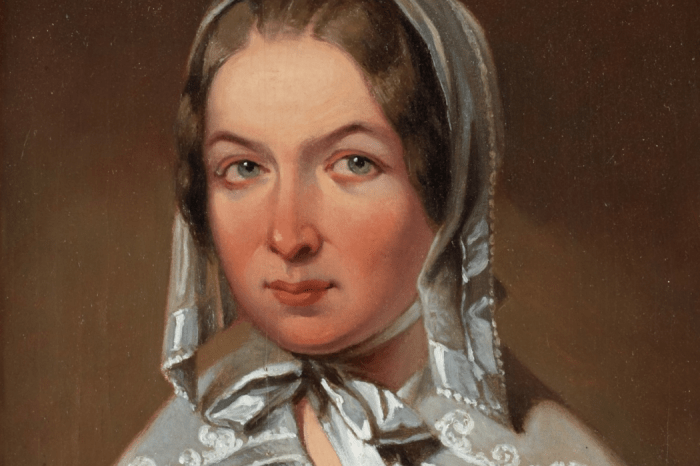
First out is the 1800’s writer and feminist reformer Fredrika Bremer, a kind of Swedish Jane Austen and one of the catalysts of the early feminist movement in Sweden.

Many of the women’s rights that we take for granted in Sweden today did not exist in the Fredrika Bremer’s time. For example, in 1800’s Sweden, women were not free to educate themselves as they liked, marry as they liked, live as they wanted, to have economic independence or to vote in elections. Married women were controlled in all manner by their husbands, unmarried women by their closest male relative.

Fredrika Bremer was born into this kind of society in 1801 in Åbo, Sweden, which today is part of Finland. At the age of three, her family moved to Stockholm where Fredrika and her sisters were raised to marry well.

Fredrika found the limited and passive family life of Swedish women of her time suffocating and she described her family as “under the oppression of a male iron hand’. Fredrika never was forced under the shackles of marriage, so had a certain level of independence inaccessible to married women at that time.

Throughout her adult life, she became a world traveler, an accomplished author (at first anonymously) and a political activist. She was very interested in social reform regarding gender equality and social work and she participated actively in debates around women’s rights in Sweden.

Fredrika Bremer was a catalyst of the first real feminist movement in Sweden. There is much in modern day Sweden to thank her for. In 1853, she started by co-founding the ‘Stockholm Women’s Fund for Childcare’ and the following year, the ‘Women’s Society for the Improvement of Prisoners’. 

However, it was in her novel, Hertha (1856) that she issued in most change, making it probably her most influential literary work. In the book, she wrote about the lack of freedom for women, which subsequently raised a debate in the parliament called “The Hertha debate”. This directly contributed to a new favourable law for adult unmarried women in Sweden in 1858, and was a starting point for the campaign for women’s rights in Sweden. Hertha also raised the debate of higher formal education for women and, in 1861, the University for Women Teachers was founded by the Swedish state.

In 1860, Fredrika helped to fund Tysta Skolan, a school for the deaf and mute in Stockholm. Now an established and respected citizen and patron, she supported giving women the vote in the electoral reforms of 1862. In the same year, women of legal age were granted this in municipal elections in Sweden. The first real women’s rights movement in Sweden, the ‘Fredrika Bremer Association’, founded by Sophie Adlersparre in 1884, was named after her, 19 years after her death.

Fredrika Bremer’s leaves a legacy of equality and autonomy behind her. Her legacy extends far beyond Sweden’s borders. Not only is she recognised as an influencial writer and reformer, but the town of Frederika in Bremer County Iowa, USA is named after her.


.

Vasaloppet in Sweden – the world’s longest cross country ski race


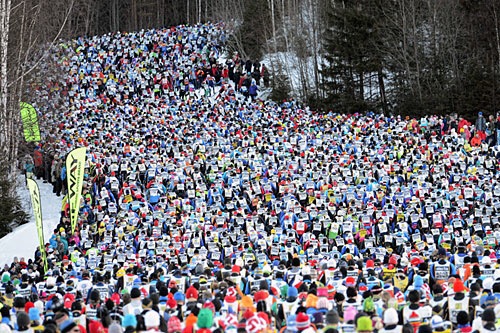
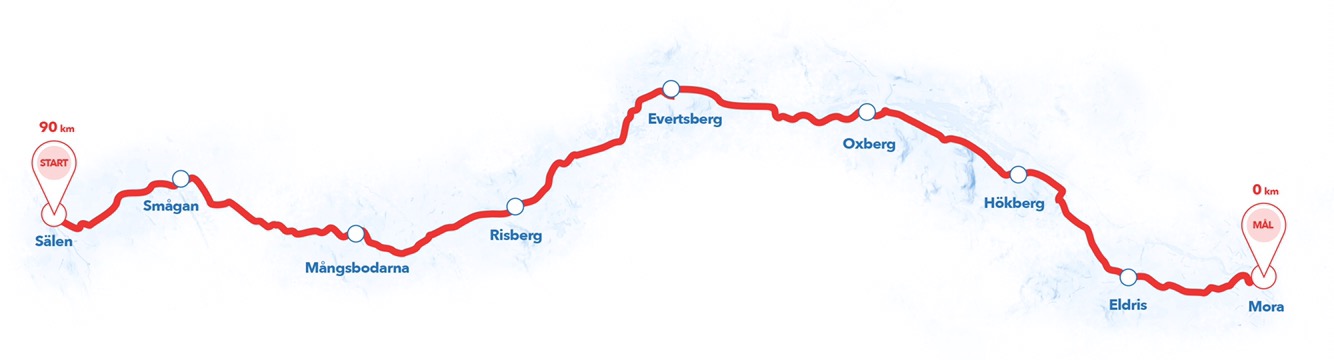
Tomorrow, the world’s longest cross country ski race takes place in Sweden. Called Vasaloppet, it entails participants skiing 90 kilometers from start to finish. It’s an extremely popular international race which is broadcast live on tv. When tickets to participate are released, they usually sell out in 15 minutes – it’s that popular.

The first Vasalopp was in 1922 and takes place annually, the first Sunday in March and it is a first sign of spring.  Normal participants can take up to 12 hours to complete the gruelling course, but the elite athletes do it in a comparatively speedy time of around 4 hours.

So why is this race called ‘Vasaloppet’? Well, it takes its name from a Swedish king. The race commemorates the escape to Norway, through the forest, of King Gustav Vasa in 1521. Legend has it that he carried out the long journey on skis,  but experts believe he more likely completed this escape on snow shoes. Nevertheless, out of this legend sprung the race which is so popular today. ‘Vasa’ after the king, and ‘loppet’ meaning ‘the race’.

Modern day skiers don’t see the experience as an escape, they see it as a challenge and for many of them it’s a rite of passage.

And as you sit watching the TV comfortably from the sofa, with tea and toast, you take vicarious pleasure in this long, amazing Swedish race.

It will be broadcast tomorrow from 7.30 on SVT ( Swedish TV). You can also check it out on the internet in the streaming service SVT Play.

Swedish ‘en’ or ‘ett’ – baked goods or a butt?

One of the difficult aspects of learning Swedish is knowing if the noun is prefaced with the indefinite article ‘ett’ or ‘en’. For example ‘a house’ is ‘ett hus’ but ‘a flat’ is ‘en lägenhet’. It’s important to know the difference as it affects the plural and the definite forms of the words. Mixing them up is a mistake many foreigners make, even after 20 years of living in Sweden. (guilty!).

About 20% of Swedish nouns are ‘ett’ nouns, so if in doubt guess ‘en’. However, it’s not that easy, as most of the commonly-used nouns begin with ‘ett’.

To add some spice to the pot, some nouns can be both ‘ett’ words and ‘en’ words, but the meaning of the word changes. Here are some examples:

Bak – ett bak is baked goods, but en bak is a butt/backside. So you see why the expression ‘I love grandma’s ‘bak’ can go very wrong!

Bål – ett bål is a bonfire but en bål is a torso or a punch (as in drink)

Barr – ett barr is a needle (eg from a pine tree), men en bar is a bar (gymnastics equipment)

Ton – ett ton is a tonne but en ton is a note (as in music)

Lag – ett lag is a team but en lag is a law or a syrup

Slam – ett slam is sludge but en slam is a term in a game of cards

Lager – ett lager is a layer but en lager is a lager (beer)

Vak – ett vak is a wake but en vak is a hole in ice

Klöver – ett klöver is a club (in playing cards) but en klöver is clover/shamrock

Poäng – ett poäng is point as in a score, but en poäng is point as in point of view

Nöt – ett nöt is an idiot, but en nöt is a nut (for example hazelnut)

Lår – ett lår is a thigh, but en lår is a crate

Can you think of any more examples to add to the list?

Swedish Life Balance

It’s said that Swedes have an enviable work life balance and the festive season is no exception.

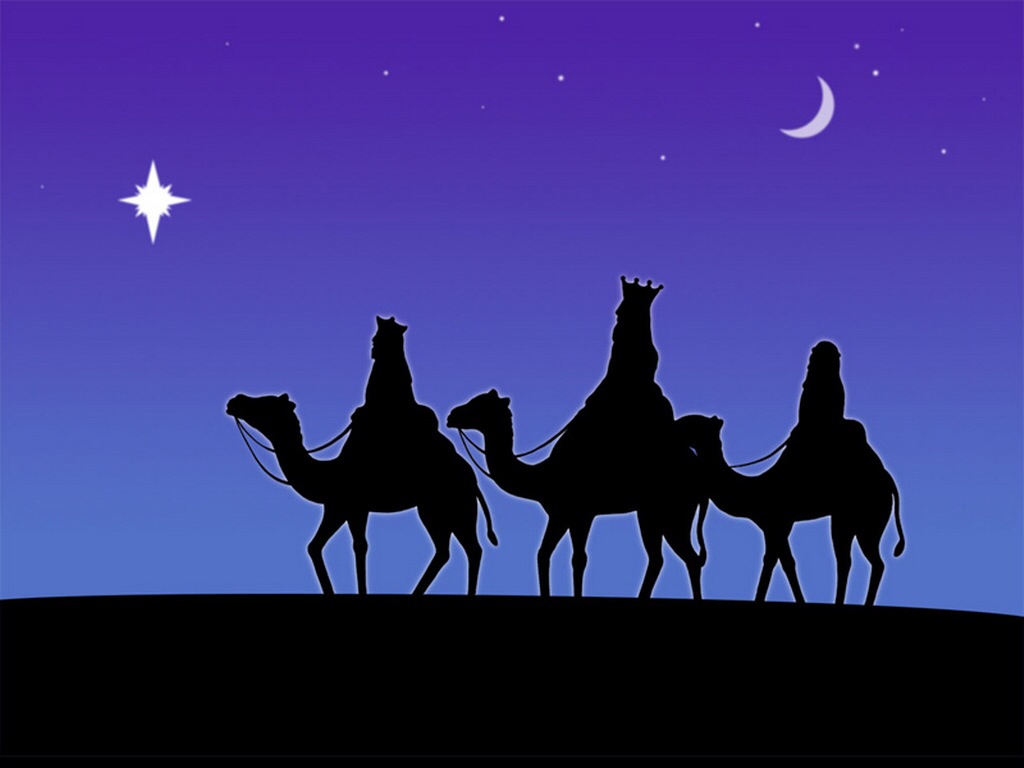
Similar to a few countries, today – 6 January – is a bank holiday. In Sweden it’s called ‘Trettondag jul’ which translates as ’13th day of Christmas’. In other places, it’s known as Kings’ day, Day of the three magi, or epiphany.

Biblically it signifies the arrival of the three wise men and the baptism of Jesus. Secularly, it means another day off for most people.

In Sweden, it is the official end of the Christmas season, although the Christmas tree and decorations might stay up for a little longer.

There’s a great Swedish word that you frequently hear after these long breaks – a person might describe themselves as ‘utvilad‘. This translates as ‘thoroughly rested’, and is essential to survive the long, dark winter season.

Advent Calendar – Dec 24: Kalle Anka

Window 24. As I am following the Swedish system of advent calendars, today is the last window, not the 25th as in the UK. So here is the final word: Kalle Anka. This is the Swedish name for Donald Duck – a Disney character with a strong, and unexpected, connection to Swedish Christmas.

Traditional Christmas celebrations on Christmas Eve in Sweden get off to a slow start usually. It all begins with a Christmas breakfast, consisting of rice porridge, wort bread, ham and Christmas cheese, amongst other things. After breakfast, some people go for a walk, some go to church, others begin the preparation for the Christmas julbord.

When to eat julbord differs from family to family. For some, it’s at lunch time, for others it more towards late afternoon. One surprising time marker is Kalle Anka (Donald Duck).

Every Christmas Eve since 1960, the Disney show ‘From All of Us to All of You’ featuring Donald Duck and his friends has been broadcasted on Swedish television at 3pm. Every single year. A very weird tradition for someone like me who grew up listening to the Queen’s speech on Christmas Day at 3pm. In the UK we have the Queen. In Sweden, Donald Duck.

So the discussion in Swedish homes is ‘should we eat before or after Kalle?’.

Today, Kalle Anka is watched as a sentimental tradition, or as background noise on Christmas Eve. But in the 1960’s when it began, it was the only time of the year that cartoons were shown on tv, so it was a Christmas treat. Since it’s been broadcast for almost 60 years, it is an integral part of what many Swedes associate with Christmas.

After Kalle Anka och julbord, it’s time for a visit from Tomten with gift-giving. This is followed usually by more food and drink. Some people conclude the day with a Midnight service at their local church.

Christmas is, like many places around the world, a time of overconsumption. Enormous amounts of food are left over and eaten during the following days.

In Sweden, Christmas Day and Boxing Day are both Public holidays – and the official end of Christmas is January 13th. Then it is time to traditionally throw out the Christmas tree. The lights in the windows have usually disappeared by February.

And as the daylight slowly returns to Sweden, people start planning for the lighter and warmer time of the year. And Christmas fades into memory…until next December.

Advent Calendar – Dec 22: Tomten

Window 22. Today’s word is ‘Tomten‘ – who is the Swedish equivalent of Santa Claus.

Around the world, Santa is based on the mythology of St Nikolas – the Greek/Turkish patron saint who’s legend morphed in the USA from the Dutch immigrants’ Sinterklaas to the jolly figure who rewards good children that we see today.

The Swedish symbol of Tomten is partially based on St Niklas and the American depiction of Santa Claus. However, he is also based on a goat and a mythical sprite.

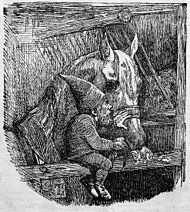
Let’s travel back to rural Sweden hundreds of years ago. Here, in the countryside, Tomten was a kind of sprite (hob, gnome, pixie) who lived on the farm and made sure that the farm had good luck.

Tomten was described as a little man, dressed in sackcloth and with a beard. He usually lived in the barn and was shy, mischievous, and irritable – and also vengeful. To keep Tomten happy, the farmer would leave out rice porridge for him to eat – a food that became known as ‘tomtegröt’ and that is still eaten for Christmas breakfast in Sweden today.

With industrialization in the late 1800’s, Sweden started to become inspired by the German St Nicholas, and in modern minds he merged with the rural sprite to become ‘jultomte’ – the gift-bearing sprite.

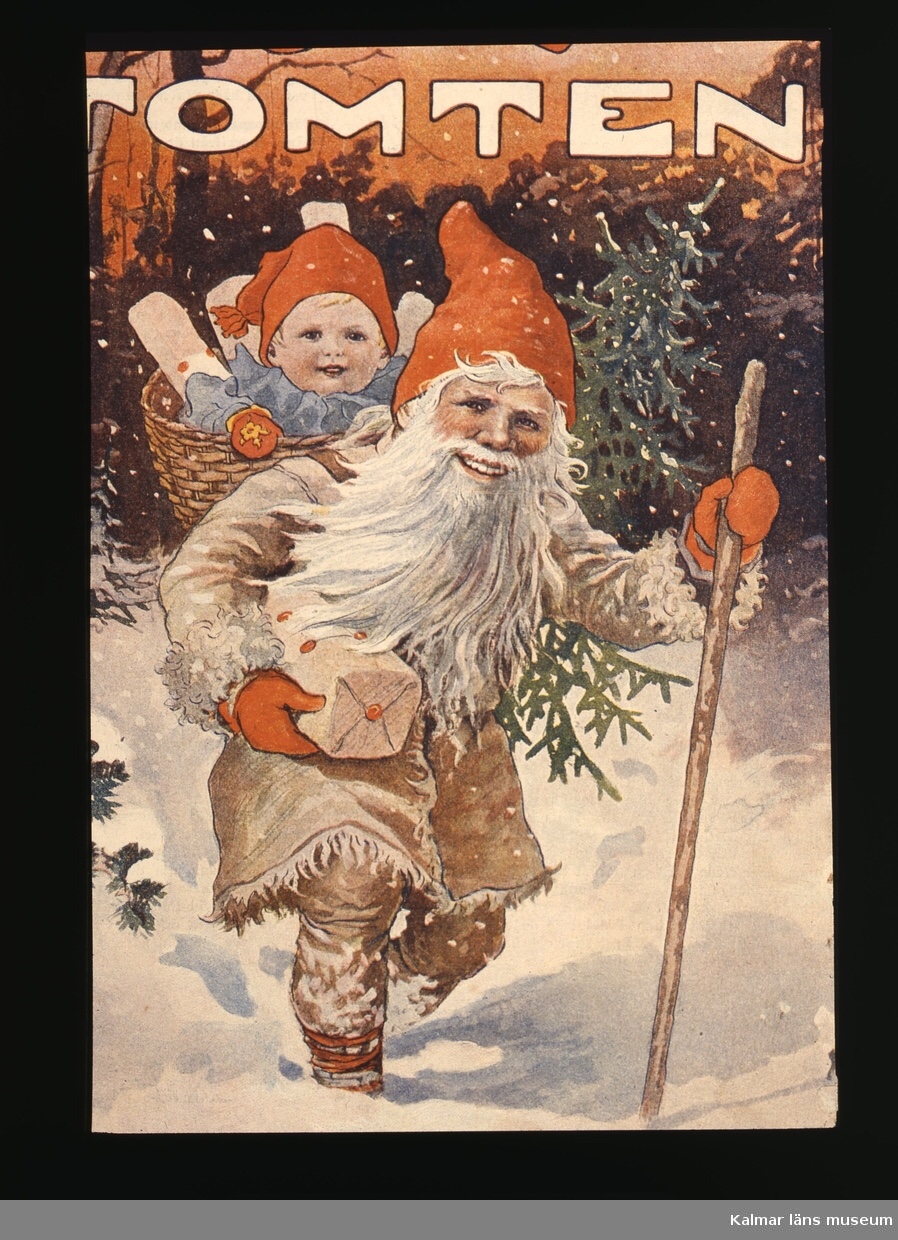
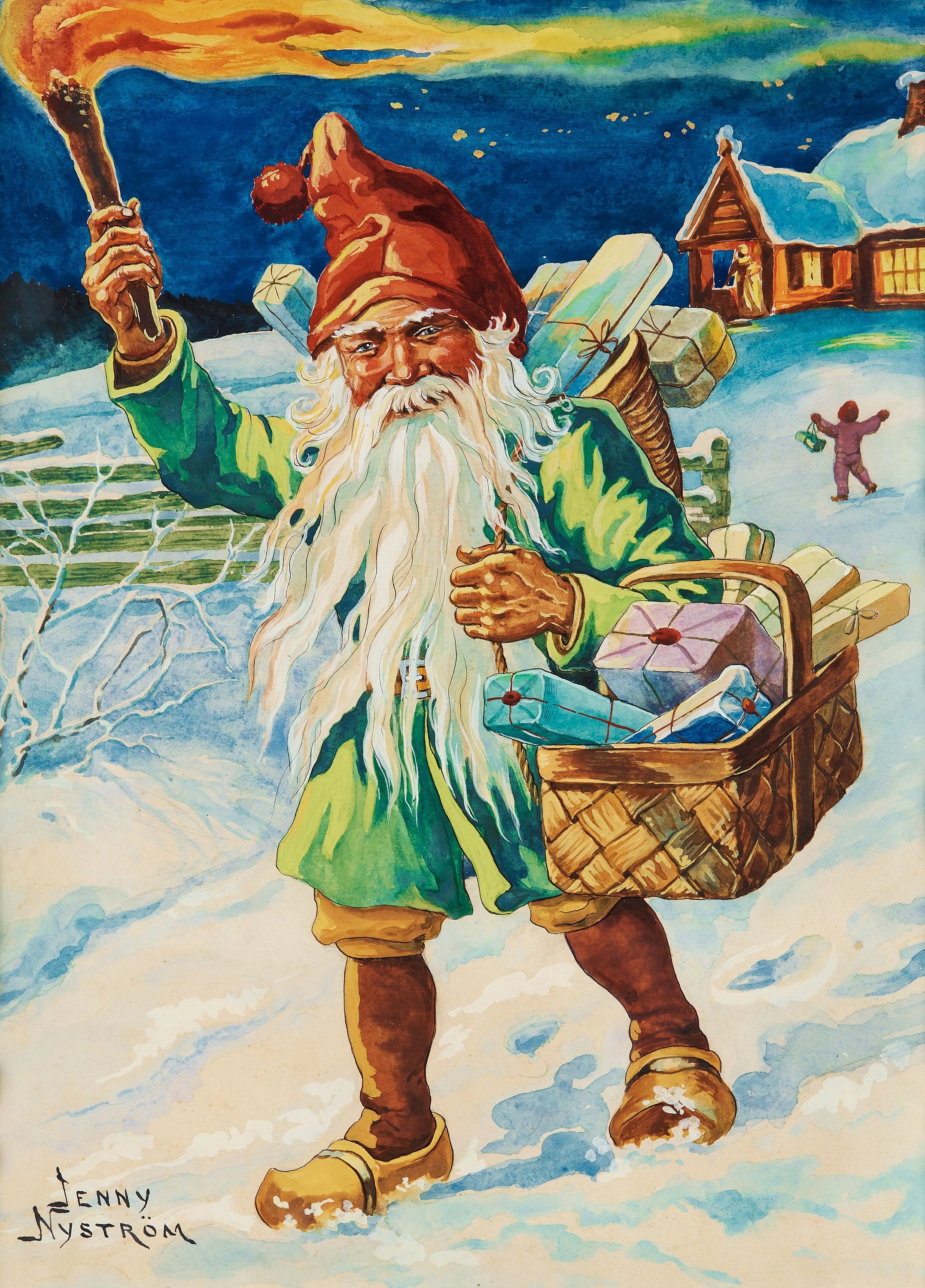
Popular Christmas cards by Swedish artist Jenny Nyström depicted this new version of Tomten in 1874 and strongly influenced the Swedish way of seeing jultomte. He was dressed in red hat, with a fluffy white beard. He is also seen to have many little helpers – known as ‘tomtenissar’ (a kind of elf).

And in 1881, a poem by Viktor Rydberg called Tomten strongly cemented his transformation and associated the figure with mid-winter and Christmas time.

Prior to this concept of Jultomte/Tomten, gifts were brought in Sweden by the Christmas goat. Straw goats are still a part of Christmas decorations in Sweden and can be found hanging in Christmas trees or standing at the foot of the tree.

In Sweden today, Tomten arrives on Christmas Eve, usually in the late afternoon. He delivers gifts to families, usually with the introduction of ‘Ho, Ho, Ho are there any good children here?’

Strangely, he always seems to arrive just when a member of the family (often dad) has gone out to the shops or gone for a walk.

Advent Calendar – Dec 22: Tomten

Window 23. Today’s word is ‘Tomten‘ – who is the Swedish equivalent of Santa Claus.

Around the world, Santa is based on the mythology of St Nikolas – the Greek/Turkish patron saint who’s legend morphed in the USA from the Dutch immigrants’ Sinterklaas to the jolly figure who rewards good children that we see today.

The Swedish symbol of Tomten is partially based on St Niklas and the American depiction of Santa Claus. However, he is also based on a goat and a mythical sprite.

Let’s travel back to rural Sweden hundreds of years ago. Here, in the countryside, Tomten was a kind of sprite (hob, gnome, pixie) who lived on the farm and made sure that the farm had good luck.

Tomten was described as a little man, dressed in sackcloth and with a beard. He usually lived in the barn and was shy, mischievous, and irritable – and also vengeful. To keep Tomten happy, the farmer would leave out rice porridge for him to eat – a food that became known as ‘tomtegröt’ and that is still eaten for Christmas breakfast in Sweden today.

With industrialization in the late 1800’s, Sweden started to become inspired by the German St Nicholas, and in modern minds he merged with the rural sprite to become ‘jultomte’ – the gift-bearing sprite.

Popular Christmas cards by Swedish artist Jenny Nyström depicted this new version of Tomten in 1874 and strongly influenced the Swedish way of seeing jultomte. He was dressed in red hat, with a fluffy white beard. He is also seen to have many little helpers – known as ‘tomtenissar’ (a kind of elf).

And in 1881, a poem by Viktor Rydberg called Tomten strongly cemented his transformation and associated the figure with mid-winter and Christmas time.

Prior to this concept of Jultomte/Tomten, gifts were brought in Sweden by the Christmas goat. Straw goats are still a part of Christmas decorations in Sweden and can be found hanging in Christmas trees or standing at the foot of the tree.

In Sweden today, Tomten arrives on Christmas Eve, usually in the late afternoon. He delivers gifts to families, usually with the introduction of ‘Ho, Ho, Ho are there any good children here?’

Strangely, he always seems to arrive just when a member of the family (often dad) has gone out to the shops or gone for a walk.