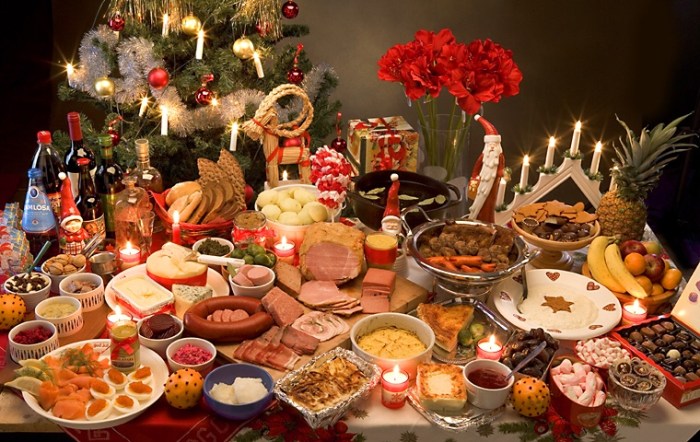
The top 5 most disgusting Swedish foods

Like everything, food is a very personal preference. Swedish food in general is great, I think. That said, here is my list of the 5 most revolting foods that Sweden has produced.
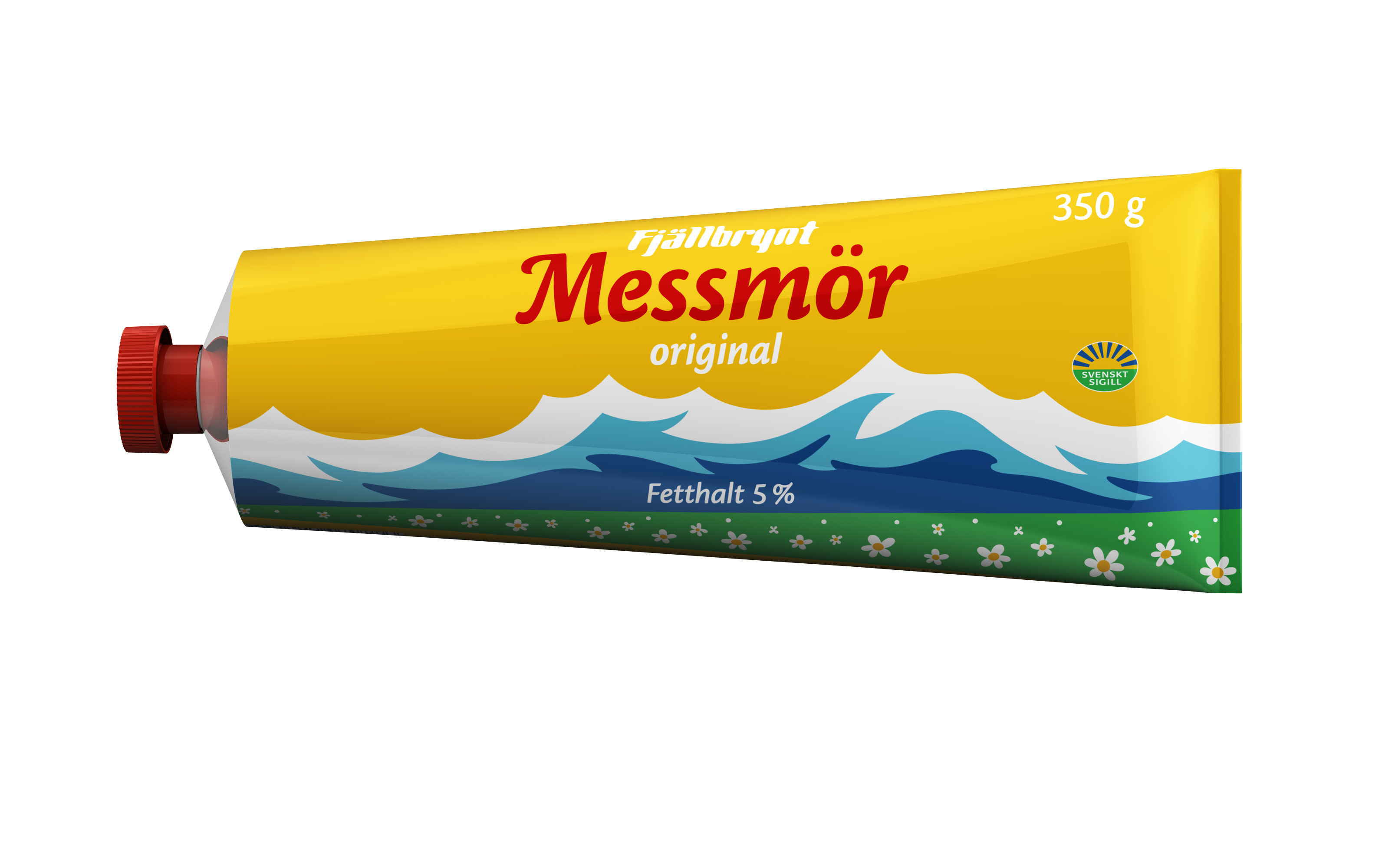
messmor_350g_original_front Messmör – Soft whey butter

Translated as soft whey butter, this disgusting sandwich topping and comes in two delightful choices: goat milk-based and cow milk-based. Whey is pressed out from cheese and then boiled until it caramlises and gets an unappetising brown colour. It looks nasty and tastes revolting.
blodspoppa

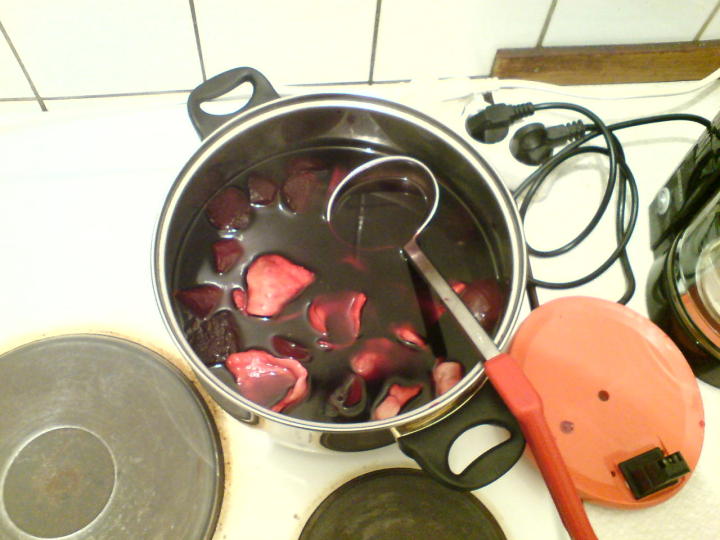
Svartsoppa – Black soup

Black soup is a soup made of goose blood which is thickened and flavoured with stock, syrup, wine, cognac, vinegar, cloves, ginger and pepper. It is traditionally eaten with a roast goose dinner and it dates back to the Renaissance period. Historically, it was a useful source of iron.

palt

Palt

Palt is a kind of potato dumpling stuffed with boiled pork. The dumpling is boiled in very salty water. It is normally eaten with butter and lingonberry jam and some Swedes drink milk when they eat it to help it slink down the throat.
surströmming

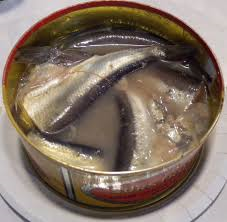
Surströmming – fermented Baltic herring

This offensive dish consists of herring that is caught just prior to spawning and packed into a tin of brine to ferment. The fermentation starts from an enzyme in the spine of the fish, together with bacteria. Hydrogen sulphide is produced in the tin. Sounds appetizing? The salt in the brine allows the bacteria responsible for rotting to thrive. This bacteria prospers and decomposes the fish, making it sour. When the tin is opened, the contents release a strong and sometimes overwhelming odour which smells like human excrement. The dish is ordinarily eaten outdoors as the reek will fill out an entire building if eaten indoors. The fish is usually eaten on crispbread, or rolled in thin bread, with potatoes and sour cream. This way of preparing food was historically a process of preserving food in order to survive through the winter. But in modern-day Sweden, it is so unnecessary – now we have fridges!!!
lutefisk-akta

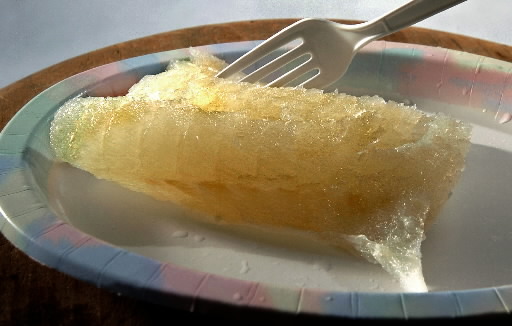
Lutfisk – Sodium Hydroxide fish

Imagine your mouth full of jelly. Wobbly, quivering jelly. Now add a creamy sauce to that consistency. Slush it round in the mouth. Now add the flavour of fish! And there you have it! Lutfisk! This revolting food is a dish consisting of dried whitefish prepared with lye (deadly sodium hydroxide) and a sequence of particular treatments. The first treatment is to soak the dried stockfish in cold water for five to six days. The saturated stockfish is then soaked in cold water and lye for an additional two days. The fish swells during this soaking, and produces a jelly-like consistency. When this treatment is finished, the fish (saturated with lye) is caustic and therefore poisonous. To make the fish edible, a final treatment of yet another four to six days of soaking in cold water is needed. Eventually, the lutfisk is ready to be boiled and then served with a creamy spiced white sauce and potatoes. This has to be the most vile thing I have ever eaten, it is truly repugnant. The good news is however that Lutfisk is a Christmas dish, so it only ever gets dumped infront of you once a year! Thank Santa for small mercies!

Other food in Sweden that is definitely an acquired taste: Kalles kaviar (fish roe paste), inlagd sill (pickled herring), grisfötter i gelé (pig trotters in jelly), fiskbullar (fish quenelles in sauce), hamburger kött (horse meat), falukorv (a processed-meat sausage), långfil (fermented, coagulated milk).

Any others you can think of?
50 Swedish words for snow

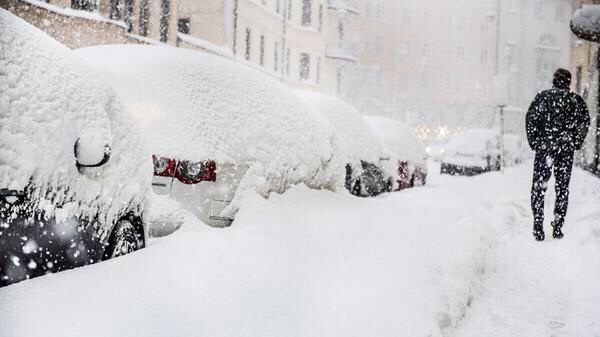
A massive amount of snow has landed in Sweden, so I thought it’s worth sharing this list again.

Not surprisingly when living in a country where it snows a lot, people start to see differences and nuances in the type of snow, whereas in English the word might just be an unsatisfactory ‘snow’.

The Swedish language makes it easy to join words together to describe these nuances.

Here is a list of 50 Swedish words related to snow.

1) Blötsnö – wet, slushy snow
2) Drivsnö – snow that is blown into troublesome snow drifts
3) Aprilsnö – snow in April, according to superstition, signifies plenty of food for the coming season
4) Hårdsnö – compacted hard snow
5) Konstsnö – artificial snow
6) Kramsnö – squeezy snow, perfect for making snowballs
7) Julesnö – snow at Christmas
8) Klabbsnö – wet, warm snow for building snowmen
9) Kolsyresnö – frozen carbondioxide
10) Kornsnö – small white snow breadcrumbs
11) Lappvante – thick, falling snow
12) Lössnö – snow that can loosen and be dangerous
13) Majsnö – surprising and unwelcome snow in May
14) Modd – snow that has partly melted due to salt
15) Natursnö – real snow (as opposed to artificial)
16) Nysnö – fresh snow, crisp and white
17) Pudersnö – powder snow
18) Rekordsnö – an unusual amount of snow, breaking previous snow records
19) Slask – slushy snow mixed with rain and dirt on the ground
20) Snö – snow
21) Snöblandat regn – snow mixed with rain
22) Muohta – the Sami word for snow (it is said the Sami actually have 200 words for snow!)
23) Snörök – faint particles of snow that look like smoke
24) Yrsnö – snow being whipped around by the wind in all directions
25) Åsksnö – snow that pours down during a thunder storm

26) Snökanon – the word for the snow canon that creates artificial snow on ski slopes has also come to mean a sudden blast of snow that suddenly hits a place, and feels like snow has been dumped on you.

27) Jungfrusnö – virgin snow

28) Snösmocka – a huge amount of snow

29) Snötäcke – snow on the ground

30) Sjösnö – snow over the sea that can roll in over land

31) Snöfall – snow in the air

32) Flingsnö – snow with larger crystals

33) Skarsnö – a crispy surface on a blanket of snow

34) Packsnö – thickly packed snow

35) Pärlsnö – snow like small pearls that hurts when it hits your face

36) Snöglopp – wet snow mixed with rain

37) Spårsnö – snow that allows footprints to be formed

38) Fjöcksnö – a light, fluffy snow

39) Flister – snow the consistency of salt that stings the face when it falls

40) Flaksnö – a sheet of snow

41) Upplega – snow on the upper side of a tree branch

42) Firn – liquid-like snow that can initiate an avalanche

43) Fimmel – sandy snow that falls at low temperatures

44) Själja – a thin layer of ice on top of the snow that resembles glass

45) Knarrsnö – crispy snow that creaks when you walk on it

46) Snöfyk – wet snow

47) Torrsnö – dry snow

48) Månsilver – a poetic word to describe the dusting of snow

49) Snöis – snow on cold water that forms an icy solid surface

50) Stöp – a mixture of snow and ice resembling porridge that forms on top of cold water

So, let it snow! Let it snow! Let it snow!

Advent Calendar – Dec 24: Kalle Anka

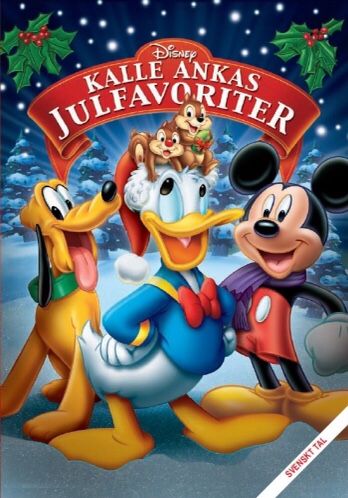
Window 24. As I am following the Swedish system of advent calendars, today is the last window, not the 25th as in the UK. So here is the final word: Kalle Anka. This is the Swedish name for Donald Duck – a Disney character with a strong, and unexpected, connection to Swedish Christmas.

Traditional Christmas celebrations on Christmas Eve in Sweden get off to a slow start usually. It all begins with a Christmas breakfast, consisting of rice porridge, wort bread, ham and Christmas cheese, amongst other things. After breakfast, some people go for a walk, some go to church, others begin the preparation for the Christmas julbord (buffet).

When to eat julbord differs from family to family. For some, it’s at lunch time, for others it more towards late afternoon. One surprising time marker is Kalle Anka (Donald Duck).

Every Christmas Eve since 1960, the Disney show ‘From All of Us to All of You’ featuring Donald Duck and his friends has been broadcasted on Swedish television at 3pm (now 3.05pm). Every single year. A very weird tradition for someone like me who grew up listening to the Queen’s speech on Christmas Day at 3pm. In the UK we have the monarch. In Sweden, Donald Duck.

So the discussion in Swedish homes is ‘should we eat before or after Kalle?’.

Today, Kalle Anka is watched as a sentimental tradition, or as background noise on Christmas Eve. But in the 1960’s when it began, it was the only time of the year that cartoons were shown on tv, so it was a Christmas treat. Since it’s been broadcast for almost 60 years, it is an integral part of what many Swedes associate with Christmas.

After Kalle Anka och julbord, it’s time for a visit from Tomten with gift-giving. This is followed usually by more food and drink. Some people conclude the day with a Midnight service at their local church.

Christmas is, like many places around the world, a time of overconsumption. Enormous amounts of food are left over and eaten during the following days.

In Sweden, Christmas Day and Boxing Day are both Public holidays – and the official end of Christmas is January 13th. Then it is time to traditionally throw out the Christmas tree. The lights in the windows have usually disappeared by February.

And as the daylight slowly returns to Sweden, people start planning for the lighter and warmer time of the year. And Christmas fades into memory…until next December.

Advent Calendar – Dec 22: Tomten

Window 22. Today’s word is ‘Tomten‘ – who is the Swedish equivalent of Santa Claus.

Around the world, Santa is based on the mythology of St Nikolas – the Greek/Turkish patron saint who’s legend morphed in the USA from the Dutch immigrants’ Sinterklaas to the jolly figure who rewards good children that we see today.

The Swedish symbol of Tomten is partially based on St Niklas and the American depiction of Santa Claus. However, he is also based on a goat and a mythical sprite.

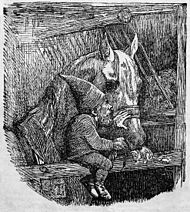
Let’s travel back to rural Sweden hundreds of years ago. Here, in the countryside, Tomten was a kind of sprite (hob, gnome, pixie) who lived on the farm and made sure that the farm had good luck.

Tomten was described as a little man, dressed in sackcloth and with a beard. He usually lived in the barn and was shy, mischievous, and irritable – and also vengeful. To keep Tomten happy, the farmer would leave out rice porridge for him to eat – a food that became known as ‘tomtegröt’ and that is still eaten for Christmas breakfast in Sweden today.

With industrialization in the late 1800’s, Sweden started to become inspired by the German St Nicholas, and in modern minds he merged with the rural sprite to become ‘jultomte’ – the gift-bearing sprite.

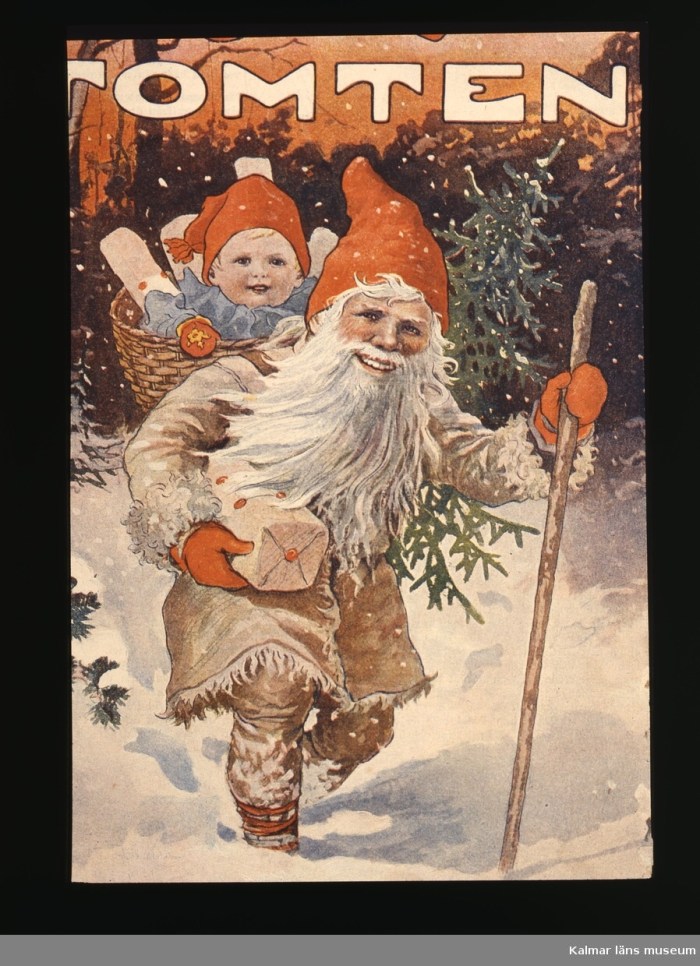
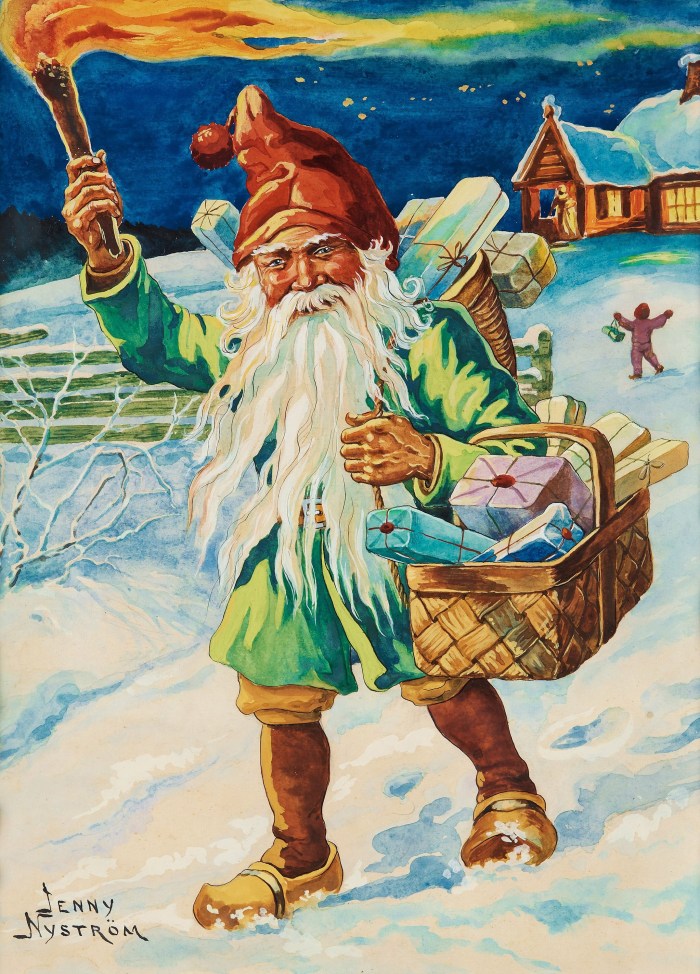
Popular Christmas cards by Swedish artist Jenny Nyström depicted this new version of Tomten in 1874 and strongly influenced the Swedish way of seeing jultomte. He was dressed in red hat, with a fluffy white beard. He is also seen to have many little helpers – known as ‘tomtenissar’ (a kind of elf).

And in 1881, a poem by Viktor Rydberg called ‘Tomten’ strongly cemented his transformation and associated the figure with mid-winter and Christmas time.

Prior to this concept of Jultomte/Tomten, gifts were brought in Sweden by the Christmas goat. Straw goats are still a part of Christmas decorations in Sweden and can be found hanging in Christmas trees or standing at the foot of the tree.

In Sweden today, Tomten arrives on Christmas Eve, usually in the late afternoon. He delivers gifts to families, usually with the introduction of ‘Ho, Ho, Ho are there any good children here?’

Strangely, he always seems to arrive just when a member of the family (often dad) has gone out to the shops or gone for a walk.

Advent Calendar – Dec 21: Julvärd

Window 21. Today’s word is ‘Julvärd‘ which translates as Christmas host.

The term Christmas host is not referring to the religious bread that represents the body of Christ. Although you’d be forgiven for thinking so at this time of the year.

No, the Christmas host is a personality on tv who guides the viewers through the proceedings on Christmas Eve.

For 27 years the ‘julvärd’ was the same person – a man called Arne Weise – and he is, for many Swedes, eternally associated with Christmas Eve.

But since 2003, a new host is announced every year and it is considered a great honour to be given the role. This year the ‘julvärd’ is popular comedian and actor David Batra.

While the role of ‘julvärd’ might seem trivial, it is actually very important. The Christmas host is present throughout the whole day and introduces the programs. He or she also talks about the value of Christmas and what it means. And not least, the ‘julvärd’ keeps lonely people company by inviting themselves into living rooms up and down the country.

The ‘Julvärd’ can be seen on SVT – Sweden’s Public Service Television – and is usually broadcast live.

Advent Calendar – Dec 20: Jullåt

Window 20. Today’s word is ‘Jullåt‘ which translates as ‘Christmas song’. The ‘å’ letter in Swedish is pronounced something like ‘or’.

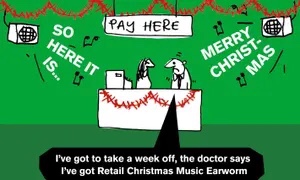
Obviously, the Christmas song is not unique to a Swedish Christmas. Like many other countries around the world, the playing of Christmas music starts in shops sometime in November and probably gives the shop assistants PTSD by the time Christmas has actually arrived.

The big international songs are popular in Sweden. According to the top list released by STIM (Sweden’s Music Copyright Protection Organisation), the most played international songs on Swedish radio are Wham’s ‘Last Christmas’, ‘All I want for Christmas is you’ by Mariah Carey and Band Aid’s ‘Do they know it’s Christmas’.

However, there is also a plethora of Christmas music in Swedish to torment us – classic, carols, hymns, psalms and pop. Many of the songs have predictable titles about Christmas time and lighting candles. The top three most-played Swedish songs are called ‘Tänd ett ljus’ (Light a candle), ‘Jul, jul, strålande jul’ (Christmas, Christmas, glorious Christmas) and ‘Mer jul’ (More Christmas).

But there are also some songs with rather strange titles. Here are just a few of them:

  • Hello (Christmas) goblins
  • The fox rushes over the ice
  • Our Christmas ham has escaped
  • Three gingerbread men
  • The Christmas goat
  • Staffan was a stable boy
  • Drunk again at Christmas
  • The gnomes’ Christmas night

A popular tradition at Christmas is to go to one of the many Christmas concerts that take place up and down the country. These concerts can be for example choir concerts, church concerts, school concerts or professional shows with famous Swedish singers such as Carola and Måns Zelmerlöw.

I myself am performing with my choir in a Christmas concert this evening in Stockholm and our special guest artist is the inimitable winner of Sweden’s Drag Race – Admira.

If you’d like to listen to some Swedish Christmas music, check it out here

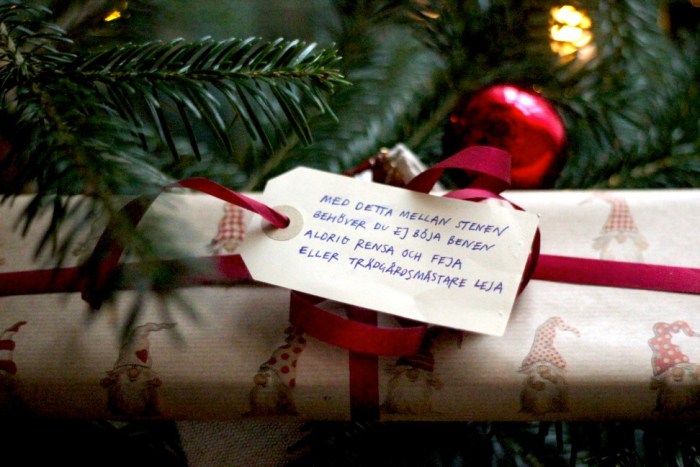
Advent Calendar – Dec 19: Julklappsrim

Window 19. Today’s word is ‘Julklappsrim‘ which translates as ‘Christmas present rhyme’

If you receive a gift at Christmas time,

You’ll find in Sweden that it comes with a rhyme.

The packets are wrapped, the present to hide

And a poem describes all the contents inside.

You see, Swedes write poems on the label

Sometimes direct, sometimes a fable.

They sit in a workshop creating their verse,

It needs to be brief, but not at all terse.

The poem is read, the packet ripped open

And you see what you got, but it still leaves you hopin’

For a phone or a trip or a book about crime,

Wrapped up with a Swedish Christmas rhyme.

Advent Calendar – Dec 18: Skumtomte

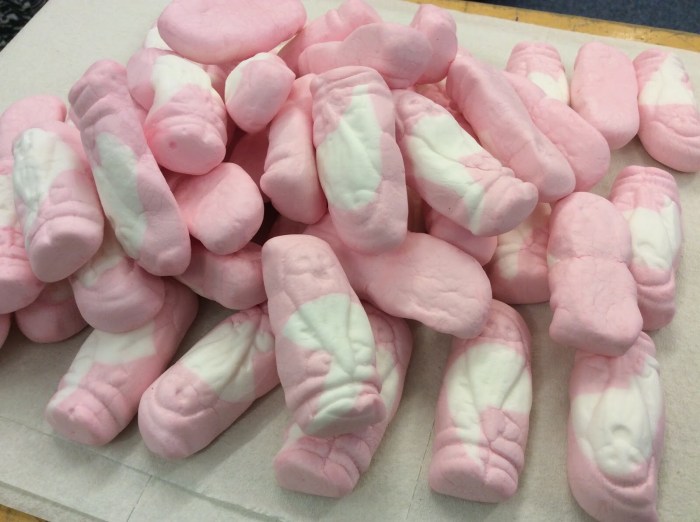
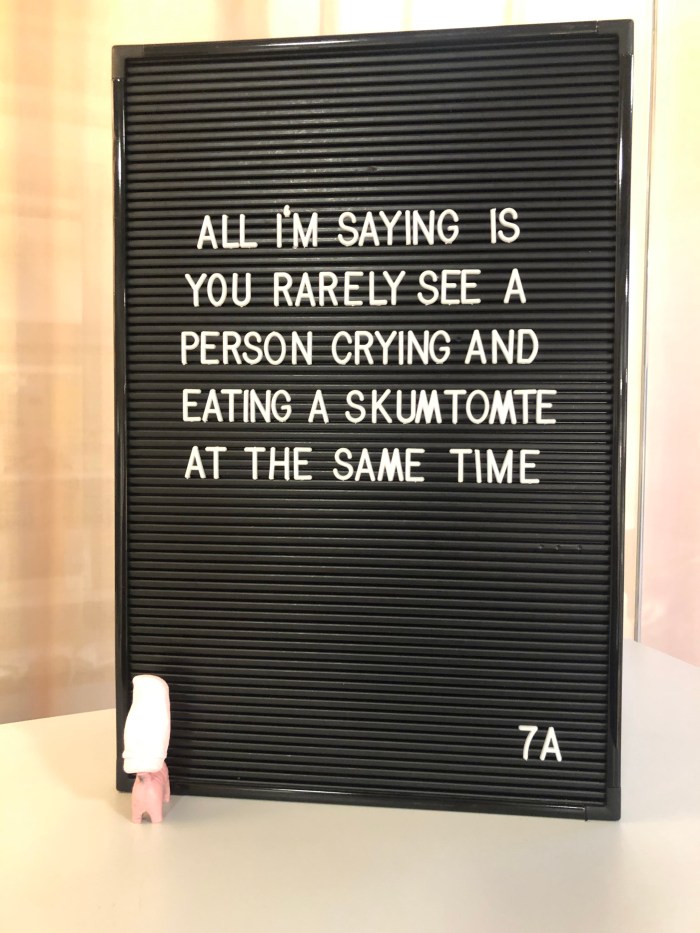
Window 18. Today’s word is ‘Skumtomte‘ which translates as ‘Marshmallow Santa’.

January is a month when it is often jam-packed at gyms up and down Sweden. This is usually due to the amount of food, snacks, and alcohol consumed over the Christmas and New Year period. The festive season is also one of the times of year when a lot of sugar and sweets are consumed.

One of the most popular sweets in yuletide Sweden is the ‘skumtomte’ – the marshmallow Santa. The skumtomte is traditionally pink and white and strawberry flavoured.

Thanks to the wonders of product development, new limited flavours have appeared in recent years: apple and cinnamon, blueberry, mint and gingerbread being some examples.

They have been manufactured since 1934, and every year over 194,000,000 are consumed in Sweden and Finland. It seems like it wouldn’t be Christmas without a jultomte.

Other sweet things that Swedes eat around Christmas are:

  • Ischoklad – ‘ice chocolate’ – chocolate with coconut fat in tiny cupcake forms
  • Ris a la Malta – a cold rice dessert with cream, vanilla and mandarines
  • Risgrynsgröt – rice porridge with sugar, cinnamon and milk
  • Knäck – butterscotch
  • Kola – toffee
  • Fudge – fudge
  • Marsipangris – marzipan pig
  • Lussekatt – saffron bun
  • Polkagris – Candy cane
  • Chokladtryffel – chocolate truffle
  • Dadlar – dates
  • Fikon – figs
  • Pepparkaka – ginger biscuits
  • Gröna kulor – marmalade balls
  • Aladdin and/or Paradis – popular boxes of chocolates

So, get eating – the gym can wait until 2024!

Advent Calendar – Dec 17: Årets Julklapp

Window 17. Today’s word is ‘Årets julklapp‘ which translates as ‘Christmas present of the year.’

Every year, Sweden’s trade research institute nominates an item that is the ‘Christmas present of the year’. This item should have sold in large quantities and/or represent current trends in Swedish society. 

The first item to be granted this status was in 1988 and it was the baking machine. Since then, various items have been the CD player, VR glasses, the tablet, the spike mat, the book, the food home delivery service, the robot hoover, the woolly hat and the wok.

So this year, what is it? 

Reflecting rising living costs, inflation and recession, this year’s present encourages cheap entertainment – it is a board game (or other forms of ‘parlour game’.

Advent Calendar – Dec 16: Julbord

Window 16. Today’s word is ‘Julbord‘ which literally translates as Christmas table.

The word ‘smörgåsbord’ (buffet) is one of the words from the Swedish language to have the biggest international reach. The ‘julbord’ or Christmas table is the ‘smörgåsbord’ that is traditionally eaten in homes and restaurants on Christmas Eve – the day Swedes celebrate Christmas.

In the lead up to Christmas, organisationens often take their employees out somewhere for a ‘julbord’.

The ‘julbord’ is an interesting concept – a potpourri of dishes, hot and cold. Not all Swedes enjoy everything on the table, but the dishes still have to be present in the name of tradition.

So, what’s on the Swedish ‘julbord’? Here are some common savoury dishes:

  • Julskinka – Christmas ham
  • Inlagd sill – pickled herring of various sorts
  • Köttbullar – Swedish meatballs
  • Prinskorvar – cocktail sausages
  • Janssons frestelse – potato and anchovy gratin called Jansson’s temptation
  • Gravad lax – cured spiced salmon
  • Kallrökt lax – cold-smoked salmon
  • Varmrökt lax – warm-smoked salmon
  • Kalvsylta – jellied veal
  • Knäckebröd och ost – crispbread and cheese
  • Sillsallad – herring salad
  • Lutfisk – whitefish in lye
  • Dopp i grytan – ‘dip in the pot’ – bread dipped in the broth that the meat is cooked in
  • Cabbage of various colours – most commonly red
  • Vörtbröd – Christmas bread flavoured with wort
  • Revbensspjäll – spare ribs
  • Ägghalvor – halved boiled eggs topped with shrimp or caviar

The ‘julbord’ is a banquet, and its history dates back hundreds of years. Around the country there are regional variants to the standard dishes. For example, in county Skåne, they often add eel, and in Bohuslän they add ‘äggost’ – egg cheese! Many regions around Sweden have brown beans and different local sausages on the their Christmas buffet.

All of this food is traditionally washed down with beer, julmust, and snaps.

You have to be careful not to overindulge, if possible because afterwards comes coffee and dessert. A traditional dessert is called Ris a la Malta, which is fluffy rice in whipped cream and tangerines. At Christmas tables organised in restaurants, they normally have a ‘gottebord’ which is another smörgåsbord consisting solely of sweets and desserts. Common contents are toffee, fudge, gingerbread biscuits, marzipan, ‘lussekatter’, dried fruits, cheese, and chocolates.