Swedish water – in rich supply

Yesterday, 22 March was World Water Day. It was inaugurated in 1993 to focus on the importance of fresh water.

According to the UN, World Water Day ‘’celebrates water and raises awareness of the 2.2 billion people living without access to safe water. It is about taking action to tackle the global water crisis and support the achievement of Sustainable Development Goal 6: water and sanitation for all by 2030.’’

Sweden contributes to this work via its Stockholm International Water Institute and, under normal circumstances, the annual World Water Week is held in the Swedish capital city. During the week, the organisation awards water prizes to researchers and institutes who work to improve water quality, accessibility and sanitation around the world.

Sweden itself is blessed with water. About 9% of the country is covered with water. Sweden is the EU country that has the most lakes – in fact, 40% of the EU’s lakes are located in Sweden. Lake Vänern, at 5655 square km, is the EU’s largest. Interestingly, Sweden’s total coastline including archipelago, is 48000 km, which is slightly more than a lap around the globe.

Much of Sweden’s freshwater is potable. Most Swedes have the privilege of uninterrupted access to drinking water, with occasional problems in rural areas during summer months. Even the water in the toilet is drinking water, not that anyone drinks from that particular vessel!

Swedish ice batheing

This winter, taking an outdoor ice bath has become very fashionable in Sweden. Disrobing and lowering yourself into frozen lakes at below zero temperatures is considered very healthy for the body and its ability to repair itself.

Spring has now arrived and the ice is melting but die hards are still squeezing the last out of the ice batheing season. Like this guy featured on TV, who regularly sits in the frozen lake – for 20 minutes at a time!

This may seem like a long time, but actually it is nothing compared to the world record. The world record for ice submersion is held by Austrian Josef Koerbel who, in 2020, held himself under ice for 2 hours and 30 minutes. In his case, it was in an ice box on a public square in the town of Melk.

Brrrr.

So, what about you? Do you feel enticed by the concept of plunging into the chilly depths to take an ice bath? Or would you rather keep yourself wrapped up warm and toasty on the bank of the lake?

The Swedish hot wall – a murderous treat

I’ve written previously about the cream bun called a semla that is eaten around this time of year in Sweden. Traditionally consumed on Shrove Tuesday, this is a sweet, wheat bun filled with whipped cream and almond paste. And it is de-lish-us.

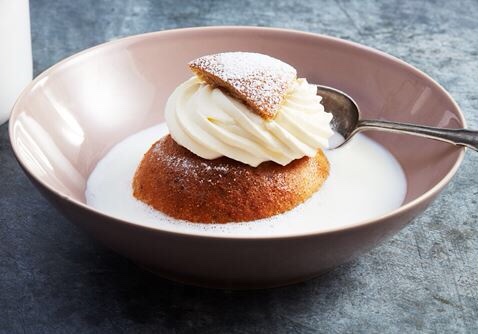
However, there is a way to eat it that I have never got on board with. A traditional method called the ‘hetvägg’, which translates literally a ‘hot wall.’ This is when the semla is placed into a bowl of warm milk, and eaten with a spoon. The result is a sugary, creamy slop.

The ‘hetvägg’ has a long history, going way back to the 1700’s when a warm, wedge-shaped spiced bun was served in a bowl of warm milk. This was eaten around Europe. In fact, the name ‘hetvägg’ has nothing to do with ‘hot wall’, but comes from the German for ‘hot wedge’ – “heisse wecke”. The top of today’s semla is often wedge-shaped as a historical nod to the original bun.

It is said that King Adolf Fredrik died from eating too many ‘hetvägg’ in 1771, but in fact it was a heart attack. Granted, he was a gluttonous man, and eating ‘hetvägg’ was indeed part of his questionable diet. After his death, there was a call to ban the sugary treat, as it was rumoured to have murdered the king.

The ‘hetvägg’ wasn’t banned and today it is still a popular way to consume the semla. I personally prefer mine dry and fluffy. But, hey, as they say in Swedish – ‘taste is like the backside – divided!’

Swedish Valentine – All Hearts’ Day’

Like many places around the world, Swedes celebrate Valentine’s Day on February 14th. Called ‘Alla Hjärtans Dag’ – All Hearts’ Day – it is a newish tradition that started around 50 years ago, but didn’t really gain traction until the 1990’s. American influence and commercialization are often cited as the reasons for this. I also think that it’s a timing issue – the month of February is an otherwise boring time of year in Sweden. A little celebration is a small distraction from the tedium.

In Sweden, Valentine’s wishes are not only limited to love interests, but also extended to children, friends and even school teachers.

Romantically, the most common Valentine’s gifts are flowers, and treating your loved one to a nice dinner, in a restaurant or at home. Approximately 10 million red roses are sold around this day, which is huge considering the population is also 10 million.

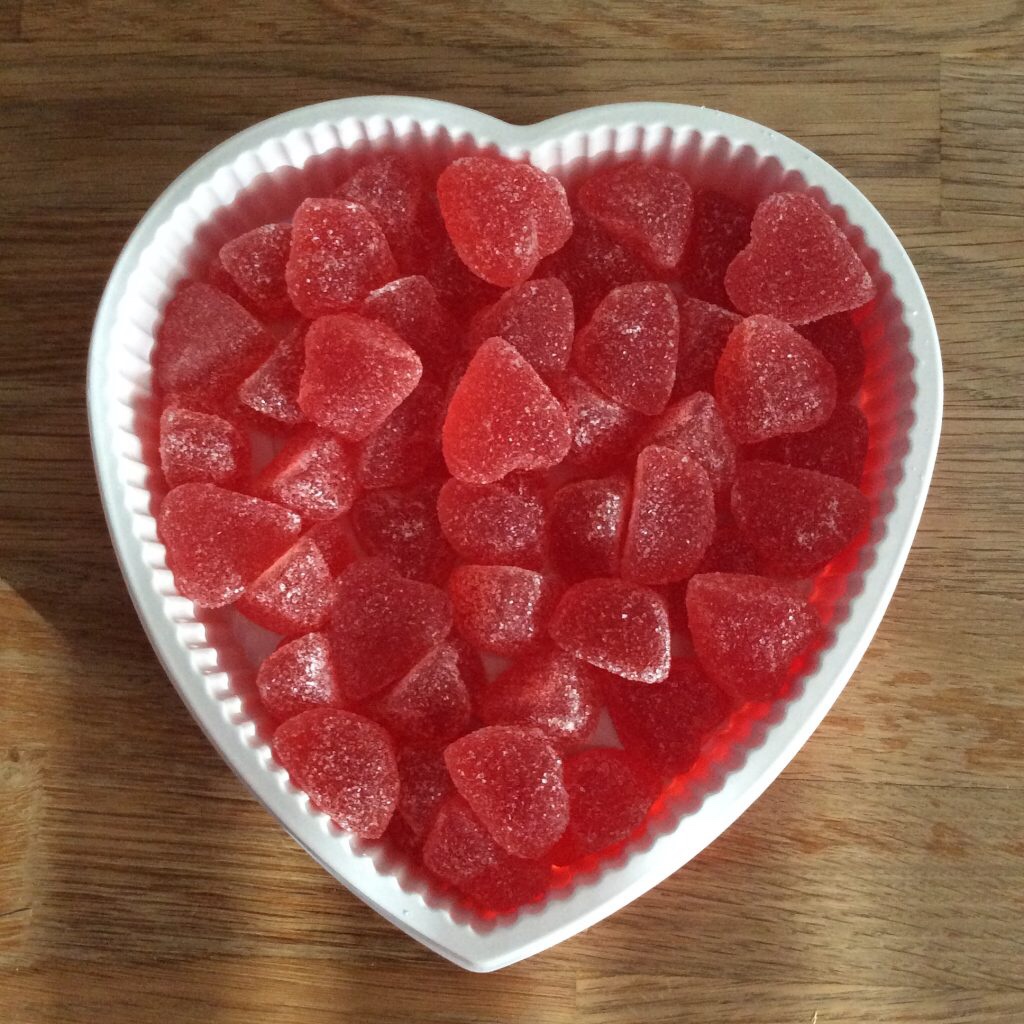
Heart-shaped candy is also popular, and in Sweden the most common is ‘jelly hearts’. Sales of chocolate and candy apparently increase by 90% every year around Valentine’s Day.

So, I might not have flowers or chocolates to give you, but I’d like to wish each of you a Happy Valentine’s Day. I appreciate that you want to read my writing, and in return I send you some loving energy. I hope you have love and affection in your life and that, when the day comes, you can celebrate with a long, warm hug!

The Swedish hot wall – a murderous treat

I’ve written previously about the cream bun called a semla that is eaten around this time of year in Sweden. Traditionally consumed on Shrove Tuesday, this is a sweet, wheat bun filled with whipped cream and almond paste. And it is de-lish-us.

However, there is a way to eat it that I have never got on board with. A traditional method called the ‘hetvägg’, which translates literally a ‘hot wall.’ This is when the semla is placed into a bowl of warm milk, and eaten with a spoon. The result is a sugary, creamy slop.

The ‘hetvägg’ has a long history, going way back to the 1700’s when a warm, wedge-shaped spiced bun was served in a bowl of warm milk. This was eaten around Europe. In fact, the name ‘hetvägg’ has nothing to do with ‘hot wall’, but comes from the German for ‘hot wedge’ – “heisse wecke”. The top of today’s semla is often wedge-shaped as a historical nod to the original bun.

It is said that King Adolf Fredrik died from eating too many ‘hetvägg’ in 1771, but in fact it was a heart attack. Granted, he was a gluttonous man, and eating ‘hetvägg’ was indeed part of his questionable diet. After his death, there was a call to ban the sugary treat, as it was rumoured to have murdered the king.

The ‘hetvägg’ wasn’t banned and today it is still a popular way to consume the semla. I personally prefer mine dry and fluffy. But, hey, as they say in Swedish – ‘taste is like the backside – divided!’

Confusing Swedish greetings of the festive season

It’s that time of year when people greet each other with more than a simple ‘Hej’ (hello), or ‘tjena’ (hi). There are various ways to do it, depending on the day, and it is a bit confusing for the uninitiated.

The last time you see somebody before Christmas, you say ‘God Jul’ (Merry Christmas). This is assuming Christmas is close of course, and does not apply if the last time you see somebody is October. ‘God Jul’ continues through Christmas Eve and Christmas Day.

Around Boxing Day, the greeting changes to ‘God Fortsättning’ (Good Continuation).

Then, around Dec 30/31, ish, it changes to ‘Gott Slut’ (Good Ending) before changing to ‘Gott Nytt År’ (Happy New Year) at the strike of midnight on Jan 1st.

’God Fortsättning’ (Good Continuation) takes over again around Jan 2 and then fizzles out after two weeks. The absolute final date for any form of festive greeting is Jan 13th. This day is called ‘Tjugondag Knut’ and is when Christmas is over in Sweden and the Christmas tree and decorations are traditionally thrown out. After that, it’s back to ’Hej’ again.

So as today is Dec 27, I’d like to wish you all a ‘God Fortsättning’.

Swedish serenity in the cemetery

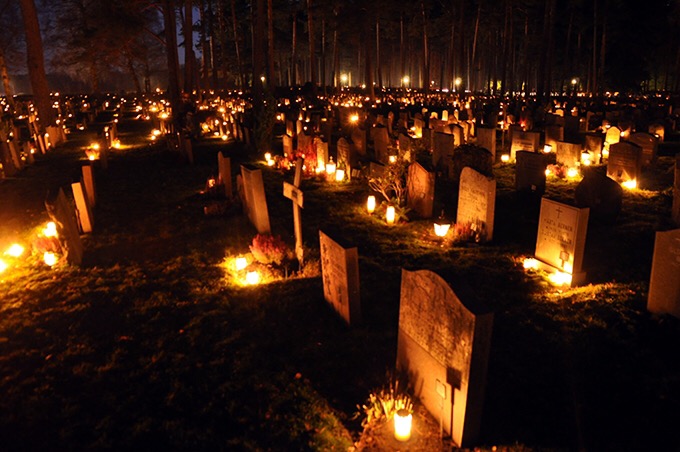
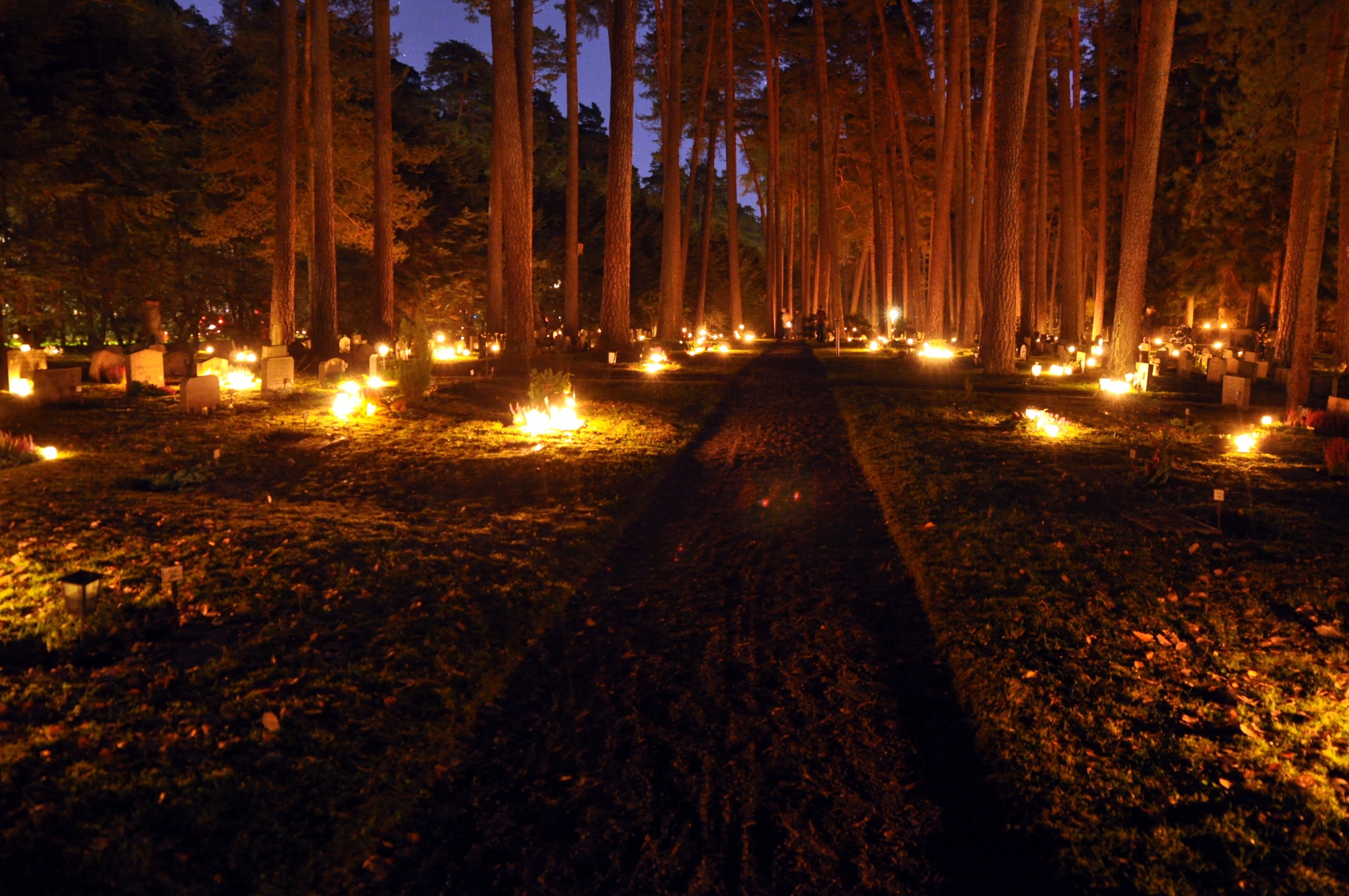
I remember walking around Stockholm when I had recently moved here. It was a pitch black Saturday evening in November, cold and crisp. As I approached a majestic church, I noticed that it was shimmering from the grave yard. This yellow and white light slowly flickered and cast shadows on the gravestones and the church wall. As if drawn by a magic spell, I walked up to the church and looked over the wall.

The sight that met my eyes was spectacular and serene at the same time. Hundreds of candles were spread around the cemetery, decorating each of the graves. In the memory grove a bright blazing blanket of candles lit up the area. It was as if the spirits of the dead had come out to play.

In Sweden, the Saturday between 31 October and 6 November is All Saints’ Day (the Sunday after All Saints’ Day is called All Souls’ Day to separate between the saints and the dead). Since the 1800’s Swedes have, during this weekend, made pilgrimage to graveyards up and down the country to decorate the graves with candle light and to pay respect to the dead.

It is a much more elegant and atmospheric tradition than the typical Halloween parties that otherwise have become very popular in Sweden. It is a truly beautiful experience to walk through the churchyards this weekend. In the pitch black November Nordic darkness, it is a peaceful reminder of those who have gone before us.

This year is a bit different however. The corona pandemic has led to restrictions and there is a recommendation to refrain from going to cemeteries this weekend. We should honour our dead, but try not to contribute to the spread of the virus at the same time. So if you plan to head to your nearest cemetery anyway, make sure to keep distance to the other visitors, and make the visit quick. Alternatively, light a candle in your own garden, or balcony this year.

The origins of magical Swedish Midsummer

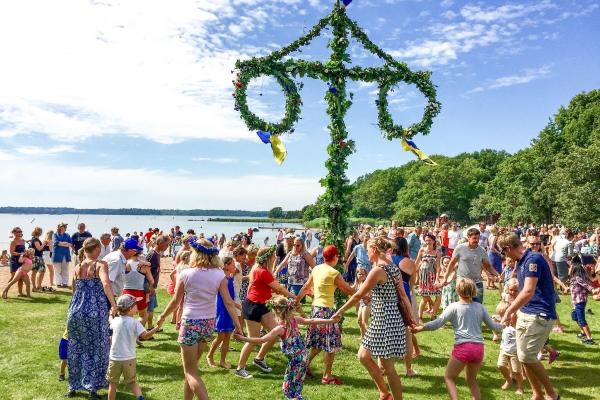
Midsummer’s Eve is possibly the biggest public celebration in Sweden, and it’s happening this week on Friday. Swedes gather to eat, drink and be merry together.

So, what are the origins of Midsummer and why is it celebrated? Well, according to authors Po Tidholm and Agneta Lilja, the origins of Midsummer date back as far as the 6th century:

‘In agrarian times, Midsummer celebrations in Sweden were held to welcome summertime and the season of fertility. In some areas people dressed up as ‘green men’, clad in ferns. They also decorated their houses and farm tools with foliage, and raised tall, leafy maypoles to dance around, probably as early as the 1500s.

Midsummer was primarily an occasion for young people, but it was also celebrated in the industrial communities of central Sweden, where all mill employees were given a feast of pickled herring, beer and schnapps. It was not until the 1900s, however, that this became the most Swedish of all traditional festivities.

Ever since the 6th century AD, Midsummer bonfires have been lit around Europe. In Sweden, they were mainly found in the southern part of the country. Young people also liked to visit holy springs, where they drank the healing water and amused themselves with games and dancing. These visits were a reminder of how John the Baptist baptised Christ in the River Jordan.

Midsummer Night is the lightest of the year and was long considered a magical night, as it was the best time for telling people’s futures. Girls ate salted porridge so that their future husbands might bring water to them in their dreams, to quench their thirst. You could also discover treasures, for example by studying how moonbeams fell.

Also that night, it was said, water was turned into wine and ferns into flowers. Many plants acquired healing powers on that one night of the year.’

There is still an element of magic in the otherwise well-organised Midsummer celebrations of today. One example is the erection of a large phallic flower-clad maypole, and the dancing around of said pole. This is an ancient fertility rite. Related to this, is the association of love to the festivities of Midsummer. In fact many Swedish babies are made around this weekend.

Another example is the gathering of 7 types of summer flower to place under your pillow at night. It is said if you do this, then your future husband will appear to you in your dreams.

And then there’s the light. On Midsummer’s Eve is doesn’t really get dark. Depending on where you are in Sweden, it ranges from a dim glow in the south to full on daylight in the north. In Stockholm, where I live, it is a magical dusky twilight that conjures up associations of witchcraft, druids and paganism.

So while today’s Midsummer might be a well-orchestrated gathering of friends and family, there is still some magic to be found if you look hard enough.

Livestream Swedish National Day

Today is Sweden’s National Day. It was declared in 1983, and was first celebrated as a public holiday in 2005. Prior to that, the 6th June was known as Swedish Flag Day to commemorate that Sweden has its own flag – a celebration introduced in 1916 after the dissolution of the union with Norway in 1905.

Swedes celebrate National Day on 6 June in honour of two historical events: Gustav Vasa being elected king (6 June 1523) and the adoption of a new constitution (6 June 1809).

Normally, the King and Queen of Sweden take part in a televised ceremony at Skansen, Stockholm’s open-air museum, on National Day. The yellow and blue Swedish flag is run up the mast, and children in traditional peasant costume present the royal couple with bouquets of summer flowers.

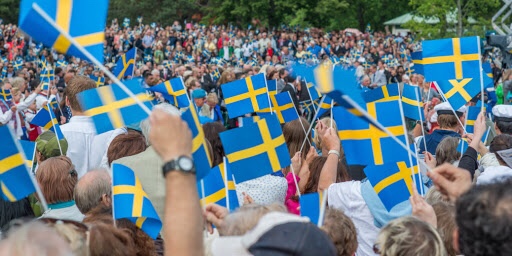
Otherwise, it’s a bit of a weird day, National Day. It’s celebrated with organised events in parks and squares. Buses fly the flag on their rooves, people hang up the flag on poles and people gather in large crowds to wave the flag. Other than this, many people don’t really know what to do. There is no collective memory around the 6th June, such as independence or winning a war, to pull people together. No sense of achievement. Or historical pride. So, the day is usually appreciated as a day off work to, for example, meet friends, or play golf, or day drink or sunbathe or go to Ikea.

One interesting event that happens on this day is the Citizen Ceremony. All new citizens up and down the country are invited to their town hall to participate in a ceremony to welcome them to Sweden as new Swedes. Usually, the mayor proceeds over the event and it’s followed by the most Swedish thing of all – Fika (coffee and cinnamon buns). When I participated 9 years ago, Crown Princess Victoria was actually there also. It did feel very official, with participants from all over the world dressed in their best clothes such as elegant saris, busutis and kanzus. Personally, I wore a blue jacket with a yellow handkerchief poking out of the breast pocket.

Due to the current pandemic, lots of celebrations are cancelled this year. As a replacement http://www.sweden.se are carrying out a digital event. This is what they write:

‘Sweden live: National Day @ home

Make yourself comfortable and join us as we celebrate Sweden’s National Day. In this 24-hour livestream Swedish artists will play for you from their living rooms, chefs will cook with you, museums will dazzle you with their exhibits – and you might also get the chance to spot some moose… Enjoy! Here’s the link!

https://sweden.se/culture-traditions/lets-celebrate-the-national-day-of-sweden/

What is Sweden’s ‘Tranquil Week’ ?

There is an irony to the fact that we are socially distancing, quarantining and home working specifically during this week. In Swedish, this week is called ‘Stilla Veckan’ – which literally translates as ‘tranquil week’ or ’quiet week’.

‘Stilla Veckan’ is a term in the Swedish church calendar to describe the week leading up to Easter – the last week of Lent. In English, we call it Holy Week.

Every day in ‘Stilla Veckan’ has a name. Holy Saturday is called ’Påskafton’ in Swedish, which translates as Easter Eve. Do you know what the Sunday, Monday, Tuesday, Wednesday, Thursday and Friday leading up to Easter are called?

The Sunday before Easter is called ’Palmsöndag’ – Palm Sunday in English. According to scripture, it commemorates Jesus’ triumphant arrival into Jerusalem. The crowds threw palm branches in front of him as he approached.

The Monday before Easter is called Blå Måndag – Blue Monday. It can also be called ‘Svart Måndag’, (Black Monday), ’Bullmåndag’ (Bun Monday), ’Fläskmåndag’ (Pork Monday) and ’Korvmåndag’ (Sausage Monday). It is called a predictable Holy Monday in English.

The Tuesday before Easter is called ‘Vittisdagen’ (White Tuesday). This is called Holy Tuesday in English.

Both Blue Monday and White Tuesday were originally used to describe the Monday and Tuesday before Lent begins in Ash Wednesday. At some point in history, they were moved colloquially to describe the Monday and Tuesday before Easter instead. Blue Monday refers to the colour that church rooms were painted on this day. White Tuesday is an old name for Shrove Tuesday, Fettisdag in Swedish, and probably refers to the flour that was used to make the Lent buns.

The Wednesday before Easter is, unsurprisingly, called Holy Wednesday in English. However, in Swedish it had the fascinating name ‘Dymmelonsdag’. This literally translates as ‘Clapper Wednesday’. The clapper that this is referring to is a wooden clapper that was traditionally put inside the church bells on this day so that the chimes would have a more subdued sound during Easter weekend.

The Thursday before Easter is called ‘Skärtorsdag’ in Swedish. This translates as ‘Clean Thursday’ and refers to the ritual of Jesus washing the feet of the disciples before the Last Supper. In English, this day is called Maundy Thursday.

And finally, the Friday before Holy Saturday is called Good Friday in English. This is derived from an obsolete meaning of the word good as being holy. In Old English, this day was called Long Friday, which is the name that was adopted in Swedish – ‘Långfredag’.