Surviving November in Sweden

mörkt3

I’m looking out of my window into the blackness of the Swedish afternoon. It’s not even 4pm yet, and the weak rays of light that illuminated the day have long gone. It’s like somebody literally turned off the light on their way out.

This is November in Sweden – one of the darkest times of the year in Sweden. The night blanket roles in over the country mid afternoon and keeps its grip until mid morning the next day. Far up in the north of Sweden, the sun barely peeks over the horizon.

It can be a challenging time for those of us who live here – this period before the snow and the Christmas decorations light up the streets and windows.

Since language develops to describe our environments, it makes sense that in Swedish there are many words to describe the darkness.  Native Swedes can instinctively feel the difference between these words, but those of us who have Swedish as a second language have to resort to a dictionary to understand the nuances.

The word ‘svart’ is ‘black’ in Swedish. And there are several types of black – there’s ‘becksvart’ (pitch black), ‘korpsvart’ and ‘ramsvart’ (raven black) and there’s ‘kolsvart’ (coal black). I’m sure there are more, please let me know if you have any others.

But there are also lots of other words that describe the darkness. I’ve tried my best to translate some of these below.

  • Skymning – nightfall
  • Dunkel – dim
  • Skumrask – half dark
  • Sollös – without sun
  • Töcknig – misty darkness
  • Molndiger – cloudy darkness
  • Ljusfattig – poor light
  • Dyster – gloomy darkness
  • Grådaskig – dingy

With all these words in their vocabulary, some people complain about the darkness. And who can really blame them? It is a tough period to get through. The darkness can go a long way towards explaining the stereotypical Swedish melancholy.

So how to survive it? Maybe it’s about shifting perspective?

In the words of the well-used, and highly consoling Swedish expression:

‘Det är bättre att tända ett ljus än att förbanna mörkret.’

It is better to light a candle than to curse the darkness!

Sing in Christmas with Europe’s oldest gay choir

Did you know that Sweden has a very large number of choirs? Singing in a choir is in fact one of Swedish people’s favorite pursuits. That means that there are lots of choirs to meet various needs and interests: gospel choirs, political choirs, church choirs, integration choirs, indie choirs.

So, it’s not surprising then that the first gay choir to be established in Europe came out in Stockholm. 35 years ago to be exact, just a short time before London’s Gay Men’s chorus was founded.

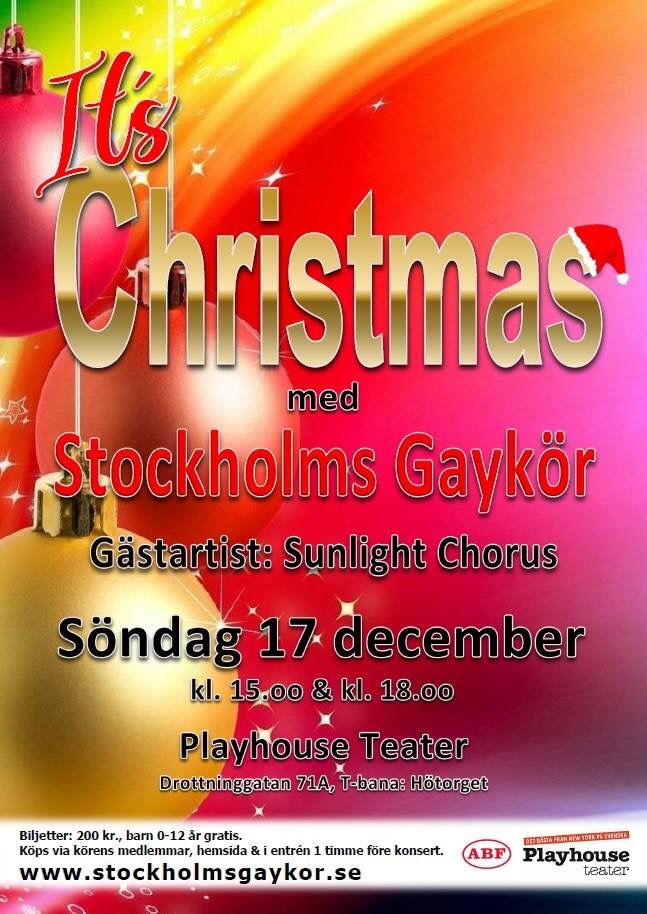
As a conclusion of their 35 years’ celebrations, Stockholm’s Gay Choir is holding two Christmas concerts on Sunday 17th December at Playhouse Theater in Stockholm. Tickets can be bought via this link biljettkiosken.se/itschristmas or in the foyer an hour before the concert. Or find the choir on Facebook or their website.

Buy a ticket, support a good cause and contribute to Sweden’s diversity. And get a bit of Christmas gaiety at the same time! See you there!

How Sweden’s population stacks up


sweden-population-pyramid-2016

One way of understanding the present and future challenges a society is facing is to look at their demographic and an interesting method of presenting this information is in the form of a population pyramid.

According to ‘The World Factbook’ which is information gathered by America’s CIA, the population pyramid, related to age, for Sweden looks as above.

In a socialised society like Sweden, this picture can tell us several things:

  • Women in Sweden seem to live longer than men.
  • There are more men than women in their 20’s in Sweden. So if you are attracted to men, Sweden could be a great place to visit!
  • For the last 10 years there has been an increase in births in Sweden. This is good as these citizens are future workers whose tax contributions will support the pressured welfare state!
  • A potential problem may arise for Sweden in 10-15 years when the largest population group (currently 50-54) will retire and start taking out their pensions. A smaller group of workers will be left to support the growing number of pensioners. This suggests birth rates and immigration need to increase!

Any other conclusions you can draw from this information?

Please share below…


Why are there so many gay nannies in Sweden? 

Photo: Johan Bävman 

Today was a rare Thursday. In the early afternoon, I got a moment to grab a coffee and sit in a cafe. Munching on my cardamom bun and sipping my latte, I looked around the room. Rather a large space with lots of seats. High ceilings. Modern Swedish design. And packed with people. 

A greater analysis of the demographic wasn’t really required. It was obvious from first glance that the majority of the guests were parental-leave parents – the armada of pushchairs being the biggest giveaway. 

About 50 percent of these guests were men. Bearded, beany-hatted, tattooed chillaxed dads. Trendy Swedish pappor. Taking advantage of the generous Swedish parental leave laws, these dads were enjoying their pesto pancake salads and bonding with their newborn infants. 

As I sat there I was reminded of a comment made to me some years ago by a friend visiting from Austria. After a couple of days in Sweden, observing the Swedes, she made an interesting reflection. 

She thought it was fantastic that there were so many gay nannies sitting in the cafes and patrolling the streets. 

Sweden truly is an amazing place! 

A casebook example of civil courage

baudin-jpg

Sometimes the best thing we can do is protest with our wallets.

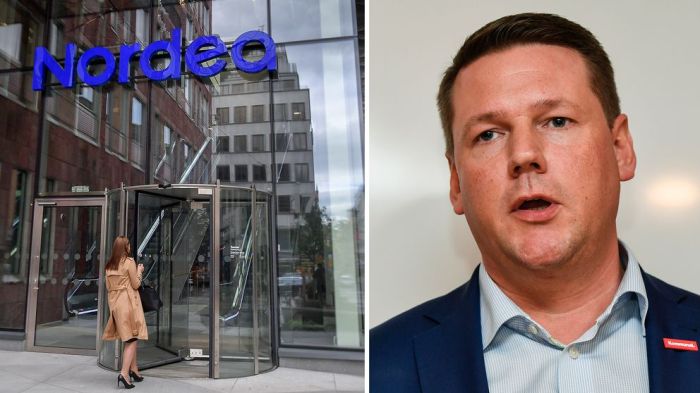
Swedish bank giant Nordea announced recently that they are moving from Sweden to Finland because of a new bank tax that the Swedish government is planning to put in place. The final decision will be made at an annual meeting next year. The threat to move has caused a lot of hoo-ha from both sides of the equation – those who criticise the bank for tax evasion and greed, and those who criticise the government for forcing companies to leave Sweden due to unattractive taxation laws.

Criticising the banks is Sweden’s largest trade union ‘Kommunal.’ – the union that represents council and municipal workers. Just today they announced that if the move happens, they will remove all their money from the bank. We are not talking about a small amount of money either. The amount is one billion Swedish crowns.

‘ We choose banks that reflect our morals and values and who act responsibly. Neither Nordeas MD or board do this,‘ says Kommunal’s chair Tobias Baudine

Kommunal joins other trade unions ‘Handels’ and ‘Seko’ who have also decided to leave Nordea and take with them investments to the value of half a billion Swedish crowns respectively.

Agree or disagree, this is definitely a great example of moral and civil courage. Sometimes as consumers, the best thing we can do is protest with our feet and our wallets.

  • If a business is acting in a way that is contradictory to our values and beliefs then leave them as a customer.
  • If a newspaper is spreading lies and hate, do not buy it or go to its website.
  • If an industry is employing dubious methods, then stop consuming their product.

Do not fund hate. Do not fund greed. Do not fund unethical behaviour (whatever that means for you).

By taking a stance, we have the power to change the world around us. If only we would realise it.


A Swedish thing, or a generational thing? 

Sitting in a restaurant yesterday beside two Swedish women in their mid 20’s. Eavesdropping on their conversation. They were talking about their employment situation. As I sat listening, I was caught between the emotions of affection and horror. 

One said ‘I don’t think employers should be able to place demands on us employees. If they keep placing demands on us, don’t they get that we won’t be happy. Then they’ll have a hard time finding staff’ 

The second woman nodded in agreement. And added ‘yeah, what if we decide we want to do something else like go to Thailand for three months? I want to be able to just go tomorrow if I feel like it.’ 

A Swedish thing, or a generational thing? 

Warring neighbours: Sweden and Finland


finland-sweden-map,0

Many neighbouring countries around the world have had their fair share of conflict. Some countries are currently at war or teetering on the brink.

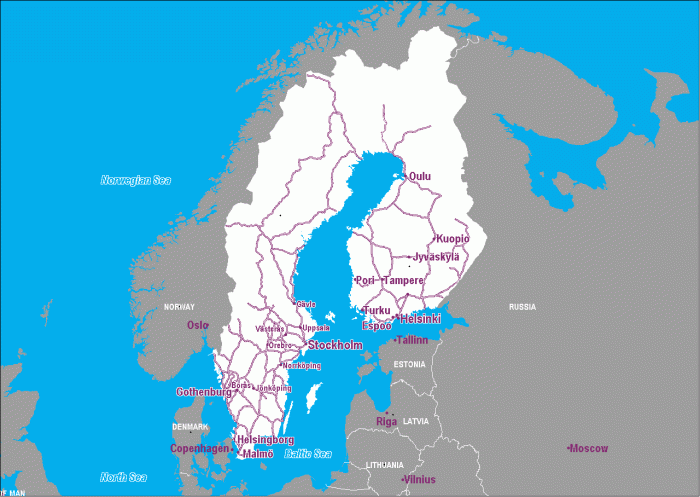
Thankfully, Sweden and the other Nordic countries have lived in peace with each other for centuries. However, Sweden and Finland still battle it out every year in an athletics competition between the two nations – the best type of neighbourly conflict. In Swedish, this is called ‘Finnkamp’ and in Finland it is called ‘Sverigekampen’. This year it is currently taking place in Stockholm.

The first Finnkamp took place in 1925 for men, and 1951 for women and it has taken olace every year, with a few exceptions for organisational disagreements and WWII. It is highly competitive, although friendly, and is a classic track and field event.

In total there have been78 annual competitions for the men and Finland leads 45-31 over Sweden. For the women, there have been 67 competitions and Sweden holds the lead at 41 to Finland’s 25. Let’s see how it ends up this year!

If you want to see the end of it, make your way down to Stadion in Stockholm today to catch the final events.


Amazing immigrants in Sweden: Part 7 Mustafa Can 


Negativity. Fear. Concern. These are some of the reactions many Swedes are experiencing about the influx of immigrants to Sweden in the last couple of years. So, I became curious to learn about some of those individuals who came here as refugees or immigrants to make a better life for themselves. People with roots somewhere else who built a home here and who contributed to Swedish society in a positive way.
For the next seven days, I will celebrate these people. My hope is that we can lift our eyes from the challenges of immigration and understand what useful contributions these people can make to society if given the chance. To our society. Our Sweden


Part 5: Mustafa Can 

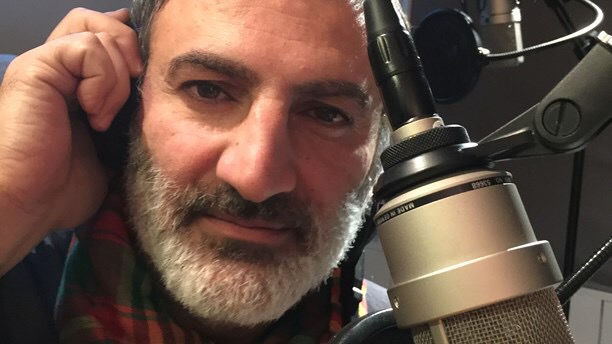
In Sweden, every summer there is a radio series called ‘Radio Talkers’ where various people get a chance to tell their stories and play music. It was in this program some years ago that I first heard of Mustafa Can. His program was very moving and focused around his mother. It was so moving that he won many radio and media prizes as a result.

Mustafa Can works as a prize-winning author, independent journalist and public speaker. His recent work focuses mostly on cultural diversity, identity and xenophobia in Sweden. He provides a controversial voice to the Swedish integration debate.

Mustafa has lived in Sweden for over 40 years. Orginally from Northern Kurdistan in Turkey, he fled with his family when he was 6 years old. He is a great example of someone who arrived in Sweden as a child, became well integrated and uses his position and his voice to try to make Swedish society a better place for everybody.

Amazing immigrants in Sweden Part 6: Hanif Azizi


Negativity. Fear. Concern. These are some of the reactions many Swedes are experiencing about the influx of immigrants to Sweden in the last couple of years. So, I became curious to learn about some of those individuals who came here as refugees or immigrants to make a better life for themselves. People with roots somewhere else who built a home here and who contributed to Swedish society in a positive way.
For the next seven days, I will celebrate these people. My hope is that we can lift our eyes from the challenges of immigration and understand what useful contributions these people can make to society if given the chance. To our society. Our Sweden

   
Part 5: Hanif Azizi

At the age of 9 years old, Hanif Azizi arrived in Sweden as an unaccompanied refugee. His parents were active in a political military organisation, a rebel Group fighting against the regime in Iran. When he was 6 years old, his father was killed in battle and his mother decided to send her children away to safety.

In 1991, Hanif arrived in Sweden with his younger brother and were placed in a host home. In this home, they were subjected to physical and pyschological abuse and were eventually removed by the Swedish Social Services and placed in a secure and supportive environment.

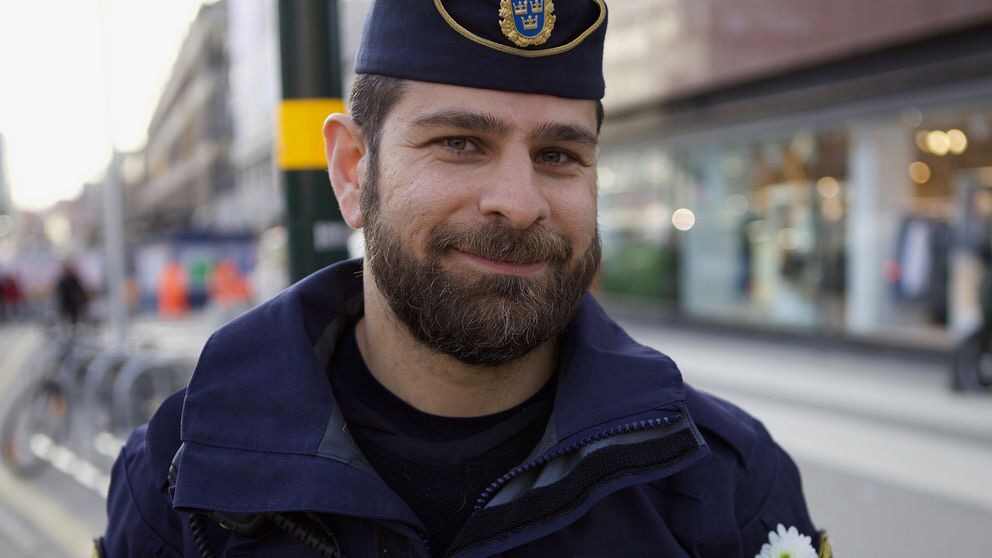
Today, Hanif is 35 and works as a policeman based in the Stockholm suburb of Järva. Here, he works to prevent crime but also to support youths who are at risk of falling into criminality. In Järva there are lots of individuals with an ethnic background. Hanif tries to help them feel involved in Swedish society so as to avoid radicalisation and crime. 

His contribution to Swedish society is extremely valuable. Hanif is an amazing immigrant in Sweden and a positive role model and contributor to Swedish society. 

Amazing immigrants in Sweden: Part 5 Meraf Bahta Ogbagaber 


Negativity. Fear. Concern. These are some of the reactions many Swedes are experiencing about the influx of immigrants to Sweden in the last couple of years. So, I became curious to learn about some of those individuals who came here as refugees or immigrants to make a better life for themselves. People with roots somewhere else who built a home here and who contributed to Swedish society in a positive way.

For the next seven days, I will celebrate these people. My hope is that we can lift our eyes from the challenges of immigration and understand what useful contributions these people can make to society if given the chance. To our society. Our Sweden

 
Part 5: Meraf Bahta Ogbagaber 
Meraf Bahta was born in Dekishahay in Eritrea, a country with heavily criticized human rights. In 2008, at the age of 19, she escaped this one-party military state. In Eritrea, she had been conscripted to do a 5-year long military service, or punishment by imprisonment. Both her parents were imprisoned and her mother had died behind bars. So Meraf fled and found a safe haven in Sweden. In Eritrea, she is considered a deserter and her return there would mean instant death. 

As a middle distance runner, she has participated in many international competitions. Her personal best times are 4:05.11 minutes in the 1500 metres and 14:59.49 minutes in the 5000 metres – which is the Swedish national record. She is also the European champion (2014) in 5000 metres. 

Since 2014 she is a Swedish citizen and eligible to represent Sweden in international events. She did so at the recent Olympics in Rio and World Championships in London. 

Meraf has found security in Sweden and is able to pursue her athletics career without threat or military interference. Watching her on the track, it’s easy to see that she wears her yellow and blue colours with pride.