Singing Swedes – the phenomenon of the choir

Choir singing is an an extremely popular pastime in Sweden. In fact, it’s a bit of a national movement with an estimated 600,000 people singing in a choir. That’s around 17% of the population. I myself sing in a choir and I’d say it’s a challenging but cathartic hobby.

Why is choir singing so common in Sweden? Maybe it’s a nice indoor distraction to have during the long dark winter nights? Maybe it appeals to the Swedish collectivist spirit? Maybe it springs from a long history of hymns, folk songs, drinking songs and contemporary music?

Whatever the reason, it’s very popular! And it’s a brilliant way to make Swedish friends!

The oldest still-active choir in Sweden is said to be the church choir of Ytterlännäs with its almost 200 year history. The oldest academic choir is Allmänna Sången from Uppsala University with 160 years on record. Stockholm’s Gay Choir is not only the oldest gay choir in Sweden, but in Europe – founded in 1982.

According to the Choir Society, the average age of a choir singer in Sweden is 56.6 years. So it doesn’t seem to be a pastime for youngsters once they’ve left school. Part of the challenge for many choirs is the process of rejuvenation as more young people are needed to bolster the aging ranks and its harder to attract them. Choirs with specific focuses seem to find it easier to attract fresh blood – such as Stockholm’s Indie Choir, where the waiting list to get in is long.

One of the most well-known specific choirs in Sweden is, not surprisingly, the ABBA choir. Dressed in ABBA outfits they sing, well, ABBA songs at ABBA tributes. And they love it!

In Sweden, choir song is also a popular way to bring people together, such as in integration choirs. Established Swedes meet newly arrived people and they sing together. The Östersund choir ‘The Rocking Pots’ is a great example of this.

Which town in Sweden has the most choirs do you think? Well according to the statistics, the town of Sundsvall seems to have the most song birds!

Choir festivals are also popular, bringing together choirs from within Sweden and around the world.

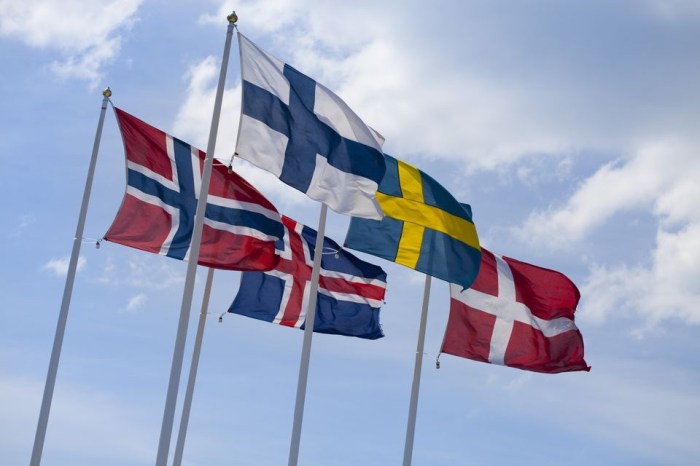
One example of this is the upcoming choir festival ‘Queertune’ which on 27-29 September 2019 brings together 14 LGBTQI choirs from Sweden, Norway, Denmark and Finland.

If you’re interested in listening to the concerts, go to the website http://www.queertune.se to read all about it.

If you’re tempted to join a choir, a good place to look is http://www.sverigeskorforbund.se

Check it out and see what’s available where you live.

So join the Swedes and get singing!

When Sweden lays down the law

The international spotlight has been shone on Sweden’s judicial system in recent weeks. An American rapper is currently being held in custody on suspected physical assault. The President of the USA has intervened and tried to get the rapper released on bail – to no avail. Consequently, Sweden has been accused of corruption and racism.

I thought in this blog, I’d quickly clarify a few things about Sweden’s legal system so that you understand the holding of the rapper is fully compliant with the law.

The Swedish system. Sweden has a civil law system based on Romano-Germanic law. Sweden’s criminal courts have three levels: The Supreme Court of Sweden (Högsta Domstolen), 6 courts of appeals (hovrätter)and 53 district courts (tingsrätter).

The Constitution of Sweden prohibits capital punishment, [1], corporal punishment [2], and “torture or medical influence aimed at extorting or suppressing statements.”[3] Searches and seizures are restricted under Article 6 of the Constitution of Sweden.

When somebody is arrested, police and prosecutors are responsible for conducting initial investigations to determine whether an individual should be prosecuted for a crime – and which crime. Prosecution is mandatory if guilt has been established through the investigation period.

A defendant is entitled to counsel as soon as reasonable suspicion is established during the investigation stage. The defense attorney may ask the prosecutor to conduct specific investigations on the defendant’s behalf.

Any witness may be interrogated for up to six hours. In some jurisdictions such as Gothenburg, the local municipal council hires lay individuals to attend and document interrogations.

No bail system. There is no bail system in Sweden, where somebody can pay a bond to avoid pre-trial detention. Bail is more common in the Anglo-American judicial systems and not the European continental systems. In Sweden, individuals are often detained while awaiting trial, although they can be released without detention and have their travel restricted by court order. If there is a risk of fleeing the country, suspects can legally be kept in police custody by court order until investigations are complete. This is common praxis when it relates to foreign citizens with no residence in Sweden.

Once the initial investigations are complete, a court of law decides what the individual should be charged with, and the trial proceedings commence.

Independent Court of Law. In Sweden, and Finland, the legal system is totally independent and free of influence from political leaders. Members of the government or cabinet may not dictate or interfere with the daily workings of a government agency, court of law or similar. While this is common practice in other countries, in Sweden, this so-called ‘ministerstyre’ is illegal.

When Donald Trump called Sweden’s Prime Minister Stefan Löfven, the Swede explained that the Swedish judicial system, prosecutors and courts are totally autonomous. Everybody is equal in the eyes of the law and that the Swedish government will not and can not try to influence the legal process.

Let’s see what happens. If the rapper has been held in custody incorrectly or if he is charged with a crime that does not warrant incarceration then he has a right to claim compensation.
What have Denmark, Norway, Iceland and Finland had – but Sweden hasn’t?

To date there is something that Denmark, Norway, Iceland and Finland has had, but that Sweden hasn’t. And it’s quite intriguing as to why. The UK has had two. India has had one. Norway has had the most of any country. Currently 27 countries have one. In fact, 76 countries in the world have had one.

Do you know what I’m talking about?

Elected and appointed female heads of state and government.

In the long history of Swedish politics, there has never been a female Swedish Prime Minister. There are female party leaders, mostly of the smaller political parties. Sweden currently has a female Deputy Prime Minister and a female Foreign Minister. But never the head of state.

According to Wiki, ‘Khertek Anchimaa-Toka, of the Tuvan People’s Republic, is regarded as “first ever elected woman head of state in the world” in 1940. The first woman to become prime minister of a country was Sirimavo Bandaranaike of present-day Sri Lanka in 1960. The first woman to serve as president of a country was Isabel Martínez de Perón of Argentina, who as vice-president succeeded to the presidency in 1974 after the death of her husband. The first woman elected president of a country was Vigdís Finnbogadóttir of Iceland, who won the 1980 presidential election and three others to become the longest-serving female head of state in history (exactly 16 years in office).’

So why not in Sweden? I don’t have a theory I’m afraid, but I do think it’s strange that a country that prides itself on leading the politics of equality has only had men as Prime Minister. White, middle-aged, assumably straight, men.

And it doesn’t look like there’ll be any change to that in the coming years. Not unless one of the three largest parties elects a female leader to replace the three men who currently hold those positions.

It’s been almost 100 years since the first woman was elected as a Member of Parliament in Sweden and currently, in the Swedish Parliament, 46% are women. Isn’t it time for a woman to also hold the highest elected political office in the country?

Then Sweden could show its equal par with Denmark, Norway, Iceland and Finland – and 72 other countries around the world.

How to meet Swedes and maybe even find romance

I met up with a good friend yesterday who has just got two puppies. We went for a stroll through Stockholm’s Old Town and out onto the harbour island of Skeppsholmen. These two little puppies are of the breed Daschund, and they were incredibly popular with passers by on the street. Countless times, we were stopped and chatted to by Swedes and tourists alike. It seems that getting a dog is a great way to get people to talk to you in Stockholm!

In Swedish there is a concept called ‘hundtricket’ (the dog trick) which basically is about getting a dog so that you can pick people up on the street. And it obviously works! It’s actually how another friend of mine met her husband.

Of course, this isn’t a specifically Swedish phenomena. It’s been proven to work on dating site Tinder. A UK company carried out some research recently into how attractive people are perceived to be if they have a dog with them in their profile picture. According to the research men got 38% more swipes if there was a dog with them in their picture. Women got 69% more swipes!

People with dogs are apparently perceived as more open, relatable and approachable. Having a dog seems to be a great conversation starter, whether you’re on a dating app or walking down the street.

So, you want to connect more easily with Swedes? Get a dog!

Bad Swedish summer

Last week I was in the Swedish county of Dalarna – where it was 3 degrees and hailed! That was extreme, but also fairly typical of this summer so far.

After last year’s mega warm and long summer, expectations were high for this year. These expectations have been crushed. Cold winds, low temperatures and rain have been the melody of summer 2019 and people are not happy.

There’s a great Swedish expression – ‘there’s no such thing as bad weather, only bad clothes’. I wonder how many people agree with that saying at the moment. Summers like this are filled with reluctant book-reading and crossword solving and not so much sunbathing and swimming.

I guess it’s early days still. The weather can change and August could be amazing. That’s what we all keep telling ourselves.

And that takes us to another great Swedish expression -‘Hope is last thing to abandon us’.

Swedish politics week – important or irrelevant?


Once a year, there is a summer politics week in Sweden. The week is happening now, and takes place in a park called Almedalen on the Baltic island of Gotland, and attracts heavy media coverage. Every day of the week belongs to a specific party that has a seat in the parliament. This year there are 8 parties.

The Alemdalen politics week started when legendary Swedish Prime Minister Olof Palme spoke publicly. It was at the end of the 60s and there was an audience of a few hundred people.

Now Almedalen politics week attracts thousands of participants and is intended to involve the man on the street in politics and to protect the strong Swedish value of democracy and free speech. The idea is that at Almedalen politics week, we meet each other in debate. And in debate and discussion, we influence each other and our environment.

The Almedalen week has been heavily criticized, and just seeing social media can explain why. The event has become a popular opportunity for companies and organizations to meet and network with each other. In a parallel existence, some people go to Almedalen only for this purpose and not to participate in any political activities. Social media is awash with images of participants mingling, drinking rose wine, partying, dancing and taking drunken groupies.

Live and let live I say. Far be it for me to criticize other people’s choices. I just wonder how far away from the original concept of democracy politics week will go.

And how long before your average Swede sees it as elitist, excluding and irrelevant?

How Sweden exposed the Chernobyl catastrophe

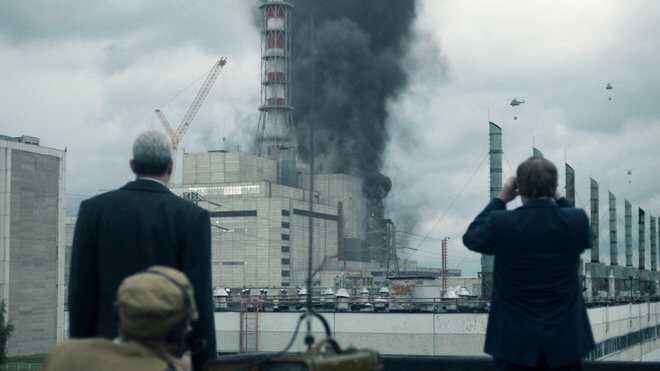
If you haven’t seen the HBO series ‘Chernobyl’, do so. Probably one of the best series ever made, it depicts the events of the nuclear disaster that happened in the Soviet Union in 1986 killing up to an estimated 200,000 people (ref Greenpeace). It’s a vivid reminder of the perils of nuclear energy, and highly relevant to the growing debate in Sweden about the expansion of this form of energy production.

The series is directed by Swede Johan Renck, and stars many Swedish actors such as Stellan Skarsgård. However, what I didn’t know was how important Sweden’s involvement was in the discovery of the disaster.

Here’s how, taken from the European Parliament news page:

The alarm sounded at Forsmark, Sweden’s second largest nuclear power plant, when one of the employees passed one of the radiation monitors on his way back from the restroom. When it showed high levels of radiation coming from his shoes, staff at first worried an accident had taken place at the power plant. However, a thorough scan discovered that the real source of the radiation was some 1,100 kilometres away in the Ukrainian town of Chernobyl.

The early detection by the Forsmark plant, one hour north of Stockholm, played a crucial role in forcing Soviet authorities to open up about the disaster that happened in Chernobyl in April 1986.

Thanks to the power plant’s early detection, they could inform the Swedish authorities at an early stage, who then told the world about the radioactive pollution coming from the disaster in the Soviet Union.

Today, most harmful materials have decayed. But some harmful materials, such as Caesium and Plutonium, will remain in the environment over a longer period of hundreds, even thousands, of years, though at lower levels.’

Sweden was affected in other ways by the radioactive cloud that blew from Ukraine across the Baltic. Still today, people in the north of Sweden are dying of cancer brought on by exposure. As recently as 2017, hunters found a pack of wild boar containing more than 10 times the safe level of radiation.

In Norway, the levels of radioactivity have reduced over time but there are still exceptions. Most recently in 2018, values detected in meat and milk suddenly doubled. The reason turned out to be an unusually widespread crop of mushrooms that year. Fungi have the ability to absorb a lot of radioactivity, up to 1,000 times more than plants. Those yearly variations mean that there will be a need for control for many years to come.

Thanks to its geographical location, Sweden played an important role in the revealing of the Chernobyl nuclear catastrophe. But it also paid a high price, the effects of which will still be felt for generations to come.

Today, Sweden has 8 nuclear power plants producing about 40% of the country’s energy. This is despite a national referendum that voted to phase nuclear energy out by 2010. In 2015, decisions were made to phase out four older plants by 2020.

The constant question is can a disaster like Chernobyl happen again? And are we willing to take that risk?

One thing is for certain, the Chernobyl disaster showed us all that pollution has no borders.

10 Swedish words about the climate

The new words that arrive in a language reflect the main topics of the time. Thanks to the environmental issues that have taken precedence over the years, a bevy of new words has entered the Swedish language. Here are 10 of the newest Swedish environment words:

  1. Klimatångest – ‘climate anxiety’ – a sense of worry about the state of the climate and the environment
  2. Klimataktivist – ‘climate activist’ – someone who campaigns and fights for environmental issues
  3. Flygskam – ‘flying shame’ – the sense of shame that comes when travelling in a plane
  4. Klimatsmart – ‘climate clever’ – living in a way that is beneficial to the environment and climate
  5. Klimatkompensera – ‘to climate compensate’ – the extra fee you can pay when booking a flight that goes to research and development of more ‘climate clever’ solutions
  6. Plogga – to jog and pick up trash at the same time (combination of the Swedish words ‘jogga’ and ‘plocka’ which means pick)
  7. Klimatkollaps – ‘climate collapse’
  8. Plastbanta – ‘to plastic diet’ – the process of cutting down or removing plastic products from your home
  9. Klimatskuld – ‘climate debt’ – the debt that developed countries have to Mother Earth due to the overconsumption of natural resources
  10. Klimatavtryck – carbon footprint – the impact each and everyone of us has on the climate and environment

Do you know any other words that should be on this list?

If you’d like to check your carbon footprint, go to http://www.klimatkontot.se where you can answer some questions and see the result. The test is in Swedish and English.

Please share this post in your channels.

Sleepless in Stockholm

We are rapidly approaching Midsummer and the nights are getting lighter and lighter. Here in Stockholm, it is still daylight at 10pm and it starts to get dark towards midnight. For 6 weeks or so, we experience so-called ‘white nights’, where the sun is below the horizon for less than 6 hours. This makes it bloody difficult to motivate yourself to go to bed and, once there, to get to sleep.

Mind you, this is nothing compared to the northern town of Kiruna in Sweden, where from the 27 May to the 16 July the sun never sets and they have months and months of white nights.

Have you ever seen the movie ‘Insomnia’ with Al Pacino? Based on a Norwegian film with the same name, he plays a cop from LA who goes to Alaska to solve a crime. As time goes on, he suffers more and more from insomnia due to the day-round light and starts to lose his grip on reality. This time of year, I start to feel a bit like Al Pacino.

On week days, when you need to get up for work, nights are spent battling with the bright chinks of daylight that pierce the window shades and shine like an aura around the bedroom door. Effective sleep time is reduced to a few hours and, heavy headed in the morning, you climb into the shower like a zombie to try to bring yourself to life.

So how to survive this period of sleeplessness?

There are a few options:

  • Black-out blinds – sold amongst other places for a reasonable price at IKEA
  • Blindfold – stolen amongst other places from airlines
  • Sheet over head – not very comfortable and rather sweaty
  • Brick up the windows – probably not approved by the local council, or the residents’ board
  • Rain dancing – to try to conjure up dark clouds to block out the daylight
  • Get up and do yoga – no, just kidding
  • Drugs – always an option, but can bring on a whole new set of problems
  • Lavender under the pillow – supposed to relax you, just makes me sneeze and the bedroom smell
  • Take your bedding to the windowless bathroom and sleep in the bathtub – effective but tragic

Or alternatively, just suck it up and enjoy the white nights as an exotic natural Scandi-phenomenon. Reassure yourself that thankfully you don’t live in Kiruna, or Alaska.

And finally, philosophically remind yourself that this too will pass – and all too soon it will be day-round darkness.

In Sweden, parents curl. In the UK, they fly helicopters.


Recently somebody was telling me about one of his employees whose mother rang him to discuss her daughter’s salary. Another friend mentioned a man who brought his father to a job interview. I personally know a mother who does her 30-year old son’s laundry, cleaning, decorating and food shopping, even though he has his own apartment. And a 29-year old who asks his mother what he likes and should eat when they’re out at a restaurant. Teachers constantly witness about parents who demand them to increase their child’s grades. And a wave of protecting children from ‘hurt feelings’ is viral in Swedish schools, as though hurt feelings are the worst thing that can happen.

These are all clear examples of overprotective adults who don’t see that they are doing their offspring any favours in life by disempowering them by overhelping.

In Swedish, because it is so common, there is a word for these type of parents. They are known as ‘curling parents’ – a reference to the sport of ice curling. Just like in the icy sport, curling parents smooth the way for their children. They sweep away any obstacles and make life easier. They think they are taking their role as a parent seriously. Life is so difficult anyway that they should try to cushion the blows for their children. But what they’re really doing is robbing their children of the chance to develop essential life skills and feel a sense of personal responsibility and achievement.

This is of course not unique to Sweden – but rather more related to the anxious parenting style of the Baby Boomers and GenX around the world. In English-speaking countries, they are called helicopter parents, because they hover noisily over their children and look for difficulties ahead. Psychologists tell us that this form of parenting has coincided with an increased societal perception of child endangerment which has led to a base of paranoia. The age of the mobile phone has also contributed massively, one researcher referring to it as ‘the world’s largest umbilical chord’.

It is a difficult balance to strike, isn’t it? On the one hand, parents should love, guide and protect their children. On the other hand, they should equip their children to be independent, self-sufficient and capable adults.

Curling is not the solution. Links between overprotective parents and long-term mental problems in their children have been seen. Adult children of curling parents are often unable to regulate their own behavior.

Former Stanford dean Julie Lythcott-Haims, drawing from her experiences seeing students come in academically prepared but not prepared to fend for themselves, wrote a book called ‘How to Raise an Adult’, in which she urges parents to avoid “overhelping” their children.

So I urge all parents in Sweden and beyond to take a long look at themselves. Are you overbearing, overprotective and over-controlling? Do you oversee every aspect of your child’s life? Are you providing yourself with happiness and security at the expense of your children?

Are you raising an independent, capable adult?