Swedish politics for the uninitiated

For those of you unfamiliar with the Swedish political system, here is a quick crash course.

Sweden is governed by a democratically elected government, led by a Prime Minister. Legislation is proposed by the government and decided by a multi-party parliament. The system of election to parliament is one of proportional representation. This means that there are several smaller parties, and sometimes they end up holding the balance of power. To hold one of the parliament’s 349 seats, parties must have a minimum of 4% of the vote. This barrier was put in place to prevent very small parties getting in.

Every four years, in September, a General Election is held in Sweden. At the same time, elections for the 290 local council authorities, and 20 county authorities are held. Sweden had a 87.18% voter turn-out in the last election in 2018, which shows a strong democratic interest from the electorate.

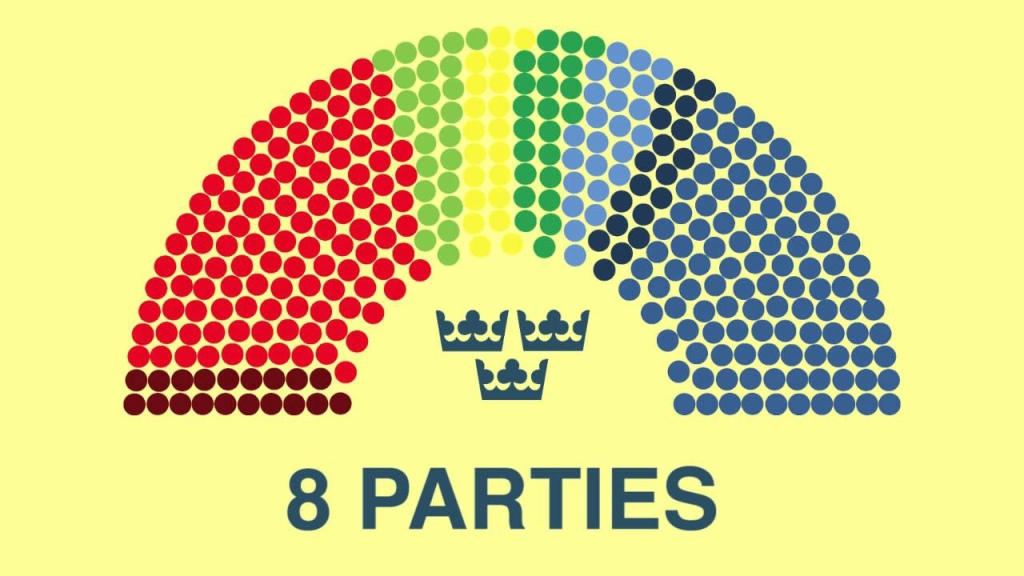
There are currently 8 parties in the Swedish Parliament. In the last election, the Social Democrats (left of center) gained the largest percentage of the vote – 28.26%. The next largest party was the Moderate (Conservative) party with 19.84%. Since proportional representation is the method, no single party receives their own mandate in Swedish politics. This means a process of discussion, negotiating and wheeling-dealing with smaller parties is required to gain majority, come over 50% and to gain a position of government.

Sweden’s current government took a very long time to finalise. After each general election, the Speaker of the House announces the preliminary Prime Minister, initially the leader of the party with the most votes. This person then has the task of forming a government and getting it passed through parliament. After the last election, the government was finally approved after an enormous 129 days of negotiation. It is a minority government led by the Social Democrats and containing the Greens (4.41%). It is supported by 3 opposition parties – the Left Party (8%), the Center Party (8.61%) and the Liberals (5.49%). This is a very unusual coalition which has shuffled around the political map and brought together parties with many opposing views. Some people think of it as an unholy and unsustainable grouping. However, despite their different political ideologies, this middle-ground alliance are united in one ambition – keeping the right-wing nationalistic party Sweden Democrats (17.53%) out of government.

It remains to be seen how long this alliance will hold, and indeed what will happen in the next election in 2 years time. It seems that Sweden might be caught in the jaws of political populism. In a recent opinion poll, the nationalists Sweden Democrats came out as number 1.

So is Sweden in a conservative renaissance – will the next coalition government be conservative-right wing?

Time will tell.

Buying sex in Sweden

In a recent police raid, over 40 men were arrested at temporary brothels in Stockholm. They were charged with buying, or attempting to buy sex. The brothels, which are also illegal in Sweden, were shut down.

So what is Sweden’s policy on prostitution? Well, it is criminalized and in fact Sweden has a trail-blazing approach to prostitution. In 1999, the Sex Purchase Act came into existence. This Act makes it illegal to purchase “sexual services” but not to sell them. So the purchaser is the criminal and not the prostitute. The rationale for criminalizing the buyer, but not the seller, was stated in the 1997 government proposition, namely that “…it is unreasonable to also criminalize the one who, at least in most cases, is the weaker party who is exploited by others who want to satisfy their own sexual desires”.

This law has since been copied and put in place in various other countries, such as Canada, Norway and Iceland. According to the statistics, the law has seen a huge decline in prostitution and trafficking, although it is by far not eradicated.

According to journalist Meghan Murphy, who has written extensively about prostitution- ‘The Swedish model is about more than just changing the law. It is also an idea — it is about changing the culture, and the culture is what needs to change as well as our legislative approach. What the model and its proponents are saying is that men are not entitled to access the bodies of women and girls, even if they pay.”

However, the law is controversial and is not without its critics.

Those who criticize it claim that the law isn’t as effective as people think and that sex work in Sweden is just driven more dangerously deeper underground. They also claim the law strips women of their control and their rights to do with their body as they wish to. An article on mic.com says ‘Sweden’s belief that prostitution is the most brutal expression of patriarchy has engendered a kind of paternalism about commodified sex that holds men responsible for their actions while assuming women can’t be. It wipes out the possibility of gray areas for men and women to be equal partners in exchanging money for sex.’ In other words, according to them, the feminist-driven Sex Purchase Act is entirely unfeminist.

So, the age old debate carries on. The discussion about if prostitution is inherently exploitative. Should it be criminalized, or can it be developed to maximize equality for everyone involved? In Sweden, the buyer is criminalized. In most other countries, the seller is criminalized. In Germany, Holland, Austria, Switzerland, Greece, Turkey, Hungary and Latvia prostitution is legal and regulated. Different approaches to the same situation.

What do you think?

Sweden’s Swexit?

In the aftermath of Brexit on Friday at midnight, I now cherish my Swedish passport even more. It is the Swedish passport that provides me with the free movement and international access that I so strongly believe in. And it is the membership in the EU that, in my opinion, gives us strength, community and a chance for peace. From living in Sweden, I have learned an important lesson – ‘tillsammans är vi starkare’ – together, we are stronger.
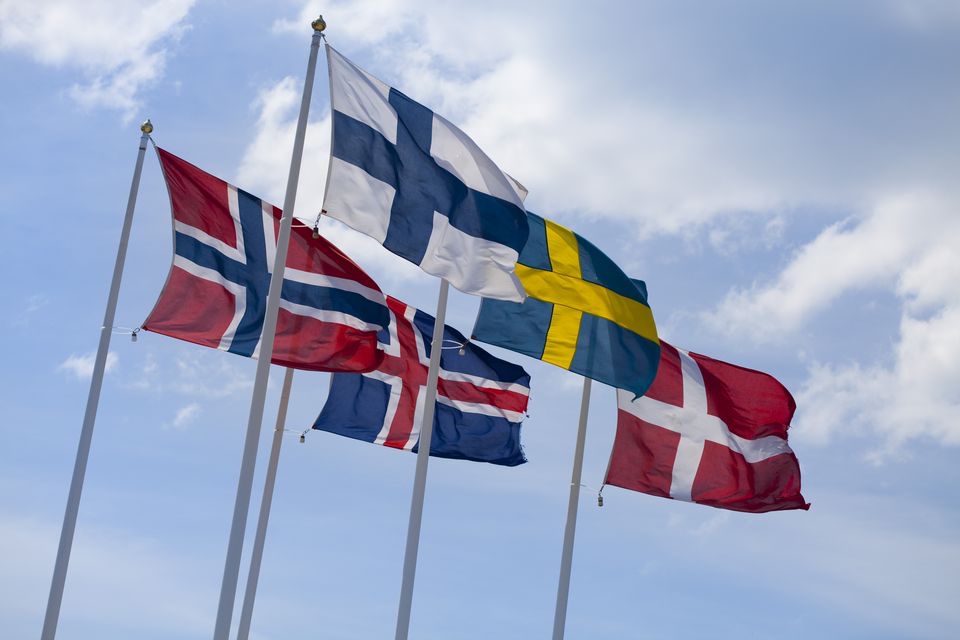
Watching the officials remove the Union Jack from the EU Parliament display, I noticed that it was positioned next to Sweden’s blue and yellow flag. It got me thinking that if Sweden was to leave the EU, it would be called a Swexit. But what could it be called in Swedish? Which one sits most comfortably on the tongue?

  • Svutgång
  • Svorti
  • Svutträde
  • Svupplösning
  • Svavgång

Hopefully, it will never happen. It would be truly swawful.

Sweden through the 2010’s – a retrospective

The Guardian newspaper describes the 2010’s as ‘The Age of Perpetual Crisis – a decade that disrupted everything but resolved nothing.’

Looking internationally it’s easy to see this. But is it the case in Sweden? Partially yes, but everything wasn’t bad.

Here’s a look back at the second decade of the century and a chance to remember some of the good and bad things that happened during 2010-2019 – in Sweden.

2010 – Crown Princess Victoria marries Daniel Westling, her former personal trainer. The last öre coin (50 öre) disappears from circulation. A suicide bomber blows himself up in central Stockholm – with no other casualties. Sweden accuses Julian Assange of rape, and issues an international arrest warrant.

2011 – Håkan Juholt replaces Mona Sahlin as leader of the Social Democrats, but it is very short-lived – he resigns a few months later. Over 50,000 people emigrate from Sweden – the largest ever exodus (as a percentage) in the country’s history.

2012 – Friends Arena opens in Solna and becomes Sweden’s national arena hosting 75,000 people. Loreen wins Eurovision with the popular song ‘Euphoria’ in Baku. Princess Estelle is born and thereby secures the future of the Swedish monarchy. Swedish Candy Crush Saga took the gaming world by storm.

2013 – Riots occur in Stockholm suburb Husby with at least 100 cars set on fire. A train derails outside Stockholm (Saltsjöbanan) and crashes into an apartment building. The man bun trend kicks off. The ABBA museum opens and quickly becomes a popular tourist attraction in Stockholm.

2014 – 80,000 refugees come to Sweden and one person sets fire to himself outside the Migration office in Karlstad. Suspected Russian u-boat in Stockholm’s archipelago. In a general election, sitting Prime Minister Fredrik Reinfeldt loses to Stefan Löfven.

2015 – Måns Zelmerlöw wins Eurovision with ‘Heroes’. A rare earthquake occurs outside Gothenburg. Unrelated knife attacks in a school in Trollhättan and an IKEA in Västerås. Henning Mankell, author of the Wallander books, passes away. Passport control is introduced at Sweden’s bridge border to Denmark in an attempt to stem illegal immigration.

2016 – Swedish actress Alicia Wikander wins an Oscar for The Danish Girl. Singer Josefin Nilsson dies from the aftermath of domestic abuse. Sweden goes Pokemon crazy. A massive snow storm disables the capital. Henrik Stenson becomes the first male Swedish golfer to win the Open. The expensive and heavily-criticised New Karolinska hospital finally opens and receives its first patients.

2017 – Sweden’s population reaches 10,000,000. A terrorist attack on Stockholm’s main shopping street, Drottninggatan, kills 7 and scars the nation for ever. The MeToo movement sweeps over Sweden.

2018 – Sex scandal in the Swedish Academy with the consequence of many members resigning and no Nobel prize for literature being decided. Journalist Kim Wall is murdered in a submarine in Copenhagen. Using a mobile and driving at the same time becomes illegal. Swedish DJ Avicii commits suicide. Swedish legend Lill Babs dies. Massive forest fires devour Sweden.

2019 – 16 year old environmental activist Greta Thunberg sails the Atlantic, speaks at the UN and is named Person of the Year by Time magazine. The King makes symbolic changes to the Royal court. American rapper ASAP Rocky is arrested in Stockholm for assault. Sweden is rocked by a series of shootings and bombings throughout the country. Swedish Democrats become the second largest party in opinion polls. Swedes become more climate aware – the number of electric-driven cars increases and the amount of meat consumption decreases.

What sticks in your memory from the decade gone by?

Guardian article

When Sweden lays down the law

The international spotlight has been shone on Sweden’s judicial system in recent weeks. An American rapper is currently being held in custody on suspected physical assault. The President of the USA has intervened and tried to get the rapper released on bail – to no avail. Consequently, Sweden has been accused of corruption and racism.

I thought in this blog, I’d quickly clarify a few things about Sweden’s legal system so that you understand the holding of the rapper is fully compliant with the law.

The Swedish system. Sweden has a civil law system based on Romano-Germanic law. Sweden’s criminal courts have three levels: The Supreme Court of Sweden (Högsta Domstolen), 6 courts of appeals (hovrätter)and 53 district courts (tingsrätter).

The Constitution of Sweden prohibits capital punishment, [1], corporal punishment [2], and “torture or medical influence aimed at extorting or suppressing statements.”[3] Searches and seizures are restricted under Article 6 of the Constitution of Sweden.

When somebody is arrested, police and prosecutors are responsible for conducting initial investigations to determine whether an individual should be prosecuted for a crime – and which crime. Prosecution is mandatory if guilt has been established through the investigation period.

A defendant is entitled to counsel as soon as reasonable suspicion is established during the investigation stage. The defense attorney may ask the prosecutor to conduct specific investigations on the defendant’s behalf.

Any witness may be interrogated for up to six hours. In some jurisdictions such as Gothenburg, the local municipal council hires lay individuals to attend and document interrogations.

No bail system. There is no bail system in Sweden, where somebody can pay a bond to avoid pre-trial detention. Bail is more common in the Anglo-American judicial systems and not the European continental systems. In Sweden, individuals are often detained while awaiting trial, although they can be released without detention and have their travel restricted by court order. If there is a risk of fleeing the country, suspects can legally be kept in police custody by court order until investigations are complete. This is common praxis when it relates to foreign citizens with no residence in Sweden.

Once the initial investigations are complete, a court of law decides what the individual should be charged with, and the trial proceedings commence.

Independent Court of Law. In Sweden, and Finland, the legal system is totally independent and free of influence from political leaders. Members of the government or cabinet may not dictate or interfere with the daily workings of a government agency, court of law or similar. While this is common practice in other countries, in Sweden, this so-called ‘ministerstyre’ is illegal.

When Donald Trump called Sweden’s Prime Minister Stefan Löfven, the Swede explained that the Swedish judicial system, prosecutors and courts are totally autonomous. Everybody is equal in the eyes of the law and that the Swedish government will not and can not try to influence the legal process.

Let’s see what happens. If the rapper has been held in custody incorrectly or if he is charged with a crime that does not warrant incarceration then he has a right to claim compensation.

What have Denmark, Norway, Iceland and Finland had – but Sweden hasn’t?

To date there is something that Denmark, Norway, Iceland and Finland has had, but that Sweden hasn’t. And it’s quite intriguing as to why. The UK has had two. India has had one. Norway has had the most of any country. Currently 27 countries have one. In fact, 76 countries in the world have had one.

Do you know what I’m talking about?

Elected and appointed female heads of state and government.

In the long history of Swedish politics, there has never been a female Swedish Prime Minister. There are female party leaders, mostly of the smaller political parties. Sweden currently has a female Deputy Prime Minister and a female Foreign Minister. But never the head of state.

According to Wiki, ‘Khertek Anchimaa-Toka, of the Tuvan People’s Republic, is regarded as “first ever elected woman head of state in the world” in 1940. The first woman to become prime minister of a country was Sirimavo Bandaranaike of present-day Sri Lanka in 1960. The first woman to serve as president of a country was Isabel Martínez de Perón of Argentina, who as vice-president succeeded to the presidency in 1974 after the death of her husband. The first woman elected president of a country was Vigdís Finnbogadóttir of Iceland, who won the 1980 presidential election and three others to become the longest-serving female head of state in history (exactly 16 years in office).’

So why not in Sweden? I don’t have a theory I’m afraid, but I do think it’s strange that a country that prides itself on leading the politics of equality has only had men as Prime Minister. White, middle-aged, assumably straight, men.

And it doesn’t look like there’ll be any change to that in the coming years. Not unless one of the three largest parties elects a female leader to replace the three men who currently hold those positions.

It’s been almost 100 years since the first woman was elected as a Member of Parliament in Sweden and currently, in the Swedish Parliament, 46% are women. Isn’t it time for a woman to also hold the highest elected political office in the country?

Then Sweden could show its equal par with Denmark, Norway, Iceland and Finland – and 72 other countries around the world.

Swedish politics week – important or irrelevant?


Once a year, there is a summer politics week in Sweden. The week is happening now, and takes place in a park called Almedalen on the Baltic island of Gotland, and attracts heavy media coverage. Every day of the week belongs to a specific party that has a seat in the parliament. This year there are 8 parties.

The Alemdalen politics week started when legendary Swedish Prime Minister Olof Palme spoke publicly. It was at the end of the 60s and there was an audience of a few hundred people.

Now Almedalen politics week attracts thousands of participants and is intended to involve the man on the street in politics and to protect the strong Swedish value of democracy and free speech. The idea is that at Almedalen politics week, we meet each other in debate. And in debate and discussion, we influence each other and our environment.

The Almedalen week has been heavily criticized, and just seeing social media can explain why. The event has become a popular opportunity for companies and organizations to meet and network with each other. In a parallel existence, some people go to Almedalen only for this purpose and not to participate in any political activities. Social media is awash with images of participants mingling, drinking rose wine, partying, dancing and taking drunken groupies.

Live and let live I say. Far be it for me to criticize other people’s choices. I just wonder how far away from the original concept of democracy politics week will go.

And how long before your average Swede sees it as elitist, excluding and irrelevant?

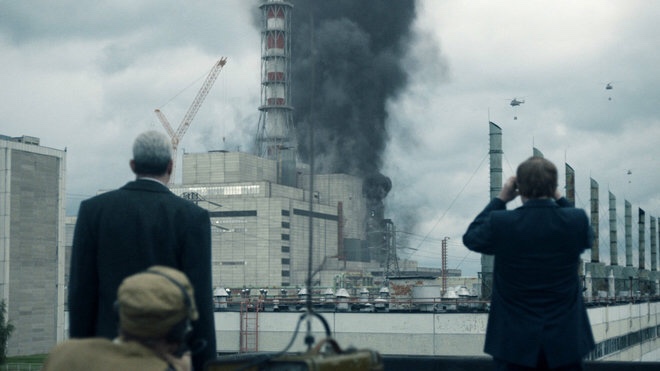
How Sweden exposed the Chernobyl catastrophe

If you haven’t seen the HBO series ‘Chernobyl’, do so. Probably one of the best series ever made, it depicts the events of the nuclear disaster that happened in the Soviet Union in 1986 killing up to an estimated 200,000 people (ref Greenpeace). It’s a vivid reminder of the perils of nuclear energy, and highly relevant to the growing debate in Sweden about the expansion of this form of energy production.

The series is directed by Swede Johan Renck, and stars many Swedish actors such as Stellan Skarsgård. However, what I didn’t know was how important Sweden’s involvement was in the discovery of the disaster.

Here’s how, taken from the European Parliament news page:

The alarm sounded at Forsmark, Sweden’s second largest nuclear power plant, when one of the employees passed one of the radiation monitors on his way back from the restroom. When it showed high levels of radiation coming from his shoes, staff at first worried an accident had taken place at the power plant. However, a thorough scan discovered that the real source of the radiation was some 1,100 kilometres away in the Ukrainian town of Chernobyl.

The early detection by the Forsmark plant, one hour north of Stockholm, played a crucial role in forcing Soviet authorities to open up about the disaster that happened in Chernobyl in April 1986.

Thanks to the power plant’s early detection, they could inform the Swedish authorities at an early stage, who then told the world about the radioactive pollution coming from the disaster in the Soviet Union.

Today, most harmful materials have decayed. But some harmful materials, such as Caesium and Plutonium, will remain in the environment over a longer period of hundreds, even thousands, of years, though at lower levels.’

Sweden was affected in other ways by the radioactive cloud that blew from Ukraine across the Baltic. Still today, people in the north of Sweden are dying of cancer brought on by exposure. As recently as 2017, hunters found a pack of wild boar containing more than 10 times the safe level of radiation.

In Norway, the levels of radioactivity have reduced over time but there are still exceptions. Most recently in 2018, values detected in meat and milk suddenly doubled. The reason turned out to be an unusually widespread crop of mushrooms that year. Fungi have the ability to absorb a lot of radioactivity, up to 1,000 times more than plants. Those yearly variations mean that there will be a need for control for many years to come.

Thanks to its geographical location, Sweden played an important role in the revealing of the Chernobyl nuclear catastrophe. But it also paid a high price, the effects of which will still be felt for generations to come.

Today, Sweden has 8 nuclear power plants producing about 40% of the country’s energy. This is despite a national referendum that voted to phase nuclear energy out by 2010. In 2015, decisions were made to phase out four older plants by 2020.

The constant question is can a disaster like Chernobyl happen again? And are we willing to take that risk?

One thing is for certain, the Chernobyl disaster showed us all that pollution has no borders.

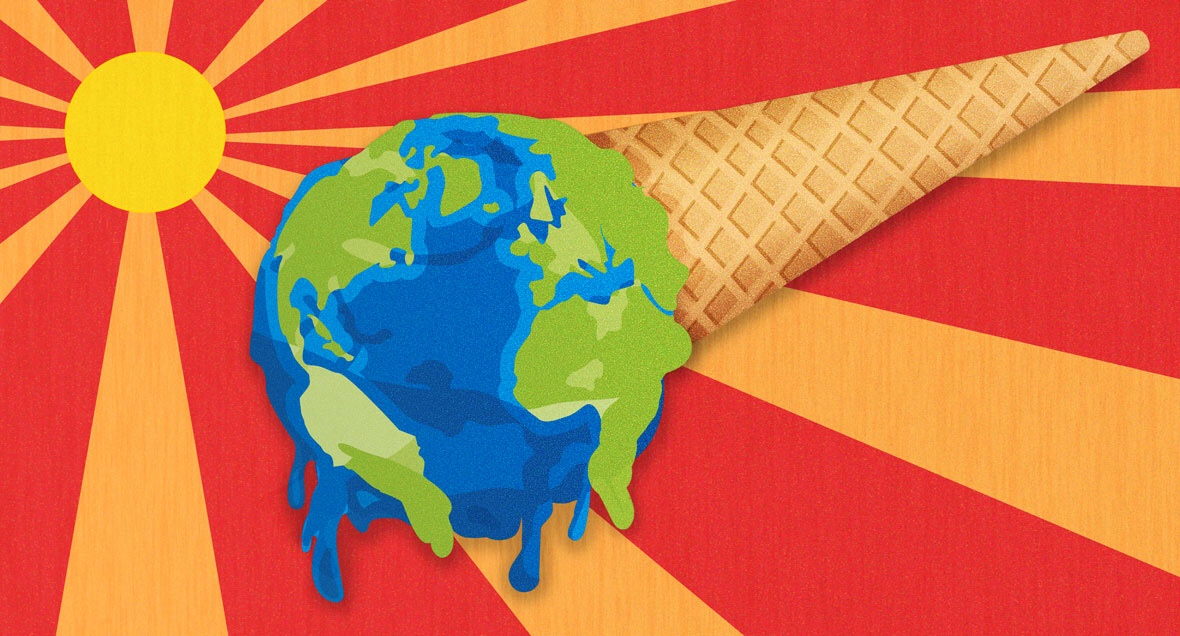
10 Swedish words about the climate

The new words that arrive in a language reflect the main topics of the time. Thanks to the environmental issues that have taken precedence over the years, a bevy of new words has entered the Swedish language. Here are 10 of the newest Swedish environment words:

  1. Klimatångest – ‘climate anxiety’ – a sense of worry about the state of the climate and the environment
  2. Klimataktivist – ‘climate activist’ – someone who campaigns and fights for environmental issues
  3. Flygskam – ‘flying shame’ – the sense of shame that comes when travelling in a plane
  4. Klimatsmart – ‘climate clever’ – living in a way that is beneficial to the environment and climate
  5. Klimatkompensera – ‘to climate compensate’ – the extra fee you can pay when booking a flight that goes to research and development of more ‘climate clever’ solutions
  6. Plogga – to jog and pick up trash at the same time (combination of the Swedish words ‘jogga’ and ‘plocka’ which means pick)
  7. Klimatkollaps – ‘climate collapse’
  8. Plastbanta – ‘to plastic diet’ – the process of cutting down or removing plastic products from your home
  9. Klimatskuld – ‘climate debt’ – the debt that developed countries have to Mother Earth due to the overconsumption of natural resources
  10. Klimatavtryck – carbon footprint – the impact each and everyone of us has on the climate and environment

Do you know any other words that should be on this list?

If you’d like to check your carbon footprint, go to http://www.klimatkontot.se where you can answer some questions and see the result. The test is in Swedish and English.

Please share this post in your channels.

Why fascists should be allowed no platform in Sweden

The trouble with being empathetic‘, somebody once said, ‘is that you also feel sorry for assholes.’

But I have had enough! I have had enough!

I’m sick of being liberal and accepting and allowing. I’m done with it. Although far from everybody, Sweden and Europe is full of assholes.

Yesterday in Sweden, a left wing politician was physically attacked by members of the nazi party on the street. This is only one of many anti democratic incidents we are witnessing in our society.

After the EU election, it is abundantly clear that a climate of Islamophobia and anti-immigrant racism is being stoked in Europe and Sweden.

There are many examples. In Sweden, like in many other countries, the main nationalistic party (called SD) gained ground. White supremists demonstrate openly on the streets of Sweden. Last week, in Sweden, RFSL (The Swedish Federation for Lesbian, Gay, Bisexual, Transgender and Queer Rights) said they would not participate in Sweden’s politics week due to threats from a nazi party.

Enough!

The democratic dilemma

As liberals, we have a dilemma on how to handle this spiraling situation. As self-identified beacons of democracy, we believe that freedom of speech should apply to everybody – even if their ideas are heinous. Banning opinion is, in itself, a fascistic move. Or is it?

I am a democrat. I believe in freedom of speech. But for me the solution is simple. The fascist opinion is not like any other opinion. It is filled with violence and hatred and should be allowed no platform in an open society.

No platform for fascists

When I say that there should be no platform for fascists, I mean that pro-democratic legislation should be stricter. I mean far right supremist groups should be criminalized in Sweden. I mean fascist meetings should be shut down, their attempts to rally and march should be prevented, counter-picketed and blocked.

It is not just because what they say is offensive. It is not a question of whether I like or agree with what they have to say. It is because hate speech does not end as speech. It is a call to violence, a tool to organize attacks on vulnerable communities.

When fascists get a platform, violence against minorities goes up. This we know. This we are seeing.

Fascism is a disease

Fascism is a disease in Swedish society. It aims to destroy our democracy and concentrate power in the hands of a “racially superior” minority. To succeed, it requires the destruction of freedom of speech. It requires destroying mass organizations of working people and unions. It requires the dismantling of free press, as SD has suggested the privatisation of public service radio. It uses an army of internet trolls. Fascism uses the blinkered limitations of liberalism to destroy itself.

Today’s fascists in Sweden and Europe try to re-brand themselves as something less threatening than their past incarnations. They are “alt-right” and pretend to be champions of free speech. They are not. They wear suits and smile into the camera. They claim they are anti-establishment and present themselves as scapegoats. They pander to the sick and the elderly by offering them more money. They pretend they aren’t racists or homophobes, just champions of white people and Swedish culture and “values”. They try to keep their real ideas and aims in the dark.

Freedom of speech

Freedom of speech is not absolute. When thugs disrupt Pride parades that is not free speech. When fascists demonstrate during the May 1st celebrations, it is not free speech – it is intimidation and an attempt to incite violence. We have a right and a duty to prevent it, through the law, superior numbers and organization.

Unfortunately, racism cannot be defeated by logical argument. Racism, and fascism, grows by an appeal to the irrational, fear and hatred. It has to be smashed.

You might think I’m a drama queen who is making a mountain out of a mole hill. But I have had enough! I’m sick of allowing undemocratic people access to our democracy.

We cannot under-estimate the threat fascism poses in Sweden, our communities, schools and workplaces. Pro-democrats must make it a top priority to expose it and organize to stomp it out wherever we find it. We must unite in saying – not here, not on our watch, not in Sweden.

Sweden, that means: no platform for fascists.