What is Sweden’s ‘Tranquil Week’ ?

There is an irony to the fact that we are socially distancing, quarantining and home working specifically during this week. In Swedish, this week is called ‘Stilla Veckan’ – which literally translates as ‘tranquil week’ or ’quiet week’.

‘Stilla Veckan’ is a term in the Swedish church calendar to describe the week leading up to Easter – the last week of Lent. In English, we call it Holy Week.

Every day in ‘Stilla Veckan’ has a name. Holy Saturday is called ’Påskafton’ in Swedish, which translates as Easter Eve. Do you know what the Sunday, Monday, Tuesday, Wednesday, Thursday and Friday leading up to Easter are called?

The Sunday before Easter is called ’Palmsöndag’ – Palm Sunday in English. According to scripture, it commemorates Jesus’ triumphant arrival into Jerusalem. The crowds threw palm branches in front of him as he approached.

The Monday before Easter is called Blå Måndag – Blue Monday. It can also be called ‘Svart Måndag’, (Black Monday), ’Bullmåndag’ (Bun Monday), ’Fläskmåndag’ (Pork Monday) and ’Korvmåndag’ (Sausage Monday). It is called a predictable Holy Monday in English.

The Tuesday before Easter is called ‘Vittisdagen’ (White Tuesday). This is called Holy Tuesday in English.

Both Blue Monday and White Tuesday were originally used to describe the Monday and Tuesday before Lent begins in Ash Wednesday. At some point in history, they were moved colloquially to describe the Monday and Tuesday before Easter instead. Blue Monday refers to the colour that church rooms were painted on this day. White Tuesday is an old name for Shrove Tuesday, Fettisdag in Swedish, and probably refers to the flour that was used to make the Lent buns.

The Wednesday before Easter is, unsurprisingly, called Holy Wednesday in English. However, in Swedish it had the fascinating name ‘Dymmelonsdag’. This literally translates as ‘Clapper Wednesday’. The clapper that this is referring to is a wooden clapper that was traditionally put inside the church bells on this day so that the chimes would have a more subdued sound during Easter weekend.

The Thursday before Easter is called ‘Skärtorsdag’ in Swedish. This translates as ‘Clean Thursday’ and refers to the ritual of Jesus washing the feet of the disciples before the Last Supper. In English, this day is called Maundy Thursday.

And finally, the Friday before Holy Saturday is called Good Friday in English. This is derived from an obsolete meaning of the word good as being holy. In Old English, this day was called Long Friday, which is the name that was adopted in Swedish – ‘Långfredag’.

The Swedish King and the British Queen

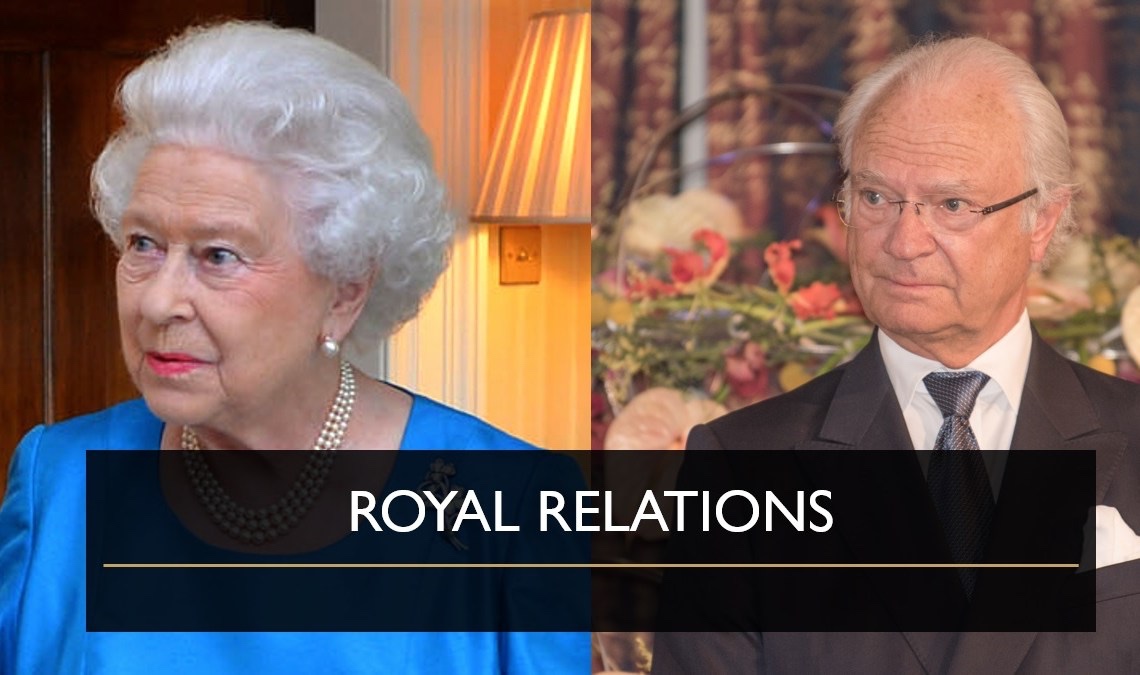
Both Sweden and the UK have reigning monarchs. The UK’s has Queen Elisabeth II and Sweden has King Carl Gustaf XVI. Like most of the European monarchs, they are related to each other. King Carl Gustaf is a descendent of the UK’s Queen Victoria, making him and Queen Elisabeth third cousins.

The other evening, they both gave a speech to their respective nations in regards to the corona pandemic. And they were like chalk and cheese.

I first watched the Swedish King’s speech. This bumbling, friendly man stumbled his way through his speech. Heavily dependent on his paper notes, he sounded a bit robotic to me. A friend of mine said it was like watching a trained chimp. Don’t get me wrong, I like the Swedish King. He seems like a nice man. But as a father of the nation in times of crisis, he missed the mark for me.

Then I watched the British Queen. This imperturbable woman, looking straight into that camera, embodied calm and credibility. In her typical restrained manner, her speech had depth and meaning, and her words were truly comforting in a crisis – from the nation’s mother.

I reflected over the two speeches, and why my reaction was so different. Part of it was definitely influenced by the delivery of the speech. The Queen used an auto prompt which enabled her to look into the camera, straight into the living rooms of her subjects. The King also looked into the camera but read from paper notes, meaning he frequently lost vital connection with his audience. The Queen spoke fluently, the King, who has dyslexia, struggled through his speech. The Queen looked dignified and prepared. The King looked like a stunned uncle who has unexpectedly been called upon to deliver a speech at a funeral.

However, I think the main difference for me lies in the cultural value of language. Even though I can speak Swedish, King Carl Gustaf’s words did not resonate with me. I understood him but was not moved by him. His words hit me in the brain, but not the heart. In comparison, English is my mother tongue, my native language. I have a more emotional relationship to English. When words of gravitas are spoken in my native language, I experience them with depth and fullness.

This really surprises me. I’ve been in Sweden over 25 years, I speak Swedish on a daily basis, and many of my relationships are in Swedish only. Yet in times of crisis and seriousness, words in my first language cut through Swedish like a knife through butter. It goes to show the mark that our first language leaves on us – our language of feeling. This is the language that indelibly forms our emotional cultural identity.

The colourful Swedish Easter tree

With Easter approaching, Swedes start pimping their homes. Yellow table cloths, yellow curtains and yellow tulips are common, as is something called a ‘påskris’. Pronounced ‘poskrees’, this is a Swedish Easter tree.

The Easter tree is a bunch of twigs and sticks (usually birch) in a vase with brightly coloured feathers attached to the ends. Some people also hang decorated eggs, colourful ribbons or festive chickens. The Easter tree can be seen all over the country this time of year. Outside shop entrances, in peoples’ living rooms, outdoors in the neighbours’ gardens. It is a very popular decoration, probably because it brings colour at a time of the year when most flowers haven’t yet bloomed in Sweden.

The Easter tree is an interesting cultural phenomena. In fact, all products of a society are. This is because they originate somewhere and, often, we have forgotten the origin but still maintain the product or behaviour.

What’s the origin and symbolism of the Easter tree then?

Well, some Swedes say that it symbolises the wiping away of the winter. The twigs represent a broom and the feathers get caught in the broom as we sweep.

Others say that it represents witchcraft. The twigs represent a witch’s broomstick and the feathers indicate flight. This could also be why Swedish kids dress up as witches at Easter and do a kind of ‘trick or treating’ for Easter eggs.

But, apparently the Easter tree has a completely different origin and symbolism. It dates from the 1600’s. Swedish people at this time were more pious, and used to take twigs and sticks and beat each other with on Good Friday – to commemorate the suffering of Jesus. In the 1800’s and 1900’s, they started to be decorated and became a symbolic decoration for Easter.

So, wiping, witching or whipping. Who would have thought the colourful Easter tree would have such a colourful history?

The Swedish ‘butt stick’

Watching the tv this evening, I learned a new word – ‘rövsticka’ – which translates as ‘butt stick’ or ‘ass stick’.

This butt stick is being sold by a supermarket owner in the north of Sweden. A butt stick is an alternative to toilet paper and is used to wipe the ass after doing your business in the toilet.

Apparently, it is an old invention that was used in Sweden before tissue paper was invented, which makes sense. It was an inventive way to maintain hygiene I guess, just like the Romans who used wool and natural sponges. And the Vikings, who used painful bones and shells. Apparently in the Middle Ages, people used grass and hay – and butt sticks made of wood.

According to the shop owner, several butt sticks have been purchased and, thankfully, they are not returnable!

Would you use a butt stick?

Swedish expressions about the forest

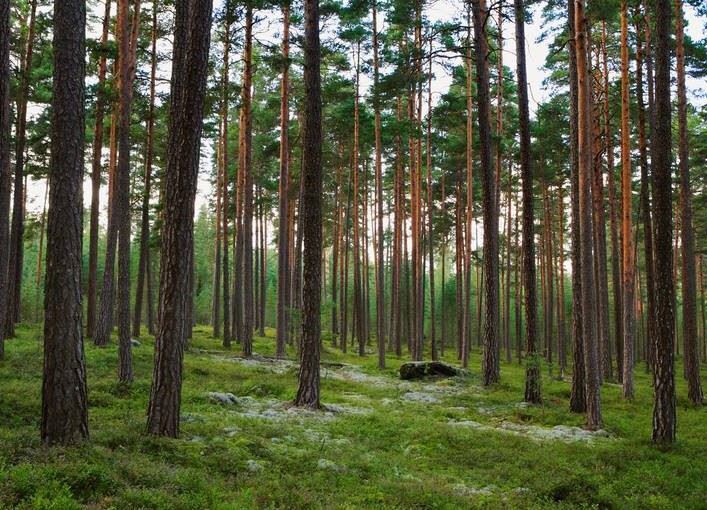
Did you know that 69% of Sweden is covered in forest? With this statistic in mind, it’s easy to understand the importance that the woods have in Swedish cultural history. The woods have supported, saved and scared Swedes for centuries. The woods have been associated with something remote, impenetrable and often mystical. In the non secular country that Sweden is, the woods also provide a ’Church’ and a source of spiritualism, meditation and reflection.

The forest has also given the Swedish language several expressions, words and sayings. Here are some:

Dra åt skogen’ – go to the forest – a polite way to tell somebody to fuck off

Skogstokig’ – forest crazy – a word to describe a person who is really angry

Det gick åt skogen’ – it went to the forest – a phrase that means something went wrong

Att lova guld och gröna skogar’ – to promise gold and green forests – an expression to mean that someone offers you wealth and happiness, but it is often overrated. Equivalent in English to ‘promise the moon’

Träskalle’ – wood head – an insult meaning someone is stupid

Träaktig’ – tree like – a description of someone as boring.

Barka åt skogen’ – going towards the forest – meaning it’s going to go badly

Can you think of any more?

Sweden’s Swexit?

In the aftermath of Brexit on Friday at midnight, I now cherish my Swedish passport even more. It is the Swedish passport that provides me with the free movement and international access that I so strongly believe in. And it is the membership in the EU that, in my opinion, gives us strength, community and a chance for peace. From living in Sweden, I have learned an important lesson – ‘tillsammans är vi starkare’ – together, we are stronger.

Watching the officials remove the Union Jack from the EU Parliament display, I noticed that it was positioned next to Sweden’s blue and yellow flag. It got me thinking that if Sweden was to leave the EU, it would be called a Swexit. But what could it be called in Swedish? Which one sits most comfortably on the tongue?

  • Svutgång
  • Svorti
  • Svutträde
  • Svupplösning
  • Svavgång

Hopefully, it will never happen. It would be truly swawful.

Sweden’s romance with Germany

Sweden has many connections with Germany throughout its long history. As a nod to the growing German readership I have, I thought I would list a few of those connections.

German language influence

The Swedish language belongs to the North Germanic branch of the Germanic languages. Many words in Swedish are similar in German. I remember when I was on a trip to Hamburg, I could understand a lot of what was written in the German paper Der Spiegel. This was not because I speak any German, but because I speak Swedish. In fact the word ‘spiegel’, meaning mirror, is ‘spegel’ in Swedish. A friend of mine, originally from Rostock in Germany, learned Swedish very quickly. When I asked her how she had done it, she responded rather matter-of-factly that ‘Swedish is just German light’.

German merchants

In Stockholm’s Old Town there is an imposing church whose large Gothic spire dominates the skyline. This church is called ‘Tyska kyrkan’ – the German Church. During the 1500’s there were a lot of German merchants trading and living in Stockholm. In fact, they made up about half of the population. The King wanted to attract and keep as many Germans as possible, so he gave them attractive tax breaks and, in 1571, awarded them the right to start their own parish and place of worship. The church that we see today was finished in 1886, after restoration after a large fire. The German Church today holds services in German, and still serves Stockholm’s much smaller German population. Sweden today has still a lot of German merchants, in the form of large retail chains. Big players include the food chain Lidl, shoe shop Deichmann, home electronics retailer MediaMarkt and DIY store Bauhaus.
German Queens

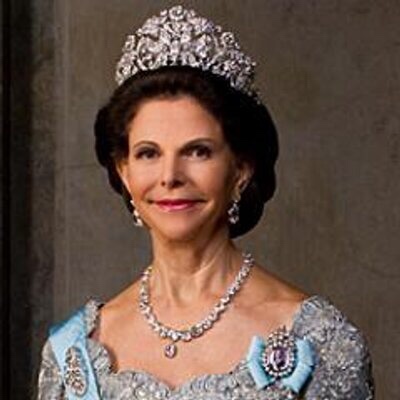
Sweden’s current queen, Queen Silvia, originates from Heidelberg. Her German accent resonates clearly when she speaks Swedish. But she’s not the only connection the Swedish Royal House has with Germany. In fact, the King’s mother was also German – Princess Sibylla – from Gotha. And both his grandmothers. And, well, throughout history the Swedish Royal House has been peppered with German aristocracy and royalty. According to Wikipedia, 22 of Sweden’s monarchs were of German descent. So, one could probably say that the Swedish royals are more German than anything else.

German tourists

Sweden is an extremely popular destination for German tourists who are attracted by the forests, lakes, open spaces, cute red cottages and fresh air. German tourists spend approximately 3,000,000 hotel nights in Sweden according to the Swedish Tourism Institute. Sweden’s three main cities are popular destinations, as well as Skåne, which is the closest county to Germany. Due to the fame of writer Astrid Lindgren, her birthplace village of Vimmerby in Småland is also very well visited. Sweden’s attractiveness is also thanks to a long-running German tv show. Since 2003, the show ‘Inga Lindström’ has entertained Germans with an idyllic, romantic image of Sweden. The program is a series of stories set in Sweden, where the characters speak German, but have Swedish-sounding names, and the attractive Sweden that is depicted makes German tourists want to flock here in droves.
German sausages

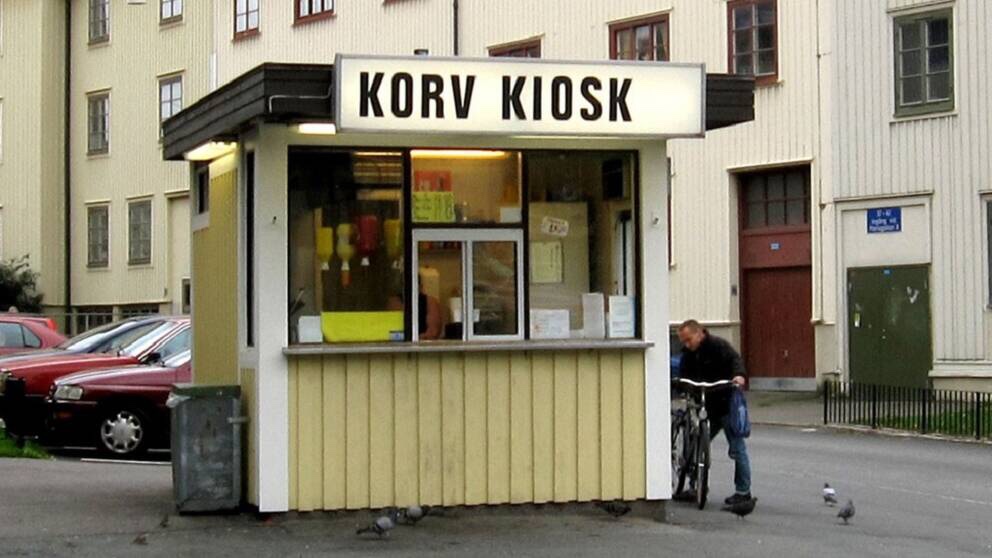
Although food trucks are a standing feature in Sweden’s current street food culture, the original fast food place was, and is, the sausage kiosk. One can not underestimate how much Swedes love their hot dogs and they eat them late at night, for a quick lunch, at sport events, in cars, at weddings, barbecues, communal cleaning days, shopping excursions. You name it. The sausage is ever-present. Evidence exists that sausage-like foods were eaten by the Vikings, but it was in Frankfurt, Germany that the sausage was really developed as a snack. This food culture arrived in Sweden, via USA, in the 1800’s and has remained a firm favourite ever since. Even Sweden’s own patented sausage, the Falukorv, apparently came into existence by German immigrants training the Swedes in how to make them. Sweden’s leading hot dog brand is called Sibylla. Named after the current King’s German mother, this was said to be an honour and not born out of ridicule.

So, there you have it. Germany and Sweden have very close ties linguistically, socially, politically, in royalty, in business, in tourism and, even on the street corners.
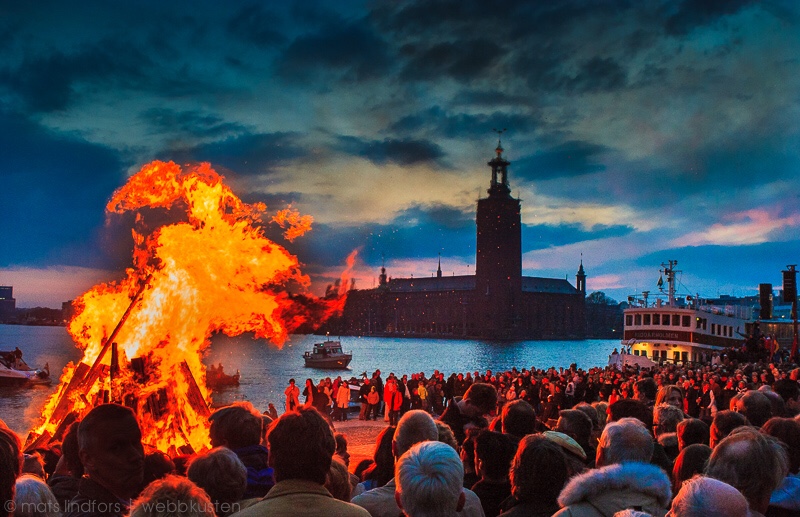
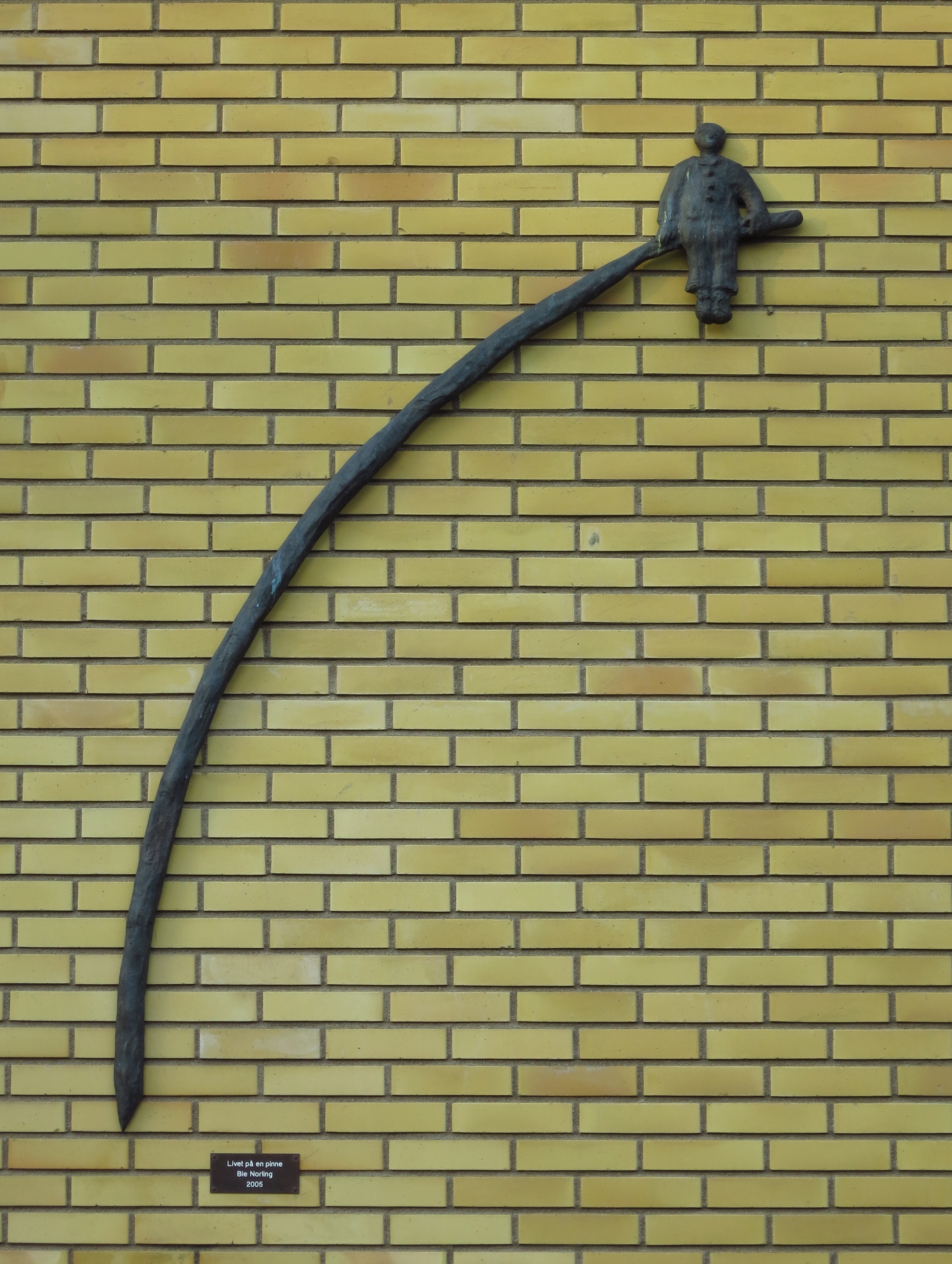
Are Swedes Nordic or Scandinavian?

This question seems to confuse people in other parts of the world and the description ‘Nordic’ and ‘Scandinavian’ are often mistakenly used interchangeably.

Simply put, Scandinavia consists of Sweden, Denmark and Norway and is largely a geographical description. The Nordic region seems less clear but is a cultural description and consists of Sweden, Denmark, Norway, Finland and Iceland. The political organisation The Nordic Council also includes the autonomous territories of Faroe Islands, Greenland and the Åland Islands. So all Scandinavians are Nordic, but not not all Nordic people are Scandinavian.

Then, to confuse things slightly, there are the FennoScandinavian countries which include Scandinavia, Finland and Karelia, but minus Denmark. Then there are the Baltic States which are Estonia, Latvia and Lithuania. So, although Sweden is on the Baltic Sea, it is not a Baltic State.

So, in summary, Swedes are Scandinavians, Nordics and FennoScandinavians but not Baltics.

Sweden through the 2010’s – a retrospective

The Guardian newspaper describes the 2010’s as ‘The Age of Perpetual Crisis – a decade that disrupted everything but resolved nothing.’

Looking internationally it’s easy to see this. But is it the case in Sweden? Partially yes, but everything wasn’t bad.

Here’s a look back at the second decade of the century and a chance to remember some of the good and bad things that happened during 2010-2019 – in Sweden.

2010 – Crown Princess Victoria marries Daniel Westling, her former personal trainer. The last öre coin (50 öre) disappears from circulation. A suicide bomber blows himself up in central Stockholm – with no other casualties. Sweden accuses Julian Assange of rape, and issues an international arrest warrant.

2011 – Håkan Juholt replaces Mona Sahlin as leader of the Social Democrats, but it is very short-lived – he resigns a few months later. Over 50,000 people emigrate from Sweden – the largest ever exodus (as a percentage) in the country’s history.

2012 – Friends Arena opens in Solna and becomes Sweden’s national arena hosting 75,000 people. Loreen wins Eurovision with the popular song ‘Euphoria’ in Baku. Princess Estelle is born and thereby secures the future of the Swedish monarchy. Swedish Candy Crush Saga took the gaming world by storm.

2013 – Riots occur in Stockholm suburb Husby with at least 100 cars set on fire. A train derails outside Stockholm (Saltsjöbanan) and crashes into an apartment building. The man bun trend kicks off. The ABBA museum opens and quickly becomes a popular tourist attraction in Stockholm.

2014 – 80,000 refugees come to Sweden and one person sets fire to himself outside the Migration office in Karlstad. Suspected Russian u-boat in Stockholm’s archipelago. In a general election, sitting Prime Minister Fredrik Reinfeldt loses to Stefan Löfven.

2015 – Måns Zelmerlöw wins Eurovision with ‘Heroes’. A rare earthquake occurs outside Gothenburg. Unrelated knife attacks in a school in Trollhättan and an IKEA in Västerås. Henning Mankell, author of the Wallander books, passes away. Passport control is introduced at Sweden’s bridge border to Denmark in an attempt to stem illegal immigration.

2016 – Swedish actress Alicia Wikander wins an Oscar for The Danish Girl. Singer Josefin Nilsson dies from the aftermath of domestic abuse. Sweden goes Pokemon crazy. A massive snow storm disables the capital. Henrik Stenson becomes the first male Swedish golfer to win the Open. The expensive and heavily-criticised New Karolinska hospital finally opens and receives its first patients.

2017 – Sweden’s population reaches 10,000,000. A terrorist attack on Stockholm’s main shopping street, Drottninggatan, kills 7 and scars the nation for ever. The MeToo movement sweeps over Sweden.

2018 – Sex scandal in the Swedish Academy with the consequence of many members resigning and no Nobel prize for literature being decided. Journalist Kim Wall is murdered in a submarine in Copenhagen. Using a mobile and driving at the same time becomes illegal. Swedish DJ Avicii commits suicide. Swedish legend Lill Babs dies. Massive forest fires devour Sweden.

2019 – 16 year old environmental activist Greta Thunberg sails the Atlantic, speaks at the UN and is named Person of the Year by Time magazine. The King makes symbolic changes to the Royal court. American rapper ASAP Rocky is arrested in Stockholm for assault. Sweden is rocked by a series of shootings and bombings throughout the country. Swedish Democrats become the second largest party in opinion polls. Swedes become more climate aware – the number of electric-driven cars increases and the amount of meat consumption decreases.

What sticks in your memory from the decade gone by?

Guardian article

Watching the Swedes Advent Calendar – Dec 24: Kalle Anka

Thank you for reading Watching the Swedes Advent Calendar. Today, we have come to the end. In Sweden, Christmas Eve, 24 December, is the big day for presents, food and festivities.

So here is the final word: Kalle Anka. This is the Swedish name for Donald Duck – a Disney character with a strong, and unexpected, connection to Swedish Christmas.

Traditional Christmas celebrations on Christmas Eve in Sweden get off to a slow start usually. It all begins with a Christmas breakfast, consisting of rice porridge, wort bread, ham and Christmas cheese, amongst other things. After breakfast, some people go for a walk, some go to church, others begin the preparation for the Christmas julbord.

When to eat julbord differs from family to family. For some, it’s at lunch time, for others it more towards late afternoon. One surprising time marker is Kalle Anka (Donald Duck).

Every Christmas Eve since 1960, the Disney show ‘From All of Us to All of You’ featuring Donald Duck and his friends has been broadcasted on Swedish television. Always at 3pm. Every single year. A very weird tradition for someone like me who grew up listening to the Queen’s speech on Christmas Day at 3pm. In the UK we have the Queen. In Sweden, Donald Duck.

So the discussion in Swedish homes is ‘should we eat before or after Kalle?’.

Today, Kalle Anka is watched as a sentimental tradition, or as background noise on Christmas Eve. But in the 1960’s when it began, it was the only time of the year that cartoons were shown on tv, so it was a Christmas treat. Since it’s been broadcast for almost 60 years, it is an integral part of what many Swedes associate with Christmas.

After Kalle Anka och julbord, it’s time for a visit from Tomten with gift-giving. This is followed usually by more food and drink. Some people conclude the day with a Midnight service at their local church.

Christmas is, like many places around the world, a time of overconsumption. Enormous amounts of food are left over and eaten during the following days. In Sweden, Christmas Day and Boxing Day are both Public holidays – and the official end of Christmas is January 13th. Then it is time to traditionally throw out the Christmas tree. The lights in the windows have usually disappeared by February.

And as the daylight slowly returns to Sweden, people start planning for lighter and warmer time of the year. And Christmas fades into memory…until next December.