International Romani Day-Roma in Sweden

Today, 8 April, is International Romani Day. It marks the first World Romani Congress that was held in London in 1971. The day exists to shine a light on the ongoing persecution and abuse that the Roma population of the world has been forced to endure throughout history.

The Romani originate from northern India. They are dispersed, and their most concentrated populations are located in Europe, and Western Asia, since around 1007. Nobody really knows why the Roma left India in the first place, as no records were kept. However theories abound: from early persecution based on caste, to banishment from angering the king, and religious war.

The estimated 12 million Roma are consequently a nomadic people with no land to call their own. Their mobility and the fact that they lived in temporary camps contributed through the centuries to associations with poverty and accusations of high rates of crime. The discomfort that others felt about their presence led to perceptions of the Roma as antisocial, unsophisticated or even dangerous. Partly for this reason, discrimination against the Romani people has continued to the present day.

Romani have existed in Sweden since at least the 1500’s and today they are classed as one of Sweden’s five national minority groups (together with Jews, Sami, Swedish Finns and Tornedalers). Romani chib has the status of official minority language.

Over the centuries, the people of Sweden discriminated against, marginalised and excluded its Roma population. For 40 years, up to 1976, Sweden had a legal policy of enforced sterilization of people to avoid ‘unacceptable offspring’. Much suggests that Roma women were particularly subjected to this abuse.

The Pew Research Poll of 2016 found that 42% of Swedes held strong anti-Roma views (compared to 82% in Italy, and 37% in Holland).

A Romani political activist in Sweden was Singoalla Millon, who died in 2020, and spent her entire life fighting for education, housing and acceptance. Another was Katarina Taikon who dedicated herself to improving conditions for Romani people in Sweden. She tried to convince the Swedish government to see the Romani as political refugees. She died in 1995. Today, the politician Soraya Post has worked as an EU politician defending the rights of the Romani and other minorities.

In 2012, the Swedish government introduced an 20-year equal opportunities strategy for Roma people. The strategy includes objectives and measures within several areas such as schooling, employment; housing, health, social care, culture and language. Of course, discrimination and marginalization are still very real in Sweden, but this is at least a step in the right direction.
60 years of Sweden’s Sun film

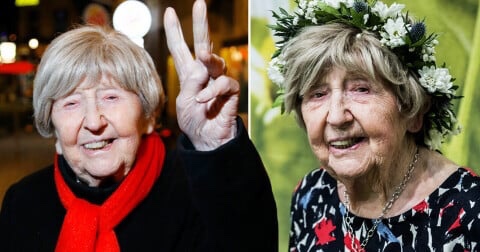
Every Monday, once a week, from the beginning of the year until the Summer Solstice, the ‘Sun film’ is broadcast on Swedish TV. The film shows what time the sun goes up and down in Lund, Stockholm, Kiruna and Lycksele.

Fantastically retro, the film has been broadcast for almost 60 years.

And tonight, I recorded it for you….

Great Swedish Women Part 7: The Leaders

Since March 8th, I have been republishing a series to celebrate Great Swedish Women, past and present: women with strength and passion, women who create change. Today is the final day – and a new post.

Never in the history of Swedish politics have so many women had such powerful leadership positions as today.

We have come a long way since 1919, when women won the right to vote in Parliamentary elections and in 1921 when the first five women were voted in as MP’s. It took 65 years until 1986, when Karin Söder was the first female party leader to be elected.

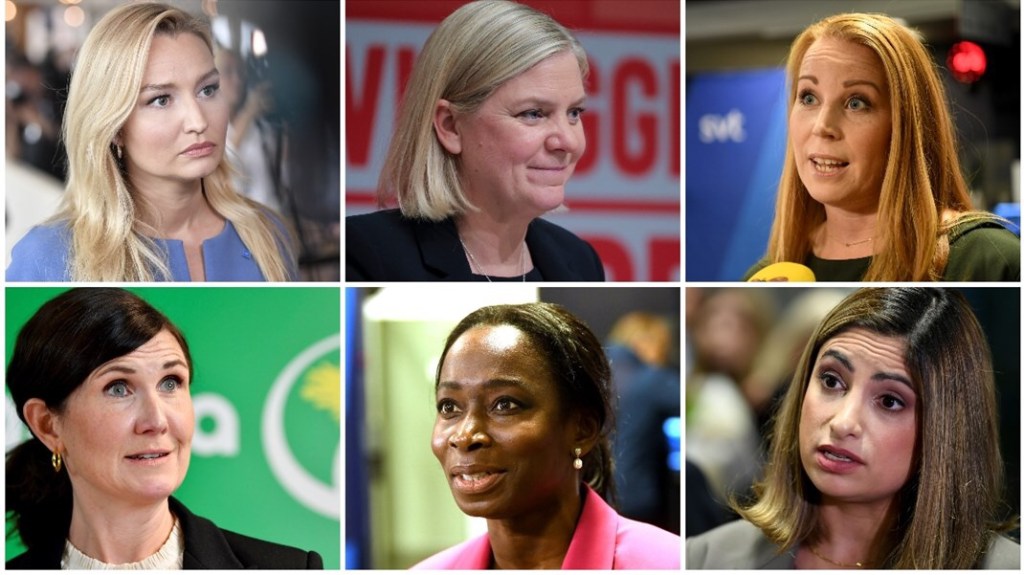
However, today six of the eight political parties in the Swedish Parliament have a female leader. These six politicians are, as seen in the picture below: Ebba Busch (Christian Democrats), Magdalena Andersson (Social Democrats and Sweden’s first female Prime Minister), Annie Lööf (Center Party), Märta Stenevi (The Greens), Nyamko Sabuni (Liberals) and Nooshi Dadgostar (Left Party). They stretch all across the political spectrum from left to right.

In the Swedish Parliament 46.1% of the MP’s are female, making it the highest proportion of women in any European Parliament. Only four other countries in the world have a higher female representation, with Rwanda in the number 1 position at 61%.

(Source: Worldbank Data 2020)

Great Swedish Women -Part 5 – The Legend 

Since March 8th was International Women’s Day, I  am republishing my series on Great Swedish Women, past and present. I hope you want to join me in celebrating them.

Part 5 – the vengeful Viking Blenda.

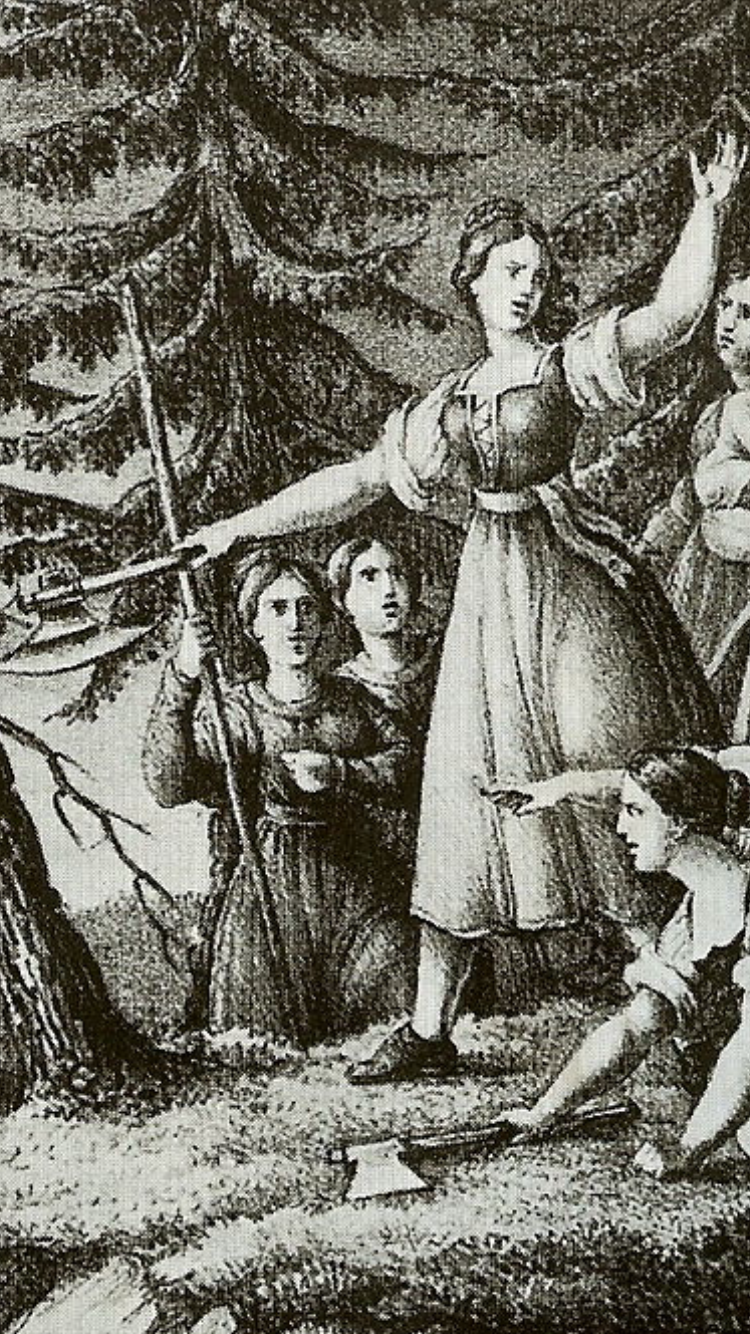
In the county of Småland in Southern Sweden, there is a legend about a brave Viking woman named Blenda.

According to legend, the menfolk of Småland were at war in Norway, leaving the women and children alone and defenceless. The Danes learned of this and chose this moment to invade and attack the region.  Blenda was a woman of noble descent and she decided to rally the hundreds of women from Albo, Konga, Kinnevald, Norrvidinge and Uppvidinge. The women armies assembled on the Brávellir, which according to Smålandish tradition is located in Värend.

The women approached the Danes and told them how much they were impressed with Danish men. They invited the men to a banquet and provided them with food and drink. After a long evening, the Danish warriors fell asleep and the women killed every single one of them with axes and staffs.

When the king returned, he bestowed new rights on the women. They acquired equal inheritance with their brothers and husbands, the right always to wear a belt around their waists as a sign of eternal vigilance and the right to beat the drum at weddings and to wear armour.

There have been various disputes about the validity of this legend, if and when it happened. One theory is that it happened around the year 500. At this time, female soldiers existed in Sweden. Called Shieldmaidens, three hundred are known to have fought during the great Battle of Bråvalla in 750. If you’ve seen the successful series ‘Vikings’, you will be familiar with these women.

Blenda is perhaps the first known woman in a long line of strong Swedish women who defend themselves from aggressors and contribute to better equal rights between the sexes.

Great Swedish Women Part 1 – The Catalyst

Today, March 8th, is International Women’s Day.

In support, I am re publishing my series on Great Swedish Women, past and present: women with stength and passion, women with a voice, women who create change.

For seven days, I will write about these Great Swedish Women, one per day. I hope you want to join me in celebrating them.

Fredrikabremer

First out is the 1800’s writer and feminist reformer Fredrika Bremer, a kind of Swedish Jane Austen and one of the catalysts of the early feminist movement in Sweden.

Many of the women’s rights that we take for granted in Sweden today did not exist in the Fredrika Bremer’s time. For example, in 1800’s Sweden, women were not free to educate themselves as they liked, marry as they liked, live as they wanted, to have economic independence or to vote in elections. Married women were controlled in all manner by their husbands, unmarried women by their closest male relative.

Fredrika Bremer was born into this kind of society in 1801 in Åbo, Sweden, which today is part of Finland. At the age of three, her family moved to Stockholm where Fredrika and her sisters were raised to marry well.

Fredrika found the limited and passive family life of Swedish women of her time suffocating and she described her family as “under the oppression of a male iron hand’. Fredrika never was forced under the shackles of marriage, so had a certain level of independence inaccessible to married women at that time.

Throughout her adult life, she became a world traveler, an accomplished author (at first anonymously) and a political activist. She was very interested in social reform regarding gender equality and social work and she participated actively in debates around women’s rights in Sweden.

Fredrika Bremer was a catalyst of the first real feminist movement in Sweden. There is much in modern day Sweden to thank her for. In 1853, she started by co-founding the ‘Stockholm Women’s Fund for Childcare’ and the following year, the ‘Women’s Society for the Improvement of Prisoners’. 

However, it was in her novel, Hertha (1856) that she issued in most change, making it probably her most influential literary work. In the book, she wrote about the lack of freedom for women, which subsequently raised a debate in the parliament called “The Hertha debate”. This directly contributed to a new favourable law for adult unmarried women in Sweden in 1858, and was a starting point for the campaign for women’s rights in Sweden. Hertha also raised the debate of higher formal education for women and, in 1861, the University for Women Teachers was founded by the Swedish state.

In 1860, Fredrika helped to fund Tysta Skolan, a school for the deaf and mute in Stockholm. Now an established and respected citizen and patron, she supported giving women the vote in the electoral reforms of 1862. In the same year, women of legal age were granted this in municipal elections in Sweden. The first real women’s rights movement in Sweden, the ‘Fredrika Bremer Association’, founded by Sophie Adlersparre in 1884, was named after her, 19 years after her death.

Fredrika Bremer’s leaves a legacy of equality and autonomy behind her. Her legacy extends far beyond Sweden’s borders. Not only is she recognised as an influencial writer and reformer, but the town of Frederika in Bremer County Iowa, USA is named after her.


.

Vasaloppet in Sweden – the world’s longest cross country ski race


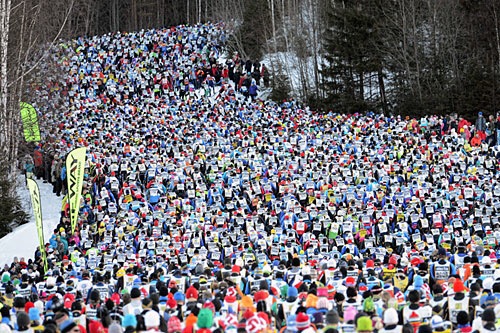
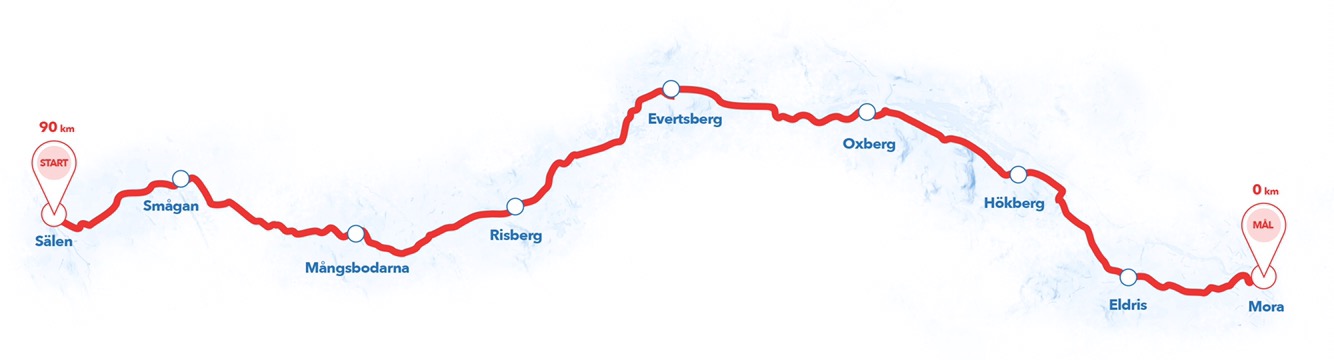
Tomorrow, the world’s longest cross country ski race takes place in Sweden. Called Vasaloppet, it entails participants skiing 90 kilometers from start to finish. It’s an extremely popular international race which is broadcast live on tv. When tickets to participate are released, they usually sell out in 15 minutes – it’s that popular.

The first Vasalopp was in 1922 and takes place annually, the first Sunday in March and it is a first sign of spring.  Normal participants can take up to 12 hours to complete the gruelling course, but the elite athletes do it in a comparatively speedy time of around 4 hours.

So why is this race called ‘Vasaloppet’? Well, it takes its name from a Swedish king. The race commemorates the escape to Norway, through the forest, of King Gustav Vasa in 1521. Legend has it that he carried out the long journey on skis,  but experts believe he more likely completed this escape on snow shoes. Nevertheless, out of this legend sprung the race which is so popular today. ‘Vasa’ after the king, and ‘loppet’ meaning ‘the race’.

Modern day skiers don’t see the experience as an escape, they see it as a challenge and for many of them it’s a rite of passage.

And as you sit watching the TV comfortably from the sofa, with tea and toast, you take vicarious pleasure in this long, amazing Swedish race.

It will be broadcast tomorrow from 7.30 on SVT ( Swedish TV). You can also check it out on the internet in the streaming service SVT Play.

It’s fatty Tuesday – Swedish style!

Today it’s ‘Fat Tuesday’ in Sweden, known as Shrove Tuesday or Mardi Gras around the world.

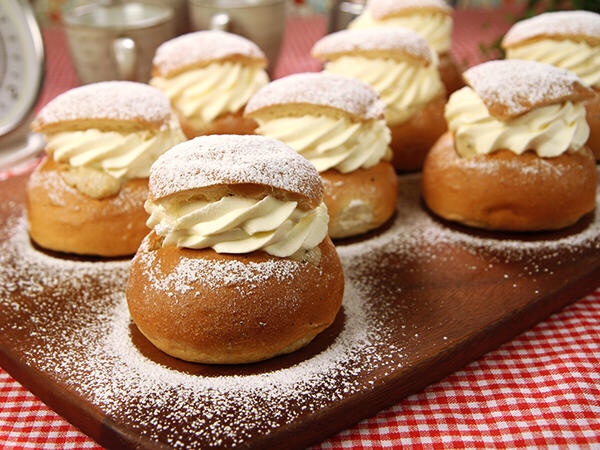
While in the UK we eat pancakes (today is even called Pancake Day) and in Latin America they scoff down fried bread, Swedes celebrate by eating the traditional cream Lent bun – the ‘semla’. 40 million of them every year! I’m also clearly going to indulge. In fact, my mouth is watering just writing this post.

The semla is a creamy bun filled with delicious almond paste. They were eaten traditionally in Sweden to commemorate the start of Lent and the great Fast, leading up to Easter. In the south of Sweden, they still refer to them as ‘fastlagsbullar’ – Shrovetide buns. Nowadays however, semlas are usually sold anytime between Christmas and Easter.

I just love them. I could eat a barrel load. But I’d end up looking like a barrel if I did. I love the taste of them, and the feeling of luxurious indulgence. I also love the knowledge that as you take a bite into a creamy semla, you are biting into over 500 years’ history of Scandinavian baking.

The word ‘semla’ comes from the Latin ‘simila’ which means fine flour and originally referred just to the bun without any filling. As long ago as the 1500’s, bakers started to hollow out the middle of the bun and fill it with cream and butter. As ingredients became more available, bakers started adding almond and cardemon and the type of semla that we know today developed towards the end of the 1800’s. After rationing of sugar and dairy products ceased at the end of WW2, the semla took off and became very popular.

Nowadays the semla trend has reached new heights. Every year bakers around the country try to launch new types of semla, with their own spin on it -for example, the semla wrap, the semla burger, the semla layer cake, the semla cocktail, semla ice cream, semla nachos, semla langos, the chocolate semla, the vanilla semla, the lactose-free, gluten-free vegan semla. Last year, the gross-sounding fermented Baltic herring semla was revealed.

But I’m a traditionalist in this matter. Give me a round fluffy cardemon-scented wheat bun brimming over with whipped cream and almond paste.

And give it to me NOOOOWWW!!!

Sweden and Ukraine – Yellow and Blue

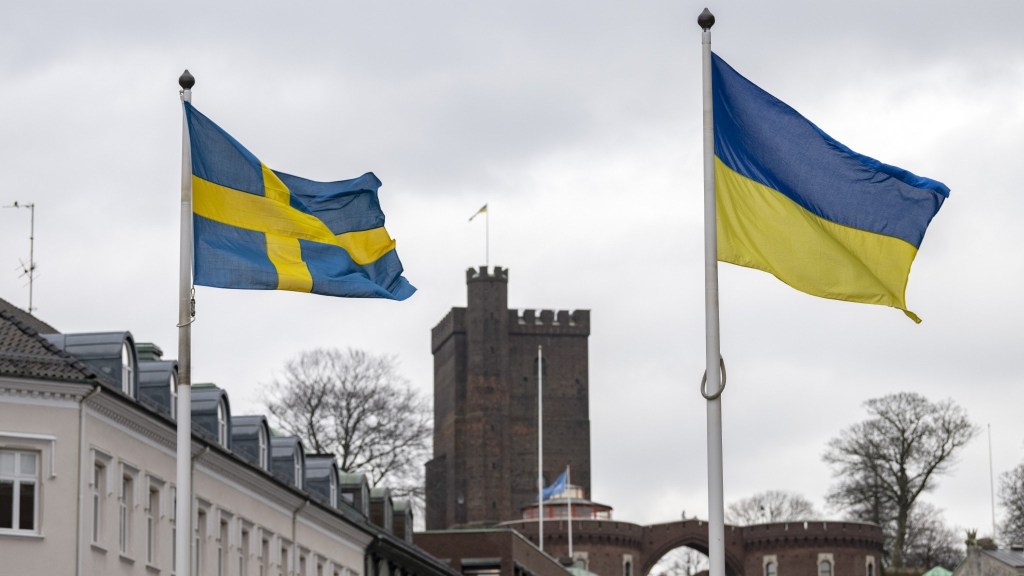
Because of the Russian invasion of Ukraine, many official buildings in Sweden are flying the Ukrainian flag in solidarity. The authorities want to show that Sweden stands side by side with Ukraine in their time of need.

The Ukrainian flag, like the Swedish flag, is yellow and blue. The Swedish flag is a yellow cross on a blue background. The Swedish flag was initiated in the early 1500’s and the yellow is said to represent gold and blue represent the sea. Sweden depicted itself as a wealthy sea-faring realm.

Psychologically, the blue represents justice, loyalty, truth, vigilance and perseverance. The yellow represents generosity.

The colours on the Ukrainian flag represent something else. The blue represents the sky, and the yellow represents the wheat fields that are so important to the country’s identity and economy. The flag was first hoisted in 1848.

On a psychological level , the yellow in the Ukrainian flag is said to represent joy and the blue represents calm.

I am sure we all hope that the people of Ukraine experience both again very soon.

Swedish Life Balance

It’s said that Swedes have an enviable work life balance and the festive season is no exception.

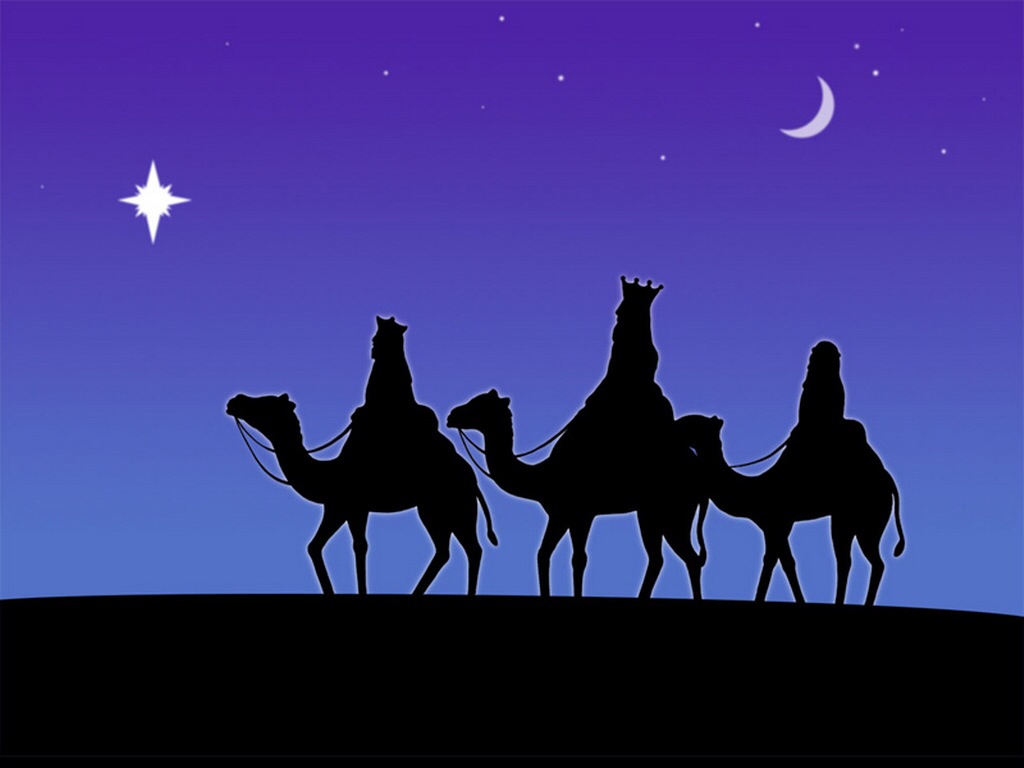
Similar to a few countries, today – 6 January – is a bank holiday. In Sweden it’s called ‘Trettondag jul’ which translates as ’13th day of Christmas’. In other places, it’s known as Kings’ day, Day of the three magi, or epiphany.

Biblically it signifies the arrival of the three wise men and the baptism of Jesus. Secularly, it means another day off for most people.

In Sweden, it is the official end of the Christmas season, although the Christmas tree and decorations might stay up for a little longer.

There’s a great Swedish word that you frequently hear after these long breaks – a person might describe themselves as ‘utvilad‘. This translates as ‘thoroughly rested’, and is essential to survive the long, dark winter season.