The scandalous obsession with Swedish schlager

jag-aelskar-schlager

Sweden has proven itself to be a musical nation – topping pop, rock and dance music charts all over the world for decades. After the USA and the UK, Sweden is the world’s largest exporter of pop music, which says a lot for a country this size. But there’s one type of music we should be grateful for. And by that, I mean grateful that it generally doesn’t get exported outside the Nordic region and Germany. I am talking about the odd Swedish music style called Swedish ‘Schlager’. It is unfathomably and inexplicibly popular in Sweden.

What is Swedish schlager music you may wonder? Let me attempt to explain.

It is a style of popular music The style emerged in Europe after World War 2 as a backlash against American rock and roll. The style uses very simple patterns of music and they are either sweet, highly sentimental ballads with a simple, catchy melody or light pop ditties. Sometimes the songs integrate folk instruments. Often the lyrics are about love and relationships. Titles such as ‘Good Vibrations’, ‘Take me to your heaven’, ‘Captured by a storm wind’ give you an indication.

To get the idea of what schlager is, it’s best to think about the Eurovision Song Contest. It’s more or less that type of music. In fact, the competition and the selection trials are often referred to a ‘Schlagerfestivalen’ in Sweden – the festival of, yes you guessed it, Schlager.

Schlager music might not be intellectually challenging but it is disgustingly catchy. It is old fashioned, simplistic and annoying. But it immensely popular around the  country and is almost always the music that gets played at parties once people have had a few too many drinks and dare to approach the dance floor.

Tomorrow night the trials begin for who will represent Sweden in the international final in Stockholm in May. And Swedes take this very seriously. More people watch these trials than watch televised sporting events or royal weddings. And tomorrow’s trial is already making the headlines. Tragic schlager hasbeen, Anna Book, was disqualified as it turns out her song was involved in 2014 in Moldavia!! Shock! Horror! Poor Anna Book is devastated and the media is calling it a sensational and tragic scandal.

  • People dying in make-shift boats as they flee for their lives across the ocean is a scandal.
  • Gangs of masked men marauding through the streets of Stockholm and attacking immigrant children is a scandal.
  • That over 20% of Sweden’s population vote for a right-wing racist party is a scandal.
  • That young women get groped and physically abused when they are in public places is a scandal
  • That health care, elderly care and education are rapidly deteriorating in Sweden is a scandal

Anna Book being disqualified from a music competition is not a scandal.

Maybe some people are so obsessed with the inanity of schlager and Eurovision that they can’t lift their eyes and focus on more important issues. For me, that’s a sensational and tragic scandal.



Swedish women fight back

Strength-woman-arms

In response to the hoards of ‘Vikings’ roaming Stockholm’s streets to protect their ‘women’ from ‘muslim rapists’, the women of Sweden have spoken up. In a social media campaign called ‘inteerkvinna’ – ‘not your woman’ – they are fighting back.

‘Den rasistiska lynchmobben som drog fram i Stockholm i fredags (29/1) och misshandlade barn och andra som inte är vita, påstår, likt andra rasistiska och fascistiska grupperingar, att de vill “skydda” vita/”svenska” kvinnor. De talar inte för mig. Deras “skydd” är i själva verket en önskan om att dominera, kontrollera, stänga in och äga kvinnor samtidigt som de försöker skrämma, misshandla och till och med utrota andra människor. De talar inte för mig. Internationell solidaritet är grunden för jämlikhet, rättvisa och fred. ‪#‎inteerkvinna‬

‘The racist lynch mob that rampaged through Stockholm on Friday attacking children and other non-white people, claim, like other racist and fascist groups, that they they want to protect white/Swedish women. They do not speak for me. Their ‘protection’ is in actual fact a desire to dominate, control, imprison and possess women. At the same time, they try to scare, abuse and exterminate other people. They do not speak for me. International solidarity is the basis of equality, justice and peace. I am Not Your Woman.


Time for Semlas! 

  
Today I’ve decided to indulge. I’m going to eat my first semla of the year. These creamy buns are filled with delicious almond paste and were eaten traditionally in Sweden to commemorate the start of Lent and the great Fast. In the south of Sweden, they still refer to them as ‘fastlagsbullar’ – Shrovetide buns. Nowadays however, semlas are usually sold anytime between Christmas and Easter. So I’ve done very well to resist them this far. 

I just love them. I could eat a barrel load. But I’d end up looking like a barrel if I did. I love the taste of them, and the feeling of luxurious indulgence. I also love the knowledge that as you take a bite into a creamy semla, you are biting into over 500 years’ history of Scandinavian baking. 

The word ‘semla’ comes from the Latin ‘simila’ which means fine flour and originally referred just to the bun without any filling. As long ago as the 1500’s, bakers started to hollow out the middle of the bun and fill it with cream and butter. As ingredients became more available, bakers started adding almond and cardemon and the type of semla that we know today developed towards the end of the 1800’s. After rationing of sugar and dairy products ceased at the end of WW2, the semla took off and became very popular. 

Nowadays the semla trend has reached new heights. Every year bakers around the country try to launch new types of semla, with their own spin on it -for example, the semla wrap, the semla burger, the semla layer cake.

All delicious I’m sure, but I’m a traditionalist in this matter. Give me a round fluffy cardemon-scented wheat bun stuffed with whipped cream and almond paste. And give it to me NOW!!! 

Sweden’s disgrace! 

  
In the latest poll today, over one fifth of the Swedish voting population would vote for the nationalistic right wing party, putting the party into position of the second largest political party in Sweden. 

Let’s be clear what this means. One fifth of Swedes support a party that has its roots in the nazi party, that has verbally and physically attacked minority groups and that believes in Swedish racial superiority. It’s a disgrace for all Swedes who believe in tolerance, openness and solidarity. 

It’s time to act. To speak out. This is not going away. As the established parties bitch at each other, the Swedish population grows tired of their rhetoric. Consequently, they feel more disengaged and resentful and turn to a party that seems to talk straight to their concerns and promises protection of the Swedish identity. It is scarily reminiscent of the past. 

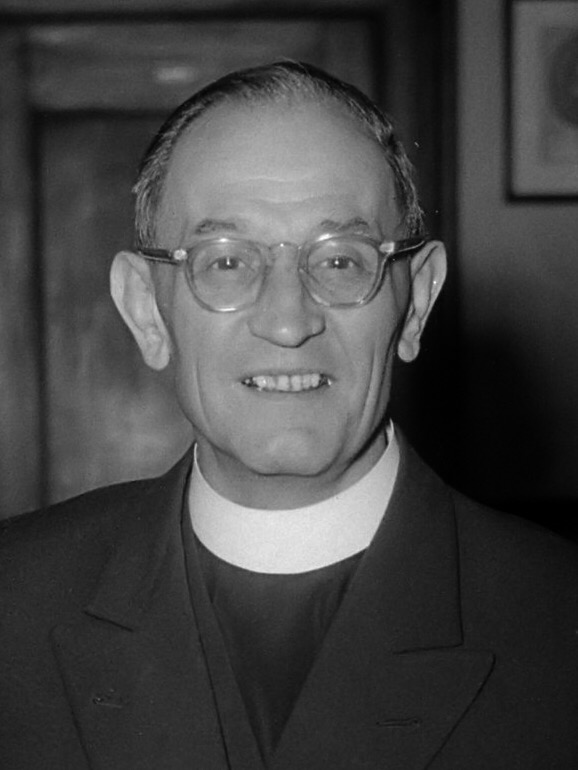
Pastor Martin Niemoller, pictured above, wrote a famous poem after he survived the concentration camps of the Second World War. His poem criticised the cowardice of German intellectuals after the Nazi’s rise to power and their subsequent purging of one group after another. It’s worth reflecting over his words. They are very relevant today. Right now. In Sweden. About us. 

‘First they came for the Socialists, and I did not speak out— Because I was not a Socialist.

Then they came for the Trade Unionists, and I did not speak out— Because I was not a Trade Unionist.

Then they came for the Jews, and I did not speak out—Because I was not a Jew.

Then they came for me—and there was no one left to speak for me.’

Do these words resonate with you? Are we the cowards he’s referring to? Are we so comfortable and complacent that we just sit back and watch it happen? 

If, like me, you believe in a multicultural society, it’s time to take a stance. Write to your MP. Talk to your colleagues, neighbours and friends. Get involved. Share this blog. Root out those one in five and challenge them. Demonstrate. Communicate. Educate. 

Speak out. While you can. Before it’s too late. 

Top 5 Rude Swedish Place Names 


In Britain, and Sweden, there are many places with funny or rude names. 

What’s in a name? Does the name of a place say anything about its residents? For example, are the people of Uppsala upwardly mobile people? Or are the people of Sundsvall very sound in their values and morals? Maybe. If the name of place represents the type of people who live there, what does it say about the residents of these top 5 rude place names in Sweden? 

5) In the town of Mora there is a place called Rövhålet, which translates as ‘butt hole’. 

4) Bögs gård, north of Stockholm, literally means ‘Gay’s farm’

3) Kattsjärten in the county of Värmland is the evocative ‘cat’s arse’ in English 

2) Way up in the north of Sweden, you will find Sexträsk, which is the exotic place of ‘sex swamp’

1) But the most embarrassing must be the place called Djupröven, which is just outside of Uppsala. It means ‘Deep Ass’ in English. Says it all. 

There’s also a suburb of Stockholm which I’m always embarrassed to say. The suburb of Fittja sounds very much like the offensive word for female genitalia. Best to avoid saying it if you’re a foreign speaker of Swedish. 

What other funny or rude place names in Sweden do you know? 

Please share this blog, if you enjoyed it. 

What Sweden’s New Year’s Eve has to do with Lord Tennyson 

New Year’s Eve in Sweden is like most other places in the world. Good food, fireworks, friends and alcohol frame in the event.

However, there is another tradition which is peculiarly English and particularly Swedish.

Almost every New Year’s Eve since 1896, a well-known person has stood on the stage at a Swedish open-air museum and recited the poem ‘Ring out Wild Bells’ by Lord Alfred Tennyson written in 1850. This may seem weird, but nowadays, the event is televised and attracts a large public. Translated into Swedish, the poem is called ‘Ring Klocka Ring’ and it has a very meaningful and deep content as we leave one year and enter into another. 

Various famous people, mostly actors, have had the honour of delievering this rousing poem throughout the years. Of the 20 narrators so far, only one has been a woman. However, this year the second female narrator – popular opera singer Malena Ehrman – will take the stage.

Below, you will find the text in English. ‘Ring out the old, ring in the new’ – and a Happy New Year to each of you!
In Memoriam, [Ring out, wild bells] – Lord Alfred Tennyson, 1809 – 1892
Ring out, wild bells, to the wild sky

The flying cloud, the frosty light:

The year is dying in the night;
Ring out, wild bells, and let him die.
Ring out the old, ring in the new,
Ring, happy bells, across the snow:
The year is going, let him go;
Ring out the false, ring in the true.
Ring out the grief that saps the mind
For those that here we see no more;
Ring out the feud of rich and poor,

Ring in redress to all mankind.

Ring out a slowly dying cause,
And ancient forms of party strife;
Ring in the nobler modes of life,

With sweeter manners, purer laws.

Ring out the want, the care, the sin,
The faithless coldness of the times;
Ring out, ring out my mournful rhymes

But ring the fuller minstrel in.

Ring out false pride in place and blood,
The civic slander and the spite;
Ring in the love of truth and right,
Ring in the common love of good.
Ring out old shapes of foul disease;
Ring out the narrowing lust of gold;
Ring out the thousand wars of old,
Ring in the thousand years of peace.
Ring in the valiant man and free,
The larger heart, the kindlier hand;
Ring out the darkness of the land,
Ring in the Christ that is to be


Don’t choke on the almond

And so it is Christmas. Like many places around the world, Sweden celebrates on Christmas Eve. Festivities throughout the day include eating the Christmas ham, receiving a visit from Santa, opening presents, drinking, playing board games and eating more. 

But the day usually kicks off with a steaming bowl of rice porridge. This delightful dish is made of rice, milk, sugar and cinnamon. Deep inside the porridge, there is often an almond. Presuming you don’t choke on it, if you find the almond it means you will be married during the following year. In the south of Sweden, and in Denmark, Norway and Iceland, the person finding the almond receives a gift. During the 1920’s it became trendy in Sweden to replace the almond with a ‘porridge doll’ made of porcelain and hide that in the porridge instead. 

Really superstitious people will even leave a bowl of porridge outside tonight to appease the house gnome who, according to legend, can make your cows dry up if he’s pissed off. 

But hopefully nobody should be pissed off on a day like today. And with family and friends gathered around a twinkling Christmas tree, a bowl of steaming hot rice porridge is a great way to kick off a lovely day. 


Wilkommen, bienvenue, welcome – to Sweden….

Cabaret_Trio

Last night I went to a performance of ‘Cabaret’ at Stockholm’s ‘Stadsteatern’. Starring popular singer, Sarah Dawn Finer, the story never felt more relevant. Set in and around the decadent Kit Kat Club, the familiar story depicts the slow and insidious growth of Nazism in pre-war Germany. As Hitler’s politics start to become more accepted, life initially goes on as usual inside the nightclub. But slowly, even the performers  cannot ignore the hardening attitudes, the anti-semitism and what is necessary to survive.  As the Nazis rise to power, and ‘Germanness’ falls into focus, the characters have to make a choice: stay or go.

One of the main characters is an American author based in Berlin. As he is confronted by the rise of Nazism he stands up against it saying ‘if you don’t stand against it, you stand with it’. Somewhat remniscent of a US President in a speech against terrorism, this hit a raw nerve. Just because we are not actively and vocally against something, does it really mean that we are for it? Is it that black and white?

As right-wing politics yet again take hold in Europe, what can we learn from the past? If we stand by and say nothing, do nothing, are we in effect accepting it? Are we saying it’s ok? And if we don’t stand up for others, who will stand up for us when we need it?

In the musical Cabaret, we see the nightclub as a metaphor of Berlin, slowly falling more and more under the influence of dark powers. We see the characters numb themselves in alcohol and we see one main character bend to the norms of society by demonstratively removing his makeup – stripped of his uniqueness and his humanity.

Never has it felt more relevant than today. ‘You are not German’ is today expressed as ‘You are not European‘ or ‘You are not Swedish’. And as I was consumed in the musical, I thought to myself, can we do it differently this time? Can we beat the negative forces in society and come out of it victorious? Or are condemned to repeat the mistakes of the past?

Sweden’s forest cemetery 

  
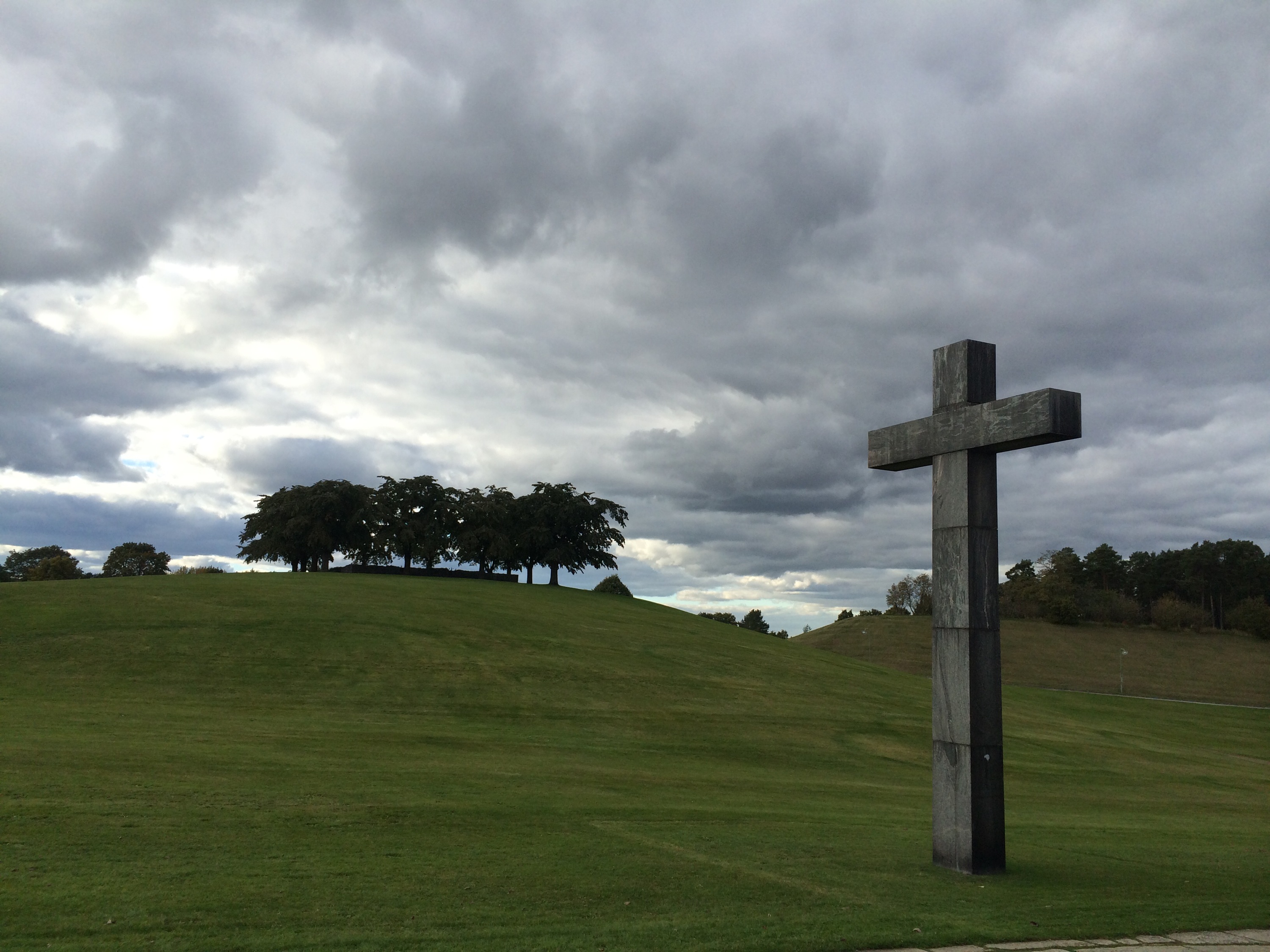
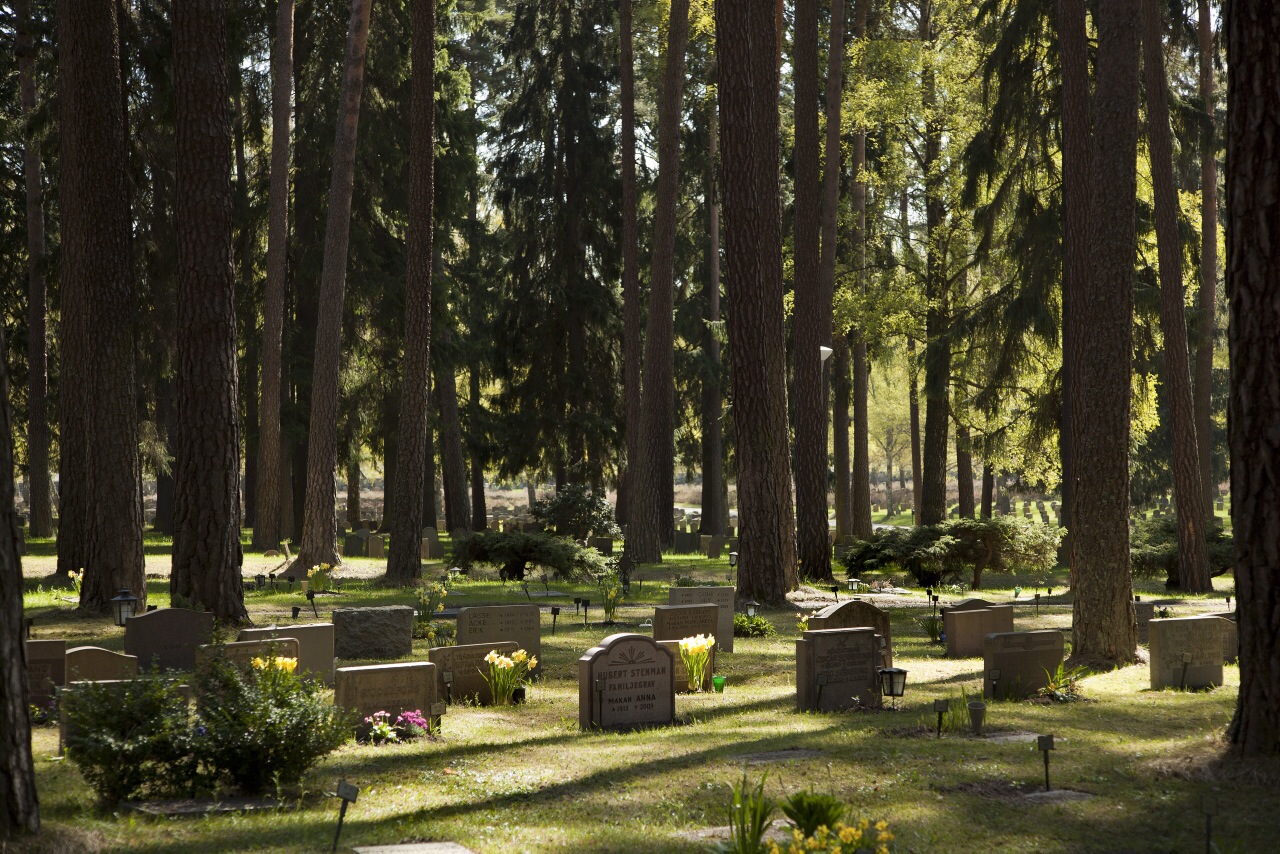
Today I visited a peaceful, magical place in Stockholm – Skogskyrkogården – the Forest Cemetery. 

Built between 1919 and 1940, this location combines a burial ground with a chapel of rest and a coniferous forest.

Listed since 1994 as a World Heritage Site, the Forest Cemetery is a wonderfully serene place to say goodbye, to remember or just to visit.