‘Paradise Sweden is just a myth’

winter österlen

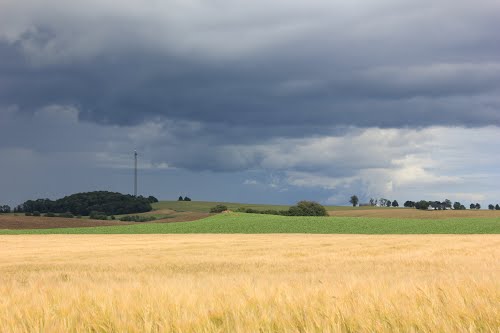
I’m fortunate enough to have a country house in the south of Sweden. The rural area, known as Österlen, is as beautiful as it is deserted – long stretches of sandy beaches, rolling open fields, wind-torn buildings and wind-bent trees. Being there has always been a retreat for me, but it hasn’t always only been relaxing.

Nagging away at the back of my mind has been a slight feeling of discomfort, like a distant memory that you just can’t recall. I sometimes feel ill at ease walking out to the barn, in case there’s something lurking in there. Or when I suddenly realise I’m alone on a stretch of beach, just the lapping of the sea to keep me company. Or when I’ve gone for a long walk and find myself surrounded by high fields of corn and approaching a bend in the road. Or when darkness descends. Or the fog rolls in.

This feeling of discomfort I have one man to thank for – author Henning Mankell. This popular Swedish writer, who died yesterday age 67, is responsible for the internationally acclaimed series of books and films about Inspector Wallander. The stories he wrote are full of violence, strangeness and critical social commentary. He set his narratives in the town of Ystad, and the surrounding countryside of Österlen, where I have my holiday home. Quoted as saying ‘ that Sweden is supposed to be a paradise is just a myth’, he populated his stories with rampaging murderers, gangs and psychopaths.

Henning Mankell passed away after some years of fighting cancer. He left a massive legacy of books and storíes behind him and will be remembered as the author whose international success opened the door for other Swedish detective novelists.

And as he rests in peace, he leaves us with the unwelcome insight that peace is in fact just an illusion.

GÖTEBORG 20070922 -  Henning Mankell, regissör, deckar- och barnboksförfattare  Foto Måns Langhjelm / SCANPIX / Kod 9200

Please follow and share this blog if you like what I write.

Was Spock Swedish? 

  
According to the World Values Survey, Sweden is one of the most rational non-secular countries in the world: decisions tend to be made on logical rather than on emotional or hypothetical grounds. 
One area in which this manifests itself in Sweden is in the separation of church and state. Policies and legislation spring out of political, and not religious, ideologies. Unlike other countries where religion has a strong influence on how the country is run, Swedish politicians base their arguments on statistical and factual information. God is never mentioned in political debate, not even by the far-right Christian Democrat Party. If they mentioned God, it would probably send them swiftly packing out of the Parliament building. 

This is why what is currently happening in the USA is so fascinating. In the USA there is a strong connection between God and rhetoric. In the USA you simply don’t become President unless you mention God several times in your speeches. With this background, it’s not surprising that extremist Christians can arise, such as marriage registrar Kim Davis in Kentucky. The delightful Ms Davis abuses her position of authority and refuses to issue marriage licenses to same-sex couples as it collides with her Christian views. In doing this, she denies these couples their legal rights and interprets the law to suit her own religious agenda. This has caused outrage in the USA and she has been ordered to back down, but continues to righteously defy the courts. And is allowed to do so. Prison is next in line, but she cannot be dismissed as her position is one for which she has been publically elected. 

This is a simple, but insidious, example of how religion, law and social legislation do often not make for a happy marriage. What would happen if we all decided to interpret the law according to our own religious convictions? Chaos. Religious dogma. Moralising power mongers.  In Sweden, Ms Davis would have been stripped of her official duties long ago. 

One secular quote reflects Swedish society in a nutshell. And it’s from Star Trek’s Spock in 1982: 

‘The needs of the many outweigh the needs of the few.’

It’s logical. May Swedish society live long and prosper. 

Swedish revolution 

Whoever thought of Swedes as a pacifistic,  neutral people needs to think again. After a racist advertising campaign was put up in the underground system by Sweden’s right wing nationalistic party, people decided they’d had enough. Crowds appeared at the station in question and demonstratively tore down the offending advertising. 

Swedes are taking a stand against the rising racism and xenophobia in society. Recent polls show that the party representing these attitudes has become the largest opposition party to the government. 

I feel at times that the open and tolerant Sweden I love is something of the past. But these reactions and these pictures show that the majority of Swedes will not take this sitting down. They will take to the streets and they will act to defend the rights of all people living in this particular spot on the planet. 


10 Swedish ways to describe this summer 

  
So far, this is one of the rainiest and coldest Swedish summers on record. Scanning Facebook and other media, I’ve come up with the top 10 Swedish ways to describe this usually happy season: 

1) Pissväder ( pissy weather)

2) Sommar-ångest (Summer anxiety)

3) Höstlikt (similar to autumn)

4) Sommar?? (Is this really summer??)

5) Trött på detta (sick of this)

6) Äntligen sol! (Finally – sun!)

7) Vafaan!? (What the hell!?)

8) Regn, regn, regn (rain, rain, rain)

9) Sjuktkallt (extremely cold)

10) Semesterbubbel (holiday bubbly)

Swedish Dads

60 days or lose them. That’s the deal in Sweden when it comes to dads taking out parental leave. 

Sweden has one of the world’s most generous parental leave systems in the world – 480 days per child, with a paid allowance from the state. These days can be divided between the parents however they like, apart from 60 days that must be taken by the father (presuming heterosexual partners).  If he doesn’t do this, the days are simply lost. 
This is an effort by the government to promote gender equality around child nurturing – and a more equal sharing of child benefit and leave. 

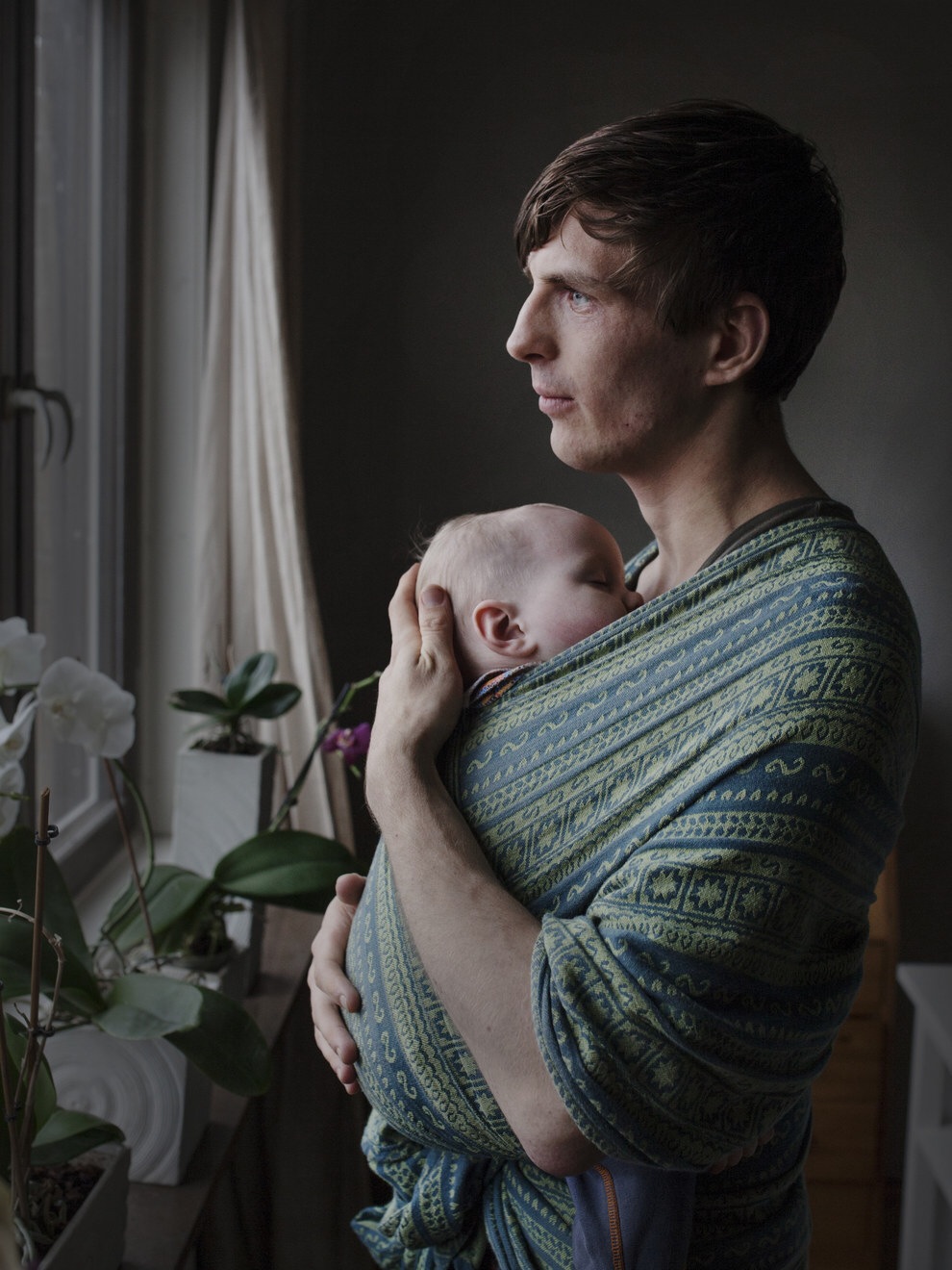
Photographer Johan Bävman found this so interesting that he has documented various fathers during their paternity leave. The exhibition called ‘Swedish Dads’ has raised interest around the world as it challenges traditional stereotypes about gender roles in the family. Johan himself says that he wants to show pictures of role models so that more dads take the opportunity to be home with their newborns.   

Photo: Johan Bävman

It’s no surprise that this initiative comes out of Sweden. According to one piece of cultural research, Sweden is extreme when compared to other countries in the area of gender overlap (men doing historically ‘traditionally female’ things and women doing historically ‘traditionally male’ things). This system and also this photo series seem to just reinforce the findings in this research. 

Can it be that Swedish men are the best dads in the world? Or is it just that the system allows them the freedom and approval to develop their relationships early on with their children? 

To see the pictures go to http://www.johanbavman.se

Ullared – Mecca in Swedish

  
Deep in the woods of rural Sweden lies what can only be described as a Swedish Mecca. To this location, people travel from all over the country. The journey might take several hours, but it’s well worth it for them. 

The place is a village called Ullared. And in Ullared is a massive low-price shopping centre called Gekås. 

Surrounding the airline hanger that is Gekås are a variety of outlet stores, restaurants, a camp site, a hotel – all making the journey more attractive to the pilgrimaging bargain hunter. When I went to Ullared this week for the first time, I felt like I experienced another level of Swedish culture. 

The car park itself was my first surprise, rows upon rows of vehicles that would put any Disneyland to shame. After parking the car, you walk towards the shopping centre like a trail of lemmings. On the way, you pick up a trolley large enough to house a small family. Each trolley is colour-coded and numbered so that it’s easy to locate should you step away from it inside the building. We walked straight  into the store, but I’ve heard that it’s not unusual to wait a long time in a queue – sometimes due to the sheer volume of people, they adopt a one-out, one-in policy. Once inside, you are overwhelmed by the giganticness of the place, the thousands of customers, they yellow and blue blinding interior and the aisle upon aisle upon aisle of bargains. But the initial shock abates quickly. Within 10 seconds, I had purchased a frying pan and was trying to persuade a friend that they should buy individual hamburger thermometers. 

All in all, I ended up with towels, sheets, underwear, freezer bags and a variety of other things. I left the place feeling satisfied with a job well done, even though I am an amateur when compared to many of the other shoppers there. Some seriously disturbed people even spend a week there, camping at the camp site and shopping every day. 

It is hard to explain how legendary Ullared is in Sweden. Everyone has an opinion about it, it seems. At Gekås they turn over multibillions per annum. Employees and regular customers have become TV celebrities thanks to a reality show that follows life in this shopping Mecca and is broadcasted weekly on national television.  At the local museum in Varberg, there is even a small exhibition about Ullared, which reflects its place in popular culture. It was there I learned that the average customer is a single mother of three, aged 42, who visits Ullared twice a year and spends 3600 sek each time. 

So if you ever visit Sweden, and want to experience something outside of the usual red cottages, forests, lakes and beautiful cities, take a trip to Ullared. You never know what you might find there. 

Sweden’s ‘best coast’

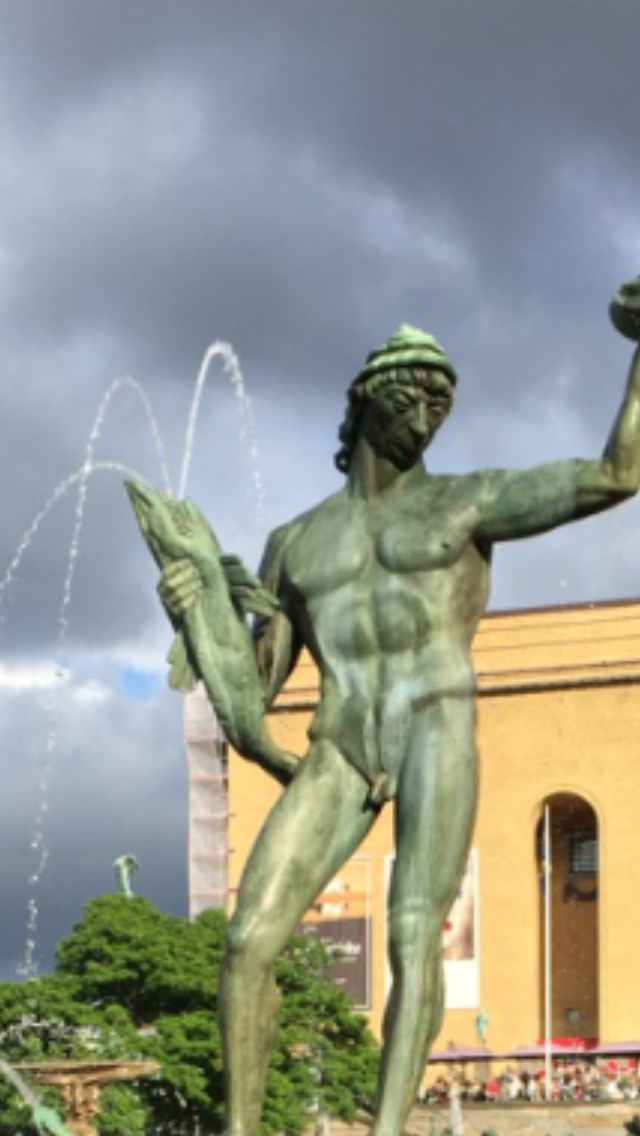
The town of Gothenburg is located on Sweden’s west coast, or the ‘best coast’ as the locals competitively call it in an attempted poke at Stockholm which is on the east coast. Spending a day here, it’s easy to feel the constant presence of the sea. Many of the streets have sea-related or harbour-related names and on the menus around town are a plethora of fish and seafood specialities: hand-peeled shrimp, freshly caught cod and classic fish gratin amongst them. At the top of the main restaurant stretch, known as Avenyn, is a statue. This statue is the grand figure of Poseidon, created by Swedish sculpter Carl Milles. There Poseidon stands in all his naked glory, willy dangling, fish in one hand, guarding the city of the sea. 

The city is currently packed with thousands of tourists, mostly in football gear. This week sees the annual event of the Gothia cup, a football competition for youths that attracts teams from all over the world. 

Gothenburg strikes me as a proud place. Proud of its unique position, proud of its role as Sweden’s second city and, not least, proud of its strong nautical heritage.  


Prawn pig out – a Swedish concept

  
This week I had what can only be described as a very Swedish experience. With friends, I participated in a ‘shrimp cruise’, also referred to as a ‘prawn pig out’. 

It works like this. You board a boat and, as it chugs around the archipelago, you eat as many shrimps as you can stomach. The menu consists of shrimps, aioli, bread. You wash this down with wine, cocktails and beer. Then there’s cheese and coffee. As you peel and pick away, the gastronomical treat is accompanied by a live band playing very loud music of a varied nature – rock, pop, country, Eurovision. I guess it’s to appeal to a wider audience. 

On this particular prawn pig out, there were about 50 passengers. And they were as eclectic as the music. Young couples, middle-aged couples, former party girls, pensioners and a gang of work colleagues from what seemed to be a construction company. Despite our differences, we all had one thing in common – a love for all-you-can-eat shrimps. 

I can’t exactly describe this experience as classy. But it was actually fun. And very very Swedish. 

Top 12 Swedish Summer Songs

  Yesterday I wrote about Thomas Ledin’s ‘Sommaren är kort’ and it got me thinking about other Swedish summer songs. So here’s my top twelve. And, as I hate Thomas Ledin’s song, it doesn’t even make the list. 

12: ‘Sommarnatt’ (Summer night) by Snowstorm. A song in which the singer ‘cruises along through the darkness in his giant machine.’ Classic uncomplicated Swedish lyrics. 

11: ‘Sommarsången’ (Summer song) by Siv Malmkvist. With lyrics like ‘and I want to sing that butterflies are good’, it just has to make the list. 

10: ‘Ta mig till havet’ (Take me to the sea) by Peter Lindblad. ‘The sand is moist, and the woman is young, crazy of longing am I’. Swedish summer sin at its best. 

9: ‘Sommar, sommar, sommar’ by Sten Carlberg is a little ditty that is synonymous with Sweden’s popular radio program ‘Summer on P1’. Summer is about ‘sun and blue skies’ but it slowly dissipates like a dream. 

8: ‘Midsommarnatt’ ( Midsummer’s Night) by Eddy Meduza. Dance band summer to which we ‘dance the whole night long’. 

7. ‘Sol, Vind och Vatten’ (Sun, wind and water) by Ted Gärdestad. An elementary song about tanned legs, high mountains and harbouring secret romantic longing. 

6: ‘Magaluf’ by Orup transports us to the tacky Spanish coast and sings of parties, alcohol and seagulls laughing until they are hoarse. 

5: ‘Our last summer’ by Abba. No list of Swedish music is complete without one of theirs. This one takes us to Paris and romantic walks along the Seine with boring banker Harry. 

4. ‘Så skimrande var aldrig havet’ by Evert Taube, sung by Lill Lindfors. (The sea was never this glistening). A fantastic romantic song by folk legend Taube about summer’s, and maybe life’s, first kiss. ‘The sea was never this glistening, nor the beach this liberating. The fields, the meadows and the trees were never this beautiful, nor did the flowers smell so sweet’. 

3: ‘Sommar’ by Kayo. A jazzy mellow song about the loss of summer with the loss of love – ‘there’ll never be a summer, there’ll never be sunshine, or jetties or mosquitoes – not without you.’ 

2: ‘Sommarkort’ (Summer picture) by Cornelis Vreejsvik. My favorite Cornelis song which captures summer in a melodious song – ‘let’s take a picture of children in the summertime as they dance – a moment on Earth’. 

1. ‘Summer sun’ by Koop. Rhythmic and cool, this song transports you to beach parties drinking rose wine and feeling the light breeze of summer – ‘Midsummer sun your love’s divine, never before have I met your kind.’

Baby we’re burning – Swedes, songs and Satanists

valbiorg

This weekend, the 30th April, in Sweden is Valborgsmässoafton. Yes, another one of those long indecipherable Swedish words.

This one translates as Walpurgis Eve, and is a day enshrined in tradition not only in Sweden but in other European countries such as Germany, Holland, the Czech Republic, Lithuania, Latvia, Estonia and Finland. Rather Baltic in other words.

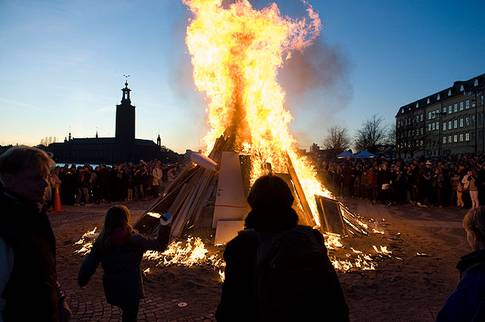
The name ‘Valborg’ is from an English Saint but, despite that, this isn’t really a religious celebration. It’s more to do with the welcoming of spring, and feels rather pagan actually. In the evening on Valborgsmässafton, Swedes gather around huge bonfires and listen to songs. These songs are in the form of traditional choir music designed especially for this occasion to shake off  the nasty dark winter and celebrate the burgeoning buds of the lighter season.

And like many traditions in Sweden, this one also has a rural origin. These bonfires are part of a Swedish tradition dating back to the early 18th century. On this day, farm animals were let out to graze and bonfires lit to scare away predators and other evil beings. This is rather ironic as Walpurgis Eve is also an important holiday in Satanism at it marks the founding of the Church of Satan.

But religion aside. On Walpurgis eve, I am watching the Swedes watching the flames, listening to music and looking forward to the spring and summer months ahead.

We survived another winter, and summer is coming!