Great Swedish Women Part 7 – The Activist

Since March 8th,  I  have been writing a series to celebrate Great Swedish Women, past and present: women with strength and passion, women who create change. Today is the final day. 

aleksa

Part 7 – transactivist, journalist and actor Aleksa Lundberg.

Aleksa Lundberg was born with the wrong body. She was born with a boy’s body and at the age of 22, she underwent corrective surgery and became physically a woman. She is the first actor in Sweden to have undergone gender reorientation. She is a strong, proud Swedish woman. But her transition hasn’t necessarily been smooth sailing – as a transwoman, she has experienced hate, disgust, rejection and ridicule.

Today Aleksa is a transactivist and works hard to change society’s view about transgender men and women and to reinforce the trans perspective in society and politics. She is a vocal representative and a fierce, sometimes provocative, oponent and is frequently seen in debate programs on television and in other media.

Aleksa is also an accomplished actor. She has played many groundbreaking, interesting roles. Currently, you can catch her in ‘King Kristina Alexander’ at Strindbergs Intima Theatre in Stockholm, directed by Elisabeth Olson Wallin.

Aleksa’s political message is actually very simple. She wants to strengthen the rights of transgender people and also change the whole of society. Everybody, regardless of gender, race, sexual orientation, handicap should feel accepted, needed and loved. In a recent interview, she says:

‘Our sexuality doesn’t choose men or women. In the end, it’s about choosing a person. For me, it’s more about politics than romance that love is the the meaning of life. I hope that we can have a world where everyone actually understands that.’

Who can argue with that? Love is the key. Long live Queen Aleksa.


Great Swedish Women Part 6 – The Feminist

Since March 8th was International Women’s Day, I  am writing a series on Great Swedish Women, past and present: women with strength and passion, women who create change. For seven days, I am writing about these women, one per day. I hope you want to join me in celebrating them.

wallstrom

Part 6 – Swedish Foreign Minister and Feminist Champion – Margot Wahlström

Like all Cabinet Ministers, Margot Wahlström has come under fire for questionable decisions. This aside, I would like to focus on her acheivements as a politician in Sweden, Europe and the world. Margot Wahlström is a woman who works tirelessly for the rights of women and champions Sweden’s ‘feminist foreign policy.’

Born in the north of Sweden, Margot Wahlström has had an impressive career, working both in Swedish and European politics. A Social Democrat politician, one of her significant roles has been at the United Nations where in 31 January 2010, she was nominated the first ever Special Representative on Sexual Violence in Conflict. She was dispatched to the Democratic Republic of Congo to investigate claims that rebel fighters raped more than 150 women and baby boys over four days within miles of a UN base. She later addressed the UN Security Council on the use of sexual violence as a weapon by both rebel and government soldiers. In her speech, she demonstrated that the rapes “were not an isolated incident but part of a broader pattern of widespread systematic rape and pillage.”

In 2014, Margot Wallström was appointed to the Swedish government as Minister of Foreign Affairs. In this role, she has not been afraid to say what she thinks, something which is often not appreciated from a woman. But she does not let this prejudice dissuade her. She was the first EU Foreign Minster to acknowledge the state of Palestine, leading to Israel removing their ambassador in Sweden. On another occasion, she summoned the Russian ambassador to criticize them regarding questionable flights in the Nordic region and threats over Sweden possibly joining NATO. Recently, she commented on Saudia Arabia’s flogging of a human rights blogger calling it a “cruel attempt to silence modern forms of expression”.

Sweden’s Feminist Foreign Policy

As Foreign Minister, Margot Wahlström leads Sweden’s ‘feminist foreign policy’. She describes it in the following way:

Sweden’s feminist foreign policy aims at ensuring women’s rights and participation in central decision-making processes. Gender equality is not just the right thing to do. As research is consistently telling us, it is the necessary and smart thing to do if we want to achieve our wider security and foreign policy objectives. We know for a fact that increasing gender equality has a positive impact on food security, extremism, health, education and various other key global concerns.

Feminist foreign policy is an integral part of the activities of the Swedish Foreign Service. Our methodology can be summarised in four words, all beginning with the letter “R.”

Reality check is about getting the facts right from the outset. If we look to the needs and aspirations of 100 percent of the population, what is the situation on the ground? How should we then prioritize?

Rights. The fact is that human rights are also women’s rights. Here, two fundamental tracks must be followed when pursuing a feminist foreign policy. Firstly, there are areas where we must aim for prohibition, such as gender-based discrimination, domestic violence and forced marriages. Secondly, there are areas where the aim is progress, for example equal rights to inheritance and access to education, employment and health, including sexual and reproductive health and rights. These areas are key to women’s empowerment.

Representation, which includes influence over agenda-setting and starts by asking a simple question: who conducts policy? Whether it regards foreign or domestic policy, whether in Sweden or Tunisia, we see that women are still under-represented in influential positions in all areas of society. I am proud that the Swedish Ministry for Foreign Affairs might be an exception: five top positions – all three ministers and two out of three state secretaries – are held by women.

Resources refers to Sweden’s ambitious international work, for example in development cooperation. The starting-point here is the need to apply a gender perspective when distributing aid and resources. To give an example: today, only one per cent of spending in security sector reform is allocated to initiatives which consider gender equality a significant objective. This is unacceptable. Global gender equality goals must have financial backing.

Sweden’s feminist foreign policy aims to respond to one of the greatest challenges of this century: the continued violations of women’s and girls’ human. Regardless of whether we struggle for gender equality at home – or in a context of conflict like Libya – let’s remember how the Swedish feminist and author Elin Wägner compared values and ideals to old-fashioned bicycle lights: they don’t light up until you pedal forwards.

In our work for global gender equality, we can do a great deal together. I am confident that many of you will join in pedalling forward.

Margot Wahlström’s feminist perspective is notable, and not always popular, on the international political agenda. She continues to fight for what she believes in and to strengthen women’s rights and empowerment around the world.


Great Swedish Women -Part 5 – The Legend 

Since March 8th was International Women’s Day, I  am republishing my series on Great Swedish Women, past and present. I hope you want to join me in celebrating them.

Part 5 – the vengeful Viking Blenda.

In the county of Småland in Southern Sweden, there is a legend about a brave Viking woman named Blenda.

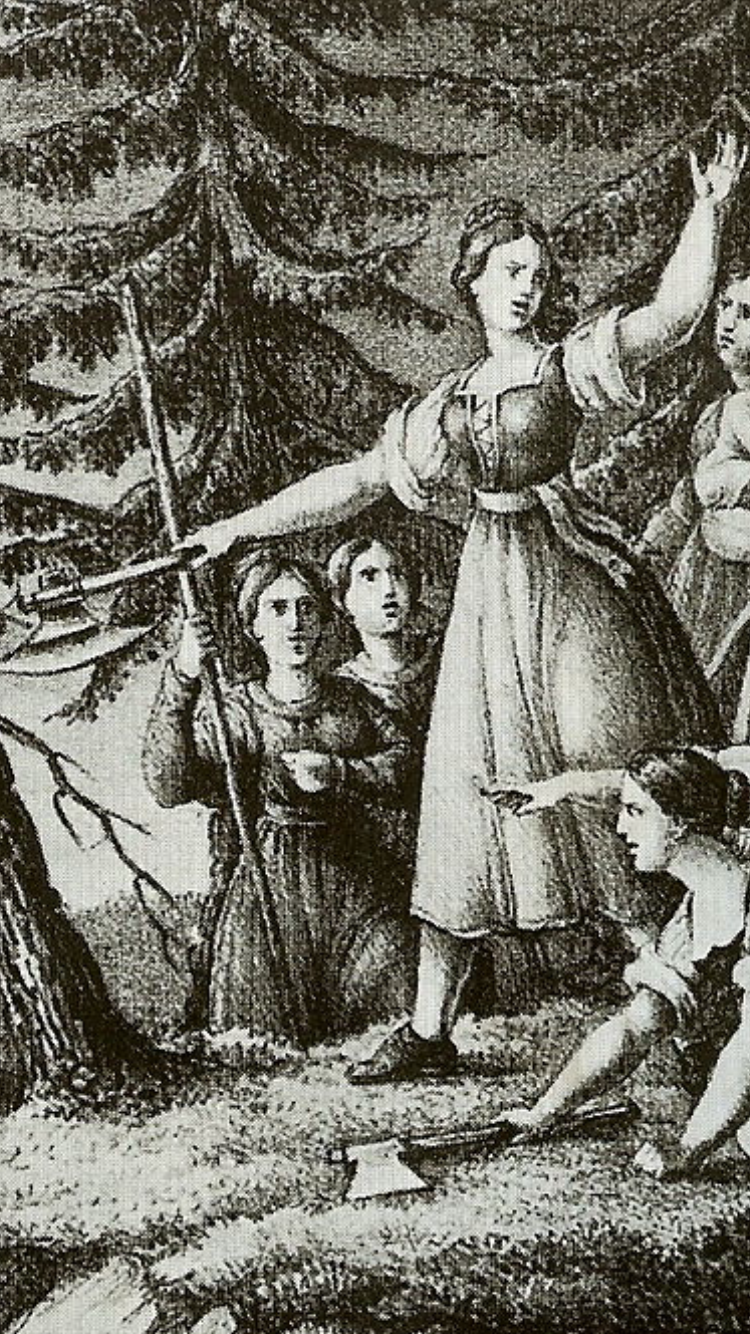
According to legend, the menfolk of Småland were at war in Norway, leaving the women and children alone and defenceless. The Danes learned of this and chose this moment to invade and attack the region.  Blenda was a woman of noble descent and she decided to rally the hundreds of women from Albo, Konga, Kinnevald, Norrvidinge and Uppvidinge. The women armies assembled on the Brávellir, which according to Smålandish tradition is located in Värend.

The women approached the Danes and told them how much they were impressed with Danish men. They invited the men to a banquet and provided them with food and drink. After a long evening, the Danish warriors fell asleep and the women killed every single one of them with axes and staffs.

When the king returned, he bestowed new rights on the women. They acquired equal inheritance with their brothers and husbands, the right always to wear a belt around their waists as a sign of eternal vigilance and the right to beat the drum at weddings and to wear armour.

There have been various disputes about the validity of this legend, if and when it happened. One theory is that it happened around the year 500. At this time, female soldiers existed in Sweden. Called Shieldmaidens, three hundred are known to have fought during the great Battle of Bråvalla in 750. If you’ve seen the successful series ‘Vikings’, you will be familiar with these women.

Blenda is perhaps the first known woman in a long line of strong Swedish women who defend themselves from aggressors and contribute to better equal rights between the sexes.

Great Swedish Women Part 4 – The Fighter

Since March 8th was International Women’s Day, I  am writing series on Great Swedish Women, past and present: women with strength and passion, women with a voice, women who create change. For seven days, I am writing about these women, one per day. I hope you want to join me in celebrating them.

linnea claesson.png

Part 4 – handball player and social media warrior Linnéa Claesson.

When Linnéa Claesson was 12 years old, she was on-line chatting with a guy who she though was the same age as her. When she turned on her camera, she was greeted by an older man masturbating to her.

It is impossible to imagine what must have run through 12 year old Linnéa’s mind and it’s horrendous to think that she had to experience it. For Linnéa, it was the start of years of ongoing net abuse and social media hate. And one day she decided to not take it any more. She decided to fight back.

Linnéa Claesson is one of Sweden’s most accomplished handball players on elite level and has won, for example, gold in the handball World Championships. After matches, she typically gets unsolicited messages from men on social media which include sexual propositions, pornographic comments about her body, physical threats and penis photographs. Linnéa decided to retaliate, and set up an Instagram account called ‘assholesonline’ where she takes a screenshot of the comments and how she has answered them, often using humour as her weapon. Here’s an example:

‘My fantasy: Me, you and another girl licking you until you scream. Maybe a bubble bath. What’s your fantasy?

Linnéa’s answer?

‘My fantasy: Me, you and another girl kicking you until you scream. Maybe a blood bath.’

In responding to the comments, Linnéa wants to take back the conversation and show those harrassing her, and other women, that she is not ashamed and that she is in control. The reaction she receives from the men is often angry and aggressive and not infrequently leads to threats on her life. In a recent interview, she said,

‘I have to do this, even if I’m scared. I have to be brave. Generations after me shouldn’t have to face the same thing.

Linnéa Claesson is not only a fighter on the playing field, she is a fighter in many other aspects. She fights against the sexual harrassment of women and in doing so she is trying to create a debate around this problem. The ultimate goal – to change society’s attitude and view of women and create a positive change. In her own words,

‘We should stand up for each other and when we see something wrong we should challenge it. I think that this is important.’

Here is Linnéa’s Instagram account  assholesonline.

Great Swedish Women Part 3 – The Creator

Since March 8th was International Women’s Day, I  am writing series on Great Swedish Women, past and present: women with strength and passion, women with a voice, women who create change. For seven days, I am writing about these women, one per day. I hope you want to join me in celebrating them.

astrid lindgren

Part 3: writer Astrid Lindgren, creator of the strongest girl in the world.

When I moved to Sweden, I vaguely knew  about writer Astrid Lindgren. It wasn’t until I arrived here that I understood what impact she has had on generations of Swedish children, and not least on generations of girls. The creator of fictional character Pippi Longstocking showed girls that it is ok to be strong, to be independent, to be different and to be the best.

Astrid Lindgren grew up in Näs, Sweden, and many of her books are based on her family and childhood memories and landscapes. Her most famous character Pippi Longstocking was invented for her daughter to amuse her while she was ill in bed. She wrote many classic stories – the most famous being  Emil in Lönnerberga, Karlsson on the Roof, the Six Bullerby Children, Mio my Mio, The Brothers Lionheart and, my personal favourite Ronja the Robber’s Daughter. Her fiction formed the backdrop of the childhood of many Swedish children and, even today for children around the globe. She is the fourth most published childrens’ author in the world and has to date sold around 144 million books in 95 different languages. She received many awards during her life and was known for her support for  children’s and animal rights and her opposition to corporal punishment.

Astrid is a national icon in Sweden and her image currently decorates the 20 kronor note. At her funeral in Stockholm’s Cathedral in 2002, Sweden’s King and Queen and other Royals were in attendance reflecting her importance and contribution to Swedish culture.

Astrid Lindgren gave strength to young Swedish girls and helped them to believe in themselves. In the confident words of the strongest girl in the world, Pippi Longstocking, :

‘I’ve never done that before so  I’m sure I can do it’.


Great Swedish Women Part 2 – The Prosecutor

March 8th was International Women’s Day.

I am writing series on Great Swedish Women, past and present: women with strength and passion, women with a voice, women who create change.

For seven days, I am writing about these Great Swedish Women, one per day. I hope you want to join me in celebrating them.

massifritz

Part 2 – Swedish lawyer and prosecutor Elisabeth Massi Fritz.

On 24 June 1999, a 19 year old woman by the name of Pela Atroshi was murdered in a honour-related crime. The murder occured when she was visiting her family in Irak. Killed by her two uncles and her father, the crime was witnessed by Pela’s mother Fatima and sister Breen. The case was concluded with life time sentences for the two uncles. Pela’s father lives in Irak, where Pela is buried in an unmarked grave for bringing dishonour to her family.

In the court, in Sweden, Breen testified against her uncles which led to the conviction. She was represented by lawyer Elisabeth Massi Fritz.  After this case, Elisabeth Massi Fritz became known as one of Sweden’s leading lawyers and prosecutors, and Sweden’s only lawyer specialising in honour crimes. She stands up for the victims of crime, many of them women, and is an active contributor in the debate against honour crimes in Sweden.

Born in Motala, Sweden, to Christian Syrian parents, Elisabeth Massi Fritz personally gained insight into honour culture as she was not allowed to have a boyfriend or to move away to study. At the age of 19, she defied her family and moved to Stockholm to study law. Today, she runs a legal firm where she employs only female staff and where they specialise in defending the victims of crime and prosecuting the perpetrator. She has worked on many high profile cases, such as the rape cases against plastic surgeon Carl-Åke Troilius and the Chief of Police Göran Lindberg, both of which resulted in prison sentences for the accused.

Elisabeth Massi Fritz continues to fight injustice and is the champion of the victim of crime.


Great Swedish Women Part 1 – The Catalyst

Today, March 8th, is International Women’s Day.

In support, I am writing series on Great Swedish Women, past and present: women with stength and passion, women with a voice, women who create change.

For seven days, I will write about these Great Swedish Women, one per day. I hope you want to join me in celebrating them.

Fredrikabremer

First out is the 1800’s writer and feminist reformer Fredrika Bremer, a kind of Swedish Jane Austen and one of the catalysts of the early feminist movement in Sweden.

Many of the women’s rights that we take for granted in Sweden today did not exist in the Fredrika Bremer’s time. For example, in 1800’s Sweden, women were not free to educate themselves as they liked, marry as they liked, live as they wanted, to have economic independence or to vote in elections. Married women were controlled in all manner by their husbands, unmarried women by their closest male relative. Fredrika Bremer was born into this kind of society in 1801 in Åbo, Sweden, which today is part of Finland. At the age of three, her family moved to Stockholm where Fredrika and her sisters were raised to marry well. Fredrika found the limited and passive family life of Swedish women of her time suffocating and she described her family as “under the oppression of a male iron hand’. Fredrika never was forced under the shackles of marriage, so had a certain level of independence inaccessible to married women at that time. Throughout her adult life, she became a world traveler, an accomplished author (at first anonymously) and a political activist. She was very interested in social reform regarding gender equality and social work and she participated actively in debates around women’s rights in Sweden.

Fredrika Bremer was a catalyst of the first real feminist movement in Sweden. There is much in modern day Sweden to thank her for. In 1853, she started by co-founding the ‘Stockholm Women’s Fund for Childcare’ and the following year, the ‘Women’s Society for the Improvement of Prisoners’. However, it was in her novel, Hertha (1856) that she issued in most change, making it probably her most influential literary work. In the book, she wrote about the lack of freedom for women, which subsequently raised a debate in the parliament called “The Hertha debate”. This directly contributed to a new favourable law for adult unmarried women in Sweden in 1858, and was a starting point for the campaign for women’s rights in Sweden. Hertha also raised the debate of higher formal education for women and, in 1861, the University for Women Teachers was founded by the Swedish state.

In 1860, Fredrika helped to fund Tysta Skolan, a school for the deaf and mute in Stockholm. Now an established and respected citizen and patron, she supported giving women the vote in the electoral reforms of 1862. In the same year, women of legal age were granted this in municipal elections in Sweden. The first real women’s rights movement in Sweden, the ‘Fredrika Bremer Association’, founded by Sophie Adlersparre in 1884, was named after her, 19 years after her death.

Fredrika Bremer’s leaves a legacy of equality and autonomy behind her. Her legacy extends far beyond Sweden’s borders. Not only is she recognised as an influencial writer and reformer, but the town of Frederika in Bremer County Iowa, USA is named after her.


.

What is Sweden’s National Dish?

swedishchef

If you’ve ever wondered what Sweden’s National Dish is, now is the time to take part in a competition hosted by radio station P3. So far, the folowwing have been eliminated: falafel, swede, ‘plankstek’ (literally steak on a plank) and ‘palt’ (dumplings).

What is left to vote for are the following:

  • ‘Smörgåstårta’ (sandwich cake) versus ‘Sill och potatis’ (pickled herring and boiled potatoes)
  • ‘Köttbullar’ (meatballs) versus ‘Blodpudding’ (black pudding)
  • ‘Tacos’ versus ‘Falukorv med makaroner´ (sausage with macaroni)
  • ‘Kebabpizza’ versus ‘varmkorv’ (hot dog)

If you’d like to vote, here’s the link: VoteforSwedenNationalDish

So, what do you think? What is Sweden’s National Dish?

Sweden’s Name of the Day

In Sweden, there’s a concept known as a ‘name’s day’. Each day of the year has a name associated with it. For example, today January 2nd, is Svea’s day. 

Celebrating name’s day was originally intended to weaken the importance of celebrating birthdays which was considered heathen and unChristian. Most people were christened after saints, which was deemed more holy. 

Interestingly, the concept was also used commonly by farmers to plan their crops, rather than on specific dates. This still exists today somewhat with terms such as Mårten’s Eve and Anna’s Day. 
Today it is seen mostly as an opportunity to celebrate a person with that name on that very day. Some people give presents or go out for dinner, others send texts or write congratulations on social media. Others ignore it completely.

So what can you do if your name doesn’t have an official name’s day? Well, either don’t care about it or adopt a day. 

My English name doesn’t exist in the calendar so I chose the closest Swedish name I could – Nils. That means that the 8th October is my day. Along with the other 138,350 males in Sweden with the name Nils.  

Oh, and the 5 women who also weirdly have Nils as their first name too! 

So when is your name’s day? 

Shedding my light on the Lucia debate


Today is Santa Lucia in Sweden – December 13th.  At the darkest time of the year, when we all are drained by the black mornings and afternoons, Lucia pays us a visit. With candles in hair and surrounded by a posse of singers, Lucia shines light into the dark depths of our spirits. The music plays. The choir harmonises. Lucia smiles at us. And slowly, slowly, the day awakens.

I love Lucia. Long live Lucia – this Sicilian martyr, who’s tradition is said to have come to Sweden via Italian merchants around the late 18th century.

Every year, towns around Sweden elect a Lucia and they visit shopping malls, old people’s homes and churches, singing and handing out gingerbread. And every year there is a debate about who owns the right to be Lucia. The answer to that question depends on your starting point – does one take a traditional view or a modernist view? The Swedish traditionalists will say that Lucia definitely has to be a girl, ideally blonde and blue-eyed. The modernists will say Lucia should reflect today’s society and therefore can be any colour or gender.

This year, as many before, the debate took a nasty turn. A large department store depicted Lucia as a gender-neutral, dark-skinned child. For some people, this was too much. Hateful, despicably racist, and, of course, anonymous comments flowed in via social media, revealing yet another crack in Sweden’s tolerant facade.  Consequently, the department store removed the advert to protect the child. This social media behaviour is unacceptable and should be in no way condoned. Having a view point is everybody’s right (be it traditionalist or modernist), but attacking a child is something totally different.

As I watched Lucia this morning I was reminded of the real message. The humanist message. Sure, Lucia is literally about bringing light to the dark day. But the metaphor is clear, if we care to remember it. It is about caring. It is about being open even when we feel closed. It is about community.

One of the songs the choir sang this morning is called ‘Sprid ditt ljus’ – and I think this sums it all up. Translated into English, the chorus goes: ‘Spread your light, in the darkest times, warm us now and let us all feel peace’

Maybe it’s just me, but I think who is elected Lucia isn’t that important. What’s more important is that we remember the point. We should open our eyes to the light that is shone on our society where we have growing social divides, enormous groups of displaced people, poverty, starvation, homelessness on our streets.

Once a year, Lucia shines the light. Can we find it within us to shine our lights on each other? I, for one, intend to try.

Happy Lucia! May the light keep you warm.