Advent Calendar – Dec 21: Julvärd

Window 21. Today’s word is ‘Julvärd‘ which translates as Christmas host.

The term Christmas host is not referring to the religious bread that represents the body of Christ. Although you’d be forgiven for thinking so at this time of the year.

No, the Christmas host is a personality on tv who guides the viewers through the proceedings on Christmas Eve.

For 27 years the ‘julvärd’ was the same person – a man called Arne Weise – and he is, for many Swedes, eternally associated with Christmas Eve.

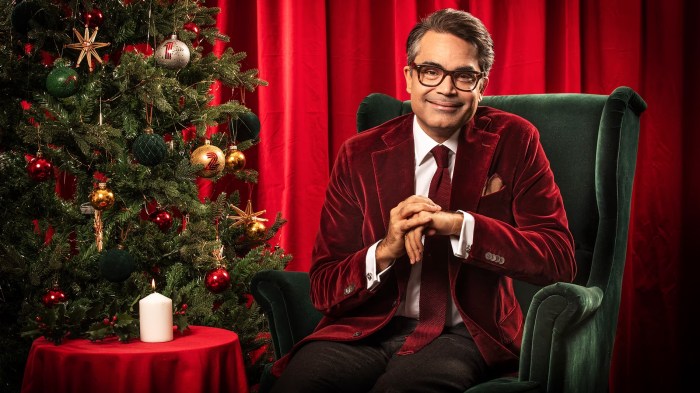
But since 2003, a new host is announced every year and it is considered a great honour to be given the role. This year the ‘julvärd’ is popular comedian and actor David Batra.

While the role of ‘julvärd’ might seem trivial, it is actually very important. The Christmas host is present throughout the whole day and introduces the programs. He or she also talks about the value of Christmas and what it means. And not least, the ‘julvärd’ keeps lonely people company by inviting themselves into living rooms up and down the country.

The ‘Julvärd’ can be seen on SVT – Sweden’s Public Service Television – and is usually broadcast live.

Advent Calendar – Dec 15: Musikhjälpen

Window 15. Today’s word is ‘Musikhjälpen‘ which translates as Music Aid.

Since 2008, the radio/tv program ‘Musikhjälpen’ has become a traditional part of the lead up to Christmas.

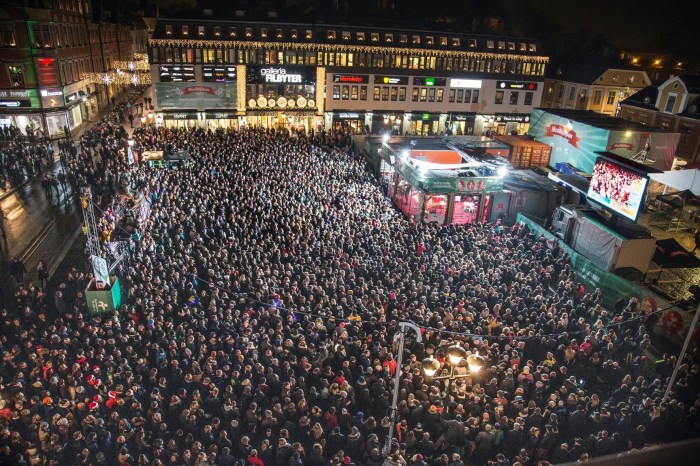
In this program, 3 presenters are locked into a glass ‘cage’ on a town square somewhere in small town Sweden – this year from the town of Växjö in county Småland. They are sleep deprived and only allowed to eat liquids.

From the cage, they broadcast radio and tv round the clock until they are released a week later.

The program is a fund-raising event for Sweden’s international aid organization Radiohjälpen. People up and down the country request songs and make donations, or carry out fund-raising activities. Live music performed in the ‘cage’ has also become an important part of the event. At most, the event has raised a staggering 74,410,363 SEK in 2017 when the theme was fighting against child prostitution.

Every year the theme is different; this year the theme is ‘nobody should die from hunger’.

Throughout the years, many of Sweden’s music and media celebrities have taken on the challenge of incarceration, such as singers Sara Dawn Finer, Daniel Adams-Ray, Molly Sandén, Miriam Bryant and Linnea Henriksson, and rappers Petter and Timbuktu. This year, singer Oscar Zia is locked in together with radio profile Linnea Wikblad and comedian Sofia Dalén.

The program is based on an original format called Serious Request from Holland and is an amazing display of charity just a couple of weeks before Christmas.

Advent Calendar – Dec 8: Ernst

December 8th window: ‘Ernst‘ which translates as, well… Ernst.

What on earth is an Ernst you might wonder? Well, the question should rather be ‘who’ is Ernst.

Ernst Kirschsteiger is a person who, by many, is considered to be Mr Christmas in Sweden. He is a very popular interior designer. After a hiatus, the 65-year old is back this year with his TV program called Ernst’s Christmas.

In his program he simply explodes festive spirit. He decorates and bakes and creates. He wallpapers and chisels and hammers. He sews and paints and he crafts. I would describe his design ethic as a nature-oriented retro scandi chic. He has a poetic, philosophical attitude to interior design coupled with practical solutions.

One week he made, for example, Christmas decorations out of mandarin peel and wire and inspired us with a wreath of dried garden flowers, moss and brussel sprouts.

Some people find him very cheesy and goofy but he has definitely cornered the market on Christmas coziness. Many viewers see him as the idea of male perfection – a sensitive man who cooks, builds and decorates the home – all wrapped up in one sweet Christmas treat.

Since his tv debut in 2000, Ernst Kirschsteiger has grown to be a phenomena who only needs referring to by his first name, like Cher, Madonna and Prince. So popular is he that a book of his quotes and poetic wisdoms called ‘Ernstologi’ was released in 2006 and became a popular Christmas present that year.

If you want to witness the phenomena (in Swedish however), watch this YouTube clip and enjoy!

Sweden’s most famous Gay

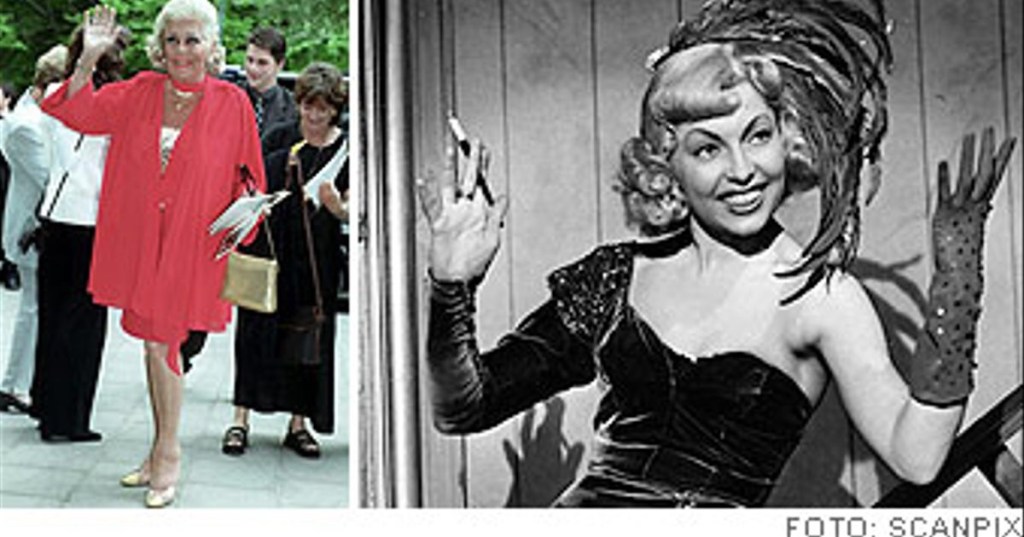
Today, 2 July, marks 15 years since the death of the Swedish actress, singer and femme fatale Git Gay. Born in Karlshamn in 1921, she went on to become one of Sweden’s most popular and notorious prima donnas.

A classically trained concert pianist, Git Gay made her name as an extravagant review artist and larger-than-life tv host. She was given her stage name in 1949 by review artist Karl Gerhard, who undoubtably thought it was more showbiz than her real name Birgit Agda Carp.

By the end of her career, she had appeared in many films and shows as well as recorded numerous records, and the name Git Gay was synonymous with glamour and glitz. In fact, the word ‘kalaspingla’, roughly meaning party babe, is said to have been of her making.

After her death, in accordance with her will, a foundation was set up in her name to give cash awards to working Swedish musical and theatrical artists. The last award was given in a grand gala, Git Gay style, in 2018.

60 years of Sweden’s Sun film

Every Monday, once a week, from the beginning of the year until the Summer Solstice, the ‘Sun film’ is broadcast on Swedish TV. The film shows what time the sun goes up and down in Lund, Stockholm, Kiruna and Lycksele.

Fantastically retro, the film has been broadcast for almost 60 years.

And tonight, I recorded it for you….

Swedish icons 14: The Swedish Chef

I can’t write a series about Swedish icons without mentioning the Swedish chef. He was probably my second introduction to the Swedish culture when he appeared on the Muppet Show in 1975. Abba winning Eurovision in 1974 was my first. And in my ears when the members of Abba spoke – they sounded just like the Swedish chef!

The Swedish chef character is a puppet that was invented by Jim Henson and Frank Oz. The puppet’s live hands where performed by Oz, while Henson controlled the head and did the classic voice. The gobbledygook that the character spoke was supposed to be Swedish, and had the occasional English word thrown in. It was basically gibberish and sounded like ‘hurdy gurdy’ and ‘bork, bork, bork’. He was known for his ridiculous cooking methods, his accident prone nature and the fact that he almost always tried to cook living animals that, in the end, attacked him.

As a kid, I thought that the Swedish chef was hilarious. I don’t know if my love affair with Sweden began there but I certainly found him entertaining and intriguing. To date, he has been seen in over 100 countries, and in some places he might be all they know about Sweden. Interestingly in Germany, he’s known as the Danish Chef.

Real-life Swedish chef Lars Bäckman claims that he is the inspiration for the character. Allegedly he performed catastrophic screen test in the USA in the 70’s which Henson saw and imitated. Bäckman’s claim has however never been corroborated by the Muppet Show.

So, does he sound like a Swede? Well, most Swedes would say absolutely not. To them, he sounds more Norwegian. I can say that in all the years I’ve lived in Sweden, I’ve only heard a handful of people speak in the ‘hurdy gurdy’ style of the Swedish chef when speaking English. It is so unusual that it is almost a shock when you encounter it. So, the answer is no – the Swedish chef is not accurate, but he is a comedy icon in his own way.

‘The Crown’ – Swedish style

The Netflix series ‘The Crown’ which depicts the British monarchy has just started its 4th season. Featuring the sad destiny of Diana, and including events like the Falklands war, it is set to be a dramatic ride.

It got me thinking if they made a Swedish version, probably called ‘Kronan’, who would be the ideal cast? Which Swedish actors would fit the bill? Any suggestions?

6 reasons why Swedes take Eurovision so seriously

We are in the middle of the Eurovision qualification rounds (known colloquially as ‘Mello’) in Sweden – three weeks in, three weeks to go. This extended selection period occupies every Saturday night for 6 weeks, and results in the song and artist who will represent the country in the big final in Israel.

People gather up and down the country to have ‘Mello’ parties. Social media and traditional media are full of comments about the bad quality of the contestants this year (and every year). People are raging that the wrong songs are voted to move on in the league table.

Nobody, and I mean nobody takes their Eurovision (ESC) more seriously than the Swedes.

But why is that? Here are a few theories:

Brightening up the winter blues. Mello comes during the deepest, darkest, dreariest time of the year. The glittery colourfulness of Mello brightens up February and early March, when nothing much else happens.

Reliving the glory days. ABBA’s legacy is a constant reminder to Swedes that they once reached long-lasting global fame and it all started at ESC. Every year is a hunt for the next big thing, when the international light will shine once more on this little country in the north.

Organized ‘religion‘. Sweden is, relatively speaking, not a religious country. So the human need for organising ourselves into a collective manifests itself in other ways. Hockey and football become a form of organized religion. And ‘Mello’ is another variation on the same theme. Ask Swedes why they like Mello and many use the word ‘folk fest’ – a ‘national party for the people.’

Swedish traditions. Sweden is a country that is good at holding on to traditions – crayfish parties, snaps songs, semla cream buns, Easter trees – to name just a few. Therefore it is easy for this society to absorb, and structure, new traditions. Halloween is now a thing here. So is Valentine’s Day. So Mello becomes another tradition and slots nicely into the national calendar.

Vicarious extrovertism. Swedes are not generally known for being outgoing and extroverted, although there are of course exceptions. This means that Mello becomes so attractive, as it’s an opportunity for Swedes to live vicariously through the ‘crazy’ performers who dance around in sequins and funny outfits. It’s also an opportunity to push your own boundaries and wear a glittery hat or a pink feather boa. And all under organised, acceptable conditions.

Love of music. Because some Swedes actually like the music.

Which theory is most accurate do you think? Do you have another theory?
A Swedish Christmas tradition since 1960

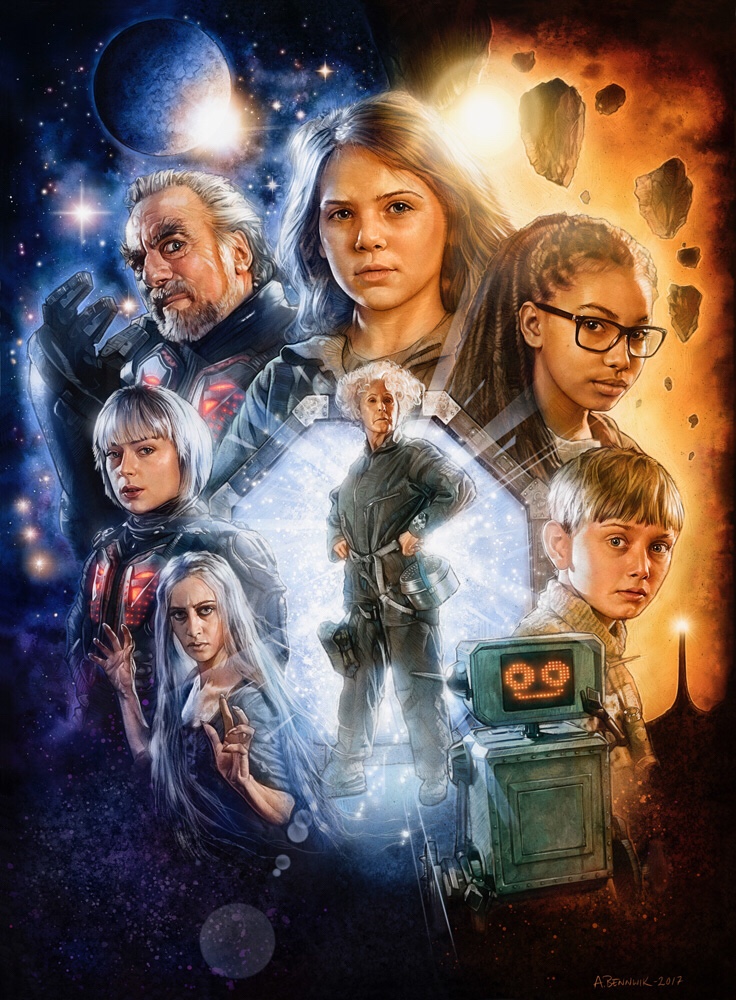
In Sweden, since 1960, something has happened every day in the run up to Christmas. A tv series called ‘Julkalendern’ – Christmas calendar- is broadcast early in the mornings from Dec 1 to Dec 24. Sent in 15 minute episodes, it is a different story each year and often stars some of Sweden’s leading actors and comedians. It is very popular amongst children, and is a cozy seasonal tradition. After each episode, viewers can open the relevant door in their advent calendar, which accompanies the program. The stories can vary widely, but most usually there is a Christmas / winter theme and a moral message suited to the time of year.

‘Julkalendern’ sits deep in the souls and psyche of many Swedes. Most cherish fond childhood memories of getting up in the dark to watch an episode before heading off to school. In 1999, a competition was launched to identify the most popular ‘julkalender’ of all time. The winner was a spooky ghost story called ‘the mystery of Greveholm’. Closely behind were ‘Sune’s Christmas’, ‘The old woman who shrunk to the size of a teaspoon’ and ‘Magical times’.

This year, the story is called ‘Hunt for the crystal of time’ and is starring a very popular, recently-deceased Swedish actor as the obligatory evil bad guy. In the series, he plans to stop time the day before Christmas Eve and the only people who can stop him are three children who have to journey to the center of the universe to do so.

It’s all very exciting – what if they fail?! There will be no Christmas ever again!

We’d all better hope they succeed! In just 5 days, we’ll find out!!!!

‘Julkalendern’ can be watched on SvtPlay you’d like to catch up!

Sweden’s insatiable appetite for Eurovision

Sweden must be the country that can call itself Eurovision fan number 1.

So insatiable is the thirst for ‘schlager’, as it is called in Swedish, that the journey towards the May 2018 final began today.

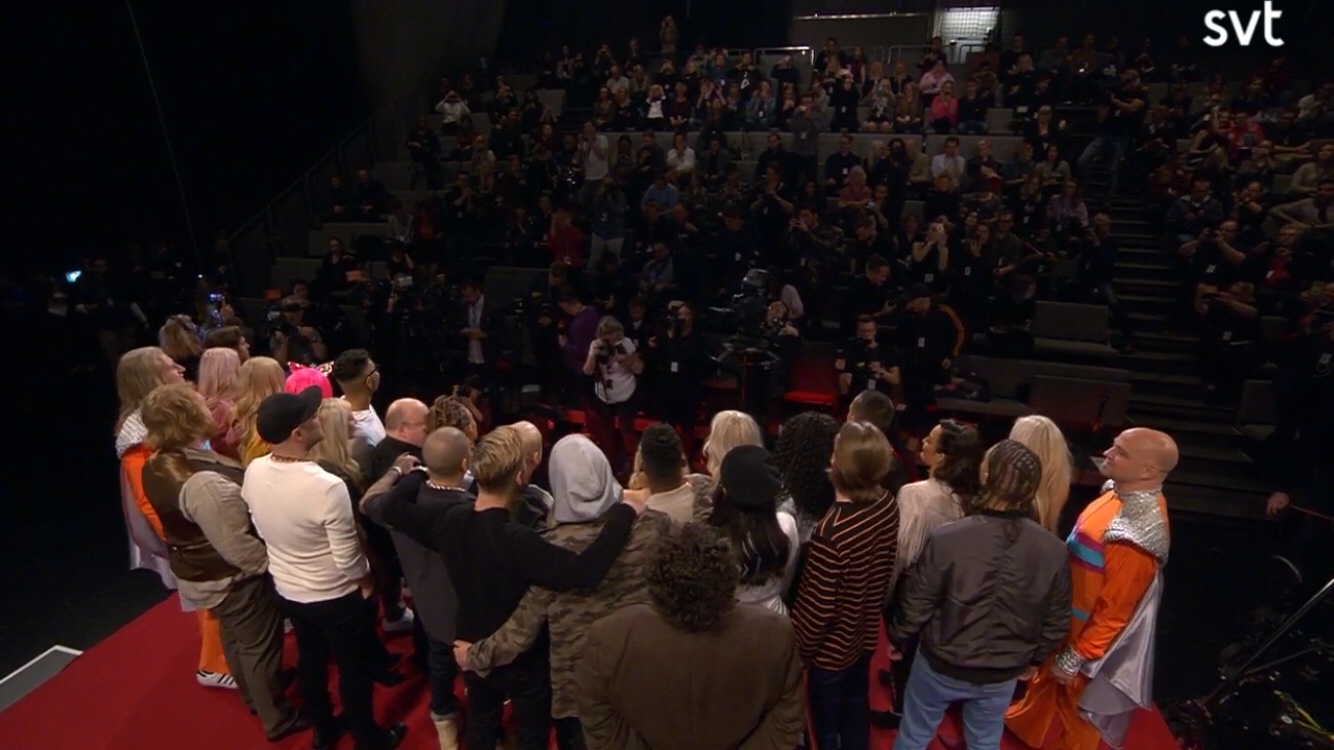
Today, it was announced in a live press conference who will be participating in ‘Melodifestivalen’ – the competition to choose Sweden’s representative. So insatiable is the thirst for ‘schlager’ that there are 28 contestants! 28!

According to the papers, the artists are a mixture of ‘new-comers, classic singers, comebacks, former winners, favourites and LGBT surprises!’ Also, oddly, a parody band and a fat tv cook.

So insatiable is Sweden’s thirst for ‘schlager’ that these 28 contestants start competing with each other in February – in 6 live televised competitions! February Saturday nights in Sweden are ruined for the uninitiated.

The weeks leading up to the Eurovision Song Contest are then filled with Eurovision trivia. So insatiable. Interviews with Sweden’s chosen representative, behind the scenes programs and analysis of every single one of the other countries’ songs grace our televisions. Then finally, once we are already saturated, the two semi finals come. God forbid Sweden doesn’t qualify. Then finally, the final comes. And Sweden usually lands somewhere in the top 10. Then comes the analysis.

Finally sometime at the beginning of June, we are released from the jaws of Eurovision. The summer comes and is filled with ‘schlager’ tours and festivals. And in November, it all kicks off again.

That’s life in the insatiable ‘schlager’ country of Sweden.