Why Nazis are welcome to Gotland 


When I went to university in the U.K., there was a policy called ‘no platform’. This meant that students were allowed to demonstrate, hold rallies and meetings about any subject they liked except with one agenda – racist. The university claimed it was democratic but also allowed ‘no platform for racists’. I personally do not hold right-wing views, but this policy never sat easily with me as I saw the clear paradox that it created and it raised the question of what a democracy is. This is a question that raises its head very frequently in today’s culturally and politically polarized society. 

One very recent example in Sweden is the annual politics week that finishes today on the Baltic island of Gotland. This is a week where political parties gather and debate the current political landscape of the country. It’s a tradition that started in 1968 under the initiative of legendary leader Olof Palme. This year, for the first time, a Nazi group were allowed to participate  with a tent and speeches. They, course, were condemned by all parties and many voices to ban them were heard – ‘no platform for Nazis’. 

This is the dilemma for any modern democracy. If democracy means that everybody has the right to exercise their own ideas and beliefs, then society can not ban or intervene when people have the ‘wrong’ beliefs. We can’t just stop somebody from participating because we don’t like their point of view. It is different of course if they are breaking the law. But being a nazi is not breaking the law in Sweden, just as it is not illegal to be a civil rights activist, a communist or a feminist campaigner. 

We shouldn’t forget the very foundation of a democratic society means the right to hold whatever belief we want and go wherever we want with whoever we want. That is our liberty. If we start to infringe on it with bans, or ‘no platform’ policies, we are heading down a slippery slope of state control, elitism and autocracy. 

For me, Nazis should not be forbidden to go to Gotland. To ban them is to undermine our democracy. Threatening behavior, nazi symbolism, Hitler salutes, encitement of violence are however illegal and should not be accepted or allowed. 

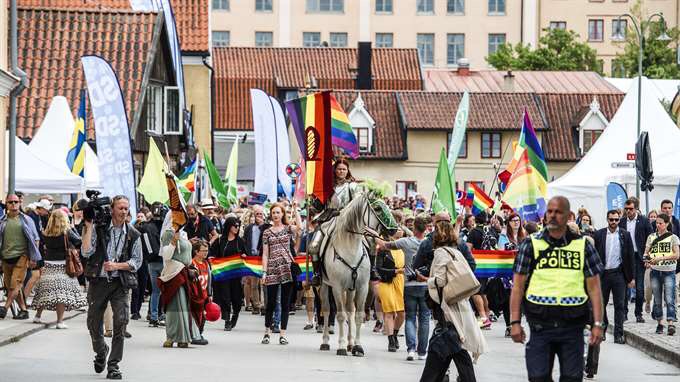
It is in the shadow that their presence casts that a counter balance can be demonstrated. And exactly that happened on Gotland in the form of a well-visited Diversity Parade. Thousands of people marched for a plurastic society and in protest of the views propagated by right wing parties. This was a fantastic manifestation representing the majority of Swedes. And this could only happen in a democratic society. 

Don’t get me wrong, I am not undermining anybody’s discomfort or fear. I am sure that the presence of the Nazis was horrible to experience. But if history has shown us anything it is that we cannot put our heads in the sand and ignore these destructive forces. We must face them head on in debate, in demonstration, in democracy and in massive, massive resistence. 

Bringing politics to the people


politikerveckan

If the election in the UK and USA has shown us anything, it is this. Bring politics closer to the people and you will win.

In the USA, it meant successfully manipulating the beliefs of the disillusioned and the sceptical.

In the UK, it meant focusing on the issues closest to people’s hearts and putting a fire under the asses of young voters.

Politicians in Sweden are, in my opinion, too often remote from the electorate and their reality. This is with one notable distinction in a quickly-growing, right-wing, populist party. This party has now taken the position as the second largest party in Sweden and poses a real threat to the other established parties and their ability to form governments in the future.

Every summer in Sweden, politicians hold a politics week on the island of Gotland in the Baltic Sea. This week brings together all the parties and they discuss and debate the current issues at hand, all televised to a broader Swedish public. I am all for politics and media debates but recently the Gotland Politics Week sits a little uneasy with me. In many ways, it is fantastic but it has moved far from its initial intention of putting politics in focus for the ordinary person. Today, it is more of an elitist gathering of lobbyists, journalists, aides and corporate partners standing in tents sipping free rose wine and partying until the early hours. How can people of the electorate relate to this? How can they even participate when, for example. it costs a lot to travel to remote Gotland and is difficult to find affordable accomodation?

As an alternative to this, a new Politics Week has risen. Initiators from the Stockholm suburbs have decided to bring politics to the people and have arranged a week of political debate and discussion on a football field.

On their website, they write:

‘The purpose of Järva Politics Week is to reduce the distance between politicians and citizens, create better conditions for ordinary people to engage themselves in politics, and put the issues of the local residents on the political agenda. This week gives politicians the opportunity to put forward their policies on exclusion, education, security and marketplace integration directly to the groups who are most impacted.’

It seems like all of the parties have accepted the invitation and most of the party leaders will attend this event to hold a speech.

Hopefully, in the suburbs, looking the real electorate in the eyes, they will realise what is needed to create positive integration, positive change and a positive future for everybody in Sweden.

What kind of streets does Sweden want?

majority-rule--1

Yesterday, hundreds of people gathered for a peaceful manifestation in the centre of Stockholm. They listened to live music and speeches and they sang and danced. The manifestation was being held to shine a light on the rights of unaccompanied refugee children in Sweden.

About 30 people from a right-wing group decided to attack the demonstrators with verbal abuse, threats, kicks and punches. Many of the victims were teenagers who were left shocked, scared and even more isolated from the society that is hosting them.

Is this what we want the streets of Sweden to be like? Groups of thugs attacking peaceful demonstrators and youngsters? In my world, this is totally unacceptable.

Democracy in Sweden is about having the right to express your opinion, whatever the political colour. It is about creating change through dialogue and activism. It is about getting involved and giving your opinion. It is not about employeeing violent methods to subdue and placate contradicting points of view. It is not about threatening and trolling and spewing hate. It is not about spreading fear in others just because I am fearful myself.

As members of an open, democratic country, each and every one of us should verbally and actively condemn what happened yesterday in Stockholm. A few short weeks after the love manifestation that filled the streets of the capital, we should not accept this attempt to drag our democracy into the shadows. This is not what we want on our streets, in our homes or in our society.

Yesterday, after the attack was over, people stayed behind to console and comfort the teenagers who has been brutally attacked. According to a witness, one of the teenagers found a thread of strength from within. He stood up and held a heartfelt, dignified speech – in Swedish. And he finished with a song – ‘Sverige’ (Sweden) by pop group Kent. One of the lines goes something like this:

‘Welcome, welcome here. Whoever you are, wherever you are.’

In that one song, this teenager showed us all what is means to be dignified and strong in the face of adversity. Violence and hate is not welcome here.


Swedish women fight back

Strength-woman-arms

In response to the hoards of ‘Vikings’ roaming Stockholm’s streets to protect their ‘women’ from ‘muslim rapists’, the women of Sweden have spoken up. In a social media campaign called ‘inteerkvinna’ – ‘not your woman’ – they are fighting back.

‘Den rasistiska lynchmobben som drog fram i Stockholm i fredags (29/1) och misshandlade barn och andra som inte är vita, påstår, likt andra rasistiska och fascistiska grupperingar, att de vill “skydda” vita/”svenska” kvinnor. De talar inte för mig. Deras “skydd” är i själva verket en önskan om att dominera, kontrollera, stänga in och äga kvinnor samtidigt som de försöker skrämma, misshandla och till och med utrota andra människor. De talar inte för mig. Internationell solidaritet är grunden för jämlikhet, rättvisa och fred. ‪#‎inteerkvinna‬

‘The racist lynch mob that rampaged through Stockholm on Friday attacking children and other non-white people, claim, like other racist and fascist groups, that they they want to protect white/Swedish women. They do not speak for me. Their ‘protection’ is in actual fact a desire to dominate, control, imprison and possess women. At the same time, they try to scare, abuse and exterminate other people. They do not speak for me. International solidarity is the basis of equality, justice and peace. I am Not Your Woman.


Sweden’s disgrace! 

  
In the latest poll today, over one fifth of the Swedish voting population would vote for the nationalistic right wing party, putting the party into position of the second largest political party in Sweden. 

Let’s be clear what this means. One fifth of Swedes support a party that has its roots in the nazi party, that has verbally and physically attacked minority groups and that believes in Swedish racial superiority. It’s a disgrace for all Swedes who believe in tolerance, openness and solidarity. 

It’s time to act. To speak out. This is not going away. As the established parties bitch at each other, the Swedish population grows tired of their rhetoric. Consequently, they feel more disengaged and resentful and turn to a party that seems to talk straight to their concerns and promises protection of the Swedish identity. It is scarily reminiscent of the past. 

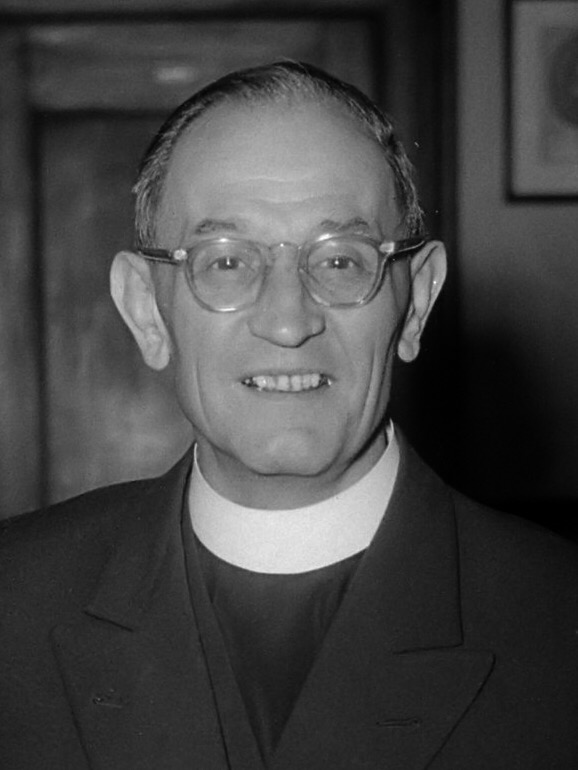
Pastor Martin Niemoller, pictured above, wrote a famous poem after he survived the concentration camps of the Second World War. His poem criticised the cowardice of German intellectuals after the Nazi’s rise to power and their subsequent purging of one group after another. It’s worth reflecting over his words. They are very relevant today. Right now. In Sweden. About us. 

‘First they came for the Socialists, and I did not speak out— Because I was not a Socialist.

Then they came for the Trade Unionists, and I did not speak out— Because I was not a Trade Unionist.

Then they came for the Jews, and I did not speak out—Because I was not a Jew.

Then they came for me—and there was no one left to speak for me.’

Do these words resonate with you? Are we the cowards he’s referring to? Are we so comfortable and complacent that we just sit back and watch it happen? 

If, like me, you believe in a multicultural society, it’s time to take a stance. Write to your MP. Talk to your colleagues, neighbours and friends. Get involved. Share this blog. Root out those one in five and challenge them. Demonstrate. Communicate. Educate. 

Speak out. While you can. Before it’s too late. 

The Gentle Minister

Anders_Ygeman

Reading on social media recently, I am struck by the amount of praise given to Sweden’s Home Secretary, Anders Ygeman. The minister is appearing a lot in newspapers and on the TV at the moment commenting on the tragic events of Paris and the impact terrorism has on the increasing security levels on Swedish soil. He also regularly informs the public on the refugee situation and the political reasons behind the government’s actions to reintroduce border controls.

On the face of it, Anders Ygeman should not be considered a good communicator. He has a very gentle, apologetic manner. He avoids eye contact at times. He speaks with a very quiet voice and a very flat tone. He is, in fact, the opposite of everything that a leader is said to be – inspiring, charismatic and energetic.  In the USA, or the UK, he would probably be ridiculed. But in Sweden, it seems to work.

From a cultural perspective, this is really interesting. What is it about Anders Ygeman that works so well in Sweden? Maybe it is a case of content over packaging. Often how we say something has more impact than what we say, but in Anders Ygeman’s case, it’s the opposite. He might not be charismatic, but he is clear and very direct. And is this an approach that Swede’s prefer in times of crisis – a no frills, humble and direct communication?

Was Spock Swedish? 

  
According to the World Values Survey, Sweden is one of the most rational non-secular countries in the world: decisions tend to be made on logical rather than on emotional or hypothetical grounds. 
One area in which this manifests itself in Sweden is in the separation of church and state. Policies and legislation spring out of political, and not religious, ideologies. Unlike other countries where religion has a strong influence on how the country is run, Swedish politicians base their arguments on statistical and factual information. God is never mentioned in political debate, not even by the far-right Christian Democrat Party. If they mentioned God, it would probably send them swiftly packing out of the Parliament building. 

This is why what is currently happening in the USA is so fascinating. In the USA there is a strong connection between God and rhetoric. In the USA you simply don’t become President unless you mention God several times in your speeches. With this background, it’s not surprising that extremist Christians can arise, such as marriage registrar Kim Davis in Kentucky. The delightful Ms Davis abuses her position of authority and refuses to issue marriage licenses to same-sex couples as it collides with her Christian views. In doing this, she denies these couples their legal rights and interprets the law to suit her own religious agenda. This has caused outrage in the USA and she has been ordered to back down, but continues to righteously defy the courts. And is allowed to do so. Prison is next in line, but she cannot be dismissed as her position is one for which she has been publically elected. 

This is a simple, but insidious, example of how religion, law and social legislation do often not make for a happy marriage. What would happen if we all decided to interpret the law according to our own religious convictions? Chaos. Religious dogma. Moralising power mongers.  In Sweden, Ms Davis would have been stripped of her official duties long ago. 

One secular quote reflects Swedish society in a nutshell. And it’s from Star Trek’s Spock in 1982: 

‘The needs of the many outweigh the needs of the few.’

It’s logical. May Swedish society live long and prosper. 

Begging for clarity – Swedish EU politics

Image

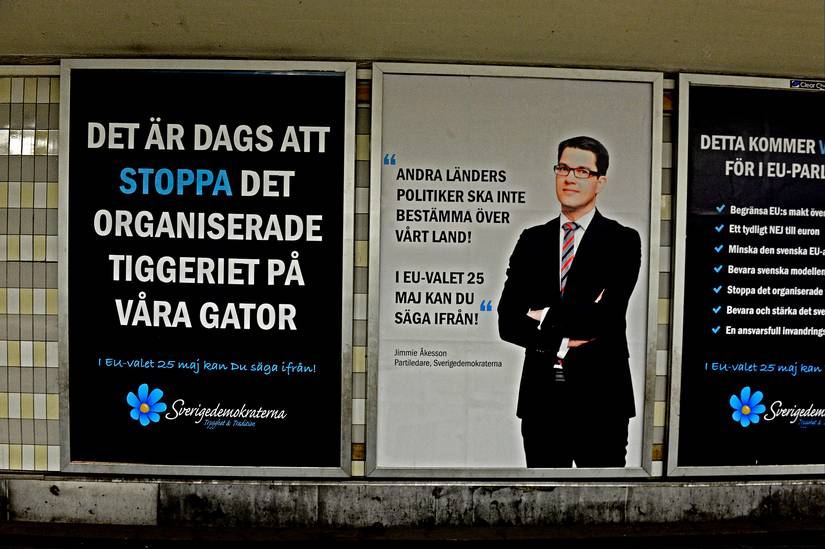
The EU campaigns are in full swing and Sweden’s right wing nationalistic party (SD) has already caused a stir. Huge signs have been put up in the underground and direct mail shots have been dumped in people’s letter boxes describing their policies. One particular policy is against ‘organized begging’.

From their program: ‘In Swedish Towns beggars from other EU countries have become a common sight…..The organized begging must be stopped. Visa requirements should be introduced for countries that abuse freedom of movement within the EU.’

This, and other policies, have caused outrage amongst many. People are calling for action against the SD, people are criticizing them for racist actions, people are burning, returning and even eating up their printed policy material.

But here’s the thing – SD are smart at rhetoric. Very smart. Just like other populistic nationalistic parties throughout history, they are very good at raising issues that ordinary people care about and they are not afraid of stating their position. Agree or not, they are the only party as far as I know to communicate an actionable position about the issue of begging.

And this is where I think the other parties are about to make a costly mistake. Almost everybody I know in Stockholm has an opinion about the influx of street beggars from other EU countries. Everybody is uncomfortable with it and doesn’t like it. It goes against the grain, and many Swedes are really divided as to whether they should ignore the beggars, buy food for them or give them cash. It is a daily challenge for many and a common topic of discussion. It is a modern dilemma, and, dear politicians…this makes it a pressing political issue! Ignoring the issue of begging will not make it go away. Ignoring it does not reduce anxieties nor does it deal with the underlying issues of poverty and inequality in our society.

The way for the Alliance, the Greens, Fi, the Left Party and the Social Democrats to deal with the SD is not only to express outrage and criticism. It is to state clearly, publicly and unequivocally what their party’s actionable policies are in relation to the increased begging on our streets.

Failure to do this is equivalent to pushing many voters straight into the hands of the SD.

Taking a stand for Sweden’s neighbours

Image

Finally! That’s all I can say! Finally!

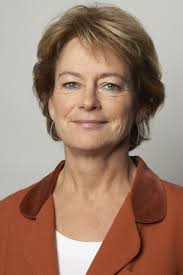
The Swedish Minister for Sport, Lena Adelsohn Liljeroth, finally took a stand today against the homophobic Russian regime and announced she will not be attending the Olympic Games Opening or Closing ceremonies in a couple of weeks. In declining the invitation, she joins USA, Germany and France who have previously stated they will be boycotting the ceremonies.

Many people say sport and poltics do not belong together. However, while each individual sportsperson absolutely has the right to fulfill their personal dreams of an Olympic medal, regardless of the country where the games are being held, I believe that governments should have a different perspective. By attending a high-profile event in a country which has dubious human rights, politicians are indirectly condoning the actions of that country. By not attending, politicians are taking a stand against oppression and violence.

I am today proud of Lena Adelsohn Liljeroth and hope that other Swedish politicians and dignitaries will follow suit.

No religion please – we’re Swedish

svantesson_1081428c

When comparing religious/traditional values with secular/non-traditional values, Sweden always comes out of research as amongst the most secular, non-traditional countries in the world. The low voting frequency in the recent Church elections reflects this. Basically, many people in Sweden don’t want religion to have anything to do with politics and Sweden is one of the few countries in the world that has separated religion and politics from each other.

This is clearly shown in the latest outrage to appear on social media in Sweden – the appointment of the new Employment Minister, Elisabeth Svantesson. Ms Svantesson comes from the Swedish Conservative Party – the Moderates – and has recently been given this high profile position in the Cabinet. Where this becomes interesting is what is causing the outrage. It seems that Ms Svantesson holds a religious belief and belongs to a radical Christian organisation which, amongst other things, condemns abortion and homosexuality.

Voices have been risen for her immediate resignation.

This is so different from most other countries around the world. Take a country like the USA -nobody gets to become President there without mentioning God. Many countries are theocracies, where the political leaders and the religious leaders are the same. In most other countries, believing in a religious deity is an advantage, if not a necessity, for a public figure to be taken seriously.

But in Sweden, believing in a God is a rarely an advantage for a public figure. They are often ridiculed and their credibility is challenged by the general public and the press.

And this makes me think…..just when did religion become a liability in Sweden?