Advent Calendar – Dec 13: Lucia

Window 13: Today’s word is ‘Lucia‘ – a light-bringing saint who is commemorated today.
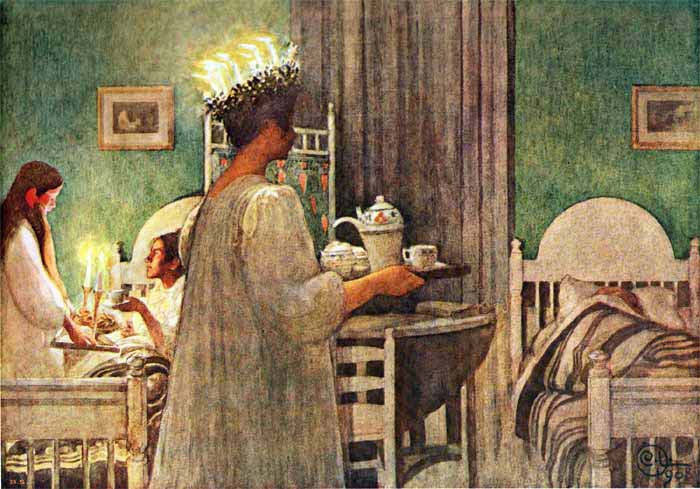
At the darkest time of the year, Santa Lucia (St Lucy) pays us a visit early in the morning. Lucia has candles in her hair and is surrounded by her handmaidens and boys, and shines light into the dark depths of our spirits. And slowly, slowly, the day awakens.

Santa Lucia is believed to have been a Sicilian saint who suffered a martyr’s death in Syracuse, Sicily around AD 310. She was seeking help for her mother’s long-term illness at the shrine of Saint Agnes, in her native Sicily, when an angel appeared to her in a dream beside the shrine. As a result of this, Lucia became a devout Christian and refused to compromise her virginity in marriage.

Officials threatened to drag her off to a brothel if she did not renounce her Christian beliefs, but were unable to move her, even with a thousand men and fifty oxen pulling. So they stacked materials for a fire around her instead and set light to it, but she would not stop speaking.

One of the soldiers stuck a spear through her throat to stop her, but to no effect. Soon afterwards, the Roman consulate in charge was hauled off to Rome on charges of theft from the state and beheaded. Lucia was able to die only when she was given the Christian sacrement.

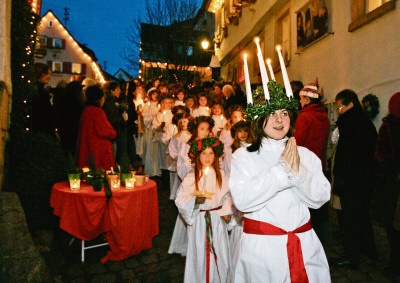
The tradition of Santa Lucia is said to have been brought to Sweden via Italian merchants and the idea of lighting up the dark appealed so much that the tradition remained. The current tradition of having a white-dressed woman with candles in her hair appearing on the morning of the Lucia day started in the area around Lake Vänern in the late 18th century and spread slowly to other parts of the country during the 19th century.

The modern tradition of having public processions in the Swedish cities started in 1927 when a newspaper in Stockholm elected an official Lucia for Stockholm that year. The initiative was then followed around the country through the local press. Today most cities in Sweden appoint a Lucia every year. Schools elect a Lucia and her maids among the students. The regional Lucias will visit shopping malls, old people’s homes and churches, singing and handing out gingerbread.
So, it might be cold and dark outside, but remember – after darkness comes the light.

Advent Calendar – Dec 10: Nobeldagen

Window number 10. Today’s word is ‘Nobeldagen‘ which translates as ‘Nobel Day’.

Nobel Day is not actually anything to do with Christmas. However, it is a traditional part of the lead up to Christmas. Every year on 10 December, since 1901, the Nobel Prizes are awarded. The date commemorates the death of Alfred Nobel in 1896.

Nobel prizes are awarded in the 6 categories of Literature, Chemistry, Physics, Medicine or Physiology, Economics and Peace. All prizes are awarded in Stockholm, except the peace prize which is awarded in Oslo. Laureates receive a gold medal, a diploma and 10 million Swedish crowns.

Most laureates are happy to accept their prize and the accolade. However, Jean Paul Satre famously declined the Literature Prize in 1964, claiming he did not want to be institutionalized.

In 1974 he was joined by Le Duc Tbo who refused to accept the Peace Prize for his work to end the Vietnam War, saying ‘peace has not yet been established.’

In 1935, German journalist Carl von Ossietzky – a vocal critic of Hitler- won the Peace Prize. This led Hitler to bar all Germans from accepting a Nobel Prize. Three German laureates were subsequently forced to decline their awards. However, they later were presented with their diplomas and medals.

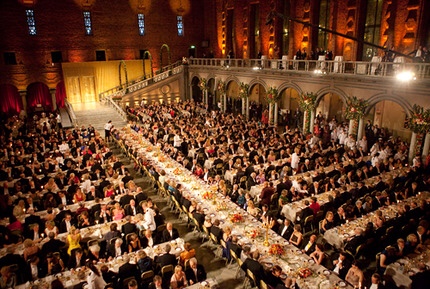
With celebratory lectures, conversations, ceremonies and concerts, Nobel Day culminates with a banquet in the Stockholm City Hall. The banquet lasts about 3 and a half hours and is televised. It is an extremely grand and formal occasion. Everything from the porcelain to the floral arrangements to the dresses, the entertainment and the menu are under scrutiny for the tv viewers.

The guests include not only the Nobel laureates and their families, but also Swedish royals and aristocrats, politicians, ministers, celebrities and other notable people. Even though there are 1300 guests, is virtually impossible for ordinary folk to get an invitation to the banquet. We have to enjoy it from afar, via the screens in our living rooms.

However exclusive the whole thing might be, it is still a welcome splash of glamour in the dark approach to Christmas. Stockholmers are also treated to the light festival called Nobel Lights, which takes place around the city.

Why does Sweden still need Pride?

This week is Stockholm Pride. It culminates on Saturday with a huge parade. The event celebrates 25 years this year, and some people question if it is still needed or relevant.

The answer, unfortunately, is more than ever.

But we’ll come to that later.

Currently there are 73 Pride festivals in Sweden during the year. From Arctic Pride way up in the north to Malmö Pride in the south, it is possible to celebrate throughout the year.

This indicates that many Swedes seem to have embraced the concept of Pride with open arms. There is, of course, a commercial benefit but the main reason seems to be that LGBT+ Pride resonates well with the societal Swedish values of equality, tolerance and acceptance.

However, like everything, it has its opponents.

Sweden’s current conservative government is in power, solely with the support of a right-wing populistic party. This party has consistently attacked LGBT people and the Pride movement. For example, this week, one of their politicians tweeted that Pride legitimizes pedophilia.

It is comments like this that plant the seeds of aggressive counter demonstrations, homophobic, anti-Pride propaganda and personal physical attacks. LGBT+ people are still regularly abused, discriminated against and attacked in Sweden. And if we lift our eyes to the broader world, we see examples of LGBT + rights being restricted or removed, and same sex relations being criminalized and punishable with the death penalty.

This is why Pride is still needed, not only as a celebration, but as a political manifestation of human rights.

If you’d like to know where a Pride is near you, go to http://www.svenskapride.se which collects all the Swedish events in one place.

11 hacks for surviving Swedish midsummer

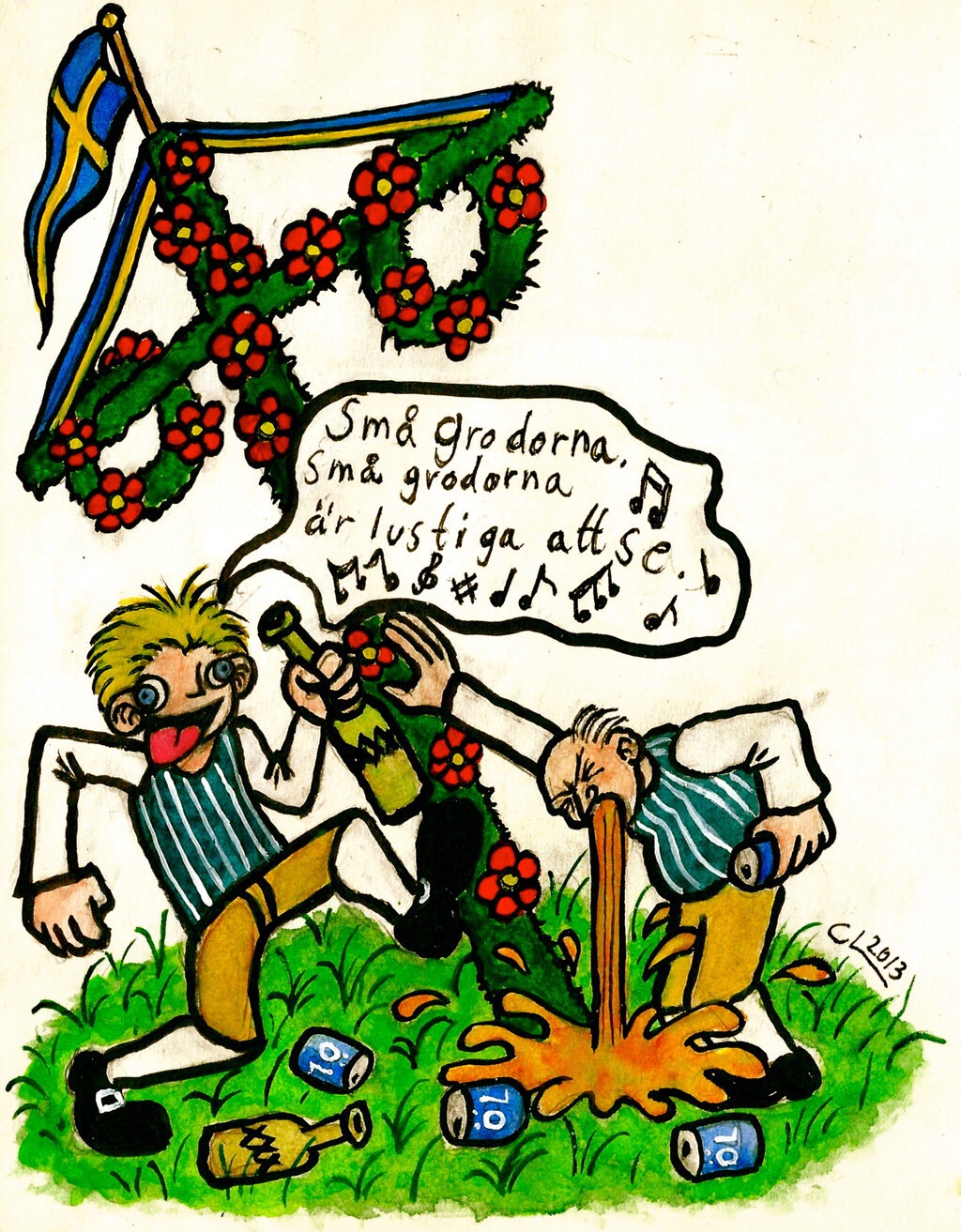
With Midsummer arriving on Friday, it is time to start planning for your survival. Midsummer’s Eve is the craziest custom in the Swedish calender and the time of the year when Swedes go a little bonkers. As a non-Swede, get ready to brace yourself. Here are a few hacks to make sure you make it to Midsummer’s Day in one piece.

Greet like a Swede. In Sweden it is considered polite to greet everybody individually, even if you plan to never speak to them again or remember their name. The appropriate way is to stand 1-2 meters away, look directly in their eyes, say ‘hej’ followed by your name. They will do the same. You might even give a small wave or shake hands if you are comfortable doing so. If you are feeling adventurous, follow up your ‘Hej’ with a ‘trevligt’ or even a ‘Glad Midsommar’. Job done. Now you can hit the booze.

Snaps is not the same as a shot. A lot of alcohol gets drunk on Midsummer’s Eve, especially beer and snaps With the popularity of shots in recent years, it’s easy to make the mistake that Swedish snaps is the same thing. Believe me, it is not. Snaps can be up to 40% proof, considerably more than your normal shot. So, go easy and sip the snaps or see yourself slipping sideways off your chair before the strawberry dessert has even been put on the table.

Take tissue. Midsummer’s Eve is a looong day and you probably will need the loo at some point. The trouble is, so will everybody else – to the detriment of the supply of toilet paper. There’s a big chance you will be seeking relief in the woods so come equipped with the appropriate amounts of paper for your needs.

If shy, bring swimwear. Bathing in the icy June waters is a common activity at Midsummer. Swedes generally are not afraid of skinny dipping when they do this. If you are, then come prepared with swimwear and a towel.

Shelve your maturity. Part of Midsummer is dancing around the maypole, playing silly games, pretending to be a frog, participating in competitions. To survive these activities, it helps to conjour up your inner child and forget you are an adult for a while.

Protect yourself. Given the amount of alcohol consumed at Midsummer, it is no surprise that the many babies in Sweden are made on this day. It you don’t want to join the ranks of parents, remember to put it on before you put it in.

Throw in the thermals. It looks like it might be super sunny and warm this Midsummer’s Eve. One of the warmest ever! But it is good to be prepared. It is not unusual that temperatures fall into single figures and that pesky rain pours down onto the smorgasbord. So bring a jumper, a rain jacket and even thermals to enhance your experience.

Don’t expect culinary miracles on Midsummer’s Eve. The food is exactly the same as is eaten at Christmas and Easter, with a few small summery exceptions – strawberries, cream, dill and new potatoes. Remember to use hand disinfectant before you attack the buffet.

Learn a drinking song. On Midsummer’s Eve, food and alcohol is accompanied by Swedish drinking songs. Learn one in advance and shine at the table. Even better sing one in your own language and you are guaranteed to use those rubbers you packed just for the occasion. For me, ‘what shall we do with the drunken sailor’ works every time.

Argue over the rules. At Midsummer a popular Swedish garden game is called kubb. Involving the throwing of sticks, everybody seems to have their own understanding of the way to play. If you want to feel really Swedish, make sure you start an argument about the rules.

Take pills. Of varying types. Allergy pills are good because there are flowers everywhere: on the table, in the maypole, on peoples’ heads. Pain killers are good as a lot of snaps is consumed. Indigestion pills are good as the food is oily, fatty, acidic, smoky and rich. The after day pill is good, well… because…

That’s it! Follow this guide and you are sure to have a wonderous Midsummer’s Eve in Sweden.

Glad Midsommar!

Please share this post to help others get ready for the big day!

A friendly conflict between Sweden and Finland

Neighbouring countries Sweden and Finland have entered into a friendly conflict. The subject? The Eurovision Song Contest.

On Saturday, artist Loreen took home the win for Sweden, just ahead of Finland. And the Finns weren’t happy, many of them saying the competition was fixed.

Now, when the televoting statistics have been released, it has become known that Finland was the only country to give Sweden zero points in the public vote. This is weird as the Finnish jury had awarded Sweden the maximum 12 points, and the song Tattoo is currently number 1 on the Finnish chart. One can wonder who was responsible for an attempt at fixing?

It has also come out that the Finnish tv commentator encouraged citizens to vote tactically in a message, something that viewers clearly did.

The issue isn’t an important one, however it is funny to observe as tensions rise between the two Nordic neighbours. It’ll probably run out in the sand, but will be interesting to see how Sweden enacts it’s revenge next year.

Walpurgis Eve – when spring arrives in Sweden

Today, 30 April, is Walpurgis Eve, called Valborgsmässoafton in Swedish, or ‘Valborg’ for short. The name Walpurgis is taken from the eighth-century Saint Walburga, and in Sweden this day marks the arrival of spring.

In a cold, dark country like Sweden, residents have suffered through a long, miserable winter. So it is no surprise that the arrival of spring is an occasion to mark. On the evening of Valborg, Swedes usually gather to celebrate together.

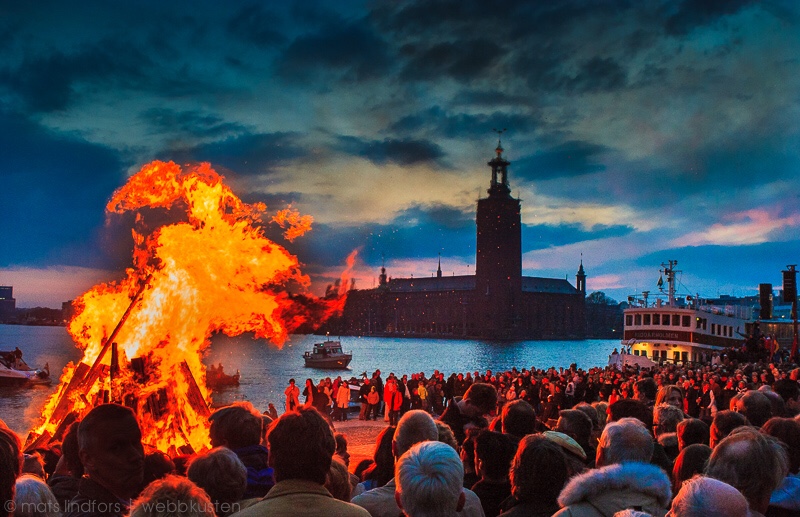
The forms of celebration vary in different parts of the country and between different cities. However, essential celebrations include lighting a large bonfire, listing to choirs singing traditional spring songs and a speech to honour the arrival of the spring season. Some of the traditional spring songs are titled ‘Beautiful May – Welcome!’ and ‘Longing for the countryside – winter rushes out’. You can see a clip below.

Walpurgis bonfires are an impressive thing to see and are part of a Swedish tradition dating back to the early 18th century. At Walpurgis, cattle was put out to graze and bonfires lit to scare away predators.

The weather is often unpredictable on Walpurgis Eve. It can be sunny and warmish, or it can still snow on 30 April! Today looks like it’ll be a cold one.

Despite bad weather, Swedes still shiver around the bonfires and ironically celebrate the arrival of Spring.

Sweden crowns their melody Queen

Last night, the final of Sweden’s ‘Melodifestivalen’ took place. The winner gets sent to the Eurovision Song Contest in Liverpool in May. Many Swedes take this competition very seriously – the process of selection takes 6 weeks!

But finally, last night, the victor was crowned. The winner this year was Loreen – again. Loreen won Eurovision Song Contest in 2012 for Sweden with the fantastic song Euphoria.

After two failed attempts, she finally gets to once again represent Sweden 2023 with the song Tattoo. The song, along with her performance and the tv production is a very strong contender to take home the victory. Many Swedes are already feeling triumphant. But Eurovision is often an unpredictable animal – since musical taste levels between the competing countries vary drastically. What is popular in the Nordic countries is usually not as popular in, for example, the Balkans.

So the question remains, will Loreen deliver Sweden’s 7th victory and thereby equal the record for most victories currently held by Ireland?

On May 13, we will find out.

You can catch the song and her performance below:

Sweden’s Lucia Celebration

At the darkest time of the year, Santa Lucia (St Lucy) pays us a visit early in the morning on December 13th. Lucia has candles in her hair and is surrounded by her handmaidens and boys, and shines light into the dark depths of our spirits. And slowly, slowly, the day awakens.

Santa Lucia is believed to have been a Sicilian saint who suffered a martyr’s death in Syracuse, Sicily around AD 310. She was seeking help for her mother’s long-term illness at the shrine of Saint Agnes, in her native Sicily, when an angel appeared to her in a dream beside the shrine. As a result of this, Lucia became a devout Christian and refused to compromise her virginity in marriage.

Officials threatened to drag her off to a brothel if she did not renounce her Christian beliefs, but were unable to move her, even with a thousand men and fifty oxen pulling. So they stacked materials for a fire around her instead and set light to it, but she would not stop speaking.

One of the soldiers stuck a spear through her throat to stop her, but to no effect. Soon afterwards, the Roman consulate in charge was hauled off to Rome on charges of theft from the state and beheaded. Lucia was able to die only when she was given the Christian sacrement.

The tradition of Santa Lucia is said to have been brought to Sweden via Italian merchants and the idea of lighting up the dark appealed so much that the tradition remained. The current tradition of having a white-dressed woman with candles in her hair appearing on the morning of the Lucia day started in the area around Lake Vänern in the late 18th century and spread slowly to other parts of the country during the 19th century.

The modern tradition of having public processions in the Swedish cities started in 1927 when a newspaper in Stockholm elected an official Lucia for Stockholm that year. The initiative was then followed around the country through the local press. Today most cities in Sweden appoint a Lucia every year. Schools elect a Lucia and her maids among the students. The regional Lucias will visit shopping malls, old people’s homes and churches, singing and handing out gingerbread.

Not only does Lucia represent tradition, but there is also a symbolic meaning. Never more important than this year when the world is in turmoil. So remember, it might be cold and dark right now, but after the darkness comes the light.

Songs about Sweden 7: Stockholm

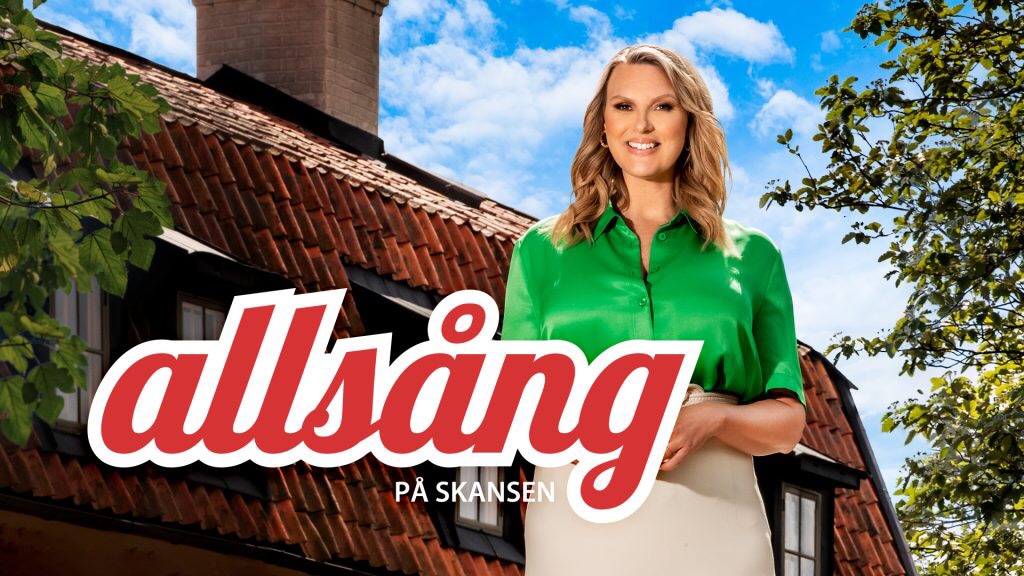
There is an iconic song in Swedish about the capital city of Stockholm. The reason it is iconic is that everybody has heard it once a week for almost 30 years, throughout the summer. It is the opening song of the unceasingly popular 8-episode summer TV show Allsång på Skansen.

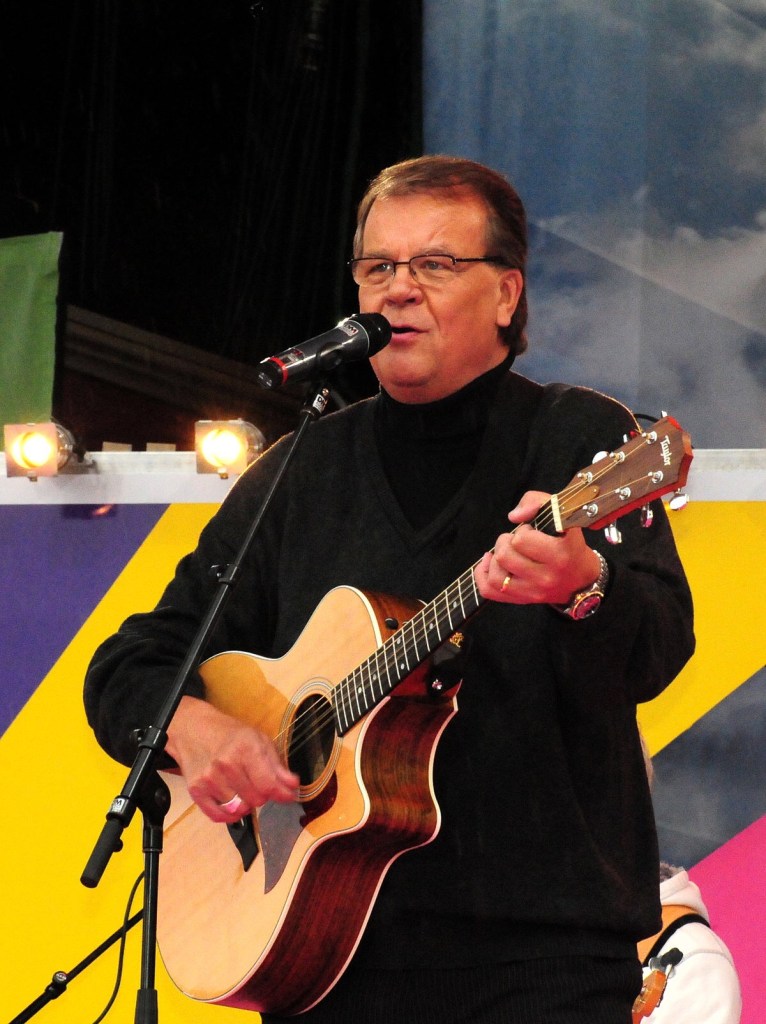
The song is called ’Stockholm i mitt hjärta’ and translates as ’Stockholm in my heart’. It was released by singer Lasse Berghagen in 1992, and written to celebrate the inauguration of Stockholm’s mayor that year.

The program Allsång på Skansen has had many hosts. Lasse Berhagen hosted the show between 1994-2003. He is one of Sweden’s most loved national treasures. The program is currently hosted by popular singer Sanna Nielsen.

The program is a live stage show with various artists singing and performing. The crucial element is the audience sing-a-long, the ‘allsång’, where even the viewers at home are encouraged to join in and sing the lyrics that are published on the tv screen.

The whole show is broadcast from a hilltop overlooking the city’s harbour. With Stockholm as a majestic backdrop, it is easy to see why the city is ‘in everybody’s heart.’

Songs about Sweden 6: Gothenburg

Don’t feel sorry for me, Gothenburg’ is a very popular song by Swedish artist Håkan Hellström. In Swedish, the track is called ’Känn ingen sorg för mig Göteborg’. It was released in 2000 on his solo debut album of the same name, selling platinum in Sweden.

Håkan Hellström is one of the Swedish artists who can sell out concerts in venues that hold 75,000 people. Very few other singers epitomize Gothenburg quite as much as Håkan, and the song has become synonymous with the singer and Sweden’s second city.

What other songs do you know that are about Sweden or a Swedish town?