The Swedish King and the British Queen

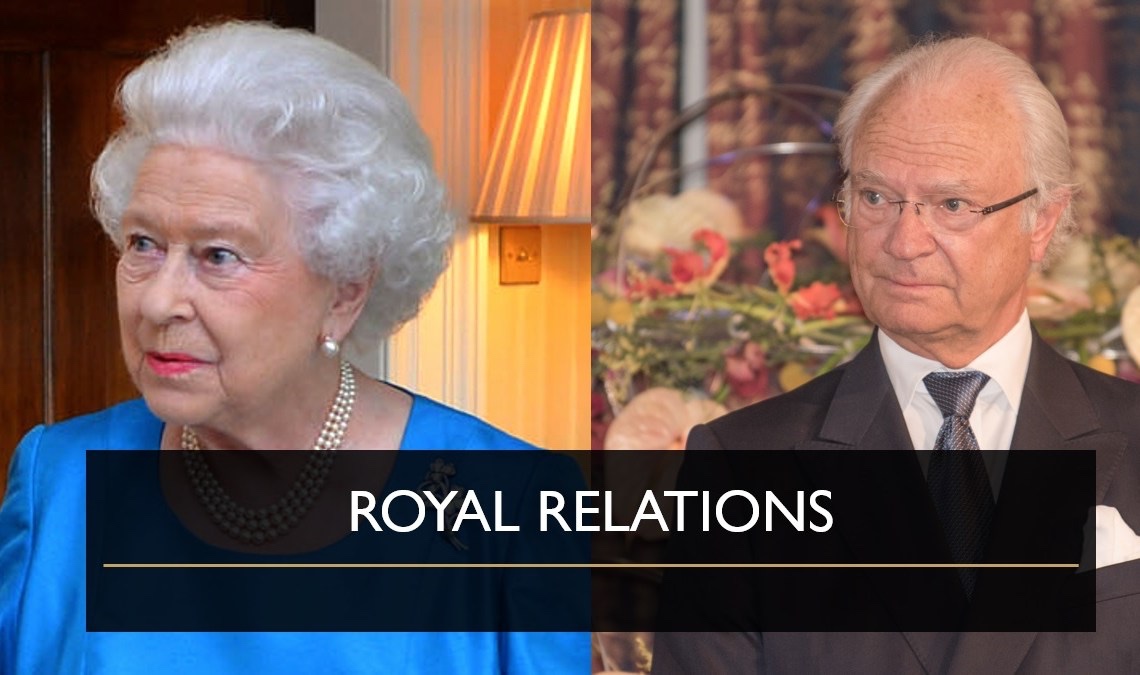
Both Sweden and the UK have reigning monarchs. The UK’s has Queen Elisabeth II and Sweden has King Carl Gustaf XVI. Like most of the European monarchs, they are related to each other. King Carl Gustaf is a descendent of the UK’s Queen Victoria, making him and Queen Elisabeth third cousins.

The other evening, they both gave a speech to their respective nations in regards to the corona pandemic. And they were like chalk and cheese.

I first watched the Swedish King’s speech. This bumbling, friendly man stumbled his way through his speech. Heavily dependent on his paper notes, he sounded a bit robotic to me. A friend of mine said it was like watching a trained chimp. Don’t get me wrong, I like the Swedish King. He seems like a nice man. But as a father of the nation in times of crisis, he missed the mark for me.

Then I watched the British Queen. This imperturbable woman, looking straight into that camera, embodied calm and credibility. In her typical restrained manner, her speech had depth and meaning, and her words were truly comforting in a crisis – from the nation’s mother.

I reflected over the two speeches, and why my reaction was so different. Part of it was definitely influenced by the delivery of the speech. The Queen used an auto prompt which enabled her to look into the camera, straight into the living rooms of her subjects. The King also looked into the camera but read from paper notes, meaning he frequently lost vital connection with his audience. The Queen spoke fluently, the King, who has dyslexia, struggled through his speech. The Queen looked dignified and prepared. The King looked like a stunned uncle who has unexpectedly been called upon to deliver a speech at a funeral.

However, I think the main difference for me lies in the cultural value of language. Even though I can speak Swedish, King Carl Gustaf’s words did not resonate with me. I understood him but was not moved by him. His words hit me in the brain, but not the heart. In comparison, English is my mother tongue, my native language. I have a more emotional relationship to English. When words of gravitas are spoken in my native language, I experience them with depth and fullness.

This really surprises me. I’ve been in Sweden over 25 years, I speak Swedish on a daily basis, and many of my relationships are in Swedish only. Yet in times of crisis and seriousness, words in my first language cut through Swedish like a knife through butter. It goes to show the mark that our first language leaves on us – our language of feeling. This is the language that indelibly forms our emotional cultural identity.

The Swedish ‘recommendation’

In the wake of covid-19, the National Agency of Public Health has provided the Swedish population with recommendations and advice. However, it seems that these very words ‘recommendation’ (rekommendation) and ‘advice’ (råd) are causing problems for many people.

How do you understand the word ‘recommendation’? Maybe it’s a friend who is making a suggestion to you? Or a family member who is promoting a certain behaviour? Or a respected critic who is letting you know what restaurant you should eat at? For most of us, the words ‘recommendation’ and ‘advice’ imply a suggestion that we can decide to listen to or not, act on or not. This is how we understand it.

But it doesn’t always mean this and this is where linguistic confusion is arising. As I understand it in Swedish, when ‘recommendation’ or ‘advice’ is used by a government authority it is not something to be taken as a suggestion – it is a serious instruction that has to be followed. It is the strongest action an authority can take. The next step is a law change decided by the parliament.

So when the Swedish Agency for Public Health recommends that we stand 2 meters apart, it is not a recommendation as we might understand it, it is a strict instruction, and does not include a high level of individual choice. It is the step before criminalising something.

In his press briefing today, Swedish Prime Minister Stefan Löfven said ‘allmänna råd från myndigheter är ingen lösa tips. Det förväntas att (alla) som omfattas av råden följer dem. Inte ibland, utan varje dag och varje minut.’ This translates roughly as ’general advice from an authority is not just a tip. Everybody who is covered by this advice is expected to follow it. Not just sometimes, but every day and every minute.’

This confusion between colloquial terminology and governmental terminology can explain a lot of the behaviour and attitudes we see around us. People are not defying the authorities, they just think that recommendations are elective.

But the bottom line is this – we do not have a choice, even though we might interpret it so. We are obliged to all follow the instructions we are provided with. Zealously.

If we do this, we avoid criminalization and curfew and hopefully can together quickly crush corona.

The colourful Swedish Easter tree

With Easter approaching, Swedes start pimping their homes. Yellow table cloths, yellow curtains and yellow tulips are common, as is something called a ‘påskris’. Pronounced ‘poskrees’, this is a Swedish Easter tree.

The Easter tree is a bunch of twigs and sticks (usually birch) in a vase with brightly coloured feathers attached to the ends. Some people also hang decorated eggs, colourful ribbons or festive chickens. The Easter tree can be seen all over the country this time of year. Outside shop entrances, in peoples’ living rooms, outdoors in the neighbours’ gardens. It is a very popular decoration, probably because it brings colour at a time of the year when most flowers haven’t yet bloomed in Sweden.

The Easter tree is an interesting cultural phenomena. In fact, all products of a society are. This is because they originate somewhere and, often, we have forgotten the origin but still maintain the product or behaviour.

What’s the origin and symbolism of the Easter tree then?

Well, some Swedes say that it symbolises the wiping away of the winter. The twigs represent a broom and the feathers get caught in the broom as we sweep.

Others say that it represents witchcraft. The twigs represent a witch’s broomstick and the feathers indicate flight. This could also be why Swedish kids dress up as witches at Easter and do a kind of ‘trick or treating’ for Easter eggs.

But, apparently the Easter tree has a completely different origin and symbolism. It dates from the 1600’s. Swedish people at this time were more pious, and used to take twigs and sticks and beat each other with on Good Friday – to commemorate the suffering of Jesus. In the 1800’s and 1900’s, they started to be decorated and became a symbolic decoration for Easter.

So, wiping, witching or whipping. Who would have thought the colourful Easter tree would have such a colourful history?

’Svennigt’ – what’s that?

The word ‘’svennigt’ is a slang term to refer to the typical, middle of the road Swede. Derived from the common surname Svensson, ‘svennig’ describes the lifestyle preferences and attitudes of the mainstream Swede.

Depending on the intention, the word ‘’svennig’ can be used endearingly, or even proudly, to refer to the ‘typical Swede’ or the typical Swedish. It can also be used as an insult. I often hear the word, laced with contempt, to undermine or criticize other people’s behaviours and choices. There is a definite class element to the term, where ‘svennigt’ implies lack of sophistication.

In American English, the closest comparison is ‘Average Joe’. In British English, there’s no real equivalent but ‘Joe Bloggs’ comes closest. However, in both of these, there is no element of ridicule, and they aren’t used as an insult; they are used just to describe an average person in the population.

Since ‘svennigt’ can have many different interpretations, I went onto social media and carried out some informal research. I asked people what was ‘svennigt’ for them. My hope was to get closer to an understanding. While there were some overlaps, I received a lot of differing inputs – positive, negative, and neutral. Most of the people who answered were themselves Swedish. Here are some of the perspectives:

Barbecuing

Being afraid of conflict but still whingeing

Being politically correct, but harbouring other opinions under the surface

Binge drinking at the weekends

Bingolotto

Consensus

Eating pickled herring at every national celebration

Eating Salty licorice

Eating TexMex on a Friday evening

Going to ‘After work’ on Fridays

Going to Golden Hits nightclub

Going on holiday in a Caravan/ Trailer

Going to the Canary Islands

Having a ‘Poodle’ hair-do

Liking Swedish dance band music

Loving the singer Carola and wondering why she hasn’t succeeded internationally

Open society

Playing car bingo

Quoting and laughing at lines from Swedish film Sällskapsresan

Reading Camilla Läckberg, author of crime fiction

Saying the vague, non-committal words ‘Jaha’ and ‘Nja’ when you actually disagree

Shopping at Ullared

Sweet loaves of bread

Talking about the weather

Talking about what is ‘typically Swedish’

Taking Löfbergs Lila coffee och Kalles kaviar fish paste when you travel abroad

Watching Lets dance/Strictly Dancing

Watching Melody festival

Watching TV4

Wearing Crocs

Wearing matching tracksuits

Wearing clogs

Working 9-5 and saying ‘Thank God it’s Friday’ at the end of the week

Worrying what other people think

As you see, these descriptions are very wide-ranging. It seems hard to nail down one particular attribute, attitude or behaviour that makes somebody ‘svennig’; it depends very much on the perception. Being ‘svennig’ is in the eye of the beholder. That said, judging by the responses above, it seems like we are all a bit ‘svennig’ now and again.

Please share this article and feel free to add your perspective on it.

Oh those healthy Swedes!

With all of us currently questioning our health statuses at the first sniffle, Swedish sickness words like ‘sjuk’, ‘dålig’ and ’krasslig’ abound. So, I thought I’d flip the perspective. How many ways in Swedish can you describe someone as being in good health? I found 20! Can you think of any more? Please let me know and I’ll add them to the list. Enjoy the positivity of the words below, and stay healthy!

Bra – Good/well

‘En sund själ i en sund kropp’ – ‘a healthy mind in a healthy body’

Frisk – healthy

‘Frisk som en nötkärna’ – literally healthy as the core of a nut, equivalent to ’healthy as a horse’

Hurtig – spry

Hurtfrisk – hearty

I bra form – in good shape

Kraftfull – vigorous

Kry – well

Kärnfrisk – healthy to the core

Pigg – bright /fit

‘Pigg som en mört’ – literally fit as a roach, equivalent to ’fit as a fiddle’

Rosig – rosy

Sund – robust

Stark – strong

Stråla – glow

Vid hälsa – in good health

Vital – vital, full of life

Välmående – healthy

Vältränad – fit

I have been given a new one by Lukus: ‘ vid sunda vätskor’ – literally translates as ‘in healthy fluids’ – dating back to the time when medicine was based on the four humours (body fluids): blood, phlegm, yellow bile and black bile. Yuck.

Some more to add from Mia – ’i topp form’ – in great shape and ‘tipp topp’ – ship shape. Then Mia adds ’mår fina fisken’. Literally this translates as ‘feeling pretty fishy’ but that would be the wrong meaning! It means ‘to feel super good!’

And Pelle suggested I add ‘finemang’ which means great/excellent!

Fredrik suggested ‘prima’ and ‘mår toppen’ – both words describe how you are feeling. Feeling great!

The Swedish ‘butt stick’

Watching the tv this evening, I learned a new word – ‘rövsticka’ – which translates as ‘butt stick’ or ‘ass stick’.

This butt stick is being sold by a supermarket owner in the north of Sweden. A butt stick is an alternative to toilet paper and is used to wipe the ass after doing your business in the toilet.

Apparently, it is an old invention that was used in Sweden before tissue paper was invented, which makes sense. It was an inventive way to maintain hygiene I guess, just like the Romans who used wool and natural sponges. And the Vikings, who used painful bones and shells. Apparently in the Middle Ages, people used grass and hay – and butt sticks made of wood.

According to the shop owner, several butt sticks have been purchased and, thankfully, they are not returnable!

Would you use a butt stick?

Useful Swedish to know during a pandemic

This is aimed at those of you who don’t speak Swedish and who’d like to understand some of the key Swedish words related to the pandemic – or ‘pandemin’.

Akuten – A&E, Emergency Room

Apotek – chemist or pharmacist

Hamstra – to hoard, to stockpile

Handsprit – hand sanitizer

Hemarbeta – work from home

Hosta – to cough

Influensa – the flu

Isolering – isolation

Karantän – quarantine

Kris – crisis

Luftburen – airborne

Läkemedel – medicine

Nysa – to sneeze

Permittera – to lay off temporarily, furlough

Prov – test

Smitta – contagion, to infect

Smittbärärbidrag – Social benefit for carriers

Stanna hemma – stay home

Stänga ned – to shut down

Toapapper – toilet paper

Torgskräck – agoraphobia

Tvätta händerna – wash your hands

Tvål – soap

Undantagstillstånd – National Emergency

Utegångsförbud – curfew

Please let me know if you’d like me to add any other important words to this list.

English Leap Day and Swedish ‘Skott’ Day

2020 is a leap year, and today 29 February is Leap Day. In Swedish, leap year is called ‘skottår’ and Leap Day is ’skottdag’.

So, why ‘skott’? And why indeed ‘leap’? Well, the English word refers to the fact that the extra day in February means we leap over a day for the rest of the year. For example, the 1st March would have been a Saturday, but because of the leap day, it is now a Sunday.

What about the Swedish word ‘skott’? Well, it has nothing to do with Scotland. Nor does it mean ‘leap.’ The word ‘skott’ originally means ‘inserted in between’. So ‘skottdag’ is literally an extra day inserted in between two other days.

An interesting fact, those born on 29 February are called leaplings in English, and there are about 4,000,000 of them in the world!

Swedish expressions about the forest

Did you know that 69% of Sweden is covered in forest? With this statistic in mind, it’s easy to understand the importance that the woods have in Swedish cultural history. The woods have supported, saved and scared Swedes for centuries. The woods have been associated with something remote, impenetrable and often mystical. In the non secular country that Sweden is, the woods also provide a ’Church’ and a source of spiritualism, meditation and reflection.

The forest has also given the Swedish language several expressions, words and sayings. Here are some:

Dra åt skogen’ – go to the forest – a polite way to tell somebody to fuck off

Skogstokig’ – forest crazy – a word to describe a person who is really angry

Det gick åt skogen’ – it went to the forest – a phrase that means something went wrong

Att lova guld och gröna skogar’ – to promise gold and green forests – an expression to mean that someone offers you wealth and happiness, but it is often overrated. Equivalent in English to ‘promise the moon’

Träskalle’ – wood head – an insult meaning someone is stupid

Träaktig’ – tree like – a description of someone as boring.

Barka åt skogen’ – going towards the forest – meaning it’s going to go badly

Can you think of any more?

Sweden’s romance with Germany

Sweden has many connections with Germany throughout its long history. As a nod to the growing German readership I have, I thought I would list a few of those connections.

German language influence

The Swedish language belongs to the North Germanic branch of the Germanic languages. Many words in Swedish are similar in German. I remember when I was on a trip to Hamburg, I could understand a lot of what was written in the German paper Der Spiegel. This was not because I speak any German, but because I speak Swedish. In fact the word ‘spiegel’, meaning mirror, is ‘spegel’ in Swedish. A friend of mine, originally from Rostock in Germany, learned Swedish very quickly. When I asked her how she had done it, she responded rather matter-of-factly that ‘Swedish is just German light’.

German merchants

In Stockholm’s Old Town there is an imposing church whose large Gothic spire dominates the skyline. This church is called ‘Tyska kyrkan’ – the German Church. During the 1500’s there were a lot of German merchants trading and living in Stockholm. In fact, they made up about half of the population. The King wanted to attract and keep as many Germans as possible, so he gave them attractive tax breaks and, in 1571, awarded them the right to start their own parish and place of worship. The church that we see today was finished in 1886, after restoration after a large fire. The German Church today holds services in German, and still serves Stockholm’s much smaller German population. Sweden today has still a lot of German merchants, in the form of large retail chains. Big players include the food chain Lidl, shoe shop Deichmann, home electronics retailer MediaMarkt and DIY store Bauhaus.

German Queens

Sweden’s current queen, Queen Silvia, originates from Heidelberg. Her German accent resonates clearly when she speaks Swedish. But she’s not the only connection the Swedish Royal House has with Germany. In fact, the King’s mother was also German – Princess Sibylla – from Gotha. And both his grandmothers. And, well, throughout history the Swedish Royal House has been peppered with German aristocracy and royalty. According to Wikipedia, 22 of Sweden’s monarchs were of German descent. So, one could probably say that the Swedish royals are more German than anything else.

German tourists

Sweden is an extremely popular destination for German tourists who are attracted by the forests, lakes, open spaces, cute red cottages and fresh air. German tourists spend approximately 3,000,000 hotel nights in Sweden according to the Swedish Tourism Institute. Sweden’s three main cities are popular destinations, as well as Skåne, which is the closest county to Germany. Due to the fame of writer Astrid Lindgren, her birthplace village of Vimmerby in Småland is also very well visited. Sweden’s attractiveness is also thanks to a long-running German tv show. Since 2003, the show ‘Inga Lindström’ has entertained Germans with an idyllic, romantic image of Sweden. The program is a series of stories set in Sweden, where the characters speak German, but have Swedish-sounding names, and the attractive Sweden that is depicted makes German tourists want to flock here in droves.

German sausages

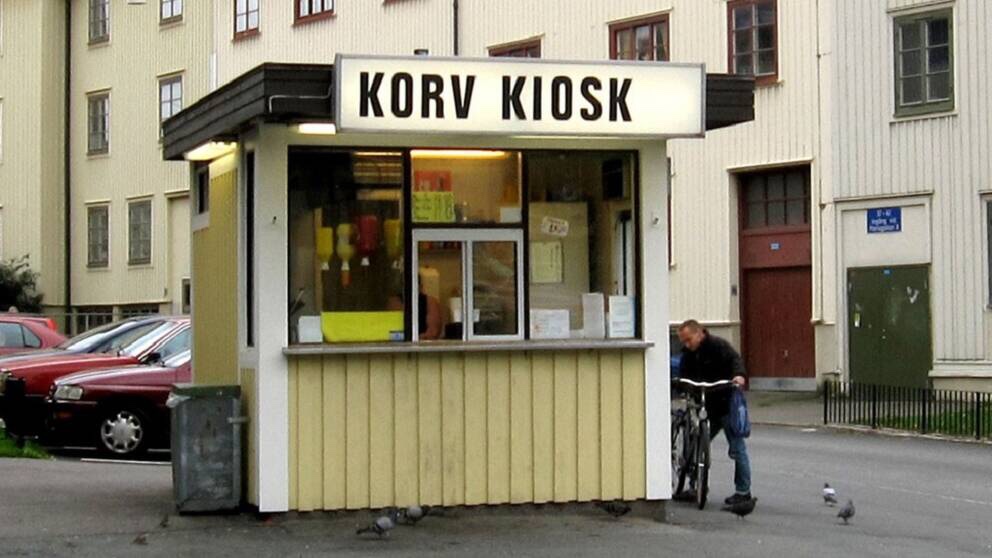
Although food trucks are a standing feature in Sweden’s current street food culture, the original fast food place was, and is, the sausage kiosk. One can not underestimate how much Swedes love their hot dogs and they eat them late at night, for a quick lunch, at sport events, in cars, at weddings, barbecues, communal cleaning days, shopping excursions. You name it. The sausage is ever-present. Evidence exists that sausage-like foods were eaten by the Vikings, but it was in Frankfurt, Germany that the sausage was really developed as a snack. This food culture arrived in Sweden, via USA, in the 1800’s and has remained a firm favourite ever since. Even Sweden’s own patented sausage, the Falukorv, apparently came into existence by German immigrants training the Swedes in how to make them. Sweden’s leading hot dog brand is called Sibylla. Named after the current King’s German mother, this was said to be an honour and not born out of ridicule.

So, there you have it. Germany and Sweden have very close ties linguistically, socially, politically, in royalty, in business, in tourism and, even on the street corners.