A rainy Swedish summer

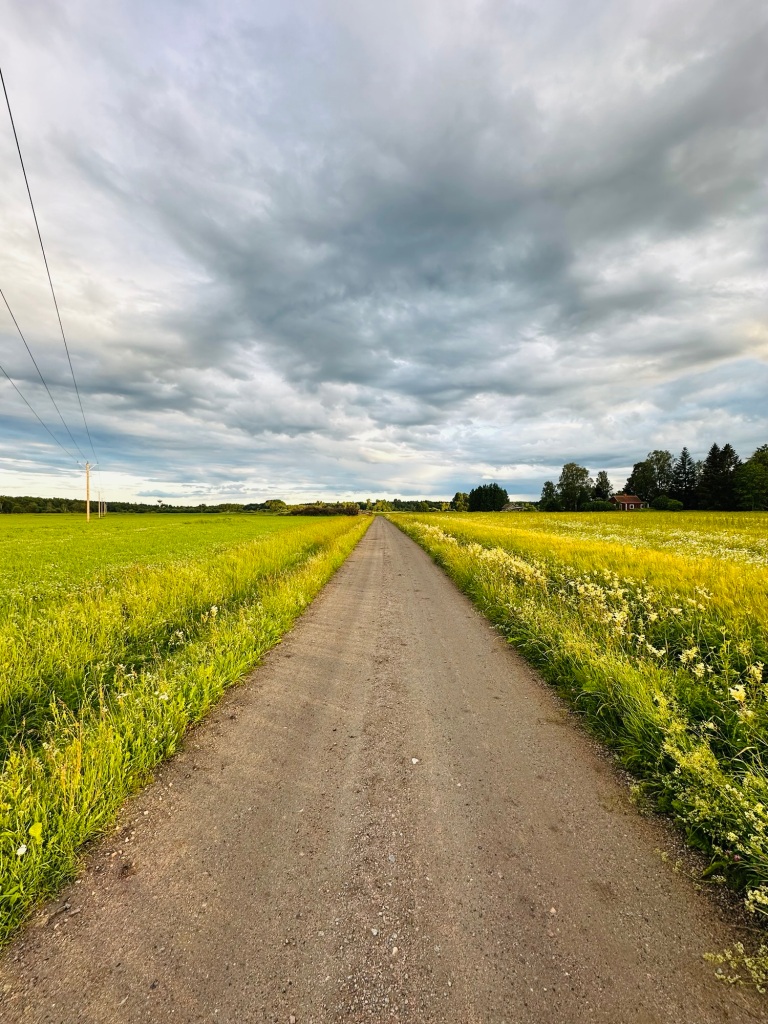
While Southern Europe is experiencing temperatures over 30-40 degrees, Sweden is undergoing a cold, rainy summer. The sun is forecast to arrive tomorrow to many parts of the country for a few days, followed by more rain.

I guess we shouldn’t be surprised. Rain is a characteristic of a typical Swedish summer. In fact, the two rainiest months of the year across much of the country are July and August. (February being the driest).

Ironically, these are also the months that most Swedes take their holidays – because of the warmer temperatures, the lighter days and the school system.

So there’s nothing to do but lie on the sofa and read books, or play card games around the kitchen table while the rain smatters the windows. Alternatively, put on your wellies and go for a wet walk. Or go to IKEA, or for a coffee somewhere nearby. And wait until the sun shows its face, albeit temporarily, in the Swedish summer sky.

The pagan origins of Sweden’s Midsummer celebrations

The long Midsummer weekend is drawing to a close in Sweden. Known as “Midsommar”, it is one of the most significant and widely celebrated holidays in the country. Its history blends ancient pagan traditions with later Christian influences and remains a vital part of Swedish cultural identity.

The origins of Midsummer in Sweden are rooted in pre-Christian solstice celebrations. Ancient peoples marked the summer solstice, the longest day of the year, with rituals to honour nature, fertility, and the sun. These rituals often involved dancing, feasting, and the lighting of bonfires, believed to ward off evil spirits and ensure a good harvest.

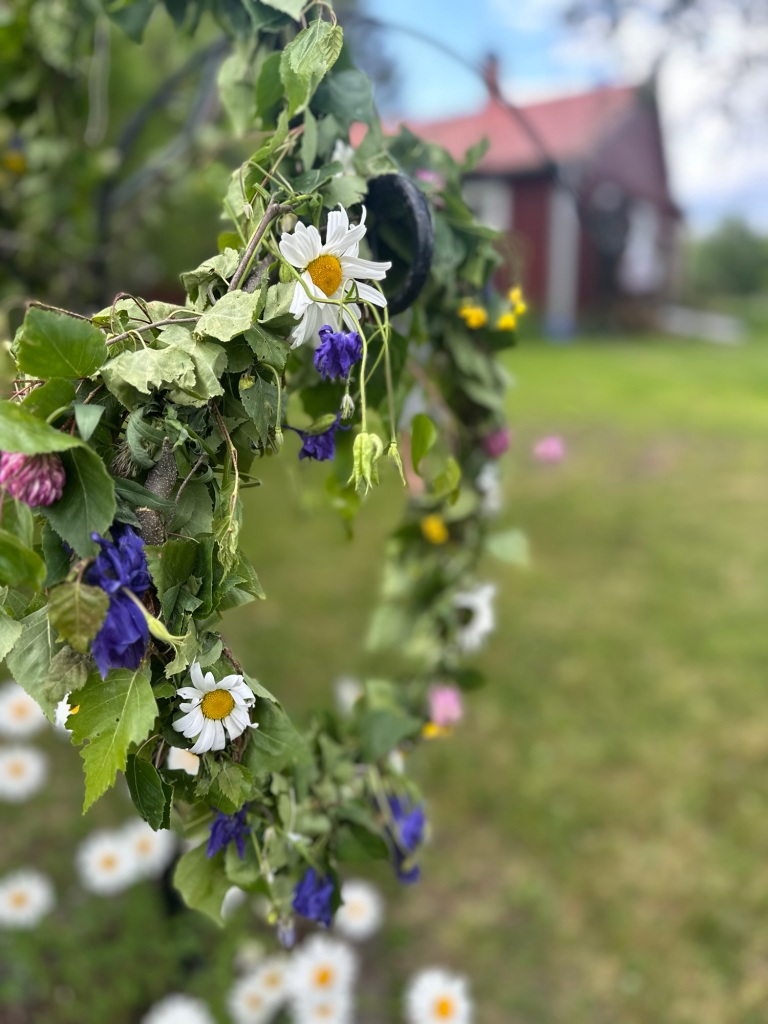
Flowers and greenery played an important role, symbolising fertility and the power of nature at its peak. It was also a time associated with magic and love, when people believed that plants had healing powers and that dreams could foretell the future—especially for young women seeking to glimpse their future husbands.

With the spread of Christianity in Scandinavia during the early Middle Ages, many pagan customs were adapted into the Christian calendar. The Church linked Midsummer celebrations to the feast of St John the Baptist, celebrated on 24 June. As a result, Swedish Midsummer traditionally falls around this date, although in modern times it is observed on the Friday between 19 and 25 June, followed by Midsummer Day on the Saturday.

Despite this Christian connection, the festival retained much of its pagan character, particularly the focus on nature and fertility, rather than religious observance.

Today, Midsummer remains the major secular celebration in Sweden. It marks the unofficial start of the summer holidays, when many Swedes leave cities for the countryside or their summer cottages (sommarstugor).

The festival is a strong symbol of national identity, with its emphasis on community, connection to nature, and timeless traditions. It is a day when Swedes of all ages participate in shared customs that span generations.

Swedish Midsummer – food and drink

Swedish Midsummer celebrates abundance and as such, a great deal of food and drink is consumed. After guests arrive and have their first drink(s), the wreaths start to get made, the potatoes peeled, strawberries topped and the maypole gets decorated with flowers and leaves. Once erected, and danced around, it’s time for lunch.

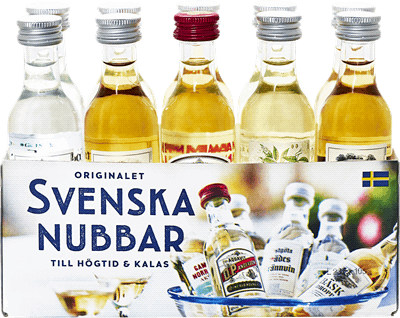
As far as drinking goes, ‘nubbe’, or snaps, is a common tipple accompanied by traditional drinking songs and washed down with beer. A popular brand of snaps is OP Anderson which is flavored with aniseed and fennel and is 40% proof. The drink has been around for 130 years on the market – the first snaps being sold in 1891! Another popular nubbe , the Danish Jubileums, is 40% proof and tastes of dill, coriander and bitter orange. There are also small-sized bottles than can be bought in fun packages that have a mixture of flavorings.

When it comes to the food, in the evening it has become popular in recent years to have a barbecue. But it is at lunch time when the traditional food is consumed, with a Midsummer smorgasbord (buffet).

On this buffet, it is common to find various types of pickled herring, soused herring, boiled new potatoes, gravlax with ‘hovmästare’ sauce, smoked salmon, Västerbotten cheese pie, crisp bread and mature cheese, chopped herbs, red onion, egg halves, ‘silltårta’ (herring cake), various sauces and mixes, fresh and smoked shrimps, fish roe.

As you can imagine, this food is very rich and fatty, which is why it is usually eaten together with the alcoholic snaps.

For dessert, the only thing to eat are Swedish strawberries and cream or a home-made strawberry cake. Anything else would be sacrilege. Some families also eat rhubarb pie.

After lunch, bolstered by the snaps, it’s usually time for garden games, a walk in the woods or a quick dip in the not-quite-yet-warm-enough lake or sea.

If the party lasts really late into the night, then there can also be a ‘vickning’. This is a ‘midnight meal’ designed to sober up drunk guests. It often includes some leftovers from the day, or can also be a very welcome hot dog. 🌭

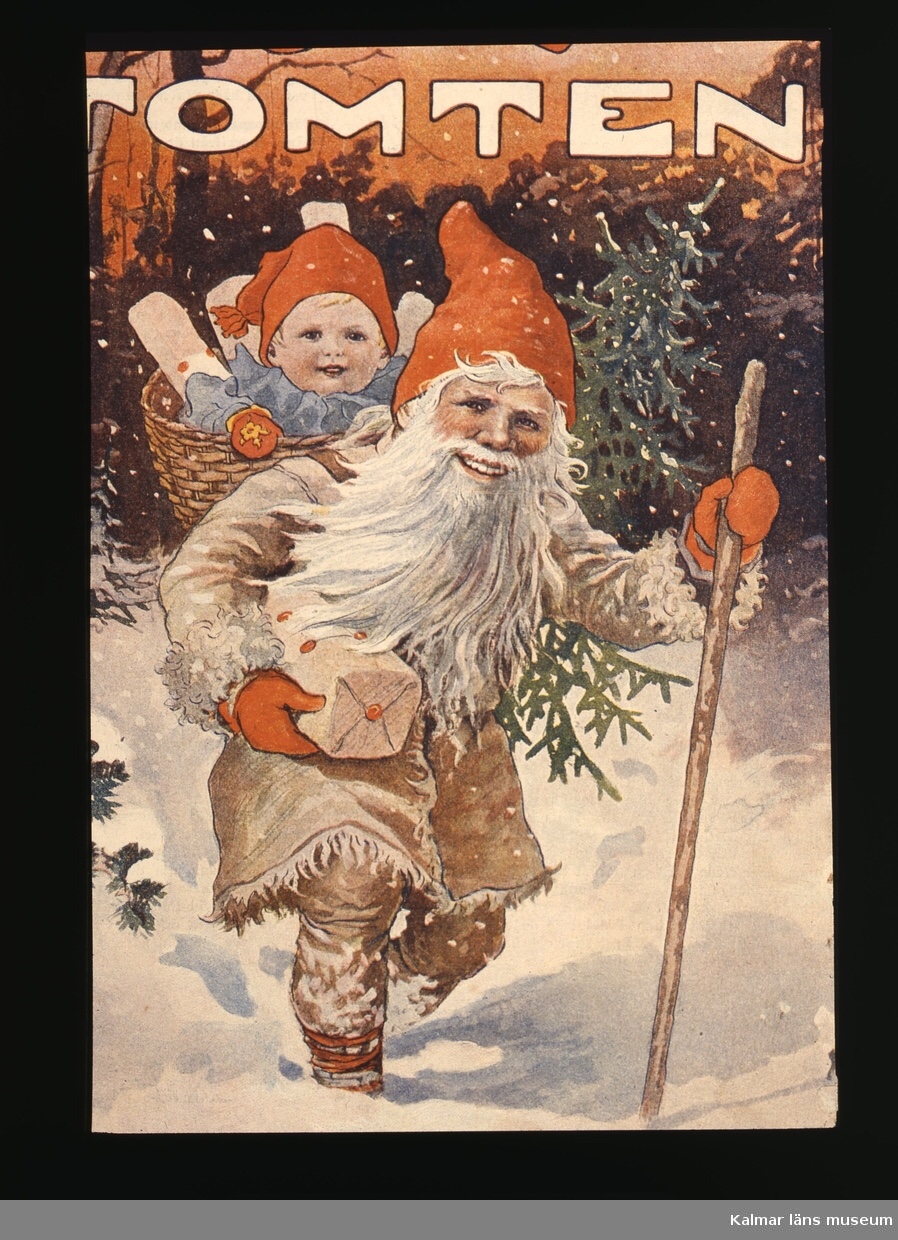
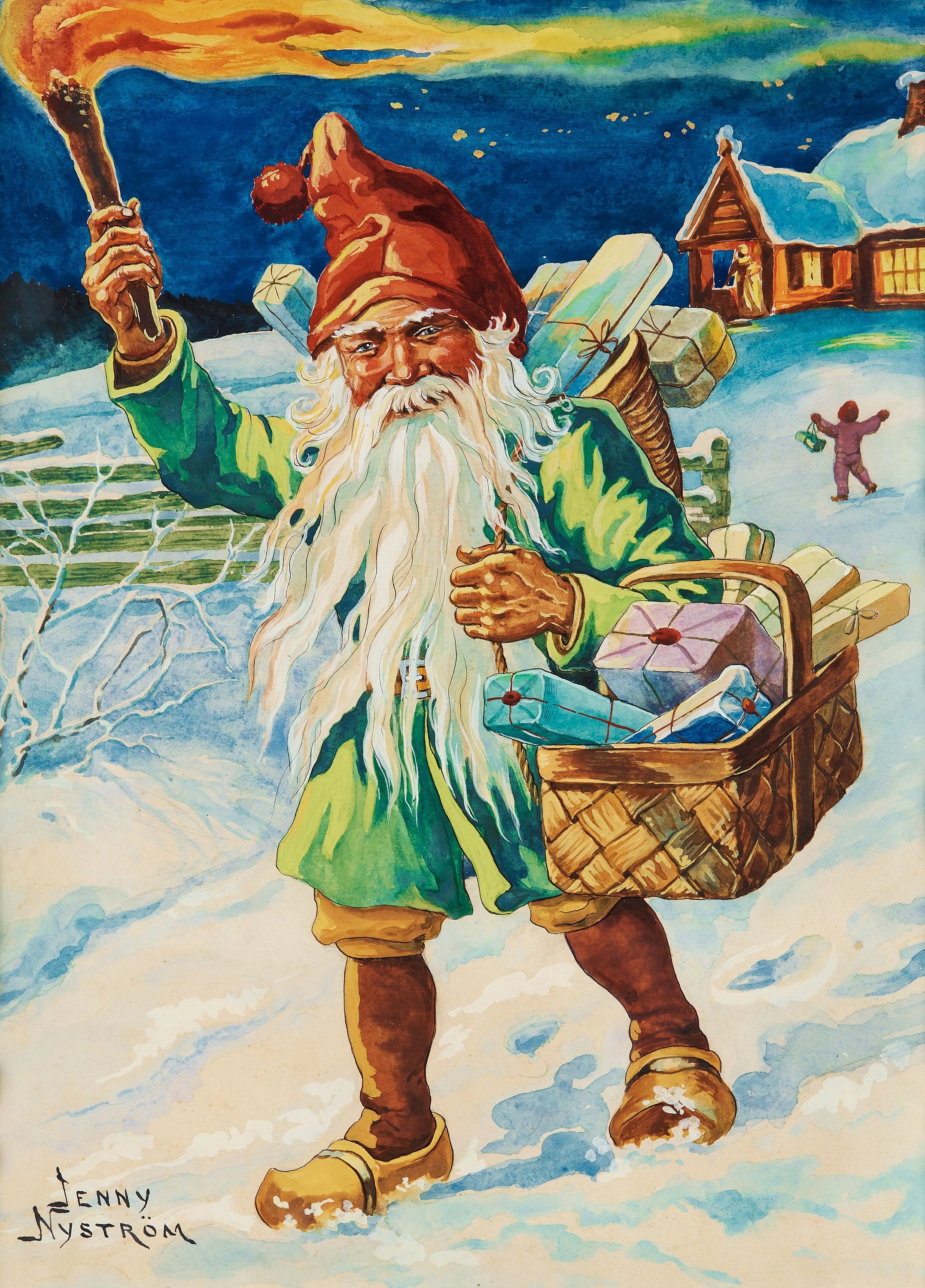
Advent Calendar – Dec 22: Tomten

Window 22. Today’s word is ‘Tomten‘ – who is the Swedish equivalent of Santa Claus.

Around the world, Santa is based on the mythology of St Nikolas – the Greek/Turkish patron saint who’s legend morphed in the USA from the Dutch immigrants’ Sinterklaas to the jolly figure who rewards good children that we see today.

The Swedish symbol of Tomten is partially based on St Niklas and the American depiction of Santa Claus. However, he is also based on a goat and a mythical sprite.

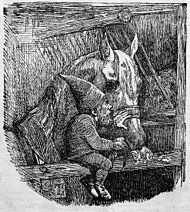
Let’s travel back to rural Sweden hundreds of years ago. Here, in the countryside, Tomten was a kind of sprite (hob, gnome, pixie) who lived on the farm and made sure that the farm had good luck.

Tomten was described as a little man, dressed in sackcloth and with a beard. He usually lived in the barn and was shy, mischievous, and irritable – and also vengeful. To keep Tomten happy, the farmer would leave out rice porridge for him to eat – a food that became known as ‘tomtegröt’ and that is still eaten for Christmas breakfast in Sweden today.

With industrialization in the late 1800’s, Sweden started to become inspired by the German St Nicholas, and in modern minds he merged with the rural sprite to become ‘jultomte’ – the gift-bearing sprite.

Popular Christmas cards by Swedish artist Jenny Nyström depicted this new version of Tomten in 1874 and strongly influenced the Swedish way of seeing jultomte. He was dressed in red hat, with a fluffy white beard. He is also seen to have many little helpers – known as ‘tomtenissar’ (a kind of elf).

And in 1881, a poem by Viktor Rydberg called ‘Tomten’ strongly cemented his transformation and associated the figure with mid-winter and Christmas time.

Prior to this concept of Jultomte/Tomten, gifts were brought in Sweden by the Christmas goat. Straw goats are still a part of Christmas decorations in Sweden and can be found hanging in Christmas trees or standing at the foot of the tree.

In Sweden today, Tomten arrives on Christmas Eve, usually in the late afternoon. He delivers gifts to families, usually with the introduction of ‘Ho, Ho, Ho are there any good children here?’

Strangely, he always seems to arrive just when a member of the family (often dad) has gone out to the shops or gone for a walk.

Advent Calendar Dec 4: Julkalendern

Every day, I will open a window containing a Swedish word that has something to do with Christmas and the festive season.

Today’s word is ‘Julkalendern‘ which translates as ‘Christmas Calendar’

Julkalendern is a television series broadcast on Swedish TV every day in December leading up to Christmas Eve. It is a popular and heavily-anticipated program that children and adults traditionally watch at 7.15 in the morning (or on line). Typically each episode is 15 minutes long, and every year there is a new story.

The first Julkalendern was broadcast in 1960 and was called ‘Titteliture’. In 2016, a competition was held to vote for the all-time favourite Julkalendern. It was won by a series called ‘Sune’s Christmas’ (1991) followed by ‘The Mystery at Greveholm’ (1996), ‘Time of the Trolls’ (1979) and ‘The old woman who shrunk to the size of a teaspoon’ (1967).

This year, the series is a continuation of 1979’s ‘Time of the Trolls’ – ‘ Legend of the Mountain Troll. ‘

Sweden’s Baltic Island of Öland

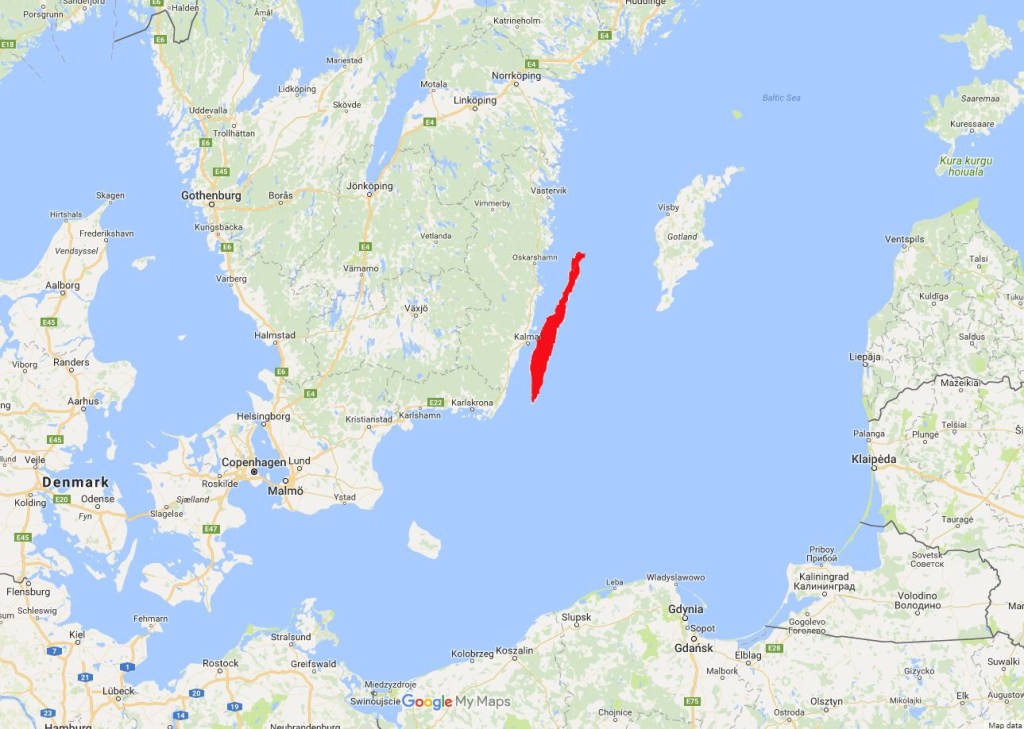
This summer holiday I was on the Baltic island of Öland for the first time. It is a fascinating place linked to the Swedish mainland by a 6 km long bridge. Interestingly, the name Öland translates as ‘Island Land’ – Ö being the Swedish word for island.

Öland lies outside the town of Kalmar in South East Sweden. The island is long, thin and mostly flat. This makes it windy and the landscape in the south of the island is barren. Made of limestone, the island is home to some unique flora and fauna that is found only on Öland. In the centre of the island is a large, open steppe called Alvaret. This vast, protected area is on the UNESCO Word Heritage List.

People have lived on Öland since 8000 BC, and the island has several Stone Age archeological sites as well as Viking settlements. The original settlers migrated across the ice bridge that connected the island with the mainland.

For a long time, the island was a royal hunting ground – which is reflected in the Öland coat of arms depicting a crown and a deer.

Today around 27,000 people live there permanently. During the summer months, the population multiplies drastically, with Swedish and foreign tourists descending on the island. This includes the Swedish Royal Family who have their summer residence on Öland. The island is a summer paradise, with its many long white sandy beaches.

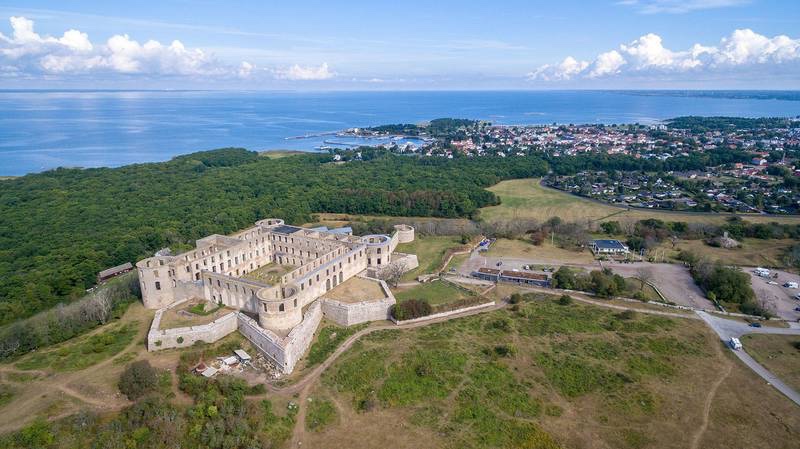
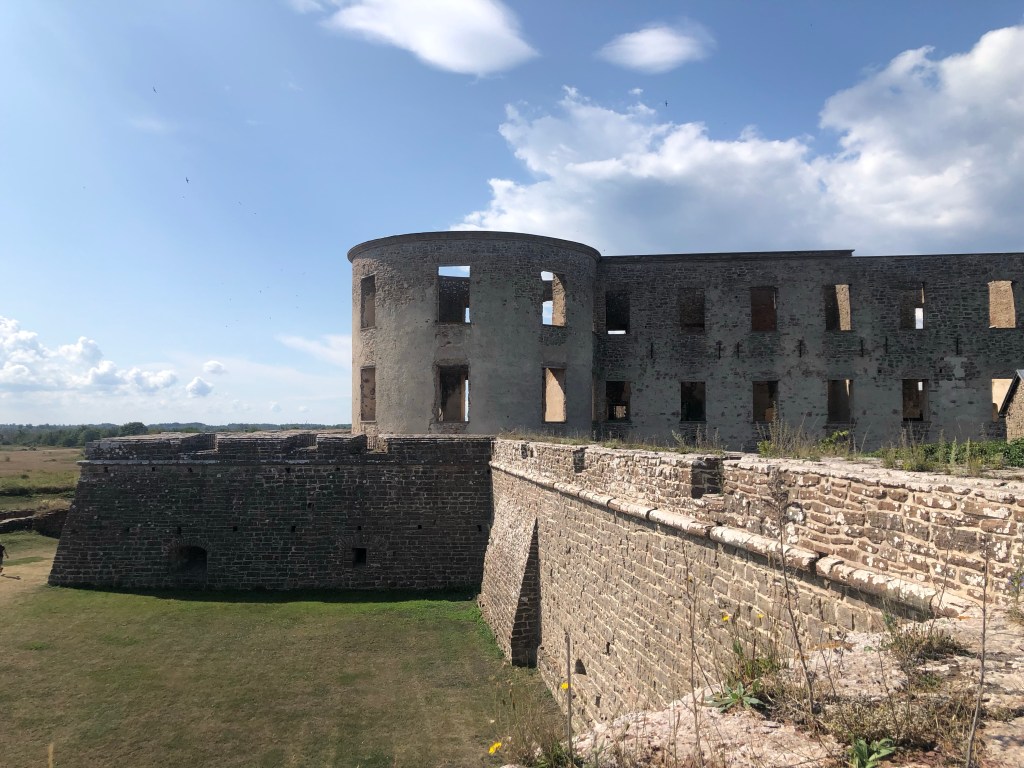
The regional capital is a small town called Borgholm, and here there is a majestic ruin called Borgholm Castle. Dating back to the 16th Century, the castle stands on the site of an older fortress from the 1200’s. It is an impressive building with its panoramic view over the sea and any potential invaders.

Öland offers a unique insight into Swedish history and culture. It took me over 20 years to visit, but I hope to return again soon!

Something surprising about Swedish Midsummer

These days, Midsummer Day is a flexible holiday practically celebrated on a Saturday sometime between 20 and 26 June. This means that Midsummer Eve, one of the biggest festivities in the Swedish calendar, is always on a Friday. In the case of 2021, that’s tomorrow.

Bit did you know that this has only been since 1953? Prior to 1952, Midsummer Day was always celebrated today – the 24th June – coinciding with John the Baptist’s birthday. This was regardless of the day of the week it landed on. So today’s strong association with Midsummer being a long weekend is actually only around 70 years old

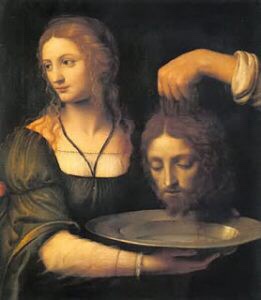
John the Baptist was a person who foresaw the birth of Jesus. He is considered a prophet in several of the world’s religions. He was a prolific preacher whose severed head was notoriously presented on a silver platter to Salome. His birthday has been celebrated since 300 AD on June 24 in many countries around the world.

An interesting fact is that Midsummer Day is still associated with John the Baptist in the other Scandinavian countries. For example, in Finland it is not called Midsummer but Juhannus. In Iceland, it is Jònsmessa. And in Denmark and Norway – Sankt Hans.

Christ Flying Day – a Swedish holiday

Today is Ascension Day, and it is a public holiday in Sweden. The Swedish word for today is Kristi himmelsfärdsdagen or Kristiflygare, which translates loosely as Christ Flying Day. Yet another example of the literalness of the Swedish language, this day signifies the bible story of Jesus Christ ascending (or flying) to heaven.

Unlike some countries that moved the celebration to the following Sunday, Sweden celebrates Ascension Day on the actual Thursday. This gives rise to another Swedish concept – the ‘squeeze day’. Since Thursday is a holiday, and Saturday is a work-free day for most, Friday gets squeezed between them and is also taken as a day off by most people. That makes this weekend a lovely long weekend, often signifying the beginning of summer. In previous times, today was also called ‘barärmdagen’ – or ‘bare arm day’ – as women started to wear clothes that exposed their arms.

This weekend is not religiously observed by most Swedes. Being a secular country, time is usually spent outdoors if the weather permits. Some Swedes go to their summer houses, or sail the waterways on their boats. Others meet friends, sit in outdoor cafes, or carry out sporting activities. In years when travel is permitted, this is also a popular weekend to fly off for a four-day break in, for example, Barcelona, Nice or Palma.

11 hacks for surviving Swedish Midsummer

With Midsummer rapidly approaching on Friday this week, it is time to start planning for your survival.

Midsummer’s Eve is the craziest custom in the Swedish calender and the time of the year when Swedes go a little bonkers.

As a non-Swede, get ready to brace yourself. And follow this simple survival guide to make sure you make it to Midsummer’s Day in one piece.

Greet like a Swede. In Sweden it is considered polite to greet everybody individually, even if you plan to never speak to them again or remember their name. The appropriate way is as follows, shake hands and look direct in eyes, say ‘hej’ followed by your name. They will do the same. If you are feeling adventurous, follow it up with a ‘trevligt’ or even a ‘Glad Midsommar’. Job done. Now you can hit the booze.

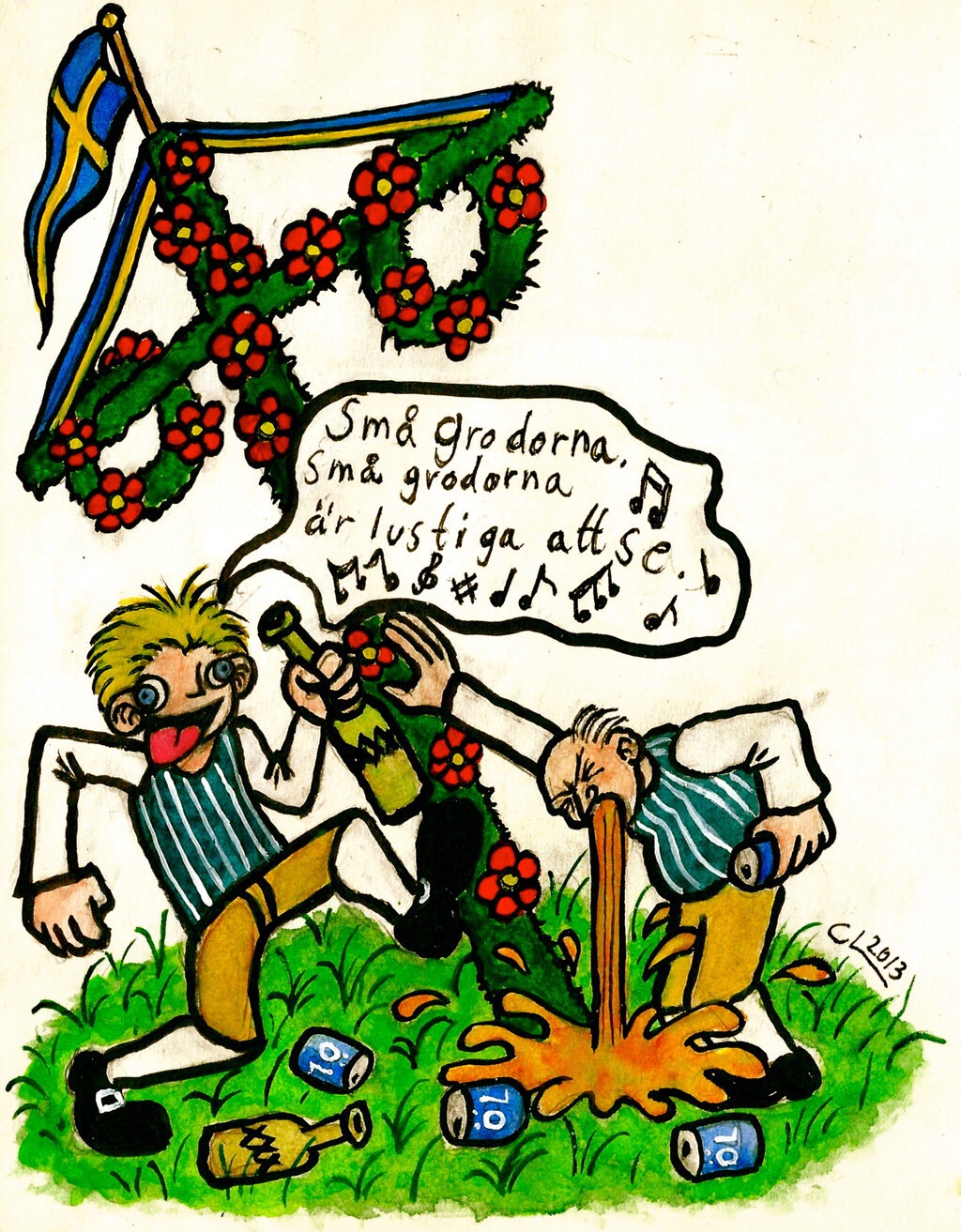
Snaps is not the same as a shot. A lot of alcohol gets drunk on Midsummer’s Eve, especially beer and snaps  With the popularity of shots in recent years, it’s easy to make the mistake that Swedish snaps is the same thing. Believe me, it is not. Snaps can be up to 40% proof, considerably more than your normal shot. So, go easy and sip the snaps or see yourself slipping sideways off your chair before the dessert has even been put on the table.

Take tissue. Midsummer’s Eve is a looong day and you probably will need the loo at some point. The trouble is, so will everybody else – to the detriment of the supply of toilet paper. There’s a big chance you will be seeking relief in the woods so come equipped with the appropriate amounts of paper for your needs.

If shy, bring swimwear. Bathing in the icy June waters is a common activity at Midsummer. Swedes generally are not afraid of skinny dipping when they do this. If you are, then come prepared with swimwear and a towel.

Shelve your maturity. Part of Midsummer is dancing around the maypole, playing silly games, pretending to be a frog, participating in competitions. To survive this, it helps to conjour up your inner child and forget you are an adult for a while.

Protect yourself. Given the amount of alcohol consumed at Midsummer, it is no surprise that the most babies in Sweden are made on this day. If you don’t want to join the ranks of parents, remember to put it on before you put it in.

Throw in the thermals. It looks like it might be sunny and warm this Midsummer’s Eve. But it is good to be prepared. It is not unusual that temperatures fall into single figures and that pesky rain pours down onto the smorgasbord. So bring a jumper, a rain jacket and even thermals to enhance your experience.

Don’t expect culinary miracles on Midsummer’s Eve. The food is exactly the same as is eaten at Christmas and Easter, with a few small summery exceptions – strawberries, cream, dill and new potatoes.

Learn a drinking song. On Midsummer’s Eve, food and alcohol is accompanied by Swedish drinking songs.  Learn one in advance and shine at the table. Even better sing one in your own language and you are guaranteed to use those rubbers you packed just for the occasion. For me, ‘what shall we do with the drunken sailor’ works every time.

Argue over the rules. At Midsummer a popular Swedish garden game is called kubb. Involving the throwing of sticks, everybody seems to have their own understanding of the way to play. If you want to feel really Swedish, make sure you start an argument about the rules.

Take pills. Of varying types. Allergy pills are good because there are flowers everywhere: on the table, in the maypole, on peoples’ heads. Pain killers are good as a lot of snaps is consumed. Indigestion pills are good as the food is oily, fatty, acidic, smoky and rich. The after day pill is good, well… because…

That’s it! Follow this guide and you are sure to have a wonderous Midsummer’s Eve in Sweden. Glad Midsommar!

Please share this post to help others get ready for the big day!