The pagan origins of Sweden’s Midsummer celebrations

The long Midsummer weekend is drawing to a close in Sweden. Known as “Midsommar”, it is one of the most significant and widely celebrated holidays in the country. Its history blends ancient pagan traditions with later Christian influences and remains a vital part of Swedish cultural identity.

The origins of Midsummer in Sweden are rooted in pre-Christian solstice celebrations. Ancient peoples marked the summer solstice, the longest day of the year, with rituals to honour nature, fertility, and the sun. These rituals often involved dancing, feasting, and the lighting of bonfires, believed to ward off evil spirits and ensure a good harvest.

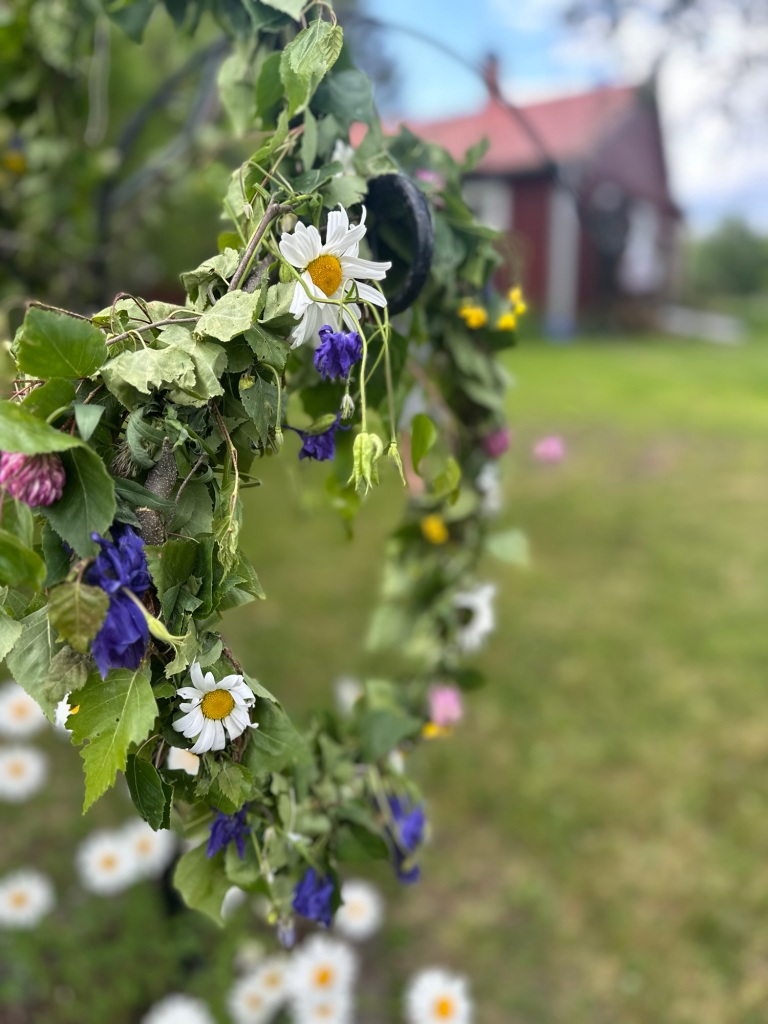
Flowers and greenery played an important role, symbolising fertility and the power of nature at its peak. It was also a time associated with magic and love, when people believed that plants had healing powers and that dreams could foretell the future—especially for young women seeking to glimpse their future husbands.

With the spread of Christianity in Scandinavia during the early Middle Ages, many pagan customs were adapted into the Christian calendar. The Church linked Midsummer celebrations to the feast of St John the Baptist, celebrated on 24 June. As a result, Swedish Midsummer traditionally falls around this date, although in modern times it is observed on the Friday between 19 and 25 June, followed by Midsummer Day on the Saturday.

Despite this Christian connection, the festival retained much of its pagan character, particularly the focus on nature and fertility, rather than religious observance.

Today, Midsummer remains the major secular celebration in Sweden. It marks the unofficial start of the summer holidays, when many Swedes leave cities for the countryside or their summer cottages (sommarstugor).

The festival is a strong symbol of national identity, with its emphasis on community, connection to nature, and timeless traditions. It is a day when Swedes of all ages participate in shared customs that span generations.
Swedish Midsummer – food and drink

Swedish Midsummer celebrates abundance and as such, a great deal of food and drink is consumed. After guests arrive and have their first drink(s), the wreaths start to get made, the potatoes peeled, strawberries topped and the maypole gets decorated with flowers and leaves. Once erected, and danced around, it’s time for lunch.

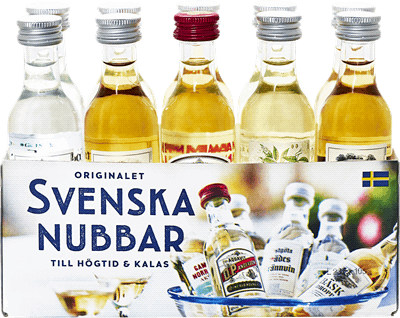
As far as drinking goes, ‘nubbe’, or snaps, is a common tipple accompanied by traditional drinking songs and washed down with beer. A popular brand of snaps is OP Anderson which is flavored with aniseed and fennel and is 40% proof. The drink has been around for 130 years on the market – the first snaps being sold in 1891! Another popular nubbe , the Danish Jubileums, is 40% proof and tastes of dill, coriander and bitter orange. There are also small-sized bottles than can be bought in fun packages that have a mixture of flavorings.

When it comes to the food, in the evening it has become popular in recent years to have a barbecue. But it is at lunch time when the traditional food is consumed, with a Midsummer smorgasbord (buffet).

On this buffet, it is common to find various types of pickled herring, soused herring, boiled new potatoes, gravlax with ‘hovmästare’ sauce, smoked salmon, Västerbotten cheese pie, crisp bread and mature cheese, chopped herbs, red onion, egg halves, ‘silltårta’ (herring cake), various sauces and mixes, fresh and smoked shrimps, fish roe.

As you can imagine, this food is very rich and fatty, which is why it is usually eaten together with the alcoholic snaps.

For dessert, the only thing to eat are Swedish strawberries and cream or a home-made strawberry cake. Anything else would be sacrilege. Some families also eat rhubarb pie.

After lunch, bolstered by the snaps, it’s usually time for garden games, a walk in the woods or a quick dip in the not-quite-yet-warm-enough lake or sea.

If the party lasts really late into the night, then there can also be a ‘vickning’. This is a ‘midnight meal’ designed to sober up drunk guests. It often includes some leftovers from the day, or can also be a very welcome hot dog. 🌭

Swedish caviar – but not as you know it

kalleskaviarWhen you hear the word ‘caviar’, you probably get an instant picture in your head – a picture of jewelled fish eggs, vodka, champagne, Russia and luxuriousness.
Until you hear about Swedish caviar – or more specifically a popular Swedish fishy foodstuff called ‘Kalle’s kaviar’. The New York Times referred to it as ‘challenging the global gag reflex’.

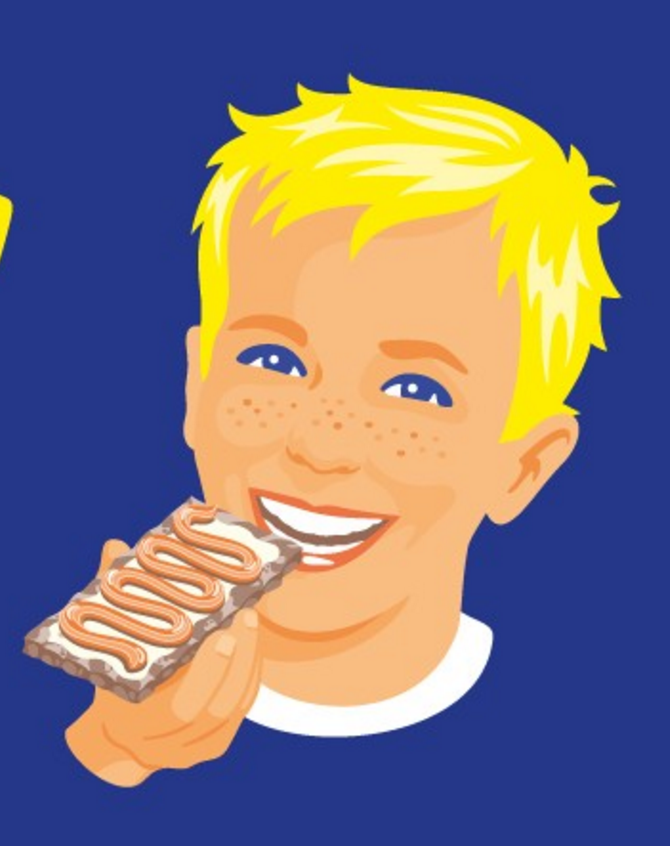
Kalle’s caviar comes in a tube, emblazened with the image of a blue-eyed, blonde-haired boy called Kalle. It hit the Swedish market in 1954, and has remained an extremely popular food since then. The tube contains smoked, sugar-salted cod and sik roe. It also contains lots of sugar, lots of salt, potato flakes and tomato purée. To eat it, one simply squeezes it from the tube, like toothpaste, onto an open sandwich usually containing boiled eggs. Kalle’s caviar is a fishy staple in the Swedish diet. It has a very pungent, extremely salty fishy taste.

It seems to be a divider amongst people. Some people love it, some people despise it. I would politely say that it’s an acquired taste. It certainly is a taste that has took me twenty years to acquire. When I first tasted it, I remember balking and questioning if it was even fit for human consumption. But now, I will happily squeeze the fishy stuff onto my boiled egg at breakfast time.

Sure, it’s caviar. But not as you know it.


Baby we’re burning – Swedes, songs and Satanists

valbiorg

Tonight, the 30th April, in Sweden is Valborgsmässoafton. Yes, another one of those long indecipherable Swedish words.

This one translates as Walpurgis Eve, and is celebrated in many European countries such as Germany, Holland, the Czech Republic, Lithuania, Latvia, Estonia and Finland. 

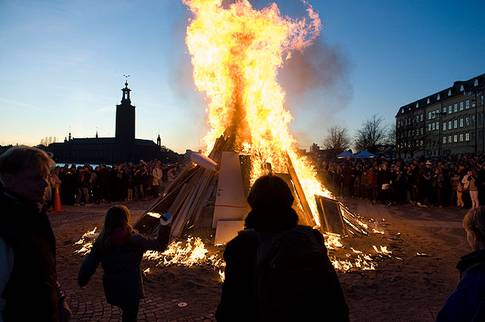
The name ‘Valborg’ is from an English Saint but, despite that, this isn’t really a religious celebration. It’s more to do with the welcoming of spring, and feels rather pagan actually. In the evening on Valborgsmässafton, Swedes gather around huge bonfires and listen to songs. These songs are in the form of traditional choir music designed especially for this occasion to shake off  the nasty dark winter and celebrate the burgeoning buds of the lighter season.

And like many traditions in Sweden, this one also has a rural origin. These bonfires are part of a Swedish tradition dating back to the early 18th century. On this day, farm animals were let out to graze and bonfires lit to scare away predators and other evil beings. This is rather ironic as Walpurgis Eve is also an important holiday in Satanism at it marks the founding of the Church of Satan.

But religion aside. On Walpurgis eve, we are joined in the knowledge that we survived another winter, and summer is coming!

A witch-filled Clean Thursday in Sweden

easterwitchmooon

Today is ‘Maundy Thursday’ in English and in Swedish it is called ‘Skärtorsdag’. The word ‘skär’ means ‘clean’ – and it is a biblical reference.

If you know your bible stories, today is when Jesus gathered his disciples together for the Last Supper. Prior to the Last Supper, Jesus washed their feet. And he washed them clean – a symbolic metaphor for purification and the washing away of sin.

So, today is Clean Thursday. In fact, in English ‘Maundy Thursday’ also relates to the same act in the bible – the act of ritual cleaning is known an The Maundy.

However, in Sweden, today isn’t that much about washing feet – it’s more about witchcraft!

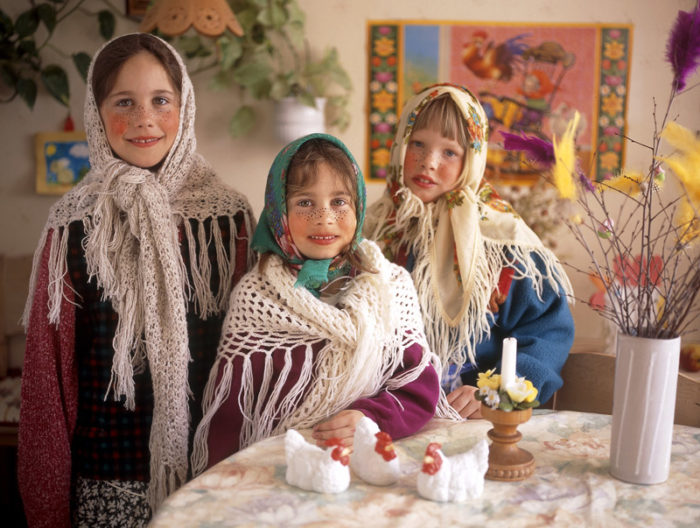
Today is celebrated by children dressing up as witches, rather like we do in the UK and USA on Halloween. Children go door to door in their outfits begging for sweets. This tradition originates from the belief centuries ago that the Skärtorsdag was the night of the witches, where these wicked hags would climb onto their broomsticks and fly to a mountain called Blåkulla. It was a night of danger and evil, and Swedish people would bar their doors to their houses and barns and leave outside gifts that would make the witches’ journey easier – food, milk, clothes, broomsticks. Today, that translates into the Swedish version of trick or treating.

paskkarringar-2-700x528

So if you celebrate by cleaning, or by dressing up as a witch or by eating candy – you’ll be kicking off your Easter the Swedish way!

It’s Fat Tuesday – Swedish style!

Today it’s ‘Fat Tuesday’ in Sweden, known as Shrove Tuesday or Mardi Gras around the world.

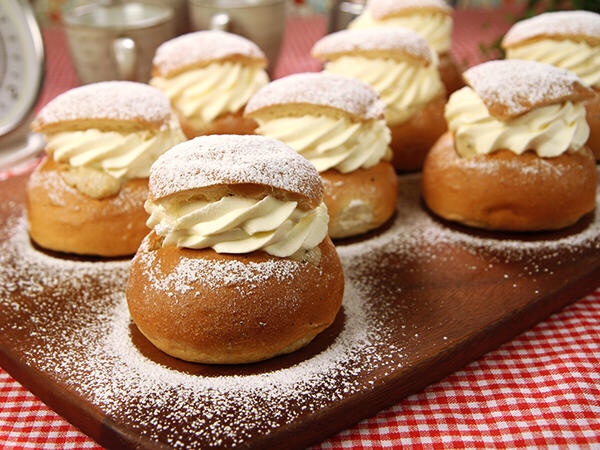
While in the UK we eat pancakes (today is even called Pancake Day) and in Latin America they scoff down fried bread, Swedes celebrate by eating the traditional cream Lent bun – the ‘semla’. 40 million of them every year! I’m also clearly going to indulge. In fact, my mouth is watering just writing this post.

The semla is a creamy bun filled with delicious almond paste. Traditionally, they were only eaten in Sweden to commemorate the start of Lent and the great Fast, leading up to Easter. In the south of Sweden, they still refer to them as ‘fastlagsbullar’ – Shrovetide buns. Nowadays however, semlas are usually sold anytime between Christmas and Easter.

I just love them. I could eat a barrel load. But I’d end up looking like a barrel if I did. I love the taste of them, and the feeling of luxurious indulgence. I also love the knowledge that as you take a bite into a creamy semla, you are biting into over 500 years’ history of Scandinavian baking.

The word ‘semla’ comes from the Latin ‘simila’ which means fine flour and originally referred just to the bun without any filling. As long ago as the 1500’s, bakers started to hollow out the middle of the bun and fill it with cream and butter. As ingredients became more available, bakers started adding almond and cardemon and the type of semla that we know today developed towards the end of the 1800’s. After rationing of sugar and dairy products ceased at the end of WW2, the semla took off and became very popular.

Newspapers often have the ‘Semla of the Year’ award, and nominate the best semla in town. Consequently, Swedes flock like sugar-addicted lemmings to the winning bakery, and you can stand in a queue for an hour to get your hands on one, if you haven’t ordered in advance.

Nowadays the semla trend has reached new heights. Every year bakers around the country try to launch new types of semla, with their own spin on it -for example, the semla wrap, the semla burger, the semla layer cake, the semla cocktail, semla ice cream, semla nachos, semla langos, the chocolate semla, the vanilla semla, the lactose-free, gluten-free vegan semla. In 2021, the gross-sounding fermented Baltic herring semla was revealed.

But I’m a traditionalist in this matter. Give me a classic round fluffy cardemon-scented wheat bun brimming over with whipped cream and almond paste.

And give it to me NOOOOWWW!!!

Advent Calendar – Dec 24: Kalle Anka

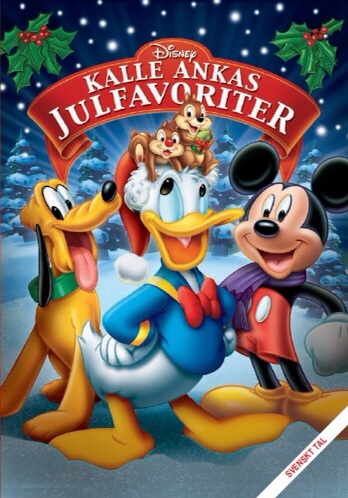
Window 24. As I am following the Swedish system of advent calendars, today is the last window, not the 25th as in the UK. So here is the final word: Kalle Anka. This is the Swedish name for Donald Duck – a Disney character with a strong, and unexpected, connection to Swedish Christmas.

Traditional Christmas celebrations on Christmas Eve in Sweden get off to a slow start. It all begins with a Christmas breakfast, consisting of rice porridge, wort bread, ham and Christmas cheese, amongst other things. After breakfast, some people go for a walk, some go to church, others begin the preparation for the Christmas julbord (buffet).

When to eat julbord differs from family to family. For some, it’s at lunch time, for others it more towards late afternoon. One surprising time marker is Kalle Anka (Donald Duck).

Every Christmas Eve since 1960, the Disney show ‘From All of Us to All of You’ featuring Donald Duck and his friends has been broadcasted on Swedish television at 3pm (now 3.05pm). Every single year. A very weird tradition for someone like me who grew up listening to the Queen’s speech on Christmas Day at 3pm. In the UK we have the monarch. In Sweden, Donald Duck.

So the discussion in Swedish homes is ‘should we eat before or after Kalle?’.

Today, Kalle Anka is watched as a sentimental tradition, or as background noise on Christmas Eve. But in the 1960’s when it began, it was the only time of the year that cartoons were shown on tv, so it was a Christmas treat. Since it’s been broadcast for almost 60 years, it is an integral part of what many Swedes associate with Christmas.

After Kalle Anka och julbord, it’s time for a visit from Tomten with gift-giving. This is followed usually by more food and drink. Some people conclude the day with a Midnight service at their local church.

Christmas is, like many places around the world, a time of overconsumption. Enormous amounts of food are left over and eaten during the following days.

In Sweden, Christmas Day and Boxing Day are both Public holidays – and the official end of Christmas is January 13th. Then it is time to traditionally throw out the Christmas tree. The lights in the windows have usually disappeared by February.

And as the daylight slowly returns to Sweden, people start planning for the lighter and warmer time of the year. And Christmas fades into memory…until next December.

Advent Calendar – Dec 23: Dan före dopparedan

Window 23. Today’s words are ‘Dan före dopparedan‘ – which translate somewhat curiously as ‘the day before dipping day’. Or, the day before Christmas.

I always thought that the name ‘dopparedan’ (dipping day) for Christmas Eve was somehow a reference to John the Baptist.

But I was wrong.

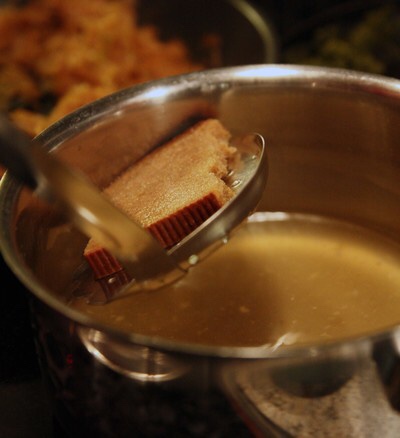
It actually comes from the Medieval Swedish tradition of dipping and drenching bread in the stock juices in which the Christmas ham has cooked, and eating it.

This traditional practice is called ‘dopp i grytan’ and originated in agricultural communities. People dipped their bread as a little snack while they made final preparations for the celebrations later in the evening. Some people still do this today.

Because Christmas Eve was called ‘dopparedagen’, the 23rd Dec became known as ‘dan före dopparedan’ – the day before the day of dipping bread.

Today’s ‘dan före dopparedan’ is more to do with making the final stressful arrangements for tomorrow. Final baking is done, last-minute Christmas presents are bought, a visit to Systembolaget (alcohol shop) is made. Long queues are to be expected.

And then, darkness and calmness descends over homes all around the country. The evening before Christmas Eve is called ‘uppersittarkväll’ and Swedish families traditionally gather to wrap presents, participate in tv bingo, play games and write Christmas present rhymes.

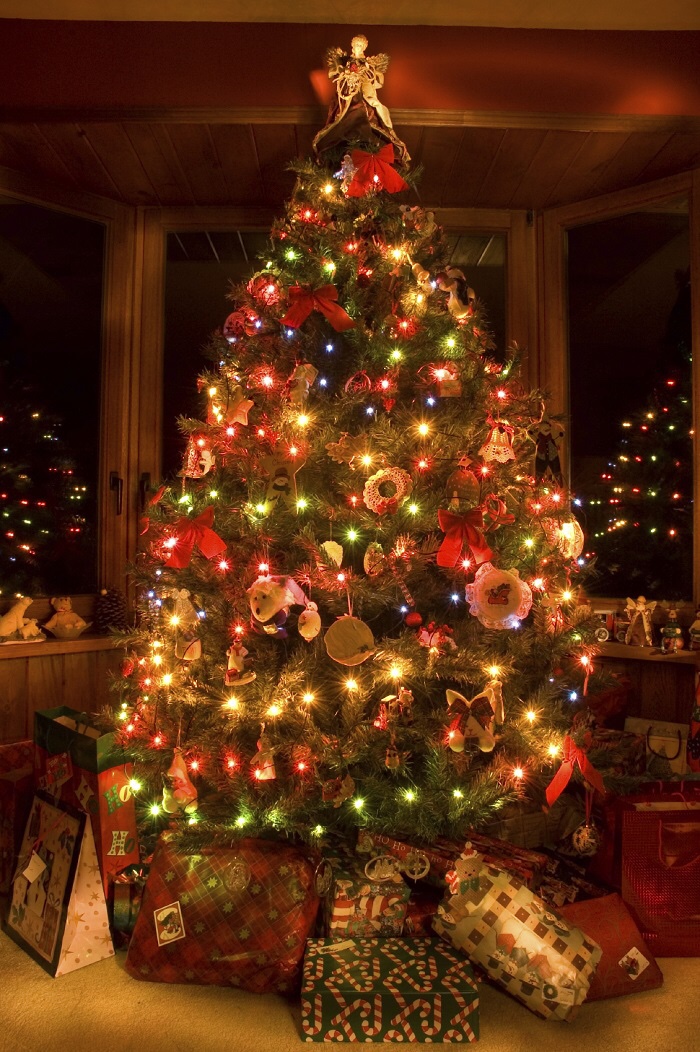
It is also the evening when traditionally people put up final decorations and dress the Christmas tree, although this happens earlier for many families.

Once everything is finalized, hopefully there is a moment of relaxation to be had with a glass of warm glögg and a pepparkaka.

And then, it’s time to head off to bed in anticipation for the big day tomorrow – dipping day!

Advent Calendar Dec 20: Mistel

Window 20. Today’s word is ‘mistel‘ which translates as ‘mistletoe’.

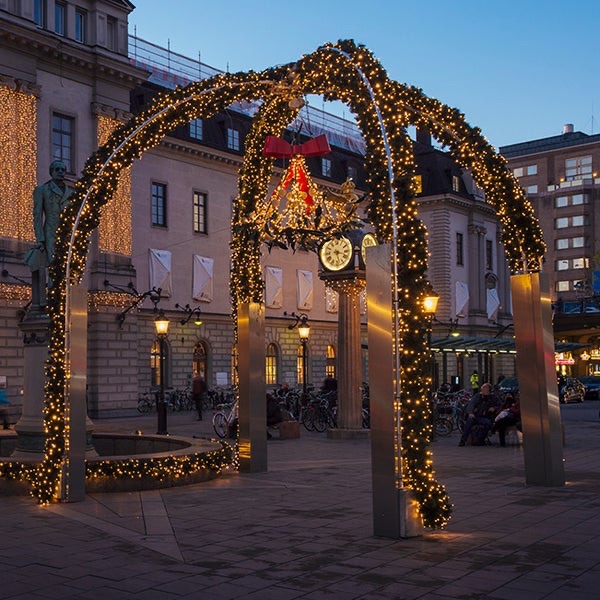
Kissing under the mistletoe is a tradition in many countries and outside Central Station in Stockholm, there is an enormous one to pucker up under.

But do you know the origin of the tradition?

Well, one of the theories is that it comes from Norse mythology in a story about the god Baldur. In the story, Baldur’s mother Frigg casts a powerful magic to make sure that no plant grown on earth could be used as a weapon against her son. The one plant the spell does not reach is the mistletoe, as it does not grow out of the earth, but out of a tree’s branches. The scheming Loki, upon learning this, makes a spear out of mistletoe — the spear that would eventually kill Baldur. 

In many tellings, Frigg then declares the mistletoe to be a symbol of love after her son’s death and promises to kiss anyone who passes underneath it. 

Advent Calendar – Dec 18: Skumtomte

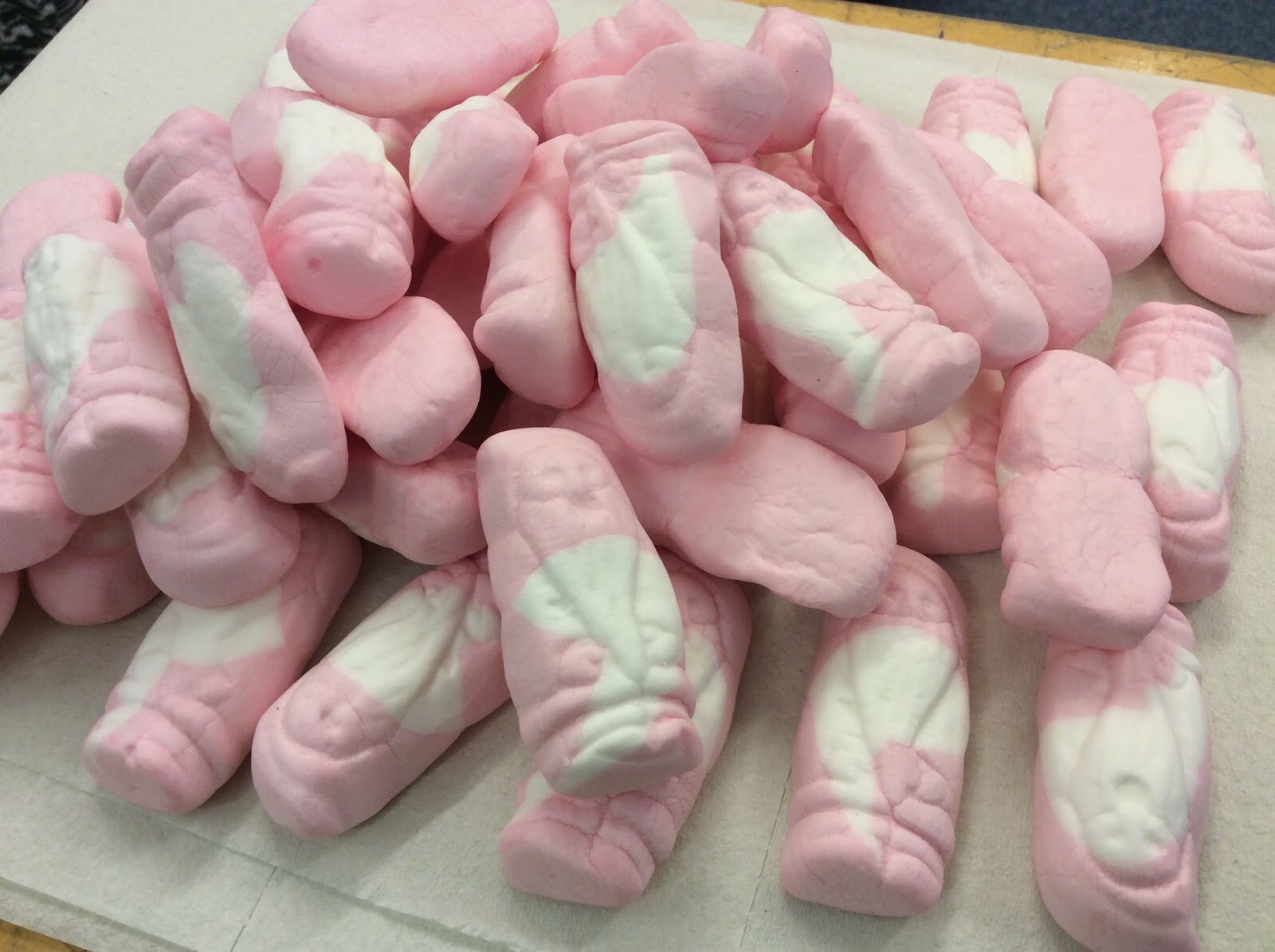
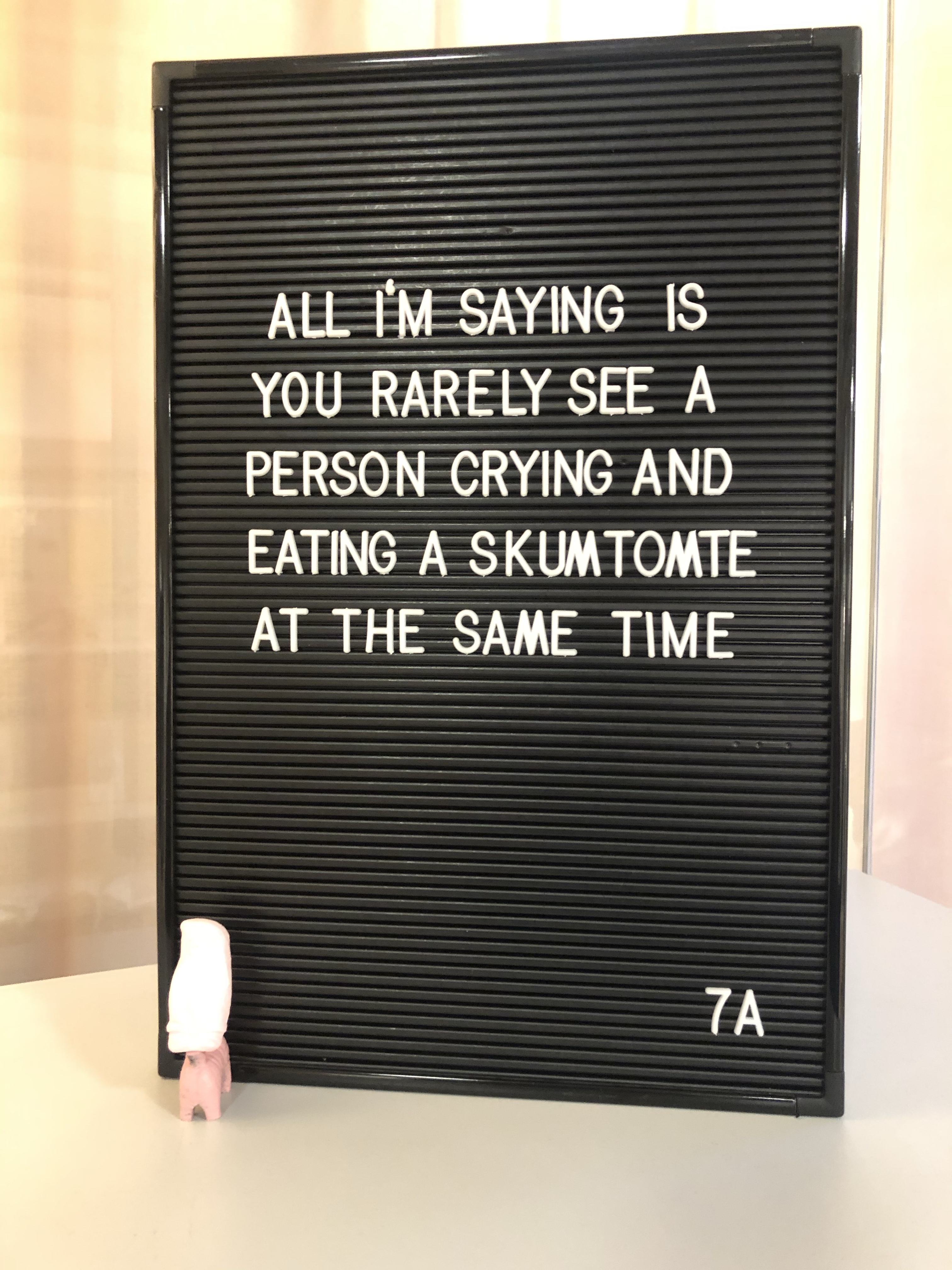
Window 18. Today’s word is ‘Skumtomte‘ which translates as ‘Marshmallow Santa’.

January is a month when it is often jam-packed at gyms up and down Sweden. This is usually due to the amount of food, snacks, and alcohol consumed over the Christmas and New Year period. The festive season is also one of the times of year when a lot of sugar and sweets are consumed.

One of the most popular sweets in yuletide Sweden is the ‘skumtomte’ – the marshmallow Santa. The skumtomte is traditionally pink and white and strawberry flavoured.

Thanks to the wonders of product development, new limited flavours have appeared in recent years: apple and cinnamon, blueberry, mint and gingerbread being some examples.

They have been manufactured since 1934, and every year over 194,000,000 are consumed in Sweden and Finland. It seems like it wouldn’t be Christmas without a skumtomte.

Other sweet things that Swedes eat around Christmas are:

  • Ischoklad – ‘ice chocolate’ – chocolate with coconut fat in tiny cupcake forms
  • Ris a la Malta – a cold rice dessert with cream, vanilla and mandarines
  • Risgrynsgröt – rice porridge with sugar, cinnamon and milk
  • Knäck – butterscotch
  • Kola – toffee
  • Fudge – fudge
  • Marsipangris – marzipan pig
  • Lussekatt – saffron bun
  • Polkagris – Candy cane
  • Chokladtryffel – chocolate truffle
  • Dadlar – dates
  • Fikon – figs
  • Pepparkaka – ginger biscuits
  • Gröna kulor – marmalade balls
  • Aladdin and/or Paradis – popular boxes of chocolates

So, get eating – the gym can wait until 2025!