Walpurgis Eve – when spring arrives in Sweden

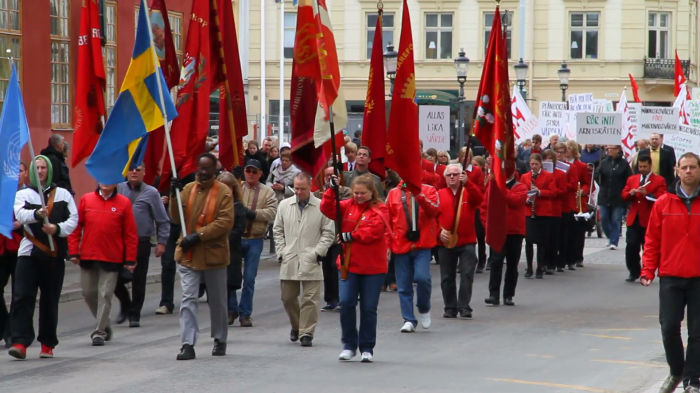
Today, 30 April, is Walpurgis Eve, called Valborgsmässoafton in Swedish, or ‘Valborg’ for short. The name Walpurgis is taken from the eighth-century Saint Walburga, and in Sweden this day marks the arrival of spring.

In a cold, dark country like Sweden, residents have suffered through a long, miserable winter. So it is no surprise that the arrival of spring is an occasion to mark. On the evening of Valborg, Swedes usually gather to celebrate together.

The forms of celebration vary in different parts of the country and between different cities. However, essential celebrations include lighting a large bonfire, listing to choirs singing traditional spring songs and a speech to honour the arrival of the spring season. Some of the traditional spring songs are titled ‘Beautiful May – Welcome!’ and ‘Longing for the countryside – winter rushes out’. You can see a clip below.

Walpurgis bonfires are an impressive thing to see and are part of a Swedish tradition dating back to the early 18th century. At Walpurgis, cattle was put out to graze and bonfires lit to scare away predators.

The weather is often unpredictable on Walpurgis Eve. It can be sunny and warmish, or it can still snow on 30 April! Today looks like it’ll be a cold one.

Despite bad weather, Swedes still shiver around the bonfires and ironically celebrate the arrival of Spring.

The colourful Swedish Easter tree

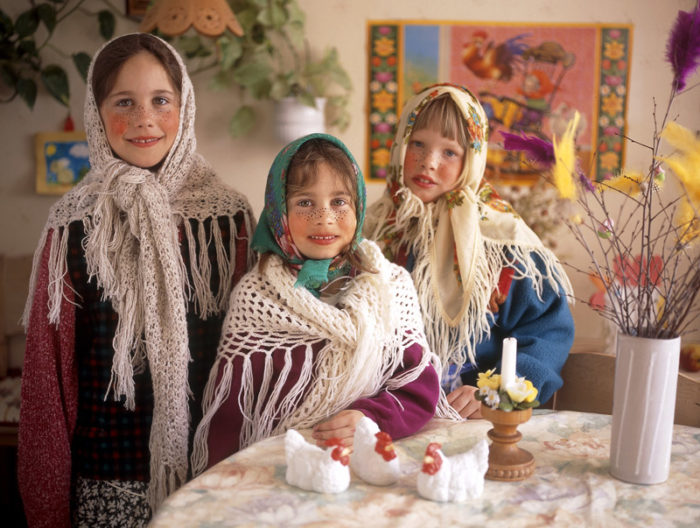
Just like at Christmas, many Swedes also pimp their homes for Easter. Yellow table cloths, yellow curtains and yellow tulips are common, as is something called a ‘påskris’. Pronounced ‘poskrees’, this is a Swedish Easter tree.

The Easter tree is a bunch of twigs and sticks (usually birch) in a vase with brightly coloured feathers attached to the ends. Some people also hang decorated eggs, colourful ribbons or festive chickens. The Easter tree can be seen all over the country this time of year. Outside shop entrances, in peoples’ living rooms, outdoors in the neighbours’ gardens. It is a very popular decoration, probably because it brings colour at a time of the year when most flowers haven’t yet bloomed in Sweden.

So, what is the origin and symbolism of the Easter tree then? Well, some Swedes say that it symbolises the sweeping away of the winter. The twigs represent a broom and the feathers get caught in the broom as we brush.

Others say that it represents witchcraft. The twigs represent a witch’s broomstick and the feathers indicate flight. This could also be why Swedish kids dress up as witches at Easter and do a kind of ‘trick or treating’ for Easter eggs.

But, apparently the Easter tree has a completely different, and more dubious, origin and symbolism. It dates from the 1600’s. Swedish people at this time were very pious, and used to take twigs and sticks and beat each other with on Good Friday – to commemorate the suffering of Jesus. In the 1800’s and 1900’s, they started to be decorated and became a symbolic decoration for Easter.

Why Swedes celebrate on the ‘afton’ (eve)

In the UK, we celebrate ‘Days’ such as Christmas Day & Easter Day. In Sweden, these days are the bank holidays but there is also a tradition of celebrating on the Eve. In fact, it is the Eve ( ‘afton’) that is the big celebration time. Today, for example, is Easter Eve and it is typically today that families meet for the big meal.

There’s påskafton, Valborgsmässoafton, Midsommarafton, julafton, nyårsafton, trettondagsafton. Why is this? Surely it can’t just be to get extra holiday?

Well, actually it originates from a time before the mechanical clock. In that period, a new day began at sunset rather than at midnight as it does now. In the Medieval times there was an expression – ‘vid kväll ska dag leva’ – which means something like ‘in the evening, shall the day live.’

Scandinavians held onto this tradition even after clocks were invented, and this is why they celebrated their important days the evening before. Now the evenings have, for practicalities sake, become day time activities.

That’s why Swedes celebrate on the ‘Afton’. Oh yeah, and for the extra day’s holiday.

A witchy Thursday in Sweden

easterwitchmooon

Today, the day before Good Friday, is called in Swedish ‘Skärtorsdag’. The word ‘skär’ means ‘clean’ – and it is a biblical reference.

If you know your bible stories, today is the day when Jesus gathered his disciples together for the Last Supper, introduced communion, and was later betrayed by Judas, and condemned to death on the cross. Prior to the Last Supper, Jesus washed the feet of the disciples. And he washed them clean – a symbolic metaphor for purification and the washing away of sin.

So, today is Clean Thursday. In fact, in English ‘Maundy Thursday’ also relates to the same act in the bible – the act of ritual cleaning is known an The Maundy.

However, in secular Sweden, today isn’t that much about religious observance – it’s more about witchcraft! Today is celebrated by children dressing up as witches and going door to door in their outfits begging for sweets.

This tradition originates from the belief centuries ago that Skärtorsdag was the night of the witches, where these wicked hags would climb onto their broomsticks and fly to a mountain called Blåkulla. It was a night of danger and evil, and Swedish people would bar their doors to their houses and barns and leave outside gifts that would make the witches’ journey more expedient – food, milk, clothes, broomsticks. Today, that translates into the Swedish version of trick or treating.

paskkarringar-2-700x528

April, April! You stupid herring!

april-fools-day-2015

Playing April Fool’s jokes on each other on the first of April is a tradition in many countries – Sweden included. In fact it is an old tradition – the oldest written reference being in 1392 in Chaucer’s ‘The Cantebury Tales’.

In Sweden, when someone is tricked, the tradition is to say ‘April, April din dumma sill!‘. This translates as ‘April, April you stupid herring!’. This is however not as weird as it might sound. In many countries, such as Italy, France and Holland, April 1st is known as “April fish”. On this day, people try to attach paper fish onto the backs of their victims.

April Fool’s pranks are common in newspapers, with classics such as:

  • IKEA is getting into the airline business. Furnishing all the flights with Ikea furniture, the name of the airline is FLYKEA.
  • Swedish supermarket chain ICA introduced toothpaste with the taste of chocolate. It might be brown, but it makes your teeth white.
  • Burger King introduced a new burger for left-handed people where ingredients were rotated 180 degrees.

I had a look this morning to see if I could identify any April Fools tricks and I found one! The tower of Stockholm’s City Hall was apparently flown in from the far east under a blimp. This is a nod to the new Golden Bridge in Stockholm that was manufactured and shipped in one huge piece from China.

If you manage to find another one, please share here!


Sweden crowns their melody Queen

Last night, the final of Sweden’s ‘Melodifestivalen’ took place. The winner gets sent to the Eurovision Song Contest in Liverpool in May. Many Swedes take this competition very seriously – the process of selection takes 6 weeks!

But finally, last night, the victor was crowned. The winner this year was Loreen – again. Loreen won Eurovision Song Contest in 2012 for Sweden with the fantastic song Euphoria.

After two failed attempts, she finally gets to once again represent Sweden 2023 with the song Tattoo. The song, along with her performance and the tv production is a very strong contender to take home the victory. Many Swedes are already feeling triumphant. But Eurovision is often an unpredictable animal – since musical taste levels between the competing countries vary drastically. What is popular in the Nordic countries is usually not as popular in, for example, the Balkans.

So the question remains, will Loreen deliver Sweden’s 7th victory and thereby equal the record for most victories currently held by Ireland?

On May 13, we will find out.

You can catch the song and her performance below:

Sweden’s vagina debate

In Sweden recently, a man accused of rape was acquitted by a panel of judges over a word. The victim, a 10-year old girl, accused the 50-year old man of putting a finger inside her ‘snippa’.

Reportedly, the judges were unfamiliar with the word and looked it up in a dictionary. In the dictionary, ‘snippa’ is defined as ‘the outside part of female genitalia’. Because if this, the judges freed the 50-year old man, as the Swedish definition of rape requires a physical penetration.

This has caused an enormous outcry in Sweden. A viral hashtag has appeared called #jagvetvadensnippär or ’I know what a snippa is’. The debate is inflamed in main stream and social media.

Although defined in one way in the dictionary, the word ‘snippa’ is taught and commonly used to mean vagina, and not only vulva. A 10-year old girl would definitely use this word to describe her vagina – and in this case she also clearly used the preposition ‘inside’. It is unlikely she would use the Latin word vagina, or the significantly more adult word ‘slida’.

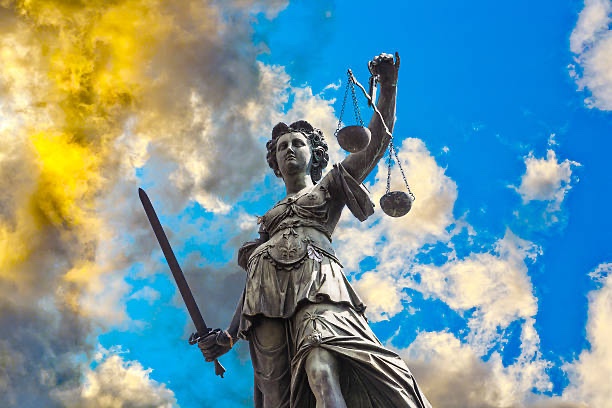
This case casts a light on what can happen when a board of judges is out of touch with reality, or when the legal system does not use the same language as the general population.

It is a huge concern that a group of middle-aged men are incapable of equating the word ‘snippa’ and the proposition ‘inside’ – especially when expressed by a child. It seriously feels like they all need some education in female anatomy as well as in linguistics.

This case shows us, yet again, how the legal system places the responsibility to prove guilt on the victim of the crime and not the perpetrator – ‘she didn’t express herself clearly’, ‘she wore provocative clothes’, ‘she used the wrong word’, ‘she’d been drinking’, ‘she didn’t say no’.

We will see what the long-reaching consequences of this decision are. Hopefully an appeal will come, and hopefully a modernisation of the legal system. As they say, watch this space….

It’s Fat Tuesday – Swedish style!

Today it’s ‘Fat Tuesday’ in Sweden, known as Shrove Tuesday or Mardi Gras around the world.

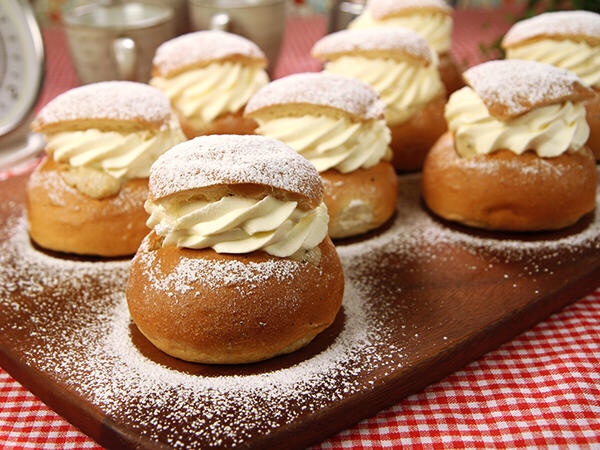
While in the UK we eat pancakes (today is even called Pancake Day) and in Latin America they scoff down fried bread, Swedes celebrate by eating the traditional cream Lent bun – the ‘semla’. 40 million of them every year! I’m also clearly going to indulge. In fact, my mouth is watering just writing this post.

The semla is a creamy bun filled with delicious almond paste. Traditionally, they were only eaten in Sweden to commemorate the start of Lent and the great Fast, leading up to Easter. In the south of Sweden, they still refer to them as ‘fastlagsbullar’ – Shrovetide buns. Nowadays however, semlas are usually sold anytime between Christmas and Easter.

I just love them. I could eat a barrel load. But I’d end up looking like a barrel if I did. I love the taste of them, and the feeling of luxurious indulgence. I also love the knowledge that as you take a bite into a creamy semla, you are biting into over 500 years’ history of Scandinavian baking.

The word ‘semla’ comes from the Latin ‘simila’ which means fine flour and originally referred just to the bun without any filling. As long ago as the 1500’s, bakers started to hollow out the middle of the bun and fill it with cream and butter. As ingredients became more available, bakers started adding almond and cardemon and the type of semla that we know today developed towards the end of the 1800’s. After rationing of sugar and dairy products ceased at the end of WW2, the semla took off and became very popular.

Newspapers often have the ‘Semla of the Year’ award, and nominate the best semla in town. Consequently, Swedes flock like sugar-addicted lemmings to the winning bakery, and you can stand in a queue for an hour to get your hands on one.

Nowadays the semla trend has reached new heights. Every year bakers around the country try to launch new types of semla, with their own spin on it -for example, the semla wrap, the semla burger, the semla layer cake, the semla cocktail, semla ice cream, semla nachos, semla langos, the chocolate semla, the vanilla semla, the lactose-free, gluten-free vegan semla. In 2021, the gross-sounding fermented Baltic herring semla was revealed.

But I’m a traditionalist in this matter. Give me a round fluffy cardemon-scented wheat bun brimming over with whipped cream and almond paste.

And give it to me NOOOOWWW!!!

Sweden’s Freedom of Expression – a cornerstone of democracy.

Given recent provocative manifestations, some people are starting to question Sweden’s freedom of expression laws. This criticism is even being used as a way to prevent the ratification of Sweden’s membership of NATO.

English writer Evelyn Beatrice Hall wrote in her biography of Voltaire – ‘I disapprove of what you say, but I will defend to the death your right to say it’. This phrase is frequently used to describe the principal of freedom of speech.

Sweden’s democracy is built on the principle of freedom of expression. It is a fundament of society, together with freedom of information, freedom to demonstrate and freedom of assembly. The individual’s right to freedom of religion is also strongly protected by the Constitution. Freedom of Expression is also enshrined as Article 10 in the Human Rights Act.

There are people in Sweden with, in my opinion, disgusting views, who manifest these in public demonstrations. However, under Swedish law, they have a right to express what they believe. I don’t have to agree with what they believe – that is also my right.

Sweden’s freedom of expression is a ‘constitutionally protected right including the right to express thoughts, opinions and feelings through speech, writing or images without interference by the authorities.’

Freedom of expression does not however mean the freedom to always say practically anything at all. For example, this freedom ‘does not extend to slander or committing an act involving threats or agitation against a national or ethnic group. On the other hand, religions as such are not protected against expressions of opinion that challenge religious messages or that may be perceived as hurtful to believers.’

To be honest, I would probably prefer some conservative opinions not to be expressed, as I feel they are deliberately provocative and lead to agitation and unrest. However, without a doubt, I would rather live in a country where individuals are free to express what they think, than in a country where religious or political powers suppress this.

If we start to limit freedom of expression, and censor opinion, we are dismantling our democracy. And where does it end? We don’t have to look very far to get the answer…..

Sweden’s 20th day of Christmas – it’s officially over!

Today is the official last day of Christmas in Sweden. Known as ‘Tjugondedag jul’ (twentieth day of Christmas) or ‘tjugodag Knut’ (twentieth day Knut), it marks the twentieth, and final, day of the festive season.

The name ‘Knut’ comes from the fact that today is St Knut’s Day in Sweden – commemorating the Danish king who was assassinated in 1131. One of laws Knut introduced was that nobody should fast during twenty days of Christmas, and that January 13 was the official end of the period.

In Sweden, today is the day when Christmas should be ‘danced out’. Traditionally, the Christmas tree is removed in a process called ‘julgransplundring’ (Christmas tree plundering), in which Swedes remove decorations, eat the edible ones, dance around the tree and throw it out. This is known as the St Knut’s Party and originated in the mid 1800’s.

On a more practical note, the discarded Christmas trees are gathered by the local councils and burned to provide heating or used on the traditional bonfires in April.