When Swedish men trivialise the problem

Metoo

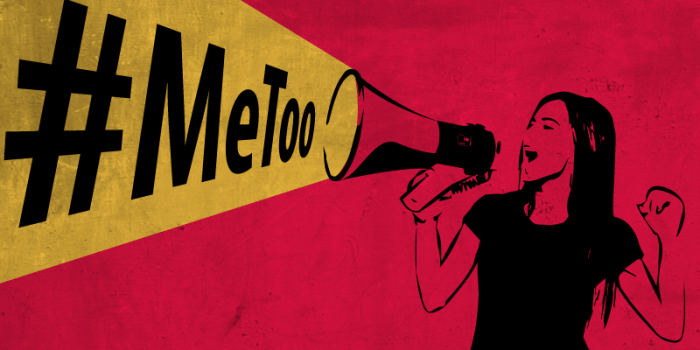
Sweden is the country that brands itself on gender equality. So good is the Swedish PR  machine that people outside of Sweden believe it and even the Swedes have bought into themselves. It’s hardly astounding then that when the global #MeToo movement accelerated in Sweden, it exploded in society like a molotov cocktail. In all walks of life, in all professions, Swedish women are coming out with testimonies of physical abuse, mental terror, sexual misconduct, rape, harassment, assault, abuse of power – at the hands of men. And it is sending shock waves through the whole of the country.

Today, a piece of research carried out on behalf of Sweden’s largest news channel was released. Over a thousand people were asked questions in relation to the #MeToo phenomena. In answer to the question, ‘I feel that it is over-exaggerated’, 45% of the men answered ‘yes’. In other words, almost half of Swedish men (in this survey) think that the #MeToo movement is exaggerated!

What is this about? Why are there so many men who think that just because they haven’t experienced the problem, the problem doesn’t exist. Is it self preservation? Arrogance?  Have they bought in to the Swedish illusion of gender equality? Whatever it is, it would seem that these men lack the ability to empathise with any other perspective on life than their own. They cannot see the situation from another perspective – or relate to the female experience and point of view.

I think it’s a case of minimisation. In psychology, and in cultural awareness training, this is a term that we use to describe people’s behaviour when full denial isn’t an option. In the case of #MeToo, I would guess these men do not deny it. But they do question its legitimacy and frequency. Classic minimisation.

Minimisation can be defined as the downplaying of the significance of an event or emotion. It is a common strategy in dealing with feelings of guilt. Minimisation manifests itself in all sorts of ways, such as saying that a hurtful comment was only a joke or reducing somebody’s feelings by saying ‘it’s no big deal’ or ‘what’s the problem?’.

In this case, minimisation is happening on a society level. It is suggesting that there are just a few bad apples or rogues in an organization when in reality problems are widespread and systemic throughout society. Minimisation in this form is a conscious or subconscious tactic used to manipulate others, and ourselves. Perhaps for the subconscious guilt we men feel for being a part of the system.

Trivialising the experiences of the women is distasteful. I get it that it is scary when people are angry and when information that has been hidden for a long time starts to surface. But playing it down will only undermine the validity of the movement. And this movement needs to last.

A societal change is essential. And we men have an important role in it. We should stop suggesting that the #MeToo movement is over-exaggerated, or that women are using it as revenge, or it is a witch hunt against men. Instead, we should listen to the testimonies. We should be shocked by them. We should not accept it. And we should work to change attitudes towards women in Sweden.

Swedish men – get it together!

If equality is something you are proud of in Sweden – then start by believing what you hear. And be an example to men all over the world – ‘In Sweden, we don’t stand for this. In Sweden, we listen. In Sweden we will change.’
HIV in Sweden – testing and treatment is the best prevention

I belong to the so-called ‘AIDS generation’. When I was young, the AIDS epidemic broke out. Horrific images of ‘AIDS victims’ were broadcast on the tv. The words ‘plague’ and ‘terminal cancer’ were used frequently in the media. People were dying rapidly and horribly and without dignity. Sex was seen as dangerous. And HIV was a dishonour and a death sentence. In that context, it’s a wonder we ever had sex at all.

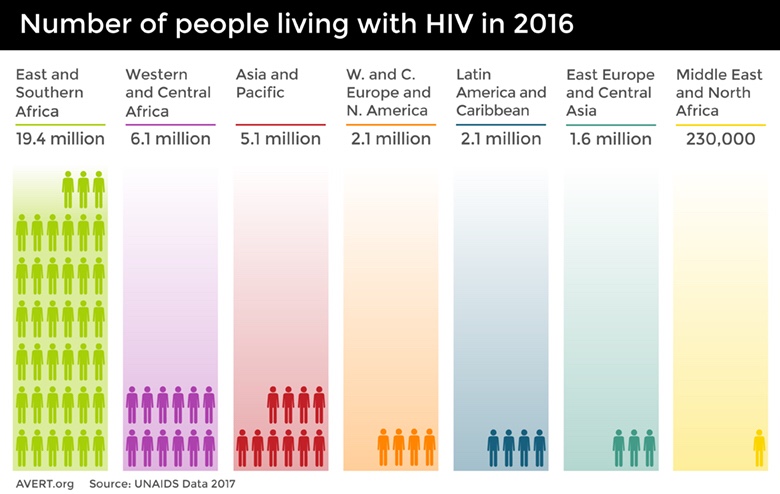
30 years later, and the the latest figures from 2016 are staggering. An estimated 36.7 million people in the world are living with HIV today. 30% of them don’t know their status. 1.8 million of them are children. Since the start of the epidemic, an estimated 78 million people have become infected with HIV and 35 million people have died of AIDS-related illnesses. In 2016, 1 million people died of AIDS-related illnesses.

These figures are baffling. Today, 1 December is World AIDS Day – a day we raise awareness, pay tribute to and remember all those people who have perished and who are living with HIV. They might be friends, family or strangers in distance lands. Today, we commemorate them.

In Sweden, the number of people in Sweden with HIV increases every year by 400-500 people. But the picture is brighter than it was 30 years ago. Today, there is treatment – treatment so effective that it can reduce virus levels to practically zero and minimise the risk of transmission.

Despite this, there is still a lot of ignorance and discrimination related to HIV. It might not be fatal in Sweden but it still is a chronic illness. Identified early, effective treatment means that patients can live full and healthy lives.

There is no vaccine or cure for HIV. There is however effective medicine today that stops the progression of the disease and prevents the destruction of the immune system if administered in time, thus also preventing the development of AIDS (Acquired Immune Deficiency Syndrome).

Most people in Sweden who get HIV today do not develop AIDS. Of course, this is a different scenario in many other places around the world where treatment and finances are lacking.

Getting HIV does not mean you are a drug addict or promiscuous. It is time to stop the shaming and discrimination. Anybody sexually active can get HIV.

A test is the only way to find out if you have HIV – available in Sweden at health care centres. Legally these can be taken anonymously.

To find out more about HIV in Sweden go to http://www.hividag.se

Www.avert.org provides more information about HIV on a global scale

This evening in Maria Magdalena church on Hornsgatan in Stockholm there is an AIDS memorial organised by HIV Sverige. 18.00.

Remember testing and treatment is the best prevention!

Help me spread this message by sharing this blog, and following my page on FB. Thanks!

Surviving November in Sweden

mörkt3

I’m looking out of my window into the blackness of the Swedish afternoon. It’s not even 4pm yet, and the weak rays of light that illuminated the day have long gone. It’s like somebody literally turned off the light on their way out.

This is November in Sweden – one of the darkest times of the year in Sweden. The night blanket roles in over the country mid afternoon and keeps its grip until mid morning the next day. Far up in the north of Sweden, the sun barely peeks over the horizon.

It can be a challenging time for those of us who live here – this period before the snow and the Christmas decorations light up the streets and windows.

Since language develops to describe our environments, it makes sense that in Swedish there are many words to describe the darkness.  Native Swedes can instinctively feel the difference between these words, but those of us who have Swedish as a second language have to resort to a dictionary to understand the nuances.

The word ‘svart’ is ‘black’ in Swedish. And there are several types of black – there’s ‘becksvart’ (pitch black), ‘korpsvart’ and ‘ramsvart’ (raven black) and there’s ‘kolsvart’ (coal black). I’m sure there are more, please let me know if you have any others.

But there are also lots of other words that describe the darkness. I’ve tried my best to translate some of these below.

  • Skymning – nightfall
  • Dunkel – dim
  • Skumrask – half dark
  • Sollös – without sun
  • Töcknig – misty darkness
  • Molndiger – cloudy darkness
  • Ljusfattig – poor light
  • Dyster – gloomy darkness
  • Grådaskig – dingy

With all these words in their vocabulary, some people complain about the darkness. And who can really blame them? It is a tough period to get through. The darkness can go a long way towards explaining the stereotypical Swedish melancholy.

So how to survive it? Maybe it’s about shifting perspective?

In the words of the well-used, and highly consoling Swedish expression:

‘Det är bättre att tända ett ljus än att förbanna mörkret.’

It is better to light a candle than to curse the darkness!

100 years of Swedish actresses who conquered Hollywood

alicia and greta

It can hardly have escaped anyone’s attention that Swedish actress Alicia Wikander is currently the sweetheart of Hollywood. Receiving an Oscar, marrying film star Michael Fassbender, coupled with fantastic acting ability, grace and poise, has positioned her firmly as the actress of her generation.

As I read about Alicia, I became curious about other Swedish actresses who have conquered Hollywood. To my surprise, she is the latest in a list of Swedish actresses stretching back 100 years. I found that there was at least one Swedish actress who broke through per decade (with questionable exception of the 90’s) and who made the Transatlantic step from Nordic success to international recognition and fame.

Here’s the list,

  • 2010s – Alicia Wikander
  • 2000s – Noomi Rapace
  • 1990s – Urma Thurman (pushing it I know – she has roots in Trelleborg)
  • 1980’s – Lena Olin
  • 1970’s – Maud Adams
  • 1960’s – Ann Margret
  • 1950s – Anita Ekberg
  • 1940’s – Ingrid Bergman
  • 1930’s/20’s – Greta Garbo (dominated the 20’s and 30’s)
  • 1920’s – Sigrid Holmquist
  • 1910’s – Anna Q Nilsson 

Other internationally-famous Swedish actresses, past and present

  • Rebecca Ferguson (2010’s)
  • Sofia Helin (2010’s)
  • Malin Åkerman (2000’s)
  • Britt Ekland (1960’s)
  • Viveca Lindfors (1950’s)
  • Zarah Leander (1940’s – Europe, refused to relocate to USA)

Maybe you have a favourite that I have missed out? If so, who?

How Sweden’s population stacks up


sweden-population-pyramid-2016

One way of understanding the present and future challenges a society is facing is to look at their demographic and an interesting method of presenting this information is in the form of a population pyramid.

According to ‘The World Factbook’ which is information gathered by America’s CIA, the population pyramid, related to age, for Sweden looks as above.

In a socialised society like Sweden, this picture can tell us several things:

  • Women in Sweden seem to live longer than men.
  • There are more men than women in their 20’s in Sweden. So if you are attracted to men, Sweden could be a great place to visit!
  • For the last 10 years there has been an increase in births in Sweden. This is good as these citizens are future workers whose tax contributions will support the pressured welfare state!
  • A potential problem may arise for Sweden in 10-15 years when the largest population group (currently 50-54) will retire and start taking out their pensions. A smaller group of workers will be left to support the growing number of pensioners. This suggests birth rates and immigration need to increase!

Any other conclusions you can draw from this information?

Please share below…


So, what is wrong with the Swedes?

perfection

Dipping into a book about Swedish culture, the opening paragraph starts this way…

‘In the world at large, especially in the English-speaking world, the Swedes seem to be universally popular. Their clean-cut profile as honest, caring, well-informed, efficient plodders who produce quality goods delivered on time sits well with their frequently well-groomed appearance, good sense of dress and (forgive the stereotyping) blond hair and blue eyes. Their English, grammatically proficient, is clean and crisp, like that of Scots who went to Oxford. They have impeccable manners and say all the right things – for the first 15 minutes. It is somewhat surprising, therefore, to discover that they are unpopular inside the Nordic area. The fact that none of the Swedes’ neighbors – Denmark, Norway, Finland – have any undue reputation for aggressiveness makes their antipathy all the more unexpected. What is wrong with the Swedes?

This is a question which the Swedes themselves have been trying to answer over the last few decades.”

So I am handing the question over to you, my dear readers.

Now’s your chance! What is wrong with the Swedes?

Please post your answers in the comments below, or on my Facebook page. Feel free to also share this blog and spread the question to a wider audience.

Swedes, and non-Swedes, are all welcome to comment! But please keep a respectful tone!

A casebook example of civil courage

baudin-jpg

Sometimes the best thing we can do is protest with our wallets.

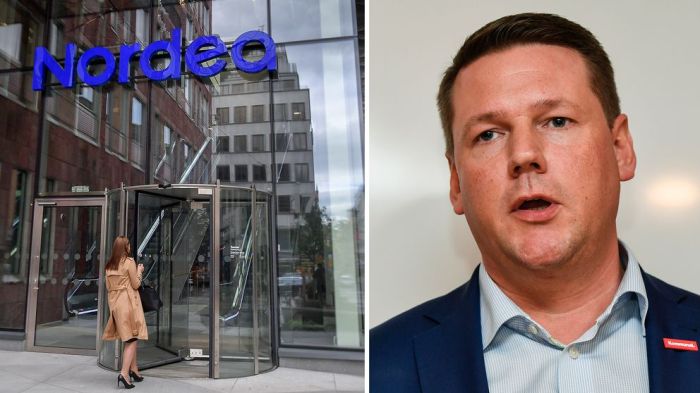
Swedish bank giant Nordea announced recently that they are moving from Sweden to Finland because of a new bank tax that the Swedish government is planning to put in place. The final decision will be made at an annual meeting next year. The threat to move has caused a lot of hoo-ha from both sides of the equation – those who criticise the bank for tax evasion and greed, and those who criticise the government for forcing companies to leave Sweden due to unattractive taxation laws.

Criticising the banks is Sweden’s largest trade union ‘Kommunal.’ – the union that represents council and municipal workers. Just today they announced that if the move happens, they will remove all their money from the bank. We are not talking about a small amount of money either. The amount is one billion Swedish crowns.

‘ We choose banks that reflect our morals and values and who act responsibly. Neither Nordeas MD or board do this,‘ says Kommunal’s chair Tobias Baudine

Kommunal joins other trade unions ‘Handels’ and ‘Seko’ who have also decided to leave Nordea and take with them investments to the value of half a billion Swedish crowns respectively.

Agree or disagree, this is definitely a great example of moral and civil courage. Sometimes as consumers, the best thing we can do is protest with our feet and our wallets.

  • If a business is acting in a way that is contradictory to our values and beliefs then leave them as a customer.
  • If a newspaper is spreading lies and hate, do not buy it or go to its website.
  • If an industry is employing dubious methods, then stop consuming their product.

Do not fund hate. Do not fund greed. Do not fund unethical behaviour (whatever that means for you).

By taking a stance, we have the power to change the world around us. If only we would realise it.


Weird Swedish rhubarb

rhubarb

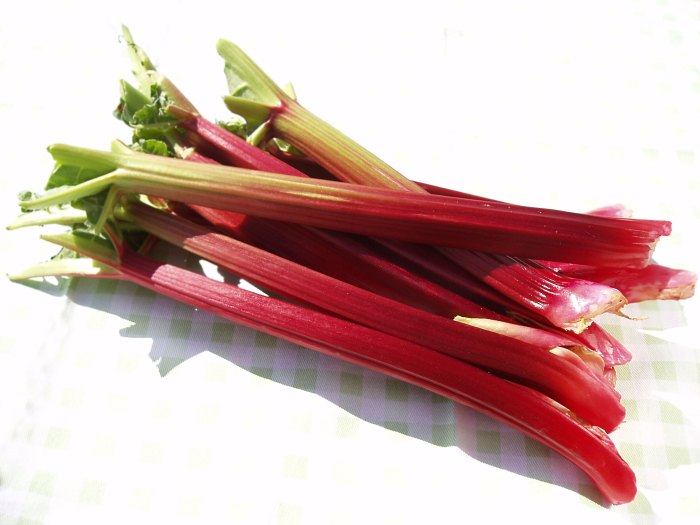
Watching TV this morning, I heard an expression I have never heard before in Swedish. It was an idiom – ‘att lägga rabarber på nåt’. Translated into English directly that is ‘to put rhubarb on something’.

This is a great example of an idiom and the fascinating thing about idioms is when translated directly, they mean nothing to those who are not initiated. But they have a clear and obvious meaning to those who understand its context. ‘Att lägga rabarber på nåt’ in English idiom would be something like ‘to stake a claim on something’ – in itself an idiom.

But why are Swedes putting rhubarb on things when they want them for themselves? Isn’t that a bit weird? Not when you understand where the saying comes from.

From the beginning, the expression was ‘att lägga embargo på nåt’ – embargo not rhubarb. The word embargo at that time was an unknown, strange word borrowed from Spanish and it meant ‘confiscate’. As it was an unusual word, it became quickly switched out for a more familiar similar-sounding one and ’embargo’ became ‘rabarber.’


What a discovery in a grave tells us about Swedish equality

female viking

Outside of Stockholm, there is an island called Björkö. On this island is a former Viking settlement called Birka. It is well worth a visit and is an active, on-going archeological site where new discoveries are constantly being made.  The area contains 3000 Viking graves, many containing high ranking warriors. Until recently, the presumption has been that these hold male remains but Swedish scientists have now revealed that the body of a warrior long presumed to be male is, in fact, female.

Scientists have assumed the skeleton to be male due to the status symbols buried along side it. However, after carrying out a DNA analysis, researchers from Stockholm University announced that the 10th Century skeleton is the first confirmed female high-ranking Viking warrior.

According to the researchers, this finding  “provides a new understanding of the Viking society, the social constructions and also norms in the Viking Age.”

“Our results – that the high-status grave on Birka was the burial of a high ranking female Viking warrior – suggest that women, indeed, were able to be full members of male dominated spheres.”

So it seems that gender equality in Sweden is not a new-found invention. It is something that stretches back, in its way, over many decades. Today, Sweden is amongst the top countries in the world to lead the Gender Equality Report. All cultural behaviour we see today stems from history and often from how we needed to survive as a society. Maybe today’s gender equality in Sweden started with the Vikings?

English words that tickle the Swedes

laughing minions

I have written a lot about funny Swedish words, such as prick, fart and slut.

I was wondering the other day about how many funny English words there are….words that Swedes find funny? To be honest, I could only actually think of a few.

Please help me to add to this list!

English words that Swedes find funny

  • Pink – a delightful color in English – means pee in Swedish
  • Kiss – a gesture of love in English – means pee in Swedish
  • Goodbyes – as in ‘saying your goodbyes’ – means good poo in Swedish
  • Pippa – the posh girl’s name as in Pippa Middleton – means to shag in Swedish
  • Bra – as in supportive underwear – means good in Swedish
  • Fan – a tool for cooling us down – means fuck (as in damn) in Swedish
  • Rap – the music form – ironically means burp in Swedish
  • Skit – as in a satirical sketch – means shit in Swedish