On 6 June 1523, Gustav Vasa was crowned King of Sweden. He was one of the few survivors of the Stockholm Bloodbath, in which his father and 80 other nobles were murdered, Game of Thrones style.
He ruled the country until 1560. During his reign, he released Sweden from the Kalmar Union consisting of Sweden, Denmark and Norway. He also turned Sweden from a catholic country into a Protestant one, with the monarch and not the pope as head of the church.
6 June is another significant day in Swedish history – on 6 June 1809 the country signed a new constitution. This lay the foundation for Sweden’s current status as an independent democracy and was in place until 1974.
The constitution returned political power to the parliament after King Gustav IV Adolph was deposed in a military coup in 1809. He was the last Swedish monarch to rule over Finland. After him, the crown passed not to his children but to his uncle, Charles XIII. Charles had no legitimate heir, which set into motion the quest for a successor. This was found the following year in the person of Jean-Baptiste Bernadotte, the first monarch of the present royal house.
For these two reasons, Sweden celebrates its National Day today – June 6th. It was declared in 1983, and was first celebrated as a public holiday in 2005.
The day is celebrated with various events up and down the country.
Today, Good Friday, is called ‘Long Friday’ in Swedish – ‘Långfredag’. It commemorates the long day and the long suffering that Jesus endured on the cross, according to Christian teachings. It is a public holiday, and for many years, everything was closed in Sweden making the day deliberately long and boring for many people. Now, most things are open.
‘Long Friday’ is a day of cooking, shopping and going for walks. Some people attend church services. For traditionalists, salted fish is the food of the day – such as salted herring or salted salmon. This symbolises the thirst that Jesus felt on Golgotha. Fish was also the only food that historically was available for people to eat in Sweden at this time of the year.
In English, this day used to also be called Long Friday, but at some point in history it changed to Good Friday. Good in this context means Holy.
Today is ‘Maundy Thursday’ in English and in Swedish it has the unusual name of ‘Skärtorsdag’. The word ‘skär’ means ‘pink’. But does that make today Pink Thursday? Actually not. The word ‘skär’ has another meaning that might be more relevant – ‘clean’ – and it is a biblical reference.
If you know your bible stories, today being the day before Good Friday is the day when Jesus gathered his disciples together for the Last Supper, introduced communion, and was later betrayed by Judas, and condemned to death on the cross.
Prior to the Last Supper, Jesus washed the feet of the disciples. And he washed them clean – a symbolic metaphor for purification and the washing away of sin.
So, today isn’t Pink Thursday – it’s Clean Thursday. In fact, in English ‘Maundy Thursday’ also relates to the same act in the bible – the act of ritual cleaning is known an The Maundy.
However, in Sweden, today isn’t that much about washing feet – it’s more about witchcraft!
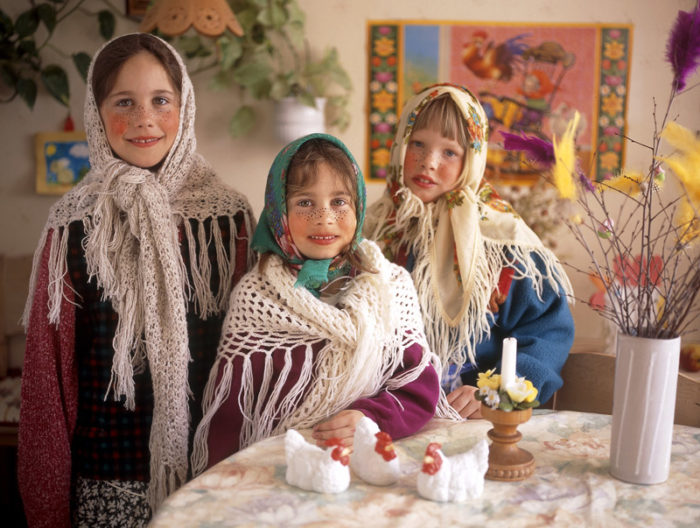
Today is celebrated by children dressing up as witches, rather like we do in the UK and USA on Halloween. Children go door to door in their outfits begging for sweets. This tradition originates from the belief centuries ago that the Skärtorsdag was the night of the witches, where these wicked hags would climb onto their broomsticks and fly to a mountain called Blåkulla. It was a night of danger and evil, and Swedish people would bar their doors to their houses and barns and leave outside gifts that would make the witches’ journey easier – food, milk, clothes, broomsticks. Today, that translates into the Swedish version of trick or treating.
So if you celebrate by cleaning, or by dressing up as a witch or by eating candy – you’ll be kicking off your Easter the Swedish way!
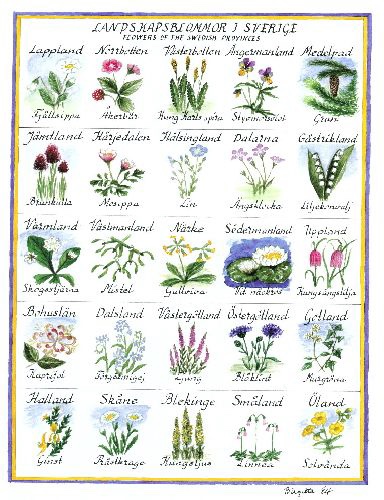
Since 1908, each of Sweden’s 25 provinces (landskap) has its own animal, coat of arms, flag and flower to define its identity.
Stockholm, for example, is on the border of two provinces – Uppland and Södermanland. The flower of Uppland is the beautiful ‘kungsängslilja’ (snake’s head fritillary). Södermanland has the floating ‘vit näkros’ (white water lily).
Other official provincial flowers include heather, daisy, honeysuckle, forget-me-not, lily of the valley, cowslip and, interestingly in Blekinge, they have the English oak.
In 2021, Sweden’s new national flower was chosen in a public vote. The winner? The colourful and ubiquitous harebell, also known as the small bluebell (in Swedish Blåklocka’.)
I’m from County Durham in the UK, where we have the vivid spring gentian as our county flower. The UK national flower is, since the 1400’s, the Tudor rose.
What’s the national or provincial/county flower where you come from?
On 6 June 1523, Gustav Vasa was crowned King of Sweden. He was one of the few survivors of the Stockholm Bloodbath, in which his father and 80 other nobles were murdered, Game of Thrones style.
He ruled the country until 1560. During his reign, he released Sweden from the Kalmar Union consisting of Sweden, Denmark and Norway. He also turned Sweden from a catholic country into a Protestant one, with the monarch and not the pope as head of the church.
6 June is another significant day in Swedish history – on 6 June 1809 the country signed a new constitution. This lay the foundation for Sweden’s current status as an independent democracy and was in place until 1974.
The constitution returned political power to the parliament after King Gustav IV Adolph was deposed in a military coup in 1809. He was the last Swedish monarch to rule over Finland. After him, the crown passed not to his children but to his uncle, Charles XIII. Charles had no legitimate heir, which set into motion the quest for a successor. This was found the following year in the person of Jean-Baptiste Bernadotte, the first monarch of the present royal family.
For these two reasons, Sweden celebrates its National Day today – June 6th. It was declared in 1983, and was first celebrated as a public holiday in 2005. And this year celebrates 500 years of independence!
The day is celebrated with various events up and down the country.
In Swedish, there is a term ‘vargtimmen’, which translates as hour of the wolf. It is used to specifically describe the time between 03.00-04.00
Although it sounds like an ancient concept, it was actually coined by Swedish film director Ingemar Bergman in his 1968 film of the same name. Or so he claimed. He describes the ‘vargtimmen’ in the following way:
‘The hour of the wolf is the hour between night and dawn. It is the hour when most people die, when sleep is the deepest and nightmares the most vivid. It is the hour when insomniacs are hunted by their worst anxieties, when ghosts and demons are at their most powerful. The hour of the wolf is also the hour when most babies are born’.
Other academics believe the concept existed earlier than Bergman’s time, and that it refers to the fact that farmers would get up in the night to protect their wild stock from hunting wolves.
Whatever the origin, the ‘hour of the wolf’ has a definite mystical and almost terrifying implication. When was the last time you lay awake at 03.00 am and chased your demons?
Today, the day before Good Friday, is called in Swedish ‘Skärtorsdag’. The word ‘skär’ means ‘clean’ – and it is a biblical reference.
If you know your bible stories, today is the day when Jesus gathered his disciples together for the Last Supper, introduced communion, and was later betrayed by Judas, and condemned to death on the cross. Prior to the Last Supper, Jesus washed the feet of the disciples. And he washed them clean – a symbolic metaphor for purification and the washing away of sin.
So, today is Clean Thursday. In fact, in English ‘Maundy Thursday’ also relates to the same act in the bible – the act of ritual cleaning is known an The Maundy.
However, in secular Sweden, today isn’t that much about religious observance – it’s more about witchcraft! Today is celebrated by children dressing up as witches and going door to door in their outfits begging for sweets.
This tradition originates from the belief centuries ago that Skärtorsdag was the night of the witches, where these wicked hags would climb onto their broomsticks and fly to a mountain called Blåkulla. It was a night of danger and evil, and Swedish people would bar their doors to their houses and barns and leave outside gifts that would make the witches’ journey more expedient – food, milk, clothes, broomsticks. Today, that translates into the Swedish version of trick or treating.
Long before the Christianity swept over Europe, the Norse people celebrated the Midwinter Solstice in a festival called Yòl. (Yule/jul). Eventually this festival blended with Christmas and gave us many of the traditions we have today.
So, what are 5 ways in which the Norse traditions impacted Christmas?
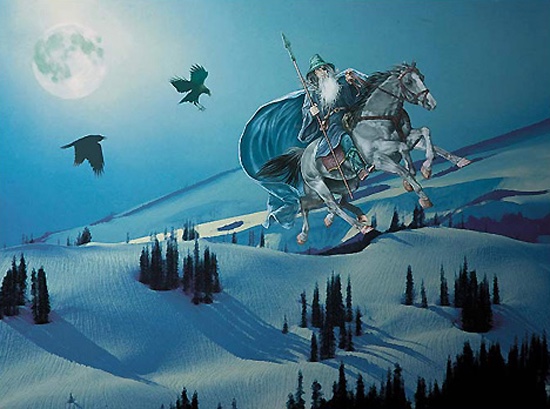
1) Father Christmas – Odin, King of the Norse Gods, was a bearded old man in a hat and cloak. He rode Sleipnir – an 8-legged horse – across the night sky and delivered gifts to those below. This morphed into the Christian St Nicholas, and 8 reindeer to complete the saga of Santa.
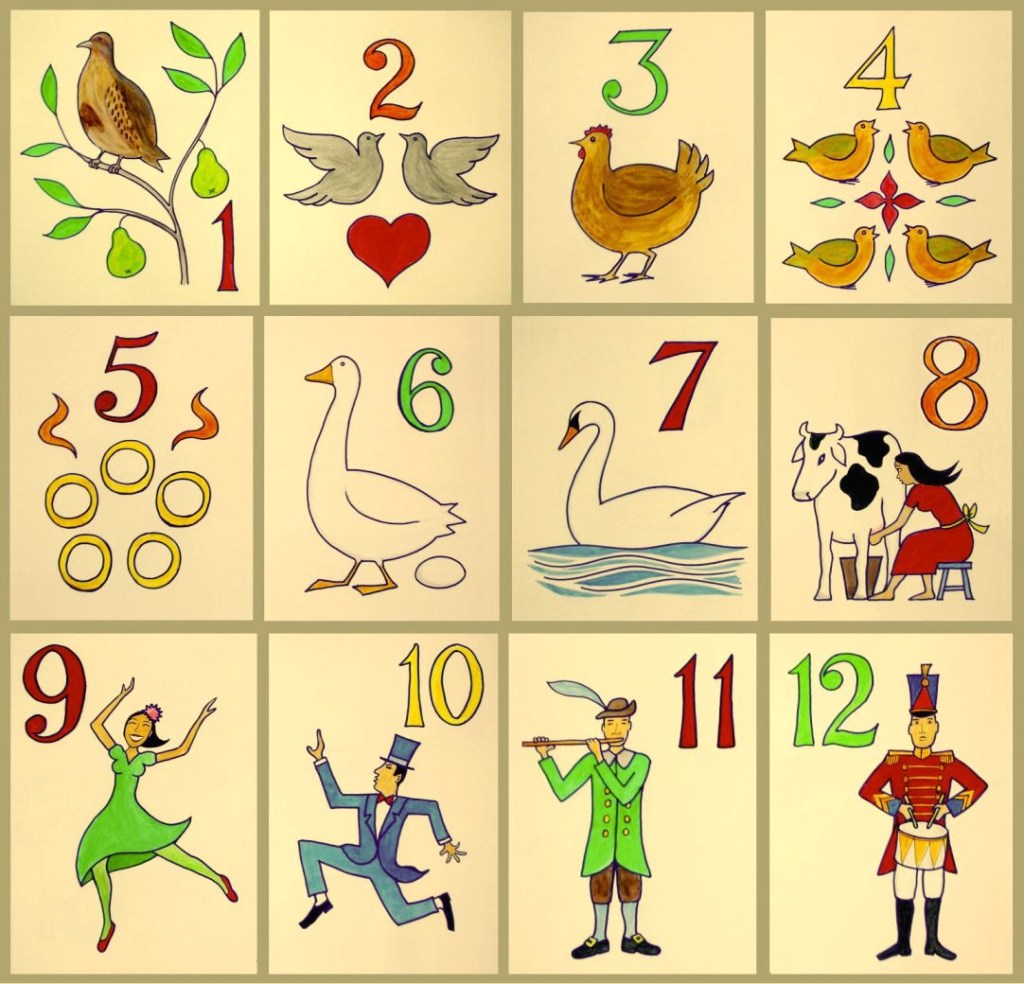
2) The Twelve Days of Christmas – the ancient Norse celebrated their midwinter festival for twelve days, beginning on the day of the winter solstice. It was believed that Odin rode the sky for these 12 days so it was forbidden to hang out laundry in case he got entangled. This was known as ‘the Great Hunt’.
3) Christmas Tree – many of us know that the indoor Christmas tree originates in Germany and was made popular in the Victorian era. However, it in fact pre-dates this. The Norse people believed that evergreens were the divine plant of their sun God Balder (the son of Odin) because they remained green though-out the winter. They took this as a sign that spring was advancing. To encourage the oncoming season, they would decorate the branches of the trees with ornaments, runes and offerings of food. With Christianity, these decorations became stars, and other biblical symbols.
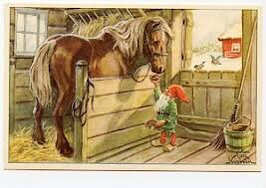
4) Christmas Elf – no story of Santa’s workshop is complete without his little helpers. In Norse mythology, there is the ‘nisse’ or ‘tomte’. These little creatures were small, bearded and wore little pointy hats. They were believed to live in the barns in the farmstead and they would guard the property and the inhabitants, and even fix broken things. They were loyal and industrious but you had to treat them with respect, otherwise their vengeance would be swift and angry. They also loved playing practical jokes and mischief, rather like the elves in Santa’s workshop. The word ‘elf’ comes from the Norse word álfar, which means ‘concealed people’.
5) Mistletoe – ever kissed somebody under the mistletoe? In doing so, you have fulfilled a Norse legend. In the legend, the God Balder had been prophesied to die. His mother, Frigg, in desperation, secured an oath from everything that they would not hurt him. However, she forgot to ask the mistletoe. The envious God Loki carved an arrow out of mistletoe and killed Balder. Frigg’s tears of sorrow fell onto the mistletoe turning the red berries white, and resurrected her son. She then vowed to kiss anybody who passed underneath it, and the plant came to represent love and renewal.
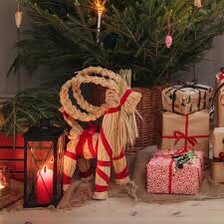
Another Norse influence on our Christmas celebrations is the Christmas Goat. The goat has lost its significance in most countries, but is still a symbol in Scandinavia, where it is a decoration made of straw. The goat originates in Norse tradition from the kid goat that was sacrificed in honour of Njord, the God of the Sea, the Weather and Prosperity. Later on, in Sweden, the Yule goat was believed to be an invisible spirit that would appear before Christmas to make sure that the holiday preparations were done correctly. Eventually, the goat took on the role of the gift giver, instead of or together with Santa Claus (called Jultomten in Swedish).
Other traditions that originate from the Norse jòl are the Christmas Ham, the Yule Log, the Yule Wreath, and Christmas caroling, or ‘wassailing’.
So, while the message of Christmas is the Christian story, many of the surrounding symbols and traditions are in fact from another source altogether.
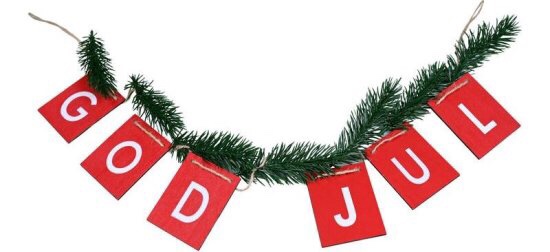
While the English word Christmas (Christ’s mass), and the German Weihnachen (Holy Night) are clearly connected to the celebrated Christian birth, the Swedish word ‘Jul’ has a much more vague origin.
Like with the English word ‘yule’, experts do not fully agree on where it originates. However, it is deemed likely that it comes from the Proto-Germanic word ‘jehwla’ which could have meant ‘party’ or ‘celebration’.
The word was taken early into the Nordics via the Old Finnish language in the form of ‘juhla’ meaning ‘festival’, and then again as ‘joulu’ meaning ‘jul’. There was already a big celebration of the winter solstice and the winter hunt around this time that was given the name ‘jol’ in Old Norse.
After the surge of Christianity through Europe in the 900’s, England and Germany aligned their word for Christmas, but in the Nordics they kept word ‘jul’. Instead they scheduled their pagan celebrations to occur at the same time as the Christian one, and eventually the two melted together. In the Nordic countries, we still see elements of the pagan ‘jol’ at Christmas time with the ‘Christmas goat’ for example.
In Sweden, Denmark and Norway, Christmas is called ‘jul’. In Finland, it is called ‘joulou’. In Iceland it is called ‘Jol’ and in Estonia, ‘joulud’.
Midsummer’s Eve is possibly the biggest public celebration in Sweden, and it’s happening this week on Friday. Swedes gather to eat, drink and be merry together.
So, what are the origins of Midsummer and why is it celebrated? Well, according to authors Po Tidholm and Agneta Lilja, the origins of Midsummer date back as far as the 6th century:
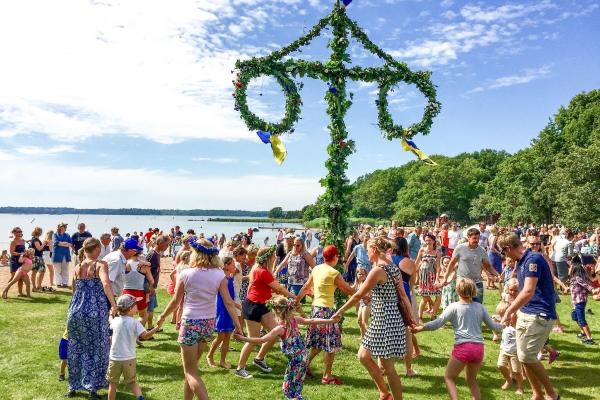
‘In agrarian times, Midsummer celebrations in Sweden were held to welcome summertime and the season of fertility. In some areas people dressed up as ‘green men’, clad in ferns. They also decorated their houses and farm tools with foliage, and raised tall, leafy maypoles to dance around, probably as early as the 1500s.
Midsummer was primarily an occasion for young people, but it was also celebrated in the industrial communities of central Sweden, where all mill employees were given a feast of pickled herring, beer and snaps. It was not until the 1900s, however, that this became the most Swedish of all traditional festivities.
Ever since the 6th century AD, Midsummer bonfires have been lit around Europe. In Sweden, they were mainly found in the southern part of the country. Young people also liked to visit holy springs, where they drank the healing water and amused themselves with games and dancing. These visits were a reminder of how John the Baptist baptised Christ in the River Jordan.
Midsummer Night is the lightest of the year and was long considered a magical night, as it was the best time for telling people’s futures. Girls ate salted porridge so that their future husbands might bring water to them in their dreams, to quench their thirst. You could also discover treasures, for example by studying how moonbeams fell.
Also that night, it was said, water was turned into wine and ferns into flowers. Many plants acquired healing powers on that one night of the year.’
There is still an element of magic in the otherwise well-organised Midsummer celebrations of today. One example is the erection of a large phallic flower-clad maypole, and the dancing around of said pole. This is an ancient fertility rite. Related to this, is the association of love to the festivities of Midsummer. In fact many Swedish babies are made around this weekend.
Another example is the gathering of 7 types of summer flower to place under your pillow at night. It is said if you do this, then your future husband will appear to you in your dreams.
And then there’s the light. On Midsummer’s Eve is doesn’t really get dark. Depending on where you are in Sweden, it ranges from a dim glow in the south to full on daylight in the north. In Stockholm, where I live, it is a magical dusky twilight that conjures up associations of witchcraft, druids and paganism.
So while today’s Midsummer might be a well-orchestrated gathering of friends and family, there is still some magic to be found if you look hard enough.






 Watching the Swedes