Swedish Midsummer – food and drink

Swedish Midsummer celebrates abundance and as such, a great deal of food and drink is consumed. After guests arrive and have their first drink(s), the wreaths start to get made, the potatoes peeled, strawberries topped and the maypole gets decorated with flowers and leaves. Once erected, and danced around, it’s time for lunch.

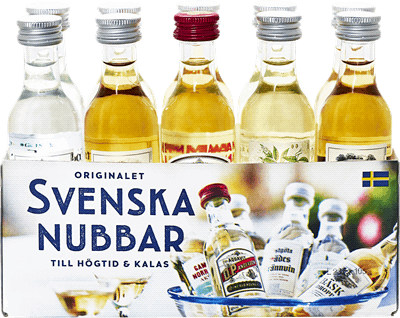
As far as drinking goes, ‘nubbe’, or snaps, is a common tipple accompanied by traditional drinking songs and washed down with beer. A popular brand of snaps is OP Anderson which is flavored with aniseed and fennel and is 40% proof. The drink has been around for 130 years on the market – the first snaps being sold in 1891! Another popular nubbe , the Danish Jubileums, is 40% proof and tastes of dill, coriander and bitter orange. There are also small-sized bottles than can be bought in fun packages that have a mixture of flavorings.
When it comes to the food, in the evening it has become popular in recent years to have a barbecue. But it is at lunch time when the traditional food is consumed, with a Midsummer smorgasbord (buffet).

On this buffet, it is common to find various types of pickled herring, soused herring, boiled new potatoes, gravlax with ‘hovmästare’ sauce, smoked salmon, Västerbotten cheese pie, crisp bread and mature cheese, chopped herbs, red onion, egg halves, ‘silltårta’ (herring cake), various sauces and mixes, fresh and smoked shrimps, fish roe.

As you can imagine, this food is very rich and fatty, which is why it is usually eaten together with the alcoholic snaps.

For dessert, the only thing to eat are Swedish strawberries and cream or a home-made strawberry cake. Anything else would be sacrilege. Some families also eat rhubarb pie.

After lunch, bolstered by the snaps, it’s usually time for garden games, a walk in the woods or a quick dip in the not-quite-yet-warm-enough lake or sea.

If the party lasts really late into the night, then there can also be a ‘vickning’. This is a ‘midnight meal’ designed to sober up drunk guests. It often includes some leftovers from the day, or can also be a very welcome hot dog. 🌭

Swedish National Day – a new king, an old king, a new constitution and 500 years of independence.

On 6 June 1523, Gustav Vasa was crowned King of Sweden. He was one of the few survivors of the Stockholm Bloodbath, in which his father and 80 other nobles were murdered, Game of Thrones style.

He ruled the country until 1560. During his reign, he released Sweden from the Kalmar Union consisting of Sweden, Denmark and Norway. He also turned Sweden from a catholic country into a Protestant one, with the monarch and not the pope as head of the church.

6 June is another significant day in Swedish history – on 6 June 1809 the country signed a new constitution. This lay the foundation for Sweden’s current status as an independent democracy and was in place until 1974.

The constitution returned political power to the parliament after King Gustav IV Adolph was deposed in a military coup in 1809. He was the last Swedish monarch to rule over Finland. After him, the crown passed not to his children but to his uncle, Charles XIII. Charles had no legitimate heir, which set into motion the quest for a successor. This was found the following year in the person of Jean-Baptiste Bernadotte, the first monarch of the present royal family.

For these two reasons, Sweden celebrates its National Day today – June 6th. It was declared in 1983, and was first celebrated as a public holiday in 2005.

The day is celebrated with various events up and down the country.

Baby we’re burning – Swedes, songs and Satanists

valbiorg

Tonight, the 30th April, in Sweden is Valborgsmässoafton. Yes, another one of those long indecipherable Swedish words.

This one translates as Walpurgis Eve, and is celebrated in many European countries such as Germany, Holland, the Czech Republic, Lithuania, Latvia, Estonia and Finland. 

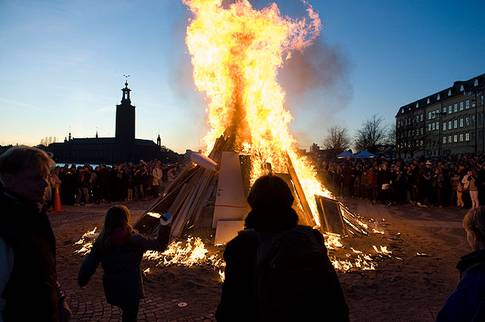
The name ‘Valborg’ is from an English Saint but, despite that, this isn’t really a religious celebration. It’s more to do with the welcoming of spring, and feels rather pagan actually. In the evening on Valborgsmässafton, Swedes gather around huge bonfires and listen to songs. These songs are in the form of traditional choir music designed especially for this occasion to shake off  the nasty dark winter and celebrate the burgeoning buds of the lighter season.

And like many traditions in Sweden, this one also has a rural origin. These bonfires are part of a Swedish tradition dating back to the early 18th century. On this day, farm animals were let out to graze and bonfires lit to scare away predators and other evil beings. This is rather ironic as Walpurgis Eve is also an important holiday in Satanism at it marks the founding of the Church of Satan.

But religion aside. On Walpurgis eve, we are joined in the knowledge that we survived another winter, and summer is coming!

A witch-filled Clean Thursday in Sweden

easterwitchmooon

Today is ‘Maundy Thursday’ in English and in Swedish it is called ‘Skärtorsdag’. The word ‘skär’ means ‘clean’ – and it is a biblical reference.

If you know your bible stories, today is when Jesus gathered his disciples together for the Last Supper. Prior to the Last Supper, Jesus washed their feet. And he washed them clean – a symbolic metaphor for purification and the washing away of sin.

So, today is Clean Thursday. In fact, in English ‘Maundy Thursday’ also relates to the same act in the bible – the act of ritual cleaning is known an The Maundy.

However, in Sweden, today isn’t that much about washing feet – it’s more about witchcraft!

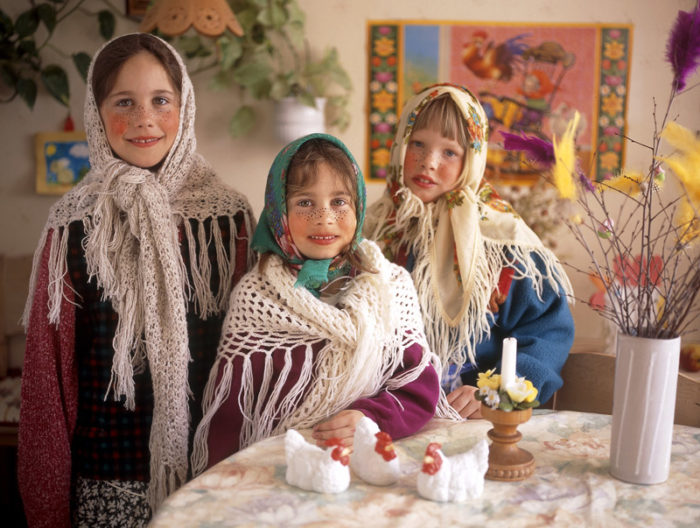
Today is celebrated by children dressing up as witches, rather like we do in the UK and USA on Halloween. Children go door to door in their outfits begging for sweets. This tradition originates from the belief centuries ago that the Skärtorsdag was the night of the witches, where these wicked hags would climb onto their broomsticks and fly to a mountain called Blåkulla. It was a night of danger and evil, and Swedish people would bar their doors to their houses and barns and leave outside gifts that would make the witches’ journey easier – food, milk, clothes, broomsticks. Today, that translates into the Swedish version of trick or treating.

paskkarringar-2-700x528

So if you celebrate by cleaning, or by dressing up as a witch or by eating candy – you’ll be kicking off your Easter the Swedish way!

Swedish astrology

The earliest astrology can trace its roots to 19th Century BC. Beginning in Mesopotamia, it later spread to Greece and Rome, and eventually Central and Northern Europe.

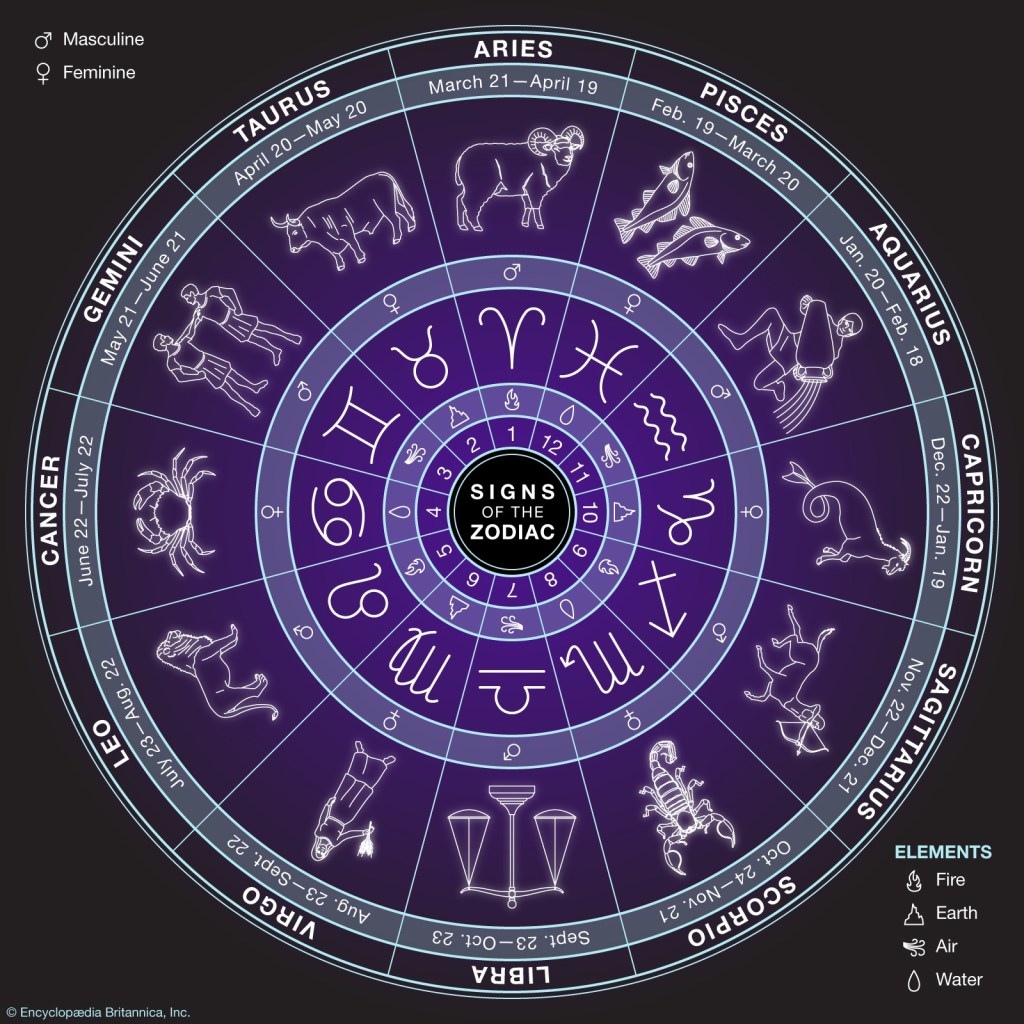
Western astrology has twelve signs, reflecting the month in which you were born. In English, these signs are named after the original Greek words. But not the Swedish names. Like much else in the Swedish language, the words for these signs are very literal. They are also in the definite form.

Aquarius – Vattumannen (the Water Man)

Pisces – Fiskarna (the Fish)

Aries – Väduren (the Ram)

Taurus – Oxen (the Oxe)

Cancer – Kräftan (the Crab)

Gemini – Tvillingarna (the Twins)

Leo – Lejonet (the Lion)

Virgo – Jungfrun (the Maiden / virgin)

Libra – Vågen (the Scale)

Scorpio – Skorpionen (the Scorpion)

Sagittarius – Skytten (the Archer)

Capricorn – Stenbocken (the Goat/Ibex)

Swedish Monsters: 10) the Troll

When I was at the open-air museum Skansen, I heard a story about mythical creatures. This started me on a series of Swedish monsters. Today, I wrap the series up with one remaining creature – the Troll!

Today – the Troll

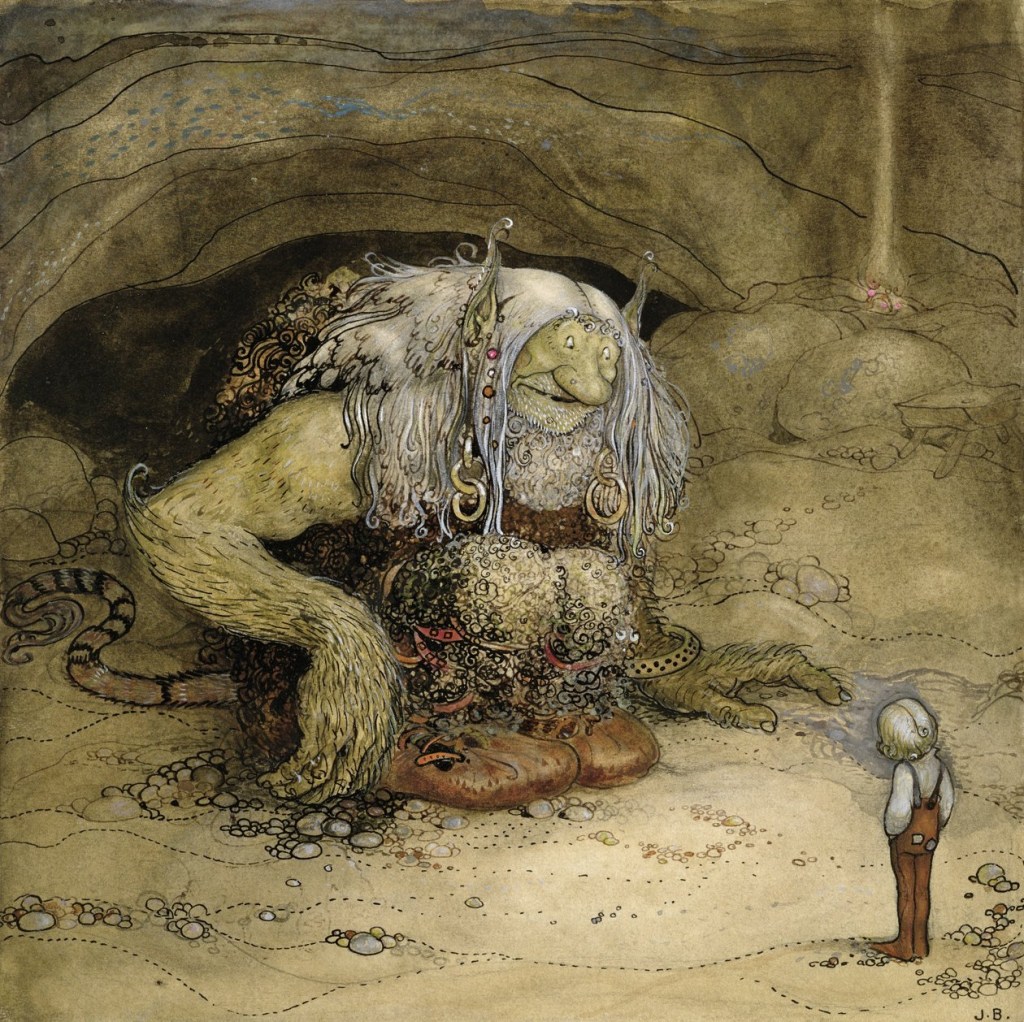
The trolls in Scandinavian legend are not the same as the cute shock-haired characters in the animated movies that came out in the late 2010’s. Oh no, they are something altogether more sinister.

According to legend, trolls are described as being extremely old, hairy, very strong, with bulging eyes and large noses. Some are giants and some are dwarves. They are depicted as slow and dim-witted. They are voracious – feared for eating livestock, and children.

However, noticing a troll isn’t always easy. Trolls can actually take the shape of anything, including human beings. Sometimes they have a tail that they hide under their clothes. They reside far away from human habitation but frequently kidnap people and overrun farmsteads and human dwellings.

Living in forests, mountains and caves, trolls are said to fear iron and steel. Placing items made of those materials on your threshold prevents them from entering.

Trolls are also said to turn to stone in the sunlight. Luring them out of their hideaways and into the light is a way to get rid of them. Petrified trolls are associated with stony Scandinavian landmarks such as Trolltungen (troll tongue) Trollstigen (troll path), Trollveggen (troll wall) and Trollberget (troll mountain).

Trolls have been sighted everywhere in Sweden – from Värmland to Småland, Norrland to Skåne. So be careful this summer when you are strolling through the forests of Sweden and Scandinavia!

Illustration: John Bauer

Swedish Monsters: 9) Skogsrå

When I was at the open-air museum Skansen, I heard a story about trolls. This got me thinking about other mythological creatures and monsters that inhabit Sweden. And a new series was born!

Today – Skogsrå

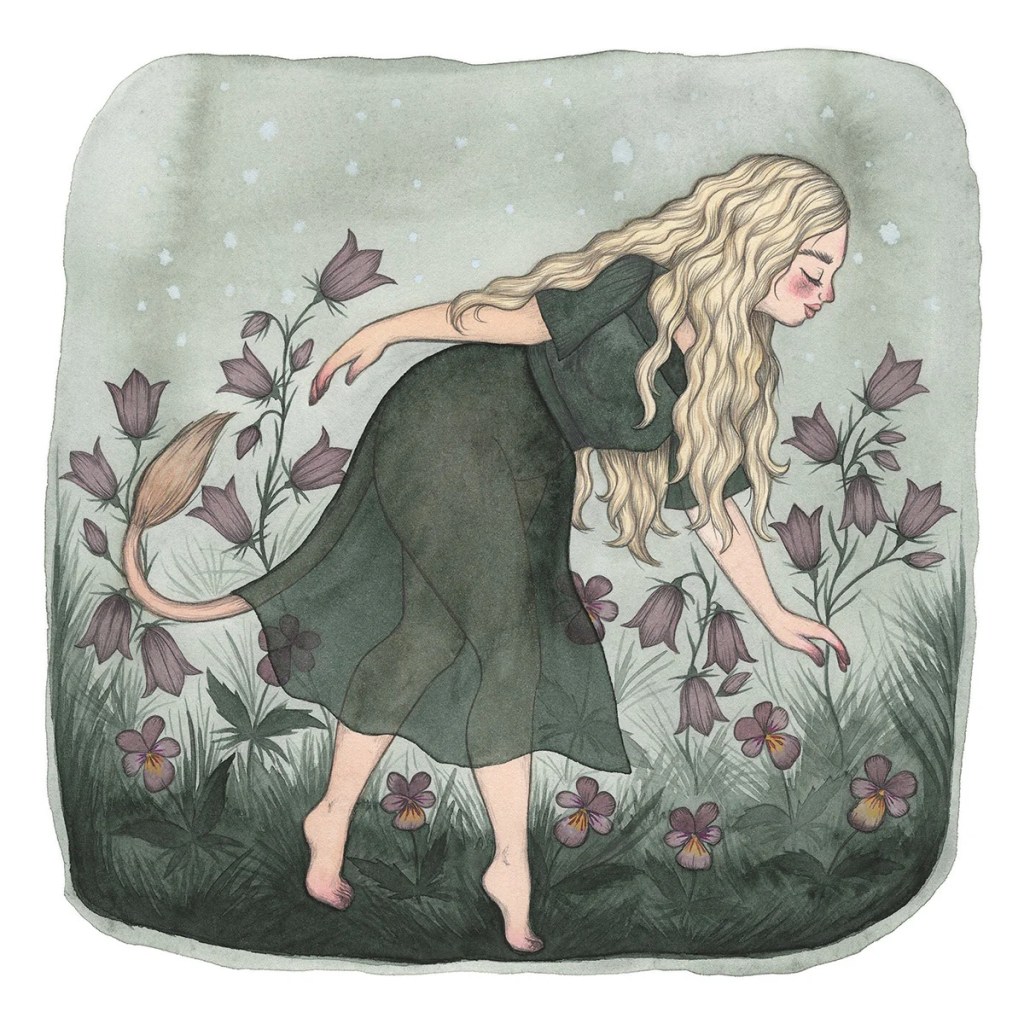
Another Swedish creature is the Skogsrå. A forest spirit, she is often depicted as a fair-haired beautiful woman, with the skill of seduction as her most prominent weapon. Using her skills, she lures men deep into the woods, to their peril.

The Skogsrå have hollowed-out backs, concealed from view. They also have a long cow’s tail. Of course, they have to also hide this from sight if their seduction is to work. The only way for a Skogsrå to lose her tail is if she gets married inside a church, when her tail will drop off, and she’ll transform into a human.

Similar to the legend of the sea-based Sirens, these forest nymphs lure men into the woods with their beautiful singing or harp-playing. They are also hypnotic dancers. It is said that if a human male has sex with a Skogsrå, he becomes sick and dies.

There are several ways to break the spell if you become bewitched by a Skogsrå. These include burning her with an ignited log and throwing tar in her face. To protect yourself, wear your clothes inside out and, under no circumstances give her your real name. If you do you will never break the enchantment.

Illustration: Kajsa Wallin

Swedish Monsters: 8) The Stalo

When I was at the open-air museum Skansen, I heard a story about trolls. This got me thinking about other mythological creatures and monsters that inhabit Sweden. And a new series was born!

Today – The Stalo.

The far north of Sweden, in the area known as Lapland, is home territory for the Stalo. According to Sami legend, this demon is a one-eyed giant troll that wears impenetrable black iron clothing. Stalo is rich, evil, and very strong. He hunts and devours people and reindeer. Locals who live nearby are expected to leave offerings on an altar to the giant. If they don’t, Stalo sends packs of wolves into the village to wound and kill its inhabitants.

However frightening he is, he is also not very intelligent and is easy to trick.

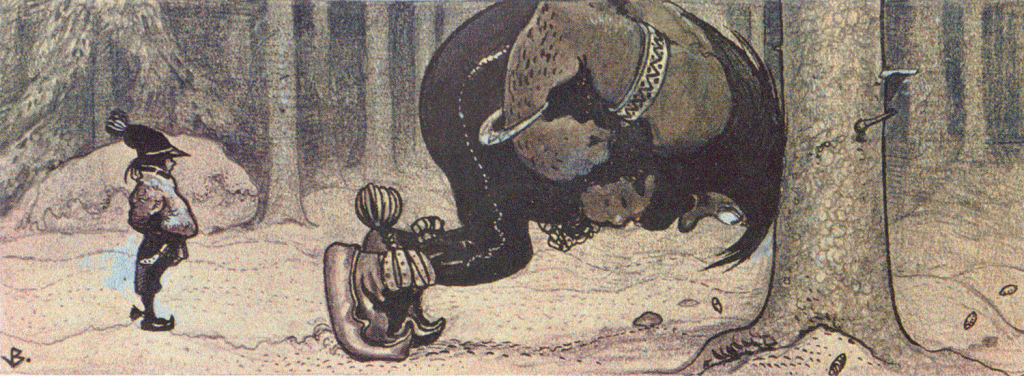
Legends exist that involve luring him onto a frozen lake, where he falls into a hole in the ice and can’t get up again. Yet another, depicted below, shows a boy called Kauras who tricks Stalo into a competition where he butts his head into a tree trunk, rendering himself unconscious. Other, more complex tales, describe children, who have been trapped by the Stalo, escaping by crushing his hands with boulders and pouring molten lead onto his face.


Image: John Bauer, Stalo and Kauras

Swedish Monsters: 7) Näcken

When I was at the open-air museum Skansen, I heard a story about trolls. This got me thinking about other mythological creatures and monsters that inhabit Sweden. And a new series was born!

Today – Näcken.

Summer is a time associated with bathing. But if you are bathing in-land, in a lake or stream or beck, keep an eye open for Näcken!

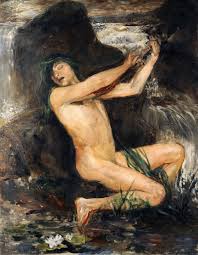
Näcken is a mythological creature in the shape of a naked man. He sits by waterways, or on lily pads, and plays beautiful music, often on a fiddle, but sometimes on a flute. With this music, he lures innocents into the water where they drown.

In certain legends, it is believed that Näcken can change his shape into, for example, a dragon, a worm or a beautiful white horse called Bäckahästen. As Bäckahästen, Näcken entices children to ride on his back and he carries them out the water to drown them. It doesn’t matter how many children there are, Bäckahästen’s back simply grows longer to accommodate them.

The name Näcken doesn’t come from the word ‘näck’ meaning naked in Swedish, as one might think. It comes from the Nordic word ‘nykr’ which meant ‘sea monster’ or ‘hippopotamus’.

So if you see a naked man playing a fiddle by the edge of a waterway – flee!

Painting: Ernst Josephson Strömkarlen

Swedish Monsters: 6) Torspjäsku

When I was at the open-air museum Skansen, I heard a story about trolls. This got me thinking about other mythological creatures and monsters that inhabit Sweden. And a new series was born!

Today – Torspjäsku.

It’s a shame that so much rain is forecast this week, because then you have to be on the look out for Torspjäsku – especially if you are on the island of Gotland.

This monster is a kind of giant troll that from the front looks like a kind, friendly and normal woman. However from the back, she is a hollowed-out tree trunk.

When it is thundering and lightning, Torspjäsku wants to take shelter inside a house to protect herself from the wrath of Thor. But whatever you do, don’t let her in, she is not very nice! In what way she is not nice, nobody knows as there are no survivors to tell the tale.

To protect yourself from this monster, put a piece of steel on your threshold, for example a pair of scissors. Then she cannot cross.

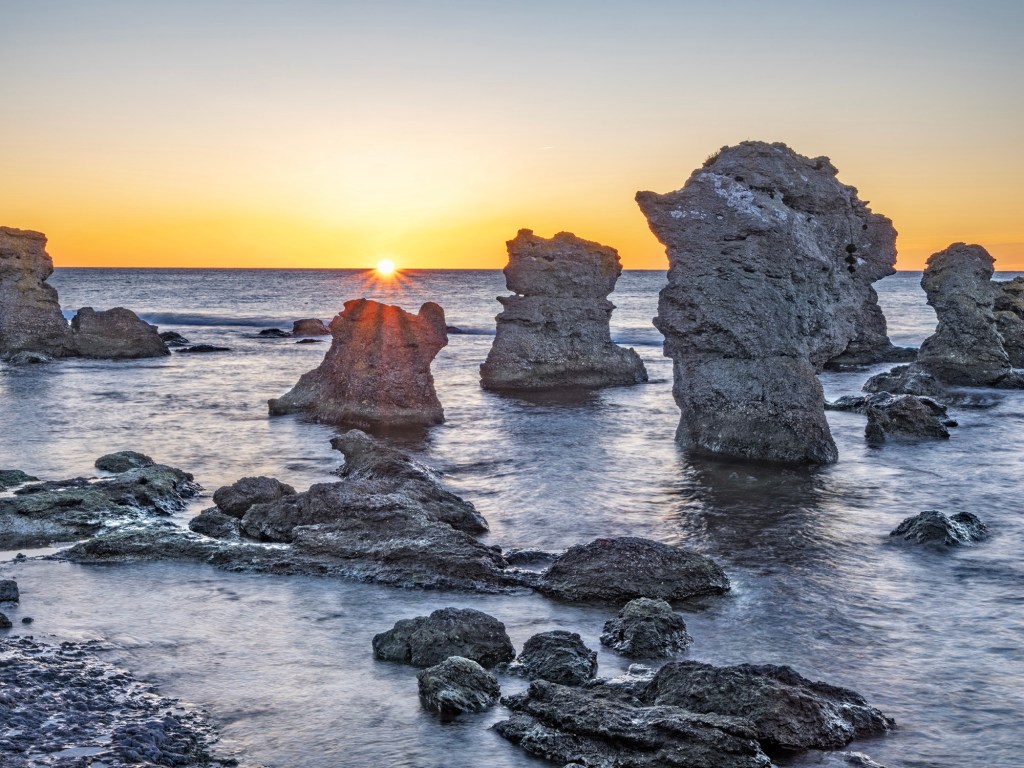
So secretive is she, that I don’t even have a picture to share! So here’s a picture by photographer Claes Grundsten of the mystical Gotlandic rock formations (rauker) instead!