Great Swedish Women Part 4 – The Fighter

Since March 8th was International Women’s Day, I  am republishing my series on Great Swedish Women, past and present.

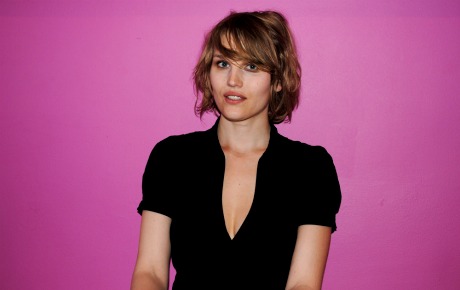
Part 4 – former handball player and social media warrior Linnéa Claesson.

When Linnéa Claesson was 12 years old, she was on-line chatting with a guy who she thought was the same age as her. When she turned on her camera, she was greeted by an older man masturbating to her.

For Linnéa, this was the start of years of ongoing net abuse and social media hate. And one day she decided to not take it any more. She decided to fight back.

Linnéa Claesson was formerly one of Sweden’s most accomplished handball players on elite level and has won, for example, gold in the handball World Championships. After matches, she typically gets unsolicited messages from men on social media which include sexual propositions, pornographic comments about her body, physical threats and penis photographs. 

Linnéa decided to retaliate, and set up an Instagram account called ‘assholesonline’  where she takes a screenshot of the comments and how she has answered them, often using humour as her weapon. Here’s an example:

‘My fantasy: Me, you and another girl licking you until you scream. Maybe a bubble bath. What’s your fantasy?

Linnéa’s answer?

‘My fantasy: Me, you and another girl kicking you until you scream. Maybe a blood bath.’

In responding to the comments, Linnéa wants to take back the conversation and show those harrassing her, and other women, that she is not ashamed and that she is in control. The reaction she receives from the men is often angry and aggressive and not infrequently leads to threats on her life. In a recent interview, she said,

‘I have to do this, even if I’m scared. I have to be brave. Generations after me shouldn’t have to face the same thing.

Linnéa Claesson is not only a fighter on the playing field, she is a fighter in many other aspects. She fights against the sexual harrassment of women and in doing so she is trying to create a debate around this problem. The ultimate goal – to change society’s attitude and view of women and create a positive change. In her own words,

‘We should stand up for each other and when we see something wrong we should challenge it. I think that this is important.’

Today, she currently studies Law and Stockholm University. Here is Linnéa’s Instagram account  assholesonline.

Great Swedish Women Part 3 – The Creator

Since March 8th was International Women’s Day, I am republishing my series on Great Swedish Women. I hope you want to join me in celebrating them.

astrid lindgren

Part 3: writer Astrid Lindgren, creator of the strongest girl in the world.

When I moved to Sweden, I vaguely knew  about writer Astrid Lindgren. It wasn’t until I arrived here that I understood what impact she has had on generations of Swedish children, and not least on generations of girls. The creator of fictional character Pippi Longstocking (Långstrump in Swedish) showed girls that it is ok to be strong, to be independent, to be different and to be the best.

Astrid Lindgren grew up in Näs, Sweden, and many of her books are based on her family and childhood memories and landscapes. Her most famous character Pippi Longstocking was invented for her daughter to amuse her while she was ill in bed.

She wrote many classic stories – the most famous being  Emil in Lönnerberga, Karlsson on the Roof, the Six Bullerby Children, Mio my Mio, The Brothers Lionheart and, my personal favourite Ronja the Robber’s Daughter. Her fiction formed the backdrop of the childhood of many Swedish children and, even today for children around the globe.

She is the fourth most published childrens’ author in the world and has to date sold around 144 million books in 95 different languages. She received many awards during her life and was known for her support for  children’s and animal rights and her opposition to corporal punishment.

Astrid is a national icon in Sweden and her image currently decorates the 20 kronor note.

At her funeral in Stockholm’s Cathedral in 2002, Sweden’s King and Queen and other Royals were in attendance reflecting her importance and contribution to Swedish culture.

Astrid Lindgren gave strength to young Swedish girls and helped them to believe in themselves. In the confident words of the strongest girl in the world, Pippi Longstocking, :

‘I’ve never done that before so I’m sure I can do it’


Great Swedish Women Part 1 – The Catalyst

Today, March 8th, is International Women’s Day.

In support, I am re publishing my series on Great Swedish Women, past and present: women with stength and passion, women with a voice, women who create change.

For seven days, I will write about these Great Swedish Women, one per day. I hope you want to join me in celebrating them.
Fredrikabremer

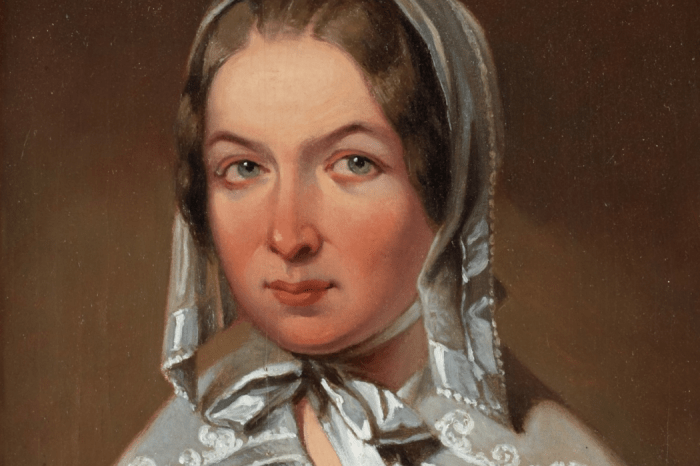
First out is the 1800’s writer and feminist reformer Fredrika Bremer, a kind of Swedish Jane Austen and one of the catalysts of the early feminist movement in Sweden.

Many of the women’s rights that we take for granted in Sweden today did not exist in the Fredrika Bremer’s time. For example, in 1800’s Sweden, women were not free to educate themselves as they liked, marry as they liked, live as they wanted, to have economic independence or to vote in elections. Married women were controlled in all manner by their husbands, unmarried women by their closest male relative.

Fredrika Bremer was born into this kind of society in 1801 in Åbo, Sweden, which today is part of Finland. At the age of three, her family moved to Stockholm where Fredrika and her sisters were raised to marry well.

Fredrika found the limited and passive family life of Swedish women of her time suffocating and she described her family as “under the oppression of a male iron hand’. Fredrika never was forced under the shackles of marriage, so had a certain level of independence inaccessible to married women at that time.

Throughout her adult life, she became a world traveler, an accomplished author (at first anonymously) and a political activist. She was very interested in social reform regarding gender equality and social work and she participated actively in debates around women’s rights in Sweden.

Fredrika Bremer was a catalyst of the first real feminist movement in Sweden. There is much in modern day Sweden to thank her for. In 1853, she started by co-founding the ‘Stockholm Women’s Fund for Childcare’ and the following year, the ‘Women’s Society for the Improvement of Prisoners’. 

However, it was in her novel, Hertha (1856) that she issued in most change, making it probably her most influential literary work. In the book, she wrote about the lack of freedom for women, which subsequently raised a debate in the parliament called “The Hertha debate”. This directly contributed to a new favourable law for adult unmarried women in Sweden in 1858, and was a starting point for the campaign for women’s rights in Sweden. Hertha also raised the debate of higher formal education for women and, in 1861, the University for Women Teachers was founded by the Swedish state.

In 1860, Fredrika helped to fund Tysta Skolan, a school for the deaf and mute in Stockholm. Now an established and respected citizen and patron, she supported giving women the vote in the electoral reforms of 1862. In the same year, women of legal age were granted this in municipal elections in Sweden. The first real women’s rights movement in Sweden, the ‘Fredrika Bremer Association’, founded by Sophie Adlersparre in 1884, was named after her, 19 years after her death.

Fredrika Bremer’s leaves a legacy of equality and autonomy behind her. Her legacy extends far beyond Sweden’s borders. Not only is she recognised as an influencial writer and reformer, but the town of Frederika in Bremer County Iowa, USA is named after her.


.
Vasaloppet in Sweden – the world’s longest cross country ski race


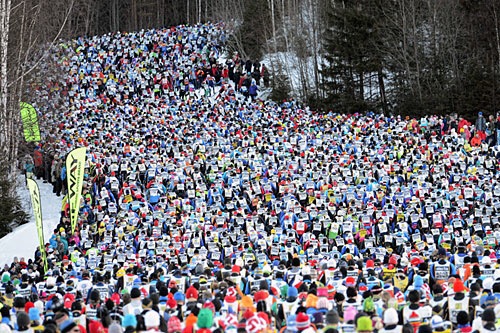
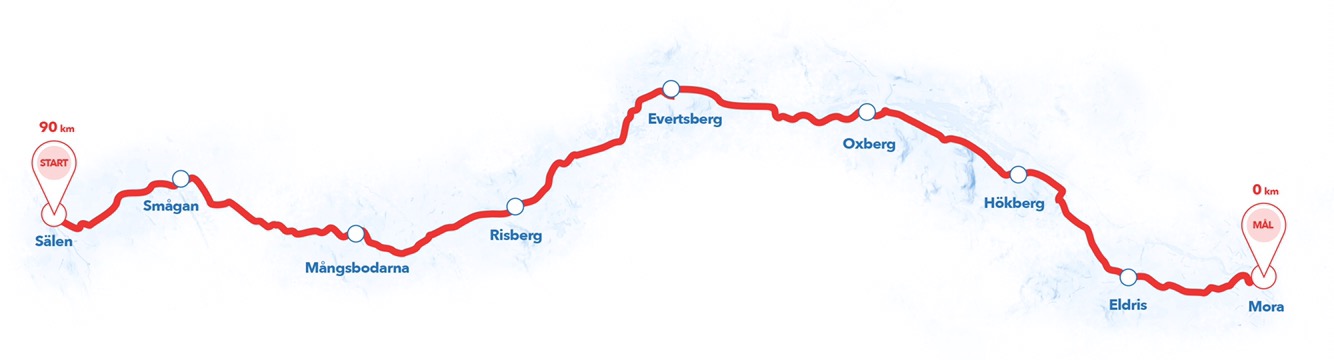
Tomorrow, the world’s longest cross country ski race takes place in Sweden. Called Vasaloppet, it entails participants skiing 90 kilometers from start to finish. It’s an extremely popular international race which is broadcast live on tv. When tickets to participate are released, they usually sell out in 15 minutes – it’s that popular.

The first Vasalopp was in 1922 and takes place annually, the first Sunday in March and it is a first sign of spring.  Normal participants can take up to 12 hours to complete the gruelling course, but the elite athletes do it in a comparatively speedy time of around 4 hours.

So why is this race called ‘Vasaloppet’? Well, it takes its name from a Swedish king. The race commemorates the escape to Norway, through the forest, of King Gustav Vasa in 1521. Legend has it that he carried out the long journey on skis,  but experts believe he more likely completed this escape on snow shoes. Nevertheless, out of this legend sprung the race which is so popular today. ‘Vasa’ after the king, and ‘loppet’ meaning ‘the race’.

Modern day skiers don’t see the experience as an escape, they see it as a challenge and for many of them it’s a rite of passage.

And as you sit watching the TV comfortably from the sofa, with tea and toast, you take vicarious pleasure in this long, amazing Swedish race.

It will be broadcast tomorrow from 7.30 on SVT ( Swedish TV). You can also check it out on the internet in the streaming service SVT Play.

Sweden and Ukraine – Yellow and Blue

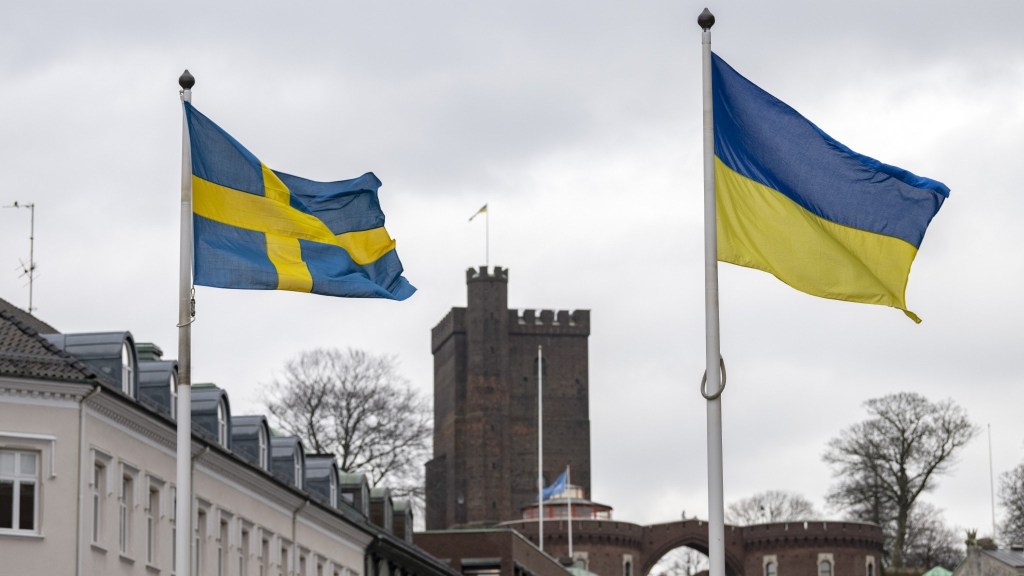
Because of the Russian invasion of Ukraine, many official buildings in Sweden are flying the Ukrainian flag in solidarity. The authorities want to show that Sweden stands side by side with Ukraine in their time of need.

The Ukrainian flag, like the Swedish flag, is yellow and blue. The Swedish flag is a yellow cross on a blue background. The Swedish flag was initiated in the early 1500’s and the yellow is said to represent gold and blue represent the sea. Sweden depicted itself as a wealthy sea-faring realm.

Psychologically, the blue represents justice, loyalty, truth, vigilance and perseverance. The yellow represents generosity.

The colours on the Ukrainian flag represent something else. The blue represents the sky, and the yellow represents the wheat fields that are so important to the country’s identity and economy. The flag was first hoisted in 1848.

On a psychological level , the yellow in the Ukrainian flag is said to represent joy and the blue represents calm.

I am sure we all hope that the people of Ukraine experience both again very soon.

Swedish Valentine – All Hearts’ Day’

Like many places around the world, Swedes celebrate Valentine’s Day today, on February 14th. Called ‘Alla Hjärtans Dag’ – All Hearts’ Day – it is a newish tradition that started around 50 years ago, but didn’t really gain traction until the 1990’s.

American influence and commercialization are often cited as the reasons for this. I also think that it’s a timing issue – the month of February is an otherwise boring time of year in Sweden. A little celebration is a small distraction from the tedium.

In Sweden, Valentine’s wishes are not only limited to love interests, but also extended to children, friends and even school teachers.

Romantically, the most common Valentine’s gifts are flowers, and treating your loved one to a nice dinner, in a restaurant or at home. Approximately 10 million red roses are sold around this day, which is huge considering the population is also 10 million.

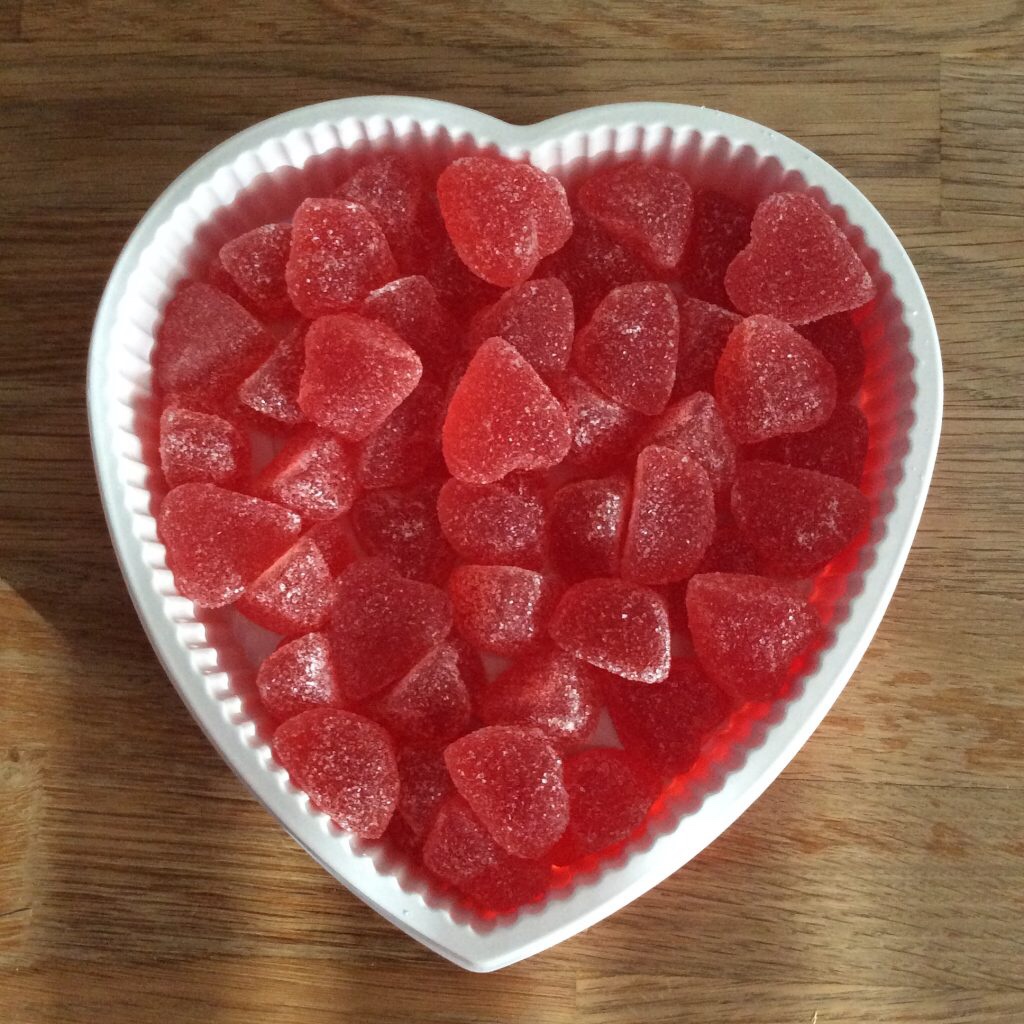
Heart-shaped candy is also popular, and in Sweden the most common is ‘jelly hearts’. Sales of chocolate and candy apparently increase by 90% every year around Valentine’s Day.

So, I might not have flowers or chocolates to give you, but I’d like to wish each of you a Happy Valentine’s Day. I appreciate that you want to read my writing, and in return I send you some loving energy. I hope you have love and affection in your life and that, now most Covid restrictions are lifted, you can celebrate with a long, warm hug!

Huge Swedish demonstration against the vaccine pass

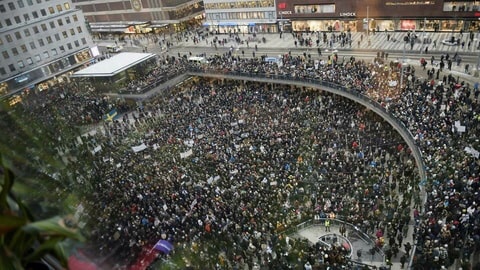
Yesterday, in central Stockholm and Gothenburg, a huge anti-vaccine pass demonstration took place. Thousands of people, assumed unvaccinated, crowded together in a public square and marched the streets.

One demonstrator was interviewed on tv and said ‘I want the right to my own body, I believe in freedom, I don’t want to be forced to take a vaccine’.

Last I checked, the vaccine was voluntary and nobody’s forcing anybody.

We have the freedom to do what we want: take the vaccine or don’t. I have had Covid and do not want to experience it again. So I choose to take the vaccine to protect myself from serious illness if I get re-infected. However, that is only a part of my choice. I also choose the vaccine to protect others in society, to try to reduce the spread of the virus and out of solidarity for our exhausted health care workers.

If somebody else does not want to get vaccinated, that is their liberty. They are in the minority in Sweden, at roughly 15%.

There is a confusion between pro- or anti-vaccine and supporting the existence of a vaccine pass. The demonstration seemed to mix up both issues. They are very different.

However, the ironic truth is that if more people got vaccinated, the fewer restrictions we would need. The more who are vaccinated, the less likely it is we need a vaccine pass.

Many people dismiss these demonstrators as ‘tin foil hatters’ – a pejorative term for people with paranoid, persecutory delusions. However, this diminishes an important and valid concern. The debate around vaccination really is a tricky one. There is a conflict between the right to make one’s own decisions over what happens to one’s body – versus the collective level of safety necessary to protect vulnerable people and the healthcare system. What we need to figure out is how to strike a balance between individual rights and the public good. The question is who’s rights weigh the strongest: a person denying a vaccine, or a vulnerable at-risk person who cannot take the vaccine?

I am sure most of us agree that safety is the basis of freedom. That’s why I see the vaccine pass as a temporary way to protect the public, while still enabling us as individuals to live a freer life.

It will hopefully enable us to protect ourselves and each other, and alleviate the burden carried by our health care workers. And it will hopefully lead to a quicker path out of the pandemic. For me, that is worth trading off against a small restriction on my personal rights.

Today is a Swedish squeeze day

Today is a ‘squeeze day’ in Sweden. What, you may wonder, is a squeeze day?

– It is not a day when everybody goes around hugging each other. Especially now during the pandemic.

– Nor is it a day when people pinch each other’s cheeks or rear ends.

– It is not either a day of drinking copious amounts of fresh citrus juice.

No, a ‘squeeze day’, or ‘klämdag’ in Swedish, is a day of the week that falls between a public holiday and a weekend.

In Sweden, when a public holiday occurs on a Tuesday or a Thursday, a common custom is to take the day between the holiday and the weekend as a day off. Sometimes this is subsidized by the employer. In English, this is called a ‘bridge day’ but in Swedish it’s cutely referred to as a ‘squeeze day’.

As yesterday (Thursday) was a public holiday, many people are also off work today.

Advent Calendar – Dec 9: Julbelysning

Every day, I will open a window containing a Swedish word that has something to do with Christmas and the festive season.

Today’s word is ‘Julbelysning‘ which translates as ‘Christmas lights’.

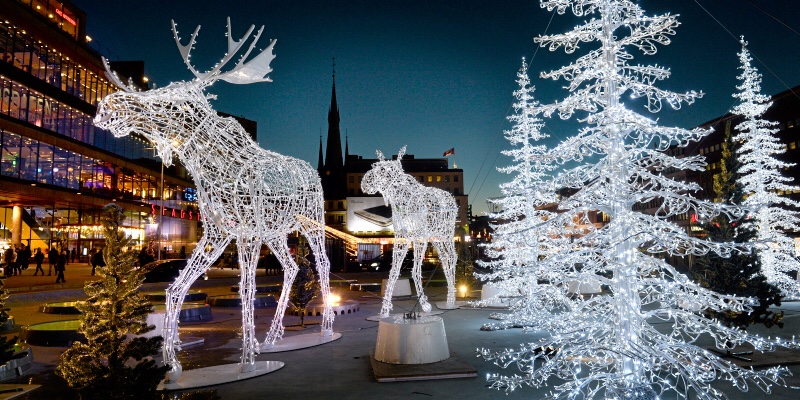
Like others around the world, Sweden’s cities and towns install public Christmas lights this time of the year. These decorations illuminate the dark December days and are an important part of building up the Christmas cheer at an otherwise miserable time of the year.

Currently Stockholm is populated with twinkling elk, reindeer, pine cones, angels, stars and fir trees. The same applies to Gothenburg, where there is also a giant red love heart on Lejontrappan. In Malmö, 1000,000 lights have been switched on and a festival called Vinter i City (Winter in the City) lasts for a month up to Christmas. More information on http://www.ilovegoteborg.se and http://www.malmo.se

Since 1996, on Skeppsbron in Stockholm, the city’s largest Christmas tree has been positioned. An enormous, impressive tree that towers over the buildings of the Old Town and spreads its light over the harbour. The tree in actual fact isn’t a real tree – it is constructed over a central pole with branches attached to it. In doing so, the tree is pleasingly symmetrical.

If you’d like to walk around and see the lights in Stockholm, the city has produced a map which you can find on http://www.stockholmsjul.se

This week is also Nobel week in Stockholm and a light festival called Nobel Lights is taking place. Monuments and buildings around the city are decorated and transformed with projected light shows. More information on http://www.nobelweeklights.se

Advent Calendar – Dec 8: Ernst

December 8th window: ‘Ernst‘ which translates as, well… Ernst.

What on earth is an Ernst you might wonder? Well, the question should rather be ‘who’ is Ernst.

Ernst Kirschsteiger is a person who, by many, is considered to be Mr Christmas in Sweden. He is a very popular interior designer who currently has a TV program called Ernst’s Christmas.

In his program he simply explodes festive spirit. He decorates and bakes and creates. He wallpapers and chisels and hammers. He sews and paints and he crafts. I would describe his design ethic as a nature-oriented retro scandi chic. He has a poetic, philosophical attitude to interior design coupled with practical solutions.

One week he made, for example, Christmas decorations out of mandarin peel and wire and inspired us with a wreath of dried garden flowers, moss and brussel sprouts.

Some people find him very cheesy and goofy but he has definitely cornered the market on Christmas coziness. Many viewers see him as the idea of male perfection – a sensitive man who cooks, builds and decorates the home – all wrapped up in one sweet Christmas treat.

Since his tv debut in 2000, Ernst Kirschsteiger has grown to be a phenomena who only needs referring to by his first name, like Cher, Madonna and Prince. So popular is he that a book of his quotes and poetic wisdoms called ‘Ernstologi’ was released in 2006 and became a popular Christmas present that year.

If you want to witness the phenomena (in Swedish however), watch this YouTube clip and enjoy!