The month the world shrank

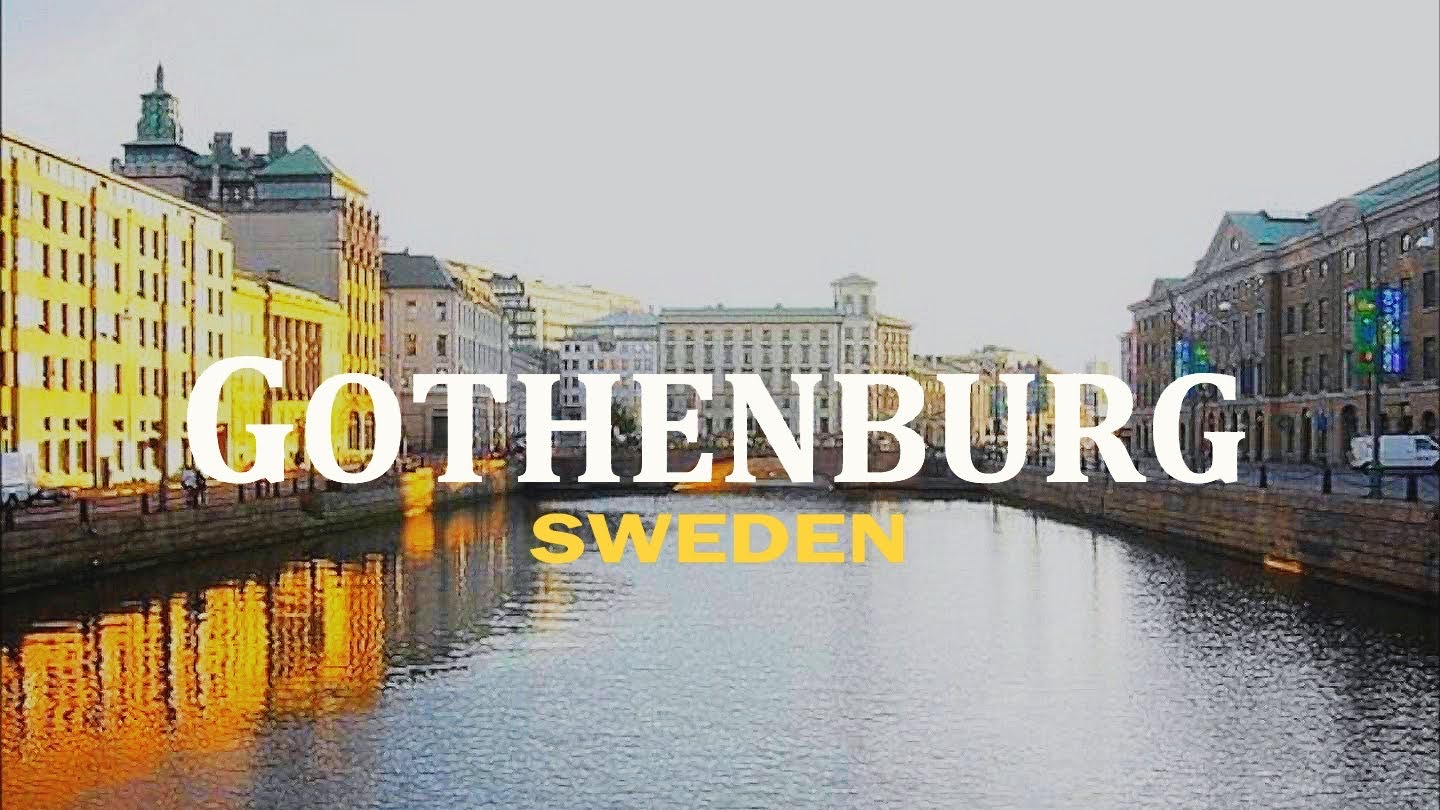
The existence and the spreading of the Corona virus in the last few weeks cannot have passed anybody by. In the earlier stages of the virus, flights were cancelled in and out of China, then we were advised to avoid other countries in South East Asia. Then Iran? And Italy? Should we also soon avoid Gothenburg?

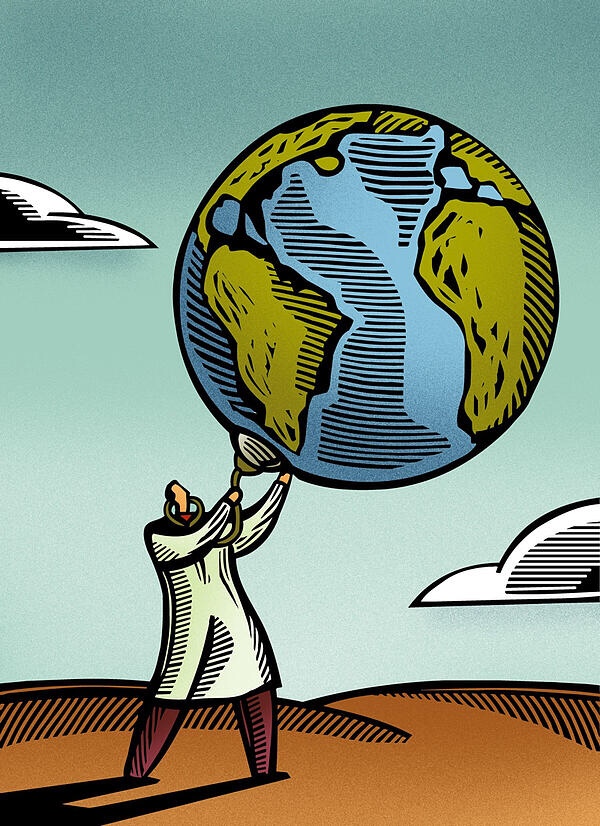
The world went from a wide open planet of international travel to a closed place where we are advised to stay put. In under a month, the world shrank.

How might this impact Sweden and the Swedes? Well, business is certainly affected. Imports are stuck in China. Events are cancelled. Employees returning from affected areas are told to stay home for two weeks, in a corporately-imposed quarantine. And this might just be the beginning.

What about the Swedes themselves? Swedes are well-known for being travelers. The people of this small, cold nation set out all over the world in search of sun, warmth, light, and adventure. Will it be so easy to tell them to stop traveling? Some would say it is impossible. You can take away many things from a Swede, but don’t touch their overseas holiday. For some, it is almost perceived as a human right to travel to warmer climates. I would say how easy it is to get Swedes to stop traveling depends on how any possible travel ban is imposed.

In general, Swedes value rules. And, in general, they follow them: traffic rules, laws, deadlines and agreements. In comparative cultural research one of the frameworks that is often used is the contrast between rules/task and relationships. Simply put, some societies value rules over relationships, thinking that rules should be followed irrespective of the relationship between people. Others value relationships over rules, often seeing the rule more as a recommendation.

Consistently in research, Sweden comes out as oriented towards the rules-side of the spectrum. While this is of course a generalization, it suggests that Swedes tend to take to rules and regulations very easily, tend to prioritize them, and tend to value them. When Sweden legislated against smoking in restaurants, people’s behavior fell into line over night. It wasn’t the case in many other countries. In the EU, Sweden is one of the countries that has applied most of the EU legislation on a local level. When participating in tenant association meetings, Swedes rely heavily on the house charter to understand what is right and wrong behaviour. A customer of mine refused a friendly lunch (in my mind to build relationship) because the company had issued a decree against corruption. None of this might be the case in other countries where a higher premium is put on individual relationships and circumstances, rather than what it says in the rule book.

So will Swedes stop traveling? If it is legislated, yes. If it becomes an official ban, then most Swedes will probably follow it. The practical nature of the Swede will understand its importance. The logic of the solution will prevail. However, if it just comes as a suggestion, left to the whims of the individual, then most Swedes will probably keep traveling. They will avoid the worst areas, and reroute to somewhere they perceive as safer.

You can take a lot of things away from a Swede, but don’t touch their overseas holiday.

Fatty Tuesday – Swedish style!

Today it’s ‘Fat Tuesday’ in Sweden, known as Shrove Tuesday or Mardi Gras around the world.

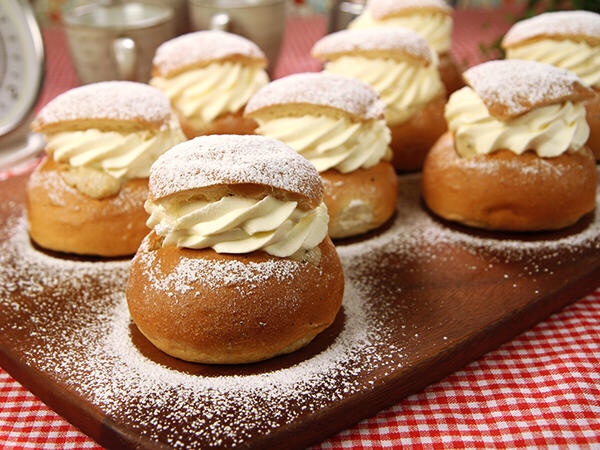
While in the UK we eat pancakes (today is even called Pancake Day) and in Latin America they scoff down fried bread, Swedes celebrate by eating the traditional cream Lent bun – the ‘semla’.

I’m also clearly going to indulge. In fact, my mouth is watering just writing this post. The semla is a creamy bun filled with delicious almond paste. They were eaten traditionally in Sweden to commemorate the start of Lent and the great Fast, leading up to Easter. In the south of Sweden, they still refer to them as ‘fastlagsbullar’ – Shrovetide buns.

Nowadays however, semlas are usually sold anytime between Christmas and Easter. I just love them. I could eat a barrel load. But I’d end up looking like a barrel if I did. I love the taste of them, and the feeling of luxurious indulgence. I also love the knowledge that as you take a bite into a creamy semla, you are biting into over 500 years’ history of Scandinavian baking.

The word ‘semla’ comes from the Latin ‘simila’ which means fine flour and originally referred just to the bun without any filling. As long ago as the 1500’s, bakers started to hollow out the middle of the bun and fill it with cream and butter. As ingredients became more available, bakers started adding almond and cardemon and the type of semla that we know today developed towards the end of the 1800’s. After rationing of sugar and dairy products ceased at the end of WW2, the semla took off and became very popular.

Nowadays the semla trend has reached new heights. Every year bakers around the country try to launch new types of semla, with their own spin on it -for example, the semla wrap, the semla burger, the semla layer cake, the semla cocktail, the chocolate semla, the vanilla semla, the lactose-free, gluten-free vegan semla. But I’m a traditionalist in this matter. Give me a round fluffy cardemon-scented wheat bun brimming over with whipped cream and almond paste.

And give it to me NOOOOWWW!!!

Buying sex in Sweden

In a recent police raid, over 40 men were arrested at temporary brothels in Stockholm. They were charged with buying, or attempting to buy sex. The brothels, which are also illegal in Sweden, were shut down.

So what is Sweden’s policy on prostitution? Well, it is criminalized and in fact Sweden has a trail-blazing approach to prostitution. In 1999, the Sex Purchase Act came into existence. This Act makes it illegal to purchase “sexual services” but not to sell them. So the purchaser is the criminal and not the prostitute. The rationale for criminalizing the buyer, but not the seller, was stated in the 1997 government proposition, namely that “…it is unreasonable to also criminalize the one who, at least in most cases, is the weaker party who is exploited by others who want to satisfy their own sexual desires”.

This law has since been copied and put in place in various other countries, such as Canada, Norway and Iceland. According to the statistics, the law has seen a huge decline in prostitution and trafficking, although it is by far not eradicated.

According to journalist Meghan Murphy, who has written extensively about prostitution- ‘The Swedish model is about more than just changing the law. It is also an idea — it is about changing the culture, and the culture is what needs to change as well as our legislative approach. What the model and its proponents are saying is that men are not entitled to access the bodies of women and girls, even if they pay.”

However, the law is controversial and is not without its critics.

Those who criticize it claim that the law isn’t as effective as people think and that sex work in Sweden is just driven more dangerously deeper underground. They also claim the law strips women of their control and their rights to do with their body as they wish to. An article on mic.com says ‘Sweden’s belief that prostitution is the most brutal expression of patriarchy has engendered a kind of paternalism about commodified sex that holds men responsible for their actions while assuming women can’t be. It wipes out the possibility of gray areas for men and women to be equal partners in exchanging money for sex.’ In other words, according to them, the feminist-driven Sex Purchase Act is entirely unfeminist.

So, the age old debate carries on. The discussion about if prostitution is inherently exploitative. Should it be criminalized, or can it be developed to maximize equality for everyone involved? In Sweden, the buyer is criminalized. In most other countries, the seller is criminalized. In Germany, Holland, Austria, Switzerland, Greece, Turkey, Hungary and Latvia prostitution is legal and regulated. Different approaches to the same situation.

What do you think?

Sweden’s Swexit?

In the aftermath of Brexit on Friday at midnight, I now cherish my Swedish passport even more. It is the Swedish passport that provides me with the free movement and international access that I so strongly believe in. And it is the membership in the EU that, in my opinion, gives us strength, community and a chance for peace. From living in Sweden, I have learned an important lesson – ‘tillsammans är vi starkare’ – together, we are stronger.

Watching the officials remove the Union Jack from the EU Parliament display, I noticed that it was positioned next to Sweden’s blue and yellow flag. It got me thinking that if Sweden was to leave the EU, it would be called a Swexit. But what could it be called in Swedish? Which one sits most comfortably on the tongue?

  • Svutgång
  • Svorti
  • Svutträde
  • Svupplösning
  • Svavgång

Hopefully, it will never happen. It would be truly swawful.

Who 20 Swedish airports should be named after

Naming airports after individuals is common – for example Paris’ Charles de Gaulle, or New York’s JFK or Liverpool’s John Lennon airports. But not in Sweden. No naming commercial airports after celebrities here. Who the hell do you think you are?

In Sweden, it is tradition to name commercial airports after the location they are in – so Stockholm is called ‘Arlanda’, Gothenburg is called ‘Landvetter’ and Malmö includes the village of ‘Sturup’.

There was loose talk about changing Stockholm Arlanda to Alfred Nobel, but the idea didn’t fly. So, I thought, who could the airports be named after? There are about 38 airports in Sweden – here is my name list for 20 of them:

  1. Stockholm – ABBA Airport
  2. Gothenburg – Ace of Base Airport
  3. Malmö – Zlatan Ibrahimovic Airport
  4. Linköping – Louise Hoffsten Airport
  5. Nyköping Skavsta – Tess Merkel Airport
  6. Östersund Åre – Henrik Lundqvist Airport
  7. Ängelholm – Jill Johnson Airport
  8. Borlänge – Mando Diao Airport
  9. Västerås – Tomas Tranströmer Airport
  10. Jönköping – Dag Hammarskjöld Airport
  11. Växjö – Vilhelm Moberg Airport
  12. Hemavan – Anja Pärson Airport
  13. Ronneby – Viktor Balck Airport
  14. Örebro – Prince Daniel Airport
  15. Karlstad – Selma Lagerlöf Airport
  16. Kristianstad – Axel Anderberg Airport
  17. Skellefteå – Stieg Larsson Airport
  18. Halmstad – Gyllene Tider Airport
  19. Visby – Josefin Nilsson Airport
  20. Umeå – Eva Dahlgren Airport

Sweden through the 2010’s – a retrospective

The Guardian newspaper describes the 2010’s as ‘The Age of Perpetual Crisis – a decade that disrupted everything but resolved nothing.’

Looking internationally it’s easy to see this. But is it the case in Sweden? Partially yes, but everything wasn’t bad.

Here’s a look back at the second decade of the century and a chance to remember some of the good and bad things that happened during 2010-2019 – in Sweden.

2010 – Crown Princess Victoria marries Daniel Westling, her former personal trainer. The last öre coin (50 öre) disappears from circulation. A suicide bomber blows himself up in central Stockholm – with no other casualties. Sweden accuses Julian Assange of rape, and issues an international arrest warrant.

2011 – Håkan Juholt replaces Mona Sahlin as leader of the Social Democrats, but it is very short-lived – he resigns a few months later. Over 50,000 people emigrate from Sweden – the largest ever exodus (as a percentage) in the country’s history.

2012 – Friends Arena opens in Solna and becomes Sweden’s national arena hosting 75,000 people. Loreen wins Eurovision with the popular song ‘Euphoria’ in Baku. Princess Estelle is born and thereby secures the future of the Swedish monarchy. Swedish Candy Crush Saga took the gaming world by storm.

2013 – Riots occur in Stockholm suburb Husby with at least 100 cars set on fire. A train derails outside Stockholm (Saltsjöbanan) and crashes into an apartment building. The man bun trend kicks off. The ABBA museum opens and quickly becomes a popular tourist attraction in Stockholm.

2014 – 80,000 refugees come to Sweden and one person sets fire to himself outside the Migration office in Karlstad. Suspected Russian u-boat in Stockholm’s archipelago. In a general election, sitting Prime Minister Fredrik Reinfeldt loses to Stefan Löfven.

2015 – Måns Zelmerlöw wins Eurovision with ‘Heroes’. A rare earthquake occurs outside Gothenburg. Unrelated knife attacks in a school in Trollhättan and an IKEA in Västerås. Henning Mankell, author of the Wallander books, passes away. Passport control is introduced at Sweden’s bridge border to Denmark in an attempt to stem illegal immigration.

2016 – Swedish actress Alicia Wikander wins an Oscar for The Danish Girl. Singer Josefin Nilsson dies from the aftermath of domestic abuse. Sweden goes Pokemon crazy. A massive snow storm disables the capital. Henrik Stenson becomes the first male Swedish golfer to win the Open. The expensive and heavily-criticised New Karolinska hospital finally opens and receives its first patients.

2017 – Sweden’s population reaches 10,000,000. A terrorist attack on Stockholm’s main shopping street, Drottninggatan, kills 7 and scars the nation for ever. The MeToo movement sweeps over Sweden.

2018 – Sex scandal in the Swedish Academy with the consequence of many members resigning and no Nobel prize for literature being decided. Journalist Kim Wall is murdered in a submarine in Copenhagen. Using a mobile and driving at the same time becomes illegal. Swedish DJ Avicii commits suicide. Swedish legend Lill Babs dies. Massive forest fires devour Sweden.

2019 – 16 year old environmental activist Greta Thunberg sails the Atlantic, speaks at the UN and is named Person of the Year by Time magazine. The King makes symbolic changes to the Royal court. American rapper ASAP Rocky is arrested in Stockholm for assault. Sweden is rocked by a series of shootings and bombings throughout the country. Swedish Democrats become the second largest party in opinion polls. Swedes become more climate aware – the number of electric-driven cars increases and the amount of meat consumption decreases.

What sticks in your memory from the decade gone by?

Guardian article

Watching the Swedes Advent Calendar – Dec 9: Julbelysning

Welcome to the Watching the Swedes Advent Calendar. Every day, I will open a window containing a Swedish word that has something to do with Christmas and the festive season.

Today’s word is ‘Julbelysning‘ which translates as ‘Christmas lights’.

Like others around the world, Sweden’s cities and towns install public Christmas lights this time of the year. These decorations illuminate the dark December days and are an important part of building up the Christmas cheer at an otherwise miserable time of the year.

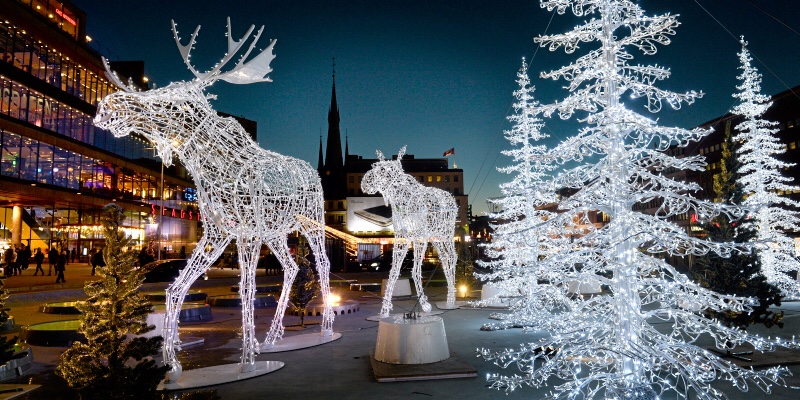
Currently in Stockholm, one million lights have been lit and the city is populated with twinkling elk, reindeer, pine cones, angels, stars and fir trees. Gothenburg, on the other hand, has heavily reduced their Christmas decorations this year saving 2 million Swedish kronor in the process. In Malmö, 400,000 lights have been switched on and brighten up bridges, squares and streets.

Since 1996, on Skeppsbron in Stockholm, the city’s largest Christmas tree has been positioned. An enormous, impressive tree that towers over the buildings of the Old Town and spreads its light over the harbour. The tree in actual fact isn’t a real tree – it is constructed over a central pole with branches attached to it. In doing so, the tree is pleasingly symmetrical.

If you’d like to walk around and see the lights in Stockholm, the city has produced a map which you can find here.

Watching the Swedes Advent Calendar – Dec 8: Ernst

Welcome to the Watching the Swedes (WtS) Advent Calendar. Every day, I will open a window containing a Swedish word that has something to do with Christmas and the festive season.

Today’s word is ‘Ernst‘ which translates as, well… Ernst.

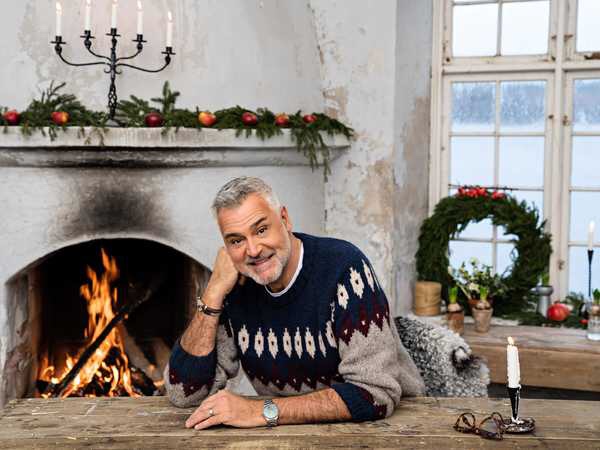
What on earth is an Ernst you might wonder? Well, the question should rather be ‘who’ is Ernst. Ernst Kirschsteiger is a person who, by many, is considered to be Mr Christmas in Sweden. He is a very popular interior designer who currently has a TV program called Ernst’s Christmas.

In his program he simply explodes festive spirit. He decorates and bakes and creates. He wallpapers and chisels and hammers. He sews and paints and he crafts. I would describe his design ethic as a nature-oriented retro scandi chic. He has a poetic, philosophical attitude to interior design coupled with practical solutions. This week he made, for example, Christmas decorations out of mandarin peel and wire and inspired us with a wreath of dried garden flowers, moss and brussel sprouts.

Some people find him very cheesy and goofy but he has definitely cornered the market on Christmas coziness. Many viewers see him as the idea of male perfection – a sensitive man who cooks, builds and decorates the home – all wrapped up in one sweet Christmas treat.

Since his tv debut in 2000, Ernst Kirschsteiger has grown to be a phenomena who only needs referring to by his first name, like Cher, Madonna and Prince. So popular is he that a book of his quotes and poetic wisdoms called ‘Ernstologi’ was released in 2006 and became a popular Christmas present that year.

If you want to witness the phenomena (in Swedish however), watch this YouTube clip and enjoy!

Why Gothenburg is better than Stockholm

I’m currently in Sweden’s second city – Gothenburg – on the country’s west coast.

Home to 600,000 people, Gothenburg isn’t huge but the rivalry towards Stockholm seems to be. So out of curiosity I googled ‘what’s so good about Gothenburg‘ and I stumbled upon an article entitled ‘10 reasons why you should visit Gothenburg over Stockholm.

These are the reasons it cited. What do you think? Is there truth in it? Is Gothenburg better?

  • It’s cheaper
  • It’s less crowded
  • It’s closer to the continent
  • Better seafood
  • A better theme park
  • Better independent cafes
  • Better football
  • The music scene
  • The Way Out West festival
  • The people are nicer

If you’d like to read the article, here’s the link:

10 reasons to visit Gothenburg over Stockholm

Swedish Saints, Souls and shimmering cemeteries

Swiping through social media channels, it’s clear to see that dressing up as witches, vampires and other ghoulish things has become increasing popular in Sweden. Halloween parties are scheduled, not just on the 31st October, but at any time over the few weeks at the end of October and beginning of November.

I’m casting no shade over the masquerade, but personally I am much more enchanted by the traditional Swedish way of celebrating this time of year – it is so serene and reflective.

In Sweden, the first Saturday in November is All Saints’ Day – not necessarily November 1st as in most other countries. In 1983, the Sunday after All Saints’ Day was given the official name All Souls’ Day to separate between the saints and the dead.

Since the 1800’s Swedes have, during this weekend, made pilgrimage to graveyards up and down the country to decorate the graves with candle light.

It is a beautiful experience to walk through the churchyards this weekend. In pitch black November, it is a shimmering reminder of those who have gone before us. Individual graves blink in the Nordic darkness, and memory groves blaze with the collective light of hundreds of flames.

If you are in Sweden today, go to a cemetery. If you happen to be in Stockholm, head for the Forest graveyard (Skogskyrkogården) for a specifically spectacular experience.