Today, 26 September, is World Contraception Day, which hopes to spread the word and raise awareness about contraception and safe sex. The aim is to help each new generation of adults make informed decisions until every pregnancy in the world is a planned one.
Contraception is Sweden is widely accepted, as there is little or no religious or social stigma around the subject of birth control. Over 90% of women have used some form of contraception in their life time. Common forms of ‘female’ birth control are the pill, the coil and hormone rings. The condom is also very commonly used.
Like in many other countries, the pill was seen as a vehicle for sexual liberation of women in the 1960’s. However, today, it is used less frequently in Sweden than in other neighboring countries as emphasis has been placed more on its negative side effects. Approximately one third of women in Sweden regularly use this type of contraception.
Contraceptive counseling is free in Sweden, although contraceptives themselves are not. You need a prescription, except for condoms and emergency contraception, such as the morning after pill, which are sold over the counter.
Controlling unwanted childbirth has been successful in Sweden, although there is still work to be done. According to the Swedish Statistics Center, 512 children were born to teenage mothers in 2020. Compare this to 6,198 children born to the same age group in 1973.
The earliest astrology can trace its roots to 19th Century BC. Beginning in Mesopotamia, it later spread to Greece and Rome, and eventually Central and Northern Europe.
Western astrology has twelve signs, reflecting the month in which you were born. In English, these signs are named after the original Greek words. But not the Swedish names. Like much else in the Swedish language, the words for these signs are very literal. They are also in the definite form.
Swedish priest, Lars Gårdefeldt, is taking a stand against discrimination in the Swedish church. Since 2009, same sex couples have been legally allowed to marry within the relatively-liberal Church of Sweden.
However, there is a loophole. Priests are not obliged to marry a couple if they have conscientious objections to the union. Under this rule, clergy can turn away same-sex couples if they are morally opposed.
Lars Gårdefeldt sees this as bigoted and discriminatory. In response, he is refusing to marry opposite-sex couples. He says that if some priests can turn away same-sex couples, then he, by the same reasoning, can turn away heterosexuals.
He is regretful that he needs to carry out this action, but he wants to highlight the reprehensibility of the situation. He believes the only way forward is that the loophole is removed and that the Church of Sweden does not recruit anti-gay priests in the future.
On social media, Lars Gårdefeldt has been met by positive comments and a fair amount of criticism. Some of the negative comments, unsurprisingly, are hateful and extremely offensive.
Heterosexuals who feel violated by his decision are experiencing exclusion for perhaps the first time. Maybe, if they could take a step back from their own outrage, and reflect on how that feels, they could use this experience to understand what it is like to be on the receiving end of discrimination. Maybe they can empathize with minority groups who have to navigate discrimination their entire lives.
To quote Lars Gårdefeldt, maybe they could actually realise ’the absurdity of refusing marriage to two consulting adults.’
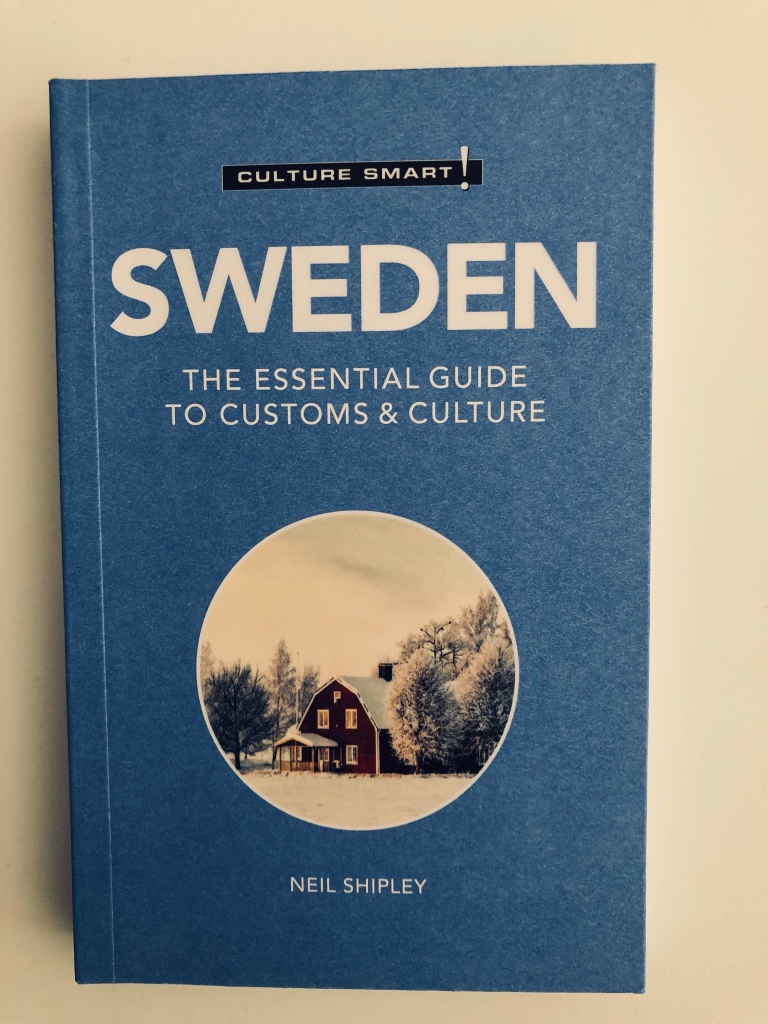
In 2020, I was approached by the publishers behind the respected Culture Smart series to see if I would write a book about Swedish culture. I accepted and, finally, it is here! I am proud to join their staff of authors! Available soon to buy on Amazon, or via me. Just pm me if you’d like a copy. Today’s a good day!!!
The leader of the Swedish Moderate party aims to win the next election. To do this, he is taking further steps to the right to appeal to the conservative and nationalistic trend that is currently sweeping the country. It is his only way to grab the power he so desperately craves. This little man, with big ambition. In his most recent speech, he said that ‘immigration has become a burden for Sweden’.
What he really means is that immigrants have become a burden. Human beings. He isn’t talking about immigrants like his three adopted daughters from China. Oh no, they are raised as ‘proper Swedes’.
He isn’t either talking about white, privileged European immigrants like myself. Oh no, he’s referring to dark-skinned people, many who have had to fight for their survival, and who come to this country with nothing. According to him, it is these people of colour that are dragging the country down.
That is what he means. Make no mistake.
Racism, nationalism and fear are rapidly on the rise in Sweden, fueled by the lies of politicians like this man. His facts are wrong and his rhetoric exaggerated. Immigration is actually at an all time low in Sweden. The country currently has the strictest immigration laws it has ever had. But still this man and these ideas are gaining traction.
His party, and his right-wing lackies, supported by the media, have succeeded in associating Sweden’s current ills with immigrants: economic imbalance, crime, security. ‘Immigrant as criminal’ is not a new argument, it is a successful argument that echoes from our not-so-distant European history. It doesn’t seem to matter that it’s misleading and incorrect.
We humans seem to always want a scapegoat. This concept comes from the Bible’s Leviticus, in which a goat is designated to be cast out into the desert to carry away the sins of the community. Scapegoating can be traced as far back as the 24th century BC. We think we are so advanced in Sweden but we are not. We still fall for the lies of charismatic politicians and we still look for easy scapegoats. Blaming all the immigrants is the predictable option. A casebook example.
On Facebook, there is a group called ‘Nysvenskar i Sverige’ (New Swedes in Sweden). I urge you to join it. It is a refreshing counterbalance to the veiled xenophobia in main stream media and politics. The group is full of people who have moved to Sweden and who are telling their stories. Each person demonstrates how they are an asset to this country, and far from a burden on society. They work, they pay taxes to the Swedish state and they contribute. They end their texts with ‘I am not a burden’.
There are also Swedish-born people in the group. One person called Anna writes this:
I am plus 40 and was born in Sweden to Swedish parents. I have previously been unemployed for 6 months, I have been on sick leave due to cancer, several times. I have used the health care system to its max. I have three kids, all in state subsidized school. We receive parental benefit. Need I go on? NO!
I do not have to prove that I am a burden on society. Why should I also have to prove I am an asset? No. A handful of people have the need to call people a burden. We are ALL a ‘burden’ more than once in our lives. It is the blend of everything that makes us people. Nationality has nothing to do with how you are as a human. Those who think otherwise should educate themselves and go out into the world. Sincerely, A Human. Who happened to be born in Sweden.
I couldn’t have said it better myself.
Please share this post. Please join the FB group. Please make your voice heard.
Today, July 3rd, is International Plastic Bag Free Day. Plastic pollution is a man-made global catastrophe. Around 500 billion plastic bags are used on a global scale – most of them littering the planet and having a negative effect on the environment, wildlife and human health. Plastic bags can take up to 500 years before they decay properly.
A staggering 300 million tons of plastic are produced every year. At least 8 million tons of this ends up in the sea every year. Scientists estimate that more than 5 trillion pieces of plastic are currently floating in our oceans.
International Plastic Bag Free Day was introduced to encourage people to choose paper over plastic, to go on plastic bag scavenging outings and to recycle.
In Sweden, in May 2020, a tax was added to plastic bags in shops. After 8 months, the statistics showed a reduced consumption from 83 bags per person to 55. The EU goal is to reduce this number to 40 by 2025.
In November this year, Sweden will introduce additional tax to plastics intended for one-time use, such as food containers and mugs. In 2024, there will also be a total ban on cups and containers that contain more than 10% plastic.
So, think about anything small you can do to help today. Take a bag with you to the shop. Take a mug to your local cafe. Don’t put your fruit and veg in a plastic bag at the supermarket. Cook at home, don’t buy take away. Reuse. Recycle.
These days, Midsummer Day is a flexible holiday practically celebrated on a Saturday sometime between 20 and 26 June. This means that Midsummer Eve, one of the biggest festivities in the Swedish calendar, is always on a Friday. In the case of 2021, that’s tomorrow.
Bit did you know that this has only been since 1953? Prior to 1952, Midsummer Day was always celebrated today – the 24th June – coinciding with John the Baptist’s birthday. This was regardless of the day of the week it landed on. So today’s strong association with Midsummer being a long weekend is actually only around 70 years old
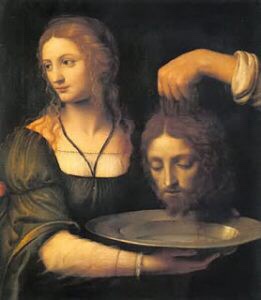
John the Baptist was a person who foresaw the birth of Jesus. He is considered a prophet in several of the world’s religions. He was a prolific preacher whose severed head was notoriously presented on a silver platter to Salome. His birthday has been celebrated since 300 AD on June 24 in many countries around the world.
An interesting fact is that Midsummer Day is still associated with John the Baptist in the other Scandinavian countries. For example, in Finland it is not called Midsummer but Juhannus. In Iceland, it is Jònsmessa. And in Denmark and Norway – Sankt Hans.
With Midsummer’s Eve arriving on Friday , it is time to start planning for your survival. Midsummer’s Eve is the craziest custom in the Swedish calender and the time of the year when Swedes go a little bonkers. As a non-Swede, get ready to brace yourself.
This year, like last, it is important to wash hands regularly, avoid totally new contacts and keep a physical distance from others. Apart from these guidelines, here are a few more hacks to make sure you make it to Midsummer’s Day in one piece.
Greet like a Swede. In Sweden it is considered polite to greet everybody individually, even if you plan to never speak to them again or remember their name. The appropriate way in corona times is to stand 1-2 meters away, look directly in their eyes, say ‘hej’ followed by your name. They will do the same. You might even give a small wave or touch elbow to elbow. If you are feeling adventurous, follow up your ‘Hej’ with a ‘trevligt’ or even a ‘Glad Midsommar’. Job done. Now you can hit the booze.
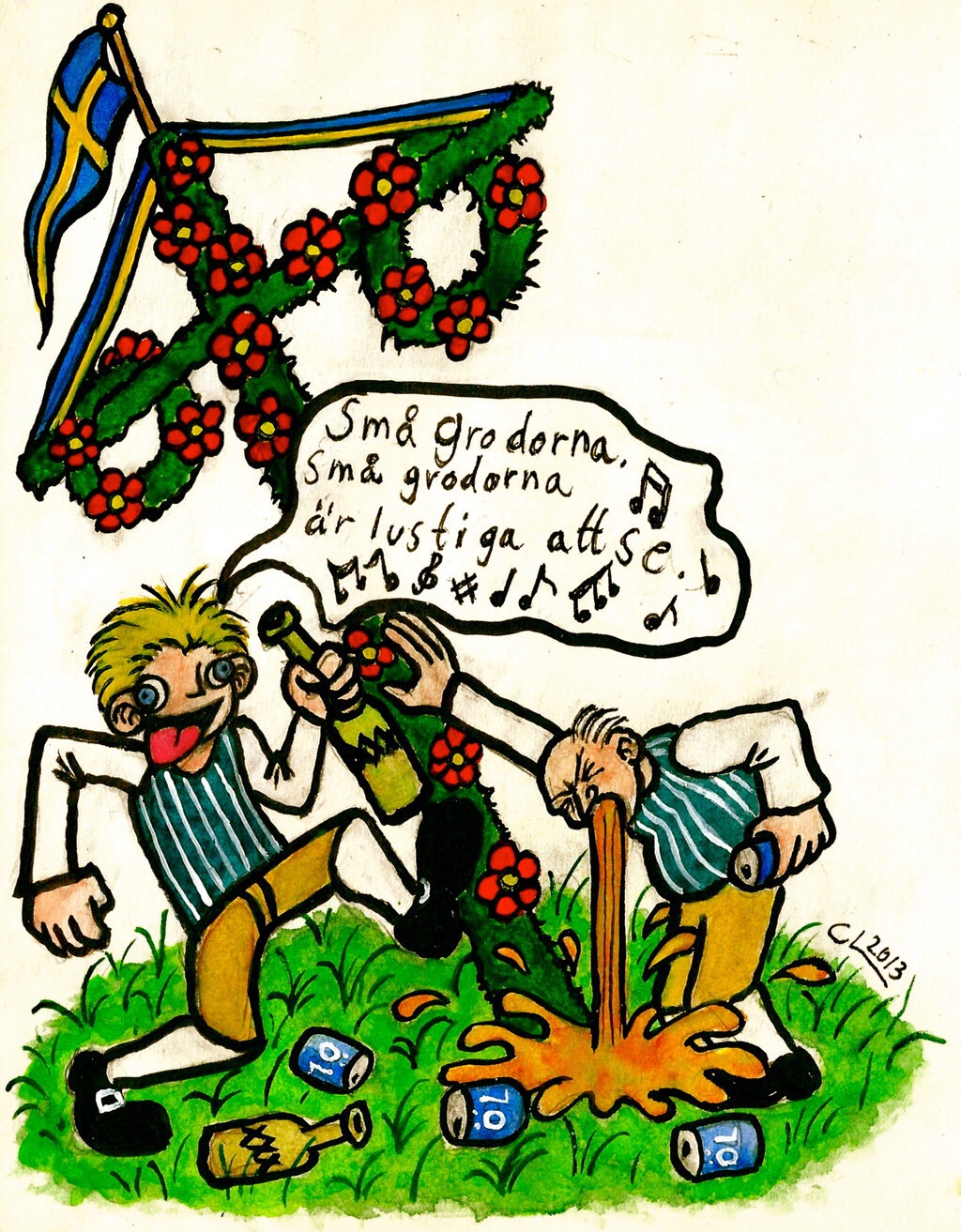
Snaps is not the same as a shot. A lot of alcohol gets drunk on Midsummer’s Eve, especially beer and snaps With the popularity of shots in recent years, it’s easy to make the mistake that Swedish snaps is the same thing. Believe me, it is not. Snaps can be up to 40% proof, considerably more than your normal shot. So, go easy and sip the snaps or see yourself slipping sideways off your chair before the strawberry dessert has even been put on the table.
Take tissue. Midsummer’s Eve is a looong day and you probably will need the loo at some point. The trouble is, so will everybody else – to the detriment of the supply of toilet paper. There’s a big chance you will be seeking relief in the woods so come equipped with the appropriate amounts of paper for your needs.
If shy, bring swimwear. Bathing in the June waters is a common activity at Midsummer and this year it seems like the water is warm. Swedes generally are not afraid of skinny dipping when they do this. If you are, then come prepared with swimwear and a towel.
Shelve your maturity. Part of Midsummer is dancing around the maypole, playing silly games, pretending to be a frog, participating in competitions. This year, the activities are hopefully adapted to corona. To survive these activities, it helps to conjour up your inner child and forget you are an adult for a while.
Protect yourself. Given the amount of alcohol consumed at Midsummer, it is no surprise that the most babies in Sweden are made on this day. It remains to be seen, however, if this year people are keeping their distance. If you don’t keep your distance, and don’t want to join the ranks of parents, remember to put it on before you put it in.
Throw in the thermals. It looks like it might be super sunny and warm this Midsummer’s Eve. One of the warmest ever! But it is good to be prepared. It is not unusual that temperatures fall into single figures and that pesky rain pours down onto the smorgasbord. So bring a jumper, a rain jacket and even thermals to enhance your experience.
Don’t expect culinary miracles on Midsummer’s Eve. The food is exactly the same as is eaten at Christmas and Easter, with a few small summery exceptions – strawberries, cream, dill and new potatoes. Remember to use hand disinfectant before you attack the buffet.
Learn a drinking song. On Midsummer’s Eve, food and alcohol is accompanied by Swedish drinking songs. Learn one in advance and shine at the table. Even better sing one in your own language and you are guaranteed to use those rubbers you packed just for the occasion. For me, ‘what shall we do with the drunken sailor’ works every time.
Argue over the rules. At Midsummer a popular Swedish garden game is called kubb. Involving the throwing of sticks, everybody seems to have their own understanding of the way to play. If you want to feel really Swedish, make sure you start an argument about the rules.
Take pills. Of varying types. Allergy pills are good because there are flowers everywhere: on the table, in the maypole, on peoples’ heads. Pain killers are good as a lot of snaps is consumed. Indigestion pills are good as the food is oily, fatty, acidic, smoky and rich. The after day pill is good, well… because…
That’s it! Follow this guide and you are sure to have a wonderous Midsummer’s Eve in Sweden, even though we are still in the pandemic.
Glad Midsommar!
Please share this post to help others get ready for the big day!
This week, the Swedish Left Party withdrew their support for the minority Social Democrat government over a rent control argument. This lead to the extreme right party calling for a vote of no-confidence in the Prime Minister and his government, with the conservatives and Christian Democrats jumping on the bandwagon.
On Monday at 10.00, the vote will happen. Currently there is a majority for no-confidence, which would mean the government would topple throwing Sweden into a chaotic parliamentary state. Just what we do not need when we are still fighting the consequences of a pandemic.
If this happens, the Prime Minister can step down and let the parliament sort out a new government. Given that it took four months to sort out a government after the last election, we have even more unnecessary chaos to look forward to.
A more likely alternative is that a new election will be held in three months. This is also unnecessary as next year 2022 is an election year anyway. This means we would have an election in September and then again next September. I’m sure most people don’t want this.
It is so irresponsible of our political leaders, left and right. Throwing Sweden into a parliamentary crisis one year before an election is short-sighted, opportunistic and disrespectful. They have turned parliament into a circus.
A new election costs approximately 400 million Swedish crowns. This is tax payers money that should be spent on helping the economy recover from the effects of the pandemic – not on solving a petty battle between our childish MP’s. Additionally, public sector workers will have to remove their focus from currently important issues to instead organizing and administering an extra election.
If politicians don’t agree with each other, fine. That is why we have budgeted general elections. Let the planned election of 2022 reflect the will of the people. Let the current government continue its work.
Back in the days when we could fly, we all used to find ourselves sharing airport space with lots of other people. This led to me developing a specific skill. Wherever I was in the world, I could always identify the Swedish families. It wasn’t to do with language or looks or fashion style. No, it was to do with parenting.
If there was a child, or children, sprinting around the airport without the supervision of an adult – they were without a doubt Swedish. If kids were screaming at top volume without parental intervention – Swedish. If restaurant queues were building up because a kid couldn’t decide what to eat – invariably Swedish. In an airport, the Swedish parenting style was on show for everybody to see.
Swedish parenting is child-centric and comparatively free. It can be perceived as permissive and hands-off. Most parents adopt a communicative style with their children, which can seem to the untrained eye that this means there are no boundaries and no consequences. Children are from an early age involved in decisions that affect them, which is in contrast to a more authoritative and punitive style of parenting found in other countries. This leads to a population where self expression and independence is important
Here are 5 typical parenting behaviours in Sweden:
1) Egalitarian parenting. In Sweden, parents get 480 days of paid parental leave to share and, in heterosexual relationships, 90 of those are non-transferable days for fathers only. This is intended to achieve a more equal division of child-rearing responsibilities. This often extends into the division of duties in the home. So both men an women cook, clean, change nappies and stay home with sick children. For Swedes, it’s a no brainier.
2) Cosiness and cuddling. Friday evenings are reserved for family time. Called ‘fredagsmys’, or Friday coziness, it is when families curl up under a blanket, light candles and watch a film or series together—all while eating tacos, pizza, crisps and sweets. It is not unusual for kids to sleep in their parents’ bed until they reach double digits.
3) Right to Day Care. Every child in Sweden has a right to attend day care from one year old. Day care is subsidised and cheap. At Day Care, the kids spend most of their time playing—academia usually begins in earnest around 6 years old. The other reason for organised child care is so that parents can quickly return to the tax-paying workforce – and collectively finance child care and rest of the welfare state.
4) No spanking. Hitting a child is unthinkable – and illegal – in Sweden. Sweden was the first country in the world to ban spanking and all corporal punishment in 1979. As mentioned before, Swedes apply communicative style of parenting and discipline their children by talking and reasoning with them.
5) Go outside. Outdoorsiness starts early with parents leaving their children outside to sleep in their prams in sub zero temperatures. The crisp air is thought to be good for them. In schools, kids go outside and play every day—regardless of the weather. Some day care solutions are set outdoors with kids spending all day every day in the woods. In the summer, it’s not unusual to see naked kids on the beaches, reflecting Sweden’s relaxed attitude to nudity. Sports and being outdoors are highly prioritised in Sweden. Fresh air, and getting dirty, are considered healthy.
So back to those Swedish kids in the airport. Sure, they justifiably could be seen as unruly, disrespectful and unsupervised. But in equal measure, their behaviour can be a result of a flexible, free parental style that encourages independence and self sufficiency from an early age.